Subscribe
Share
Share
Embed
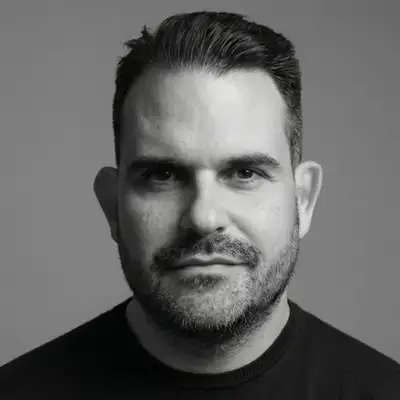
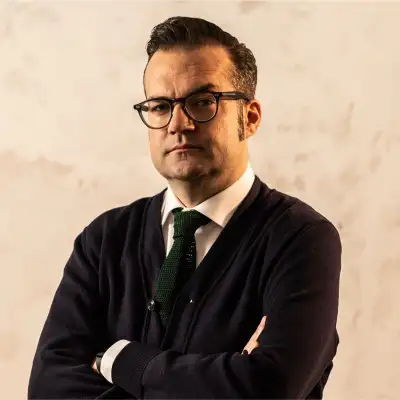
In this episode, I talk to Francois Monti, a renowned Cocktail Writer. We discuss the global cocktail scene’s uneven growth, from advanced cities boasting cutting-edge bars to emerging markets grappling with minimal training. While high-profile venues attract headlines, Francois argues that second-division bars drive consumer adoption of cocktails. He highlights the shortage of skilled bartenders, many lacking foundational taste education (e.g., wine and food flavor insights), leading to haphazard quality. Instead of focusing on big consumer-awareness pushes, Francois advocates strong trade relationships, mentorship, and recognition of diverse bartender career paths—even if that means contentedly staying in a single role long-term. Local bar culture flourishes by ensuring bartenders can refine their palate and technique at multiple levels of the industry, eventually benefiting both consumers and spirits brands.Timestamps:00:00 Introduction and Welcome00:45 State of the Cocktail Industry03:36 Challenges in Cocktail Culture08:23 Training and Skill Development20:03 Mentorship and Industry Growth25:06 Conclusion and Farewell
The MAFFEO DRINKS Podcast is a leading drinks business podcast delivering actionable insights for drinks leadership.
For founders, directors, distributor MDs, and hospitality leaders navigating the tension between bottom-up reality and top-down expectations.
20+ years building brands across 30+ markets. Each episode features drinks builders: founders, distributors, commercial directors, sharing how the drinks industry actually works. Not the conference version. Honest conversations.
Insights come from sitting at the bar.
Beyond episodes: advisory for leadership teams, subscription with episode deep dives and principles to navigate your own reality.
Beer, wine, spirits, Low and non-alcoholic.
Bottom-up Insights & Episode Deep Dives at https://maffeodrinks.com
Hey, drinks builder. This is Chris Maffeo and you're listening to the Maffeo Drinks Podcast. Today, we are reaching listeners in over 100 countries and I'm grateful you're one of them. Before we dive in a quick reminder that while the show is free, our paid Substack subscribers get early access to episodes, full transcripts, and exclusive deep dive newsletters. Check it out at mafjordrinks.substack.com.
Chris Maffeo:Now let's get into today's conversation. Hi, Francois. Welcome to the Mafjordrinks podcast.
Francois Monti:Hey, Chris. Thanks a lot for having me. Very excited about this conversation.
Chris Maffeo:It will be very interesting. So let's start with the state of the industry. We met at BCB some time ago. And, know, we were talking about many different things, but like one thing that really is interesting for me is to hear your perspective of the state of the industry in terms of cocktail bars, the state in the cities. You are also involved with 50 best bars.
Chris Maffeo:You travel a lot. You get a lot of inputs from many different cities in Europe and outside. From a consumer perspective and also from a trade perspective, there's a lot of confusion in understanding what is what. What are, like, certain cocktail bars, the fancy ones, like the ones that want to make it into the list, then the ones that actually want to just make good cocktails. And then another world of basically people that are super into gin and tonic and spritz and and so on.
Chris Maffeo:Do you also feel this kind of like unclarity, Or is it just me?
Francois Monti:I don't know if there is a
Francois Monti:lack of clarity. I think a lot of it's difficult to answer because first, although there is a cocktail movement globally, there is no doubt about that. Seeing every country and every major city is at a different stage of its evolution. A lot of the techniques, lot of the drinks are the same everywhere. One of the ironies of the cocktail world today is that everyone wants to do local drinks, but they taste the same everywhere in the world because it tastes of their technique instead of the actual ingredients they're using.
Francois Monti:But that's not the subject for today. It's undeniable that there's been something happening for the last few years. It's growing everywhere. It's a very exciting time. It's really a good time to be involved in this industry.
Francois Monti:Within the hospitality world, bartenders are in a class of their own. They're not as famous as chefs, but it's exciting. There's a lot of young kids that want to be bartenders and there's always more demand. It depends city from city, but it's true that you can see almost wherever you go that five years ago you had a couple of bars trying to do something about anywhere, in any relevant city in the Western world. And now what is really noticeable is that even places that didn't care about cocktails five years ago are now wanting to, which is restaurants.
Francois Monti:Hotels aren't taking it much more seriously. Like London, hotels have been very important, but in most other European cities it was not the case. Even theater lobbies or some like premium cinemas are like, you know, you can have Bloody Mary, you can try Martini, or you'll go to you'll go to a musical and you'll have a you can have a cocktail where before it was only champagne or even at football games. I mean, in Real Madrid, it's the old stadium and it's the most important club in the world and now they have an area where they will be serving cocktails. So everything points to this being a very exciting time in the cocktail world And maybe that's where the lack of clarity comes from, because before it was very easy, it was very segmented.
Francois Monti:You had good cocktails at a handful of places and now everyone wants to do it. A lot of people don't understand the way this will move. So you have people who maybe should just be happy to serve a proper Negroni or proper dry Martini or proper Mojito to their client, but they are saying the objective is being on a list like 50 best. Brands are unsure because the issue with the cocktail world is that people call for cocktails. What, you know, the marketplace we used to is a marketplace where someone walk into a bar and say, Bacardi Coke, Beefeater and Tonic, and they are a bit unsure what this means to them and how they should deal with that.
Francois Monti:So I think the uncertainty you are perceiving is more from a sort of outsider perspective. My issue is I've been an insider for twelve years, so my perspective is probably going to be different. And my perspective as a so called insider is I'm not worried about this lack of clarity that you're identifying. I'm more worried about the sustainability of the growth we have in terms of a human talent and skill set.
Chris Maffeo:Yeah, and I agree. That's actually where I wanted to get the dichotomy more than unclarity, if maybe it's the right word to understand this, it's growing and growing more and more people seems to be able to make cocktails, but actually there's a lack of personnel, and often there's a lack of skill. What I feel when I travel is that it may be a super fancy bar, but a very junior person that hasn't been bartending for a while. You get this unclarity with, like, it's supposed to be a top cocktail bar with top list. And what was interesting for me when I was reading one of the articles you shared some time ago from Kevin Armstrong about the state of cocktail making at the moment.
Chris Maffeo:No? And if I remember correctly, the article was talking about pre batching and how pre batching is deskilling bartenders. So there is this kinda, like, dichotomy of super skilled. It almost feels like young people especially want to rush into, I want to make it instead of getting their hands dirty. Let me learn to do the basics for a few years before I actually can do and do some fancy stuff.
Francois Monti:I think there's a lot of things you're mentioning there. I'll go very quickly on a couple of them and try to get more in-depth on one, which is especially the skill set, engagement, etcetera. First, in terms of visiting a supposedly top bar, there's actually not a top bar. I'm sorry, Chris, this is always going to be like this. I think one of the issues we we really have in the cocktail world is that a lot of consumers are not trained to cocktails.
Francois Monti:They are not just coming into cocktails. It's something new to them. So they're making bars successful where they don't really understand what they're drinking. A lot of what we call top cocktail bars would be if they were restaurants, trendy restaurants, and no one would call them the best restaurant because we have that issue. That's on the side of the customer.
Francois Monti:On the side of the professional, I think there's also a big, big issue with palette training. A lot of pros and sometimes seasoned pros, which is a bit sad to me, don't understand taste and flavors. They don't understand balance. It sounds bad. Any bartender listening to this is gonna say, Who's this hassle?
Francois Monti:But honestly, I'm dealing with bartenders sometimes very young coming to the Prussian other times, a bit more experienced, who don't go out for dinner, they don't go to restaurants, they don't drink wine. When they end their shift, they may have a Negroni or a beer. They don't go and drink the cocktails from everyone. They don't train their talents. I think this is a big issue.
Francois Monti:For me, it's actually obviously, technique, etc, and how to make a proper drink is very important. But the first step in making a proper drink is actually identifying a properly made drink. A friend of mine who owns the bar in Madrid says, sort of kidding, when he asked, what's one thing young cocktail bar in a train on? And he says, wine.
Chris Maffeo:That's a great point.
Francois Monti:My version of that is if I walk into a cocktail bar in any city in the world, another bartender's order a diatribe. If the diatribe is good, they can move on to the cocktails on the menu. My version of that would be I walk into a bar, I've done my homework, I know where I want to have food in the city, I'm better as the bartender, where should I go for food? And if the recommendation is good, then I know it's probably going to be a good experience in terms of cocktails because the palate has been trained. That's one side.
Francois Monti:And I'm again steering away from the question. In terms of the quantity of talent that we have in this industry, there's something ironic. I think ten years ago, the issue was. You knew you had to train them from the ground up. You take someone who's a cocktail waiter or cocktail waitress, and then, all right, that person is interested in drinks, bring them behind the bar and start the basics from scratch.
Francois Monti:This industry has been growing so fast that you don't really have the time to do that. It used to be bar operators who were doing the training, but now in other places they don't have the time or the skills. The people at management level are not skilled because they went on the fast track. And that's obviously an issue. I think there's also a big issue with how external training is done.
Francois Monti:There are a lot of baldening schools everywhere, But most of the people who go out of those baltanning schools are useless. Why are they useless? They can be useless for two reasons. In my experience, I've done a lot of education. I've been teaching for ten years.
Francois Monti:I'm not teaching how to stir, but I'm teaching cocktail history, rum, vermouth aperitivo and stuff like that. I think one of the issues we have is that ten years ago, if you were running a bartending school, most of the students you would get would already have some notion of hospitality. There would be waiters, they would have been trained in culinary school or whatever. There was a growth in cocktails, and that would have been an opportunity. The training was set for those people.
Francois Monti:Now the issue is that you get a lot of people into those schools who have never really worked in hospitality, who don't have the basis. And of course, you can teach those people from scratch how to make cocktails. But because they don't necessarily have that experience in the hospitality industry, what you're selling them is the promise that once they're out, they'll find a job as a cocktail bartender. Where most bar owners in serious places will tell you, no, no, no, no, you're going to be working on the floor, you're going to be taking the garbage out, you're going to be washing glasses, you're going to be a barback. And you might be a barback for six months, for one year.
Francois Monti:And they're like, but I was shown how to do milk punches and that's what I want to do. That's what I've been sold. And there is this disconnect. I don't think the training needs today are the same as they were five years ago, because the profiles of people are the same, the profile of the venues during the hour are not the same. I think this is a big figure.
Francois Monti:I'm not saying that the training was good five years ago. There were much less people doing training. But the explosion has been so big that we're still playing catch up. Think.
Chris Maffeo:And that's a great point you're raising, because I think that's where we go back to the confusion from my side. Very often, actually also what happens is that person that learned how to do the milk punch may get a very important role in that bar because there's lack of people. So maybe they are rushing that person into that position. So that person is keeping all the throwing the garbage and doing the ground up, the bottom up kind of thing. And then you have this kind of thing where positions are getting very confusing names now, because you may have a bar manager that has twenty years experience.
Chris Maffeo:So you may have a bar manager with one year experience or a head bartender with, one year and another one with five years. And there's a lot of difference. And it's super interesting. I mean, this perspective you're bringing on learning and development. I'm a big fan of learning and development in these terms and to really understand where we are.
Francois Monti:I've seen as I've seen the last few years, a lot of schools, sometimes, like, really high profile famous schools that used to work only with chefs move into the cocktail world. They're not attracting people to their cocktail trainings for the right reason. I there's one it's a very prestigious culinary program. They're doing a cocktail thing, and most of the top bars that I know of don't take their students as interns. They've tried and say no.
Francois Monti:People come and expect to be part of the creative process straight away. I'm not taking them because that's what they were sold against, paying a huge amount of money. It's not the reality of the cocktail world. Know people who've been invited to teach there, they say, I'm not going back. What they wanted to hear is how I got to that Instagram sort of cocktail.
Francois Monti:They don't want to hear how I build my business. They don't want to hear, you know, how I set up my teams for success. That's not what they're not interested in that. They want to know how the characters that made it into Vanity Fair. That's what they're interested in.
Chris Maffeo:Do you think there's a connection with that on the fact that probably, for example, if you take cuisine as an example, now cuisine has been very hierarchical for centuries from the French way and so on. So people kind of like got slept on their face. If they try to go up the ranking, like without being able to be so, probably in the bar world has been a little bit more loose. It has been more flexible, more fun. There is that element that chefs are behind the wall in the kitchen while bartenders have this prime position in the bar where the people are.
Chris Maffeo:And probably the fame has taken over in this Instagram wave of people taking pictures of cocktails and the Instagram ability of cocktails and so on. So probably there's been a perfect storm with COVID, the lack of people, people leaving the industry, the middle management disappearing, then young people coming in, Instagram making cocktail famous, people getting lucky, maybe that could be an easy career path. Know, like, it's it's kinda like a can can that be so?
Francois Monti:I mean, this this obviously, there's a lot of factors. I think the the the issue we now have on has nothing to do with COVID. I think COVID there was a shortage of personnel for the reasons you mentioned people went out of the history. Now it's because the acceleration of the presence of the cocktail in places where they didn't have cocktails before has been so big in the last five years that even without the loss of talent that some countries, not all countries, some markets had during COVID, we would still be in the ship, honestly. That didn't really impact us.
Francois Monti:But going back to the chef thing, dealing with clients differently, not being behind the wall, etcetera, you attract different sort of people and personalities. But I think for me, what's most interesting with the comparison with restaurants is that you need eating is a need and drinking cocktails is not. What do I mean by that? It's obvious you are not going to work in a Michelin star restaurant if you can't make an omelet. This is not going to happen.
Francois Monti:You can work in the top cocktail bar that may end up on the list like 50 best and you can't make a dijiri. That's something we really should be thinking hard about. Because sometimes, you know, the reasons why cocktails are trendy may be the wrong reasons, maybe because it's new, it's a novelty factor. But, you know, you go to Michelin star restaurant once or twice a year and you have an omelette maybe once a week. And if we want this great moment, if we want to keep on making money with cocktails, and I certainly do want to keep making money with cocktails, we need to make sure that people are able to enjoy classic simple drinks everywhere and that there is not that idea that cocktails are these weird, technophy thing that I actually am not enjoying that much.
Francois Monti:But, you know, I do it once a year and I can say to my friends, wow, this crazy place. It was, you know, hidden door or it had, you know, it was a dragon or smoke and stuff like that, which is fine. And it's important. And it's been very important on the evolution of cocktail because you need to convince people to spare with their cash for something they've never done before. But I think we really need to think about the next step and the next step is is not that.
Chris Maffeo:This is super interesting. I will I would love to to spend hours talking about this with you, it's super fascinating because I I also feel like from a consumer perspective, there is this kind of like world of the I mean, let's call it the 50 best, you know what I mean? Like the fancy top cocktail bars. And then there's a world of the gin and tony where the waiter or waitress is kinda like fixing. They're doing an espresso, and then they are filling a spritz and then doing a gin and tony and bringing it to the table outside now in a rush in summer.
Chris Maffeo:I feel that there is a lack of the middle ground. There is this world in between the stars and the basics. And that's where we need to work. The middle ground is where we need to bring cocktail culture to the masses, not getting people to drink loads of cocktails, but to really understand what is it. It's a little bit like your wine example that you made before.
Chris Maffeo:The the that's like, let's go from a €3 Chianti from the supermarket. Doesn't have to be a super Tuscan, but let me drink a proper €18 bottle of chianti that is properly made. It's the same thing in cocktails. How do I go from an Aperol Spritz to a Rota Vap made fancy cocktail? And how do I get people to make these two worlds speak to each other?
Francois Monti:Yeah, I mean, that's complicated. If I had the answer to how to bridge all those worlds, I would be selling my advice. I would be on the beach somewhere. I think that's a very important point. For me, the maturity of a cocktail scene, the quality of a cocktail scene is not measured by the Premier bars.
Francois Monti:It's not measured by your handshake or Tehran Lamentary or Jigar and Pony or Paradiso or Samgru. It's what I call second division, using footballing terms, sports. Know, I'm not saying that using that term in a derogatory sort of ways. I think cities or markets that don't have a second division making good cocktails, which means bar operators and bartenders who are happy to know that they're working in a place which is not competing in the big leagues, which is not trying to be on list, which is not trying to be awards, which is just happy to make customers happy making cocktails, just happy to make good drinks, but also a healthy consumer base where people would walk into your bar on a regular basis to have a dry mountaineer, like cream or heat or whatever. If you don't have that, you don't have LCC.
Francois Monti:I'm very aware of this because this is what happened in Madrid twelve years ago. I've been living in Madrid for fifteen years now. And twelve years ago, I thought, all right, we're in the big league. We had three or four really good bars, really, really good bars, and they were going to go places. Within six months, they all closed down for different reasons and we were left with nothing.
Francois Monti:I can tell you if there is a massive accident and the two most relevant bars of Madrid close down within the next six months, we will still have a healthy scene because we have dozens of bars who cater to that middle ground. And that tells me. This is not just a trend, it's getting into the fiber of the city because we're also seeing those bars who are not capturing so much for tourists, but also more for locals. And that's we should be striving for. This is the mark of something that is not going to go away soon.
Chris Maffeo:And in and in your experience, how does that happen in the sense that is it top down or bottom up? Is it like the top three bars, for example, have a lot of people in the team and then they branch out and open their own place. Or is it coming from outside the return diaspora from London or New York that people go back to their hometown and open their bar? How can we help support that second division that I love as a term?
Francois Monti:Think first you need mentors. You need to be the owners or the operation people at those top bars to be actual mentors. And mentorships also entails telling your staff, look, I think you need to leave and do something else, which might be open your own bar or go and learn another skill set somewhere else. And it's important to have that generosity of knowing that you're not only working for your business but also for the health of the cocktail scene, which means mentoring from inside, but also from outside. So having people who are open to share secrets, knowledge, recommendations with other would be operators.
Francois Monti:That's obviously very important. But also it has to come from the bottom in the sense that you need to have a clientele that wants to drink cocktails and that sees some cocktails as a single value. If you don't have that, you're a bit fucked. How do you create that? Well, it's complicated, but it's years of work and art toile.
Francois Monti:If you have the leading bars are open for six or seven years and then you have big hotels coming into town and blah blah blah. You know, at one point, something that gets trendy if it lasts for long enough is something that you take for granted. And if you take it for granted, then maybe it's a bit more easier that you walk into a bar where you can have wine, you can have beer, but you feel like a cocktail. And I think that's also something that's quite important to foster. And going back to the mentorship, what I've seen is also is crucial is that you're not driving your employees to think that your model is the only model.
Francois Monti:And what I mean by that is your 50 best bar ideally, you know that some of your staff is going to get pushed. They're going to be hired by someone else. But if it's a healthy culture within the business, I think some of the employees will be drawn towards that model of trying to be a 50 best bar, and others would recognize that what they really enjoy is dealing with clients or making the task factors and then they will leave you, but that's because they want to open their own space, no stress, no fuss, somewhere in the neighborhood. So you have to have also that dynamic within the term bots. I think, yeah, mentorship for me is fundamental.
Francois Monti:You have to have people there are bar owners and bar operators, they only talk about their bars. Others, when you talk to them, they talk about their city. And if you're lucky enough to have more people talk about their city and about their boss within the top tier of your cocktail industry, there's much more possibilities that your city is going to grow.
Chris Maffeo:I love that. It's also having like honest conversations now to understand what's your place in all this because I can be a bartender. And maybe at some point I realized I like to make cocktails. I mean, I like to make classics. I don't like to use a rotavap or whatever, or I always give the comparison to the corporate world.
Chris Maffeo:Now maybe I want to be a brand manager or my career. I used to look down to people. I was driven into career back in the days and I was like, why is this person being a brand manager for fifteen years? What's wrong with them? Brand managers, they have job done.
Chris Maffeo:They don't want to become marketing manager, marketing director, CEOs. They don't want to. They don't want that. And there's nothing wrong with that. And if we don't change that narrative, you are twelve years a brand manager, you're a loser.
Chris Maffeo:And instead of saying you are the one that is getting the marketing job of this company going forever. There's nothing wrong. It's much better to be like that than to burn yourself as a marketing director for six months and get fired.
Francois Monti:Yeah. Think also the power industry always had that anxiety where, you know, bottling is not a real job. What are you going to do next? And so they started thinking, well, no, it is actually a real job, it's a career because there is a career path and a career path is this and then this and then this and then that. And no one told them that, yeah, but maybe you're a great bartender, but you'll be a shit bar manager.
Francois Monti:Or maybe you're, you know, you could move from bartender to bartender would be good. Or you could move to operation, you know, operation director, whatever. Could be good. You are not made to be an owner because you can't actually manage money or you don't understand the dynamic of whatever. And this is a narrative that needs to be changed.
Francois Monti:And I think it's changing bit by bit. I think there are many more because of the growth of the cocktail industry, there are many more avenues opening, but it's not always easy to navigate them. That's for sure.
Chris Maffeo:No, that's fantastic. So I'm aware of your time. I would love to spend another hour and a half, like speaking to you because this is super fascinating as a topic and to get your insight, but let's wrap it up here. I want to leave some space for you to mention who you are, where can people find you and so leave some context for people out there that want to reach out to you, Francois.
Francois Monti:Yes. So unfortunately, I guess most people would be listening to this are English speaker and most of my published work is in Spanish nowadays. I have a sub stack and use that word called Jabil. It's complicated. A I B O L.
Francois Monti:I really don't have time this year for actual writing, but you know, if you want to improve your Spanish or if you're a Spanish speaker, there's a lot of whenever I can, I will go back to publishing on that platform? If you want to follow what I'm doing, of course, I'm on Instagram with Francois Monti, but I have a consulting business, consulting agency working with brands, hotels and restaurants, sort of trying to work around quite a few of the issues we've been mentioning today and many more that we haven't had time to discuss, but maybe we'll do a chapter two and a chapter three at some point.
Chris Maffeo:Absolutely.
Francois Monti:The agency is called Amargueria, which is also complicated Spanish, which is the bitter liquor version of Vermutera. Vermutera is a ball where you drink vermouth in Spain. So Amargarilla is where you go for bitter stuff. So, yeah, this is this is where I am.
Chris Maffeo:Fantastic. So thanks a lot, Francois. It was a great pleasure and an honor to have you on and let's talk soon.
Francois Monti:Thanks for having me, Chris. Hope you guys enjoy and hopefully catch up soon.
Chris Maffeo:Fantastic. Ciao, Francois. That's a wrap on today's episode. If these insights helps you take a moment to leave us a quick review. It really helps other drinks builders find the show.
Chris Maffeo:And speaking of sharing, pass these insights along to another drinks builder who needs to hear this. Wanna get next week's episode right now? Head over to mafairdrinks.substack.com where paid subscribers get episodes a week early plus full transcript and deep dive analysis. Until next time, remember that brands are built bottom up.