Subscribe
Share
Share
Embed
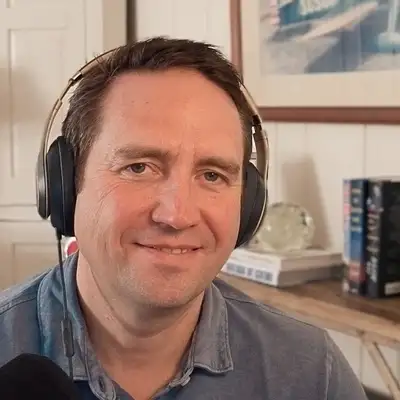
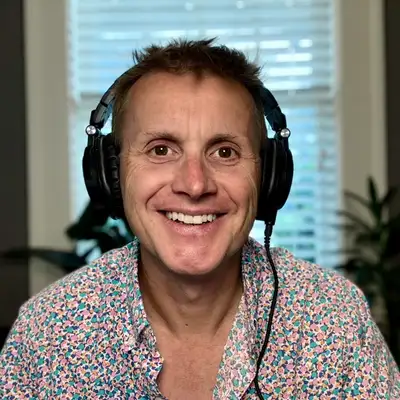
Space Insiders is your bi-weekly deep dive into the intersection of space, cloud technologies, and entrepreneurship. Hosted by Tony Sewell and Rob Ruyak, both seasoned space-tech executives, this podcast features candid conversations with founders, investors, and entrepreneurs shaping the future beyond Earth. Whether you're launching a startup, investing in innovation, or just space-curious, Space Insiders gives you the behind-the-scenes insights you won’t hear anywhere else.
New episodes drop every two weeks. Subscribe now and join the orbit!
Disclaimer: The views and opinions expressed in this podcast are those of the hosts and guests and do not necessarily reflect the official policy or position of any organization or employer.
Welcome to Space Insiders. I'm Tony Sewell, and as usual, here with my good mate, Rob Reyak. How you going, Rob? Good. What's up, Tony?
Tony Sewell:Oh, man. It's I had to pull out the the hoodie. It's getting cool. I think summer's finally over.
Rob Ruyak:Yeah. But Halloween is Friday. Halloween is awesome.
Tony Sewell:Weekend. So, yeah, that's gonna be fun. Love that it's gonna be on a Friday this week.
Rob Ruyak:I do too.
Tony Sewell:We We can have a little bit an extended party, I think, into
Rob Ruyak:the evening. Walk around the neighborhood with your kids drinking beer with other neighbors. Yeah.
Tony Sewell:Candy for dinner and and beer. Yep.
Avi Shabtai:For sure.
Rob Ruyak:Oh, yeah. You do have that sweet tooth. I remember that.
Tony Sewell:I do have a sweet tooth. Yeah. Well, is a really exciting episode because I feel like the trajectory of our time together over the last sort of five or six years, Rob, has been kind of coming to this point, space and cloud, and and we're gonna get to to talk to the CEO of Ramon Space, Avi Shabtai. And I think it's I think people are really gonna like this this episode.
Rob Ruyak:Yeah. I mean, this guy, I love this conversation among I love all the conversations, but this one was really interesting because this is someone who's an example that just had all the technical skills required to build data centers, build networks, innovate around all of that, and then look at the opportunity of bringing it to a completely new and different domain, which is space. And what's fun about this discussion is I think there's a lot of, I guess the right word is like dissonance, you know, in the conversation, depending on who you talk to. You have people that say, there's never it's never gonna happen. There's too many constraints.
Rob Ruyak:And then you have those dreamers such as Avi and his team that are trying to bring that to reality. Mean, his background is really impressive. I mean, like I was mentioning, we worked in semiconductors, wireless, IoT, various types of networking architectures. He's got his master's degree in electrical engineering, so he's got all the right skills and technical skills. And then he held a lot of leadership positions in different companies, everything from marketing to the CEO and general manager of a very large sales organizations.
Rob Ruyak:And now as the CEO of Ramon Space since, I think it was 2020. Yeah. And they're one of the leaders in developing and bringing cloud computing and intelligence. We probably want to say AI and intelligence actually now, given everything going on in the market, to space and different use cases. A little bit of this is, If you build it, they will come.
Rob Ruyak:But we also talk about specific use cases and opportunities with him as well, which are really fun.
Tony Sewell:Yeah, the tech is fascinating. I did love where some of the discussion went though around sort of his experience turning Remote Space into a global company over the last five years during his tenure. Because it's a it's a company that's been around for twenty years, so that definitely would bring really unique challenges because they're still a they're a twenty year old startup. And as we started to you alluded to this idea of how to sort of take the constraints off your thinking and really try and not just listen to the naysayers. Because, I mean, even I look back at my career in space, I mean, you think about, like, when I first met you at OneWeb and at that stage OneWeb was really kind of leading the charge on leosatcom.
Tony Sewell:A lot of people at that stage were saying, yeah, this this is not gonna work based on the the Iridium experience. At that stage, back in 2019, 2020, we all thought Starlink, SpaceX's Starlink was a joke. It wasn't they weren't gonna even we were like, we were saying that. Yeah. And look at it now, and, I mean, I I was struck by an article I saw in the news last week that Iridium has had to downgrade their revenue forecasts for the next sort of their long range forecasts based on what these new direct to device arrangements that SpaceX is making and others and how that is gonna impact their business.
Tony Sewell:So it's just like you couldn't foresee this stuff ten or fifteen years ago. And I think it was a really good example of how to, as a CEO or a leader in these companies, how you really do need to check your assumptions and just open your mind.
Rob Ruyak:Totally. Yeah. And and as I think about it more and more and listen to you summarize it, I think, yeah, I think the unconstrained thinking is really good. And I think that's kinda what you need as a leader for some of these companies because god only knows your board and your investors will keep you realistic. Yeah.
Tony Sewell:For sure.
Rob Ruyak:But but there's a nice complimentary, you know, relationship to that, which I think is really important if you wanna do something really unique, big, and purposeful, like like what these guys are doing.
Tony Sewell:Yeah. Awesome. Alright. Let's get to the interview. We'll see you in a minute.
Tony Sewell:Alright. Welcome back. Really pleased today, to have joining us Avi Shabtai. He's the CEO of Ramon Space. Avi, great.
Tony Sewell:Thanks for joining us.
Avi Shabtai:Hey. Nice, joining this session. I'm looking forward to
Rob Ruyak:Yeah. We are too. We are too. Thanks for joining us.
Tony Sewell:Yeah. I was saying to Rob a little while ago that this is the I was really pleased when when our our mutual mutual friend and colleague, Steph and I, Poly connected us, and I feel like we've kind of been building up to this moment being able to talk about the cloud in space. So I think this is gonna be a really interesting episode for for a lot of people. Before we get started, love to learn a little bit about you and also about about Ramon Space. So companies the company you've you've been CEO for for about five years, I think.
Tony Sewell:Correct. Company's been around for about twenty years. Can you Big funding round a couple of years ago, I think in 2023. Love to just hear a little bit about your journey and I guess the evolution of Ramon's space.
Avi Shabtai:Yeah. Well, my journey is probably connected and Ramon's space were connected through karma, I guess. Because I don't know if you know that, but my last name is actually direct translation is Saturn.
Rob Ruyak:So while
Avi Shabtai:not being a lifer in the space sector, I was probably meant to be here. I'm not coming from the space industry. I'm actually coming from deep tech industries, semiconductors, networking, data centers, optical communication, wireless communication. And at some point of time I met with founders and the new investors in the company and they kind of encouraged me to look into it seriously and said, okay, I'm joining Ramon's visit because it looks super exciting of what we can do with it. You're right, the company started more or less about twenty years ago, as I said, as an incubation towards building technology in the area of semiconductors for radiation hardening computation chips.
Avi Shabtai:Now, about five years ago, the company made a pivot and changed to become a player in the, what we call the computing infrastructure, and actually laying the foundation towards being a major player in the evolution towards building data centers in space. And that's exactly where I joined. And then we took the company, you know, through actually two rounds of fundraising and build it to become what it is today. And as you mentioned, Stefano just joined us and I guess if you would call him today, I hope he will say he's very happy, but I know he's very busy.
Tony Sewell:He's a hard worker. I remember when we were together at Imarsat. Well, that's part of building the company to move,
Avi Shabtai:you know, really to the next step of of our growth.
Tony Sewell:Yeah. That's awesome. Before we one one sort of thing I I I do wanna touch on before we before we of dive in. I I mean, so Ramon Space is is obviously an Israeli based company. I've had the extreme good fortune to be able to visit Israel a couple of times through my work to visit vendors.
Tony Sewell:Israel is super interesting country as far as the quality and the names of tech in tech innovation that come in. I mean, in the space industry and telco industry, you have names like Galat SatixFi, and and Amdocs, just in general software like Wizz and monday.com. Like, what what is it about Israel that is that incubates technology like like Raman Space and companies like these?
Avi Shabtai:I think it's a combination of the culture and capabilities. Meaning Israel Israelis in general tend to be very innovative, creative, think out of the box, have the ability to combine different fields into one. And that comes with a very strong, I would say investment in innovation and technology development. And when you combine the two, you get a lot of startup. It is called the startup nation, right?
Avi Shabtai:So it's, and it's really kind of embedded in the DNA of the culture of the country. And I think that's what enabled us really to move fast. I would say also that Israeli culture or Israel in general are very resilient, very resilient. And the number one thing you need in an early stage company is resiliency, because you don't know what's going to happen tomorrow. You don't know how things are going to shape up, competition, another crisis in the lab or something happens.
Avi Shabtai:You need to be able to react to it. You have to react to it fast. You have to react efficiently. And we're very good at that. And that's what helps Israelis build a lot of companies are very successful.
Avi Shabtai:Combining the innovation together with the DNA of, you know, resiliency, thinking out of the board, and executing very well under a lot of pressure.
Rob Ruyak:Yeah. I would think also the defense and national security side of it too within Israel pumps out a lot of incredible talent, right? A lot of unique technical talent, right? Yeah. As well.
Avi Shabtai:A lot of the, I would say the defense sectorgovernment sector is an incubation for a lot of talent to pose after their service into the market. And then, you know, they are the ignition part of building more and more companies. Combining that as well drives the industry, the Israeli industry to build more startups, more early stage companies that grow and become dominant in their market share. And I think that one of the things that we were I think that the Israelis are in a way when we need to approach a problem, we think very efficiently on a solution. We're less concerned about, can we do it?
Avi Shabtai:We'll just say, okay. Let's do it. And then it happens.
Rob Ruyak:That's a pretty unique burning, I think, you know, fire in the belly that you guys have, I think, in that region. I I unfortunately have not visited. I've always wanted to go. But I remember Tony, I remember when you went and when you came back, a couple of the things you said was not only is it a beautiful country and the people are just super unique and smart and innovative, but the companies and the innovation was also very unique. Being in the DC area over the years, I've met a ton of companies that set up US entities here just to sell to defense and national security here, but also just solving a lot of huge problems around cybersecurity.
Rob Ruyak:And I know that cybersecurity seems to be also a big output of Israel Yes, as
Avi Shabtai:it does.
Rob Ruyak:So, what is it unique about Israel for space, you think? Starting with Ramon, how did that start? What do you think that's unique about Israel that helped start that company?
Avi Shabtai:I think it's that space is difficult, It's hard. And in dealing with deep technologies, multidisciplinary deep technology. Israel is a very it's also an incubation for dealing with new technologies with the deep tech type of companies. So the final, you know, it could be semiconductors, it could be quantum computing and it could be the space sector. And I think that's part of what makes us a bit more, I would say special in that, that we are dealing with the hard problems with really the deep technologies that need to be associated with, okay, we need to build something for space.
Avi Shabtai:So it's not just building, we needed to build a processor, but now we need to build a processor that needs to work on the radiation conditions. How do we do it in a very efficient, smart way? And now it needs to be, you know, in a vacuum environment. How do we deal with that? So we find, I think solutions for difficult problems and where the barrier of entry is relatively high.
Avi Shabtai:And that's what gives us the ability to enter these markets and really compete successfully in such an environment. I would like to add also that we're putting as a company, especially Ramon Space, but you would see it across the board on companies, we are starting from the, I would say, incubation in Israel, but we tend to go outside because we do understand that the markets are outside and want to bring more talent from other countries. So for example, Ramon Space, we have the Israeli company, we have a company in The UK and we have a company in The US and all of them are growing and being part of that big global organization. And I think doing this transition from moving from Israel to other countries and building new companies that are starting to be by themselves effective in the area where they are operating is also part of our ability to, you know, the ability really to do it, to move down to The US, build a company, establish that, move all the good things that we can bring over, learn from the other side, how to do maybe some things different locally. And now when I look at RamonSpace, we are a global company.
Avi Shabtai:There is a lot of assets that were created in Israel, but now we have a lot of assets being created in The UK, assets being created in The US, and possibly there will be other parts of the globe that you will find a Ramon space presence maybe in the near future.
Tony Sewell:We often get to talk with our guests about leadership and to say how to build the company. So this global expansion, is this something that has happened under your watch, Nassir? Yes.
Avi Shabtai:Yeah. It happened When I joined the company, I think it was I mean, you understand that when you look at the global space market, the markets themselves, where you have the ability to connect with customers is US, is Europe, and in parts of Asia. That's the big market. Domestic market in Israel is not huge. And therefore we understood that we need to start planting the seeds towards establishing companies in other regions.
Avi Shabtai:So it was all planned. It was planned to build a company in The UK because we had target customers there. We started to build a relationship with the local ecosystem. Same goes to The US. We understood there is a, the market is there.
Avi Shabtai:There are talents that we can bring into the company. We're not trying to look at ourselves as, as really one cut like a center or one country. We're looking at us truly as a global company that needs to operate in multiple regions. And that's part of the strategy. And I think one of the strengths that we bring in Ramon's space is that doing these moves towards establishing another company in a different regions is something that we do well.
Avi Shabtai:We know how to do it. We're doing it relatively fast. We're very focused on how to build it in the right way, because it's not easy to build a company that has, you know, different sites, different areas, sometimes different cultures and so on. So that's part of the work that we invest in, how to build a company that will work as one entity from one point of view, but then it will have its own flavor in the regions. And I can say today that we've been doing it so far very, very successful.
Rob Ruyak:So, Avi, what do do you have any advice for startup CEOs on a good time. Maybe there's not a right time, but a good time to think about extending yourself globally. I feel like that's a really hard thing to figure out. How does one do that? What advice do you have?
Avi Shabtai:I would say a few points. First, I would say move to areas where it's easy for you to win. Okay. Don't move to an area just because it's a big market. Okay.
Avi Shabtai:Because it might be a big market, but you're not ready. Make the steps when the company is ready to do the right move. So move, for example, to an area that you know that you have partners, you have customers, you have the ability to connect quickly with the ecosystem, be successful in one area and then expand. So do it kind of in these steps. We've seen it also in Ramones' plan.
Avi Shabtai:Plan the move. Plan, meaning, okay, establish the company, plant the seeds on time. We established The UK, for example, The UK entity about a year before really something happened. But we knew, we knew there was a plan. Established the company, we're doing these moves, and then we really kick it off to become an active company.
Avi Shabtai:So if you do the plan, then you know what are the steps that you need to take, because building a subsidiary in another country, there's a lot to take into account, financial and people, talent acquisition, regulations, not even connected directly to the day to day work that you also need to deal with. And then, cultural differences that needs to be managed. Sometimes we relocate people to other regions. So many things to take into account. Plan.
Avi Shabtai:Plan what you want to do and do it where it's efficient, of course. You want to do it not just where it's easy, where it's easy to win. Yeah. And then scale up and then
Rob Ruyak:Yeah. No, that makes sense. Guess, what I'm hearing you say is focus on a place where you think you can have or you believe you can have a quick win. Create a plan accordingly. Because I think that's also one of the things that's Because being in this particular area, there's so many international companies that want to move here, and they just start moving.
Rob Ruyak:Some of them just start moving here because their whole thought is like, This is a hotbed for opportunity. I need to be here to listen, meet people, network, get involved, and then opportunities will come. Maybe that's a good strategy if it's like one or two people. But to your point, thinking about all the steps it takes to actually then establish yourself ahead of time, like standing up a company and dealing with all the compliance regulations. So, there's a lot there.
Rob Ruyak:So, finding an opportunity that's most likely to land makes a ton of sense to me. But yeah, it always sounds like a very difficult decision to make that investment, right? Because it's people involved. It can be quite a big financial investment. And the cultural differences are feel like a lot of people kind of take that.
Rob Ruyak:They don't really think about it as much of an impact. So, think that's really good points.
Avi Shabtai:Speaking the same language does not mean you should really think the same. But I think moving to another country means, especially by the way, you're referring to The US, but going into The US space sector is something that requires operation. You need to establish your positioning. You need to come with the right, you know, records. I've done this, we've done that.
Avi Shabtai:We were successful here. We're successful. Otherwise, you're kind of the new guy in town, but no one really knows you and you need to start, you know, climbing up this very difficult mountain of, know, people getting to know you, penetrating new customers, establishing a relationship. It's much easier to do these steps when you've already established something outside that, you know, you're ready, that your name is already known. Okay.
Avi Shabtai:And then you start moving up that mountain. So I think we're investing a lot in thinking how to do these moves. As I mentioned, timing here is important. Do it when you're ready and plan. Plan.
Avi Shabtai:Plan that ahead of time.
Tony Sewell:So I think this is a good segue talking about when you move into a market, go somewhere where you can win. And there's been so much talk in the media over the last little while from some of the biggest names in tech about how they want to put data centers in space, and Rob and I have been involved with a number of companies that have been evaluating using different technologies in space, pushing the edge into space. I mean, traditionally satellites have been fairly, like, just bent pipes or or fairly dumb sort of assets. What's changing, and and what has been the the opportunity that that Ramon Space has has seen in this area?
Avi Shabtai:I think what we're observing is really a paradigm shift in the space sector. The sector is becoming more data driven. There's more data that is generated in space, more data is flowing through space. And when, when you have so much data that is running through space and more satellites are being launched and you start to see the beginning, I would say of the space networks, you start to understand that if I have data, I need in some way to start processing it. I need to make the devices that are flying out there data aware and not data agnostic.
Avi Shabtai:I mean, like the transparent satellite. And then that happened and you need that, then it evolves towards the direction. Okay. How do we, how are we used to deal with data? How are we doing it?
Avi Shabtai:And we're not reinventing the wheel. I mean, we know that the best infrastructure that was built in the terrestrial world was some sort of a distributed or sometimes centralized data centers that are built in order to support the amount of data that is being generated and laying down the foundation for developing more application and services much faster than in the old times when you have to build your own enterprise data center in order to build your company. You understand that, it becomes obvious that the trend that we're seeing, data is generated, you need to deal with this amount of data. At some point of time, you need to start running some sort of computation in orbit. And what I see, I'm not coming from the I didn't come to the company from the space sector, I came from optical networks of building optical connectivity for companies like Google and Facebook, Amazon and so on.
Avi Shabtai:And I see the same steps that happen in the terrestrial world. What we seeing? We're starting to see the beginning of networks. We're starting to see optical links. Yeah, free space, not fiber, but I mean, it's the same in a And we're starting to see these satellites that are originally were independent, start to be connected to each other and start to move data between them.
Avi Shabtai:That's the evolution of an architecture that will lead towards more and more computation in space, and eventually will lead to some sort of data center architecture. Now, I do assume that there would be many or several possible architectures, right? I mean, we're not going to expect to have now in orbit a mega data center located in one satellite. But I do believe that it will evolve to have what we call a distributed data center architecture where you have nodes with capabilities of storage, of computation on processing, and then data will flow towards these nodes and optimize the services or the customer application in orbit. Combined, by the way, don't think it will be totally disconnected from earth.
Avi Shabtai:I think there will be some fusion between the space networks and the terrestrial networks. And we're seeing the first steps of that happening even now, know, in the evolution, for example, of five gs in space, you know, five gs non terrestrial starting to deliver five gs services to earth. It's combined with the mobile five gs network.
Rob Ruyak:What do you think is the most difficult technical challenge associated with this?
Avi Shabtai:I I don't think it's I I think we're past, in my opinion, the technology challenge. I think that we have the ability to supply infrastructure equipment that will work in orbit and will deliver storage, deliver processing power and will enable the evolution of data center in space. So I think the barrier is not the technology readiness. There's nothing that I, in my opinion, that holds that evolution. What holds or not holds, but what takes time is the buildup of the use cases, the needs in the industry.
Avi Shabtai:And then, and then you will start seeing that evolution. I think it's inevitable, but you know, people will tell you data center in order to, it will take a decade. Some say it will take less. Some say it will take more. But I think that the train has already moved.
Avi Shabtai:It's out of the station. It's happening. It will happen. I do imagine that as time goes by, satellites are going to be computers with wings, not a satellite with, you know, a computer. And once it happens, then I think we'll start seeing more and more services.
Avi Shabtai:I mean, looking at it from a perspective when the first days of AWS, let's look at the first days of AWS. I'm not sure, I haven't been there, but I'm not sure that they had thought, that they thought at that time that this will be the foundation for building so many new companies. Right. If you look at the value, just, you know, market value of the companies that were built on top of Azure AWS infrastructure, for example, infrastructure, that's, you know, a big chunk of the NASDAQ
Tony Sewell:market. So
Avi Shabtai:just think if you had all these capabilities in the space sector, how much can be done? And by the way, people come and ask, what's the application? What's the application? Sometimes I say, look, I don't know the applications. I don't what someone will come and think about two years from now, but I'm sure they will know something and the foundations will be there for them to accelerate the introduction of new type of capabilities.
Tony Sewell:So where are some of the bottlenecks or the key enablers for what you're doing? Because you're the hardware and the systems that can support these ideas, but what are some of the the key technologies or the or the key partnerships that are really gonna unlock the the free thinking around your different use cases?
Avi Shabtai:I think, you know, in the, I would say on the base level, of course there is the challenges of building, you know, computation equipment storage that can sustain in orbit, deal with radiation, deal with temperatures, deal with vacuum. Okay. We solve this problem. I think that the industry, the biggest challenges of the industry is really how much money is being invested into really building the infrastructure from key players that have the interest to drive the industry. I think the trend towards satellites that could be launched, the cost of ownership in terms of launch and ownership of satellites that we're seeing, goes down.
Avi Shabtai:Mean, the cost of ownership goes down, the number of launches. I mean, look how many launches SpaceX has done this year compared to what's just a decade ago, how many launches per year versus how many launches we have in 2025 versus 2015. I mean, this is amazing. Right? So fast forward ten years from now, and let's say this number will go up by a factor of a 100 maybe, the access to space is going to be easier, the cost of ownership and satellite is going to be easier.
Avi Shabtai:So it will drive more capability. Think these are the real barriers for building that. Because, you know, I would say the need versus the solution is kind of tricky. It's like the chicken and the egg. Suddenly you have a need, expect the solution, but sometimes you already have the infrastructure and you leverage that in order to solve a problem.
Avi Shabtai:But I really don't think that the challenge at this point is the computing technology itself. It's ready. It's ready and it can be improved and can do more with that.
Tony Sewell:Sorry, Rob. One Yeah. There particular, and they may not be customers of yours, maybe they are, but are there particular companies that are operating that you see are really kind of leading the way in thinking about how to drive these use cases or get the most out of some of these technologies in the space? Are there any that come to mind?
Avi Shabtai:I think, I mean, I would maybe split the list into two. I would say there's a list of companies that are thinking how to build infrastructure. Okay. How to build really the foundation. And we know companies such as, you know, even AWS is looking into that and companies such as Acxiom is looking into that.
Avi Shabtai:And then there is the layer of companies that are actually looking into perform in orbit processing. And there are many companies that perform in orbit processing. But I think the challenge today is it's done on a relatively low scale type of activity. Once there's more capabilities, I think there will be more. I mean, just imagine maybe the Imagine a different type of architecture of space and taking you Today an ERS observation satellite is taking images, right?
Avi Shabtai:And then downlinking it to earth. Correct. That's the most common way of using, using the data. But let's say that you have a space network that is running somewhere, you know, at a certain orbit that has connectivity to earth and many locations, but many locations. And then every satellite is equipped with the ability to connect to that network.
Avi Shabtai:The satellite doesn't need to connect to earth. The only thing the satellite needs to is to connect to that network. You would find out that it's much easier, you know, it has its connectivity at every point, you know, anytime they suddenly needs to. And suddenly they use kind of a transport infrastructure to deliver, you know, the services, the data, or to use the hubs in space to analyze the data. That's a change for what you see today, right?
Avi Shabtai:Today's kind of an independent entity that needs to find its connection. It's a little bit similar to having wifi on your phone or having mobile connectivity, right? Wifi, you kind of seek for that wifi hotspot to connect to. Right. And when you have the mobile connectivity, just connect it everywhere because somebody already built an infrastructure.
Avi Shabtai:So that's, that I see kind of steps. And this is one example of how things I love
Tony Sewell:that analogy. That's a really good analogy, actually.
Avi Shabtai:That's what happens today with satellites. I mean, they're looking for the hotspots. Right? But they're moving and looking for a ground station to connect. Then they see the ground station for five, ten minutes, and they need to look for the next one.
Avi Shabtai:I mean, if you think in 2025, kind of where 2025, a satellite really needs to look for that hotspot, can't you solve that problem? You can. Okay? The technology is there. You just need to connect to a different network that is built in space.
Rob Ruyak:On the topic of describing all this complexity for people, especially that don't really are not familiar with space, what would you say are what's what's your and customer? Is there a particular industry that you feel will be kind of out in front that can really benefit from cloud and space? And which one is that, do you think?
Avi Shabtai:I I think that I would say eventually. Eventually, everyone that is in some way dealing with the data that is generated in space will use the infrastructure. And I believe that many parts of earth will use the infrastructure. I to give one example. There are, for example Let's talk about the vehicle connectivity to space.
Avi Shabtai:Just imagine that every car manufacturer in the world will have its own space private network. They will not own equipment, that they will have their own space private network and they will be able to connect to any vehicle they manufacture, whatever it is. Don't need any connectivity, local connectivity. They will have what can you do with it, what they can do with So that's an example why I think it will touch many points that we may not think about today. But I do think that, you know, there is the traditional way of looking at space, which will move it to, I would say it's in no pain.
Avi Shabtai:Then there are the newcomers, the, you know, companies that think in a different way that are challenging what was done before to do it in a different way. They will use that infrastructure to deliver new type of solutions. And the the vehicle industry is just, you know, it's just automotive industry is just another example of how it can impact such a Yeah.
Rob Ruyak:I I think that makes a lot of sense to me. And and you're right. I think part of it is what's exciting about this area, and I I Tony and I have talked a lot about this and others that we've worked with in past, it's there's a little bit of if you build build it, they will come or who will come, actually, I guess, is part of it too, right? I mean, I see a lot of applications for it in space exploration as well. Know, part of me thinks that there could be a lunar network you know, that's actually a cloud in space for, you know, if we talk about the Artemis program, that that is a huge international effort, you know, around having a sustainable presence on the moon.
Rob Ruyak:You know, how in the world are we gonna be able to do that if we have to rely on communications back and forth to the earth for everything we do? Or eventually, we go to Mars or even for defense applications in Cislunar and beyond, it's it's really hard for me to imagine how any of the communication processing or intelligence that we're going to have here on earth could actually be utilized that far away. It just seems almost impossible to me. So, love the passion, Avi, because it's interesting. Tony was bringing it up earlier.
Rob Ruyak:I feel like depending on who you talk to, there's some folks who are like, Oh, well, the swap is a problem. Satellites are too small. There's not enough power. It's too cold. Blah, blah, blah, blah, blah.
Rob Ruyak:Right? But then you have the real pioneers such as yourself and people in your industry that are basically saying, Well, no startup is really successful unless it thinks unconstrained. And I feel like that's another lesson for a lot of people that want to start their companies is you have to be realistic also, but you have to temper it. But I think those that are the most successful, those I think are the ones that can think unconstrained like you guys. And I think it's an exciting place to be.
Rob Ruyak:Too think it's going to happen. And I think it's hard to see what the future will hold, it's exciting to watch. I applaud you guys for being a pioneer in this area. It's really exciting.
Avi Shabtai:I do have to say that for any new innovation, market innovation, technology innovation, there would be tons of people that would tell you that it's not possible, that it's a problem. There's the 100 reasons why not. And you need to live with the fact that there will always be the people that are, you know, they don't have the ability to have the vision or to see the next few steps of how things can be, and just believe in what you do and move forward and things happen. And, you know, being in a company like Ramon Space for the last five years, I mean, especially, you know, in such companies, early stage companies, you're always in a situation where people are telling you why not. Everybody's, by the way, everybody's great in telling you why not.
Avi Shabtai:Yeah.
Rob Ruyak:They're telling
Avi Shabtai:you how it's going to fail, by the way, as well. I'm always saying, I need people that will help me to win because to lose, can perfectly do on my own. I'm very good at it. I mean, you're playing against the odds, right? And you need to do things different in order to, to be able to, to really get things done and happen.
Avi Shabtai:But the surprise, what's surprising, I would say the big surprise is when you want to, and I can really share that experience without even touching specific things that actually happened. But when you want to do something and you have the belief that you can actually do it and you don't think of how you're going to fail, suddenly you can execute and it's a step by step and hard work. And there are many ups and downs during the process, but you can get there. And I think that's what people sometimes don't see. They just say, Oh, okay, it's impossible.
Avi Shabtai:Let's undo it. And can do it the same way we did in the last fifty years.
Rob Ruyak:There is that saying. I feel like it was recently. I think it was one of my in one of my kids' classrooms. I think one of the teachers had, like, an Albert Einstein quote. It said something like, if you've never failed, you've never taken a risk, which is true.
Rob Ruyak:Right? I tell my kids the same way. Of course, I was growing up without that in my head, but now I do. Probably because in hindsight, I failed in a whole lot of ways, and I'm trying to make myself feel better. But it's it's there's a truth to that, right?
Rob Ruyak:You do learn the most when you've overshot something or you've fallen short. Yeah.
Avi Shabtai:And I can tell you for sure, our way, we're making a lot of mistakes. We're making a lot of mistakes. And even today, had a big mistake that we had to deal with. But in the bigger picture, I can see how we're moving forward. We're progressing.
Avi Shabtai:We are being successful in achieving the goals that we put to ourselves. And I do agree, have to be realistic. I mean, we're not dreamers that just think somewhere in the cloud, what's going to happen in the future. We're very realistic, but with the right, I would say, mindset that we can open the envelope and manage to cross some barriers.
Tony Sewell:That's such a great message. Rob and I are both longtime Amazonians, and one of the leadership principles is think big. And one thing you see I think one of the things that really sets people anyone can think up ideas, but when you can connect those ideas with action
Rob Ruyak:and an
Tony Sewell:outcome, that's really going from the dreaming to actually doing, I mean, that's so important. I just love that message. So, Avi, just sort of wrapping things up, I mean, what's the future for Ramon's space and where do you see this segment going in the next sort of five or ten years?
Avi Shabtai:I think we are in the past of the shift that the industry is doing from segmentizing the industry towards communication satellites or observation satellites towards what I'm calling space networks and space data centers or infrastructure for computing in space. And my view or my guidance and my really, the vision that we have is really, we want to be the dominant player in providing that computing infrastructure, creating the ecosystem that will enable to have all the foundations that are needed for the space sector to become data driven, programmable, software based, and really to enable other companies to leverage on everything we deliver to develop their own companies and to do more with that infrastructure. That's where we see ourselves. And if we're there, I believe we will have, you know, we'll have the rewards of being, you know, the major player in this industry that started from day one thinking on this direction and actually executing to get there.
Tony Sewell:I love it. That's great. Well, look, Avi, we we always like to end each of our interviews with a with a completely non non sort of space topic question. And the question I I had for you, and this is kind of a fun thing that people are going learn a little bit about you, what was your first job?
Avi Shabtai:I was a postman. Postman.
Tony Sewell:Alright. And how old were you when you were doing that? 14. 14. Alright.
Tony Sewell:Wow. So you just had a regular sort of a local ruch or something, did you?
Avi Shabtai:Yeah. I had my route. I had to deliver that.
Tony Sewell:On the bike? Delivery No. On the
Avi Shabtai:No. Was actually walking. And, All you know, putting the letters in their mailbox.
Rob Ruyak:All right. Are those fond memories? Did you learn something from them if you think about it? Like, what's
Avi Shabtai:what's you know, think the fascinating thing is you learn you meet a lot of people. Yeah. Because you bring them letters and and you know who lives in you actually know who lives where and what do And they and you get lot of information this way. And it was fascinating because I was all and they were seeing me coming down the street. They would approach me, they'd talk to me, do I have a letter?
Avi Shabtai:You get to know people. And it was taking me out of, you know, the bubble of, you know, high school and then suddenly seeing the real world of working experience.
Rob Ruyak:Yeah. That's cool. Tony, what was yours?
Tony Sewell:So my my first proper proper job when I was at school was I worked at Target. I was a checkout chap.
Rob Ruyak:Oh my god. That is so much.
Avi Shabtai:The one thing the one thing I lost about the postman job, I I could just I was on my own, right? I was out in the field, I could do whatever I want. No one really watched my back saying, oh, do that. You didn't have to
Tony Sewell:clock in at a certain time or whatever.
Avi Shabtai:You know, deliver as long as I deliver the letters.
Tony Sewell:That's alright. Yeah. No.
Rob Ruyak:Did it. All I can think about is the SNL skit, and you're in that Target. What
Tony Sewell:was her what was her name? The the
Avi Shabtai:I don't remember.
Tony Sewell:It's a funny Anyway, what what about you, Rob? What was your what was your first job?
Rob Ruyak:Mine was a camp counselor at a at a small school where I went to where I went to lower middle school. And I was I think I was 13 or 14, and I was so I wasn't old enough to have my own group of kids to be the actual counselor, but I was a camp counselor who tried to teach lacrosse to kids. And what did I learn? I learned that I think most of them it was a coed camp, but the boys are what I really remember because the boys in third grade were so sweet, really nice, wanted to learn, wanted to run around. The kids in seventh and eighth grade were just awful.
Tony Sewell:I don't know how teachers do it.
Rob Ruyak:Teachers, I swear I have the most respect for them. I mean, it's incredible. And I think that age for especially boys, I think about the terror that I was probably just being able to, I think, be patient. And actually, when I think about it, I think that's one of the ages where you're trying to really think unconstrained to do whatever you can to push the envelope and raise hell. But I mean, it was a great experience when I look back on it, but it was tough.
Rob Ruyak:Maybe that might have been my first kind of quasi management kind of experience.
Tony Sewell:Oh, wow.
Rob Ruyak:Yeah. Yeah. Very good. Those are good memories.
Tony Sewell:Awesome. Look, Avi, it's been a fantastic fantastic conversation. Conversation. We really appreciate you taking the time to join us today. If people want to learn a little bit more about you and Ramon's space, where can people find you?
Avi Shabtai:I guess ChatGPT is the best place, but the website and, you know, us and they can or LinkedIn. I guess that's the easy way.
Rob Ruyak:Very good.
Tony Sewell:Well, I'll make sure I put some links in the show notes anyway. But yeah, look, and thanks everyone for listening. If you've enjoyed the show, make sure you give us a rating or write us a review, and we look forward to seeing you next time. Cheers.
Avi Shabtai:Yeah. Take care. Was fun. Take care.