Subscribe
Share
Share
Embed
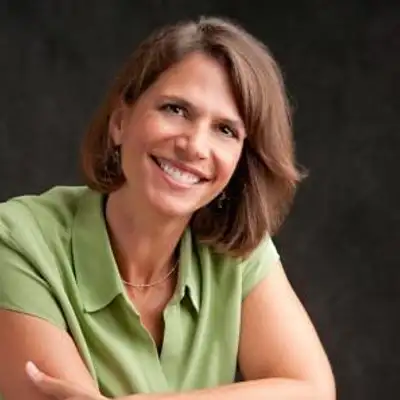
Learn how to cultivate a more productive mindset, form sustainable habits, and create a lifestyle that supports both your goals and your wellbeing with host, Monica Reinagel. Drawing on decades of expertise and experience, Monica provides guidance on navigating the challenging process of behavior change in a fun and accessible way. Learn more and find show notes for every episode at https://changeacademypodcast.com
There are a lot of tools that I use and teach in my coaching programs that are based on behavioral economics, strategies that help nudge us in the direction that we wanna go or help us make our desired behavior a little bit more automatic and habitual. And all of that is well and good, but the kinds of changes that most of us are working on are likely to require more than just nudges and habits.
Brock:Alright. Alright. If you want, take your seats or lace up your sneaks. We're about to get started.
Monica:Welcome to the Change Academy podcast. I'm your host, Monica Rheinagle. And in this show, we talk about what it takes to create healthier mindsets and habits in our own lives, as well as how we can create healthier communities and workplaces. Whether you're working on your own health and well-being, or promoting healthy behaviors is your job, we're going to talk about what works, what's hard, what's needed, and what's next. Let's jump in.
Monica:The field of behavioral economics has given us a lot of insight into how we can influence our own behaviors and other people's behaviors, but the approach also has some serious limitations, especially when applied to promoting health behaviors. And joining me today to dig into this topic is doctor Michelle Seeger, a frequent guest here on the Change Academy podcast. Michelle is an NIH funded researcher at the University of Michigan. She's also a best selling author and health coach whose work focuses on how to create sustainable changes that can survive the complexity and the unpredictability of the real world. Welcome back to the Change Academy, Michelle Seeger.
Michelle:I am so excited to be here. I love our conversations.
Monica:Yes. And this is going to be a juicy one. But before we jump into it, I wanna just take a minute to sort of set the stage or lay the context for what we're talking about today for everyone. So, Michelle, you and I, and I think pretty much everyone listening have all grown up in the era of behavioral economics, which at its heart kind of revolves around this insight that surprise, surprise, we humans don't always reliably act in our own best interests. Even when we have all the information, we just won't always make the best or the most rational decisions about how we behave.
Monica:And there are all kinds of ways that this plays out. So for example, we tend to discount future rewards. We'll settle for a much smaller reward if it is going to be available sooner, not totally rational, or we will work a lot harder to avoid losing something that we already have. Then we will work to gain something that might even be more valuable. That loss aversion can be sort of irrational, but it's clear that our behavior and the choices that we make can be relatively easily influenced or manipulated by environmental cues and social comparisons and even just how choices are presented to us.
Monica:I mean, just think for a minute about how the tipping amounts are presented on the checkout screens and how that has changed your tipping behavior since that has become the norm. But the point is, I think it's it's easy for us to forget just how revolutionary this insight was as recently as the 1980s, when behavioral and economics was this fringe rogue renegade field and not the dominant narrative. And I wanna just stop and give a quick plug to our friends, Curt Nelson and Tim Houlihan of the behavioral grooves podcast. I know you've been on their podcast. I'm gonna be on their podcast soon.
Monica:They're gonna be on the Change Academy. They recently released a terrific 5 part series on the history of behavioral economics. It is so well done. It is so entertaining. I really enjoyed it.
Monica:Now I'll put a link in the show notes to that for anybody that wants to go back and geek out a little bit. But my point is, I think we're all a little bit like fish that don't notice that we're in the water. It's just easy to overlook how pervasive this worldview has become. And while it started out very much in the realm of economics and personal financial decision making behavioral economics quickly colonized all kinds of other related social sciences, such as the sciences of behavioral health and health promotion, which is where you and I hang out all the time. And for sure, there are a lot of insights from behavioral economics that we can borrow that transfer over to health promotion.
Monica:We can definitely influence our choices or influence other people's choices by making the healthy choice, the easy choice by removing friction. We can use our knowledge of habit formation to try to make desirable behaviors more automatic. We can use reward bundling and commitment devices and all the things. We've talked about them all on the Change Academy at one time or another. But Michelle, as you and I have talked about, there are some limits to what behavioral economics can offer when it comes to really complex things like health behaviors.
Monica:Absolutely. Getting ready for this conversation, I was reading through a systemic review of health policy and behavioral economics. It was published in 2022 in the Journal of Education and Health Promotion, and the authors acknowledged that we have had some success applying some of these behavioral economics principles to some public health issues, things like getting people to wear their seat belts or making organ donation, the default choice on the driver's licenses. We have been able to change behaviors. However, they also pointed out that the behavioral interventions that were targeting things like physical activity or junk food purchases have been pretty disappointing.
Monica:So I think we can't afford to put all of our eggs in this basket when we're talking about trying to construct and live healthier lives.
Michelle:I think you're right. I I'm excited to dive into the different directions we're gonna go into on this topic. Well, the last time you were
Monica:on the podcast, we talked about habits and the habit formation techniques that we get from BJ Fogg and James Clear and Charles Duhigg can definitely be effective for making small incremental changes in our behaviors. But as you've pointed out, as you've argued, addressing the larger, more complex health behaviors often takes a lot more of a multifaceted approach. It goes way beyond just habit formation.
Michelle:I think that's the bottom line is that a lot of research, by its nature, has to be kept simple. To get funding, you have to tell a really simple story. I remember I submitted a grant proposal, like, 30 years ago, maybe 28 years ago, and they critiqued it for having too many theories. And so I took out a couple and then I got funded. Didn't change anything.
Michelle:They just didn't like the idea that I had integrated different theories. And so simple is easy to understand. And the behaviors that you and I really focus on are complex and multifaceted and involve other people and places and destinations. And how can a simplistic or a simple single approach really address sustainability? And why should we care about anything other than sustainability?
Monica:Well, right. Right. And it's not to say that what we know about habit formation has no value. It's just that we need to choose our targets wisely and carefully and be able to match our approach to what it is that we're working on. And one big insight that I've gotten from you is that habit formation techniques is not a great match for, as you said, a very complex behavior.
Monica:I love the point about behaviors that involve other people, you know, the the huge uncontrollable variable of other people. That's our first clue that maybe habit formation might not get us all the way across the finish line.
Michelle:Right. And, I mean, I I do think it's important to say as you did with behavioral economics, all of these things have value. I mean, we know that humans live a great deal of their daily life through unconscious mechanisms. Right? And so then Mhmm.
Michelle:The logic has been, well, if so much of our life is lived unconsciously, well, let's just put our health behaviors in that Right. Efficient pocket too and run with it. And unconscious habits do serve us, and behavioral economics can serve us, but we have to be behavior centric. Complex behaviors again, it's I'm not talking about putting our keys in the same place when you walk in the door. That's a simple behavior.
Michelle:I'm not talking about doing the dishes after you eat even though, for me, that is a complex behavior. I'm talking about things that involve emotions and approach tendencies and avoidance tendencies and schedules, and have to navigate the unanticipated. And like we talked about other people, and not just other people, but work responsibilities. And you and I have talked about this before and we've talked about the fact that eating and exercise, while they're very different behaviors, there are some commonalities, emotional, sociocultural commonalities with eating and exercise that really make them very different from any other changes in in behavior. And so by being behavior centric, meaning our focus is on the behavior we're trying to solve, not the theory, we need to look to different frameworks and theories to understand how to create sustainability.
Monica:That's right. And, you know, we wanna have a lot of tools in the toolbox. And because we all have had this multi decade infatuation with behavioral economics, I feel like some doors of our toolbox have been neglected. But you mentioned something that I think is really important and that is the emotional aspect of behaviors, especially around eating and exercise and other kinds of health behaviors, because they do play a huge role in the choices that we make. And these I think are sometimes under addressed by the strict behavioral economics, which are focusing more on automatic processes and decision biases, and may not really take into account things like stress or trauma or mental health, which are going to have a big influence on our health behaviors.
Michelle:Absolutely. And, you know, we're talking about emotion, but let's elevate that idea to meaning. You know? We don't just have feelings about certain decisions. They mean they mean things to us.
Michelle:They may mean that we're that we're not good enough. They may mean that we can't partake in the celebration. They may mean that we're different from our friends and family. So the meaning of behavior, which is very much related to how we feel about it, has tremendous influence. And and one of the reasons we know that that's true is we can change the meaning of a behavior from one thing to another and literally radically transform how individuals perceive that exact same behavior, which is absolutely astounding.
Monica:Right. Having nothing to do with the queue or the environmental design, but really focusing in on the meaning that we ascribe to it. And I think that that goes also to our personal values and our beliefs, and those are extremely diverse and individual, deeply personal. Our health related decisions are often deeply rooted in those things. And these are also it's another category of things that's really not adequately accounted for or addressed by behavioral economics.
Michelle:Absolutely. Our beliefs and our values are indeed deeply personal. But I would propose that to a great extent, I think a lot of them come from what we've simply learned to believe in society. And so we need to address that direct but invisible connection.
Monica:So for our listeners who are thinking about how they could be applying what we're talking about to their own efforts, to create positive change, to create sustainable change, here are a couple of questions that you might ask that get at to some of what Michelle and I are talking about. You might ask what emotions or feelings or what past experiences or memories are influencing my current behavior patterns. And how might I address these as a way of facilitating change? And to your point about beliefs and personal values, we can ask ourselves, how do my personal values or my beliefs about this either support or maybe hinder the changes that I'm trying to make here? Are these goals really reflective of what's important to me?
Michelle:I think those are great questions. You know, beliefs are a core part of how I help people adapt sustainable physical activity And it is astounding how much people have internalized beliefs about, you know, what's worth doing, what counts, what's valuable in terms of needing to step it up, needing to achieve something. 3 is better than 2. More is better than less. Bigger is better than you know?
Michelle:And, you know, there is this quantification, this this math, if you will. Like, if I go 3 times to that exercise class, I'm gonna be more successful than if I go 2 times. In some way, that's a logical map. But when you take a huge step back and think about your whole life, it doesn't translate into sustainability. It doesn't translate into I know how to overcome my barriers.
Michelle:It doesn't translate into I have really compelling reasons that drive me consistently to want to do this. And so I think there's been an over focus on logic. And behavioral economics is just one example of that.
Monica:And I would add, you'd mentioned the quantitative nature of how we value or how we gauge our progress. What about the qualitative aspects? Like how much am I enjoying this particular way of moving my body? And is there another way that would be more fun for me either because it involved other people that I like to be with or it's at a better time of day or what I like the music better. And that all of those are equally important in terms of sustainability, to go back to our point there.
Michelle:Exactly. And it is essential that people in the roles that you and I play, coaching people with this stuff, with these changes in behavior, that we help people make that shift in mindset because, you know, having a very quantitative, logic based approach that doesn't appreciate these qualitative aspects. I mean, people, in general, will choose to do things that that are gonna feel good now rather than future logical rewards they have to wait for. And I consider that as coming from behavioral economics, and that is a key concept that I teach to help people understand how to cultivate sustainable physical activity. Instead of aiming for achievement goals, I wanna lose this amount of weight, I wanna avoid that dreaded disease, etcetera, we want people to focus on right now while they're moving, which movements are going to feel the best.
Michelle:And, of course, they can change based on the time of day and what one needs. Do they want energy or they want relaxation?
Monica:How we want to feel while we're eating when we are done eating an hour afterwards. And yeah, but we do, we are always trying to weigh what's right in front of us right now with what we are trying to create in the future. So we do need to have some capacity to hold both at once. But what I like about what you're saying though, is let's not just disregard the power of the near reward, the close reward. Let's leverage it to make the choices that we are trying to make as appealing, as attractive, as enjoyable as we can instead of just trying to appeal to that logical brain that knows that I should be willing to hold out for my long term goal.
Monica:We can work with human nature and not against it. And recognize this as an issue instead of saying like, I'm not going to the gym. Let me just build a better habit cycle. There are some things that I've done that we might qualify as habit cycles that definitely have helped me with being more consistent with exercise. For example, I like to exercise in the morning before I eat breakfast.
Monica:And if I get out of bed and immediately put on my exercise clothes, I am, I'm gonna say, exactly 6.2 times more. I just need to get that up. I'm so much more likely to actually exercise than if I just pad downstairs in my in my robe and make coffee and somehow that could just kind of bleed into the day. And as it Oops, I missed my opportunity to exercise. So that I would put more in that habit cue cycle strategy of just having my workout clothes out before I go to bed and putting them on as soon as I get up without a lot of negotiation or decision making, and that helps propel me.
Monica:But that alone is not something that has helped me build a durable exercise habit. It has also required me to understand what I really enjoy and what I'm willing to give up a little sleep for, or whatever the costs are. That's been a big part of it too. So again, we don't want to throw out the baby with the bath water. I just, when people have memorized atomic habits and they feel like they failed because they have not yet been able to institute some consistent behaviors, I just want to offer, okay, that's great, but we have other tools that we can and should be using.
Monica:And if we are viewing everything too narrowly through this behavioral economics lens, we're leaving resources on the table.
Michelle:When you were talking about what you knew to be true about your own exercise routine, putting your clothes on, not giving yourself an opportunity to question it, but doing that, it you know, that really reflects something that I would say is way more important than behavioral economics. It's still only one part of the full toolkit, but and that is self awareness.
Monica:Mhmm.
Michelle:And I the traditional approach to promoting lifestyle change, you know, has focused on formulas and, you know, taught us how to set goals. But if you don't have awareness about your preferences, about which strategies work and don't work, if you don't think about what you're learning or think about your thoughts through self awareness, then it's very difficult to stick with anything. So that is a key ingredient. I've been in the process of building my list of fundamentals for creating sustainable behavior change and self awareness and the metacognition, our being able to think about our thinking and observe our thoughts and our choices and understand why we're doing that, that is one of the key fundamentals for sure. And I don't know if it gets enough airtime.
Monica:Well, it's interesting. One of the practices that I ask my coaching clients to do involves a sort of daily reflection about how the day unfolded and what went well and what maybe didn't go as planned or as desired. And there's often a a tendency for them at first to see this as an exercise where they're beating themselves up for what they didn't do. Right. And that's really not my goal for them in this exercise.
Monica:It is much more about reflecting on why it didn't work, why it didn't feel right. Why it didn't feel good and how we might set things up a little bit differently so that it could, but And maybe this is the way we've all been trained with our habit trackers. You know, you either check the box or you have to put an X on the box if you didn't do it, that people often see that reflection exercise as just a catalog of all the ways that they might've screwed up, and where it really is an opportunity to reflect on how we can make things work better for us in the future.
Michelle:Yes. Creating a sustainable change behavior is just a learning process, as you know. And there is zero probability or possibility of failure because everything, as you just said, everything gets applied to what we learn. And going forward, we can use that. I like to tell people to think about themselves in a big giant laboratory that's really outside of regular life where you're just getting to play.
Michelle:You're learning something, and you get to play with it. But everything you do, as long as you bring self awareness to it,
Monica:is a win. Well, thank you for saying that because I'm saying that all the time. But it's it's good for them to hear it from somebody else. As I was thinking about behavioral economics and all that we have learned from it, all that we have gained from it, but some of the ways that sometimes it leaves some gaps. Another thing that caught my attention is the fact that most of the science historically anyway, that has been done to prove, to validate these concepts tended to focus on affluent white Western populations, didn't really look at very diverse populations who may be dealing with, as we've been talking about, very different sets of values, motivations, beliefs, environmental circumstances.
Monica:And so I also just want to say that before we accept these tenets as being true for everyone, we should acknowledge that the datasets that we have may not be representative and we need to continue to I think that there is an effort now on trying to involve more diverse populations in this research. But in the meantime, I think we always need to put a little asterisk next to all the things that we think we know about human behavior that may really be derived from the behavior of a fairly homogeneous population.
Michelle:Absolutely. And to some extent, that's true of so much research.
Monica:Well, you're right. You're right. Yeah.
Michelle:I just finished doing focus groups both with student populations and with community samples, and it's so much harder doing research out of the university. It's so much more work to leave the university. It's more expensive. It's it's more labor. And so, you know, there's a reason why so much research is conducted among college students, which not everyone is affluent, of course, and not everyone is white, of course.
Michelle:To a great extent, it's not a very diverse population compared to the general population. And so it's important to understand why a lot of the research isn't with diverse samples, but it's so important that we go beyond what's easy in research and and do research that lets us better generalize to a broader population.
Monica:And also just to recognize that things that we might not have a lot of direct or immediate control over, like access to healthcare, like the environment in which we are living. The social support networks that are available have a huge impact on how we are able to address change and what health behaviors we can reasonably pursue. And so I think we should also, if we are having difficulty following through it's worth looking around to say was, is there something about the policies in my workplace of my health care system in my neighborhood or community where I live that is making this harder for me to follow through. And just, it's a big leap between seeing that acknowledging it, and then starting to put into motion things that could change it. But I do think it's valuable to acknowledge that not all of this is up to us as individuals to just, be able to do the right thing.
Monica:Those of us who have the privilege of being able to do the right thing are also resting on a lot of resources and supports that are not equally available.
Michelle:That is just such a critical statement and insight and truism that I think probably should be said anytime we're talking about behavior change. I am really focused on individual behavior change and how people think about behavior and how to change the way they think about behavior so that they can stick with it. But I am not addressing the grittier and harder issues related to, community level change, organizational level change. We've got to appreciate these other levels and that they can prevent individuals who not only have the best of of intentions but who actually might even have the right mindset and skill set from ultimately succeeding because the other forces just
Monica:are just too strong to overcome. That's right. Because when those forces are better aligned, they can be an accelerant for all of that individual awareness and intention and resolve. And when they are not, they can really hinder it, and that is not a reflection on the awareness or determination or resolve of the individual. So, yeah, we do need to take that into account.
Michelle:Absolutely. And it would be an excellent exercise, especially for those people who struggled to sustain the changes that they wanna make in eating and against the decisions that they really want to make. And
Brock:Mhmm.
Michelle:I think recognizing what those are, even some of many of which one an individual won't be able to change because they're huge societal level, organizational level policies. But once you can see something, then it can't influence you unconsciously. So at least you know what you're truly up against. And and it doesn't necessarily get you to where you wanna be, but it could certainly help you better understand why it's been so frustrating and challenging and potentially help you foster different types of strategies that might help you get partway. Well, and of
Monica:course, this was, I think, the take home message of the Barbie movie over the summer. Right? Just when we see the effects of the system that we're working in, that alone can be enough to break some of its power over us. But as you say, some of these issues may be larger than we can tackle. But I just want to say that even when we are dealing with things, and we just talked about this with Bethy Campbell in a previous episode, that we can acknowledge that something is larger than we can tackle on our own or change on our own, but we can still ask what role can I play in however local a way, however, micro part of this, I think it is empowering to, to I can't change it all?
Monica:I can't do it all, but is there any role that I could play in influencing some of these external factors? Absolutely. What a great discussion. Michelle, thank you for bringing your experience and your compassion and your researcher's brain and all the things to hashing this out with me. Anything that you are working on right now that we want to make our listeners aware of?
Michelle:You know, I am getting ready to launch a certification program for my, lasting motivation to exercise. It's not quite ready, But if people are interested, they should feel free to email me. I'm training professionals, specifically, how to deliver the system that I've been using for about 30 years.
Monica:Great. Well, we will definitely put a link in the show notes to so where they can reach you, so they can be in the loop as that comes down the down the pike. I hope we'll have you back on for for another conversation real soon.
Michelle:I hope so too. Thank you so much. Thanks, Michelle.
Monica:In the show notes, you'll find links to Michelle's books, No Sweat and The Joy Choice, as well as a place to contact her for information about the certification program that she's developing for health coaches. But I also wanted to leave you with a few takeaways from our conversation, some ways that you can apply everything we were talking about today to your own work and on a larger level as well. Remember to take some time on a regular basis to reflect on how your personal values, beliefs, and motivations align with your desired behavioral changes and vice versa. Remember to acknowledge emotional and psychological issues that may be presenting barriers to change and consider seeking support from a mental health professional, especially if you face challenges like depression, anxiety, or past trauma. Take a look around your social and your physical environment and think about how these factors are impacting your behavior.
Monica:Consider where you might find supportive communities or how altering your environment might encourage positive habits. And finally, if you have the bandwidth consider getting involved with community initiatives or advocacy groups that are working to address broader societal issues that impact our ability to choose healthier behaviors. For example, groups advocating to make our cities and neighborhoods more walkable or bike friendly or organizing mobile farmers markets or upgrading local recreational facilities. Thanks so much for being part of the Change Academy community. Special thanks to listeners Cam and Glenn for buying us a few cups of coffee.
Monica:That always makes my day. And thanks so much to the listener who posted this review on Podbean. She wrote, I've been using this podcast to jump start a healthy new me. I listen, pause, reflect, and journal. Keep it coming.
Monica:This is helpful work. I am so glad to know that you find it helpful. So thank you for taking the time to let us know. And if today's conversation got you thinking about behavior change in a new or different light, drop me a line and tell me about it. I always enjoy hearing from listeners about what they're working on.
Brock:Alright. Thanks, everyone. This has been the Change Academy podcast with Monica Rineagle. Our show is produced by me, Brock Armstrong. You'll find links to everything Monica mentioned in today's episode in our show notes as well as on our website at changeacademypodcast.com, where you can also send us an email or leave us a voicemail.
Brock:If you're finding this podcast helpful, we hope you'll subscribe, or even better, give our show a rating or review in your favorite podcast app. Or best of all, share this episode with a friend or colleague you think would enjoy it. Now, here's to the changes we choose.
