Subscribe
Share
Share
Embed
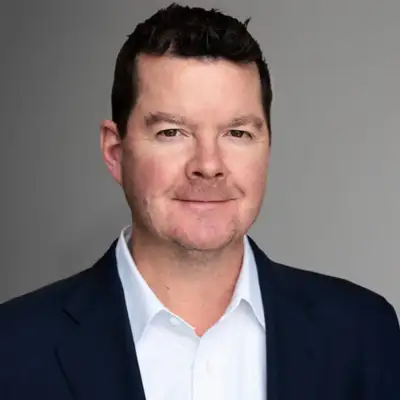
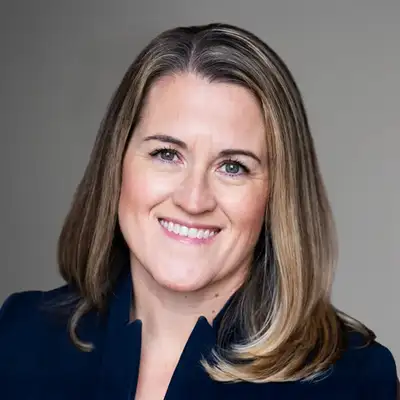
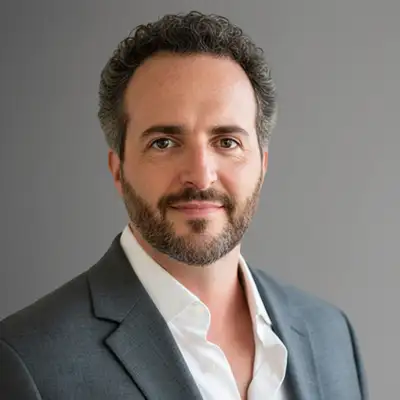
Meet the Insiders rewriting the rules of influence. Pulitzer Prize-winning journalist Brody Mullins and veteran DC strategist Lisa Camooso Miller interview the leaders who shape perception, move policy, and win when it matters. Not pundits or commentators – these are the operators driving some of the most critical strategies and outcomes in today's Washington.
RODELL: It's not Kumbaya. It's not about publicly holding hands. It's about trying to either get Democrats and Republicans on board with the goal, or they're trying to get Democrats and Republicans to leave them alone. Period.
ANNCR: Behind every major policy decision, every corporate strategy, every Washington power play. Are the insiders shaping the game and the new rules to win it? The Deciders, with Pulitzer Prize winning journalist Brody Mullins and veteran D.C. strategist Lisa Camooso Miller.
BRODY: Welcome to The Deciders, where we talk of the insiders rewriting the rules for effective advocacy in Washington. Today, we're talking to Ron Bonjean and Rodell Mollineau, a Republican and Democrat who founded ROKK Solutions. Welcome to the show.
RODELL: Thanks for.
RON: Having us. Thanks for having us on. And congratulations on such a successful show.
RODELL: Right on.
LISA: Yeah. Thank you. Well, before we get to rock, I want to talk a little bit about each one of you, Ron. We've known each other for over 20 years. Your background is really, I think, one that's incredibly interesting to this conversation. You served as the top communicator for the head of the Republican House. The head of the Republican Senate. You also worked for cabinet secretary, and you've done a variety of other things, including, confirmation for a Supreme Court justice. Talk to us a little bit about how you got there.
RON: Well, I started out just a kid from Wisconsin who came here looking for work, and I landed an internship on Capitol Hill because the staff assistant, was from Wisconsin, was a badger, and she won another badger in the office. So there was a California congressman. And that's how I got started. And, after, just a little while, I became a deputy press secretary there. And soon after that, a press secretary at the age of 23. And I like to joke that, I had two things going for me, a positive attitude and spellcheck, because I absolutely knew nothing. And you're not didn't really know what I was doing. But I had the opportunity to learn, make a lot of mistakes, and then move my way up the ladder. So that's how I got started.
LISA: It's interesting you say that about communications because, you know, in a Hill office, ordinarily it's not that you ascend to be a communications person. That is just one rung up on the hill. First you answer phones, then you do correspondence, and then somehow you luck in to be communications. And if you do it well, then you get to ascend to the high.
RON: That's right. You have to you have to be willing to do anything really. And I asked you basically say yes and you are there late and you're you're grinding it out and there is no work life balance. You are living your job and doing anything you can to learn and to soak it all in and know is there is no way to replicate that experience. You have to understand if you want to understand the public policy process, you have to live it.
BRODY: And Rodell, you came up on the other side, obviously working for Harry Reid when he was the majority leader. You also work for the Senate Democratic Policy Committee. You founded American Bridge. Yeah. Tell us about how you got to Washington and how you rose through the ranks.
RODELL: So this wasn't in my cards, at least when I was in college. I wanted to be a journalism. I want to be a journalist and was a journalism major and, graduated from school. University of Dayton, Ohio. Could not find a job in journalism, couldn't find a job at all. So I did what most people do when they can't find a job. I went to graduate school. One of my classmates fathers at the time was Senator Dick Durbin, state director, who used to come and visit his daughter a whole bunch. And he said to me, like, why don't you come to Washington, D.C.? I was probably 22. I had never been to Washington, D.C., never did the eighth grade trip or anything. I'm like, I don't know anybody. And the understatement of the like, my life, he said, I know a couple people. He's like, I'll introduce you. And one of the people that he introduced me to was Pete Rouse, who at the time was, Tom Daschle's, chief of staff, went on to be Barack Obama's chief of staff in the Senate. And then also for a time in the in the white House. But, I go to Washington, D.C.. I had one suit one time. I used to have these dreaded braids. I put them back, you know, in a ponytail, because I wanted professional. And I go, and I have this conversation with them I didn't even realize was a job interview. We talked for over an hour, and I. I'm like, I've been here in D.C. for like all of a day. I noticed that, like everyone here, even the Democrats look pretty conservative. I got all this hair is going to be a problem. And he looks at me like, I'm going to hire you right now. I don't care what your hair looks like. And that's how I started. So I was answering phones for Tom Daschle. Every day I'd go back to the press office and be like, having nothing for me to do, have a thing for me to do. And after a while, they just started giving me small things to do. One thing led to another, and boom, here I am, 25, 26 years later.
LISA: Harry Reid was known to be a ruthless, cutthroat member of the Senate in modern history. Anyway, what did you learn from that experience about sharp elbowed tactics and how to deploy them in Washington?
RODELL: You know, I'm still learning things now, things that maybe when you're like 30, but I didn't really 100% get. And he have sayings and he do things and like my comms person and sometimes it be like, oh Jesus Christ, I wish you hadn't said that. And now I got to go and clean it up, and I gotta look back on it. And I'm like, he was right. More often than he was wrong. He was a principle man, even though he was not maybe always the most articulate man. But he stood for something. He had a lot of respect for his colleagues. He always kept his promises. He was actually very good to staff too. So I don't know. I'm just more and more as I get older, I think back on some of the things that he did and said, I'm like, oh, I got it. And my favorite, my favorite thing that he's ever said was, if you have spinach in your teeth, a real friend, I'll tell you. So that's good.
LISA: Council.
BRODY: Ron, similar question for you when you were in high school, you MC the dolphin show at the Milwaukee County Zoo. What do you learn about comes from that experience?
RON: Bernie, I think you need to get your facts checked. I did that in college. That is a great question. So, yes, I did indeed work at the Milwaukee County Zoo for the dolphin in Sea Lion Surfin Safari Theater. My job initially was just to sweep up around the show, and the the host got into a fight with the manager and quit on the spot. And I said, who are we going to get to do this? And I raised my hand and I said, well, I, I've been deejaying at my college radio station. And I said, basically give the kid a shot. And I had this Tony Robbins Mike on, and I had a script and I learned a lot, made a lot of friends. But most of all those those dolphins and that sea lion.
BRODY: What did you learn at the Dolphin Show is about projecting confidence that's helped you so much in your career here?
RON: I got I'm so glad I did that show. I would say that it gave me a lot of confidence to understand that people want to be heard, the people want to hear what you have to say, and they want to believe it, but you have to convey that information in a positive and professional and confident way. But I will say that there were times during the show where I started inflating statistics like, you know, Dutchess can go from 0 to 68 miles an hour and stop at midnight at the time, which is true. That is accurate. But now she went from 0 to 350 miles an hour in 15 seconds. No one.
RODELL: Cared. And that, my friends, is the beginning of the disinformation state that we live in right now. Is that the, the inflation of these dolphin statistics? Thanks, Ron. Yeah.
RON: We've. Right. Yes. Right.
LISA: So you guys separate sides of the aisle working on separate sides of the issues. But in 2015, you made a concerted effort to work together. How did you meet and what made you guys make that decision?
RON: We met when we both worked in the Senate, and Rodell would be, talking to reporters off the Senate floor on one part of the, you know, by the higher clock. And then I would be, by the higher clock in a different area doing my thing, talking to reporters. And we'd walk by and we give each other the bro, not sort of like, hey, and, you know, I didn't. Republicans and Democrats like, to a certain point, tell a certain age, don't really talk to each other, especially in the House. Now, Rodell is the exception. Everybody wants to talk to Odell and everybody wants to know him. It's true.
RODELL: But I'm a very likable guy, right?
RON: But for the most part, unless you're a Republican, you don't talk to Democrats at least while you're working. Anyway, that all changed when the national media, so I, Brody Mullins and others would invite us to their happy hours or their book parties, promotional events, and I would go and then I would see Rodell at those events. And I eventually became much more friendly. And I would we'd start to talk profession. Oh, I read that quote from you. I think that was a quote from you in The Washington Post. Or you would say, I think that was you as a source close to the leader and, you know, in The New York Times. And so we kind of enjoyed that kind of a talk.
RODELL: And then Ron left, before I did, and he was out there consulting on his own. I was still there. I eventually left after Reed won that election in 2010 that no one thought he was going to win. Then I went and started the superPAC American, bridge, and I was there for a little bit. And then I went out on my own. I was just it was just me hung out a shingle and we would talk every now and again about just like, how's business going, blah, blah, blah. I remember this, it was January of 2015 and I was like, hey, let's meet for coffee. So he needed threats and he was like, you know, we should start a firm. It was something I'd never really thought of before. I knew Ron and I trusted Ron, and I thought about it for a couple of days, and it was a pretty simple equation for me. I said, one of two things is going to happen. This is going to go very well, or this is going to go extremely bad. And if it goes extremely bad that I'll go and find a real job. But let's see how it goes. And so yeah, so we joined forces and January 2015 just been kind of rolling ever since.
LISA: But ROKK Solutions isn't just the two of you. It's obviously a big firm, but you have a third partner. Tell us how Kristen got involved.
RON: Kristen Hahn is a fantastic third partner to as she is, Democrat who works with Blue Dogs and conservative Democrats, a wonderful person, a friend I've known for, I think 20 years approached both of us and said in 2018, you know, I can bring my business and my ideas, my thoughts anywhere in this town. But I'd like to work with you guys because I really like you guys, and I really love the business model you're following. And so we teamed up and she's been a great friend and a tremendous help, and has really worked very hard with all of us to grow our firm. We're really proud that we're working with her.
LISA: In 2015, bipartisan was a choice today. Sometimes it could feel a little like a hitch. And I ask that because I'm curious when a one of the CEO or fortune 100 General Council calls you and says, we need to keep this bipartisan, how do you translate that? What are they really telling you that they want?
RODELL: I don't think things are that different. Let's start with what bipartisan isn't. It's not Kumbaya. It's not about publicly holding hands. And we're doing this because, you know, it's great. Like, hey, we got Republicans and Democrats now it's about people that hire us. They have a story to tell in Washington DC. It's a very cluttered place, a lot of skepticism. And they're trying to either get Democrats and Republicans on board with the goal, or they're trying to get Democrats and Republicans to leave them alone, period. And so we help them come up with strategies to, to do that. And a lot of our clients that want to be on the front page of the New York Times or of the Wall Street Journal, they just want smart strategy to make sure that they're navigating round the corners, that they understand how Democrats view an issue, how Republicans view an issue, how to not piss off each party's, how to not get caught in a crosshairs. And that's really what we're doing for a.
RON: Long time now. For example, we had a client emergency health care legislation was about to pass around the one yard line, and they had hired a Republican firm to message to do messaging in Democratic districts. And they messed up because there wasn't testing done, or they just thought this is what they probably want to hear. And it backfired. And Democratic members on the floor were enraged, and it created a backlash. And we were brought in to help mitigate the situation and reframe the issue and do redo the advertising and the districts that mattered in a way where that's why we love the bipartisanship is because we can knock on the door right now. Is this message going to play with the client that I'm working on over here?
RODELL: Yeah, that.
RON: Kind of thing. And we do it in such a fast, efficient way that's also beneficial for our clients economically because we're underneath one room.
BRODY: So right now your party obviously is supposed to take more power in Washington. Coming up, if Democrats win the House is more talk about Democrats policy. Where in the Senate, what are you advising your clients to do to position themselves for that scenario?
RODELL: Buckle up. Now, we just came out with some research that shows that, you know, American people don't care who gave to who. They're pissed, don't get me wrong. And they're actually really upset with corporate America, but they're not upset because somebody gave to a ballroom. They're upset because costs are rising. They are concerned about layoffs. In general.
RON: 73% of Americans are upset with President Trump and Republicans over the high prices, gasoline prices, grocery prices, you know, all those things. 73% of Americans are also angry with corporate America.
RODELL: They blame them.
RON: They blame them both.
RODELL: If you're one of these industries that these voters are looking at is like, hey, you're making my life more economically insecure. You're making my life, you know, the cost of living going up a less affordable the solutions for corporate America that they're also advocating aren't great. You're talking about majorities of both Republicans and Democrats, going back and looking at corporate taxes and raising corporate taxes, price controls, which I thought was, weird, which I thought was very interesting. And more regulation.
BRODY: We'll be right back. After the break.
LISA:. Welcome back to The Deciders with Ron Bonjean and Rodell Mollineau.
BRODY: So many public affairs firms and lobbying firms in DC have been sold to private equity firms or have taken other investments basically, you know, sold out your independence. What is passing on that check meant for you guys?
RON: I think there's a couple of different reasons. One is that we haven't needed the private equity money to help us get to where we need to go. Number one. And number two, the show is called The Deciders, and we like making our own decisions. We start at ROC Solutions with roads. Myself, we took no money. We took no loans. We just started because we believed in ourselves and we put our idea of a bipartisan firm forward and we started growing it. We thought we had we moved into a an office of 13 people and we thought, well, never fill this office. And we filled that. In less than a year, we moved to another place, and we never thought we'd fill that office. We filled it, and now we're an even larger place. We're doing what we want to do with the dream that we have. And if we need the private equity money to get to another goal that we have, then that's a conversation we may have someday, but not now. We love what we do right now. We enjoy working with each other. And you know, when you take the private equity money and for many people, it's a good decision. They need it for their own expansion. For us, we haven't. But if we if we ever do, then we do. But I, I just don't see that in the near future.
LISA: Those conversations happen a lot in this town, though. I'm sure that you've been approached and there have been offers and opportunities. Have you ever come together, sat down to talk that through?
RODELL: We're approached by a large firm that was part of one of the mega holding companies, and it was under the guise of, hey, we don't really have a great Washington, D.C. presence. You guys really know what you're doing in Washington, D.C. would you want to work with us? White labels and stuff, so on and so forth. And we were like, yeah, sure. We'll we'll have a conversation. So and so we got to know people at the firm, got to know the CEO. Things were going well. And then one day they called and like, hey, which man get a call with us. Yeah. We want to talk to you about something like. Yeah, sure. So we get on this call and it's the CEO of this company. It's one of our deputies we've been talking with for a while. And there's this other guy, and I haven't seen this other guy before, like, who are you? And he's like, oh, hi, I'm the CFO of the blah, blah, blah holding company. And I was like, okay. And it was a we really love you guys and we would like to acquire you. And it was one stunning because honestly did not see it coming. Two flattering, you know, because it's like oh right. Okay. We're we're obviously doing something right here, to get to that, to that point. And I feel as though since then we get approached like probably 2 or 3 times a year by someone with a real serious offer. I think our take on us has always been let's have conversations, let's get smarter, but also really upfront about, you know, our belief on organic growth. You know, we always leave those conversations with a, you know, hey, you know, maybe one day down the road we'll talk. But we're really good with where we are right now.
LISA: What can rock do for a client as an independent firm that a larger owned company cannot do for their client?
RON: We're faster, we're nimble, and we have strategic insights that are decades in the making, and we come up against them and pitches a lot. Because of that. We can be the David to the Goliath, and oftentimes we win. Or if they win, a lot of times we end up getting them as a client. A year later, we build so much more than just a public affairs firm. And frankly, we consider ourselves more of a strategic communications firm because we have now hired an insights team. We've now created our research team. And because the walls of public affairs and corporate affairs are coming down, and the C-suite cares about Washington every single day from major brands, we've created a chief corporate affairs officer, and we're creating that practice to offer our clients at much higher level tactics.
LISA: The strategy stays the same. Whatever the client is, they come in, they want to advance legislation, they come in, they want to build reputation. But the tactics to get to those goals have shifted and changed. It sounds like inside your practice, you've actually started to incorporate some of those. Talk a little bit about what tactics are working in 26 as opposed to years before.
RODELL: It's not that all the tactics go away. I think there's more of them and you need to be using all of them. We tell our clients, you really need to be everywhere all at once. I think one of the great things about, I mean, listen, we're sitting on a this podcast with an award winning, Pulitzer winning Wall Street Journal's were telling our people that they need to be everywhere because you can't have any gaps. You can't miss these holes. So it is about the blocking and tackling of what we've been doing for 20 years. But it's also about digital amplification, and it is about having your social media right. And it is about looking to find out where those those independent journalists are and being on Substack. And it is about thought leadership, and it is about the events and it's about all of these things, but that you're putting together integrated 360 degree campaigns that make sure that their stories are being told to the right audiences, stakeholders and employees, policymakers, regulators, and so on and so forth.
LISA: There was a time in Washington, CEOs really were almost invisible. And now brand is being, a big part of that. They didn't make their politics known, and now they're making it quite a bit visible about where they stand politically. Tell us a little bit about, our company's politics, part of its brand.
RON: Successful companies reflect the values and outlook of its employees and its customers. If they're off brand because the CEO or the chief communications officer believes a statement should be made due to something that's going on in Washington, but it hasn't been thought through. That's where mistakes happen. That's where they get out of alignment with their core constituencies and get in a lot of trouble.
RODELL: I think about some of the CEOs, rightfully or wrongfully, that made pronouncements and before this last administration and have suddenly walked those statements back. And for me, if you're not going to be able to stand ten toes, then why do it in the first place? But I think some of these CEOs prefer never to talk about politics. But everything is political. And I would say that this administration specifically is really good at making things that otherwise ought not be political into political things. Corporate leaders are minding their own business and they say something and all of a sudden it's like, oh my God, this has become this political firestorm because there is an outrage machine. There are people making these into political landmines. So you really have to think about that, and you really need to make sure that you've got great counsel, preferably a bipartisan public affairs firm, with two very handsome partners. You know, to kind of help you walk through it.
LISA: We'll be right back with the Deciders.
BRODY: Welcome back to The Deciders. Ron, What’s a decision in the past year that you're most proud of.
RON: Really proud of the expansion of our firm into different areas that can help our clients in a comprehensive way. The first is our data and insights team. Our clients come in and they walk out with another eye tool. They come out with something that's going to benefit them and their bottom line, and they really appreciate it. They're kind of getting addicted to our our service. The second is, hiring our head of research, fantastic. Chris Havens, phenomenal person and real expert in their field. And the third is our announcement of our chief corporate affairs officer. Amy Fox has been in the business for 30 years. She understands the C-suite and will be bringing that offering to corporate America shortly.
LISA: On the flip side, what's something you wish you could do over?
RODELL: We joke about this, and this is what happens when two liberal arts majors without a businesslike class between them get together. We started off with like, okay, we'll see how this is going to go. And the first year was like, oh, okay, I think we could do this. And each year kind of got a little bit, better and better. I don't think it was until like year three, 3 or 4 that we really, truly took a business mindset. And I think that had we started with a business plan, it would have been a little bit easier. We would have made it a little bit easier on ourselves. The flip side to that is like the journeys half of the, you know, half of the fun. But yeah.
BRODY: What is one thing that people in Washington are not talking about, but should be.
RON: How much Democrats are going to if they take control of the House of Representatives, how much corporate America is about to go through the polling that we see out there. The research that we've done shows that 73% of Americans are upset with Republicans, but also upset with corporate America, and they want them to do something about it. Our forecast is to have our clients get prepared for rough seas.
LISA: And you guys, thanks so much for joining us. It's great to have you.
RON: Thank you so much for having us on.
RODELL: It's been a blast.
LISA: That was Ron Bonjean and Rodell Mollineau from ROKK Solutions. Brody what did you think?
BRODY: You know it was such a fascinating conversation. My major takeaway is that here you have a Republican strategist and a Democratic strategist. Both of the years experience between them and they're saying the same thing, which is that it's tough sledding for corporations coming up in the next 2 or 4 years. I mean, the poll that they are coming out with says it's 73% of Americans blame corporate America and congressional Republicans for troubles in the economy. That's both sides. We're talking about who's going to win the midterm elections. It almost doesn't matter to the American public.
LISA: What's also interesting to me from that point of view is that while the strategy itself remains the same, the tactics that they're employing to help their clients are not fewer. They are more and more robust, and they're trying to make sure that they can get that all done at a time when it's really noisy otherwise in the narrative.
BRODY: Thanks for joining us on The Deciders.
ANNCR: The Deciders is hosted by Brody Mullins and Lisa Camooso Miller and produced by Dave Tobey. Subscribe wherever you get your podcasts. Find more online at deciders.show and follow The Deciders on YouTube, LinkedIn and X.