Subscribe
Share
Share
Embed
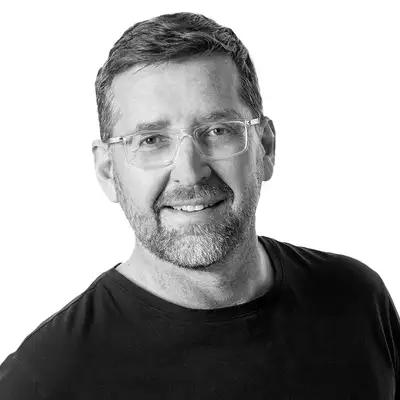

Hosted by Heath Fletcher, The Healthy Enterprise explores how innovation, technology, and leadership are reshaping the life sciences industry—from discovery and development to commercialization and care delivery. Each episode features candid, heart-centered conversations with founders, scientists, executives, and investors, sharing real-world experiences and insights for building resilient, future-ready organizations.
Created and Produced by Bullzeye Global Growth Partners — Let’s build it together!
Dylan McDonnell (00:00)
California signed a bill called SP68, which for the first time in the US mandates that restaurant chains with 20 plus locations where at least one of those locations is in California must label their menus for the major non-food origins.
Heath Fletcher (00:15)
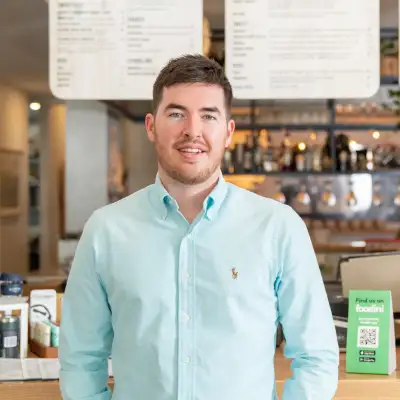
What began as a personal challenge for him has evolved into a global solution that kind of blends cutting edge AI, dietitian expertise, and some real world menu transparency. I'm going to be speaking with Dylan McDonnell He's the founder and CEO of Foodini. It's a dietary intelligence platform built to make dining out easier and safer for anybody with food allergies, intolerances, or specific diet needs.
Dylan McDonnell (00:41)
Anyone can have an idea and lots of people have lots of ideas but to actually come up with a business model that works and that's scalable and that is investable is much harder, frankly. You do need to be prepared, you do need to be prepared for lot of no's. As well, it's about surrounding yourself with good people.
Heath Fletcher (00:58)
Dylan joins us today to share his dream to build and scale a food tech startup. So let's dive in.
So Dylan, thank you for joining me for this episode. Looking forward to hearing your story and hearing more about Foodini So why don't you start with that? Just introduce yourself to listeners and tell us about it.
Dylan McDonnell (01:21)
Sure. Well, first of all, very much for having me on. Really appreciate it. As you can probably hear, ⁓ of an accent. ⁓ Just a Just a smidge. Born in Philly, grew up in Ireland and I'm a corporate lawyer by trade. So worked in Big Law for a number of years with Apple's, Facebook's, Google's of the world and then ⁓ moved to Australia a little while after that, still in illegal capacity. But my connection, I suppose the problem we're solving is our life.
What I'm working on now is celiac. So I was diagnosed when I was 10 years old after a few years of being unwell and parents and doctors not too sure what was wrong with me. And once I got the diagnosis, moved on to a gluten free diet. And thankfully, from a health perspective, been been fairly solid since then. But what has been a challenge ever since has been dining out and ordering online with a food allergy.
mistakes that have happened, misinformation from staff or just zero information, it's really hard to find places to go to, just a long list of incidents and errors over time that finally led me to question like, why is it still so difficult in this day and age to get simple transparency as to what is in my food? And then I started digging more into the numbers of like how many people that does this really affect? Cause you kind of think you're in your own little bubble and you know, how does it
But then was like 33 million Americans with a diagnosed food allergy. I was like, wow, like that is a big market on just food allergy. Then you'd another 50 million with a food intolerance, another 70 million who fall into like lifestyle diet, you're vegans, you're vegetarians, you're keto, you're paleo, you're low FODMAP. And so I just, you know, looked at it from the perspective of this is a problem that really impacts a lot of people. It's a huge market. It hasn't been solved for, and decided to give it a crack. So that's my quick background.
Heath Fletcher (03:20)
Well, I totally relate. Our son is a celiac as well. And when that diagnosis happens, you're kind of thrown into this whole new way of living. You know, particularly if you've got multiple people in a household where one's a celiac, one's not like you brought up a good point. Try picking a restaurant to actually for everyone can go and have a nice evening, right? Like it's almost impossible. So I completely relate to that experience. Secondary to that, the you just talked about millions and millions of people that are
their health is impacted by their food and what limitations they have on the food that they have access to. So that's another really key thing that I'd like to talk about too. And that's the core reason why you got into this besides the fact that you yourself suffered from ⁓ a food restrictive diet.
Dylan McDonnell (04:09)
Yeah, I think it's, you as you said, you've kind of got the health, the allergy, like the medical requirement component of it. But I think what you're touching on there is the modern day consumer is so much more cognizant about what they're putting into their body.
like the food is as medicine movement. have, you know, the super powers and function health of the world who are now testing your microbiome and your gut health and giving you, you know, real insights onto foods that might be impacting you in a negative way. And so I think consumers now.
are beginning to not just have it as a nice to have, but as a must have in terms of understanding what they're putting into their body and what impact that's having on them. so this drive for transparency, I think, is only going to continue to snowball as it has over the last decade year on year on year.
Heath Fletcher (04:57)
Well, I mean just just the the cost of healthcare in itself and trying to navigate that as a as a as a nation as a society to try and you know, try and trim some of those costs that come with getting sick and getting sick as we're finding out more and more and more is you know, as a result of our habits and what we're putting in our bodies and how we're you know, making daily choices. So
Dylan McDonnell (05:25)
Yeah, and it's funny, it's like there's the health impact. there's like dollar health impact to like your physical, you know, short and long-term health, bear in mind, you know, if you're a celiac and you keep eating in error, gluten over a period of time, that does serious damage to your intestines, even if it's not, you know, short-term, you know, lot of symptoms coming out. Like it's the longer-term impacts that are the most concerning. But I think it's even more than that. I think it's social as well.
It's, know, if you're a teenager and you're a celiac and you know, you're, you're, or have a severe allergy. It's all the things that most kids take for granted. It's the lunch with your friends. It's the, you know, it's the weekend party. It's the, know, it's in a work environment. the, it's the team Christmas dinner. It's the, you know, Sunday lunch, all these things that everyone looks, most people look forward to are, are, can be a source of immense stress and anxiety for people who found this bucket because.
They've been stung before they've had that anaphylactic reaction and had to use the EpiPen, you know, and or been terribly ill for a few days after and even with reassurances from restaurants and whatnot. And so, you know, a lot of those people, unfortunately, decide not to go or eat at home instead or, you know, or go out, but they're so nervous they can't enjoy it. And so I think.
Again, all of this stems from the lack of transparency. And if you fix that and finally give consumers the information they need, you're bringing into play a market of people that is desperately just looking for options that are suitable for them.
Heath Fletcher (07:02)
So when did the light come on for you? You kind of was like you were doing one thing and then you completely changed tracks. So what was the moment? What was that pivotal moment for you when you made that decision?
Dylan McDonnell (07:14)
Yeah, think for me it had been like, it wasn't like there was one massive incident where it was like, ⁓ I need to do, I think it was over time. It was the buildup of little things over time that just kept growing and growing in my mind. And then I spent several months when I was still in my capacity as a lawyer, you know, doing my research, you know, cause you kind of think I'm crazy. Like I'm, I'm a corporate lawyer. What am I looking at food allergies here? I insane? ⁓ And so no, did a lot. Like I said, the
The size of the market was probably the next thing that like really got my attention in terms of, wow, is it really this many people? And then I did a lot of customer research in terms of speaking to these people and on the restaurant side as well to fully understand how big of a problem is this for you really? Is it just me who has these experiences? And as I just kept getting consistent feedback that no, this is extremely challenging and extremely difficult, I think then...
know, seven or eight months into that research piece, I was like, okay, I have enough conviction now that this is real, that this is Warren is a problem worth solving. And that I think I'm, you know, someone who can can do that. And yeah, then I took the jump in full time. And yeah, after the races, that was a few years ago, that was like, pushing four years ago now.
Heath Fletcher (08:27)
And when was that? When did that happen?
So, you know, tell listeners about Foodini. What does it do? How does it work? How are you fixing these problems that you've discovered?
Dylan McDonnell (08:41)
Yeah. So we're a dietary intelligence company is kind of our headline banner. But in its simplest form, we partner with restaurants, food service companies. So think stadiums, think schools, universities, hotels. And we take all of their menu data, we tag it with the correct allergy and dietary information. And that allows us to power a personalized menu solution for consumers, whereby a consumer can create a dietary profile across 150.
different allergens and diets and then instantly see what they can and can't eat on that menu. So here's the 10 things you can eat. Here's the 10 things you can eat with a modifier and what that modifier is. Here's the 10 things you can't eat on Y because X, Y and Z is baked into that. So I can go into more detail on how we do it, but that's kind of the top level deliverable.
Heath Fletcher (09:30)
That's cool. Yeah, go into it. Let's hear what you're hearing how you discovered this. Because I mean, that's, actually it's more than I, I mean, I did some research on the website, but it's more it's deeper than I actually thought. You know, I was kind of more, ⁓ you know, out for dinner, this and that shopping grocery stores, things like that, buying your ingredients. But it's a lot deeper than I imagined.
Dylan McDonnell (09:49)
Sounds.
I think it's a very fair point. I'm going to start the more detailed by saying I have a lot of empathy for restaurants and food service in terms of dealing with this problem. If they could wave a magic wand, 99 % of them, and just give consumers the information they wanted, they would. The reason that this hasn't existed is because the data layer is so fragmented. There is no data source that you can just tap into and get access.
knowledge and information when it comes to restaurants. It just doesn't exist. And so what we, going a layer deeper, we essentially pull data from the places where it does it. So we pull menu data from their POS. We pull recipe data from their inventory or recipe management system. We pull product data from the distributors and manufacturers and suppliers of the products. Because we need to know, it's no good knowing it's ketchup in that dish. We need to know what brand of ketchup. What's the exact
skew number of that piece. And we also, over the last two years, have trained large language models and AI to analyze and ingest a lot and classify a lot of that information. And we have a team of dietitians who did most of the training of the technology, but who also do all of the QA over the top, because there is, I've yet to do an onboarding where there hasn't been some questions. There's always something missing somewhere or something that looks wrong or whatnot.
And so yeah, we ingest all the information, the tech does the kind of data entry, ⁓ easy classification piece, the dieticians come in over the top and do the proper QA and then run the onboarding process. And then once we have that verified source of truth, we make sure it stays up to date as menus change, as recipes change, as products change over time. And the beauty in a backend system is that normally how...
were implemented in a restaurant environment, for example, will be a QR code on the menu and our menu board. So allergies, dietary needs scan here. And then it's usually a button on the restaurant website, allergy menu, click here. And so that brings up a web experience. So they don't have to download an app. It's a web experience, two clicks and you can see your personalized menu. wow. But the beauty of that as well is that
when we update any data in the background, it automatically propagates to that front end experience. So don't need to reprint menus. You don't need to change grids or make it's like, there's one source of truth and that powers the data everywhere that a consumer can access it.
Heath Fletcher (12:22)
That's amazing. it's not, there is no app.
Dylan McDonnell (12:25)
We do have an app as well.
App is you can use the app to see the information in restaurant. The app is more for discovery though. And in the U.S. we launched that in Australia and scale that in Australia. But in the U.S. it's only in LA at the moment. So if anyone wants to check it out from somewhere else in the country, feel free. But just don't be mad at me if there's not many options. There's nothing in the U.S. Yeah, exactly. But a lot of people like to just
Heath Fletcher (12:50)
Cleveland.
Dylan McDonnell (12:55)
understand the experience and how we go about it and what does a dietary profile look like and what does a personalized menu look like. So still feel free to check it out. how we're tiering this is as we keep working with more and more more restaurants, we keep adding them to the app. And then over time, we get to a point where we have critical mass of choice in cities all over the country. And that then will allow someone who's sitting in Cleveland to be like, I wonder what...
restaurants near me have those best gluten-free and not free options that I can actually trust. ⁓ And then, you know, we just want to make sure that there's enough choice for to be a good experience for consumers before we start pushing that heavily.
Heath Fletcher (13:35)
So that's how you determine how you're going to grow into a new market, new new area, new, new city.
Dylan McDonnell (13:41)
Definitely a factor. Definitely a factor. Yeah. Like we can work with, we work with restaurants and food service in any city. So we're not limited to LA by at all at all. It's more from a consumer discovery perspective. only push the consumer app there from just a, we work with independents in all over the place as well as bigger chains, which we might come to in a moment in terms of regulation and what's kind of changed on the landscape recently. But
Heath Fletcher (13:48)
OK.
Dylan McDonnell (14:09)
Yeah, we can work with anywhere that serves food.
Heath Fletcher (14:12)
And what's your projection for the rollout of other cities, other states?
Dylan McDonnell (14:18)
in terms of timing.
Heath Fletcher (14:20)
Yeah, timing.
Dylan McDonnell (14:21)
Yes,
it kind of follows a relatively intuitive path in terms of your LA, New York, Chicago are kind of three biggest targets and the three biggest markets in terms of restaurant adoption as well so far. But the thing with a lot of the chains, they have coverage all over the country, right? So you work with some of the bigger enterprise groups and all of a you're... But the thing then is that's great, but...
Heath Fletcher (14:45)
one. Here's this city or yeah.
Dylan McDonnell (14:50)
A lot of the times the magic for like a local person in a local town is the local small corner restaurant that they might not have known about prior or didn't know had that type of menu or menu options or that took this issue seriously. you kind of have to, when it comes to discovery side, you have to tread the needle a bit and not just work with the biggest enterprise brands. You need ⁓ a sprinkle of some of the local
Heath Fletcher (15:20)
You
got to get local. So well, and food in itself is taking a more local approach. You know, people are buying more local and shopping more local and, know, you know, getting closer to their communities. So yeah, my wife had a vegan restaurant and also cooks bakes gluten free as well. So you had a very interesting experience in that. And you mentioned vegans earlier, they're a very tight network. And when they find something
they find something, they're great promoters of that, you know, they they go, this is the restaurant we go to when we go here. And you find that usually it's smaller localized ⁓ companies, right? ⁓
Dylan McDonnell (16:01)
It's
you, literally are giving the pitch that I give to restaurant groups. Why this is important to your point, right? You've got, if I give the 20 seconds field, you've got half the population who fall into the bracket of needing to understand what's in their food. If I am looking at someone you suggest, let's go to X restaurant tomorrow. I'm the first thing I'm going to do is look it up online. If I can't find information that suggests to me that there's gluten free options there.
I'm just going to veto it. I'm going to say, do you mind, can we just go to the place 50 meters further down the road? I know they have options for me. I've eaten there before. I just saw their website. They do. Let's go there instead. And so not only do you lose as the restaurant or the food service place, me, the celiac, you lose my friends, my family, my coworkers, everyone in my circles as well. So it's a huge revenue loss, but it's a huge revenue opportunity for the groups who do do this well. And to your point,
Once I find that place that I have a good experience in, I am the most loyal customer they will ever have. eat in the same places in my circle and around me all the time. I'm a creature of habit because I have to be. find these places. So when I go to make good food, I am there three days a week, every week. Same thing. it's acquisition of customer base. It's loyalty. It's operational efficiency as well. Right now you have usually, you know,
casual part-time, maybe 17 year old who started last week is your line of defense between someone with a severe food allergy and the kids. It's not that kid's fault either. They're not trained on food allergies. They can't be expected to be an expert on every ingredient and every allergen in every menu item. It's just not plausible unless you're super high-end fine dining.
One, what we see with our technology is about a 60 % reduction in the number of questions that go to staff full stop, because now the consumer is empowered to access that from a real source of truth themselves. But the second thing is you see a massive reduction in mistakes. Because again, well, give you a real stat, 54 % of all allergy incidences that occur in restaurants happen after the staff have been notified of the allergen. And that just tells you that that whole communication, modal, blah, blah.
by word of mouth is broken. And so you've got peace and then the data. We also can share, tell restaurants and ex location. Last month you had 2000 profiles created, 40 % were gluten free, 25 % were vegan, 10 % were keto, but you don't have any keto friendly options on your menu. If you swapped out this ingredient and these four items, they would become keto friendly. That can drive your bottom line by a lot. So it ties into data for menu optimization as well as marketing.
understanding your customer base and who they are and what their diet needs better as well. So a raft of benefits to just simply putting basic information in front of your guests in a way that they can understand it.
Heath Fletcher (19:06)
Right. I mean, we're, talking a lot about restaurants too, which is a big thing, a big factor for a lot of people eating out, but you mentioned earlier, there was a lot of other places that support in this as well. mean, yeah, for the most part, this is relatable to almost everybody listening, but there are other places that you're, you're doing this.
Dylan McDonnell (19:24)
Well,
think about it, you mentioned you have a child who is celiac as well, so you know this. This is relevant everywhere that they touch food. In the home, at school, in college, at a restaurant, in the hospital, at an aged care facility, on an airplane, on a cruise ship, at a stadium, at a music festival. It's the same thing. It's everywhere.
And so we did build our technology in such a way that we can work and we do work in several different environments. Some are more built out than others. We're obviously, we can't do everything at once, but ultimately, we want to be the provider of this transparency everywhere food is served.
also help power this in online ordering. You have your Doordashes and Anubis of the world where a lot of orders come through as well. And that's even trickier for a lot of people because you don't even have that staff member task.
Heath Fletcher (20:20)
No, there's no one to talk to. It's just the guy delivering it.
Dylan McDonnell (20:24)
So
that's another pain point. But the trick is once you have the accurate data, it opens up a lot of doors in terms of what you can do. But yeah, to close out answering your question, we can work in pretty much any environment that serves you.
Heath Fletcher (20:38)
⁓ this may not be, this is in context, but not necessarily part of your problem, but something we discovered not too long ago is that the new paper straw industry that is replacing the plastic straws that are starting to surface. Now, ⁓ we discovered that some of those paper straws are not gluten friendly or gluten free. Yeah, here you have somebody and someone told me discovered this. So now of course you go get a
a booster juicer, a Slurpee or you know, whatever it is and you've got plastic straws. Well, the straw you got, you would have trouble getting the food in the cup that's gluten free, but you're sucking through a straw that's not gluten free. So a whole other level of like, ⁓ can this get any more complicated?
Dylan McDonnell (21:23)
It can crop up like for people with other allergies, it crops up in cosmetics and shampoos
Heath Fletcher (21:31)
Yes, that's other
things too. Yes, gluten free products.
Dylan McDonnell (21:34)
Yeah, toothpaste and stuff from the pharmacy, medications and blah blah blah. It can crop up everywhere. It's mad. I hadn't heard the paper straw one before now, so that's news to me. ⁓ that's not happening too often anymore, so good on you. But yeah, it goes to show until you're in the world and you see someone suffer the severe symptoms, it's easy to not take it seriously, but it crops up at every touch point in life, unfortunately.
Heath Fletcher (21:44)
That's a new one for you. Okay, well, there you go.
So if I'm a business owner, restaurant owner example, how do I get started? ⁓ with foodini, how do I get going?
Dylan McDonnell (22:10)
It really is a simple, like we've built this, like restaurants have so many things to do. It's hard to know. It's a tough industry as it is. COVID didn't help them. They're trying to just get the doors open, get staff in and, know, try and turn a profit and give a good experience to customers at the same time. So we really built our system to do all of the heavy lifting so that it's easy for restaurants or food service. we...
pull their data from their systems or if they're an independent and maybe it's more a spreadsheet or manual, that's fine. They send us all the data, we do all the QA review, but we come back to them with a list of questions and usually in an onboarding call, we knock them over, that's it. So really, we can get a restaurant set up in a week ⁓ pretty easily, assuming they're responsive and get the stuff across to us. It's only when, you know,
it's messy maybe under the hood or a lot of this information is just that there's a bit more hand holding involved, but we do that as well. if that is the case, it is what it is. ⁓ For the most part, we turn stuff around pretty quickly.
Heath Fletcher (23:14)
And it's subscription based, right?
Dylan McDonnell (23:16)
Correct. Yeah, yeah. Pretty inexpensive, but yeah, monthly subscription to power the service. Not for users, completely free for the guest. Yeah. Right, right.
Heath Fletcher (23:23)
but not for users.
right.
Wow. Very cool. so let's let's talk about you now in this ⁓ through this whole transition. How did you how did you shift ⁓ as Dylan the lawyer to Dylan the Foodini great name by the way Foodini. Come up with that.
Dylan McDonnell (23:45)
I did, yeah. Yeah, yeah. So cool. It was a play on food and Houdini. We were like, like magic. Yeah.
Heath Fletcher (23:54)
Very good. Anyway, how is this? How was that transition for you?
Dylan McDonnell (23:59)
it was definitely a transition. ⁓ like the good thing coming from like a big law background is you are broken in, terms of working crazy hours, high stress environment, high expectation for virtually no margin for error. So they're like, your time management and your organizational and your presentation skill, like all of those things are pretty well honed and trained in that kind of environment. So definitely took a lot, a lot from that.
On the flip side, think there's a reason statistically that like a second, third, fourth time founders are the most successful. And it's because they don't make all the silly mistakes that a first time founder makes because they've already met them. ⁓ It's definitely a naivete. And I was as guilty of this as anyone in terms of, how you think, how easy you think it might be or, ⁓ you know, so many things that, ⁓
If in looking back now, we're silly, but I had to make the mistake to learn and grow from that. And I think there's one thing the world of startups will knock into its resilience. Like you've got to be resilient and be able to, you will get 50 no's for every yes, whether that's in sales, whether that's in investing, whether that's in whatever it is, it's tough. But if you have conviction in what you're doing and your mission, then
I think that that gives you the kind of the resilience to keep pushing on until you get to that point where you turn a corner like, okay, we're actually, you know, we're onto like, we're, we're, you know, a bit more, the product market fit is probably the right phrase, but you know, we have a bit more, a clear path towards success. Whereas in the early days, you're like, this is chaos. But yeah, it's been, it's been fun.
in one way, it's obviously, it's ton of work, things in a lot of work. But that's all part of the ride.
Heath Fletcher (26:00)
And the shift from founder to CEO is interesting too, right? mean, as the founder, a person is got, it's their baby and it's like, yeah, look what I got is a great idea. And there's a lot of passion and drive behind that. And sometimes that's what investors want to see, right? Is the passion and drive behind that. If you go to the investor route and then at some point, you know, you have to shift from being founder to CEO where you're actually running the company as well.
which is a very different, it's a different hat than some.
Dylan McDonnell (26:33)
Yeah, it's, yeah, I suppose in the way you're articulating, the way I define it's the difference between like the idea and the versus like, this has to be a business. Like if we're like, anyone can have an idea and lots of people have lots of ideas, but to actually come up with a business model that works and that's scalable and that is investable.
is much harder, frankly. And so you're right, sometimes you do have to, you you can dream and have ideas all the time of different things we can do and could do better and blah, blah. But you kind of have to then, to your point, put the other hat on and pull yourself back and be like, well, do the unit economics of that work? What's the impact of that on the business? Is that going to drive more revenue or is it just a shiny toy?
chase that opportunity when it's not our core focus or are we going to stick to what we agreed goals wise in last quarter? You have all these different things. But I think a healthy mix, it's important to do both. It's important to helicopter view out every now and again and act more creative think. ⁓ As much as it is, it's important to be in the weeds and crunching numbers and making sure that you're making the right business decisions as well.
Heath Fletcher (27:49)
Did you have to go down the investor road?
Dylan McDonnell (27:52)
Yeah, we did. Yeah. So we raised two rounds of capital over the last few years. Again, we just spent so much time building out the tech that it was virtually impossible to do it in a bootstrap way. We needed the investment to... Again, ultimately, we're trying to build a big, company here. This is a big problem. It's a global problem. ⁓ It's one that once we... Whoever solves it, I think, will be at scale.
will be in a very, very good position. And there's a lot of different pathways off that spin out of this once you have the kind of the data and the coverage. So ⁓ yeah, it's it's the investor route was the only viable route to do what we needed to do in any kind of a timely fashion.
Heath Fletcher (28:39)
How did you deal with the pitch process? Did you enjoy that?
Dylan McDonnell (28:45)
Did I
Heath Fletcher (28:47)
maybe that's a terrible question.
Who likes begging for money, right?
Dylan McDonnell (28:52)
No, enjoy it, like fundraising is...
Heath Fletcher (28:55)
was a yeah what was your experience like as a doing the pitches and how did you know did you yeah did you learn a lot and what were some of your challenges
Dylan McDonnell (29:02)
It's
a brutal process, or at least like post, you know, the 2019, 2020, when money was, you know, getting thrown at everyone everywhere for if you had a deck, you know, I was after that. So I missed that window. It's probably a good thing net net, but it's a brutal process. It's 10 times harder than you think it will be. You know, there's always a handful of companies that will raise around quickly. They're, you know, senior execs at
Heath Fletcher (29:16)
It's the-
Dylan McDonnell (29:30)
open AI or from somewhere that come off when I do, you know, there's people who will get backed quickly, but that's a small percentage of, of, companies that get backed at all. And so the good in the process is that typically if you go after smart investors, they'll ask you smart questions and they'll give you a smart feedback. Like we in our first round of capital got a no from an investor who told, who, but he said he told us why specifically. And we took that away and we're like,
he's actually right. Like he's on the money. Took two weeks, tweaked what we were doing, went back to him and said, we've changed, we're doing that now and he invested, right? So point me, you know, it's, some, no, that's not everyone. Like a lot of the, and some people don't understand the industry and sometimes they're just blah, it's a tough process. You do need to run it like a process. You do need to be prepared. You do need to be prepared for a lot of no's. And there's a lot of reasons for no's. can be just bad timing. It can be, they don't have a lot of capital. It can be, you just came up against,
three or four other amazing companies in that period of time who were better fit the thesis of that investor. There's a lot of different things at play. The markets play into this a lot, especially as you get bigger and then the rounds get bigger as well. But we're very lucky. We have some amazing investors on our cap table who are really bought into our mission. I think that's the point here. It's like everyone who's invested obviously sees the potential for a big, big company.
But they understand that this is a real problem that helps people in a real way and that it is a rewarding mission to be a part of as well. And so it's nice to kind of have the twin combo of both of those things and not just be saving people a few cents on a banking transaction or something. It's legitimately rewarding. And we get that feedback all the time from the end user in terms of like this for a lot of them is life changing and that helps.
Heath Fletcher (31:28)
Nice. do you approach the pitch process or the investor process as like, it's just as important that you're interviewing the investor as the investor is interviewing you because of the health and the relationship of that could be quite long-term and, and, and the outcome could be affected by that relationship.
Dylan McDonnell (31:48)
100%. It's two things. It's like no asshole policy boatways. They don't want to work with an asshole and I don't want to. And it is, you're jumping into bed with this person. They own a stake of your company. They can over time, or at least, but they're still, they're on your cap table. They're in bed with you. so you ideally want strategic investors who can add value.
Heath Fletcher (31:57)
Neither do you.
Yeah, they have say in the decision making.
Dylan McDonnell (32:18)
who ⁓ can open doors for you, who can provide you with advice and guidance, and who are just good people. so absolutely, for pretty much everyone who came in, we definitely asked plenty of questions both ways as well and made sure that it was a good fit both ways.
Heath Fletcher (32:39)
Yeah. How are you? ⁓ Now you're also probably leading a decent sized team. How many people are working for you now?
Dylan McDonnell (32:48)
We're like 13 people. Oh, that's great. like there was a time a few years ago where it was cool to have a 50, 100 person team. I think it's nearly gone the opposite way. The coolest teams right now are teams of like five who are doing, using AI agents and getting to a million dollars ARR in record time.
Like they're the cool companies now. I think the unlock of a lot of this technology is insane what some people have managed to do. So no, definitely trying to keep it lean, not spending money unnecessarily and just trying to make sure that everything we do invest in has a clear ROI for the company.
Heath Fletcher (33:27)
I mean 13 people still, you're leading 13 people. I mean, what is it about your leadership style you think is that you're bringing to the table that you think is the most valuable?
Dylan McDonnell (33:44)
think conviction and persistence, like I think the team understood, like the team truly knows and believes that I am so convict, so strong in my conviction about this space and where we're going and the fact that this needs to exist in the world. And I think you'd have to ask them, but I like to think that that rubs off and helps energize people to kind of move as fast and as...
and as precisely as we can. ⁓ But as well, it's about surrounding yourself with good people. Like get good people around you and then get out of their way a little bit as well. let, you know, I'm not, can't code. I'm not a technical person. I guess that my tech team understands the requirements and we'll deliver them in the best way possible and not try and, you know, micromanage every element of that because that's not going to deliver any positive results. So it's just about, yeah. ⁓
setting vision, setting mission, doing all like, obviously I do a lot of the heavy lifting in terms of the bigger accounts that we work with and a lot of the events and conferences and whatnot. yeah, just making sure the team is very clear on the direction we're going in and then trusting them to execute.
Heath Fletcher (35:00)
And what do you use? What do you tap into to kind of keep yourself, know, keep your tool sharpened to lead the ship and things like that? What do you do to tap into
Dylan McDonnell (35:11)
A lot
of podcasts. The world is moving so quickly. The tech and the things that are out there. ⁓ As recent as yesterday was the first time I've been using a lot of the AI tools, but I had an idea of a kind product element. I went playing in Claude for about five hours yesterday and honestly, was blown away with what it actually gave back to me. This is me my first time using that tool specifically in that way.
without even probably know how to give it the proper prompts. This is actually very close to what I wanted and what I envisioned and so quickly and so for nothing essentially. So I think it's all these use cases in terms of new texts, new ways of using them, new ways of using agents, blah, blah, blah is evolving so quickly. And ultimately the best way to learn about them is just be close to the different podcasts and the different.
YouTube resource or whatever content is being pumped out by people in the space and just learning tips and tricks from them. That's kind of how I try and keep, on the tech side in particular, keep close to what's going on.
Heath Fletcher (36:21)
Did you know, you, was that the plan from get go to you implement and leverage AI? No.
Dylan McDonnell (36:28)
Nope.
I started the company before it was, so it didn't, it wasn't like the things we can do now. I never thought we'd be able to do when I started this. Like I thought, I thought we'd probably doing things differently, but a hundred percent. And so I think that's, that's an important part of what you need. Well, what I think people should do as well is like,
Heath Fletcher (36:31)
I was gonna say I think it was before wasn't it? Yeah
Or not as quickly, maybe.
Dylan McDonnell (36:52)
there's a new normal now and there'll be another new normal in two months and there'll be another new normal two months after that. And if you don't keep up to pace with what that new normal is, someone else is gonna come behind you in that new normal and catch up to you in record time and then outpace you because they're using best in class and you're using what was best in class six months ago. And that's gonna be the difference. So I think it's critically important that you...
Heath Fletcher (37:15)
That's the reality.
Dylan McDonnell (37:18)
day up to day with what's happening and it might not always be a fit for what you're doing, but at least be aware of it and understand it and take the time to think about it. And if you decide not now or not yet, fine, but yeah, you don't want to be, it's definitely not good to be ignorant of what's out there.
Heath Fletcher (37:33)
No, no. And you're right. It's moving so fast. The new normal is there is no normal anymore. It's gone. Every day is a new day. Yeah. So yeah, you're, you're now we talked about Foodini, the word, which came up, which was very cool. So you, uh, you, which you came up with. is marketing, uh, do you like playing in the marketing side of things?
Dylan McDonnell (38:01)
I'm probably more in sales, probably would be more in I'm good in terms of I live the consumer problem. So I have a good idea of what would resonate with.
Heath Fletcher (38:06)
Okay, just connected, but not exactly.
Dylan McDonnell (38:17)
another me, for example, but I'm not the most creative when it comes to like marketing, execution. Just being honest, it definitely isn't my strength. You know you're lame. I enjoy it and I dabble. I think that's what you, especially in the early days when you're younger, I everything. I did everything. All the marketing, all the sales, all the ops, all the everything. So.
Again, you need to be understand it and understand the tools and understand the metrics and understand what's working, what's not, and stay on top of, again, trends in industry and what people are using that's successful. But I'd be lying if I said it was my strong point.
Heath Fletcher (38:59)
What are you leveraging? What's your mode of distribution?
Dylan McDonnell (39:04)
So upbound is tough, right? So in terms of, and I think every salesperson will say this, like if your email and whatnot is a tricky one, ⁓ it's good for awareness, probably not so good for conversion. LinkedIn in our world is a strong one. We've got a lot of stuff through LinkedIn, ⁓ outreach, because you can be very targeted to the right decision makers. ⁓ Conferences and events is another strong one for us.
kind of been doing a lot more panels of late in the right events and that tends to drive in particular with the bigger enterprise groups who are kind of primarily targeting right now that works. We get a lot of referral, which again is a hundred times better than pulled outreach. I think it because right now we're in terms of outbound, we're going after a pretty ⁓ precise kind of cohort of companies.
⁓ It allows us to be a bit more targeted in that outbound and have to do less spray and pray type stuff. But it's tough. it's so many AI companies sending spam emails. I get 50 of them a day. can't ⁓ imagine. There must be an absolute nightmare to pass through. yeah, hard to get people's attention. But the good I think for us is that once we do,
Heath Fletcher (40:16)
me too.
Dylan McDonnell (40:27)
people resonate pretty quickly and it's very rare that people don't accept that it's a problem for them to solve. ⁓ So that helps.
Heath Fletcher (40:38)
Anything coming up on the landscape for you in your industry that you see might be a challenge or something you're bracing for?
Dylan McDonnell (40:47)
Well, the opposite opportunity. So regulation. think I mentioned it ⁓ earlier. But so to date in the US, there had been no law as related to food allergies in restaurants. The only thing that came in over a decade ago was nutrition. If you had 20 plus locations, you had to have nutritional information publicly available. And that's why you see calorie information on all the of chain menus, et cetera.
On the 13th of October, so just over nearly two months ago, Gavin Newsom in California signed a bill called SB68, which for the first time in the US mandates that restaurant chains, well, and some food service facilities as well, with 20 plus locations where at least one of those locations is in California, must label their menus for the major nine food allergens effective July 1. ⁓
Heath Fletcher (41:44)
Wow, that's a big deal.
Dylan McDonnell (41:46)
Less than that just over six months away and it's no no it's huge and so that essentially Captures pretty much every national and most mid-market chains as well well to be fair Some of them have already published this information and like a PDF kind of buried on their website, but now Everyone else has to do it that falls in that bucket and it's no longer, you
It's not just buried in the website somewhere. It has to be built into the menu and menus, physical and digital. And so it's a huge step change for the entire food allergy industry, frankly, because our community, because ⁓ this is just the first domino. This now is going to like in Europe for the last decade. You can't open as much as a hot dog stand without labeling for the major 14.
Heath Fletcher (42:35)
Alrighty
Dylan McDonnell (42:36)
over there. Yeah, yeah. Standard. Now, this is the first domino to fall. The Senator in California has already committed to go back to make this apply to all restaurants, not just 20 plus. There's a similar bill already. It's kicked off in New York. Other states are getting ready to follow. At federal level, like RFK, whatever your politics, he is doing, you know, he's three kids with peanut allergies. He has made food allergies a priority health issue for the White House. He's doing, he has, he's quite passionate about ingredient transparency and
food dyes and different things like that in particular in schools. So there's all of a sudden in this last few months a load of momentum from a regulation standpoint behind this issue and I believe that that is going to continue to drive ⁓ a real shift in how the entire food ecosystem thinks about and deals with this problem with the ultimate benefit of
far, far superior transparency for everyone who lives in this country. And that's huge. And that's a big opportunity for us.
Heath Fletcher (43:38)
No kidding. That is going to just boost the intelligence of what you're already built so far. So that's incredible. Yeah. Yeah. Well, congratulations. It's a, it's a fun business, ⁓ to learn about. And, ⁓ is there anything we haven't covered that you wanted to mention or bring to the.
Dylan McDonnell (43:56)
No, not really. would just say we're operational in Canada, the US and Australia. So if anyone's listening and works in the world of restaurant or food service or knows someone who does feel free to share information. Our website is foodini.co. So that's where you can find some more information. I'm on LinkedIn as well. So feel free to track me down ⁓ if there's anything that is of interest. And yeah, any consumer out there who's listening who has a food allergy and wants to check out our experience.
check out the app and if you have any feedback feel free to let us know. But excited for what the next few months have to hold and looking forward coming to City near you soon.
Heath Fletcher (44:36)
That's awesome. Thank you, Dylan, so much for joining me today. I really enjoyed learning more about you and Foodini and it was a great chat. Thank you so much.
Dylan McDonnell (44:45)
Likewise, thank you so much for having me on.
Heath Fletcher (44:48)
Wow, great to meet Dylan. Hope you enjoyed that episode. Thanks to Dylan for dropping his wisdom with us and proving that food tech can be smarter, safer, and way less stressful. Thank you for joining me today and we'll see you next time.