Subscribe
Share
Share
Embed
Ready to unpack the powerful stories of a Texas titan - the Brazos River? Listen as experts explain the Brazos River Basin's immense role in our daily lives. They'll cover everything from the river's fascinating history to all the work that goes into ensuring you have water when you turn on your faucet.
Hear invaluable insights on topics like why lake levels change, the important projects safeguarding our water, the many species that call the Brazos home, and even some tips for enjoying the water from Brazos River Authority experts.
This is your chance to understand the immense work that goes into developing, managing, and protecting the Brazos River Basin, which stretches from the Texas-New Mexico border to the Gulf. (The basin is the size of Tennessee, y’all, it’s big.)
It’s a huge part of our state’s story and we can’t wait to share it with you.
Clay Sellers: Got questions about the Brazos. No more unknowns. Ever wonder where that water comes from or where it goes? We're Unpacking the Brazos River.
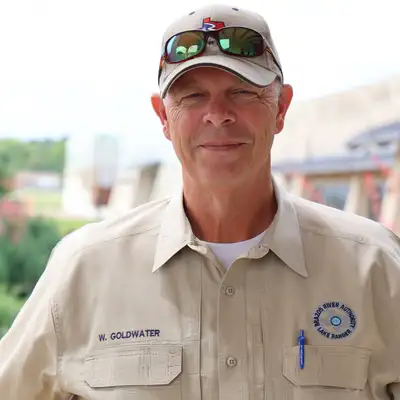
Charlie L Shugart: If you're a waterfowl hunter in Texas, August isn't just hot — it's officially the start of the season hype. If you want guaranteed access to a spot to hunt at Lake Limestone, Granbury, or Possum Kingdom Lake, today’s episode is your guide to enter a lottery for a golden ticket this season. I’m Charlie Shugart, and this is Unpacking the Brazos River. Joining me today are staff from each of the lake offices. The rules and requirements are the same across the board, and the crew is here to share not only that, but the times and dates of the drawings, what that special day looks like, and tips for those who haven’t participated. Okay. So, joining us from Lake Limestone is Sharon Davenport and Wayne Goldwater. Welcome to the podcast, guys.
Wayne Goldwater: Thank you.
Charlie L Shugart: So, Sharon, this is your first time on the podcast with us. Tell everyone a little bit about your history with the organization.
Sharon Davenport: I am the senior administrative assistant here at Lake Limestone. I have been here for almost 24 years.
Charlie L Shugart: That's amazing.
Sharon Davenport: I've enjoyed every minute of it.
Charlie L Shugart: Well, welcome aboard, glad to finally have you on the show. From Lake Granbury, we’re joined by reservoir manager Dylan Mayfield. Welcome back.
Dylan: Yeah. Glad to be back.
Charlie L Shugart: Last but certainly not least is reservoir programs coordinator Diane Davis from Possum Kingdom Lake.
Diane Davis: Good morning, Charlie. How are you this morning?
Charlie L Shugart: I am so good. How are you?
Diane: Good.
Charlie L Shugart: So, tell us, what is this waterfowl hunting site drawings that the lakes are having?
Dylan Mayfield: So, the Brazos River Authority, we've got tons of water, so that attracts a ton of waterfowl every year. So, we do an annual drawing for waterfowl permits. So, we have locations designated on the lake where it's free to enter, and if you get selected, it's a $200 permit, but you get to waterfowl hunt this specific location all year long. So, it's great that we have this to offer it up to the public.
Charlie L Shugart: Alright. So, when is the drawing at Lake Granbury for this year?
Dylan Mayfield: So, this year, it's on August 28. That's a Friday. Our address is 4552 Mambrino Highway, Granbury, Texas 76048. You won't miss us. That morning, there'll be vehicles everywhere.
Charlie L. Shugart: Amazing.
Dylan Mayfield: So that morning, we'll open the door about 8 a.m. We have a sign-in sheet, and the drawing starts at about 8:30 a.m., and we'll start drawing names at random. I usually pick a kid out of the room to be neutral or pull numbers, and we'll go down that list. It's kind of a first-come, first-served as far as the locations. We'll have our PowerPoint up on the screen, kind of rolling through the locations so people can see where those are, and they can select those. And then we'll mark them off the list. When you enter, it's free. If you're drawn, your name will be read aloud, you'll pick 1-15, whichever one you want. And then you will go in, and Kyle Lewis will kind of go over the permit, you know, and just make sure that the permittee understands the rules and regulations and what they're signing up for. And then you'll get over process for payment.
Charlie L Shugart: So, Sharon, what is the date for Lake Limestone? When can people come and be a part of the lottery?
Sharon Davenport: It will be on Friday, August 21, 2026.
Charlie L Shugart: Awesome. And is it going to be there at the Lake Limestone office?
Sharon Davenport: Yes, ma'am. 20226 Sterling Robertson Dam Road, Thornton, Texas. So, normally we ask everybody to be present at 8 a.m., and we always have stragglers. So, we usually start at about 8:30 a.m., and we have everyone come into the office and put their name into a hat, so to speak. And then we pull names. So, yes, we pull 27 names for the 27 spots and then 10 alternates. Just in the event some of those 27 decide they don't want a permit due to maybe not liking the site that's left.
Charlie L Shugart: I was going to say, why would somebody show up and then decide they didn't want it?
Wayne Goldwater: Well, in the past, we've had some that will get a big group together, you know, 10 or 15 guys, and they're all kind of hunt together. So, they would get multiple blinds drawn. And so, once they got their pick, they would just let the other blinds go if they were lucky enough to get drawn. And that's where the 10 reserve or alternates come into play in case someone doesn't want the blind. They're going to have to show us that they got a current hunting license for the 26-27 years and their federal duck stamp to be able to be eligible to participate in the drawing.
Charlie L Shugart: OK. Now for Possum Kingdom. When is y’all’s drawing?
Diane Davis: Well, our waterfowl blind drawing is on Friday, August 21, 2026. Our gates will open at 7 a.m. That's when sign-up starts, and then the drawing will start at 8 a.m., and it's right in the parking lot at our office.
Charlie L Shugart: What's the address at y'all's office?
Diane Davis: 301 Observation Point Road in Graford, Texas.
Charlie L. Shugart: Ok. Awesome.
Diane Davis: So, during that hour, you need to sign up with myself or the other reservoir programs coordinator, Justin Bullock. We'll have a table set up, and we'll explain the rules of the drawing. You know, you have to be present. You have to have a hunting license with a duck stamp. All of that needs to be current. During the drawing, we're hoping to have a game warden here and a sheriff's deputy. So, if you have any law enforcement questions, you can ask them right there.
Charlie L Shugart: Oh, that's really helpful. So how many spots are there available if people are to show up? Like, what are the options there?
Diane Davis: Okay. So, at Possum Kingdom Lake, we have 29 available blinds.
Charlie L Shugart: Does that number stay the same year to year?
Diane Davis: Each year, we go up the river in our airboat, and we check and make sure that those sites are still available: That there isn't something that has changed in the land or the water. At this time, we have three that are unavailable, and those have been unavailable for several years due to the river and the land. We're always checking every year before the season starts to make sure that the 29 that we have open are still open. We want to make sure that you are in an area that's safe and that you're far enough away from another blind. You're also far enough away from any residents, things like that.
Charlie L Shugart: Oh, yeah. That makes sense.
Diane Davis: I mean the river is always changing. It changes the land a little bit. It changes the way it flows depending on how much water we have.
Charlie L Shugart: OK, so Possum Kingdom Lake has 29 spots, Lake Limestone has 27 spots, what’s it look like over at Lake Granbury?
Dylan Mayfield: We have 15. Historically, they're kind of in the same location. Usually around, you know, duck hunting season, we have water in these locations. So, hopefully, we have that later in the year, but these are locations where they're boat in, unfortunately. We're just very landlocked, so there's no walk-in. So, you have to have a boat to get to these locations. There's a post with a number that coincides with your permit number, and so you just have to hunt within 20 feet of those poles with the numbers, and there are GPS locations as well.
Charlie L Shugart: So how do you determine what locations are available for that?
Dylan Mayfield: Well, I mean, I'm a duck hunter myself, and our lake rangers, several of them are duck hunters. So, these areas that we've used, these 15 areas that we've used are kind of away from houses, if you will, so it kind of attracts more of the ducks in those areas. It's got the right depth, vegetation, you know, things like that that, are good areas and conducive for duck hunting. So, you know, if people have good success in these areas, why change them? So that's kind of the feedback that we've had, and I think a lot of the locations haven't changed in a few years. But, you know, with vegetation and homes coming in and just development around the lake, we might have to change in the future. But as of right now, we're keeping the same as last year.
Charlie L Shugart: Wayne, is it the same at Limestone?
Wayne Goldwater: The stands that are located on the lake are away from any kind of structures, residents, anything where someone could get injured. You just don't want to hit and destroy, you know, someone's property or whatever, or wake them up at, you know, daylight because of all the gunfire and everything else.
Charlie L Shugart: I mean that makes sense. You’ve got to keep everybody safe.
Wayne Goldwater: I know we've lost a couple because dwellings have popped up in those locations, but all permanent spots are located on the lakebed. We will not put a permanent spot on someone's property. So as long as they fall below this 363-lake level, that's considered lakebed. That's where those blinds will go. You cannot hunt from someone else's property. It's a big no-no.
Charlie L Shugart: Yeah. So, at all the lakes, the number of locations can vary year to year depending on lake level and if new development has popped up since the previous year.
Wayne Goldwater: A lot of people hunt from their boat too, which is good. They don't have to worry about putting up a structure or anything. They just kind of hunt from their boat.
Charlie L Shugart: OK. So, what’s the energy look like at your location on the day of the drawing? Do a lot of people show up for these? Is it kind of the same crew year-to-year? Dylan, let’s start with Granbury.
Dylan Mayfield: Well, all I know is, my first year was last year here, when I experienced this drawing. And I know when I showed up to work that morning, we had cars everywhere. So, we had a traffic jam, our whole parking lot, and grass was all parked on. We have 170 to 180 people that typically show up, on average. And so, I think a ton of people get excited, and the line's out the door waiting for us to open the door to kind of process people in. So, yeah, I think just in this area, some people go to PK and put in for the drawing. They'll come down to Granbury as well since they're on different days.
Charlie L Shugart: Wow. That's an incredible amount of people for the drawing.
Dylan Mayfield: Yes.
Charlie L Shugart: What about Lake Limestone?
Wayne Goldwater: Well, I think we had a pretty good group last year. I think we had around 200.
Sharon Davenport: It was close.
Charlie L Shugart: Oh my gosh.
Wayne Goldwater: They're pretty excited. Some people already have boats there. So, if they do get a spot, they'll drop it out to get ready because the season starts the first week of September. First or second week, depending on what zone you're in. So, they want to get out there and get to work on putting their blinds together and making sure there's water in their spot. Because a lot of blinds dictate how full the lake is. It's pretty energetic. A lot of people show up. But we've had to, like I said, with the current duck stamp and current hunting license, that kind of weeds people out because we were getting a lot of people who didn't even hunt to come to the draw to be able to help others draw out. So, this kind of restricts a little bit. We had several comments that said they were happy that that was being done last year because people would bring in either their grandmother or their children or whoever that didn't even want to hunt. They were just there for an extra person to put their name in the hat.
Charlie L Shugart: Ahhh, so no bringing grandma along just to double your odds in the hat unless she’s actually planning to hunt herself.
Wayne Goldwater: It kind of makes it more fair to everybody who really wants to hunt out there. We do have some guys that go to drawings all over the state, and this is just one of the stops. They'll go to Granbury and PK and some other lakes around the state that have permanent hunting. Some of them are really serious into it. You know?
Charlie L Shugart: Yeah. That's really cool. What about over at Possum Kingdom Lake?
Diane Davis: Every year is different, Charlie. I've had years where there weren’t even 29 people that showed up. And after the drawing, we still had open spots, and people contacted us, paid their permit fee, and accepted those spots. In recent years, we've had possibly up to 100 people showing up to get those spots.
Charlie L Shugart: Alright, so all the lake offices have seen big crowds come in hopes of being one of the names drawn to get a waterfowl blind hunting location. Do you have to be there in person to be a part of the process?
Dylan Mayfield: Yes. They have to be present. It's one person, one entry. The hunting licenses through Texas Parks and Wildlife go on sale for the 2026-2027 hunting season on August 15. And so, you essentially have two weeks, give or take, to get your new hunting license. We'll be checking the migratory game bird endorsement and the federal duck stamp. So, you can either have those hard copy, you know, in hand or digital copy on your phone. Our lake ranger will be checking those. That's kind of a prerequisite to get in the door. So just to make sure that, you know, everyone's permitted and paid for the licenses before they enter the draw.
Charlie L Shugart: Ok. Yeah. Good to know that on August 15 the hunting licenses go on sale through the Texas Parks and Wildlife Department for the 2026-2027 season. And if I’m not mistaken, you can buy those online through the Texas Parks and Wildlife Department’s website. So, for everyone listening who's thinking about showing up to the next drawing for, like, the first time, is there a rookie mistake you see people make year to year? Sharon and Wayne, what have you seen at Lake Limestone?
Wayne Goldwater: Some of the ones that we've had that it was their first year. We have a big map in our room that's put up on the TV or the monitor, and we show them what we think are good locations, accessible locations, because you're looking at trying to get on the lake at 4 a.m.- 5 a.m. in the morning before daylight. Where's the nearest boat ramp, you know, that they can utilize and stuff like that. So, depending on, you know, where they are, where they want to choose their spot, we kind of give them some hints and just kind of guide them a little bit. And then I guess the big mistake is a lot of people aren't reading the back of the permit where the blinds have to be removed ten days after the season closes. Sometimes we do find remnant blinds that are still on the lake. You know, come summertime, we’ve got to get them out of there. And we did get a couple complaints last year where people were trespassing. They get up on somebody's private property and started clearing the brush off of it so they can build their blinds. That's a big no-no. You're not allowed to cut materials off somebody else's property to create your blind. You have to bring all your own stuff in to create your duck hunting blind.
Charlie L Shugart: Yeah. Noted. Bring all your own stuff to create your duck hunting blind. So, Sharon, since you've been there, has the number of people who've attended grown, or did it start out big right away?
Sharon Davenport: The first year that I participated in the draw, it was a first-come, first-served thing. So, we would have hunters driving up the day before, the evening before, parking along the roadways so they could be first in line.
Charlie L Shugart: Oh my gosh.
Sharon Davenport: Yes. They would literally camp overnight.
Charlie L Shugart: Camping out the night before? Man, hunters don't mess around when it comes to getting their spots.
Sharon Davenport: It's crazy. So that may have gone on for maybe three or four years, and then we decided to actually, I think the BRA as a whole decided, to do the draw. Like, everybody just comes in, puts their name in a hat, and we pull names, which was beneficial to the hunters. They didn't have to sit here all night. We still have some that are here very early the next morning because they still feel like they have to be the first on-site. You know? We have some hunters that work the night shift, you know, come straight from work. It's a lot of camaraderie. It's actually a fun day. We have repeat hunters that come in. We have new hunters that we've seen for the first time. With me being behind the desk, taking the application and the permit fee, I get to listen to a lot of it. It's really neat to hear the seasoned hunters that have been here before giving pointers to those who've been here for the first time.
Charlie L Shugart: Oh, I love that.
Sharon Davenport: It's a cool day. We really enjoy it. It’s a fun day.
Charlie L. Shugart: Yeah.
Sharon Davenport: Actually, fun morning because we're usually done, I guess, probably about 10:30 a.m. – 11 a.m.. Charlie, I will tell you, so as far as the numbers, I think the lowest number that I remember being in attendance is 75. It's always been 75 or more, over 100. The parking lot is just packed, and there are people everywhere.
Charlie L Shugart: Yeah. I bet that is a sight to see.
Sharon Davenport: It's really a neat thing, and I enjoy it. I look forward to it every year. I guess, you know, just make sure you have your hunting license, your duck stamp, your $200 fee in the form of a check or money order made out to the Brazos River Authority. Now I will say that there are some that come in and they have dad write the check for them, and that's perfectly fine. Back to what Wayne was saying earlier, the permit allows only four people in a duck blind at a time.
Charlie L. Shugart: So, what does that look like?
Diane Davis: Say the person that wins the drawing for that blind and his three friends, they go out. Maybe the person that got the permit isn't able to go that day. The three friends can still go, with the permit holder giving the permit to one of them. They have to have that permit while sitting in the blind. Also, as most duck hunters know, when they are in that blind, they have to have their license. They need to be safe. There may be game wardens coming by to check to make sure that they are being safe and to check their licenses. Some people show up kind of as a team, and if one of them, say it's a group of, you know, four guys or, you know, ladies, and once one of them gets a spot, the rest of them pull their name because they know that they're going to be able to have a spot. You know, there's no sense, this is you know, their thoughts is, if you got four guys that are a family or friends, there's no sense in each of them getting a blind. They want to hunt together, and so they'll pull their name. It dwindles down pretty quickly after we start drawing.
Charlie L Shugart: Oh, that's really interesting. And super considerate of people to pull out once one of their friends secure a location. So, if I heard you right, four people can be in one hunting blind location at a time, and they only need one permit amongst them?
Wayne Goldwater: There's only four people allowed at a time in a blind, and it states it clearly on the permit that they'll be issued. Because we've had some people that want to bring in a group of 10 or more. That blind area is not going to hold that many people. So, it's only four total at a time that can hunt one blind location that you draw for.
Charlie L Shugart: Yeah, 10 is a lot of people. Is there anything else that they need whenever they show up to be a part of this?
Sharon Davenport: The permit has a $200 fee to it, so we only accept check or money order. No cash.
Charlie L. Shugart: And Possum Kingdom Lake?
Diane Davis: Our office accepts money orders, checks, and money cards. And money cards are preferred, but this office does not accept American Express, and we will not accept cash.
Charlie L. Shugart: Oh yeah. That’s really good to know.
Diane Davis: Yes.
Charlie L Shugart: What about Granbury?
Dylan Mayfield: We accept checks, money orders made out to the Brazos River Authority, of course, and credit cards as well. Everything except for American Express.
Charlie L Shugart: OK, well, any final reminders for our listeners today?
Diane Davis: Yes, ma'am. Also, when they do come up here, we are located at Observation Point so you can look over at the dam. Also, we'll have the parking lot somewhat blocked off so it's safe for people to stand and wait. We also have a restroom close by in the parking lot. Also, if people come and they're not sure about anything, they can always approach us, always ask questions. We'll have several BRA employees out there as well as law enforcement who have been invited. We're all available for any questions that they have.
Dylan Mayfield: And just want to remind, you know, everyone as they're duck hunting, of course, by boat, just make sure they're wearing their life jackets and being safe on the water.
Wayne Goldwater: Just a reminder when you're out duck hunting, this goes for all the lakes. All the holes that you're shooting, which are the shot empty shotgun shells, they need to be picked up. They can't let them wash on the bank. That did cause some problems in years past where the owners of the property had all these shotgun shells floating up on the bank and people jumping out on the bank and going to the bathroom or whatever. And basically, it's private property, they could get called for trespassing if they'd gone to file a complaint. What’s good about the permits, I just called that permittee that one year, and he said that will never happen again. And so, they never had a problem after that. They picked up all their shells and stuff. So, believe it or not, duck hunters will run out of gas too. And so, there's been several times when we had to go out there and get way up in there to be able to get them back to a boat ramp or give them some gas.
Sharon Davenport: There are GPS coordinates on the permit, so they know the exact location of their site.
Charlie L Shugart: OK. So, wear your life jacket if you’re on a boat. Pick up your trash. Stay off private property. And make sure you have enough gas in the boat before heading out for the day.
Also, as a reminder, hunting on BRA reservoirs is only permitted during waterfowl season and only at these designated blind locations. Which is what makes this lottery drawing so special.
Alright, grab a pen—or open your notes app—here’s a quick recap of the dates, times, and phone numbers you need to lock in your spot.
The drawing at Lake Limestone is Aug. 21, doors open at 8, and the drawing starts at 8:30. If you’ve got any questions, you can reach them at 903-529-2141.
The drawing at Lake Granbury is Aug. 28, doors open at 8, and then registration closes and the drawing begins at 8:30. You can reach them at 817-573-3212.
And the hunting blind location lottery at Possum Kingdom Lake is Aug. 21. Doors open at 7, and then registration closes, and the drawing begins at 8. And you can reach them at 940-779-2321.
And if picking up the phone is the absolute least thing you ever want to do, you can shoot us an email at information@brazos.org, and we’ll help you out.
Thanks to Sharon, Wayne, Dylan, and Diane for joining us today, and good luck to everyone participating in this year’s draw! Stay safe, stay hydrated, and we’ll catch you next time on Unpacking the Brazos River.