Subscribe
Share
Share
Embed


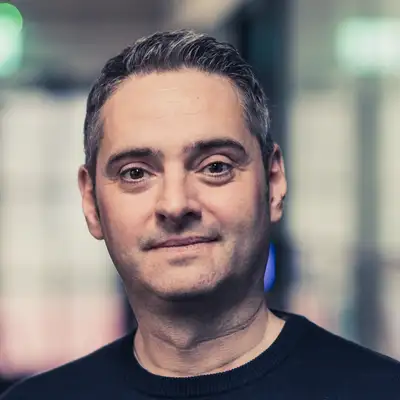
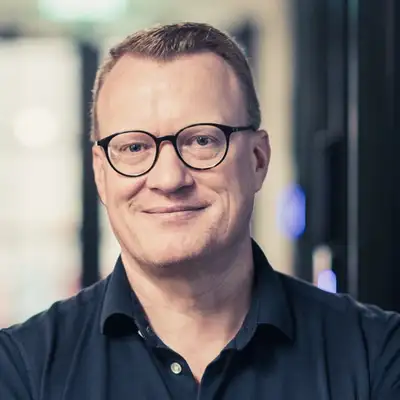
From the award‑winning team behind Cloud Realities, Realities Remixed explores what happens when people, culture, industry, and technology collide, because real breakthroughs rarely come from technology alone.
In each episode, hosts Dave Chapman and Rob Kernahan dig beneath the surface of innovation to understand what’s truly shifting. They speak with leaders, practitioners, vendors and thinkers across industries to explore how technology reshapes human behaviour, organisational culture, and society, for better and sometimes for worse.
Web - https://www.capgemini.com/insights/research-library/cloud-realities-podcast/
Email - realitiesremixed@capgemini.com
(00:00.91) Did you say long-tin then? Long-tin? What? You can't get the help. You can't get the help. said long-tin. Long-tin? Long-tin. Long-tin. (00:24.184) I'm Dave Chapman. I'm Rob Kernahan, and this is Reality's Remixed, an original podcast from Capgemini.
And this week we're kicking off a mini series about the world and the challenges and the futures of life sciences and how we drive better patient outcomes. Now, unfortunately, Esmee is not going to be joining us for this mini series, but I am delighted to say that joining us as co-host to help guide us through the world of life sciences is Thorsten Rall. He's our global industry lead for life sciences here at Capgemini. And like I said, he will co-host us through this and be our Sherpa in the world of life sciences.
Thorsten, welcome. Good to see you. Dave, good to see you. Very happy to be here. Why don't you tell us a little bit about what your day job entails? That's a tricky question, right? It is a little bit of a tricky question, isn't it? Because you end up doing so many different things often. Yeah. I my kids ask me that all the time. What are you actually doing all the time? I mean, they, are still convinced that I'm usually spending my time on the phone and that's what I do. I, I'm on the phone for a living. And works in IT. Yeah. Just on the phone a lot. Or on podcasts. So, so what, what I do in my role is really, mean, I have, I have a pleasure of working with, with pharma and meta companies around the world really on, helping them translate, I would say the, the potential. from technology into their day-to-day business reality. So taking what is the actual business challenge that they are facing to serve patients better, and then taking them and say, okay, here are the different components that we can bring to the table that can help and can make an impact with you on this. Now, personally, I have the benefit that I've been on both sides of the table. So before joining Capgemini, was with Novartis for a decade. I've been dealing also with the Capgeminis of the world just from the other side of the table. And I have a good understanding of what it means to drive those kinds of transformations in organizations, in large multinational organizations that have a running business to do, right? Which is usually something that when you're coming from the tech side, you tend to forget a little bit, right? You're so excited about all this potential and all the benefits that could be that you're forgetting that the people you are actually working with. (02:48.462) They have a running business. They need to focus on getting new medicines out there. They need to focus on getting new medical devices out there to patients. So, and I'm essentially building that bridge and try to create impact where it's really meaningful and where it makes a difference. it's the sort of purpose of the industry really driving better patient outcomes is an extremely motivating thing, I think. And one of the things I'm looking forward to in the series is inquiring on how the improvement in patient outcomes kind of can be driven by some of the technologies and ways of working and things we're going to talk to. And I think it's fair to say that, you know, if you look back in the sort of history of life sciences, it's probably never been better. Would that be totally obvious thing to say or, you know, we still pursuing a higher goal? no, it's true. It's never been better, right? If you look at life expectancy or if you look at cancer treatment, I mean, Five years of viral rates in cancer have gone up like 50 % in the last 25 years. Definitely, it's never been better. Now, at the same time, is biology and biology keeps evolving. Essentially, that means the F-neutin disease is coming up. There are still thousands of diseases that actually do not have a treatment. Relatively speaking, it's never been a better time, but there's still a lot to be done. Well, we will dig into that in detail. Today we're going to talk about setting all of that up and some of the themes we're going to talk about. And then we're going to have a series of episodes where we're going to have guests in to talk about certain aspects of themes and give their real world perspectives on it. So looking forward to that.
But before we go there, Robert. world life sciences in it. Yeah, it is. It can be very confusing at times. you know, leverage you know, very state of the art quantum computers, you know, to get to answers that normal humans wouldn't normally get to. is very true. It's an area where it's very complicated, as we say, and technology is solving and allowing us to advance ourselves through that. drug design, we see the technology doing a lot more these days.
You know where else technology could be leveraged from. here it goes. Go on, go on. I thought you were going to ask me a sensible question. (05:16.808) I know what's Getting out of Waterloo station. no, no, not this. No. have you ever arrived in Waterloo station in London before? Well, it's a normal train station. It's not a normal train station. It's designed to trick you. Now Robert, so Robert arrives in London, not for the first time I hasten to add, he's been to London before occasionally. How long did it take you to get out of Waterloo station, Robert? This is, why did you have to bring this up? This, was, it was too long, David. And I was late. was, was late, which didn't help my mind. And I was marching around Waterloo station. It's on multiple levels. I was up the escalators, down the escalators. I was out the taxi rank. I was back. There's a wall in the way. had to walk around corners, come back onto the concourse. It was very confusing. But all in all, I was probably trapped there for good 10, 15 minutes. Good news is you made it out, otherwise you would not be here, right? I did eventually make out, in a very bad mood. And then the irony of it is, is when I had to go back through Waterloo Station, it worked out my hotel was just down the street and there was a door and I'd walk straight past the exit, ignored it and walked on. I mean, well done. I've learned David, I'm a wiser human after that experience. Maybe at some point we'll talk about the time that you were leading us through a Paris Metro station, but that's maybe a conversation for one of the other episodes in this mini series. That was good performance that time. Well, let's come back to that. Maybe on one of the other life sciences episodes. Are you just going to pepper the episodes with my travel failures? Is this what you're going to do? basically embarrass me like that? We this like a running theme. Like one in every episode. Rob fails again type thing. I must admit, getting trapped in Waterloo station was a bit of a low point. Could say like a life low point that as it entered minute 15, they're trying to get out of a normal building. We could ask the audience for the world's most challenging train stations. And then send me in and film me and just see what happens. That's a whole other show that would be brilliant.
All right, look. (07:37.056) On that note, let's dig into the world of life sciences. you (07:50.222) Well, let's start right at the top, shall we? Let's just start with life sciences. I mean, it's clearly, it's a significant sector and industry in terms of its societal impact, its impact on human beings. Torsten, you're deep into it. You your day job, you live and breathe life sciences. So why don't we kick off with, why don't you paint a picture for us of the industry and how it's evolving? Okay, sure. Very happy to. So, Let me also start at the top then, because what's important to keep in mind is just the pure size of what life science really is. When we're speaking life sciences, we're usually talking about two main big segments. The first one is pharmaceuticals. guess most of us are aware of what pharmaceuticals are. Those are essentially therapies, drugs that people take as treatment. There's a slight differentiation between pharmaceuticals that are still on patent and generics. So I won't go into too much detail there. And then the other big segment is medical devices. Now medical device, think, might require a little bit more explanation because different people have different understandings, right? So medical device actually encompasses quite broad range of things. So from classical diagnostics devices, large image devices to devices for diabetes treatment, also laboratory devices for diagnostics surgery. So very broad range of different products. And I think that's important to keep in mind. Now, if you take a step back and think about the size, mean, both those together around about two trillion of a market size. Now I think that's hard to kind of get a head around. So to give you a sense that is kind of like a third bigger than the total economy of Spain. So it is a very, very big segment and a big chunk of actually just our Western industry really. that a full global number or is that specific countries? No, so that's actually the full global number. If you look at it by country, you essentially have, of course, the US is the by far biggest market. It's almost 50 % of the global market. It's also the most profitable one and it's the one that is growing the fastest. And if you look at it, mean, life science, (10:07.668) is a very stable industry, comparatively speaking, right? Because the underlying drivers, mean, for good or for bad reasons, I mean, those are mostly societal, right? I mean, people always get sick, people get older. So there's just a demand driver for the overall industry that makes us very, very stable. And that means it also has been growing through periods of time where most other industries kind of went down. At the same time, also don't see those huge peaks in growth. when you look into growth, it's not the same everywhere. So when you think about pharmaceuticals, the biggest growth drivers actually have been in the past, like oncology treatments and immunology, because unfortunately, and fortunately, mean, more and more people are suffering from cancer. But fortunately, there's also more more treatments to treat cancer. And more recently, and that's maybe where now everybody who is listening to this podcast is going to become aware, of course, you have the whole space of obesity. Right. So with the advent of GLP once you have the situation that all of a sudden everybody knows what a I mean, I just said a GLP one is if you had asked somebody in like five years ago on how you actually defining a certain molecule, I don't know the name, but now everybody's aware of that. And it's really going into almost a mass market because there's so many people globally suffering from obesity. And when you go into the actual medical device space, you see quite a, quite a nuanced growth drivers here, right? mean, one is imaging diagnostics, diagnostics overall is growing a lot. that is partially driven by the growth in oncology because diagnostics and oncology treatment often goes together. Then you see a big increase also when it comes to minimally invasive surgery. For the ones that are a little bit older listening to this podcast, they might remember what a knee or hip surgery looked like post-surgery 15, 20 years ago. It was usually not very nice to look at, to be honest. look slightly terrifying to experience as well, don't they? (12:20.654) My dad has both of his knees done and you get it done in the local anesthetic these days. exactly. Local anesthetics. You're actually back walking within a couple of weeks. you looked at it, I mean, a couple of decades ago, I mean, if you look at it, was just, I mean, sometimes people could never really properly walk again, right? I mean, they could walk better, but not like the way they used to. And today this is pretty much business as usual, which I think is the most important point. mean, Of course, usually when I talk about the industry, I'm being asked like, how big is it? What is growing and so on? But I think what is important to keep in mind is if you are a patient like your dad, and unfortunately, most of us are a patient at some point in our life, right? for a patient, there's actually never been a better time, if there has ever been a good time, but at least never been a better time to be a patient. when you talk about medical devices in that... context, where do you draw the line? So like you get smartwatch, it measures your heart, it does quite funky things, it can tell if you're in distress, things like this. Is there a boundary on the industry line that says, we discount these but we keep them here? Because obviously you've got all the smart devices that are coming out. Are they included or are they just a natural extension? What's the viewpoint on those? It's a very good question because if you'd asked me like... three, four years ago, the answer would have usually been to say anything that is a consumer device that has some sort of functionality like step tracking, but it's not regulated per se, right? So that doesn't have, does not have to go through clinical medical validation and being accredited by the FDA or another regulator does not really count as a medical device. And actually it still does not count as a medical device by just the definition of it. But the reason why I say things have changed is that these consumer devices become more and more powerful. So when you see boundaries between what is like a classical medical device versus a computer device becoming like more and more blurred. And that's where you have a lot of the newer categories like software as a medical device coming up where essentially are using algorithms that, for example, translate like (14:47.886) step count or step count plus gate balance to identify if your gate is becoming better or worse over time. And you can validate those if they are validated, often also are then qualified as a medical device of different class. But it's an interesting area because it also means that you're operating at completely different pace. I mean, if you're like a medical device company, you have long development timelines. If you're a consumer company, You just churn out new devices. Let's use that as a bit of a bridge into, was going to go a level deeper in pharma in particular and talk about regulation and the regulatory process, which I suspect is different in the major markets. But can you give us a general gist of the regulatory process for like a pharmaceutical or med tech product? Sure. So mean the regulatory process actually bit different for the two, right? So when you when you look into a pharmaceutical product, when you look at the product development cycle, you start with the face that I mean, you start, course, with like early research, right, where you don't necessarily have a target for for certain disease, and you don't have a potential candidate to treat that target. But I'll skip that. Let's assume you actually have identified a target and you have identified a potential candidate. Once you've done that, you go into what's called preclinical, which is essentially either a in silico test or like an animal test to assess if the molecule that you've developed is at least meeting safety, basic safety requirements. Right. So is it safe enough to be tested in humans? So that's like the very first phase. Once you're once you're going through that. Then you're entering the clinical phase and that's when you're bringing the drug candidate into the human body. And within the clinical phase, you usually you have three different sub phases. The first one is essentially you're testing, you're taking the molecule and you test it on healthy human beings. Right. And just to just to assess if there's like major safety signals or count indications that like, let's say person that is not healthy, actually not even (17:06.54) be able to stand. So and then you're going through two additional phases, phase two and phase three. Sometimes you're actually allowed to skip phase three when you're going with breakthrough therapies that essentially assess the efficacy of the drug on the patient population they are designed for. Now, once that is done, you're taking the results from the three phases, package it up for the regulators, submit the dossier to the regulator. they assess it, come back with questions or not. If they are not coming back with questions, you're essentially approved to bring the drug to market. And then you usually have to go to individual markets for market authorization in the market. Now the important thing to understand is that the dropout rate of candidates along that process is huge, right? So you, between the first phase and the phase three, you only have like round about like one in one in hundred that actually make it one in three faces. Blimey. That shows the amount of investment that must be required to be able to get something successful to market that. That's a big ratio. Which, which is one of the challenges because when you look at the, the average development costs for a drug that makes it to market, it just keeps increasing. Right. And I mean, you, you find different numbers, you find everything between 2.5 and 4 billion. for an average truck to go to market. Wow, 2.5 to 4. That's a lot of money to get it all the way to the end Billion. million. sorry. Billion, yes. A fairly substantial investment. on the back of that then, of course, technology and particularly technologies that are data centric and actually potentially processing centric like quantum are increasingly heavily used in the process, right? So in terms of like just a little sketch picture at the moment of what the state of tech is in life sciences. And just so I can put a bit more meat on the bone. When we talk to other sectors in these mini-series, sometimes, you know, the sector wants to do more with technology, but investment cycles might get in the way or legacy might get in the way. For example, in the telecoms industry, the mini-series we did last year, we talked a lot about (19:30.754) you know, the myth of 5G. So why does 5G not work like 5G? And actually it's to do with they're still going through the cycle of upgrading the full network. Like a lot of the network cars are not running at full 5G and therefore even if you've got your edges running at 5G, the whole thing's not running 5G end to end and there are issues. Everybody would love to fix that problem, but the investment cycles are very, very long. So how would you characterize the state of tech in life sciences? So I think you have to look at it again, I think a little bit separate for for pharma and mettech and then even within within pharma and mettech on where the tech is applied. mean, generally speaking on let's let's start with pharma. I generally speaking on pharma, pharma has been making massive investments into technology for for the last decades, because in the end of the day, pharma business, if you look at it, and if you just listen to what I said on the development process, pharma is essentially a data generation business. That's what they do. Now you have different areas within pharma that are where deploying tech is easier or a little bit more difficult. So if you go into the preclinical and research space, you're essentially operating in a non-regulated research environment. The reason why by emphasize that is actually the fact that it's not regulated because you're not talking or not dealing with with actual people is that there you can deploy technology much more easily. Plus you're running a much higher number of fast experiments, right? Which addresses a bit your point on long cycle times. So historically, that's where Pharma has and keeps investing a lot of money into AI tools, data capture tools to just like help capture the data from their experiments, but also make predictions, for example, on what an optimal molecule design looks like. Now, is that fully mature and has fully unfolded its potential? Not yet. I think we can maybe speak a little bit later about the reasons for that. (21:38.382) But this is clearly one where Pharma has been quite advanced. You mentioned quantum. mean, pharma companies have been working with quantum for decade, at least, because they, of course, they understand or understood very early that quantum has the potential to simulate parts of molecules, right? So they are very open and early adopters in that regard. The same was true with GEN.AI. So when the GEN.AI wave hits years ago, around about like now, for most pharma companies, specifically for the research teams, they were like, why are you all so excited? We've been using Gen. AI for molecule design forever. So that's nothing really new to us. Clearly, one step ahead of the market, you know what they should get beavering away on? This is a bit of a side hack for them, maybe. But I think there's market position for a flying car. Oh no, don't go there David. cannot do this again. Nobody's cracked it yet. Aerospace have had a go at it. It's absolutely useless. It looks like a bad helicopter. And if they're already deploying quantum, come on, they've got to be able to crack this problem, haven't they? We've been here before David. Physics, physics. We haven't quite broken some barriers yet. We will see about that, Robert. We will see about that. The day of the proper flying car will come. Anyway, Tosin, hopefully that was helpful. yeah, of course. I mean, I have to check. don't think I've come across a client that is working now on, on flying cars, but maybe I can, I can bring that up. The Chapman one, that's what we're going to call the first flying car, the Chapman one. That's what it's got to be. Yeah. I would endorse that. Yeah. I think, I mean, just, just coming back to your question, right. The reason why I highlighted this unregulated component so much before was that the picture is a bit different if you're moving into the regulated part. So when you go, for example, to clinical development, clinical development is highly regulated. So every process is pretty much set by the regulator. How and who is allowed to deal with certain data is set by the regulator. If you're thinking about also what you are allowed to do, who is allowed to see the data, it's a very different construct. (23:59.15) Plus, given the long runtimes of clinical trials, there is a challenge of scaling technology in the running operations. Because in the end, if you have these high failure rates, the last thing you want to do as somebody owning an asset or a trial, you don't want to put your trial at risk. And if the trial is running, you cannot just intervene, step into the trial and say, now I actually want to change ABC because like how the trial is run, what is happening in the trial is also fully defined. Right. So you usually have a challenge there when you go into like technology deployment, you can deploy it with one or two trials, but then rolling it out across the full portfolio of running trials. And if you go into like large farm organizations, they usually run like 300, 400 trials at the same time. Right. So you're actually becoming, it becomes a challenge of scaling up. And then you have other areas like commercial where, of course, you do the classical, I mean, would say classical investments, like everybody's trying to do omni-channel next best action for their sales reps. Still there here also, you have given the regulations quite heavy boundaries between the individual functions, which makes this real omni-channel not always easy. But we see quite a lot of interesting movements in that area as well. When you go into into medtech, I mean, the majority of the medtech investment technology was actually into the actual products. Because when you when you look at which medical devices are going to market, they are becoming more and more hardware plus software. And the weighting between what is hardware and what is software is going more towards software. Right. And that that allows you not only to, of course, think differently around update cycles, but it also allows you to think differently about what your commercial model is for. for those medical devices you bring to market. that point on software then, there must be some... Is there a view of continuous regulation about software that controls the device that has to go through that every time it's released? Because basically the device only works hardware plus software. It used to be a very different ratio in the past. So that must have changed the way the regulators work. Is that a recent thing or have they been tracking that for a while? (26:13.228) So they actually keep updating the regulations on that one. And they just quite recently actually update the regulation when it comes to AI in medical devices. And that has been quite rigorous regulation they put in because, for example, you're not allowed to bring any algorithm into your device that is self-learning for quite obvious reasons, right? Because if it's self-learning, you cannot self-optimize because you're essentially losing control of what your device is doing. It's not an option. Also not an option if you say you put a lot of monitoring into it. They are quite restrictive in what you're allowed to do to put in a medical device at this point in time. Do they have the feedback loop so you can take the data out of the device, feed it back for research and development? on better software. I'm assuming they do that. It just has to go through the regular cycle before it's loaded onto the device again. they... exactly. So essentially they of course have... I mean, depends on the device, of course. Let's maybe start with that, right? But if you are going large image diagnostics devices, of course they are like... pulling all the information from the device, usually onto a cloud-based platform. They use that data to not only optimize the software to help the image diagnostics, but also to optimize the device itself. But then, as you say, when you're doing an update, depending on the materiality of the update, you essentially have to go again through the whole assessment of risk factors, validation, verification, before you can then upload it. But it has to go through a complete validation cycle again. So I think that's a good sketch picture of life sciences and some of what it is trying to achieve. In a second, we're going to move on to some of the bigger themes that are running through the industry that we're going to cover in the mini-series. But before we get onto that, every sector has challenges, whether the challenges are going to be commercial, whether they're regulatory, whether they're technical. (28:24.322) whether they're political, what kind of challenges is the life sciences sector generally dealing with in terms of, I guess it's modernization overall? All of the above. It's all in it. I did sort of my own question in the question. Take all of that, stick it in a bucket, stir it up and throw it at the wall. Next question, all of the above. No, I mean to make it. to make it little bit more concrete here. So on the R &D side, I mean, we touched on some of those, right? On the one hand, I said, when you look at where the science is today, there's likely never been a better time for scientific breakthrough. But at the same time, the drugs that are coming to market are becoming increasingly complex. And on average, the patient populations they are addressing becoming smaller, right? And I mentioned obesity before. mean, that's really like the big in like any sort of dimension, big exception here, but generally addressable patient populations become smaller. And if you combine that with the fact that the development costs per asset are still going up, that actually puts a significant pressure on the actual innovation engine for many pharma companies. And you could say, okay, that's already big problem. But if you then put on top of that, the fact that from a geopolitical and pricing perspective, we are currently operating in an environment where pricing pressure is quite significantly increasing. I mean, you have in the US, the Inflation Reduction Act came into effect. You have ongoing continued discussions on additional rebates, most favored nation pricing schemes to be implemented, which just to recap, would be hitting like the market that is almost 50 % of the global market, right? And that has a huge impact, potential impact on the bottom line of those companies. And now you make it even a bit more complicated with the geopolitical context. You also see a massive reshift link and reshuffling of where manufacturing capacity is located. And you have to remember if you're building a new manufacturing site in pharma, that is like, (30:46.21) can be anywhere between a couple of hundred million and a couple of billion investment every single time you set it up. Plus it actually takes several years, and I'm not talking one, two, I'm more talking like five to eight, to set an individual new site up. So it's a really difficult, I mean, on the one hand, there is clearly a need to be coming up with more differentiated innovation, but on the other hand, actually the pricing pressure has likely never been as severe. And when you look into Met Tech, the situation is a bit different in the sense that you have not necessarily the same challenge on the innovation side so much. But here you have the challenge of what innovation is. I mentioned this move towards more software when you're coming from a very hardware heavy development process, moving into this software plus digital innovation logic. is culturally a big change. And then when you look at the overall market dynamics, mean, for the last decades in Metec, China has been a very, very important growth market. And regulations in China have been changing in a way over the last couple of years that it actually limits growth, both in terms of just investments that the Chinese hospitals are making in devices, but also how much you can charge. for, let's say, certain diagnostic procedures that essentially make this growth engine stutter. And you are here from a geopolitics supply chain perspective. mean, unfortunately, we have more supply chain disruption over the last 10 years than maybe in the previous three to four decades combined. Quite unpredicted. Quite unpredicted and for specifically medtech. companies, the supply chain disruption is actually harder to handle because they often operate because the margins are thinner. They don't operate with the same safety stock in different places that pharma companies often can afford to do. So it's all of the above. Yeah. I mean, certainly all of the above. It's extremely complex. And let's just talk a second about the organizations that are doing this. So the life sciences companies and their operating models and technology status. (33:06.742) Are they going under as much transformation? mean, obviously like every, every organization is impacted by cloud. Every organization is impacted by AI. You know, let's just take that as, as broadly read. So presumably within those organizations, they're having similar conversations to other sectors about what they need to do to their, you know, kind of operating models, ways of working, culture, et cetera. Where would you say the adoption rate in terms of how they're generally operating their businesses? of these sorts of new technologies are. And to give you a bit of a datum, depending on who you read and which analysts you believe, cloud adoption still globally is still at the sort of 30 to 50 % level. It's nowhere near the level that you might sort of believe from kind of reading the news sort of thing. it's, you know, not necessarily cloud specifically, but where would you say they are on the journey to state of the art? I'm actually surprised that global cloud adoption is only 30 % because then I could say, wow, big pharma, they are clearly ahead of the curve. But this might also be driven by them just being large multinational companies. Exactly. The enterprise end of the market are way more adopted than the rest of the market. when you think about, I mean, for me, it's a question of how do you actually define technology adoption, right? Because you have to keep in mind, If we are talking pharma, big pharma, those are all global, multi-billion, 10, 20, 30, 50 billion dollars in revenue companies. And in that sense, of course, they all have adopted technologies like cloud. They all have adopted, of course, ERP systems and so on. So that's out of question. you talk about technology adoption in the sense of how advanced are they across the board when it comes to, let's say, for example, scaling AI solutions throughout their whole operations effectively? Then the picture is different. And there, I put them somewhere in the mid-range, maybe, of industries. I you mentioned Telco before. I would hope that Telco is further advanced because those are technology companies at their core. But what... (35:27.81) What you see is that pharma is still often struggling with fundamentally the availability of the data in their system. I mentioned research before. Research happens in labs. Well, you can also say, of course, where else would it happen? The point is, it happens in a multitude of labs that are spread around the world often. that usually are not connected, that generate huge amounts of data that is usually not going into one data lake and is usually not following a standardized ontology across the organization. Yeah. lot in common there with many organizations, I think, outside of sector. The situation is not that different, right? And I'm not even talking about... manufacturing, where oftentimes, like every site is essentially having their own, of course, they have their own technology stack. But they also defined individually their technology stack, how what their process looks like for their individual site, how they call things, how they connect devices. So if you're then trying to really move towards what usually you say like in an I enabled and in a AI-enabled company, which essentially means it has to be a company where data is readily available at the right quality, there's still some way to go. have seen some push from the hyperscalers to build industry platforms to try and help industry out. And one of the ones that was of note last year that came out, I think it was Ignite, where John Link on the Microsoft Discovery platform, the guy who gave us the tiki bar... recommendation was head of the life sciences platform that Microsoft had just built to sort of bring exactly what you're talking about there together, which was common data taxonomy that allows everybody to operate on it, can connect the data sets and then allows deeper analysis to take care. So trying to solve exactly that problem you have. And that was a sort of, they're quite proud about the way they brought that to market. we, I think we do see the industry understanding that and trying to respond and life sciences can obviously (37:39.298) benefit hugely from that type of approach by the sounds of it. Definitely. mean, the question around industry specific semantics and ontologies in life sciences is extremely relevant. What is often holding people back is that once you start actually to try to develop those, it's an enormous amount of work. And you have some areas in the industry. when you look into quality, for example, right, mean, quality, how you need to run quality assessments of your drugs that's regulated. that's also a space where the ontology is pretty much standard across the world. So that makes quality reports easily comparable. But in most other spaces, you actually don't have that one ontology that is accepted by the industry. And that is just quote unquote, how you call the data, right? If you then think about trying to translate how you call the data into, let's say the semantics of the industry. When I say, give me all open quality reports on molecule X inside Y, making the translation of what that actually means in the context of the site, in the file manufacturing, is a lot of logic you need to build. And it's one of the key requirements actually that has to be cracked for not only AI, but of course specifically also the potential from agentic to be really unlocked in the industry in full. Well, look, I think over the coming episodes, we're going to dig into some of those areas in quite a lot of detail. So thanks Torsten for sort of the overview of industry there. Now we've picked five themes that are going to be specific to the conversation and as per usual, we'll have industry leaders come in and talk to us about these themes. Now the themes are accelerated and effective drug discovery and clinical development, sustainable, resilient and efficient ops, integrated and user centric marketing and sales, secure user and software centric product platforms and go to market. then finally, we're going to look at platform use and the kind of digital core. (39:58.24) of organisations in the life sciences world. And as you've heard in some of Torsten's tea up there, there are some very common themes that we're seeing in other industries. So to see it through the life sciences lens, I think is going to be pretty insightful. Torsten, when you're thinking about the themes of the show, what makes these five core to you and core to the leadership decision making that's going on in life sciences? For me, essentially, it's the areas where you can expect among the biggest impact from technology to address the challenges, not in full, but at least in part that I outlined before. So if you look into R &D, I mentioned that R &D was one of the early areas where I was being deployed. But if you look at the capabilities that are being developed at the moment, what you actually see happening is that you can now really rethink the actual research and development process, right? Paralyzing things, moving away from hundreds, I mean, in research, like hundreds of point solutions that people need to deal with into really integrated, newly thought workflows that have the potential to bring down the times for discovery for like five years to just 18 months. So, and similarly in the clinical development space. So that's one on the... On the operations side, I mentioned the challenge that you currently have with this massive CapEx investments that are happening in new site buildups. Now, technology can help accelerate that process equally by one to two years, which means at the end of the day that patients actually can have the drugs in hand one to two years earlier. which is huge, right? And on the commercial side, I mean, we see a shift. I mean, was joking a little bit like, of course they did omnichannel. But what you see now really happening is that it's increasingly difficult. There's two things. On the one hand, it's increasingly difficult to reach the HCPs, but it's increasingly easy to connect the functions inside of the commercial organizations in a way that actually this (42:11.754) more seamless experience around an HCP as a reality. And the second one is, I mentioned obesity before, this consumerization approach that you have in marketing and sales actually requires pharma companies to also think differently how they tackle that challenge, right? Because you're all of a sudden not dealing with only competition from like another pharma company, you're actually dealing with an actual consumer market. And if you want to make it more complicated now, with all our nice agent, agent search engines coming up, essentially you have a completely new intermediary that sits all of a sudden in between your marketing messaging and your marketing content and the actual person that's consuming it, by the way, in a different format. that's that. And on the MedTech side, mean, that's pretty much going into the theme that I started to talk about, which is how do you actually deal with a much more integrated development cycle and go to market model for medical devices? that allow you to potentially separate the hardware from the software monetization as well? And how do you need to set up your organization behind that? And the last topic that you summarize so nicely on the platform side, mean, that is really, really going into, yes, historically, there were big investments into ERP rollouts and so on. But if you think about what the future of agents needs, the future of agents needs a small number of super high quality systems of record. So if you think about what the digital core means, that's the way how you need to design these platform programs now. So to really make sure how can you actually use a new ERP program system or any other platform like CRM platform to really enable that agentic future. It's really the underpinning of a lot of what other potential that is sitting on top. And I'm personally very much looking forward to those sessions. I was going to ask you actually by way of bringing the conversation to a close, going into it, thinking about these themes, like what are your expectations? I mean, my expectation is always that I learned something new. (44:30.114) Because the space is so broad and evolving so rapidly that every week you talk to somebody, there's something new that you haven't heard before. So that's the first one. The second one, I think, is also an expectation of just giving a bit of a reality check, right? Because you have a lot of buzz out there and a lot of big announcements out there. The important point is if you really need to look under the hood to understand how much of that is pilot. deployed once or really scalable and also learn a little bit what are the things that you need to do differently now compared to how you would have tackled, let's say one of the previous AI waves and thought about scaling, scaling for impact in those. And then last but not least, I just hope it's going to be an entertaining discussion for all of us. (45:32.6) Now we end every episode of this podcast by asking our guest or in this case guest host what they're excited about doing next and that could be you've got a great restaurant booked at the weekend or something in your professional life or maybe a bit of both.
So, Torsten, what are you excited about doing next? So I'm sitting here looking outside of the window. I see a blue sky and guess what? Tonight I'm going to open the barbecue season. wow, excellent! What's on the, what's going to be on the grill? Oh, that's a secret. I'll tell you in the next episode. Oh, brilliant. All right. Now I'll you what, let's talk about barbecuing technique for a second. Cause I think this is, this is one of the big topics that everyone is interested in. Now. Yeah. I'm actually, I'd be up for that. Yeah. So do you go for, are you like, I'm just going to make a quick burger with an instant lighting bag end of the spectrum, or are you like, I'm going to smoke a brisket for like 18 hours and wrap it three or four times and turn out the most gorgeous barbecue. I'd be, I mean, 18 hours I do very rarely. but I'm more like on the spectrum. do anything that is up to 12 hours. But for me, it's, it's not only how many hours I also like to experiment a little bit with stuff. Right. So do like, Iberian pork stuffed with salchicha and then you put it in a hay wrapping and then you, you know, this kind of stuff. think you've just differentiated yourself from a lot of barbecuers there. This is advanced end barbecuing. That is extreme barbecuing. So Robert, obviously you're teeing yourself up for this. Whereabouts are you on the Insta-Lighting bag to hair wrapped in Berico ham scale? I used to do the long run charcoal barbecue, but not that. I'm now, I am a gas barbecue convert, although I will take a coat to booth and cook it very slowly, reverse sear it, et cetera. That type of thing. I'm not anywhere near the, what's just been described by Thorsten. And by the way, that doesn't take that long though. It's the prep. How long does that take to prep? That feels like a lengthy prep though, from what you've just described. (47:57.686) That one actually is pretty fast, right? Because you, you only, the only thing you need to do, I mean, you have to marinate the pork for like 24 hours, but the marinate is not very difficult. And in that specific case, I mean, the clue is you actually do, you know chorizo, right? Do you know chorizo? Okay. So essentially a lot of the flavor comes from the chorizo that you kind of like stuff in it. I guess you want to cut this out of the episode. This is podcast gold, Torsten. So that's quickly done, And then the last clue is really just the fact that you're wrapping it in hay. And then it is like on the barbecue for round about two hours. What temperature at? Because hay is combustible in my head. Material, is it? Does it not create mean, you don't heat it up. Come on. I don't know if I want to come to your barbecue if you said hay on fire. It's like degrees Celsius-ish. What about you Dave? Where's you're on the spectrum? Are you an Insta-lite man? I am dangerously down to the pretty basic end of low end. It's as easy as possible, but there's a martini over there with your name on it. I mean, not far off. I can do relatively accomplished sort of basic stuff. Like I'm not like, he's an overly well done steak or a totally rare. I can cook properly on a barbecue, but I'm definitely at the more convenience end of the spectrum, I have to say. I've looked at the big green egg a few times. yeah, yeah. Sarami barbecues. That's a good one. I actually have one. That's very nice. Yeah, exactly. But I look at it and I go... It's a bit like your point is I look at it and I go like, am I gonna, am I gonna light that 12 hours ahead? Like that would require me to think 12 hours ahead. This is why gas barbecues are good. But it's also, it's also- Did you say you're a gas guy? I'm a gas guy, yeah. See now that's even, that's on a different, I think that's further down the end of the spectrum than the, the lighter bag. Oh, you're, you're relegating me now, you? Just because I use the convenience of gas. (50:22.862) Correct. You are off the true barbecuing spectrum. the big green egg, you can actually also do really good pizza. Oh yeah. I have done that before where you heat up the stone and then you put the pizza on and it works quite well, doesn't it? And you get it heated up really high and it holds the temperature very well. Good pizza dough also takes like two days. So you're a pizza guy as well. Have you got a pizza oven? I mean, let's sack off life sciences and just do a whole culinary podcast mini series where we talk about Thorsten Cooks. We'll just call it Thorsten Cooks and that's it. And he just describes the three day process he goes through to create some incredible culinary delights. Margarita. Exactly. This margarita took three days and cost 400 quid. All right, look, on that note, we will be back over the coming weeks with episodes diving into the themes of the Life Sciences mini series with some excellent industry guests. So we're looking forward to speaking to you then. Torsten, thanks for joining us, guest host. Good to see you today. was a pleasure to be here. Looking forward to our first larger session.
If you would like to discuss any of the issues on this week's show and how they might impact you and your business, then please get in touch with us at realitiesremixt@capgemini.com. We're all on LinkedIn, we'd love to hear from you, so feel free to connect and DM if you have any questions for the show to tackle. And of course, please rate and subscribe to our podcast, it really helps us improve the show. A huge thanks to our sound and editing wizards Ben and Louis, our producer Dr. Mike, and of course to all our listeners. See you in another reality next