Subscribe
Share
Share
Embed
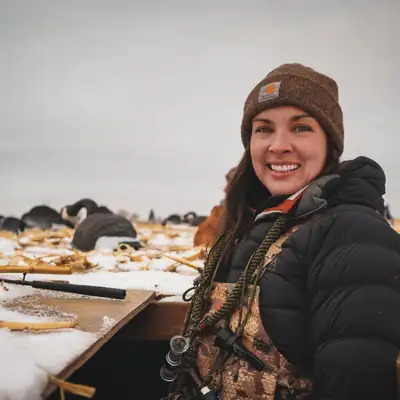
Ascend is a multimedia platform that spotlights the millions of outdoorswomen across our country who go hunting, fishing, hiking, camping, biking, running, and perform important conservation work every day.
Our web series and podcast feature guests who share their experiences with a focus on entertainment, education, and authenticity. Our viewers and listeners will get to know them and learn all about their passion for the outdoors. Whether you've been in outdoor communities all your life or are just getting started, Ascend is the place for you to follow your story!
Brought to you by Ducks Unlimited.
I am so excited to bring you today's podcast with Sarah Fleming. We are talking about the migration and how weather affects it and setting your expectations as a new waterfowler. Stay tuned.
VO:Welcome to the Ascend podcast, a podcast by and for women in the outdoors. Every episode delivers real stories, practical how to's, and a welcoming community to help you start, sharpen, or rediscover your passion for the outdoors. Authentic women, real stories, outdoor adventures, Ascend. Presented by Ducks Unlimited, the leader in wetlands conservation. Your next adventure starts here, the Ascend podcast.
Erin Crider:Hello, everyone. This is Erin, and I've got Sarah Fleming on the podcast today. She is the managing director of conservation programs at Ducks Unlimited in the Northeast Region. But I wanna tell you why I'm so excited to have her on today. I, as a female waterfowl guide, am trying to learn more and more about how the migration works.
Erin Crider:And as my passion to create more safe spaces for brand new female hunters in the outdoors, set expectations that go along with the migration, if you will. Because I feel like social media has one type of waterfowl culture where there's, like, girls with, you know, piles of ducks or straps of ducks or limits of geese. But Sarah and I today are gonna talk about why that might not always be the expectation we wanna set for a brand new hunter. The other thing we're gonna talk about today is equipping do it yourself waterfowl hunters with the migration science. We're gonna talk about weather in the different flyways, unique opportunities when it comes to duck hunting in the four different flyways of The United States, which if you didn't know, there are four.
Erin Crider:If you're a brand new hunter here with us, and we wanna build some confidence in those first time hunters that we're welcoming into the blind this year. It's it's gearing up to be a great year here in the Central Flyway. I'm closer towards the Rockies, Sarah, near Denver. But let's hear a little bit about you, where you're located, what you love, your passions here, and how you're gonna add education to today's talk.
Sarah Fleming:Well, thanks, Erin. This is one of my first podcasts, so I'm really excited to be here to promote the waterfowl hunting community, especially from the new hunter perspective. We've all been there and would love to share experiences and knowledge on what it's like to get out there, and quite honestly, I'm a new hunter in a lot of ways, too, with regards to we're always looking to try something new, and so there's always a first time for everything. And so leaning on your resources and leaning on your connections to learn and just be willing to try new things is definitely what I'm all about. But just going back to introductions, I'm the managing director of conservation programs with Ducks Unlimited in the Northeast.
Sarah Fleming:I am based out of Syracuse, New York. I have a small hobby farm with my husband, two four legged children, my labs, go everywhere with me. They are hunters, one's retired, but they spend all the time in the blind with me whenever I can get them out. And really, that's part of my passion is to get them out because they're so enthusiastic about it. As far as my background goes, I've been with Ducks Unlimited now coming up on almost sixteen years.
Sarah Fleming:My background is wetlands and waterfowl ecology. Did my master's degree at Mississippi State. And a little fun fact is I am Canadian, or I have dual citizenship. I was born and raised in Ontario, Canada, and spent a lot of time up in some of the breeding areas hunting when I was younger. And now I'm down in the stateside exploring my passion for waterfowl hunting down here in The States.
Sarah Fleming:So excited to have a conversation about the science behind waterfowl, migrational roots, and then just the experiences I've shared and the lessons I've learned with regards to being a waterfowl hunter and hopefully encouraging others to get outside too.
Erin Crider:I love it. I'm so excited when I was like, I really wanna do a podcast about setting new hunters' expectations when it comes to waterfowl hunting. And Clay was like, you gotta talk to Sarah. I was like, this is gonna be perfect. This is what this information is what I needed when I started hunting.
Erin Crider:Because the first couple times I went hunting, I didn't get a duck. Like, they fly past. I was brand new with a shotgun. I'm also an adult onset hunter, Sarah, and I founded a company, Uncharted Outdoors Women, that is exactly what I needed. Like, I needed somebody to connect with me, meet me where I was at, because I had never shot a shotgun before, and then be like, tell me, okay.
Erin Crider:Maybe the day after opening day of duck season is not the best day to expect a limit. Just like those little tips. So that's a little bit about why we're here. But without Ducks Unlimited and one of my passions about trying to get more women into conservation via hunting and fishing and foraging licenses out here on all of our public land in Colorado. That money goes towards funding for conservation efforts, which is kind of in your realm.
Erin Crider:So can It is. And then you you spent time in the Prairie Pothole Region. Can you explain how important the Prairie Pothole Region is? Why it's like, it is the duck breeding zone. Right?
Erin Crider:And I guess you can explain why Erin keeps Saskatchewan, Canada, and other cities around the Prairie Pothole Region on her phone so that when I see, like, single digits or negative temperatures, I know the ducks are gonna show up in Colorado, like, three days later.
Sarah Fleming:Absolutely. Yeah. So where to start? There's a lot to digest there. It is.
Sarah Fleming:So first first and foremost, yes, you're absolutely right. The Prairie Pothole Region is what we refer to as the duck factory. It is one of our most critical breeding areas for waterfowl that, of course, extends up into Canada, into Manitoba and Saskatchewan, and then extends down into North Dakota, South Dakota, and all those prairie landscapes, which is why it is so important that we are watching our waterfowl numbers and doing breeding bird surveys and pond counts and really kind of using those data to help us set our waterfowl season structure and also being able to kind of get an idea of what, to your point, what might be available to the hunters in the fall, so like those pond counts, which is when the service goes and does an assessment of how much water is on the landscape based on usually the spring floods or melts as well as the rain conditions, that's a really good indication on what recruitment and productivity might be like for waterfowl populations simply due to the fact that so much habitat is available for those nesting females. And so if it's a good wet year, chances are you're going to see a lot of ducks, and a lot of recruitment into fall population.
Sarah Fleming:So, that's one thing to keep an eye on if you're into the numbers and you can always go out and take a look at the annual reports that come out usually in August, so they are available online. People can download them and read up on the pond counts and the breeding waterfowl surveys. But, your point, you know, just critical areas, of course, that flyaway that you're talking about, not only is the prairie's a duck factory, but if you keep going further south heading down towards The Gulf, that is another one of our critical wintering areas for waterfowl, And we spend a lot of money and resources putting habitat on the ground in our critical wintering and breeding areas throughout North America. As we know, ducks don't see borders, and so we work very closely with our Canadian partners, our sister organization, Ducks Unlimited Canada, to make sure that we're all collaborating and putting good habitat on the ground and making sure we're sharing resources to maximize that habitat. So to go back to your first point is how do we do that?
Sarah Fleming:And so really, that's the backbone of Ducks Unlimited. We were very successful last year, another successful year, but over another million acres conserved. So it's two years in a row we've met that milestone. Really excited about that. And the way we achieve that is through multiple different partnerships, both federal, state, NGO, anybody, private landowners.
Sarah Fleming:We all come together under the shared mission of protecting and conserving wetland and waterfowl habitat. And part of my role and the role of the biological team, including our engineering staff, is we write grants. If we find federal funding or state funding or partnership money to bring into our programs, and then we leverage that with all the contributions and dollars contributed through our philanthropic giving through our donors, and we couldn't do it without them. So, our donor support is really why we're so successful. So, we'll take those dollars in the door from our private donors, leverage that to federal funding, and then that's really how we put money back on the ground.
Sarah Fleming:And so we work the biological team works with our engineering. We have licensed professional engineering staff who are out there day to day designing and engineering wetland projects. I always joke the biologists come up with the grand scheme of ideas, but the engineers tell us what's the reality of getting it on the ground is. But it very much is a teamwork. It's a bioengineering team that puts that great habitat on the ground.
Sarah Fleming:And so money comes in the door from those grants, the biologists manage the grants, the engineers deliver the project on the ground, and then so repeats the cycle every year. That's all we do, is write grants and put habitat on the ground.
Erin Crider:Yeah. And is some of the money, does it go on to just the acres conserved, or do they also work with local landowners around the Pothole region?
Sarah Fleming:Yeah, so, continentally speaking, but both in the Prairie Pothole region as well, we work with private landowners. We also work on state and federal lands. Now, we're often not giving funding to federal agencies to do work, we're partnering with them, so we're coming in to work on their land in partnership with them to help restore habitat conservation. Now, private landowner work is very similar. We're working with them to either identify critical habitat, we're working with them to help perhaps cost share, offset some costs that they might need some support on.
Sarah Fleming:We have great partnerships with the USDA Natural Resource Conservation Service, or NRCS, to make sure we're keeping active farms active, but also working on making sure we can have some good timing and good conditions with regards to maintaining working lands for wildlife type habitat, so making sure grazing practices and other sustainable agricultural practices can also support wildlife habitat. And a lot of that cost share helps support some of those funding and programs as well that can actually pay private landowners to disenroll some of their property from agricultural practices and put it back into habitat for a period of time.
Erin Crider:I love it. I love it.
Sarah Fleming:There's a lot going on.
Erin Crider:Yeah. I've gone to the museum and watched different documentaries on the flyways and how much goes into the Prairie Pothole region and seeing how excited the landowners were to work with Ducks Unlimited and use that money to create habitat for the water the waterfowl versus farm it was it it filled my cup, for sure. It filled my cup.
Sarah Fleming:Well, and again, it's those those those public private, partnerships that are why we're so successful. Really, when you look at the amount of public land versus private land on the landscape, we need landowners supporting our programs or we would not be making a dent. And that partnership obviously is continental when you think about our DU Mexico as well as our DU Canada partnerships who have similar models, all working under the the guise of our business plan and the North American Waterfowl Management Plan.
Erin Crider:Could we go through, like so could we go through when you're gearing up to be a first time hunter, how much of the money that you that you are about to spend and like, how much of the those dollars go to different conservation areas? So, like, I'm thinking when I buy my duck stamp, that goes somewhere. When I buy my Colorado waterfowl license, that money goes somewhere. I also well, not every state has a waterfowl license. Right?
Erin Crider:But Colorado does. We have 48% public land to pay for and conserve for our wildlife. And then the federal waterfowl stamp and then Mhmm. Your box of ammo. Right.
Erin Crider:Yes. Can you talk more to that? Because, like, it floats in my brain, but I've never, like, gone through like, okay. If I'm thinking about getting into hunting, and I'm about to spend a money some money on it because it is a hobby. Right?
Erin Crider:A lifestyle for myself currently, but a hobby I hope to always keep. But I am as a hunter, I am giving dollars to conservation. Whereas, maybe my girlfriends that just go skiing, if they don't buy a simple duck stamp, which is art, by the way. They're beautiful. Like, they might want to put some money into conservation for public land, but not know exactly how to do it and might look at me like you're well, you're harming the animals.
Erin Crider:And it's like, may every now and then, you know, I will I will harvest some ducks. But I'm out there so often in 70 degree weather that it doesn't it doesn't always come to fruition. But I also am scouting a lot. We're gonna talk about they're like, what are you doing? Just running around, like, the Kansas side of Colorado?
Erin Crider:And and I'm like, well, it there is money going like, everything I do, there's money going into the the conservation system here.
Sarah Fleming:Correct. So yeah, if we want to take it from the individual perspective of what can you do to help support habitat conservation on an individual level, if you're perhaps, like you said, your friends who are skiing, they could still support habitat conservation, and this is the message that we always encourage people to think about is, well, you've kind of already hinted at it, there's several layers. So I'll start at the federal level and we'll work our way down. So in order to hunt waterfowl, you have to purchase what's called a duck stamp. It is a federal duck stamp, and you've already kind of hinted at the idea.
Sarah Fleming:They're beautiful, a lot of people collect them. There's a competition every year as to who is the awarded artist, who's going to get their individual artwork on the stamp for that year. Actually, just had them two weeks ago, and I believe the 2026 winner is a bufflehead, so I'm pretty excited about that. I love those little pink footed ducks, they're one of my favorites. But they are required to be purchased in order to hunt any migratory bird.
Sarah Fleming:And so if you are a hunter, you must purchase your duck stamp every year. That can be done at the local post office if you want to have a hard copy or if you want to go to you can do what's called an e stamp now, you can just purchase it online. But that money goes into a federal pot and is used, I believe, at 98%, if I'm not mistaken. Of those particular funds go back to supporting habitat conservation, either through acquisition of lands that support the National Wildlife Refuge. It also helps support funding associated with what we NACA is an acronym, so it's the North American Wetland Conservation Act, which is a huge source of funding and opportunity that Ducks Unlimited taps into every year.
Sarah Fleming:Appropriated specifically for wetlands and waterfowl habitat. And then that money, again, when you start talking about yes, you need it for duck hunting or any migratory bird hunting, but it supports so many other species, right? Like when you think about the refuge system and all the birds that utilize those systems and the land that's needed in order to sustain large migratory bird populations, it's not just about ducks, it's about everything else. If you have a friend who may not be interested in hunting, but enjoys bird watching, buy your stamp, because that'll get you the same amount of enjoyment, I think, just going out and watching the birds and knowing that it's providing that critical habitat. Yes, usually buy five or six every year, they're about $25 and I give them out to friends, but knowing it all goes towards They're a really good support from good gifts, you know, to hand out, and you can use them.
Sarah Fleming:Some national wildlife refugees will actually allow you to use the duck stamp as your fee for a day pass. If they have a fee system, you can just show them your duck stamp, and you've already invested in that system, and so you can move. Not everyone, but most some do. Keep your duck stamp in your pocket for year round, even if you're not hunting. And then taking a step down, you kind of hinted about this earlier too, there's also the state level.
Sarah Fleming:So not all states require a duck stamp specific, sometimes it's just under your small game license, but you are required to buy a license, it's just a matter if you need a duck specific license or not to hunt migratory birds. You definitely check the regulations within your state to make sure you're up to date there. And then that money will often go into supporting a pot of money that helps support habitat conservation in the state, often supporting staff or habitat management. Ducks Unlimited works with a lot of state agencies, and we will leverage the money from that state duck stamp to support several initiatives. One we call the Fall Flight Program, which was an association of fish and wildlife agency program that helps provide habitat conservation in Canada for breeding habitat.
Sarah Fleming:We also leverage it for that North American Wetland Conservation Act grant that I talked about. That's state level funding that we can match for those programs. Or it just simply pays your neighbor who happens to be the state wildlife manager who needs the money to help manage their state wildlife management area. That money can go to making sure that berms get mowed or drawdowns happen in order to maximize the habitat quality that's out there. So lots of money goes to support that.
Sarah Fleming:I did kind of hint So licenses as make sure you buy your license. Have to have a license to know how to subcheck it. Yes. And those state licenses can go back into the state pot, and then that money will often get divvied up to support, again, the state staff, management criteria that might be needed, it goes towards state budgets. Some states even have taxes, some portion of their state income tax supports conservation programs, so every state is a little bit different, but that licensing is also critical to habitat conservation.
Sarah Fleming:So, buy your hunting license, even if you don't intend to go out in the field to even pull the trigger, it still supports that larger landscape level habitat conservation effort.
Erin Crider:Yeah. And just to give y'all, kind of a bigger, broader view of dollars. So being in Colorado, when I started teaching hunters ed to, you know, people trying to get their hunting certificate, Colorado is a 3,250,000,000 parks and wildlife man like, we need them. Right? And they only received about a quarter million dollars of tax money.
Erin Crider:So really Coloradans and western states, the best way to support your local state is to buy your state licenses. Like, don't don't go out there and not hunt without them because it's three in the morning and you're driving. Like, go buy them online. They're they're all on the website. They're all on the apps.
Erin Crider:Right? Yes. Just just do it. Well, and that does
Sarah Fleming:and I kinda overlooked your question earlier about when you start talking about buying shells and guns and other hunting supplies. So there's also a federal program called the Pittsman and Robertson program. It's a federal program that will actually divvy up state money from excise taxes on hunting and fishing. It's an additional tax that gets added on when you purchase that equipment, and the proportionate number of hunters that you have in the state will determine how much of that federal pot of money gets returned back to the state programs to help support. So the more licenses that are sold, the more money you get back from that excise tax to be able to continue to support habitat conservation at the state level.
Sarah Fleming:So again, even if you don't hunt, the license is the one that helps dictate the number of hunters, and so that will help support a large number of conservation.
Erin Crider:I have to be honest, I don't think I knew that, but it makes my mission and life a lot stronger. Just buy the license, even if it's for one day.
Sarah Fleming:Absolutely. And non resident fees sometimes can be a little higher, but that's okay. I know that can be a deterring sometimes for new hunters if they're looking to kind of go to a new area, like we've talked about. It can be a little daunting when you look at some of the fees, but no, it goes towards good causes. And if you don't wanna travel, you can always buy local and and just support your local state conservation mission there.
Erin Crider:Yeah. I'm definitely a nonresident licensed purchaser out of Wyoming and Montana and Kansas and Oklahoma, and I just kinda run all around over here and hope to adventure even farther into the Pacific Flyway. But with that, so let's talk a little bit about or a lot about the migration, weather, and setting expectations. So for example, yeah, the one of the first times I went duck hunting, it was, yeah, the day after opening day. And, you know, the the kid was friendly.
Erin Crider:Right? He's like, I'll take you out, give you an idea, but I'm gonna go opening day. And I was like, oh, shoot. Yeah. It was hot.
Erin Crider:We didn't see anything. And that's just because, you know, they were they've been shot at the day before. Like, they were scared. They're not gonna come back the next day to that property, even though there's been millions of dollars invested in it for conservation. So something I immediately learned as a new waterfowler is, oh, I don't necessarily wanna hunt the same spot that was hunted yesterday or last night.
Erin Crider:And even I'm so picky now. I'm like, if I have a one of my leases. I don't let anybody hunt it the week of if I'm guiding it. Right? Like and I feel like that's kind of normal.
Erin Crider:Sometimes I'll if if it's like a snowstorm, which we're gonna talk about, it can definitely be hunted twice in that week because we got fresh birds coming in. But Right. So okay. So winter in Colorado is definitely different. I'm from Missouri.
Erin Crider:I've never hunted waterfowl. And no. I did one time. Very poorly. I was also very just looking for opportunities.
Erin Crider:Right? Called up my buddy. He's got a duck pond. Some geese flew way too high over me. You know?
Erin Crider:Expectations and learning, a lot different. He's like, I got a duck pond. I'm expecting to see, you know, what I see on social media. Right? I'm expecting to see a blind with some decoys or something.
Erin Crider:He's like, so I've got this, like, gazebo that's next to a pond. I'm like, okay. I guess we'll just sit here for a little while. But the migrations work very different in Missouri in the Central Flyway versus, like, I'm on the very other side of the Central Flyway near the foothills, or in the Pacific Flyway is the other half of Colorado. So let's talk about what that looks like with storms coming in.
Sarah Fleming:Yeah. So there's a lot like, you're absolutely right. Depends on what type of hunter you hunting you wanna do, whether you want to do dabbling duck or diving duck hunting. Sometimes a snowstorm is the best time to be out there because you're getting birds moving, especially when you're talking diver hunting on the Great Lakes where I am over here in New York. But again, you've got be really mindful of the weather for multiple different reasons.
Sarah Fleming:You don't want to put yourself or anybody else at risk if you've a major storm coming in, you want to be right on the cusp of when the birds might be kind of keeping ahead of that storm. You can get some really good hunts. But there's been a lot of research and science out there that supports there's really two things that are the primary indicators that might get a bunch of birds to move, and that's cumulative days of cold and basically cumulative days of cold, and then the amount of cumulative amount of snow. And one of the reasons, if you think about that, is they get shut out of food resources. So it's cold, they need to start eating more, so and they're starting to use the resources that are there, so they're going to continue to follow that snow line.
Sarah Fleming:And then similarly, if it's cumulatively or consecutively a number of days it's cold, it's going to ice up. And so again, loss of resources for food. So when you think about being a duck, you want to be maintaining that, you want to be fat and happy the winter months, because you want to make sure you're going to be really healthy and to be able to make that spring migration jump back to the breeding grounds. So following that snow line is usually a good indication of when you're going to see good bird movement and migrational patterns. And there are a lot of resources and podcasts out there that kind of track some of that, so people can check that out online on their own individual timelines when they have that to just kind of see what recommendations are out there.
Sarah Fleming:But, yeah, just watching the weather and being on top of it, so I don't know about you, but I've always got my weather app up being like, Okay, we're going to see a cold day coming here. But to your point, warm weather doesn't really move birds, right? When you think about they've got all this fat resource on them, they're probably don't need to be moving because they don't need to be, foraging for a lot of food because they're quite content. So you might see less movement on days when it's 70 degrees outside. They're probably just honestly trying to find ways to stay cool when you think about all the fat that's on them.
Sarah Fleming:So you're probably less likely to see big migrational pushes when you have lots of days of warm weather. And so, but there are a few species, I'll throw a little quip out there, it's like blue wing teal, for example, they actually are more like a songbird and they will move more on the seasonal changes, as opposed to snow lines, so that's why you often see the blue wings moving through earlier in September, because they're falling more a traditional songbird Oh, gosh. Kind of route. Compared to mallards that we all love hunting, they're more of the follow the snow line and food resource kind of bird where they want to stay as far north as they possibly can, so they can maximize their return trip.
Erin Crider:Did not know that.
Sarah Fleming:Yeah, lots of little tricks there. And again, the smaller you are, the more resources you're going probably need available to use. So wood ducks, for example, you're going to see them more early moving on comparatively to black ducks from Mallard or some of your bigger
Erin Crider:ducks. Definitely tried to get out to New York for a wood duck hunt. Missed it.
Sarah Fleming:Yes. So it it goes early, like October, and then they're out of town. They're heading south. So and then they'll hit the Carolinas, and they'll be down there for the winter.
Erin Crider:So yep. I guess I always had assumed that since teal were smaller ducks, that they had to migrate sooner because it's colder.
Sarah Fleming:Correct. Yep. But blue wings definitely are ones that work more on the seasonal changes. Green wings probably are more in line with exactly what you said. They're going be able to move a little sooner, but because they're a little smaller, can't put on as much fat resources as to some of the bigger birds.
Erin Crider:That makes so much sense because we have green wings in Colorado on in the Eastern Plains pretty much all year, I'll see them. But the blue wings, they do like, I'll see them in Wyoming because I'll go there first, and they do move out. And I just saw some photos. I really do eventually wanna hunt in Texas. I saw Kelly Godfrey, who I'm interviewing next about how to book safe hunts for duck hunting and women's hunts.
Erin Crider:She just posted some photos. Right? So here I am trying to as a as a new hunter to Texas. Right? She just posted some photos.
Erin Crider:All the girls have straps of their blue winged teal. She runs Texas Woman Outdoors, by the way. Find them, follow them.
Sarah Fleming:Oh, fantastic.
Erin Crider:They're amazing. And she and I'm like, wow. That's like the ocean in that photo. You know? I've been landlocked.
Erin Crider:Yep.
Sarah Fleming:That's the ocean. I usually yeah.
Erin Crider:And they were all blue wings. And if you see what I've been sharing into the women of waterfowl Facebook group, because I try and just put information about migrations and just kinda, like, break up the like, oh, here's my here's my, like, awesome limit of mallards because I paid, you know, $4,000 to go on this awesome hunt. And it's I'm a do it yourselfer. I like to save money, and I'm okay with with the type two font every now and then. But seeing those teal against an ocean, wow.
Erin Crider:Like, that's and they were in shorts. I'm like, that is not something that happens here. So, like, that's an experience I want. But as a as an expectation, I now know you really do wanna go the weekend Kelly has picked, which is earlier in the year, just like you said, because they migrate sooner with the songbirds. Oh my gosh.
Erin Crider:Sarah, this is a little different.
Sarah Fleming:Book them off to
Erin Crider:Texas, then go to New York, hit the woodies.
Sarah Fleming:Got it. Get some good forested wetland hunts up here in New York. And if you look at the seasons, dates and structures as well, there's often early teal seasons, so Michigan has an early teal season for that exact reason, otherwise they would blow through and there would be no opportunity. So if you're a new hunter and you are a warm weather hunter and want to hunt in some, you know, you could possibly go out in September, early October and still be able to kind of keep things warm in Michigan and hit those early teal, and then wait for the regular season to open up later, and then you'll be able to get your other bigger birds.
Erin Crider:One of the girls that I just hired to help me guide waterfowl, she mentored under me last year, and she's guiding by herself this year. I'm so excited for her. But she's, like, a expert shotgunner. Like, she shoots skeet, and so she took me to shoot skeet. Wow.
Erin Crider:She's incredible. No wonder she's, like she's addicted to teal hunting. Like, addicted to it. Now I know
Sarah Fleming:why get those birds. I cannot hit them. So, yeah, one of my it's a running joke whenever I go out in the marsh. If there's a teal that flies by, I don't even bother. That's because I know I'm just gonna mess like, it's like, I'm just gonna enjoy the show and not because I I can't hit them Yes.
Sarah Fleming:No matter how hard I try. So but that's okay.
Erin Crider:This is how bad I am, Sarah. I will I will let Teal land in my decoys, and I'm and shooting light comes up, I'm not I'm not even messing with them because I'm scared that if I'm in a good hunting situation, I'm scared that I'm gonna blow out the big ducks, which is what like, I'm looking for some larger meat because it's you know, I think I go to Wyoming now. It was November, but now it's kinda more like December, and the the big fat Mallards from Canada
Sarah Fleming:Oh, yes.
Erin Crider:Covered in fat. And I'm just like, I'm not gonna, like, blast a teal, you know, and potentially miss a group of Mallards that I scare off. So but now now that I've, like, shot skeet with Haley, I'm like, okay. I might I might need to get out there and just dabble a little because we won't see our ducks, like like we've been talking about, until the Prairie Pothole region in Alaska starts freezing up. Yes.
Erin Crider:Yep. So should we piece together, like, moving into the this part of our conversation about Mhmm. The different flyaways and what that looks like? Because as I'm so passionate about trying to get more women specifically and new hunters into waterfowl hunting and social media is so wild right now. I'm trying to do a lot of education around, like, if you see an Oklahoma duck hunt, what does that look like versus a duck hunt, a diver duck hunt near the Great Lakes?
Erin Crider:Right? I want women to be like, am I about to get scammed? Why is this hunt only, like, $300 for the weekend? Those kinds of things because we want women to be safe out there.
Sarah Fleming:Absolutely. So, yeah, I think that's a great opportunity. I don't know if we just jump in just talking about the different flyaways. So Let's do it. Okay.
Sarah Fleming:Perfect. Do you wanna tee it off?
Erin Crider:Or I I'm so interested in, like, the Atlantic flyaway. I'm like, that's that's your jam, girl. I'm like, let's
Sarah Fleming:That is my jam. Yep.
Erin Crider:I haven't been over there, so it's all new to me.
Sarah Fleming:So, yeah, I I've spent majority like, I've lived in the Atlantic Flyaway the entire time, however, I have hunted in the other flyaways, so I have hunted over in Michigan, and then I have taken some trips over to the Central Flyway and spent some time in North Dakota and Montana. My sister lives in Montana, so I like getting over there to spend some time with her and do some unique hunting there. And again, you know, I drove all the way out to North Dakota and had a relatively benign hunt, rarely shot much because of the warm weather conditions that we were talking about, just, you know, expectations can be challenging when you are thinking about trying to set up a hunt and you're going to travel across two different flyaways to get to where you are, you've taken vacation time off, you clearly can't move your schedule. There's nothing you can do but you just kind of or fix, and you kind of have to hope that everything lines up properly, and that didn't work out that well for me, but you know what? My dog had a great trip and got to retrieve some birds, and I got to watch my 11 year old kind of have his last hurrah because he's retired now, so that was the most memorable thing for me.
Sarah Fleming:I came back with, like, five birds on a twenty four hour, you know, one way trip, but seeing him, that was worth it for me. But taking it back to the Atlantic, that's where I spend all my time and it's a really diverse hunting opportunity over here. You know, everything from big water diver hunter, hunting later in the season around the Great Lakes and the Finger Lakes, if you're familiar with New York, it's kind of Central New York area. That can be very challenging, I would definitely recommend if you're a new hunter looking to go out, go with somebody who knows how to hunt those areas, just get some expertise, whether it's a friend or a guide. Those big waters around the Great Lakes act very similar to the oceans.
Sarah Fleming:They actually have some tidal flows to them and big winds can cause some major rolling water, so you want to be safe. So go with somebody who knows the areas, but you can get into some really good hunts when it comes to just divers flowing down because they will congregate in winter on those Great Lakes. So you can get into things like redheads and canvasbacks and long tailed ducks, it's really diverse, so it's a really popular hunting location for a lot of people just simply because of the diversity. Wintering mallards and black ducks, you name it, they're all there. But it's a different type of hunting.
Sarah Fleming:You're usually in layout blinds or layout boats. You're hunting from boats. It's cold. There's often ice chunks because that's when all the birds congregate because the water's open, so they're hanging out, like I said. And when the water's open and there's no ice, they're going to hang out there and feed.
Sarah Fleming:So it can be a lot of fun if you don't mind the cold. I am a warm weather hunter. I don't like diver hunting that much because I don't like getting too cold. So I prefer the marshes kind of hunting in what we'd call moist soil or shallow marsh, emergent marsh areas, or even those flooded timber areas for wood ducks. Those are my jam.
Erin Crider:I want to do that.
Sarah Fleming:Yes, highly recommend. So like, great hunting, mallards, can spend a lot of time out there, but again, lots and then you go a little further south than the flyaway, you get down towards the Carolinas, and you've got a lot of coastal marshes and big open areas that are a lot of fun to hunt in as well and kind of these brackish type conditions. So you're getting to see a lot of other really cool species beyond just waterfowl. You get a lot of the migrants hanging out in those warmer areas, too. So lots of fun.
Sarah Fleming:So yeah, but the biggest thing to your point, if you're a new hunter, do your research. I think that's the biggest thing. Like you alluded earlier, Oklahoma pictures are going to be completely different than what you'll see in Maine when it comes to hunting. So really think about what you might need to do, talk to people you might know, get on Facebook, you know, whatever it might be to just get an idea of what you might need to bring with you for those hunts, because each one is different.
Erin Crider:And they're becoming more and more resources out and available, you know, as hopefully there becomes more and more hunters purchasing licenses to protect conservation. Yeah. I'm I it's so funny. I will climb to the top of a mountain, not a fourteener, not a 14,000 foot mountain, but, like, a 12,000 foot mountain. But I will not get in a boat in the ocean with my shotgun and waders.
Erin Crider:That that sounds tear like, that won't be anything I ever probably experienced. But to sit in a marsh and see wood ducks just whistle in
Sarah Fleming:Mhmm.
Erin Crider:And, like, in my mind see, here's here's, like, the expectations already. Right? In my mind, I've seen these videos of, like, hundreds of wood ducks pile into the swamp, and when I'm paying my let's call it let's say it's, like, an easy thousand dollars a day is, like, a good like, if you work from out of town, you need pretty much everything. That is kind of where I set my budget on the to be maxed out. Like, I'm gonna be paying for the guide, the tip, the lodge, the food, any wine.
Erin Crider:Maybe I buy shells from them. Like, that's kind of my expectation is a thousand dollars a day. But like you were saying, I might get there and one comes in. Right? And having other things to do, like, oh my gosh, one of my favorite stories was we would go to this bread shop, this local middle of nowhere
Sarah Fleming:I'm all about good bread service.
Erin Crider:Bakery. And I bet I think we ended up one day, we went in there three times in one day. Like, coffee in the morning. Then, obviously, we had to have sourdough for our lunches. Well, of course.
Erin Crider:And yeah. And just, like, looking at her plants. But, anyways but, yeah, having that expectation and finding a good safe hunt is gonna cost a lot of money. I know I wanna go to that flyway, but I know I don't wanna do the ocean diver hunt. I know I wanna be standing with my feet on the ground.
Erin Crider:And when I hear marsh, I hear of a lot more bird like, a marsh to me is a a lot more birds than what I see here in Colorado. And as a birder, because I feel like every woman over the age of 30 has become a birder somehow, I would I would just be so excited to see all the different kinds of birds. And my expectation would be to, like, probably get a photo with a duck and taste some duck or taste something that maybe oh, my favorite is when the guide brings, like, something it as, like, a little appetizer, like, hey, try this. It's from where you are standing. That's also, like, another really good thing that I love when I book somebody.
Erin Crider:But anyways.
Sarah Fleming:Oh, no. I think that's great. Like, get the local fare and kinda get that. I've learned so many great recipes from working with some guides, like duck poppers are one of my favorites. So everybody does it a little differently, but it's basically little cubes of duck that are wrapped with bacon and a little bit of cottage sorry, cream cheese and a little pepper in it, so it's very good.
Sarah Fleming:Everybody has their little tricks, but no, you're absolutely right. But I guess to the point, too, is you can do inexpensive hunts, too,
Erin Crider:like paying for a guide is pricey. Pricey.
Sarah Fleming:You can
Erin Crider:travel is pricey. Pricey.
Sarah Fleming:Making sure that you are looking at the type of hunt, I think that's really important too. So if you are outfitted already for a particular type of hunt, like you said, you've got the waiters and you're comfortable, you've got your camo and everything that could easily be translated to a marsh hunt, great. But then you start talking about other types of hunting, like diver hunting, where you need cold weather gear and you need, really, like, possibly a float suit or something because you're hunting in ice cold water, well, that starts increasing the cost a little So, basically, it's a suit that if you fall overboard, it's got a life jacket built in, because you're required to be life jackets after November in a lot of these areas simply for safety. I've never It's little heard things you kind of check into, but you don't have to spend a lot of money if you just want to try even, like, marsh hunting is going to be similar in New York with regards to the resources you need, as the Carolinas, possibly as Mississippi, but then you start doing more diverse hunting types, you might have to expand your wardrobe a little bit, but the guides can help you with that too.
Erin Crider:Cool. Yes. Thank you for all that. Yeah. One of my first experiences, I went on a snow goose hunt, and there was two girls there from Louisiana.
Erin Crider:Oh, yes. And I I think I had maybe been hunting for, like, two or three years, but still brand new because I hadn't had a lot of opportunities that were professional opportunities that just came to me. But I saw this women's snow goose hunt, and I booked it. And the I met these two gals there, and I I guess I just had assumed that they had waterfowl dogs because she was telling me how much money she buys or pays for a lease. And I was just like, oh my gosh.
Erin Crider:That is like my car.
Sarah Fleming:You know? Yeah. It can be pricey.
Erin Crider:And they do all of the work on the lease. She said, like, they do fishing trips on the lease. They do gator hunts on their lease. And I was like, back it up. So you don't have dogs because of the gators?
Erin Crider:Mhmm. And she was like, yeah. Yeah. You no. You like, when you step out there to put your decoys out, like, every now and then, you step on one.
Erin Crider:And I was like
Sarah Fleming:Well, I don't know if I'd be hunting there, but shots.
Erin Crider:I did not know that that was a thing. But apparently, that is a possibility in some hunts near where she lived.
Sarah Fleming:Yeah. And I've actually hunted in Mississippi where that was the situation. Like, of the national wildlife refugees I was hunting when I was in grad school, you didn't take your dogs to the marshes early because there were gators around and that's their habitat, and you had to wait until the colder temperatures came and they went dormant, but it's still a bit of a risk. So yeah, it can be a little do your research, you know, want to make sure you're talking to the locals because there are those little local tips that you have to think about that sometimes I wasn't even thinking about it until somebody told me, Hey, might not want to let your dog swim there because it's got gators in it. I don't have them in the North, so stuff I didn't think about.
Erin Crider:Yeah. Like, we have blue green algae and ice. Oh, yeah. But that's Yeah. That's about it.
Erin Crider:Well, with
Sarah Fleming:that We're not worrying about predators on our dogs.
Erin Crider:That's for sure. So so With that, let's take a break, and then we'll cover the other flyaways.
Sarah Fleming:Okay. Sounds good.
Erin Crider:We're back here with Sarah, and this is Erin on the Do You Ascend podcast. We're talking about different, the different flyaways and unique hunting opportunities you can find with each one for and expectations for new hunters going into waterfowl season. And next up, we're gonna talk about the hunting opportunities and how they're different around Michigan and the Great Lakes.
Sarah Fleming:Perfect. Yeah. So looking at our kind of Mississippi flyaway perspective there, obviously, New York is similar when it comes to the big open water hunting as you could possibly be able to have access to when you're in Michigan because you're pretty much surrounded by Great Lakes in Michigan if you look at it. So there is a lot of opportunity to do coastal marsh, coastal freshwater marsh hunting, where you can go out in those kind of more shallower bay areas, like maybe on the parts like just on Ohio or Southern Michigan part areas along Lake Erie. A lot of hunt clubs around Lake Erie, because that's a really nice area to go hunting.
Sarah Fleming:You can also go out and do some of that big diver hunting opportunity as well. But you start looking and there's some really cool hunting up and around kind of more as you move up into the upper parts of Michigan to kind of get into some more permanent wetland basins that are up there, you get into some good wood duck hunts and stuff as well. Quite a diverse opportunity in Michigan. For new hunters, it can probably be a little intimidating, just again, because there's so much that you can do, but Erin, I think you said you know some great local guides and hunters that people can connect with to be able to kind of get the feel for the land, so to speak.
Erin Crider:There's a women's group by Felicia called Women of the Wild, and she's got a program out there. She does it on her free time, But she like, I went and hunted with her. She was great. She sat pretty much right next to me, was explaining to me how things were working, so I was learning. Right?
Erin Crider:And we didn't shoot a lot of birds that day, and that was fine with me because I had learned so much. And we had met in the Central Flyway. It wasn't even in her flyway, but hearing her talk about it as a new hunter, I was like, oh, this is yeah. We're sitting in a cornfield with mallards. What you normally like, she came down for that opportunity, but hearing what how what she normally hunts, like, it made sense why she moved down to kinda catch the field mallard fly.
Erin Crider:Which that's gonna be my favorite. So
Sarah Fleming:Me too. You stay high and dry, the way I
Erin Crider:look You at it,
Sarah Fleming:can put on a pair of muck boots and you're good to go. You don't have to have a canoe and waders and everything else. You can just basically walk out and collect any game that you harvest. Yeah. That's a lot of fun.
Sarah Fleming:And to see those birds pile in, if you were so lucky to do so, like, right as as Dawn comes in, yeah, that's really, really cool.
Erin Crider:So yeah. Just moving in. Well, now we're now we're definitely sidetracked. But, yeah, seeing seeing even, like and I'm guilty of it too. Seeing the, like, several 100 birds fly around you, and you don't move because you're waiting for the guide to call the shots, which, by the way, you wait for the guide to call the shots, not the girl next to you or the person next to you.
Erin Crider:You call you wait for the guide. Seeing that and experiencing that made my trip. I don't even think I brought a bird home from that. I don't know. I did one.
Erin Crider:But I would I think I don't even know if I shot that. Like, I don't know. But it was yeah. The Mallard field hunts. Their timing is so hard.
Erin Crider:It is very to time them is I always wanna do a Mallard field hunt, but their timing like, if you put that on the calendar for women to, you know, say even, like, as short as a month out for women to get babysitting or, you know, to be able to travel and book accommodations that late of a notice can be really tough. But anyways, back to Michigan.
Sarah Fleming:Yeah. No. Michigan's a great, great state. Wisconsin's another really popular waterfowl hunting area, so all those kind of Mississippi flyaway northern parts. But then you go further south, there's some great hunting as you extend down into the flyaway as well.
Sarah Fleming:So like I said, it depends on what you're looking for and the timing. And kind of you hinted at this earlier, the seasons will change slightly based on bird migrations, that's why they're set. The federal and state set them based on the hopefully, it'll be the maximum opportunity that can be available for people during the season setting dates. So you may get an earlier season in Michigan, and then the season might be a little extended a little later as you go down the flyaway. And so if you are challenged with home care for kids or just getting time off work, you can think about traveling a little bit more so within that season structure as to where you want to hunt to maximize your availability to go.
Sarah Fleming:So maybe you can't make it in early October in Michigan, but you could go later in the season further south. That's an opportunity as well you could look at.
Erin Crider:Awesome. Yeah. I I think I realized that last year when I met some gals from Michigan, and I was like, what do you mean your flyaway's already closed? Yeah. Wait till February.
Erin Crider:Right. Yeah. Like, that's why we're here. Like, oh, okay. I just love always learning something new and not having an ego about hunting, and I love how you, like, came into this podcast.
Erin Crider:Same thing. Like, we're all students of nature. We're all learning. And so when you go into your hunt, even if it's even if you've been hunting your entire life, first of all, awesome for you. Not everyone's had that opportunity.
Erin Crider:Right. But to walk into a different flyaway, a different opportunity in that flyway could look very different than what you're used to at home.
Sarah Fleming:Well, that's something, I guess checking my ego, I definitely learned that lesson a little bit. About three years ago, I took a road trip over to Montana to do some hunting. I wanted to do some upland as well as some waterfowl hunting at the same time, and we ended up over Medicine Lake area, which is just on the inside of North Dakota border there. Great upland hunting location. Well, my husband and I are both waterfowl biologists, you know, by training, and we spend our lives in the outdoors.
Sarah Fleming:And it took us three days just to figure things out. We went into it like we know what we're doing, you know, no problem, but it took us three days. So we definitely had our egos checked on that one where it's like what we do in New York is not the same thing you're going to be dealing with over in Montana. It's a different environment, different everything, just where to go, how to set up, what the landscape looks like, what the birds are doing. So be willing to learn, I think, is the best thing.
Sarah Fleming:And like I said, we had some pretty awful hunts because we, you know, overtopped our waders because we didn't check the water depth properly and, you know, just things you learn along the way, but it became a fun conversation we joke about now that you got to make sure you're ready to learn.
Erin Crider:Yeah. One of my very close girlfriends just moved up to the Dakotas, so I'm excited to go visit whether she likes it or not. And she's got two Flushing dogs and has she's been a big part of me learning how to hunt too, all the different things. Absolutely. So I'm excited to go up.
Erin Crider:But, like, our plan will be maybe to start with some upland hunting in the afternoon, but what we're doing is actually scouting.
Sarah Fleming:Yes.
Erin Crider:You know? We'll drive around, do stuff like that. This I do this in Wyoming a lot. Drive around, scout, stop by the bakery. Mhmm.
Erin Crider:Of course. And then get set up, get checked into the Airbnb, spend some money at the local Restaurant there's only a few of them at the town that I like to go to and The next morning or and then set up the duck blind on some really really shallow water like some tributaries into where the you know the bigger water is set our decoys out on private there, and show up the next morning and hunt. And sometimes it goes great, sometimes it just doesn't. And then we know we have to move to bigger water, but we're gonna upland hunt in the middle, like, in the middle of the day and stop by the bakery again. And, you know, like, we're gonna pivot to different things.
Erin Crider:And this past year, I used to always do turkeys too.
Sarah Fleming:Oh, yes.
Erin Crider:Because I started seeing the turkeys every time I went in there, and they were always in the same spot. So I knocked on a landowner's permission, like, on her door for a landowner permission one year, and not only was she excited to see a woman, just Yeah. She's like, girl, I and I was like, let's not like, let's let's not talk about how you've been getting rid of them. Just know that I will call you every year, and I will take a couple of these, you know. But mixing it in just because of things that you saw, and I keep going back to the same place, and then moving to the bigger water afterwards if the small water isn't working.
Erin Crider:But when I move, like, I'll text some girls in Montana. What what are y'all seeing? Like, are you seeing up there? And they'll be like like, last year, nothing. It was rough Right.
Erin Crider:For a very long time. Hot.
Sarah Fleming:It was hot last year.
Erin Crider:Yes. And their wildfires were rough the past couple of years. Okay. So I drove up to Wyoming, and we had barely any birds here in Colorado because the ranchers had used most of the water on the Eastern Plain. So the resource that you're talking about, their water wasn't here, so they had to move
Sarah Fleming:on. Right.
Erin Crider:Colorado only holds 1% water. So they really did have like, Wyoming and Montana are like the motherland of fly fishing and water, which I love to do. And then they get here and they're like, wait a second. So then we have a couple big reservoirs up in the Northeast and some big veins of water. Otherwise, you've got to go the opposite side of the state, which is a long drive.
Erin Crider:Right? Yes. It is. But when I went up to Wyoming to see what was going on, I hunted in, like, the middle of Wyoming, and, you know, I'm bringing my mojos, my motion ducks. I do call my ducks, and people are like, you can call your own and I was like, yes.
Erin Crider:I have a mouth. I can use a tube.
Sarah Fleming:Oh, I sound like I'm blowing a kazoo, so, like, I I am not good. That's okay. So yeah. I learn I'm learning.
Erin Crider:I yeah. We all are. Right? Because what I learned when I go up there, last year specifically, when I blew that duck call, they were out of there.
Sarah Fleming:Oh.
Erin Crider:Because they were quote, unquote stale ducks is what I refer to them as. So they were smart already. Someone had already hunted the private land pretty hard, and those since there was no weather, those birds stayed there.
Sarah Fleming:And they got smarter and smarter.
Erin Crider:And so I turned off my motion duck, and that and just quiet. You just gotta find the kind of habitat that they want to be in, and then hunt that. And this happened to be on, like, the side of a beaver pond, which is, like, the worst. Right? Side of a beaver pond in December, and there's just sticks and then, like, these massive mammals that'll chew off your Achilles tendons.
Erin Crider:But I also do a lot of fly fishing, so, like, that's where my trauma from beavers comes from. But, like, I hunted, like, some pretty rough spots just to see ducks. And Oh, I I think we got a teal
Sarah Fleming:now that we talked about it. Oh, I know. And I if I am gonna dunk myself, it's in a beaver pond, inevitably. Like, I'm tripping over logs or sticks or whatever. If I'm going down, it's a beaver pond every single time.
Sarah Fleming:So, yeah, I hear you.
Erin Crider:But when the ducks got to Colorado, I didn't blow my duck call at them, and it worked. See, and again, that's just kind
Sarah Fleming:of knowing, like, you're right, how the conditions are. And talking to the locals, has there been a lot of movement? Are you seeing new migrants? And do you know there's new migrants? Well, you're ultimately just going to see an increase in bird movement.
Sarah Fleming:You're going to see different species showing up that maybe weren't there a day or two earlier and you kind of know that they're pushing their way down. Again, there are resources out there and podcasts that kind of track some of that, so you can get online and hear what's happening a little bit further north in different states. But yeah, it's challenging out there, and no matter how much experience you have, you're always going to have hunts that are just you feel like we're a bust. But that's okay. I don't know how many Even if you pay for them.
Sarah Fleming:Yes. Yes.
Erin Crider:Most of the time. Most of the time. If we could And control I said that wildly in beginning. Yeah. We'd be in a
Sarah Fleming:I'd be so much.
Erin Crider:Different situation altogether.
Sarah Fleming:And honestly, just going out with my dog for me, you know, being able to get her out and because she loves it. She just loves it so much. So watching her work and spending some time with her, whether I well, she wants me to shoot something. But if I even if I don't, it's just a great morning to spend in the marsh and watch the birds with my my companion. Yeah.
Erin Crider:That's I mean, that's a huge point of entry for hunting is women that have purchased or been given or adopted these hunting breeds, and they wanna well, they wanna give them their best life. A lot of us are childless, so we're like, we wanna give you our you know, give you your best life.
Sarah Fleming:Yeah. And
Erin Crider:just to have fun with them, I probably teach probably half the women that come to my shotgun clinics are that girl that just got a dog, and now she's learning to hunt, but she's terrified of a gun. And I was like, oh, that was me. That was me. And now we're here, and it's gonna be fine.
Sarah Fleming:That's a great point, and I don't know if we've actually covered this up to this point, but having a comfort level with firearms is So, take a hunter safety course, familiarize yourself with what you have to for your licenses, but just getting handling that gun, working with somebody who's experienced like yourself, getting out and doing some clay shoots and some target shooting, just what it's like to swing a gun and target at a moving object. I do it every summer and the first couple of days in the marsh, it's like I'm hitting I can't even hit the broadside of a barn. So it just it takes time to kind of retrain your mind as to how to handle it, and don't be discouraged. If you shoot a box shells and you don't hit a clay, you'll get there. That's me every year, feel like I go through a 25, at least, before I'm confident again that I can actually hit some things.
Erin Crider:Yeah. And we've got a shotgun gal, Julia, on the Ascend program. She's gonna talk a ton about it, but I will plug in that I did not realize having high cheekbones makes you miss your birds if you don't have a cheek riser.
Sarah Fleming:That's exactly I'm the same way. Long neck, high cheekbones. Women are built differently. I'm sure she'll get into this, but having a gun that fits you properly is critical. And buying an average gun that's really built for a man, you know, with a 14 inches plus pull, length of pull, and again, I'm probably talking a little bit beyond some of our beginners here, but just make sure you get a gun that fits.
Sarah Fleming:And maybe that might be getting a youth model because women Oh, yeah. Generally have shorter shorter arms, longer necks, and so they're gonna need a little bit of a different fit. It's critical.
Erin Crider:Even all my rifles are youth compact. You know? Me too. So yep. Awesome.
Erin Crider:Yes. Wanted to just plug that in there. Okay. Let's talk about the Pacific Flyway.
Sarah Fleming:Yeah.
Erin Crider:Here's how I go about the Pacific Flyway. I don't know if it if any of it is true, So you're gonna confirm what I'm
Sarah Fleming:No.
Erin Crider:What I have witnessed. So I tend to hit the Pacific Flyway first in my waterfowl season, and I have had an opportunity to hunt in Alaska, and all the ducks were brown. That was, like, eye opening. That's another one. You just, like, shoot at brown things.
Erin Crider:And when Alaska freezes, that's when the birds start moving down to the south. Right? Because the down to the California Coast because the resources are being depleted. Right? They it's getting colder.
Erin Crider:I have have not shot a pintail yet. We a limit of two in Colorado this year on my fly on my side of the flyaway, so that's new. But I try and go over there every year and try and find them, and I can get them to circle, you know, but just getting them to circle is kind of like my checkbox for when I go over there. It is not until Alaska starts freezing, and if California's wildfires aren't blazing Right. Then I will go over to the Western Slope Of Colorado and hope to make it to California and definitely Oregon for some Harlequins one day.
Sarah Fleming:That would be awesome.
Erin Crider:Just to even see them is so I have seen them, and I about I think I'm pretty sure whoever was in the boat with me was like, what is wrong with this girl? It was flipped inside out. But, yeah, is that that is that how it works? It it freezes in Alaska, birds get pushed down.
Sarah Fleming:It it's the same concept in all the flyaways. You're absolutely right. So, you know, the breeding grounds for a lot of our birds are in Northern Canada, up into Alaska, and so birds are generally moving up well, not all the breeds, but most of them are moving up into that landscape, and so they're kind of waiting for the fall migration to move down for the wintering time, you already alluded, the resources are depleted, the colder temperatures, they have to kind of jump ship and start following the snow line south. So yeah, I'm like you, I'd love to I actually have never hunted, it's the one flyaway I haven't spent some time in hunting, is is the Pacific. So, again, harlequin ducks would be awesome.
Sarah Fleming:Eiders, I'd love to get into a good eider hunt in Alaska. Cinnamon teal is one of my big ones, so I'd love to go over to Salt Lake or even over to the Pacific and shoot one of them. That'd be a lot of fun too. Or just see them. Just see them.
Sarah Fleming:Masse. Yeah.
Erin Crider:That's kind of where I'm at. I'm like, I am not an expert shotgunner. So if I just see them, like, experienced, check.
Sarah Fleming:Yeah. Absolutely. Well, and and you made a really good point earlier about brown ducks, and that's a term that a lot of our northern hunters experience because what you're seeing is the birds that are either that year's hatchlings, so they still haven't come into their full plumage yet, or the males and females are coming out of what we call an eclipse phase, which is where they've gone through their molt. And so they're pretty drab looking, so they're kind of brown in color, unless you get them in hand, they're sometimes hard to tell what they are, especially differentiating different females or hens. So, just, spending some time and knowing what you're looking at is good once you have a bird down to make sure you're not going to go over your bag limit, but, the birds do change color, as they go further south, so they're going to move into their breeding plumage later in the year, so if you're hunting south in the flyways, you're going to start seeing those birds that are really bright and colorful and the mallards are showing up with their big tail curls and, yeah, that usually happens later in the season as they kind of go through that molt and are moved into their breeding plumage because they are pairing on the wintering ground, so those those drakes look pretty colorful for that purpose.
Erin Crider:And I think that's why I'm like, I want it to be freezing cold. We're opposites. I think it's maybe my Irish roots. Like, I want to trek through a foot of snow to get to the river for some reason, and I really do think it is because they're in full plumage and Yeah. They're when they're so much bigger, I also have to up my shot size when I do that.
Sarah Fleming:Oh, that's a good point.
Erin Crider:And that by the time you have a foot of snow out there, the other reason or the other way I can tell I've harvested a migrating duck versus like a duck a resident duck that lives there is the amount of fat that they have on them when I breast them out. If they don't have any fat, then that dog probably just lived there. Didn't migrate, just lived there. I don't know why they do that. Do you know?
Erin Crider:They're just happy?
Sarah Fleming:Well, they'll hang yeah. They're happy and content. Know, we do we do have local breeding populations where they just may not jump ship and move. A lot of times, birds are following the hen to the breeding ground, so they'll kind of mingle along the migration route and when they get to the winter areas, they'll pair, and the hen is the one who usually will lead the drake back to the because the hen will return back to her natal or the breeding grounds where she was hatched or if she was successful, she's an older bird, she'll keep going back to the same area. So the drakes will follow.
Sarah Fleming:So that's how you diversify getting that spreading of birds along the flyaway. Yeah, it's really cool. But some of them don't really go that far. If a hen was successful, we have a lot of resident breeding mallards here in New York and lot a of other states will have resident populations too. They're less comparatively to all the way up on the breeding grounds, but, yeah, they'll hang out.
Erin Crider:Cool. I just when I first started, I was like, wait a second. Why does this bird look different from this one? And it was always when I moved farther north and later in the season, Right? Yep.
Erin Crider:But, yeah, I like I'm, like, tucked in a heated vest. I've got my heated socks on.
Sarah Fleming:Oh, yes.
Erin Crider:Yes. I have my hand warmers, but I'm also a mountain woman. Like, if it gets over 80 degrees at my house, that's really that's I'm not okay. It's too hot.
Sarah Fleming:I'm with you.
Erin Crider:But if it drops into the thirties, like, I'm not even wearing my jacket out there to set decoys. So don't be stupid like me if you're not also an Irish mountain woman. Bring all the gear. Bring all the gear.
Sarah Fleming:Yeah. Overpack. I can't stress that enough. You never know what the conditions are gonna be like. You never know how you're gonna feel on that morning.
Sarah Fleming:You know, you might be a little bit cooler or something, anything. Right? It might rain. You weren't so just overpack, you can always put it away when you get home.
Erin Crider:You might fall in, need an extra pair
Sarah Fleming:of clothes. That's one Thank of my Try and true. Inevitably, fall Oh in twice a my gosh. At some point, yeah. It's a running joke.
Sarah Fleming:I usually try to get it over with early, not intentionally, but first week or so, I'm I'm going down.
Erin Crider:I do love to hunt the Pacific Flyway because Yes. There are fewer hunters, I read one time, and so they aren't as smart. So I'm like, compared to the pintails in Kansas, like, have called out a few of them, and they're like, oh, that was, like, very cute of you. But in the Western, or in the yeah. In farther to the West in the Pacific Flyway, they'll, like, look at me.
Erin Crider:Like, they they're playing. They're I've had a chance at one, and it landed on the water. And me and one of my girlfriends, we just looked at each other, and then we watched it fly away. And I was like, that was the best experience ever. She's like, yeah, but no one shot.
Erin Crider:And I'm like, it it finally happened after calling a pintail for, I don't wanna say ten minutes, but it sure did feel like it, and just not moving, and it land there, and then you just look at each other. And then if you watch it fly away, you're like, okay. Like, that's gonna happen too. Yes. Absolutely.
Erin Crider:And be prepared
Sarah Fleming:for that, LSU. Like, won't even get a shot off, but just that experience. Right? Didn't even know
Erin Crider:where my gun was at that point. I was just so focused on trying to get that bird in front of us.
Sarah Fleming:Oh, I don't know how many times I've had a cup of coffee in my hand and birds come in, and I'm like, well, my gun's over there, so I'm just gonna watch this. Yeah. So yeah.
Erin Crider:I had to switch from eating breakfast burritos, like, mid hunt to just protein shakes and bone broth because I'm like, as soon as I good idea. As soon as I put that breakfast burrito, if I take one bite, you know, here now I'm, like, blowing eggs through my my duck call, which I'm sure is. Everyone's gonna experience that at some point. Well, cool. I also we talked on, like, the call as we were getting ready for this.
Erin Crider:When the California wildfires get really crazy, I also feel like I see more birds than normal as if they pivot around California. Just like little things that I try and keep in mind when I come off of a hunt. I'm like, okay. Why did this happen? And more than one more than three times, I'm like, why are there so many more ducks over here than normal?
Erin Crider:It'll I'm assuming it's like the wildfires and trying to avoid that smoke because it will come this way to Colorado and, like, move across The United States.
Sarah Fleming:I have to imagine that's the case too. You know, when you think about just, the pollution in the air, the smoke and everything like that, they're going avoid it just like any animal would, so they may actually go around or move out of that area. I could definitely see that for sure. They're just looking for a clear flight path to be able to you know, or they might get up above it and go over to just try to keep around. So yep.
Erin Crider:Yeah. So we will wrap up our podcast here. I was so excited about all of this. I've learned so much. I've learned that just by because I'm I'm not watching a lot of men talk about waterfowl hunting.
Erin Crider:I'm really going out there and experiencing it for myself. Like, when I was I was telling you when we were getting started, there wasn't a a male waterfowl guy. There wasn't a waterfowl guy that would take me hunting when I first started. Yeah. That Happy to take my husband who wants nothing to do with hunting, really.
Erin Crider:Like, he's not a hunter. He's the chef, though, which works out great. So Perfect. So it's kind of a turn off. So these are all things that I have actually really like looking at books, like books at garage sales from a long time ago, like the science behind it, and looking at the migration reports and things like that.
Erin Crider:But just going out there with a friend, even someone that's never gone before, even when I go fishing, like, I am paying attention to the birds and seeing what's what's happening. Just picking apart all those little things to make myself a better outdoors woman, Not only paying attention to the wildlife, but also my body. Like, how is it reacting to how cold it is? You know?
Sarah Fleming:That's that's really important. Yeah.
Erin Crider:So, Sarah, did you pick your I gave you a little piece of homework.
Sarah Fleming:Assignment? Yeah. Yeah. What my takeaway from our conversation. Okay.
Sarah Fleming:Good. So So, as we were talking, I guess the big takeaway, I'd love to just share, you know, obviously, just get out there and do it and try it. New hunters, you have to experience to know if you're going to like it and what you're going like because we talked about all kinds of different situations and opportunities, but unless you try it, you're not going to know which one is ideal for you. Myself, I'm a warm weather hunter, I don't like hunting in the big ice conditions, but I've learned that because I've experienced it. And it can be challenging, know, and finding the right but find the right person to maybe go with you, it's always nice to have a buddy, whether it's your dog or another girlfriend who wants to share those experiences with you, I highly encourage it.
Sarah Fleming:And it doesn't have to be super expensive, it does cost a lot to travel, but you can be resourceful, hand me down clothing, I have a lot of hand me down clothing, just think about what it might be for yourself and what you're interested in, and I guess the big thing I kind of hit on this at the beginning is even if you decide you never want to hunt again after trying it, buy your duck stamp, buy your hunting licenses because those still really support good habitat conservation for a diversity of wildlife beyond just hunting.
Erin Crider:Always. As women are the fastest growing demographic in the outdoors, we really need to get more women into buying those duck stamps and participating in conservation funding and knowing that they they are doing that. They don't have to go buy a gun. They don't have to do that. But if you are a new outdoorsman, new to duck hunting, and maybe you went on a duck hunt and it wasn't great and you didn't get anything, it's not because you paid or because of who you went with.
Erin Crider:It's because of the weather, the resources, and and how they're managed.
Sarah Fleming:Right.
Erin Crider:So buy your duck stamp, pay for the management, maybe you'll have a better hunt. But as a do it yourself duck hunter, I hope you also learned more from Sarah and I's conversation today that was maybe presented to you in a different way than Ducks Unlimited has normally presented waterfowl and how to get your limit and all those amazing things that can come in waterfowl hunting. But in my experience, you really gotta be on top of the storms and have babysitting and have all the things in place to be able to just jump in the truck and start driving in the middle of the night, which if you don't, then that's okay. Just have make sure your expectations are where they should be. And when you're booking those waterfowl hunts with outfitters or Facebook groups, make sure you're doing the full deep dive on, is this a scam?
Erin Crider:Is it a scam? Just like if you're buying clothes off of Facebook Marketplace. Is this a scam? Did the pictures match the unique hunting experience of that flyaway, or did they did the scammer take them from somewhere else and create something that you're about to put your credit card through? Is the person like there's a lot a ton of women's hosted duck hunts and waterfowl hunts?
Erin Crider:Do you get along with that kind of person in the experience that they're about to show you? Like, I imagine when you go to Arkansas, the sky is just, like, covered in geese 100% of the time. But, like, our cons our conversation is clearly it's not.
Sarah Fleming:It's not. They have
Erin Crider:to get there. Right? But when you pull up these women's hunts, and you see piles and piles and piles, maybe go into the open the doors and go in saying, I don't really I've never done this before. I know how to use my shotgun. I'd like to get better at it if it's warm.
Erin Crider:Like, tell your host what you're trying to get out of the experience, because if they're a good host, they will give you that. Because what we can't promise is limits in wildlife and all of that. None of And honestly, at the end of the day, you get your photo and you have some meat, but, like, what did you what did you learn by 08:30 versus being out there all day until 02:00 with me? You know, just just to getting out there. And if they have a dog and you're interested in getting a dog, another thing you can do is ask them to, like, show them or show how, like, their dog will point the birds or how they move through the field.
Erin Crider:Seeing dogs work is another intention you can have going into your waterfowl hunt. I love watching dogs Dogsworth. Yeah. Just those kinds of things. And if you're a host, please keep our women safe.
Erin Crider:Please keep them safe. They're trying to learn. Safe and legal is what we really need in the waterfowl world. But, Sarah, thank you so much for joining us today. I have been so excited about hearing your I've been so excited about hearing not only my thoughts on waterfowl hunting and the different flyways be validated, but also hearing your, like, expertise, your scientific research on how it all comes together, and how it's all funded, I hope that that definitely has inspired me.
Erin Crider:I hope that a new waterfowl hunter today that maybe hunts all the other things, deer, elk, anything else, I hope to say, You know what? I might just give it a try. I might just ask so and so if she wants to go one day, knowing my expectation is really low, but my intentions are education and becoming a birder.
Sarah Fleming:Yeah. I think that's a good way to say it, become a birder and
Erin Crider:not a birder.
Sarah Fleming:Become an expert marsh birder.
Erin Crider:Awesome. Well, thank you so much. Well, thank you.
Sarah Fleming:I really appreciate the time. And good luck to anybody who's out there trying for the first time. I know I will need it when the season opens, even though I've hunted a lot.
Erin Crider:I love it. Me too. Thank you for joining us today on the Ascend podcast. There are tons more stories from women just like me about how to get outside as an outdoorsman. There's tons of stories, pro tips.
Erin Crider:Join us on the Ascend podcast wherever you listen to your podcast to subscribe to more.
VO:Thank you for listening to the Ascend podcast. New every week, the conservation driven podcast one week, and our adventure video series the next. Watch the Ascend adventure episodes on the Ducks Unlimited YouTube channel, and be sure to like, share, and subscribe. Opinions expressed by guests do not necessarily reflect those of Ducks Unlimited. Until next time, follow your outdoor story wherever it leads you.
VO:Ascend.