Subscribe
Share
Share
Embed
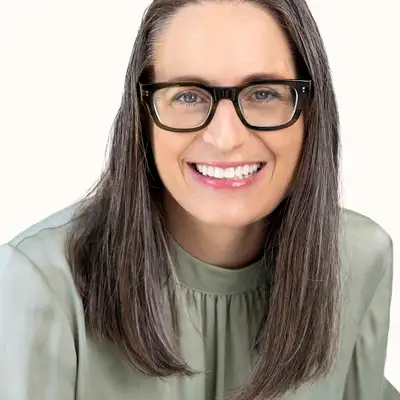
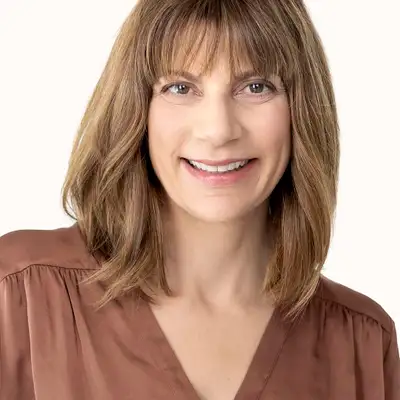
Born from 20 years of friendship, during which they navigated the trenches of autism parenting and advocacy, the Refrigerator Moms is Kelley Jensen and Julianna Scott’s way of reaching out to parents waging the same battles they were. Their purpose with this podcast is to clear the fog, silence the noise, and find a path through neurodivergence for parents that are stuck between bad choices. They tackle parenting topics such as mom guilt, tantrums, pathological demand avoidance, siblings, medication, comorbidities, social media, and much more.
Julianna Scott 00:00
There's a scene in the HBO movie Temple Grandin where a doctor tells her mother to institutionalize her daughter and blames her, the mother, for causing her autism. That's the refrigerator mother theory, the theory this show is ironically named for. But here's the thing. That's not quite how Temple's mother told it in her own book. Today we're going straight to the source. Dr. Temple Grandin, scientist, professor, autism advocate, and the woman who redesigned how half the cattle in this country are handled, is sitting down with us to talk about her mother, her mind and everything. Welcome to Refrigerator Moms. I'm Julianna Scott. I'm here with Kelley Jensen. And today's guest needs no introduction, but we're going to give her a proper one anyway because her story is exactly why this show exists. Dr. Temple Grandin didn't speak until she was four. She's now a distinguished professor of animal science at Colorado State University, the author of books like Thinking in Pictures, Animals in Translation and The Autistic Brain, and one of the most influential voices in both the autism community and the livestock industry. Her equipment and handling designs are used on an estimated half of the cattle handling facilities in North America. But we didn't just want to talk about the resume. We wanted to talk to her about her mother, Eustacia Cutler, who turns 100 this month, and about the theory this show takes its name from. We wanted to talk about pushing versus stepping back, about strength based thinking versus deficit based thinking, about over prescribing, about self diagnosis, about what it actually means to build a career out of a special interest. So again, thank you, Dr. Grandin, for joining us. It is a true honor.
Temple Grandin 01:40
It's really good to be here today.
Kelley Jensen 01:42
So we wanted to start at the beginning. You talk a lot in your books about your early intervention, about the kinds of therapies that your mom did with you. And really, you make several points that we really think are important. You are not allowed to be a recluse in your room. Your mom was not running interference a lot. You kind of were left to figure things out with the guidance of therapies that your mom had available to you. So tell us a little bit about your childhood.
Temple Grandin 02:13
I think before I do that, I want to talk a little about the refrigerator mom thing that got to be the worst in the 60s. I was born in 47, so when I was very young, fortunately, my mother wasn't exposed to that rubbish that came a lot later when I was a teenager, okay, and that probably was a good thing. I just wanted to clarify.
Kelley Jensen 02:34
Okay.
Julianna Scott 02:34
Thank you.
Kelley Jensen 02:35
Thank you.
Temple Grandin 02:35
This is 1949. I would have been taken. And I had no speech. All kinds of autistic behaviors. Doctors didn't know what autism was, most of them at that time. And so I went to a neurologist and the neurologist checked me out for deafness and checked me for epilepsy. Both of those were negative. And she referred me to a speech therapy clinic that just two teachers just did in the basement of their house.
Kelley Jensen 02:58
Okay.
Temple Grandin 02:59
And they did a lot of the things that good teachers do today. And there were three main emphasis in my program. Learning to talk.
Julianna Scott 03:07
Yes.
Temple Grandin 03:07
Learning how to wait and take turns at games. Lots of emphasis on that. And then skills. Eating with a spoon, putting a coat on. Basic skills. And I liked going to therapy. I used to call it talking school.
Kelley Jensen 03:19
Talking school.
Temple Grandin 03:20
Give you some tips on working with these young kids. Slow down when you talk. When the parents and other people talk too fast, it went to gibberish. Give the kid time to respond. They're like a slow computer. They need time to respond. I always encourage the kid to use their words. It might take 15 seconds for them to respond. Just like a slow computer. And the good teachers back then are doing the same thing that good teachers are doing today. They know just how hard to push.
Kelley Jensen 03:56
You remember it. You remember some of those exercises and some of those lessons?
Temple Grandin 03:59
Yep. And I remember turn taking games. I remember marching around with flags. I remember my speech teacher holding up a cup and saying, now say cup.
Kelley Jensen 04:09
Yes.
Temple Grandin 04:09
And she'd say cup and then she'd say cup. She'd say it both ways. And we started out just with names of things.
Kelley Jensen 04:16
Right.
Temple Grandin 04:17
So real basic. And it was a same thing that teachers do today.
Julianna Scott 04:21
Yeah. How are you motivated when they were doing those turn taking games and things like that?
Temple Grandin 04:25
Well, marching around with flags is fun. I mean she did little fun games. And I've watched other good teachers engaged an autistic kid. Just doing good, good fun games.
Kelley Jensen 04:38
Yeah, yeah.
Temple Grandin 04:39
There's good teachers. They just have the knack. There were two older teachers working in this house, you know, a couple of Down syndrome children there. And there were some other kids. And by the time I was four, I was fully verbal.
Kelley Jensen 04:50
Okay.
Temple Grandin 04:50
Though still slow to respond. Sometimes I can't emphasize the importance of early intervention in too many places. I'm running into three year olds on two year wait lists. Yes, three year olds, just terrible. I said we're going to have to start doing something. We're gonna have to get the retirees and the grandparents and the students out there and we're gonna start library play. We can't call it therapy even though we're gonna do therapy, we're gonna call it library play for legal reasons. We gotta start doing something with these kids.
Kelley Jensen 05:19
I agree with you.
Temple Grandin 05:19
You can't just let em vegetate on electronics. You're gonna have to start doing something.
Julianna Scott 05:24
Absolutely. The rise of the screens. I've heard you talk about this before about you just can't let the kids kind of veg out on screens.
Temple Grandin 05:35
No, no, no, no, no. I talked to a kindergarten teacher a month ago. She said these kids don't have any imaginary play. They don't have a house or anything like that. And I just heard on the news just recently the New York schools are banning all the Chromebooks and all the computers up through third grade.
Julianna Scott 05:53
We did an episode about screen time and I couldn't believe that they even have to say that kids up to I think 3 years old shouldn't be on screens at all. That parents need to be warned that kids shouldn't be on screens that early. That kids were being changed on their changing tables and holding phones.
Temple Grandin 06:12
Oh, I think it's ridiculous. And you get on a plane today and every window shade is down, dreary dark planes. And you'll have kids on there just glued to phones like kids in a window seat on a plane. They need to be looking out the window.
Kelley Jensen 06:27
Yes, absolutely.
Temple Grandin 06:29
This is just ridiculous. What being above the clouds was like. I can remember my first flight. I was fascinated by the idea of being above the clouds.
Kelley Jensen 06:36
How old were you?
Temple Grandin 06:38
12.
Kelley Jensen 06:39
You were 12 and where were you going?
Temple Grandin 06:40
Unfortunately plane was an ancient old Lockheed Electric with horrible pressurization. And my ears hurt, but I still, I was glued to the window for the whole flight.
Julianna Scott 06:51
Yeah, no, I think you're absolutely right. People are just like kids especially. Well and what we say, it's hard because parents are glued to their screens. So they give their kids screens and it's, you know, it's a slippery slope.
Kelley Jensen 07:05
One of our basic suggestions is to just not have the Wi Fi in the house or have the WiFi only connect in one room of the house and only active at certain times of the day.
Temple Grandin 07:15
Well, that's right.
Kelley Jensen 07:17
So that's one of our suggestions. We have a paper about screen times and we really encourage parents to learn to straddle good old fashioned play with modern convenience.
Julianna Scott 07:28
Yeah, it's interesting about screens and people will say, well, what did you do before screens? We grew up before screens. And we were out there doing basically everything that anyone would do without a screen. So yes, absolutely. This episode of the Refrigerator Moms is brought to you by Brain Performance Technologies. Brain Performance Technologies is a specialty mental health clinic that offers magnetic e resonance therapy, or MeRT, for autistic people aged 3 or older. MeRT is a transcranial magnetic stimulation protocol that utilizes an EEG diagnostic to deliver personalized magnetic pulses to stimulate the brain and build neural pathways effective in managing autistic symptoms.
Temple Grandin 08:11
Well, the thing is, on the screens, I mean, the schools have been taking phones away and at first the kids are really upset about it, but then after a few days, they start to like it.
Julianna Scott 08:21
Absolutely.
Temple Grandin 08:21
And they no longer try to have to put them in special bags that make them, you know, so they can't use them. And they figured out a different, and then they just put them in shoe bags and put them in airplane mode and leave them.
Julianna Scott 08:31
Right, right.
Temple Grandin 08:33
And they're finding that they are liking that. Yeah, right.
Kelley Jensen 08:38
I agree. It's scary for about a minute and then kids are back to playing.
Julianna Scott 08:42
Yes. What would you say to parents who think that screens are regulating? Some parents think that it regulates them and they need it to kind of regulate and calm down.
Temple Grandin 08:52
Let's use exercise to regulate.
Julianna Scott 08:55
Yes.
Kelley Jensen 08:55
When you were a child and you had had a long day or you had had some overstimulating behavior, what were some of your regulation tools? What did you do?
Temple Grandin 09:05
Mother would say, go outside and run the energy out of you. That's what she used to say.
Kelley Jensen 09:10
And did it work?
Temple Grandin 09:11
Yes, it did work.
Kelley Jensen 09:12
That's awesome.
Temple Grandin 09:13
But you see, kids just get so calm. I mean, I've seen like 2 year olds in a stroller at the airport just glued the phones. Yes, absolutely. Glued the phones.
Julianna Scott 09:21
Yes.
Temple Grandin 09:22
In a way that's really kind of weird.
Kelley Jensen 09:24
Yeah, I agree.
Julianna Scott 09:26
I agree.
Temple Grandin 09:27
Yeah. And I don't think this is a good thing. And just watching some silly cartoon, that's all that's on the phone.
Kelley Jensen 09:34
Yeah.
Julianna Scott 09:34
Right.
Temple Grandin 09:35
And they're not paying attention to any of the people around them. And I've also noticed. I've noticed that little tiny babies that parents are in a pouch on the front of them. There's no phones there. And that little tiny baby is checking everybody out on the tram.
Kelley Jensen 09:49
Yeah.
Temple Grandin 09:49
When we're going on the tram, everybody has to stand in there close together. And that baby is just like this looking all around at all the people on the tram and responding to them.
Julianna Scott 10:00
Right. We often say, you know, your face should be the most interesting thing your baby is looking at. Not a screen.
Temple Grandin 10:07
No. We got, you know, what was done. When I got older, we had one of the first TVs in the neighborhood. And when I saw very little, there were very few programs on. And then when it got to where a lot of programs on, I was limited to an hour a day. That was the rule. One hour a day, two hours on Saturday. Yep. TV watching was limited. And then it was go outside and play.
Kelley Jensen 10:28
And so what are the things that you used to like to do outside? What did you do? Did you run around?
Temple Grandin 10:33
Outside by myself, I flew kites. I experimented with parachutes, and I discussed those by myself. Discussed all little projects that I did outside. Figure out how to make a parachute out of a scarf and tinker with it to get it to open faster. You know, if it was with other kids, we'd ride bikes. We made up games, play tag, go down to the brook and throw sticks in it.
Kelley Jensen 10:57
Yes, excellent.
Temple Grandin 11:01
Dig things outside. It was always, just go find something to do outside.
Kelley Jensen 11:04
Your mom is 100. She's turning 100 on September 12th. Happy birthday to her. How is she?
Temple Grandin 11:10
Well, she's hanging in there. That's what she's doing. But mother had also a very good sense of when to push me. There were sort of like high expectations, but there were going to be some accommodations. For example, when we went and visited family and visited my grandmother or my Aunt Bella's house, I was expected not to disrupt Sunday dinner. This is when I was maybe six years old, but I was given a corridor that I could run in. That was the accommodation, a specified exercise zone. And when we went on summer vacation, I had to go on a ferry, and I was terrified of the horn. And yes, you're going to go on the ferry, but we'll make an accommodation. You can ride in the cabin under the deck, away from the horn, but you're going to go on the ferry. So I really like this idea of high expectations, but there were some accommodations. My birthday parties did not have noise makers.
Kelley Jensen 12:09
Oh, okay. So was it the pitch you think that bothered you? Do those noises still bother you?
Temple Grandin 12:14
No, I tolerate it now. I was in the parking garage just the other day, and the train has a blaster of horn, and I was tolerating it just fine. I didn't like it, but it was going right by the parking garage when I was in it.
Julianna Scott 12:28
That notion of pushing versus stepping back. What would you suggest to parents who have autistic children who have like a lot of food selectivity issues or things like that?
Temple Grandin 12:42
Well, what we need to be doing is let the kid get involved with food prep and food play in the kitchen because it is sensory and they play with food all they want in the kitchen. Give them some choices. Now the dining room, we have manners, they don't play with food. The dining room, the kitchen, we can play with food. The other thing I'm very concerned, I've run into three cases of scurvy in the last year and a half. That's vitamin C deficiency. If a kid has a very, very rigid, very little few things in the diet, you better give them a multiple vitamin because it was a hideous case. Vitamin A deficiency started to go blind. Iron deficiency, give them a multiple vitamin just to make sure you're not going to get the old vitamin deficiency diseases we used to study in home EC that we don't study anymore. And on one guy, I added up the vitamin C in his diet and it was half the recommended amount.
Kelley Jensen 13:40
Wow. Wow.
Temple Grandin 13:41
And he had scurvy and the doctors were not picking it up. The other thing, with individuals that remain non speaking and let's say they've been pretty good, now all of a sudden have a behavior problem, you've got to rule out a hidden painful medical issue they can't tell you about. Urinary tract infection, ear infection, toothache, stomach ache, acid reflux. Something they can't tell you about.
Kelley Jensen 14:10
Absolutely.
Julianna Scott 14:11
Yes, definitely. We're talking about supplements. What about medication? Both of our children have been on medication. It's been very helpful.
Temple Grandin 14:22
And how old were they when they put on medication?
Julianna Scott 14:24
I think my eight, maybe mine was pretty young. I would say kindergarten age we started.
Temple Grandin 14:32
You have to look at why you were doing it.
Kelley Jensen 14:33
Yes.
Temple Grandin 14:34
I think there's way too many medications just sort of indiscriminately given out to little kids.
Kelley Jensen 14:34
I would agree.
Temple Grandin 14:40
And given out with not much thought. Maybe three things given out at once when you ought to be trying one thing at a time, carefully. I'm just appalled. I've run into parents, the kids on seven drugs, and when you ask them why they gave them those drugs, it didn't seem to be any rhyme or reason to it or any thought put into it. Now I take antidepressants and I discuss that in my book Thinking in Pictures.
Julianna Scott 15:04
Yes.
Temple Grandin 15:05
But I started taking them in my early 30s. They were extremely helpful. They stopped the constant anxiety and I think they saved me. So the correct use of drugs can be really, really helpful. But on the other hand, way too much stuff is given out without much thought being put into it.
Kelley Jensen 15:21
Absolutely.
Julianna Scott 15:22
Agreed. Do you think that that's a function of doctors who just don't know what else to do? Why do you think there is so much over prescribing?
Temple Grandin 15:32
I think doctors are losing clinical skills and they're trying to do everything with an algorithm. I'm hearing more and more horror stories about somebody who went in the hospital with some problems with their blood vessels and they complained about burning pain in their back and had shingles.
Kelley Jensen 15:49
Oh.
Temple Grandin 15:49
And nobody bothered to look. Yeah, this just happened. I can't go into privacy issues here, but nobody bothered to look and they missed the window of time to give the antiviral drug. I think that we're getting to where the doctors are giving up stethoscopes. I've talked to two people in their 70s, friends of mine, last fall that went in. And these young ones don't think they need stethoscopes anymore.
Kelley Jensen 16:17
Wow.
Temple Grandin 16:17
Everything can just be done with algorithms and tests.
Kelley Jensen 16:20
Right.
Julianna Scott 16:20
And I hear more and more is just online, like video calls and not really being in the room with the patient, things like that. Yes, definitely. So beyond, when you started taking anti anxiety meds, I know you're kind of.
Temple Grandin 16:36
Antidepressants.
Julianna Scott 16:37
Antidepressants.
Temple Grandin 16:38
Big difference between antidepressants and things like Valium and those benzo drugs, you want to avoid those, you want to avoid benzos. But there's a lot of people, especially older, or a little Zoloft or something like that can really make a difference. And the mistake that's made with the antidepressant medications is too high a dose, because I'm taking a starter dose of an ancient old drug called desipramine. And if you take too high a dose, you get agitation and insomnia and absolutely a mess. Now, even though Thinking in Pictures is over 25 years old, the information on the drug dosing and everything is still correct. And I recommend that people read my chapter titled A Believer in Biochemistry.
Julianna Scott 17:22
Yes, I know, and I really enjoy your, you've got several books, including The Way I See It. And the adolescence one I just read, that was excellent too. Also mentioned medication and I really liked, I can't remember which book it was in, but you mention when you're considering a treatment that you hadn't heard of before. I liked it. I think it was like the 3 family, 3 individual rule they can convince works.
Temple Grandin 17:49
Okay, like you take colored paper for dyslexia. Some people see the print jiggle on the page, and if you print it, you see, like this card right here is light blue. So you print it on light blue paper, or maybe light gray or light tan paper, the print stops signaling. Nobody knows why it works, but when they try to do evidence based, they put all the dyslexics in there. It may only work on 10%, but it really works on that 10%. And the colored paper can't possibly hurt you, and it just takes a few minutes to try it. And sometimes it works, because when they did the evidence based, they mixed all the dyslexia subtypes together.
Kelley Jensen 18:31
Right.
Temple Grandin 18:32
Yeah.
Kelley Jensen 18:33
Fantastic.
Julianna Scott 18:34
So you mentioned that, let's pivot again about diagnosis. What was your thought when the DSM changed and changed to the different levels? And do you think that there is a good argument for separating out profound autism to a separate diagnosis? What do you think of the DSM criteria and the umbrella now?
Temple Grandin 19:00
Well, the way I look at it is a little kid can look really, really severe. I was one of them. And the only good thing is I did not have any sign of epilepsy. That was the good thing. But I look really severe. You can't use those levels on little kids. That needs to be when they get older. But you have a big difference between, then the Asperger's is merged in, which is basically autism, no speech delay. But you see, the problem is you're going all the way from Einstein and Bill Gates to somebody who can't dress themselves. So it does make some sense. You have really profound cases, they require 24-7 support. And that's very different than somebody like me that needs to be out there getting a job. I'm seeing a lot of smart, fully verbal autistic kids doing well in school, not launching into the workplace. That's another big problem. They're not learning work skills. And then the grandparents come up to me all the time and they discovered they're autistic and they all had decent jobs. Because when they were younger, they had paper routes. Now, I know those are gone now, but how about some paper route substitutes? Walking Mr. Jones's dog, helping out a senior next door, where you're doing something on a schedule for somebody outside the family.
Kelley Jensen 20:14
That's fantastic advice.
Julianna Scott 20:16
Yes. I know that you've talked a lot about and written a lot about careers and focusing on those who are able to lean into their special interests, their strengths. And also you talk a lot about thinking in pictures and how there are those who think in pictures, those who think in patterns, and those who think in words and facts.
Temple Grandin 20:40
And I discuss that in this book. Yes, Visual Thinking. I discuss that in this book right here.
Julianna Scott 20:45
Yeah, fantastic book. So can you talk a little bit more about how autistic people can find a career stemming from their special interests and those different ways of thinking and how that translates to the job market?
Temple Grandin 21:03
Well, my kind of thinking is what's called object visualizer. I'm terrible at abstract math, like algebra. In fact, I'm very concerned, we're screening out our clinical skills in doctors and veterinarians with all these draconian math requirements, stuff they don't even use. But a visual thinker like me, the kind of stuff we're good at, mechanical things. A lot of my kind of mind needs to go into trades, and these jobs are AI proof and they'll be extremely good at it. I worked with people that were undiagnosed autistic, owned big machine shops, and they didn't invent equipment for clients, they built stuff for me. And quite a few of them were either autistic, dyslexic or ADHD, owning a big shop. And then what makes me crazy is then all this other kid's playing video games in the basement and he's never been introduced to a tool. You see, students can't get interested in things unless they're exposed to them. The worst thing we ever did was take all the shop classes out, and the cooking classes and art classes and all these other kinds of classes. Taking that stuff out has been really bad. So my kind of thinker is going to be really good at animals, mechanical, all kinds of mechanical stuff, art and photography, and terrible at abstract math. Then you have your pattern thinker. This is your mathematician, computer programming, all kinds of higher mathematics stuff. Music and math go together, art, mechanical go together. And then another kind of autistic mind is the word fact mind. Like they might know everything about the World Cup soccer, but they can be extremely good in specialized retail jobs where they'll know everything there is to know about business, insurance.
Julianna Scott 22:42
Yes, that's my autistic son, he's definitely in the word fact category, and he has moved from his special interest into his career.
Temple Grandin 22:53
And what is his career?
Julianna Scott 22:54
So his special interest growing up was everything military and strategic thinking. And now he works, he's an expert in the defense industrial base.
Temple Grandin 23:05
Okay, but you see there, they found a job where knowing all these facts about something is valued by the employer. And things like selling cars has been successful because they'll know there might be 50 cars out on the dealer's lot and he knows every single one of them, and help the person get the right car, not the most expensive car, the right car.
Julianna Scott 23:28
Right.
Kelley Jensen 23:29
In your books you talk about the experience of being bullied and that your special interest carried you through those years. What would you say to a teen that feels they're being bullied in their school right now? What would you say to him and his parents?
Temple Grandin 23:43
Well, sometimes the bullying's so bad they have to be taken out of the school. I have a 16, I want to put them right in the workforce and then maybe homeschool them. I'm really concerned about this failure to launch.
Kelley Jensen 23:57
Yes.
Temple Grandin 23:58
The kind of things that were, at least in my industry, which I know the most, getting back to these building things, custom mechanical equipment. There were two things that worked. The guy would get a job in the maintenance shop at a factory, and he was the weird maintenance guy that fixed everything and they just left him alone. That worked. The other thing that worked is he'd have his own business and go and do a project, then go to another place and do a project, which helps keep them out of the weird politics stuff in the company. That's hard to deal with. Those are two kinds of things that have been really good. You know, make yourself really good at a skill that other people want and appreciate. And mentoring was very important to me. I had to learn how to be a lot more diplomatic. I couldn't just be calling people stupid and things like that.
Kelley Jensen 24:47
And so did you have some mentors that helped you with that?
Temple Grandin 24:51
Yes, I did. And you can't just be vague and say you're rude to colleagues, when I called it welding pigeon doo doo, the plant engineer made me apologize for the rude talk. He told me exactly what to do.
Kelley Jensen 25:07
So that's very effective for my son, and I was always taught to tell him what he could do, not what he couldn't do. And I think it's super important to just be, call me at 5:30 on Tuesday, don't keep calling me, call me here, we're going, you know, very specific language was very helpful. So you touch on that beautifully.
Temple Grandin 25:30
The other thing is tasks that involve sequence, like let's say cleaning an ice cream machine at McDonald's, pilot's checklist, take apart steps, cleaning steps, reassembly steps, in a pilot's checklist format where you just have bullet points which are memory joggers for the steps. Because I basically need an external working memory for sequence. Very, very simple accommodation. And we need to teach the autistic people how to make their own checklists.
Kelley Jensen 25:58
That is fantastic advice.
Julianna Scott 26:00
So you found your home in the cattle industry, and your special interest with horses and cattle and animals. And I've read, and I believe I saw in your, it was a great documentary, the one that came out of Colorado State.
Temple Grandin 26:18
An Open Door.
Julianna Scott 26:19
Yes. That was fantastic. And how you really identify first as an animal scientist. We're big, we grew up with horses and all kinds of animals.
Temple Grandin 26:35
Let's just start with the most important things. Had to be exposed to horses and cattle.
Julianna Scott 26:40
Yes.
Temple Grandin 26:41
How could you get interested in something you were not exposed to?
Julianna Scott 26:45
Right.
Temple Grandin 26:45
And I got exposed to cattle out of my aunt's ranch. My horse interest came earlier. But we gotta expose kids to lots of different things. I'm seeing so many kids today, they've never used a tool. I talked to a mom just the other day, her kid does Legos and he's like 12, 13 years old, he's never used a tool. I think that's a gigantic mistake. I was doing tools in second grade. Kid's good at Legos, let's start tools in second grade. I did hammer, pliers and screwdriver. The kid's good at math, let's move them ahead. Build up the math. Don't make them do baby math. Build on the thing they're good at.
Julianna Scott 27:19
And so if the schools are no longer providing those opportunities like vocational training and things like that, it's really up to the parents then to expose their children, give them those tools, find a woodworking class, find a shop class.
Temple Grandin 27:33
Exactly.
Julianna Scott 27:34
Yes.
Temple Grandin 27:34
Home Depot's got some little classes they do for free.
Julianna Scott 27:37
Yeah.
Temple Grandin 27:38
There's resources in the neighborhood, we've got to tap into our resources. I just went to a fabulous program in Colorado, it's called the Western Heirs, and it's a horse program, totally all self funded with volunteers. They start with nine year old kids, basic riding, and then the higher levels do very, very big precision drills for major livestock shows. And it's all self funded. And what they've done in this is to tap into retirees also. It costs you $25 a session, they do have to charge something, they've got to make it pay. And then the parents have to do some volunteer work for it.
Kelley Jensen 28:20
Yeah, yeah, that makes.
Temple Grandin 28:23
That's the only way they can get it supported. And they have a building and they're on a fairground, so that's all paid for the buildings.
Julianna Scott 28:29
That sounds like an amazing program.
Temple Grandin 28:31
But the thing that, what did they do different here? Well, one of the things they did different is making the parents volunteer also. They go after the retirees when they first retire, when they're looking for something worthwhile to do.
Julianna Scott 28:45
Right.
Temple Grandin 28:46
Another thing they did, this program's been around for 60 years, it's had three different managers, still there. And one of the things, they're learning these precision riding where they ride in formation, like maybe 20 horses in formation, it's hard to do. But they say kids need to learn how to do something that's hard and learn how to do it, to get grit, resiliency, teamwork. But the thing that amazed me is that this program is completely self supporting.
Julianna Scott 29:14
That is amazing. That is amazing.
Temple Grandin 29:16
And they only have one paid employee that lives on the place and feeds the horses and fixes up the arenas.
Kelley Jensen 29:23
So you have a book coming out in June all about calming animals and reducing fear. Tell us about that. That's a little bit of a departure.
Temple Grandin 29:32
Well, the thing is, I understand fear because before I took the antidepressant, my nervous system was in a constant state of fear all the time over nothing. In fact, my fear center, the amygdala, was bigger than normal. That showed up on a brain scan. And just the littlest things, some little thing, I'd be having a big panic attack over it. And this is a problem for a lot of autistics, it's just extreme panic attacks. And so I can relate to fear. And lots of times when an animal, a horse, kicks at you or lashes out, it's not due to its aggression, it's afraid, it's lashing out scared. And people mix up aggression and fear all the time.
Kelley Jensen 30:14
Very, very true.
Julianna Scott 30:15
Right, right. We talk about that a little bit about meltdowns and panic attacks and how a lot of it is fear based, and for autistic children especially. And one of the books, your Animals Make Us Human, was really great. What insights did you gain about those emotions of animals that relate to humans? Is it just the fear...
Temple Grandin 30:39
Or what else. Animals Make Us Human, talk about the Panksepp emotional systems. You have fear, all mammals have this. Then you have aggression, you had a couple of bulls duking it out on the pasture, that's not fear, that's aggression. Then you have separation distress, the young animals separated from the mother, the flock of sheep, one lamb's off by itself, that's separation distress, that's different than fear. Fear and separation distress are separate traits. Then you have seek, or the urge to explore. Like one dog, all it wants to do is chase a ball, and the other dog could care less about balls. One cow is going to want to climb up the hills and graze, and the other cattle are too lazy to do it. That's the seek, or the exploration trait. Then you've got sex drive. Then you've got mother young nurturing, like some animals seek out stroking more than others. And then you have play. These are emotional systems, all mammals have them. Now what seems to happen in autism is you get oftentimes an overactive fear system. And what the antidepressant did for me was damp down the fear, sort of like turning the idle screw on an old fashioned carburetor.
Julianna Scott 31:50
And once you started taking that, did that eliminate, you kind of famously created a squeeze machine for yourself?
Temple Grandin 31:58
Well, I was still using that even after I took the medication. But you see, the pressure from the squeezing machine helped me calm down. Another thing about sensory stuff, I could control the squeeze machine. This is very important, when the autistic individual can control the stimulus. I had problems with people hugging me because it was too overwhelming. Or if the child doesn't like the vacuum cleaner and they can turn it on and off, that can make a really, really big difference.
Kelley Jensen 32:27
That's fantastic.
Temple Grandin 32:28
The child controls it. And you don't want to wear headphones all the time, because that will make the sound sensitivity worse. But the child can have them with them, with control, but try not to wear them all the time.
Julianna Scott 32:42
So did you eventually not need to use the squeeze machine anymore?
Temple Grandin 32:46
Yeah, I guess, based, yes, eventually I did not need to use it.
Kelley Jensen 32:49
Okay.
Temple Grandin 32:50
I was tolerating hugging for real people.
Kelley Jensen 32:52
And how were you identifying what the fear was? Or was it, the fear was just what it was?
Temple Grandin 32:58
It was just a nervous system, fear system turned on overdrive.
Kelley Jensen 33:02
Okay, okay.
Temple Grandin 33:03
So any little thing would set it off. Any little stupid thing.
Kelley Jensen 33:08
And so the SSRI really helped with that, the squeeze machine really helped with that, time to process, there are other things.
Temple Grandin 33:14
And exercise, exercise, another thing also.
Julianna Scott 33:17
And what about determining, you know, what triggered the fear?
Temple Grandin 33:21
It could be just the dumbest thing. I could be going out to the mailbox and I'd be worried I'd get something in the mailbox bad. I mean, just stupid.
Kelley Jensen 33:30
Right, right, right, right. Yeah.
Julianna Scott 33:32
What about animals with autistic children?
Temple Grandin 33:37
Some autistic kids just really relate to animals and maybe they ought to be doing a career with animals. I've seen horse trainers I'm pretty sure were autistic.
Kelley Jensen 33:47
What are your thoughts on a companion animal, a guide dog...
Temple Grandin 33:53
A service dog.
Kelley Jensen 33:54
A service dog for an autistic child. There are some families, some...
Temple Grandin 33:58
Kids, having a dog opens up a lot of doors for them. It can be a social icebreaker. Some autistic kids instantly relate to dogs, they just love them. Then you've got other autistic kids a little afraid of horses and dogs at first, and then they love them. And there's been some really, really good things, with therapeutic riding and horses, really, really good things. And then there's some kids where the sensory aspects of the animal is just not going to work. They can't stand the smell of it, or they're afraid it's going to whinny or bark, because you can't control a dog barking totally. And then an animal is not appropriate. But for most of the kids, animals are good. That's the three kinds of patterns I've seen autistic kids relate to animals.
Julianna Scott 34:47
So did horses really help you, or was it a dog? What animals did you have growing up?
Temple Grandin 34:52
Well, for me, as a teenager, I have a paper, it's titled How Horses Help the Teenager with Autism Make Friends and Learn How to Work. And through horses, I was put to work at my school cleaning nine stalls every day. So I was learning work skills with horses and responsibility. But I also had friends through getting horses ready for horse shows and doing horse activities. So horses were both something that taught me work skills, but also there were activities where I had friends.
Kelley Jensen 35:21
What about a dog? Did you have a dog?
Temple Grandin 35:23
We had dogs when I was a kid. And in fact, dogs just kind of ran loose in the neighborhood when we were children, and we did not have all the behavior problems we've got today.
Julianna Scott 35:33
Oh, yeah. Well, we're big dog people, so we have dogs, and they definitely helped my son. And I know your dogs help.
Kelley Jensen 35:44
Yes, absolutely.
Temple Grandin 35:46
The animals can be really great. In fact, at this Westerners program, I talked to three or four, it could say that we're definitely autistic, ranging fairly small kids to older ones.
Kelley Jensen 35:57
Are you taking care of your brain? You've tried medication, you've gone to therapy, but has anyone talked to you about brain care? It is the mental health treatment no one has told you about. At Brain Performance Technologies, we help with depression, PTSD, autism and many other mental health conditions. Our treatments are drug free and non invasive. Reach out to us about insurance options, brainperformancetechnologies.com.
Julianna Scott 36:24
So going back a little bit about your mother, because I know that at one point you asked your mother to join you on the lecture circuit, and I know that I read in her book that she really felt it was, she felt a responsibility to talk to other mothers. How did she have mothers in her circle when you were growing up that were also going through what she was going through, or was she pretty isolated at that time?
Temple Grandin 36:50
She was pretty much by herself.
Kelley Jensen 36:52
Yeah.
Temple Grandin 36:53
You see, I just turned 79. Nobody knew what autism was in those days, but she had a really good sense of how to push me. And when I had to go to a special school, she had worked as a reporter writing about special schools. And she picked out three schools and gave me a choice. There was always some choice, but staying in my room all day was not one of them. And when the opportunity came up to go to my aunt's ranch, which was really important for my career, I was afraid to go. Mother said, you can go for a week or you can go all summer. Not going was not a choice. And I got out there and I loved it. And I've had other moms tell me, well, my kid was afraid to go to a summer camp and he got out to the summer camp and he loved it.
Julianna Scott 37:38
Right, so your mother had a real instinct about what to do and how to push you.
Temple Grandin 37:42
It sounds like she knew how to push, stretch and give some choices.
Julianna Scott 37:48
Yes, I think choice is really important.
Kelley Jensen 37:51
And then you talk again about time to process those choices. You weren't, talk slowly, talk clearly, talk loudly and give time.
Temple Grandin 38:02
That's right.
Kelley Jensen 38:02
And give time.
Temple Grandin 38:03
And I'm sorry, I have problems with interrupting. I have a slow processing speed and I still have problems. I can't get the timing right. I still have problems with that. And I've got problems with rapid chit chat conversation, I simply can't follow. It goes too fast.
Kelley Jensen 38:17
Okay. Yeah. So I think that's people forget, you know, you forget these things. And one of the things we're trying to do, the Refrigerator Moms, is remind everyone that the brain does think differently.
Julianna Scott 38:29
Absolutely. Well, one of the things that has changed a lot since you were diagnosed is people are much more aware of autism today, as you've probably seen through your lecturing, and just probably the crowds have gotten bigger and bigger and more people are talking about it. And it's almost now, we were just talking about this recently, that people are even self diagnosing now. Have you heard about this trend? And people now are identifying themselves as autistic.
Temple Grandin 39:07
Oh yeah, it's happening all the time. It's not a precise diagnosis, it's a behavioral profile. And the thing is, autism's a continuous trait. When does slightly nerdy become autistic? There's no black and white dividing line.
Julianna Scott 39:22
Right, right.
Kelley Jensen 39:24
And what do you think about, have you heard of pathological demand avoidance, PDA, as a profile of autism? It's diagnosed as a profile of autism in the UK and we don't have any equivalent here in the United States.
Temple Grandin 39:37
I thought it was ridiculous when this got diagnosed in a four year old. Absolutely ridiculous.
Julianna Scott 39:43
We agree with you.
Temple Grandin 39:44
There were some things where I was just expected to do, and that didn't exist in my generation. We are going to go on that ferry, but we'll make an accommodation, and you will not have to sit underneath the horn and get blasted by it. We can even go sit in the car down on the car deck, get away from the horn. But we are going to go.
Julianna Scott 40:14
I mean there's a real lack of resilience.
Temple Grandin 40:18
Well, that's one of the things that the Westerners, they drill the little kids, they just do riding lessons. They enough first sessions, just walking, they just do regular little riding lessons. But then when the kids get older they do this really kind of complicated precision drill teams. And one of the things they believe, and I agree with this, it's important for a kid to learn something that is difficult to master, because that teaches resilience. And I'm very concerned that we've been taking this out of the school. So I was horrified to hear that a school stopped doing the physics experiment where you put an egg, you have to design a box to put an egg in, chuck it off the top of the building and make a box so the egg doesn't break. And a school took that out because kids got too upset when their egg broke.
Kelley Jensen 41:02
Oh no.
Temple Grandin 41:03
I thought that ridiculous, ridiculous. And that just happened like two months ago. Wow, that's ridiculous.
Julianna Scott 41:14
That is ridiculous.
Temple Grandin 41:15
I would spend hours figuring out how to make my little bird kite fly. Hours and hours and hours tinkering with it. And the grown ups just let me tinker. As long as I didn't do anything dangerous, the grown ups just let me tinker.
Kelley Jensen 41:28
Some of the parents doing that today, some of the parents that tell us that they are struggling with school refusal, where the young children are refusing to go to school, what do you suggest to those parents? Two choices, right?
Temple Grandin 41:41
You said, I don't know, I would have been a pile of trouble.
Kelley Jensen 41:44
Yeah, I agree.
Julianna Scott 41:48
Is it expectation? Is it that, putting that expectation there?
Temple Grandin 41:52
Some of it is just an expectation. Now you put out a situation at school that's really bad, and you have to make sure that they aren't doing something abusive. I heard something the other day, they were locking a kid in a janitor's closet, that just recently, that's really bad. Somebody else locked a kid in a box, no, that's totally bad. So you have to make sure there isn't something going on at school that's totally bad. But there has to be some expectations, right?
Kelley Jensen 42:23
Absolutely.
Temple Grandin 42:25
For things.
Kelley Jensen 42:25
Right, right. And what are they doing at home, if they are not going to school, what are they doing?
Julianna Scott 42:31
A lot of screen time.
Kelley Jensen 42:32
No screen time. Right, right. So...
Temple Grandin 42:35
And then we have to replace screen time with other things and things that we do with other people.
Julianna Scott 42:41
Okay. Speaking of other people, I feel like there is, and we've talked about this with our own autistic children, loneliness, and I feel that's one of our biggest concerns as parents, the difficulty making connections, making friends. Do you have any advice for parents or those who are autistic who struggle to make friends?
Temple Grandin 43:09
Well, I think found friends who shared interests. Friends riding horses, friends would ride bikes together. I had a lot of friends in the construction industry, I used to love to sit around and talk about how to build stuff, that was just super, super interesting. But I think we need to get the kids involved in things where they can get friends who shared interests. The other thing I figured out on the job front really quickly was make myself useful, make myself good at something. Also, these kids are afraid to talk to people. Both Bill Gates and I, when we were nine years old, had to be host and hostess at parents' parties, and we just sold stuff door to door for charity. Something that cost nothing to implement, and it was really good training, because as in a scene in the HBO movie where I go up and I get the editor's card and I started writing for that magazine.
Julianna Scott 43:57
Right, yeah.
Temple Grandin 43:59
And I made myself good at that.
Julianna Scott 44:00
Yes, absolutely. Yeah, that is excellent advice and inspiring for sure.
Kelley Jensen 44:06
I think that finding people with shared interest is good advice for anybody, regardless of your...
Temple Grandin 44:13
Well, absolutely, absolutely.
Kelley Jensen 44:16
It's gotten a little bit lost, hasn't it, as we all spend more time alone.
Temple Grandin 44:20
We need to get them out, get them out doing things. One thing I'm against, recluses in the room, that's one thing we're not going to be. And some of these older kids get into very bad, really horrid stuff online, I don't really want to discuss.
Julianna Scott 44:33
No, I know, I don't.
Temple Grandin 44:34
Very bad stuff. And we need to get them out doing real things. And the other thing we need to be doing with the fully verbal autistic kids, we need to start doing work skills at around 11 and 12. Things like walking a neighbor's dog, it's not illegal, they need to get jobs. And I want to avoid what I call chaos jobs, crazy busy lunch window, let's avoid that, chaos during the holidays in a store, a delivery route downtown New York, where it's, I call those chaos jobs, those don't work. It's too much rapid multitasking. But there's plenty of other jobs that do work. And people say, well, how do we do it? I said, use your connections. Every decent job I ever got, I went in the back door and I would call people up on the phone and talk my way in.
Julianna Scott 45:23
Well, it certainly worked well for you.
Temple Grandin 45:25
Absolutely.
Julianna Scott 45:27
One thing I want to talk to you about, a little bit pivoting slightly away from autism, is you've mentioned several times that one of the bigger barriers rather than your autism was being a woman in the cattle industry when you started. So do you feel like, obviously you're such an inspiration for those in the autism community, I think you're equally inspiring in the kind of feminist, breaking doors down for women in male dominated industries sense.
Temple Grandin 46:04
I didn't, I never got involved in demonstrations.
Julianna Scott 46:06
Right, but you...
Temple Grandin 46:09
But what I did, I made myself very good at what I did. Now in the magazine there were ladies in livestock journalism, so that was easier to get into, you see, and that was sort of opening up the door. But then when I got into the design work I made myself good at it.
Julianna Scott 46:28
Yeah. So are there more women in your industry now?
Temple Grandin 46:32
Oh, lots, lots and lots of them now. Lots of them. Lots of them.
Julianna Scott 46:36
That's amazing.
Kelley Jensen 46:37
Excellent.
Julianna Scott 46:38
That's amazing. And you were...
Kelley Jensen 46:39
Kudos to you, I know, for...
Julianna Scott 46:41
Being a pioneer, the first one through that door.
Temple Grandin 46:43
Yeah, there's lots and lots of them now.
Kelley Jensen 46:45
Yeah.
Temple Grandin 46:46
But I worked, I never went the demonstration, that kind of activism, I never did any of that stuff.
Kelley Jensen 46:53
Was not interesting to you? Did you, I mean, you were sort of already...
Julianna Scott 46:57
Doing it, you were living it.
Kelley Jensen 46:59
You didn't need to do any kind of activism because you weren't being prevented. You didn't let anything get in your way.
Temple Grandin 47:04
I had a very big motivation to prove I wasn't stupid. I still can't do algebra and calculus. And then when I got out of industrial construction, I discovered all these shop people, they couldn't do algebra and calculus either. But you ought to see their patent portfolio for mechanical devices, just amazing. But I had a huge urge to prove I wasn't stupid, that was a very, very big motivator.
Kelley Jensen 47:26
That's an interesting point that you bring up, that you had a sense of yourself and a sense of self worth. You knew you weren't stupid, you were just going to show everybody what you already knew about yourself.
Temple Grandin 47:35
Well, I wanted to prove I wasn't stupid, so I made myself good at stuff that I did.
Kelley Jensen 47:39
Fantastic.
Julianna Scott 47:40
Right, right. Another thing that I think, everything that you've done is very inspiring, but I know that you and your mother created the Temple Grandin and the Eustacia Cutler Autism Fund, offering no cost webinars. We feel really strongly that the information we provide on our website, the papers we write and things like that for moms, it's not behind a paywall. What inspired you to create that fund, that website, those webinars?
Temple Grandin 48:10
Well, just to get information out there. But on the other hand, I do lots and lots of webinars like this one right now, I don't charge anything for it. Open access. When I started out in cattle handling, I wrote lots of articles, I put a website up showing people how to design stuff, no paywall there, just put stuff out there, that's what I do. If I have to travel somewhere, I've got to charge for that. Also, you might wonder what I've done with book money and speaking engagement money, I have put 27 masters and PhD students through the animal science behavior program.
Julianna Scott 48:49
I saw that in the documentary in Open Door, and it was really, I want people to know that. It's really inspiring and amazing that you've done that. And what inspired you to put your money there in the scholarships?
Temple Grandin 49:10
Well, I think that we need to, both Bill Gates and I, we're the same generation, were taught we were supposed to give back. And I think that's one of the reasons why he's put so much money into medical things. We were taught to give back in our generation. And I think it gets back to, I remember one thing in church, we had to give a present for a poor kid, and I remember they had a big manger full of wrapped presents, and I was maybe 10 years old, and the minister says it's better to give than to receive. It was a very basic thing that we were both taught. In fact, Bill Gates has a book out now called Source Code, and that explains it. And I also learned very early in my career, when I was designing things, you might have a rich person that bought a ranch for a plaything and a jet in their garage, that does not get them happiness.
Kelley Jensen 50:00
I learned, what makes you happiest?
Temple Grandin 50:04
Well, I get happy when things that I do work. Oh, I fixed a pipe condensation problem in a plant the other day.
Kelley Jensen 50:11
You did?
Temple Grandin 50:11
I didn't know what...
Julianna Scott 50:14
So that still gets you going.
Temple Grandin 50:16
All I did was change the temperature of the pipe by 2 degrees.
Julianna Scott 50:20
Oh wow.
Kelley Jensen 50:21
Still a genius. Still stopped it from dripping.
Temple Grandin 50:25
That made me happy. I guess the old lady still can fix things.
Julianna Scott 50:29
Oh my gosh. So gives me a hopeful little thing.
Temple Grandin 50:33
I got thinking about a cold water glass and a thing I had read on an extension publication about condensation and food coolers, and I called up and I said, why don't you try that?
Julianna Scott 50:46
So you're still out there, are you in slaughterhouses? Where are you going out?
Temple Grandin 50:52
Well, I just was at the Westerners yesterday, wonderful horse program, and I questioned them extensively on how they funded it, because we're going to have to figure out how to do things with less funding. I was amazed, this thing is self supporting. Now they are on a piece of land where it's buildings, they got those. But there's other ways that a horse facility can get buildings. For example, there's been two very nice therapeutic riding stables where a real rich person retired from their horse activities and gave their stable.
Julianna Scott 51:28
Wow.
Temple Grandin 51:29
Who was doing therapeutic riding, beautiful stables, I've been to about two of those.
Kelley Jensen 51:33
That's awesome.
Temple Grandin 51:34
And I'm really interested in seeing how the things are funded, because I'm interested in helping people implement it.
Julianna Scott 51:44
Right.
Temple Grandin 51:44
Because the problem is funding is drying up, because us seniors are sucking it all up in Social Security. They're half the national budget.
Kelley Jensen 51:53
Yeah, yeah.
Julianna Scott 51:54
Are you still writing?
Temple Grandin 51:56
No, I'm 79 years old. I just don't want to do anything today where I could get hurt.
Julianna Scott 52:01
No, I...
Kelley Jensen 52:02
What about the hundred push ups?
Julianna Scott 52:04
Are you?
Kelley Jensen 52:05
What about the 100 push ups a day? Are you still doing the 100 push ups?
Temple Grandin 52:08
I'm still doing that. I'm doing 100 push ups.
Kelley Jensen 52:12
That's amazing.
Julianna Scott 52:13
That is inspiring.
Kelley Jensen 52:14
And are you still drawing, doing that?
Temple Grandin 52:16
That I'm doing, I have to make myself do them. And I found a new exercise that's helping my back a whole lot.
Julianna Scott 52:23
Oh, tell me.
Temple Grandin 52:24
An animal welfare meeting at a restaurant table.
Kelley Jensen 52:28
What is it?
Temple Grandin 52:29
The thing is, we've got to figure out a lot more stuff that we can do in the community, that's what we got to do. And the thing that fascinated me about the Western Heirs is it's completely self supporting.
Julianna Scott 52:45
Yes. So do you think that in the world of autism advocacy, is that the most important thing, that we look into funding programs? What do you think? What do you see as...
Temple Grandin 52:59
I think one thing I think we've got to do, we've got to tap into retirees. You got people retiring like at 55, they got another 20 years of work left in them, and get, because this whole thing, I went to it yesterday, it's all volunteers, and they said we got to hook them when they first retire, when they're looking for something to do with their life.
Julianna Scott 53:27
You're absolutely right.
Temple Grandin 53:30
Working with all these kids is something really worthwhile to do.
Julianna Scott 53:34
Right, right. So you think that it's that notion of giving back and finding those people who can use their talents, as they retired, they use those same talents that they were using in their industry, to give back.
Temple Grandin 53:53
Well, let's set something up, retired mechanic and start teaching kids auto mechanics, because a lot of video game addicts, I'll tell you how to get them off video games.
Julianna Scott 54:02
Yeah.
Temple Grandin 54:02
Car mechanics, and it has been successful, and they find out that's more interesting than video games.
Julianna Scott 54:10
What about those who are in the word fact category? When they're in those industries, when they retire, how can they give back?
Temple Grandin 54:19
Well, the Westerners, as a voluntary accountant and record keeping people, they have to do travel logistics when they go out and do shows, that word fact person would be very good at doing that, doing the non horse part of it. And there's a big part of it, they have to do all the travel logistics, they've got to rent motels, just planning all that stuff out.
Julianna Scott 54:50
Yeah, yeah. Well, this is it, really.
Kelley Jensen 54:53
It's been amazing. Tell us a little bit about your Temple Grandin stuffy.
Temple Grandin 55:00
Oh, okay. Well, that was Future Horizons came up with the idea of this, and there's a toy company that specializes in really unique toys.
Kelley Jensen 55:08
Yeah.
Temple Grandin 55:09
And Jennifer Yakko, the president of Future Horizons, came up with the idea of doing it. They made her really cute.
Kelley Jensen 55:17
She's adorable.
Julianna Scott 55:19
She's fantastic.
Temple Grandin 55:21
Through the Future Horizons website.
Julianna Scott 55:24
Yes. And does the cow have a name?
Temple Grandin 55:27
No, maybe we don't name it right now. It didn't have a name. It's just a cow. Maybe I need to name it.
Julianna Scott 55:34
I think you need to name it.
Kelley Jensen 55:36
I think you do need to name it after.
Temple Grandin 55:37
Okay, maybe I need to do that. I hadn't thought about that.
Julianna Scott 55:42
Well, let us know what you decide to name it. So what was the name of your first horse?
Temple Grandin 55:46
Oh, the first horse I ever actually owned, his name was Sizzler. When I was in high school, they had horses there, and there was a horse that myself and my roommate rode, named Bay Lady, and we showed her in shows.
Kelley Jensen 56:00
Okay, fantastic.
Temple Grandin 56:01
In teenage equitation class, trail class, boy, I had to work so hard in trail class to figure out how to get the mailbox open in the trail class.
Kelley Jensen 56:13
Well, it's been wonderful to talk to you. Thank you for everything you do and everything you have done. And thank you for the really practical, common sense advice that you continue to give to people. Sometimes the most simple explanation is the best explanation, and we feel like that's getting lost in all of the social media and all the noise.
Temple Grandin 56:37
I think sometimes I just want to end up, I've got to get on another podcast, but I'm seeing too many kids where their diagnosis is defining them. I had a mother come up, give me this big complicated genetic blah blah blah, and I'm going, don't let that hold you back. Yeah, you have some physical limitations with the joints, but let's look at what you can do. You like tropical birds, you could work in a zoo where it's not going to be physically taxing. I just see a solution for that.
Julianna Scott 57:10
Fantastic. I think that's fantastic. And I did hear you say something about what's important is doing something real and making an impact, and that you want to open doors for other people. And I think you are 100% doing that, and we thank you for that.
Temple Grandin 57:25
Well, it's been great to be here.
Kelley Jensen 57:27
No problem.
Temple Grandin 57:28
Thank you so much for having me.
Kelley Jensen 57:30
Thank you so much.
Julianna Scott 57:31
You are a true pro. Thank you so much.
Temple Grandin 57:33
Okay, great to talk to you.
Julianna Scott 57:35
Bye. Thank you for listening to this episode of Refrigerator Moms. Don't forget to subscribe so you never miss an episode. You can also find episode notes, resources and any refrigerator paper connected to today's discussion on our website at refrigeratormoms.com, where you can sign up for our newsletter. We'd love to hear your questions and future episode ideas. Reach out to us on social media or through our website. The information shared in this podcast is meant for informational and educational purposes only. It shouldn't be taken as medical, psychological, therapeutic, legal or professional advice. If you have questions about a diagnosis, treatment, intervention, or any medical or developmental concerns, please consult a qualified health care or service provider. Don't rely on this podcast in place of professional guidance, and don't delay getting help because of something you heard here. The views and experiences we talk about are our own and those of our guests. They're not meant to serve as personalized recommendations for any individual or family. Listening to this podcast does not create any kind of professional relationship between you and the hosts or guests. Any choices you make based on the information here are completely your own, and we are not responsible for any outcomes that result from them. If this episode includes a refrigerator paper, you can find all sources and citations along with additional notes on our website at refrigeratormoms.com.