Subscribe
Share
Share
Embed
The podcast for high achievers who want to stay sharp, focused and full of energy despite their diagnoses. Those who know there has got to be something better than simply accepting decline.
Hosted by Julie Howton, a National Board Certified Functional Medicine Health Coach who used to suffer from crippling Rheumatoid Arthritis until she learned the tools and strategies to take her power back from autoimmunity.
In this podcast, Julie brings you interviews with thought leaders in the Functional Health and Wellness space. You will get actionable recommendations to Take Your Power Back and catapult your health. No fluff, just concrete, useful steps to improve your health!
Welcome back to the inspired
living with autoimmunity podcast.
I'm your host, Julie Michelson.
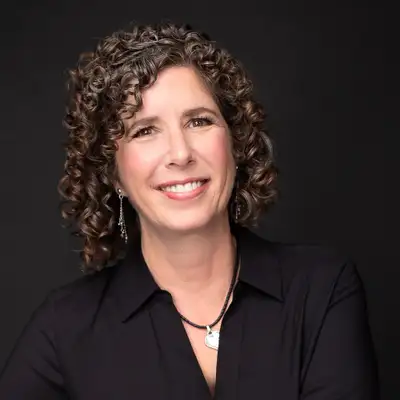
And today we are joined by Dr.
Traci Potter, who is a functional
health anxiety detective and the
founder of innergeniushealth.com.
As a practitioner, speaker, and writer.
Dr.
Traci helps growth minded professionals
overwhelmed by anxiety to find and
fix the hidden causes with natural
solutions so they can have a limitless
life at peace in their own skin.
In today's conversation, we're
talking about the connection
between anxiety and autoimmunity.
Traci's experience as a medical
anthropologist has inspired her
approach to holistic healing and
reinforces that our connection to
nature is essential for wellness.
Dr.
Traci, welcome to the podcast.
Hey, Julie.
I'm so excited to dig in and connect the
dots between anxiety and autoimmunity.
Um, so thank you for joining us
and, and taking us on this journey.
And I would love to start with a
bit of your story because you have
such an interesting background.
Um, and I don't, I don't know that
I've ever met anybody else who has
a medical anthropology background.
Um, and I know that that
has shaped your approach.
So so share with us a
little bit of that journey.
Yeah, I wouldn't be the practitioner I am
without starting out first as a medical
anthropologist, also without starting
out as the daughter of a psychiatrist.
So that was kind of interesting how
it all led me to functional medicine.
Um, so I, yeah, I started out
professionally as a medical
anthropologist, and one of the things
I was fascinated with, well, was
indigenous cultures and how they were
being impacted by industrialized culture.
And then I think a lot of us have
an intuitive sense that guess what,
when they started living like we
do, they started getting the same.
Diseases, not only what we think
of as physical illnesses, but
what we call mental illnesses.
So I realized that what I've been told
my whole life, having a father that
was a psychiatrist was not correct.
And what he had been taught and what
everyone been taught and what people are
still teaching their, you know, a lot
of psychiatrists and therapists and like
so many people still believe this, that
anxiety is a genetic chemical imbalance.
which implies that there's something wrong
with you genetically, you're defective,
you're broken, and you just have to be
on meds to manage your illness or manage
your symptoms the rest of your life.
And then maybe you'll go to talk therapy.
Now, maybe if you're super
hip, you know about somatic
therapy, which I'm a huge fan of.
I love somatic therapy and all
the trauma informed therapies.
And those are amazing, but hopefully
in our conversation will illuminate.
There's so much more to it than that.
And so that needs to be one of our tools.
That can't be all of our tools.
And we'll also hopefully
talk about medication.
I never want to judge or demonize anyone
who's using medication, especially if
you're tolerating it, you're not having
side effects, it's working for you, or
it's sort of working for you for now.
But I'm hoping by the end of
this conversation, you'll see
the medications as a stopgap.
It's like a cast and crutches or a
band aid to get you Over the hump,
just so you can feel well enough to
do what it takes to heal yourself.
And, and I grew up with a
father's a psychiatrist.
I love my father so much.
He, his patients really appreciated
his ability to help them, but his hands
were tied in so many ways by medical
politics and And a lot of just what
he couldn't see himself because he had
been trained to think a certain way.
And, you know, I grew up working
in his office, like I was a kid
and I was like making copies and
my dad's psychiatric practice.
He grew up on a farm.
So he wanted everyone to
like help out on the farm.
So we went to the office.
I did not like it by the way.
And then, you know, I would be
filing and stapling it because
back then everything was paper.
And then as I got older, I got
more grownup jobs, you know, like
calling the pharmacies and, you
know, like all kinds of stuff.
I went to lunches with
pharmaceutical representatives.
They brought fajitas and Chinese food.
And, you know, so my dad took
me with him to see his patients.
So he did, I did rounds with him.
I was like an emotional support kid.
So from the time I was little to the
time I was a grown adult until my father
retired and then passed soon after.
I went with my dad to see his patients.
So I got, I grew up behind
the scenes of psychiatry.
So when I had my first panic attack at
19, before I had really had all these
realizations as an anthropologist, I
was in the old school way of thinking.
And I thought, Oh my God, I
I'm genetically defective too.
I'm like those people.
And I realized I had stigmatized
unconsciously my brain, people
with mental health issues.
I saw them as other than me.
And it was a lot of humble pie.
When it happened to me and I realized
any one of us can be one of them.
And yeah,
Yeah, so so powerful.
Um.
And so we'll, we'll dig in
a little, a little further.
I want to kind of circle back to the
medical anthropologist angle, because what
you said, it sounds so obvious, right?
And, and I'm going to repeat it and
it's going to sound obvious again,
that as you take an indigenous
culture and you industrialize it,
they end up where we are, right?
Same, same challenges.
Yeah.
And that's when I realized is I
actually had a former business
partner, this beautiful man named
Skye, really beautiful human.
And he helped me find the words
that were not living in alignment
with our evolutionary biology.
And that's what it was.
That's what I was realizing.
I wasn't sure how to put it into words
at the time, but that's what it was.
And that's what I continue to say and
teach is that we weren't living in
alignment with our evolutionary biology.
And there's something called
co evolutionary relationships.
That's just a fancy talk for the fact
that all of existence evolved as one, it
didn't evolve like this flower over there
by itself and that tree over there by
itself and that bug over there by itself
and that human over there by itself.
No, and that those people on that
continent and those people and
then that tribe in that village.
No.
We are all one, everything, like we know
this through unified field theory and
physics, like we are one existence, and
so everything has co evolved together.
And so when you start doing things
that don't work with the whole
big, big picture of nature, with
the brilliant genius intelligence
of nature, then you get fallout.
That's when things fall apart.
And I think a lot of us are led to
believe that nature is so cruel and
you know, geniuses make mistakes.
Now, I always say nature's genius
and we are nature and if we can
tap into our inner genius, then
we can heal from cell to soul.
That's what I want people to understand.
But, you know, there are genetic
mutations that cause problems, you know,
like geniuses make mistakes, right?
And that's part of evolution too.
But overall, When, when you look at
cultures, you know, like classic example,
most of you have heard about like the
Blue Zones project, like Okinawans or
Sardinians, you look at people who lived a
more traditional lifestyle, they got their
nutritional needs met, they got, they
lived with better circadian rhythms, well
at least they did, it's one point, and
you know, and they have their social and
emotional needs met, you know, when they
get their most basic human needs met, Not
only do they have more centenarians, like
they live longer, but they live better.
And there are people who are 103,
104, they're still having sex.
They're squatting on
the floor, standing up.
They can climb upstairs.
They're able bodied.
They're not disabled like we are.
We have the shortest disability free
lifespan of any industrialized nation.
We have the shortest lifespan
of any industrialized nation.
And we have the most
disease and mental illness.
What is that?
And we have so much money and technology.
What is that telling us?
Right.
Right.
So, so how, here we are, Although
Zoom, which is awesome.
not, not that I would mind, you know,
maybe living in Sardinia, but, but how
do I, because I know, you know, again, we
don't have these conversations, we want to
shed light and not spread doom and gloom.
And it's like, okay, well, we're here
now we're in this sick, fat, tired, you
know, you know, Nation and or wherever
listeners are, you know, there isn't
anywhere, even in the blue, even the blue
zones are touched by all of this now.
right, they are
So, so what are the things we can focus
on, you know, and, and maybe through
that, we can also to highlight some of
the, this autoimmunity podcast, right?
Well, this all goes back
to everything's connected.
Right?
So to answer your
further two points there.
So I'll start with the first thing
you said is what, what's the solution?
Like, how can we be solutions
oriented not doom and gloom?
Well, one of the things we've got to stop
talking about mental and physical illness
is a war against or we're battling,
like stop using war, destructive war,
colonization, euphemisms, like we're
going to overtake and overpower and
conquer and whatever, you know, sometimes
you do want to kill some parasites,
sometimes you want to kill some things,
but like overall, you know, We need to
start shifting the way we think to start
shifting the way we behave and feel.
And we've got to start creating a culture
of nurture instead of a culture of war.
We've got to start honoring
ourselves as extensions of nature.
We need to learn about the
intelligence and genius of nature.
And one of the super fun things about
weaving together, how, how is our, if we
connect anxiety and autoimmunity together,
you're going to start to see connections
that will start opening up your awareness.
To that intelligence of nature
and the, the, it will point to the
solutions like once you understand the
underlying mechanisms and connections,
then the solutions become obvious.
So I'm not saying we have to go, you know,
put on the loincloth and live in a cave
or forest, although that could sound like
fun, especially if your immune system
could tolerate all the different critters
and and things like that, but like.
But like, how can we live in our, you
know, so called modern world or whatever,
or I don't, I want to be careful with
language because I don't want to say
indigenous people aren't modern, they
are, you know, but how can we live in our
industrialized process world and start
shifting the needle on how the culture
we're co creating together because culture
is something we're creating every moment
with every, with the money we spend, with
how we breathe, with how we think, with
how we speak, with how we connect with
each other, with the choices we make for
ourselves and what we share with others.
We, we, we, we, culture is dynamic.
It's not fixed.
And so when we realized that when we
make cultural shifts, we make biological
shifts, and when we make biological
shifts, we make cultural shifts,
that it's all in a dance together.
Then we realized we have more
power than we thought telling
someone like 19 year old little me.
Who was like, Oh my God, I must be
just defective and it must be my genes.
Cause you know, the truth was my
dad had severe mental illness.
He was a psychiatrist who was severely
abused as a child, grew up in rural
Kansas, closet gay, he would have been
probably beat to death if he had come
out, he even got arrested for being
gay once, but he would never admit it.
But I mean, he had a, he had a
record, you know, but he just.
He, um, he went through a lot.
He had severe unresolved trauma.
And so, and even as a psychiatrist,
he wouldn't talk about it or admit to
it because there was so much shame.
So we've got to stop it.
And one of the things I want people
to realize is that, and I'm going
to like really pause before I
say this, I want you to listen.
Anxiety is a natural response
to an unnatural environment.
Okay.
We have normalized a toxic culture
that tries to override nature instead
of working with its intelligence.
And one of the things I learned, it seems
so cliche, but if you do look at so many
indigenous cultures, they revered nature.
They revered rocks and bugs and
dirt, and they saw connections
that we've, we miss now.
We don't see those connections.
You know, we've learned other cool things,
but we're missing these connections.
And so one of my passions in life is
to help weave together this tapestry,
put that tapestry of nature back
together in our consciousness so that
we can move forward in our lives in
ways that not only heal our illnesses,
but create thriving, satisfying lives.
So beautiful.
And, um, so for listeners
that, and I see all the time in
practice, you know, anxiety and
chronic stress, it's all the same.
It's on a spectrum, just like
autoimmunity is It's on an
inflammation spectrum, right?
So you've got that early aging
and decline you were talking
about all the way to autoimmunity.
Same thing.
We all are living with chronic
stress and that can tip into anxiety.
And some of it, as you mentioned is like
tools, what tools, you know, your, your
dad had a toolbox full of medication,
That's it.
That's all
you have this beautiful expanse of, of
tools that, that you help people with.
Um, so how do we, in our industrialized
modern processed worlds, how
do you help people incorporate?
Cause I love, you know, it is a
tapestry and there is no, it isn't,
we're not going to go live in a cave.
Like that's not realistic.
It's not
some people, some people do.
I actually literally met someone
the other day who lived in a cave in
the Mojave Desert, but yeah, most of
us are not going to live in a cave.
And that.
After time can create it's a, you
know, then where's your social
circle, where's your, you know,
exactly.
Yeah.
So here's the deal.
So we don't have to reject the
things that, that serve us.
We just need to upgrade the things that
don't to things that do and, um, so I can,
would you like me to say kind of what my
pillars, my toolboxes are first, or would
you like me to talk about the connection
between anxiety and autoimmunity first?
What do you think?
Let's do the connection first
and then move into the toolbox.
Cause I think the connection
points to the toolbox.
So I think that's a good call Julie.
Okay.
So.
One thing that's interesting, like, you
know, I'm sure Julie's aware of this,
practitioners are probably aware of this,
but this is something that your average
person, I remember the day I learned this.
Was that your vagus nerve, your vagus
nerve, the longest nerve in your body,
that's become very trendy to know about
this now, which is such a cool trend.
It's way more exciting than skinny jeans.
So we're, we have this nerve that
innervates like our internal organs,
including a lot of our digestive tract.
And it's crucial, you know, for
calming down our nervous system.
But guess what it also does.
It regulates cytokine storms.
Well, cytokine storms are part
of the immune system that we
learned about during COVID
I was just going to say,
nobody knew what those were
until COVID, right?
So yeah, no one knew what cytokine
storms were, but cytokine ramped up.
And that's what was
killing people from COVID.
They were dying because their
own immune system was so ramped.
that it killed them on accident.
That wasn't the intention of the immune
system, but they're nervous systems
because of lifestyle and all these
disease risks, but also just stress,
anxiety, overwhelm of the modern world.
People's ability to regulate or
modulate their immune systems for
it to have a proper response was.
Being dampened by the nervous
system being overwrought.
So, so what I want you to
understand, that's just one
example, it's so intricate.
The way the immune system
and the nervous system are
physiologically the same structures.
Like they're overlapping in so many ways.
They communicate, they're, the way
our parts communicate with each other.
I mean, just like as a quick overview,
and I'll try not to rabbit hole this.
But basically, there's your nerves,
your nerves, your cranial nerves.
One of which is the vagus nerve constantly
talking between your brain and body,
especially between with the vagus nerve.
We're kind of obsessed with
that because it's talking.
It's not only a calming, soothing nerve,
but it's talking to play such an important
role in how the gut talks to the brain.
So we know if we have gut issues
we have brain issues we know if our
microbiome the microbes that make us
up we're more microbial than human or
at least as much microbial as human.
We're getting as much DNA information
from our microbe cells as our human cells.
We are.
symbiotic creatures, right?
And so these critters are
excreting chemicals that are like
signaling our nervous system.
And there's a super highway through
neurons, through chemical signaling,
through these things called neuroendocrine
cells that are like a cross between
a hormone and a neurotransmitter.
I mean, we're like magic.
Like the way our, our brains and our,
and our internal organs and ourselves
are all talking to each other.
And so you cannot separate out
an immune response from a nervous
system response, because your
nervous system is telling your immune
system what to do all the time.
The problem is, is that if you're in a
constant state of overwhelm, if you're
a constant state of hyper vigilance
of stress now, and when, when I get to
my pillars, my toolboxes, you're going
to see that stress is so much bigger.
than what we think of it.
It's not just work.
It's not just the kids.
It's not just your spouse.
It's not just, you know, time management.
Yes, all those things, but there's so
much more to what stresses our bodies out.
And, you know, so what I want
people to understand is I think of
autoimmunity as immunological PTSD.
So your immune system has been hammered
and hammered and hammered and hammered,
and it becomes so hyper vigilant, just
like when a person has trauma, whether
it's complex trauma from childhood,
which more people have it than not, or
single incidence trauma or single event
trauma, it creates A hypervigilant nervous
system where you're just, your nervous
system wants so bad to protect you.
Your body is your most
loyal, sweet protector and it
wants to protect you so bad.
And when we get, we get really scared like
that, we get, we don't get our needs met.
We're really pushed to our edge.
Our nervous system becomes hypervigilant
and it is looking for a threat.
It's been, it's been taught.
I'm not safe.
I'm not safe.
So I've got to protect Julie.
I've got to protect Traci.
I've got to protect, it
wants to protect you.
So it becomes, it's just
looking constantly for a threat.
And then it becomes what we call
dysregulated because it's overactive and
then we're nervous, we're shaking, we're
trembling, maybe we become depressed,
we become anxious, and, but we also,
because of the stress on the body and
the impact of all these stress hormones,
it starts affecting our physiology.
Stress triggers inflammation.
Right.
And so we become inflamed.
Um, also stress makes our, our
gastric juices not secrete as much.
So it slows down our digestion and we
don't absorb, you don't make enough
hydrochloric acid in your stomach.
You don't release enough pancreatic
enzymes and bile in your small intestines.
Like it just goes on and
I always say you don't have
to digest lunch if you don't
outrun the tiger, right?
Like
right.
our system isn't set up
for that ongoing stress,
and you don't need a libido
if you're going to get eaten
right.
Or yeah,
And you don't really need to get,
yeah, and you don't need to really
kill infections or fight off, you
know, like, really, you just need to,
like, prepare for impact, you know,
so we'll have inflammation in the
joints, we'll have inflammation in the
sore muscle, like, we'll get icky all
over because our body's so inflamed,
preparing for impact, but also your
body thinks, but there could be famine.
You know, so it's
Hold on to that fat.
going to affect your metabolism.
Yeah, hold on to that fat, right?
So how do you stress out?
How do you fatten up chickens naturally?
Like, this is horrible, but
like, you know, in factory farms,
they'll put chickens like in a, you
know, in under bright fluorescent
lights all day and all night.
So they, their circadian rhythms
don't work and it stresses them
out so much that it makes them
gain weight, which is like speaks
That's why we, that's why
we say don't eat that.
Um,
yeah.
I mean, well, that's what we say.
Like, watch your circadian, like
watch your, you know, turn off
the lights at night, get off your
But also don't, don't eat the factory
Oh, yeah.
Don't need the factory
That's what I meant.
Um, but, but
Yeah.
also I want to highlight because
I, I just point out for listeners.
So I know that there are.
The majority of listeners
are like, yeah, okay.
You know, I feel that I get that.
I hear you.
I understand like, oh, okay.
These aren't two separate things.
My anxiety and my auto immunity I'm one
I do?
but I do, I do encounter people that are
so conditioned to be in chronic stress.
They don't feel stressed out and
they'll tell you I'm stressed.
I'm fine.
Yeah.
Right.
I'm like, well, you just told me
about your life and now I'm stressed.
So I think we have some work to do.
Yeah.
No, self awareness is a huge part of it.
Yeah.
Yeah.
You're right.
you know, at your wit's end to, to
have a stress load or an anxiety
level that is impacting your
Absolutely.
And that's why I want to like
put a pin in, like, let's
broaden our definition of stress.
We need, we can't.
We can't just say it's just this narrow,
like I'm, I'm having panic attacks.
And then if, if I'm not having
panic attacks, I'm not stressed.
Like, yeah, I'm fine.
Yeah.
And we, we do become habituated
to things that are uncomfortable.
And one of my favorite things with
clients is when people like things start
resolving, they start feeling good.
Like they didn't even realize how not
good they felt like until they feeling
good and they didn't realize, like,
it's like people crying tears of joy
and wonder and awe that they could
feel so good after their whole lifetime
of feeling the way they thought was
normal and thought was fine, you know?
So that's a really legitimate
point, and I did want to like, just
finish up the autoimmunity thing.
I'm almost done, but so one of the things
I wanted to like, talk about what, like,
so, so I was establishing how the nervous
system and the, you know, the gut,
you know, all that stuff is connected.
We know the gut and the
immune system are connected.
We know the gut and the
brain are connected.
Um, we talk about, I recommend, um.
I listened to your interview
with Myles Nichols.
Um, so I'm going to skip over
some details that he covered very
nicely in, in that interview.
So if you haven't, um, you know, after
this interview, if you could go listen
to the interview with Myles Nichols,
or really all of them, they're great.
Um, that would be wonderful.
Um, so anyway, but.
We, he did talk about autoantibodies
and we, when we talk about
neuroinflammation, so one of the things
I'm constantly educating people about is
neuroinflammation, which is inflammation
of the brain and nervous system.
And so often when you have
autoimmunity, your immune
system again, is hypervigilant.
It has PTSD so it's looking for
something to protect you from and
so it gets confused and there's
molecular mimicry where your body
gets confused and it confuses certain
molecule chain molecular patterning,
and it thinks, oh, that's gluten.
But no, that was your thyroid or
it thinks, Oh, that's what it could
be gluten again, or it could be
dairy, or it could be another food.
It could be, it could be a pathogen.
It could be lime.
It could be mold.
It could be, it could be anything.
It could be a parasite.
It could be bacteria, virus, your body
can get fused, confused, and it'll
accidentally attack brain tissue or
heart tissue or in your autoimmune
condition is just, it's all the same.
It's just, we're naming the condition
based on the tissues it affects,
but really on the same process, like
whichever one showed up first, right?
And it's so, you know, but because we eat
so much wheat and gluten, our thyroids,
often Hashimoto's becomes one of the first
ones, but also our guts are so messed up.
So Crohn's is so, so rampant, but also
a lot of people may not have full on
Crohn's autoimmunity, but they have
colitis, IBD, IBS, you know, so, so
what's happening is the body is just,
you know, you have your Allostatic load,
like how much your body can handle.
Like it's like a bucket of tolerance of
how much stuff your body can sweep, body
can handle before that bucket spills
over and things start breaking down.
You can't, you know, you
can't hold it all together.
You can only, your body
can only do so much.
And so that's what I'm going to
get to, like what we do about this.
Right.
But I just want you to understand that.
You know, the reason your practitioners
want to heal your gut to heal your
autoimmunity, is it plays such a central
role in the immune system, you know,
and also one of the pieces of work
that people want to skip right over
is the nervous system, reconditioning
the nervous system, rewiring.
I'll take my pills.
I'll even change my diet.
But stop and like work on, you
know, focus on my thoughts and my
beliefs and like take 15 minutes
to meditate in the morning.
Are you crazy?
I can't meditate.
I suck at meditation.
So these are limiting beliefs that I, you
know, you can get rid of very quickly.
They're not you.
It's just conditioning.
It's not who you are.
So I just want people to understand
that the same things that are
causing your autoimmunity.
Are causing your stress, overwhelming
anxiety and even depression
or any other mental or mood
struggles, grumpiness, whatever.
And I want you to understand that the very
autoimmune condition, the autoantibodies
are actually also triggering brain issues.
So I want people to
understand that anxiety.
It's how the brain
says, ouch, ouch, right?
So is depression.
So is fatigue, brain fog.
These are always, the brain says, ouch.
And so, instead of thinking there's
something wrong with me, because my
brain is saying, ouch, would you say
if you put your hand on a hot stove,
and it hurt and your body told you,
ouch, and told you to jerk it away,
would you say, Oh, stupid body.
You stupid
Hold it there.
you.
I'm going to
a baby.
I'm going to take some painkillers.
I'm going to numb my hand so
I can put it right back on the
hot stove and it won't hurt.
You don't do that, right?
If your house is burning down
and the smoke alarm goes off.
Do you just take this bat, the
battery out of the smoke alarm
and say, okay, that should fix it.
No, your house will still burn down.
So this, one of the things
we need to learn is to feel.
We're taught not to feel.
We're taught to be all in our
heads and not in our bodies.
We're taught to, if we
have to pee, ignore it.
We're taught, we're thirsty, ignore it.
We're hungry, ignore it.
Statistically, men are a little bit better
than women at like, you know, listening,
you know, being like, I'm hungry.
I'm going to eat.
I'm thirsty.
I'm going to, you know, whatever.
I'm going to take it up here on the sofa,
Maybe with their physical feelings,
but not necessarily the emotional.
you're right.
You're right.
So in terms of bodily,
like, urgent bodily needs.
all suck,
Yeah, we're all kind of could do a lot
but we all
and then emotion.
Yeah, and then emotional needs.
Yeah, that's a whole other realm.
I've actually talked to a lot of
men about their struggles with
like, not even knowing how to feel
not to know what to do with their
feelings or how to talk about it.
So, and as a culture, we've also
done a lot of disservice to men.
Um, you know, the whole boys don't
cry thing that used to be the old
school way and telling, like the
definition of strength is being numb
and insensitive and aggressive and, and
not feeling and not being vulnerable.
It takes so much bravery and
strength to be vulnerable and
Absolutely.
to admit you're wrong and to like
receive and not just, you know, whatever.
And to tune into other
people's feelings and needs.
Those are super powers.
Those are not weakness.
So I want to make sure that we, we touch
and I know I, some of it has already
come up, but, but the toolbox, the,
Yeah, I'm ready for it.
I'm
right,
Okay, so now that we've established that
that's all connected, um, hopefully it'll
make sense now why you have to cover
these three, I call them pillars or three
toolboxes, you have to do all three of
these, or you will not heal your anxiety,
you will not heal your autoimmunity.
A lot of people, one of the reasons
I got into like, um, functional
mental health is I, when people would
come to me with autoimmunity and gut
issues is, you know, we would address
those things and then their mental
health issues would just disappear.
Like, and I know you've
experienced that too, Julie.
My depression is gone.
My anxiety is gone.
Like, you know, I was like, okay,
let's catch people who don't
know they have autoimmunity or
they don't know they have Lyme.
They don't know they have toxic mold.
They don't know,
it or
like, yeah.
be
catch him a while.
Let's let's get the pain of that smoke
alarm and let's have them go in and like
heal all of it right because really the
same toolboxes work for both because
it's all connected right so toolbox one.
And I want people to explore the
hidden medical causes of anxiety.
What is causing the neuro inflammation
or in the case of autoimmunity what's
causing this immune dysregulation.
And so often, it is things like.
You know, things that are invisible,
like toxic mold that you just because you
don't see it doesn't mean it's not there,
especially if you live in a high humidity
environment like Hawaii or Florida, or,
you know, I live in Hawaii right now.
And so, um, and then there's, you know,
like a lot of people have like tick
borne infections or some form of line.
And they don't want to find out if they
have Mulder Lyme, because they have
heard people have such a horrible time
getting rid of it, or they think it ruins
your life, so they don't want to know.
But the thing is, there are solutions.
If you get the right
help, you can get over it.
Like, it's better to know and
treat it than to like, be like,
la la la, I don't want to know.
And by the way, I've done that myself,
even for what I do for a living.
I put off finding out some stuff
about my body that like, if I had
known sooner, it would have saved
me six figures of money and like,
like years of pain and suffering.
So I'm really big on that.
well, we're all human
were all human, we're all human.
So, you know, you could have,
you know, thyroid disease.
You could have, you know,
things we're testing
Yeah.
So hidden these hidden medical causes.
So toolbox one.
Functional practitioner, hidden medical
causes, things that are causing ouch
in your digestive system, ouch in
your cells, ouch in your brain, so
neuro, sources of neuroinflammation
and immune system dysregulation.
So that's box one.
So that's the, go to the, go
to the practitioner, run the
tests, take the supplements.
Okay.
A lot of people seem okay with that part.
Okay, now moving right along.
The second toolbox is your lifestyle.
In your lifestyle, yes,
we hear diet and exercise.
It's become so cliche,
we're almost numb to it.
Um, what if we hear it as self
nurture, as nourishment and movement
and play, as relationships, as
your daily thoughts and actions?
Just the thoughts in our heads are one
of the hugest parts of our lifestyles,
and we don't think of that as lifestyle.
Um, our physical environment, do you have
mold in your house, you know, or, you
know, whatever, are you exposed to some
kind of fumes or toxic chemicals at work?
Like, you know what, you know, so your
environment, your physical environment,
but also your social emotional
environment, your relationships with
other humans, you know, these are, or
even if you have connections with other
humans or are you alienated, right?
So this is all lifestyle.
And the thing is, I
don't like the word diet.
I use it, but I don't love it.
Because it's, I like nurture, I like
nourishment, I like yummy, I like food,
I like, you know, people have grown to
be ashamed, well I love food, like it's a
bad thing, yes, you have an evolutionary
wiring to love food, otherwise you
would flourish, this is a good thing.
You know, you're supposed to want
pleasure, we are wired for pleasure.
So I made up this term that I teach
people called healthy hedonism.
So hedonism is the pursuit of
pleasure of wanting to feel good.
Guess what?
That's normal.
You should do that.
I encourage it.
Here's the deal.
Are your sources of
pleasure destroying you?
Or are they uplifting you?
Hugs.
Uplift you.
Alcohol.
It's a poison.
I'm not saying you can never drink any.
But let's not lie to ourselves.
be, yeah, beware me.
yeah, be aware, you know, like,
you know, caffeine, I hate
to say it is a neurotoxin.
And one of the primary causes of
anxiety, I have clients who will just
we you have to wean off caffeine,
you cannot quit cold turkey, I have
clients, they wean off caffeine, and
they suddenly they have more not less
energy once they get over the hump.
And their anxiety goes from an eight
to a four or to a two or to zero.
You know, so it's amazing how
many things we do that we think,
oh, this will give me energy.
No!
Caffeine is like living off a credit card.
You're stealing from your future self.
You're running yourself into the ground.
You need to create true cellular
energy through rest, through nutrition,
through hugs, through relationships,
through love, through support.
So, like, it's so important.
To become the artist of your life and you
know, to craft your thoughts, to craft
your daily habits and routines and make
them things you enjoy that lift you up.
Because if you fall in love with
your life, you don't need willpower.
And when you give your body the things
that needs to thrive, it feels so good.
You get this natural high, but it
makes alcohol seem like a downer.
It makes like sugar seem like a downer.
It makes.
Caffeine seem like a downer.
It makes codependent
relationships seem like a downer.
It seems like rushing to get
through your checklist a downer.
Like suddenly you are
at home in your soul.
You're so rooted in the
essence of what you are.
You're back in your core, like you're
back in balance and you're so in this
beautiful alignment and things in your
life start, you start experiencing
more synchronicity and life starts
to feel like magic and like things in
your external world start shifting.
Your relationships start getting better.
There is no end.
to this.
And there's research showing that
people with autoimmunity, also
with cancer, are personalities who
tend to put themselves last, who
tend to be like, you are so great.
You can depend on this
person for everything.
This person, even when they were
battling with Crohn's disease or cancer.
They kept going and volunteering and
they kept getting involved in all these
things and they kept serving their spouse
and they kept, you know, and like, yeah.
And then that's their obituary.
And someone who has brought this
to public light is Gabor Mate.
He talks openly about, he has, he has
great like YouTube videos and all kinds of
things talking where he reads obituaries
of people who died of conditions because
they didn't take care of themselves.
And dying a martyr is not the
way to use the gift of a life.
And I'm thinking of my mother
who had Crohn's disease.
I got into functional medicine
because they wanted to remove her
colon, give her a colostomy, a
permanent colectomy and her to have
a colostomy bag the rest of her life.
And I was like, I'm not, no, no,
my mom cannot lose her colon.
She cannot never use her anus again.
This is not okay.
You know, and that's how I
got into functional medicine.
It wasn't, I didn't start
out with an anxiety focus.
I started out like saving my mom's
life and we, by just changing her
lifestyle, there were just a couple
of supplements she used, but all
with lifestyle and emotional work.
She got into, she was, became quiescent,
which is like what you say for
remission from autoimmunity in 2004.
She's 83.
She's never had a relapse since, and she
has not been on any immunosuppressant
drugs or drugs for, for any of this.
And yet doctors, if she has anything
happen, like she got SIBO and,
and they were like, Oh, it must be
colitis or Crohn's or they wanted
to put her in a, and I was like,
no, can we do a SIBO breath test?
And her SIBO levels were through the roof.
She'd gotten food poisoning
and it turned to SIBO.
And they didn't want to test for
that because they were like, well,
you're a Crohn's patient to hammer.
Everything looks like
Yeah, absolutely.
So yeah.
And
And then the third,
pillar,
and then the third pillar.
So like a lifestyle you're in
love with hidden medical causes.
And then the third pillar is.
rewiring your nervous system.
Isn't it magical?
We have neuroplasticity.
We used to think a nerve neuron died.
It couldn't regenerate.
We used to think that's just how you are.
No, we are plastic elastic.
We are neuroplastic, elastic.
We are formable creatures.
We are programming ourselves
daily society, and external
stimulus is programming us daily.
The cool thing is we can
reprogram and rewire.
There are more and more people
speaking up, you know, from the
science space into the public space.
Someone you guys have probably
heard of is Andrew Huberman from
Stanford, Stanford neuroscientists.
He's really putting it out there
that look at all these things
you can do to rewire your brain.
This information has been
around for a long time.
These practices he talks about
have been around forever.
the ancient practices is the new science.
yes, yes, exactly.
I love it because some people really need
to see the science or know their science
before they'll just take that leap.
It helps me.
It motivates me.
When you learn, when you know,
for example, he talks about
the physiological side, right?
This is not a new thing.
This is something primal.
This is the genius of nature.
The genius of nature has you naturally
when you're sleeping, when you're
upset, when you're crying, whether
you're a baby or an adult, where you,
you inhale, you inhale and you exhale.
So you're like, you know,
of any infants or toddler who's
been crying and they're settling
back down, like they all do it.
Yeah, it's nature.
You'll do it.
You have a big cry and don't
you hold in your cries, people.
You got to cry.
You got to let it out.
Don't hold in a cry.
Okay.
And we have a culture where we cover
our face and apologize when we cry.
Why?
Do you do that when you laugh?
Conditioning.
Yeah.
I mean,
sometimes, cause I've been
known to laugh inappropriately.
That's definitely happened,
yeah,
but that's okay.
Self
such a natural.
Yeah, crying is such a natural release.
It's like burping or farting
or going to the bathroom or
peeing or like you sweating.
You know, sneezing.
Like it's how your body releases.
cleanse.
It's a, yeah,
It's a beautiful thing and people
imagine because our minds feel
so like real and so strong and it
feels like to change my thoughts.
It's going to take like it's going to
be like trying to pick up the Empire
State Building with my with my pinky
finger or something like that, you know,
we think it's like this huge thing, but
but Neuroscience is showing in like,
there are different breath work, whether
it's the physiological side, there's a,
uh, a practice called pendulation that
I have a, I have a recorded, I have a
guided meditation on the homepage of
my website that teaches you to do this.
It teaches you embodiment.
It gets you to feel your body, which
we all need to do more of all of us.
Um, it, it helps you sleep.
It helps down regulate pain.
It actually helps stop pain, helps calm
anxiety, overwhelm, stress tension.
It's I start out all my
sessions with my clients.
I, we, not every session, but the
first kickoff session, we do this
at the beginning and people are
just blown away at how calm, like
in blissful they feel you have, you
have the ability to create bliss.
And I'm not saying you can't have healthy
desserts because you can't and I'm not
saying you can't have any food and I'm not
saying you can never have a glass of wine.
I'm just saying the pleasure you can
create internally with your own internal
pharmacy through breathing, through
how you focus your attention, through
how you move your body is incredible.
It is, you can get downright euphoric.
And what's also cool about it
is when you get in these brain
states, you make different choices.
You get solutions to problems that
have been eating at you for years.
You see things from in new ways you never
could have forced through your intellect.
You tap into your wisdom brain.
You become genius.
That's your inner genius.
That's part of it.
You have inner genius, the healing power
of your cells, of your DNA, of your
microbes, epigenetics, neuroplasticity.
Like we have the ability.
And just.
You can, you can, you know, the
physiological side, you know, I'm trying
to remember the name of the scientist.
Is it at UC Irvine?
Oh, where is it?
Yours at UCLA.
I can't remember.
I don't know if you know, but anyway, one
of the guys who's doing the big research
on the physiological side, they're finding
that doing it five minutes a day, that's
about 30 breaths, five minutes a day
is changing people's brain structures
within a matter of weeks, like six weeks.
Imagine six months, what
it will do to your brain.
That's five minutes a day, right?
Well, and that's so important for people.
I think that is you, you hit on that
resistance of, you know, I've had
these thought patterns for decades.
It's going to take decades to shift it.
And that's not true.
Even something as simple as
writing three gratitudes a day,
how quickly you can start shifting.
Right.
Why?
Why is gratitude all the rage?
Because
So powerful.
Because we have a negativity bias.
Again, hypervigilance.
Something's wrong.
I'm not good enough.
This isn't it.
Something's wrong.
I'm not good enough.
This isn't it.
I got those three things
from my friend Sage.
He was one of my first, the first
people that introduced me to meditation
and open eye meditation and all these
magical, my magical inner world.
And, and, and that's what the
default, you know, of the negativity
bias it's, it's to make us survive.
But it, we can't thrive
when we're like that.
So by just appreciating, you know, like,
you know, just being like appreciating
things like, especially after I
lived in Cuba, I really got good at
appreciating electricity and toilet
paper and like, you know, all kinds of
things, you know, being able to say my
opinion out loud without getting thrown
in jail and like, you know, whatever.
So like, just, um, there are so many
things that are surrounding us constantly
that we almost take for granted, like
here I have like this lovely, you know,
like I have a sweet potato, and it's
like, it's orange and bright and beautiful
inside I have like all this access to
food like I mean there's so much to
have this beautiful plant behind me
and I have a beautiful home and I have
beautiful friends and yeah, do I have
problems and challenges and struggles?
Yeah, absolutely.
But, but appreciation is so
just making a habit of it.
As much as we are inclined to complain, if
we could like, if we could just appreciate
a fraction of what we complain, amazing.
Sometimes we gotta vent.
Sometimes you gotta get it out.
So,
Well, and I always try to clarify
having a gratitude practice.
doesn't mean you weren't
already a grateful person.
It's just what you're saying is
shifting that focus to the positive.
And then what, then you're
experiencing everything through
that lens and who doesn't want that?
Exactly.
from all of the healing properties,
it happens to also feel good.
Right.
And you just said, you just said
something that is gold, which is like,
if we do the things, this has a caveat.
If we do the things that make us feel
good, we will actually heal our illnesses.
And if we do the things that heal our
illnesses, it will make us feel good.
There's no separation there.
Now, caveat heroin.
Long term.
never done it.
I've never, yeah, I've never done heroin.
either.
But I hear it feels really good.
You know, um, you know, there are
things that feel good in the moment,
but they hurt us in the long run.
And unfortunately, yeah, yeah, we
have, we have, we have a culture that
has fetishized destructive pleasures.
Alcohol, tobacco, caffeine, yeah,
like simple carbohydrates, definitely
like gluten, um, you know, like
not talking about that.
We're talking about, you know, and
you, you touched on it earlier as well.
The, this idea of, you know, as we start
to nourish our body and, and positively,
you know, it, it becomes its own fuel.
right.
I like how you
the healing.
Right.
It
I love that.
Yeah.
Perfectly said.
And you know, the thing is, is I
teach people, you know, through
my healthy hedonism approach to
broaden your pleasure palette.
If you're painting and you only
have black and white, you're not
going to make a very pretty rainbow.
And then someone says, well, you
can't paint black and white anymore.
You're like, oh crap.
I can never paint a rainbow.
Well, you weren't even painting
a rainbow to begin with.
So when, when you have all the colors
and you can mix and match them and
all these beautiful creative ways,
then your life comes into full color.
And so.
You have to like really start
focusing on what are things
that feel good that uplift me.
Because instead of these, I call them
cheap thrills, things that make you feel
good now, but then the future self, I want
you guys to anthropomorphize your future
self, future Traci, future Julie, future,
whatever your name is, look out for your
future self and thank your past self.
When you do something nice, like you
made yourself leftovers at dinner.
So it's lunchtime and now you
have this really amazing lunch.
Thank your past self.
When I go on a trip, I make extra
food and put it in the freezer.
So when I get back, I
have like food already.
And I think past Traci, cause that was
really nice of her to do that for me.
And
that what.
Yeah, whatever choices you're making,
and not to make this a heavy thing.
I like to make it fun and playful, but
you just, like, whatever your mundane day
to day choices are, how you're breathing,
how you're thinking, how you're eating,
if you go to bed, if you went to bed early
enough and got enough sleep, that's going
to affect tomorrow you, and today you is
living with the consequences of yesterday
you, and you from months and years ago.
So, like, if
And that's where the power is.
That's how we get to change.
Right.
So if you can look out, first, understand
that anything that feels resistant to
change, it's literally just a thought.
It's not a biological reality.
It's just a habit of thinking,
and it can be changed.
And all you have to do is repeat is
like, it's called cognitive reframing.
You just change the thought and you
look for evidence that it's true until
you're convinced it's your new reality.
And it takes.
days to weeks, sometimes two days
a day, you know, it depends on what
the thing is and how deep it is, but
we can change a lot in just weeks.
We can like, like I do three month
programs and people in three months are
like, whoa, that's not very much time.
A lot of
it's powerful.
people want things tomorrow, like, you
know, I said, you have to heal at the
speed of life, not at the speed of amazon.
com, right?
So, so like, you know, give
your give yourself time.
You took time to get here.
You need time to get out
to heal any major illness.
Give yourself a year.
Give yourself 3 years.
I don't know, but like,
within 3 months, you can
going to feel.
Yeah.
You'll feel changes all along the way.
that is the perfect segue into what is Dr.
Traci's one step that listeners can take.
This is always such a hard one, but
starting today, we covered a lot of things
and we know there are many ways to things
that will move the needle, but what's one
step listeners can take starting today.
I'm so glad you asked.
It goes back to paying attention to how we
feel, but we have a culture that teaches
us to be full steam ahead, not feeling.
That's why I think having a practice
every morning and that you can do it at
night too, but it's most powerful research
shows it's most powerful, makes the most
brain changes in the most life impact.
First thing in the morning, pee, drink
water, do your thing, let your pet
out to go to the bathroom, whatever.
But as soon as you can, after you
wake up, I want you to sit down.
It would be nice if you had your feet
on the earth and, you know, could get
outdoors a little bit, you know, even
in your house, I want you to sit down,
close your eyes and breathe and feel.
Now you can try the pendulation meditation
on my website, innergenioushealth.
com.
Um, and it will teach you a very specific
technique to, it's a kind of somatic
meditation to get into your body.
And to connect to your breath.
And it's going to be so structured
that it doesn't matter if you have
a giant monkey mind or if you're
agitated or whatever, it's okay.
It's fine.
It doesn't matter any way you are
to show up how you are and do it.
And if you can just give
yourself even 15 minutes a day.
Yeah, if you do an hour long
meditation, that's wonderful.
That's wonderful, too.
But if you can just give yourself
15 minutes a day, even five
to start your day coming into
yourself, breathing and feeling.
You'll notice how you feel throughout
the day, you'll take, you'll make
different decisions, you'll see the world
differently, making changes and the rest
of your health will suddenly start feeling
doable, you will start to feel empowered.
So if you start with the inside.
This is the part the work that people
tend to want to avoid the most, and the
part that gives you the fastest results.
And it has a domino effect into
every other area because then you
will figure out if you don't have
a practitioner that's working
for you, you will find your way.
I promise it'll just like, it'll,
you'll be led to the right practitioner.
You'll be led to the right answers
that things will intuitively come
to you that you couldn't see before.
So the magic of meditation, the
magic of breathing and feeling.
Meditation isn't erasing your
thoughts and clearing your mind.
Like, that's a myth.
Your thoughts will stop
when you're brain dead.
Like, otherwise,
Yeah.
if your thoughts.
It's okay.
You're just focusing on
breathing and feeling.
It's so simple.
We make it out to be this
very complicated thing.
You know, just stop and breathe and feel.
If you have some structured
something to listen to until you
really master it, that's great.
If you've already mastered
it, just make time for it.
And then everything else will
start to fall into place.
Amazing.
And before we wrap up for people
listening on the go, where's
the best place to find you?
Inner genius health.com so that
some people think I'm saying
energy, I'm saying inner like
inner.
Yes.
genius.
So I N N E R G E N I u s health.com.
So that's the, the genius of nature
that is inside you, your inner genius.
So inner genius health.com.
And then I'm also on Instagram, Dr.
Traci Potter of PhD.
I'm on Facebook and I
have a YouTube channel.
Amazing.
If you look up my name, you'll find
me because it's spelled so weird.
I'm the only person in the
whole internet with my name.
So if
Potter plus an F.
yeah.
Like Traci my Potter with
enough, you'll find me.
Traci, thank you so much.
You have given us amazing gold today
and given listeners so many things
that they can just take and run with.
I really appreciate it.
Yeah.
You're welcome.
Just, I want people to know you
can heal the anxiety and the auto
immunity together at the same time.
You can.
I don't care what's
happening your whole life.
I don't care what runs in the family.
You can resolve this both.
You don't have to live with managing it.
Like you can really resolve this.
Love it.
Thank you.
For everyone listening.
Remember you can get the
transcripts and show notes by
visiting inspiredliving.show.
I hope you had a great time and
enjoyed this episode as much as I did.
See you next week.