Subscribe
Share
Share
Embed
Celebrate the joy of reading with the Book Love Foundation podcast. This is a show filled with information and inspiration from teachers and leaders across grade levels, states, and school systems. We interviewed authors and educators for the first five years and now turn our attention to leaders in public, private, and charter schools. Find out more at booklovefoundation.org or join our book-love-community.mn.co of 2500 educators from 28 countries. We sustain joy together, one kid and one book at a time.
Penny Kittle 00:04
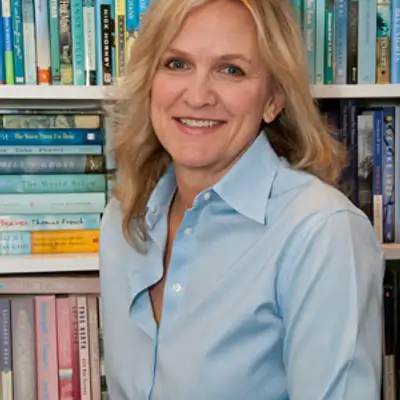
Welcome to the Book Love Foundation podcast, season four. I'm Penny Kittle. I start almost every one of my mornings with poetry in this time of crisis and worry, poetry centers me. It brings me back to a focus in the midst of what poet Georgia heard called confetti, brain born of our fractured attention during this pandemic. Today, our amazing podcast host Julia Torres discusses writing with English teacher and poet Nicole Stellan O'Donnell, Nicole has published two collections of poetry, Steam Laundry and You Are No Longer In Trouble. While she's also been teaching the book Love Foundation has selected You Are No Longer In Trouble as one of our books for our online summer book club this year, no matter who you are and what you teach, Nicole's collection of memoir poems will ignite reflection and your own will to record your stories, perhaps in poems, perhaps in sketches. Make today, the day you record a glimpse of who you are and share. Here's Julia and Nicole.
Julia Torres 01:17
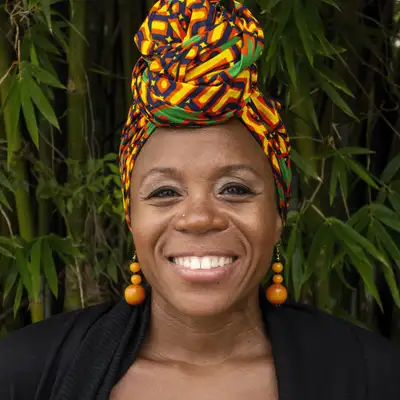
All right. This is Julia Torres with another book. Love foundation podcast today, my guest is Nicole Stellon O'Donnell. She is a friend of mine from Heinemann fellows, and she's going to be here today talking with us about writing instruction, poetry reading and all the good things. So Nicole, why don't you give our listeners a little bit of information about yourself.
Nicole Stellon O'Donnell 01:41
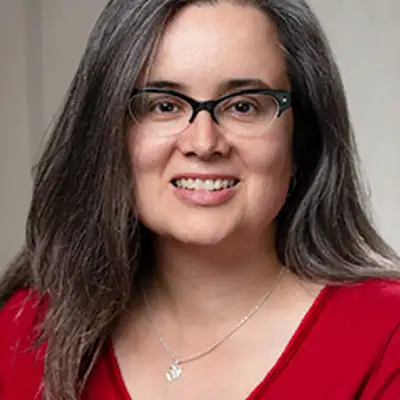
Okay, Hi, Julia. It's good to hear you and good to talk with you. I am a teacher who lives in Fairbanks, Alaska. I've been working in Alaska for my whole career, for about 21 years now, and recently I became an instructional coach. So I've been working as an instructional coach for the district I taught for a long time at kind of what you'd envision as a traditionally structured high school that we have in this country, and also in village, a village in Alaska, to Gaelic, Alaska, and then also in a school for students who are in detention, in juvenile detention. So I've moved around a little bit in my career.
Julia Torres 02:21
I love hearing you talk about what it's like to be a teacher in our detention centers, because that's often an area of teaching that I think gets kind of pushed to the side or marginalized. So hearing about your experiences and learning from those settings has been really impactful and important for me to learn from you about. So on that note, we know that you are also a writer, and you are going to be part of our summer book club, which is really exciting. So can you talk to us a little bit about how you balance your writing and teaching life, and then just what that looks like for you.
Nicole Stellon O'Donnell 03:00
What balancing anything with a teaching life, it is really hard, and I'm up. I started as a poet, and I still consider myself a poet, although I've moved on to prose poems now and write lots of little bricks of prose and in the poacher world, when I started out, I had this vision of, I have to write every day. I have to write every day that people get in the chair and do the work. And that's not how it works for me at all. It just couldn't I have, you know, my work life, and I have two kids, and life is really busy. So I wound up writing my first book many years after I finished grad school, when my kids were babies, and I realized I just had to write while people were like throwing Cheerios around. I just had to work on little things. And so for me, my process is a little bit erratic. I'll dive in and write a whole bunch, and then I'll edit for a while. I'm not an everyday writer, and I guess I'm kind of proud to say that now, because I want people to realize that they can write even if they don't feel like they get the 15 minutes a day in, or the hour a day, or the 250 words a day, whatever those self imposed rules are. So that's kind of my process, and it's hard to balance. I use noise canceling headphones and have a little office space in our house where I'll go. And for a while, when my kids were younger, there was a sign on the door that said, go bother TJ, don't ask mom. and have to Yeah, so there was and they made fun of it for a long time. I just took it down recently because they're old enough now where they're not always coming in to ask me to get them water when someone else is in the room with them. So yeah, so balancing all that is hard.
Julia Torres 04:31
Setting boundaries and goals for yourself, that's what we tell our students to do, right? So that makes a lot of sense.
Nicole Stellon O'Donnell 04:38
yeah, setting some boundaries around it, and then accepting that I'm not always going to be a chugging along writer every day. So,
Julia Torres 04:46
Yeah, yeah, I'd love to hear a little bit more about how your writing life has woven in with your teaching life and when you were teaching writing with students.
Nicole Stellon O'Donnell 04:56
So weaving in has been hard for me because, um. And in the sense of for a long time, I thought of teaching as off limits for writing for lots of reasons. So my first book, Steam Laundry is written in persona, and it's a historic called novel and poems. So I didn't write anything about my own life. I kept that boundary very firm. And then I started writing about teaching, of course, because it's what I was doing. And I started creating poems and pieces of prose about teaching, but I felt so much discomfort around them, because you know what is true, what is respectful to my students, what is respectful to the people with whom I work? How do I keep honesty and compassion balanced in my writing, and that got really hard. So writing, you are no longer in trouble, was really a struggle for me mentally because of that boundary I'd made, and now I feel I've broken through it. In terms of teaching writing, I taught creative writing for many, many years at the high school. I think I had four sections a year of that class, and for a long time, I thought, Oh, I don't want to teach creative writing. It'll ruin my writing. And then I started my department had said, oh, you know, could you teach it? You have an MFA in poetry. You're a good you have the qualifications. And I kind of, you know, like Eeyore, oh, okay, poo. And went forward with it and found out, oh, who knew teaching the thing you love would be best instead of having that artificial boundary? So I think I broke down two boundaries, first the one of teaching the thing I loved, and then the one of writing about my work. So it but it took a long time for me to break those boundaries down.
Julia Torres 06:34
Wow, that is so important for us to hear because I know that. I also believe that when you can teach about something that you're passionate about, then it really makes a huge difference. Have you always considered yourself to be a writer like were you like many of our students in school who feel that they want to write but aren't really quite sure how that looks? How did that happen? How did that process evolve for you?
Nicole Stellon O'Donnell 06:59
For me, as a school. In high school, there wasn't a creative writing class, there wasn't a and I don't know if that was back in the 80s, if that was just less prevalent, or if it was my high school, it didn't seem to be an option. One would do, like, if you wanted to write a novel, you just became a novelist. And I had that vision based on the authors that I was reading. Like, Oh, you become this kind of mythic novelist, but I didn't really have an interest in that. And actually, in college, I didn't have any interest in I didn't take a creative writing class. Until later, I had a requirement for my English major, because I was majoring in English, to take a class. And the professor made me really, really mad the way he was running this workshop. I'd never been in a workshop, but he would choose a poem and then pace around the room and tell us what he thought about it, one poem that someone had turned in and like praise or eviscerate it. So I got really mad, so I wrote a poem against him, and I turned up into my workshop.
Julia Torres 07:57
The fires of passion ignited
Nicole Stellon O'Donnell 08:00
And I'm so oppositional. So he ignited that in me. And that's, that was the first poem I really ever wrote. And then from there, I wound up going on to get an MFA after after undergrad, but I didn't major in creative writing, and I was very distant from it. So it's always been this. It seemed like it was on the side for a long time of what I do, and I kind of couldn't not write them.
Julia Torres 08:25
I hear that, yeah, at one point, I went back and I got an MA in creative writing, but I didn't get to focus on just one element of creative writing. The reason I did it is because I felt like I needed to have more content knowledge than I did with the masters in education. So I don't regret it, but it must have been really fascinating to be able to dive deeply into a specific area of creative writing, and in your case, poetry.
Nicole Stellon O'Donnell 08:54
And what you said is interesting about how you wanted to know more for your own teaching. And I think most of my teaching philosophy comes out of my time in the MFA because I did it backwards. I wasn't a teacher. I finished college, and then I went straight into the MFA program and didn't know what I wanted to do, and then went back and got a teaching certificate. So a whole bunch of the way I teach is grounded completely in the process of creative writing, to the point where I assume that's just how one teaches writing, but it's not, you know, I had to learn. Oh, there's other methods for this. I'm so used to this one particular process.
Julia Torres 09:30
Speaking of which, I mean, how do you think that writing instruction has changed in the last, you know, we could say the last five weeks, but there have been some major changes in the last five months and years too. So what are, what are some of the big changes that kind of stand out to you?
Nicole Stellon O'Donnell 09:47
It's, it's so interesting. This question makes me think really deeply, kind of, about the arc of a career, and when I started, and how I was teaching all ninth grade. You know, typical first year English teacher in a district like all ninth grade I was on a cart. I didn't have a classroom, and I had to teach the essay in a strict way, which was basically a five paragraph essay, but in the district, they had come up with another term for it, and I feel like things have really broadened since then. And I had to learn as a teacher where, where I could draw a boundary and say, you know, this isn't working for my students, and I do have the power to do something different. But looking at the way in which choice has become an element of writing, and I think that has increased really in the last five years, choice and structure, letting go of structure, and working with students on more authentic choices of topic and structure and audience, creating authentic audiences, and watching all that play out has been interesting. In the last five weeks. It is so interesting to see teachers that I work with, and I zoom into some of their classes, or watching my own two teenagers work with it, the way in which our present situation is being used or avoided. You know that we're working on, how do we give kids choices around that? Because maybe they want to write about it, or maybe they don't. And how do we structure an assignment that gives space for both? So that's been really interesting to watch that play out too.
Julia Torres 11:09
Yeah, I've been excited about the fact that there are more books being used for curriculum that are considered trade books. So they're not textbooks, and they might be a story written in verse, or just books of poetry that with, you know, teach living poets is so monumental with the work that that they have done to bring poetry into the classroom. So I'm glad that creative writing isn't being completely ignored, because for a while there, I felt like argumentative writing took so much more energy and time from what we were able to do in the classroom and people were not really allowed to indulge, or we looked at creative writing as an indulgence, rather than something that is really necessary for all writers to experiment with at some point. So a question that I have related to that is, what do you think are some best practices for writing instruction that can work in any environment. Talking about creative.
Nicole Stellon O'Donnell 12:03
that's such a good question. And when you said, I love that, you use that word indulgence, I think people saw it as like a nod. Oh, let them be creative for a little bit. And then let's get back to the what was, what was posited as the real writing. But I think what's interesting about that, and that is how it has been and is still in some places. When I started my career, it definitely was that way, and we were coming into the early days of testing, so there was this idea that students needed to read only nonfiction and write only argumentative nonfiction in response to heavily standardized, structured state testing and national testing. And that seems like it's finally being blown up. And I love teach living poets, showing people a path to and along with disrupt text with you work with, but that idea that we can bring other authors in and put them alongside and instead of, and I've been really inspired by that idea. And I think that's one of the things that works in all settings. And I think what we have to do as teachers is we have to start from our setting, from the students we work with, and find the authors that reflect their lives, show elements of facets of their lives, and give students a range. And I think that has become with disrupt text and with teach living poets, both of those, that is becoming more and more a priority for English language English language arts teachers. And that's super exciting, this broader reading, this more openness. And I think the openness is what works in all settings, because we have to respond to the students we work with. Yeah, we start with people.
Julia Torres 13:38
Some of my I remember one of my students saying to me, she was asking, Is writing an actual job that you can have that pays you money? And I said, yes, absolutely, it is. But it was interesting to me that she had never considered writing as something that she could do as a career. And so she said, Yeah, I just thought that writers that had bunch of stickers on their books, but I thought like that. She thought the stickers and the awards that was it, that there was no money actually attached to it that you could she didn't know that you could make a living from it. So, um, you know, there's, there's a disconnect between the life skills we constantly tell our students they need to have that we will teach them through reading and writing, and then what the real world actually looks like in terms of creativity, and now, with the internet having a completely different place in the educational landscape or ecosystem than it did, you know even five years ago, 10 years ago, social media is a way for disseminating their writing in ways that it wasn't 1015, years ago. So knowing that you have taught in a variety of environments, I'd love to hear about some unique components of your school environment or teaching position that present challenges or opportunities.
Nicole Stellon O'Donnell 14:55
One thing that I learned a lot from going into teach in this. In the juvenile detention center was because my students had were in the midst of an ongoing trauma. Being incarcerated as a juvenile is an ongoing trauma, and in the midst of that, you're trying to help someone. You want to help them learn. But also there's a big push on earning credits, because that can also help the student with the court system. If they show they're making progress for their education, it can help them with their juvenile probation officer. Can help them, you know, move out of the system or get into a less restrictive environment. So there's these, there are these pressures on you. And what I found was, when I went in there to teach, you know, the first semester, I realized, oh, and it was, it shouldn't been a surprise, but I realized, Oh, these are the students who were disappearing from my classes. And then I heard nothing about and it started to dawn on me, therefore, or in this should be kind of something that you realize immediately, but your eyes in the education system, as a teacher, are so focused in the structure you're in. So in the regular in the traditionally structured high school, I had to focus one way, and thought I was, you know, working well for most of my students, not realizing because these other students wind up, hit and wind up pulled out of the school system in that way, that really instruction wasn't working for them the way writing instruction was, these structured essays or arguments or not having choices of topics around things wasn't working, because these the students I was working with had particular concerns and things that would cause them stress that as a teacher, would be invisible to you in a larger classroom. And an example of that is, um, you know, I wasn't, I mean, now looking back and I think, oh, wow, I should have seen that. But a student was writing in one of the I didn't have multiple topics at that time, and I just said, let's write about a favorite food. Unthinking. Seems like a neutral topic like and I say that almost laughing now, because it's clearly not, and I know that deeply well. This student wound up having a huge he started writing about how he likes to make a hamburger, and he wound up having a huge blowout and being removed from class by the juvenile justice officers. And it was, it came out of and he said it right as he was getting, like, getting escorted out, that he really missed that, you know, and I had not thought in how I was structuring the writing assignment to give him space, and that topic didn't on that day, didn't give him that space. And for other students, it did work. So what I realized in that setting is I need to create. I think I heard Cornelius minor describe something recently in a thing I was watching in liberate and chill, where he was saying, I think he used the phrase structured challenge. I think it was his phrase. And, um, I realized I needed to structure challenges differently because of what my students were going through and what they were missing and what their emotional reality was, and that I had to really seek out my own blind spots, which I still have. There's no perfect, you know, but I had to figure that out. Does that make sense?
Julia Torres 18:05
So yes, yes, I appreciate that. Honesty a lot. Seeking out your own blind spots and really going after them rather than avoiding them, is an important part of any teaching practice, and I love that, that you took us through the process of identifying the challenges and then also seeing them as opportunities, because that's powerful too. So often we get caught up in the loop of feeling sorry for ourselves because of whatever challenges we might feel we are facing that sometimes seem unique to us or seem like nobody else is dealing with this. But it's important to remember that no matter how bad you think you've got it somebody else has probably got it worse. And each challenge can be seen as an opportunity, if you just allow yourself and your students to have that breathing space so powerful.
Nicole Stellon O'Donnell 18:55
And seeing a student react and then not realizing that the only thing I can do is change something I'm doing. I can't change that student's reaction that's coming from a different place in them, but I could examine what I'm doing and see if there's space I can provide within the structure of the assignment. So that's kind of what I so that's how I approach it now in all classes, and I learned that from teaching in that setting.
Julia Torres 19:20
What space can you provide within the structure of the assignment? So it's not such a rigid box around what you can do, what you what will achieve the grade and what won't, but more of a little bit of a permeable space around the outside. I love that. So switching gears a little bit. Is there a poem that you would like to share with us today.
Nicole Stellon O'Donnell 19:43
So, um, I was thinking about this when you asked me, and I was like, I was thinking, huh, what poem do I share from You Are No Longer In Trouble. And I realized I should just share the title poem. It's, it's not called that, but this poem gets at, really, what is the heart of this book. And. Think I wrote this poem. I wrote it way before the book was even an idea for a book, and it's because this character in it has such power over me. In my mind, it was my eighth grade English teacher, Mr. Buff, or maybe it was seventh grade, I think. And this poem, I think, explains the book, why I'm a writer and where all of this comes from. So I decided to go with this one, and the title is, You Are No Longer In Trouble.
Julia Torres 20:26
Thank you. We're ready. I'm ready.
Speaker 2 20:29
All right, You Are No Longer In Trouble. Mr. Buff rides a motorcycle to work and keeps a knife in his black boot. He pulls it out, cuts the apple on his desk into wedges and choose as punishment for cheating on your math homework, he makes you stay inside and write a story using all the words on the spelling list. Mr. Buff might know some things about catching cheaters, but he doesn't know that to you, words can't ever be punishment you write rhyme and rhetoric were walking down the boulevard. You make them do bad things. You make them so bad you might be afraid to meet them walking down the boulevard. You make them as bad as the boys who smoke in the dugout at the park, as the men shouting in the beer tent at the Fall Festival, as the bikers in the tavern with Mr. Buff, you write so hard, the lump on your middle finger aches from the pressure it takes to push the words across the wide ruled paper. You walk back to the desk with a page filled to the last line as he reads, a smile spreads slow across his face, and you are no longer in trouble.
Julia Torres 21:43
Wow, thank you. I could see myself teaching that one. Thank you very much. Thanks, Julia. I'm excited for summer book club. One last question that can maybe be combined, a couple questions that could be combined. Who are the poets that you think folks don't know about but should, and then what are you reading right now?
Nicole Stellon O'Donnell 22:01
Oh, good questions. Good questions. Um, the three books I have on order that are being shipped here, apparently, very slowly right now. I was checking my order this morning. I'm waiting for Obit by Victoria Chang to arrive, and if you've heard of that book, and these are pretty well known poets, but I want everybody to read these books. It looks like just an amazing book. She wrote a series of obituaries for all the things that have been lost when her mother died. That's how she channeled her grief and wrote this book. And I'm really looking forward to reading it. I'm also awaiting the arrival of Natalie Diaz's Postcolonial Love Poem and her first book, when my brother was an Aztec, everyone should read. Every human being should read that book. And there are lots of opportunities for English teachers to dig in and find texts from that books to share with their students. So I really recommend that. I'm also really looking forward to Tess Taylor's Rift Zone, which just came out like a few days ago, launched into the pandemic environment. So Tess has been doing some online stuff, but no author visits right now. So I'm looking forward to those three I've been reading that a lot. I've been or I'm looking forward to reading those. I've been reading I'm being a little bit escapist, but my escapism is extremely nerdy, so I'm about to admit it, I'm reading Neil Gaiman's Norse Mythology. Yeah, I just really wanted to read something that wasn't about our world right now. And I hear that I've and that book was kicking around my house, and so I've been reading that. And then I turned to with law was and borskas poems, her Collected Poems. I'll just pull those out and read them. Sometimes I find she has so much clarity and focus. And so those are the two things I've been reading recently. So lots of Thor and Loki.
Julia Torres 23:56
I can relate. I'm definitely in the same energy of just wanting some speculative fiction, but things that are not too dystopian, just right now because it feels too real. Thank you so much, Nicole, this has been amazing. Thank you for your time and your energy and your work. Looking forward to summer book club, and we can catch you on social media, right on Twitter.
Nicole Stellon O'Donnell 24:20
Yeah, yeah. I'm on Twitter. I'm at Steam laundry, and thank you for having me. I'm It was super fun to get to talk to you, and I am so excited about this book club. It is such an exciting thing for a poetry book to you know, wind up being read by a whole bunch of people in the world. It's just a joy. So excited.
Julia Torres 24:41
It'll be a great, great discussions to have at a time they need it most. Thank you so much, Nicole.
Nicole Stellon O'Donnell 24:46
All right, thank you, Julia.
Penny Kittle 24:51
Wow, after listening to that, you know you want to be a part of our summer book club. More details at summerbookclub.org where every dollar we raise goes to fund teacher libraries. Thank you so much for listening.