Subscribe
Share
Share
Embed
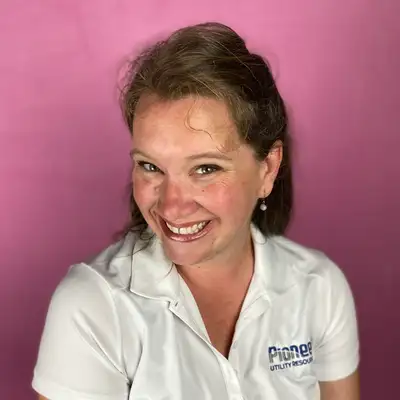
StoryConnect features interviews with marketers, communicators, CEOs and other leaders at cooperative and independent broadband companies, electric cooperatives and municipal power providers. The goal of the podcast is to help listeners discover ideas to shape their stories and connect with their customers. It is produced by Pioneer Utility Resources.
Intro:
A production of Pioneer Utility Resources.
StoryConnect, helping communicators discover ideas to shape their
stories and connect with their customers.
Megan McKoy-Noe:
How to find stories that stick in the capital.
When you walk into a legislator's office,
will your story stick,
or will it slip away? In this episode,
Inland Power and Light's Andy Barth is going to share how
utilities can move beyond numbers to craft the stories that our
lawmakers care about.
That's what we're talking about on this episode of The
StoryConnect Podcast.
Hi, I'm your host, Megan McKoy-Noe,
one of the storytellers at Pioneer Utility Resources.
And I am joined by one of my favorite people,
the delightful Andy Barth.
He is the vice president of government and community relations at
Inland Power and Light in Washington.
We are together in beautiful Whitefish,
Montana.
I know it's so nice here at one of my favorite events of the
year.
Andy Barth:
The premier event.
Megan McKoy-Noe:
The premier, the premier event of the year,
Andy.
Andy Barth:
Yes, yes, it is.
Megan McKoy-Noe:
It is the NWPPA's Northwest Innovations in Communications
conference.
Andy Barth:
Yes. Also known as the fun havers conference.
Megan McKoy-Noe:
Oh, well. But now, it takes a lot of hard work to have this much
fun.
Andy Barth:
Yes, it does.
Megan McKoy-Noe:
It does.
Andy Barth:
Dolly said so.
Megan McKoy-Noe:
So we all lovingly call it the NIC.
But if you hear any noise in the background,
it is because we are all together learning,
connecting.
Andy Barth:
Yes.
Megan McKoy-Noe:
Not networking, a network is something you build.
When you connect, it is something you're like focused on doing
and connecting with each other.
Andy Barth:
Absolutely. Connections that stick.
Megan McKoy-Noe:
Connections that stick just like stories.
Andy Barth:
Exactly.
Megan McKoy-Noe:
Look at you bringing it all around. Andy,
thank you so much for taking time out of merriment to join me
today. Let's start big picture.
Andy Barth:
Yeah.
Megan McKoy-Noe:
If you don't mind.
Andy Barth:
Absolutely.
Megan McKoy-Noe:
You spend a lot of your time talking to lawmakers in Washington.
And I should clarify, we're not talking D.C.;
we're talking Olympia.
Andy Barth:
We're actually talking both, but primarily in Olympia.
Yes.
Megan McKoy-Noe:
Primarily in Olympia. Why does it matter to tell your story well,
to elected officials for utilities?
Why should a utility care about this?
Andy Barth:
Mhm. You know, in every state, regardless of what the politics
are,
the state government dictates a lot of the regulations and how
you can and cannot operate as utility.
And so, if we're not educating the people who are making those
decisions for us,
we're doing ourselves a disservice.
And so it's one of those things,
lawmakers and regulators, those are two different bodies,
and that's something that a lot of people don't realize.
So you have the lawmakers who pass the actual law,
but the nitty gritty details are actually handled in the state
agencies, in the regulatory bodies.
And so once it's out of the lawmakers hands,
they kind of think of it as,
okay, we did it. Cool. It's passed. Now it's on to somebody else,
on to the next big thing.
Megan McKoy-Noe:
Then goes interpretation.
Andy Barth:
Then goes interpretation. And if anyone has ever read anything
like a bill or a statute,
it is clear as murky, murky mud.
And so, it's always interesting to have that.
So not only is it important to really tell the story to
lawmakers,
but also to regulators as well.
Megan McKoy-Noe:
Well, and that makes me wonder,
do you have to tell different stories to those two groups?
I mean, do you focus your attentions on lawmakers,
and then have a different set of stories and a different tactic
that you're using to communicate to the regulators who are
interpreting everything?
Andy Barth:
I think it's the same story. Maybe just we get a little bit more
granular on the regulatory side,
if that makes sense. So we're trying to get lawmakers to pass
legislation that does help our citizens,
our environment, but that it does it in a way that promotes
longevity,
that promotes affordability, that promotes reliability,
all of those things.
Because while some of their ideas from behind a desk sound great,
when you actually get into the day-to-day operations of it,
not only does it not make sense most of the time,
it's not possible. There's some things that are past that are not
possible.
And so our first step is with the lawmakers.
So we can make sure that what they are passing is as close to
realistic as possible.
And then when we go, but that's a little bit more high level. So
then we go to the regulators,
okay, now let's talk details. Let's get into the nitty gritty. If
you want this,
how did you get this number? How do we get that number?
And being involved. You know, earlier in our session today at the
panel,
Sheila said, show up. And it doesn't just stop with the
lawmakers.
It goes with the, they hold rule-making sessions that anyone is
welcome to.
Be there. Be part of the conversation.
Megan McKoy-Noe:
Do they have food?
Andy Barth:
No they don't. I know, I know. I bring my own.
I bring my own. Have party, we'll travel.
So, but no, just being there, being part of the conversation,
helping drive the conversation.
Speak up. Were the industry experts.
We should be helping shape the policy.
Megan McKoy-Noe:
Well, and I wanted to talk to you. You mentioned Sheila. Sheila
Corson at Mason PUD No.
3. She was one of the panelists on a panel that you moderated
today on government affairs,
which it's just an interesting title.
Government affairs, anyhow.
Andy Barth:
Right. Yeah, I know.
Megan McKoy-Noe:
Yeah. But there was an amazing panel that you moderated,
and another one of the speakers was Tucker Billman from ORECA.
And he was encouraging everybody to think first,
not about the utility issues,
which to be fair, we all think of our story first.
Andy Barth:
100%.
Megan McKoy-Noe:
Right.
Andy Barth:
That's what we spend our lives telling.
Megan McKoy-Noe:
Right? But he said, stop that. Put what you are trying to get
across aside,
and instead ask the legislators what issues they are concerned
about in the community.
Find out what matters to them. And it was interesting because we
are constantly doing that not for political storytelling or
trying to get the attention of lawmakers. But we tell folks that
all the time for the magazines,
don't just tell the utility story.
Feature the faces of people in your community.
And I hadn't thought about it. It's the same thing with politics.
Find out what matters to them, tell their stories and build those
relationships.
What's a good example of that working?
I mean, what kinds of issues have you found that common ground on
in your work?
Andy Barth:
Yeah. So, that's very true. And I think a lot of people,
and I will get to your question,
but I think a lot of people – shocking – they forget lawmakers
are humans,
too.
Megan McKoy-Noe:
What?
Andy Barth:
They're people. I know, shocking,
I know.
But they have families. Some have kids,
some have, you know, they all have their people.
And no one runs for office. I mean,
okay, I can't say no one.
Most don't run for office to create havoc and to create – they
run because they believe.
Megan McKoy-Noe:
That's good to know. That's comforting.
Andy Barth:
Right? I know. Doesn't mean that they don't follow through with
it, but they run because they believe in something,
and they want – whether or not we agree with it or not.
Guess what? That's what our country is supposed to be.
So off that soapbox. Examples of how that works.
So by and large, in the public power industry,
at least in Washington state,
I wouldn't necessarily say that it's a partisan issue,
but the beliefs about power become partisan,
usually more on the conservative side,
tend to be more supportive of our efforts,
and those on the left tend to not understand our efforts.
I'm not going to say that they're opposed to us because that's
not true.
They just don't understand because we do a very good job of
making sure that when they turn on the light switch, lights
there, and that's all they care about,
right? And so it's our job to help tell that story,
but because there are people too,
we're talking about not networking here,
but connecting. Guess what? That happens in the lawmakers'
offices.
That happens with their aides. So many people are like,
"Oh, we just got a meeting with the legislative aide,
not the lawmaker." That's the gatekeeper to the lawmaker.
Megan McKoy-Noe:
That's like getting in with the secretary.
Andy Barth:
You become best friends with them.
Megan McKoy-Noe:
It's a huge thing.
Andy Barth:
Yes. And so it's all about relationships.
I mean, it's cliche to say, but it's cliche for a reason because
it's so,
so true. There's a lawmaker in Washington state,
she is the chair of the House Energy Committee.
Her name is Beth Doglio, and she is very progressive when it
comes to renewable energy and is really excited about it.
And I love her passion. She dives in.
She loves to learn more. Not everything that she presents is
necessarily realistic or factual about certain parts of the power
industry. But guess what? The power industry is massive.
Megan McKoy-Noe:
Sure.
Andy Barth:
And it is complicated, and it is technical.
And it is not an easy thing to do,
to operate, to solve, to anything.
And so just spending time with her,
finding out what she likes, and she,
and I was in her office one day,
and I was talking to her about my husband and my daughters,
and, one of my colleagues said,
show her a picture.
And so I did, and that just clicked.
Because she loves her family. She started showing me her
pictures.
And we've gotten a great, a great relationship.
And this past couple of weeks ago,
I held a wildfire mitigation tour for lawmakers at my office,
and I've never been able to get her to come.
She came this year and dove head first,
and it was amazing.
And the more we see that and, you know,
whatever our politics are,
it's not an option to not reach across the aisle.
Because neither side has all the right or wrong answers,
it's in the middle,
and that's where we have to be.
Megan McKoy-Noe:
I still remember when, so I started out as a newspaper reporter,
and I also worked at Starbucks.
Andy Barth:
Love Starbucks.
Megan McKoy-Noe:
Because newspaper reporters are not paid much.
Andy Barth:
No. No.
Megan McKoy-Noe:
And so I was fixing coffee for folks,
and one of our state representatives came in for his coffee.
Right. And I was like, Representative Hembree,
here you go.
And he looked so scared because he was in,
like, normal clothes.
He was just getting coffee.
Andy Barth:
Leave me alone.
Megan McKoy-Noe:
I know, and that's the challenge.
I feel. And this is something that the panel y'all talked about.
So many people want their time. And some lawmakers can get into a
position where they're just like they were in their
defensive mode. Like, don't talk to me.
Andy Barth:
Who's going to yell at me next?
Megan McKoy-Noe:
Exactly. And so building that relationship,
making yourself human to them and letting them know that you see
them as human and not just a vote.
Andy Barth:
Yes. And I think one of the most important things to remember
with that is when you're building these relationships,
it does not happen when you are in the middle of legislative
session.
It happens in the interim. Go to them.
Go to where they live, travel. I mean,
we have a beautiful region.
Travel across your state, meet with different lawmakers on
different things.
And, you know, get to know them.
Yes, talk about your issues. It would be not intelligent to not,
but talk about them.
Talk about their issues, what makes them tick?
What are they following? What are they passionate about?
Because it's not that you're necessarily going to affect change
for them.
I mean, you could potentially, but just having that camaraderie
and bringing it up,
letting them know that I see you as a human.
I care that you have feelings and beliefs and passions too.
Let's work together to make it work for both of us.
Megan McKoy-Noe:
Just letting them know I see your story.
Andy Barth:
Absolutely.
Megan McKoy-Noe:
It's as simple as it needs to be.
Andy Barth:
Absolutely, and make it stick.
Megan McKoy-Noe:
So, Andy, the first time I met you,
I was, like, blown away because you're very polished,
and you just have this presence,
and I know I tease you about this,
but it's true. Like, you hold yourself very well,
and you are very confident.
Andy Barth:
Yes.
Megan McKoy-Noe:
Yes. Not everyone is Andy, which that's another podcast too.
Andy Barth:
It's a series.
Megan McKoy-Noe:
It's a series. But for someone else,
it can feel intimidating.
Andy Barth:
Very intimidating.
Megan McKoy-Noe:
So when you first started advocating for Inland Power and for
public power in the area,
what surprised you the most about how,
like what would lawmakers listen to?
What hit home? What helped them connect with you?
Was there something that surprised you that might help somebody
else when they're getting into this for the first time?
Andy Barth:
Yeah. So from a personal side, no,
because I have a very unique situation.
I grew up in politics. My family's very political.
I've been door knocking and sign holding,
and, I mean, I was born with a microphone in my hand,
and I still haven't put it down,
so.
But and so, it's different for me.
And growing up in Washington state,
I already had those, a lot of those connections because, you
know, we don't have term limits.
Which again, is a whole other podcast.
Megan McKoy-Noe:
Indeed.
Andy Barth:
But so mine's a little bit different.
But I've started working with folks at Inland who have kind of
started,
they're not necessarily government affairs professionals,
but they're dipping their toe into it.
It could be board members. It could be,
it could be staff that's wanting to take on a new role.
My number one thing that I always say first is they're people.
Remember that they are people, and remember that they are like
us.
They just happen to be an elected official that makes very
important decisions.
Second thing, because we are in the society that we are in the
country we are in,
we get to be part of that decision as well. We cannot forget our
part in that political process.
When it comes to figuring out what makes people tick and what
they're passionate about,
it's just getting to know him. Ask him.
It doesn't. We always don't have to be on.
Like representative, have you heard about that? No. Hey. Hey,
representative. Great to see you. How's the family? If you have a
specific example, you know. How was the rafting trip?
How was, you know, whatever. That's when the walls start to come
down.
And it happens during the interim when we're not in session.
Because in session, we always talk about that 15 minute
appointment.
But there's also those appointments where when you're a stalker
like me,
you wait outside one committee room,
wait to grab them, and you talk to them for five minutes as
they're walking from one committee to the other.
Megan McKoy-Noe:
I wanted to ask you about that. You know,
we all talk about elevator pitches,
but you were talking about the walk and talk.
Andy Barth:
The walk and talk, yes.
Megan McKoy-Noe:
You were like, do you have your walk and talk perfected?
Andy Barth:
Absolutely. It is, and it obviously,
because I've been doing it as long as I have,
and I have the relationship, I have,
it's able to change with different people I'm talking to.
And there are some people who will not do a walk and talk,
and I have to respect that.
Megan McKoy-Noe:
How do they?
Andy Barth:
Because they're just like, sorry,
I can't talk. I've got to go. And they're, I mean, because when
you're going from one complex committee to another complex
committee, you have to clear your brain.
And I get it. And so, it's also about being respectful because
like when I'm going from one meeting to another,
let's say we're talking power supply here,
and we're talking community benefits here,
two very different topics. And I need time to decompress for at
least a minute and go.
So I respect that as well. But yeah,
talking to him you know, Senator,
great to see you. I'd love to walk you to your next committee.
I just have a couple questions. And keep it short,
you know, question one,
question two, question three, maybe.
No more than three questions. You know,
what are your, and I'm big on,
what are your thoughts on this? Because that will always come
back to when they ask you the same thing.
So these are my thoughts. How does it affect you?
That happens nine times out of ten.
Megan McKoy-Noe:
Really?
Andy Barth:
So it's almost without them knowing it,
you're putting them in the driver's seat.
Megan McKoy-Noe:
And they like to drive.
Andy Barth:
They love to drive.
Megan McKoy-Noe:
See, I like that. Now we're talking about how to tell your story
and make sure your story sticks.
Now, from my time working in D.C.,
the other Washington.
Andy Barth:
The other Washington.
Megan McKoy-Noe:
We would have to go to the, we got the opportunity to go to the
Hill sometimes.
It wasn't always my job, but part of the time we would go there,
and a lot of it was figuring out how to tell the story and not
just have statistics.
Andy Barth:
Right.
Megan McKoy-Noe:
Which is hard because.
Andy Barth:
I know. We love our charts and our numbers.
Megan McKoy-Noe:
But they don't.
Andy Barth:
They don't.
Megan McKoy-Noe:
So they need some numbers.
Andy Barth:
Right.
Megan McKoy-Noe:
Right. But how do you strike the right balance between data and
the story that you're trying to tell?
Andy Barth:
I have found that when it comes to data,
pictures are worth a thousand numbers and
graphs things like that. And then you can have some,
even if it's a background image that helps bring it to life,
if you're able to email them, and there's a like motion in the
background,
this is where the communications and the creativity side is in
valuable.
Make it stand out. Don't make it black and white. Color it up.
Brand it with your coloring. And have some verbiage there,
but be very graphic intense.
Megan McKoy-Noe:
So. And I know that the whole team at Inland Power is very good
at graphics.
You shared some of those earlier today.
How do you deliver those stories,
those storytelling images to them?
You mentioned email. What about when you're walking and talking?
Andy Barth:
Yeah, so.
Megan McKoy-Noe:
How does that work?
Andy Barth:
Here's, we're going to throw a wrench in this.
Megan McKoy-Noe:
Oh please do, Andy.
Andy Barth:
Because in Washington state, you can no longer give paper
handouts in the Capitol.
Megan McKoy-Noe:
Super fun.
Andy Barth:
So let's go back to making something stick.
Several years ago, our Olympia fly in day happened to be on
Valentine's Day.
My CEO's wife was not happy with me.
But we're good now. It's fine.
Megan McKoy-Noe:
That's good.
Andy Barth:
So, I was like, how am I going to get this message across?
And it was really, you know, it was right when the Inslee Murray
thing was a big deal with the lower Snake River dams,
and so we really wanted to feature hydropower in a different way
than we've ever done it before.
And I was like, it's Valentine's Day.
Megan McKoy-Noe:
Yeah.
Andy Barth:
Chocolate. So I found this company,
and we made a chocolate bar,
and it said, "Be a Hydro Hero." I got to do the whole box.
We had it was very –
Megan McKoy-Noe:
You didn't put the design on the chocolates?
Andy Barth:
No. Our logo was on the chocolate.
Megan McKoy-Noe:
Okay, good.
Andy Barth:
Yes, and so every year since then,
and so it doesn't count as a paper handout,
it's, you know, happy Valentine's day. Here's some candy. And by
the way, there's facts on the back, just FYI. And ever since then
we've done chocolate in different forms,
different packaging. Some of it has just been to promote Inland
Power. Because no matter how long you do this,
there's always new people.
There's new legislative aides, new lawmakers.
You always have to tell your story first.
And what is our story? We are a not-for-profit electric
cooperative who is owned by the people we serve,
and we live in these communities as well.
Megan McKoy-Noe:
And that you're sweet.
Andy Barth:
Well, there's that too. Hence the chocolate.
Megan McKoy-Noe:
I feel that kind of ties in.
Andy Barth:
Yes. So, yeah, there's just different.
And so this year for our chocolates again,
we had this ones were wrapped in gold foil,
and the foil had our logo. And then the chocolate had our logo.
And then the box that came in had our top three issues on it with
really pretty pictures that we've taken of our line crew,
because we want to really humanize what we do.
We have guys out there in all kinds of weather.
I showed in one of the presentations today a video that our
lineman sent us of snow coming in sideways,
and we sent that out to our members,
and they realized what our guys were going through to restore
their power. Same thing works for our members as it does with
lawmakers.
Megan McKoy-Noe:
Do you ever do anything? I mean,
no, that's for handing out to the lawmakers.
Do you do something similar for their staff?
Andy Barth:
Absolutely. The same things.
Megan McKoy-Noe:
Same thing.
Andy Barth:
They got the chocolate bars. They got the.
Megan McKoy-Noe:
Not roses, too?
Andy Barth:
Not roses. Well, no.
Megan McKoy-Noe:
Okay.
Andy Barth:
I think there actually might be a rule against that.
Yeah, something.
Megan McKoy-Noe:
Okay. As long as they don't have rules against sweets,
we'll be okay.
Andy Barth:
That's when we're going to pot. I mean,
that's.
No,
Megan McKoy-Noe:
We'll go to bat.
Andy Barth:
That's when it's. Anyway. Moving on.
That went and rolled sideways. That was not supposed to be.
Megan McKoy-Noe:
It's all good. So I love that example of bringing
your story into a form that they can eat.
Andy Barth:
Yeah, 100%.
Megan McKoy-Noe:
Easily consume. Is there another example you have of another
story that you saw really stick?
Andy Barth:
We talk at them a lot, and we give visuals,
we give reports.
We bring, and I'm a very big advocate of going to them,
but then we also bring them to us.
And as I mentioned you know we got the chair of the energy
committee for the House at our wildfire mitigation tour,
we also got for the very first time,
the chair of the Senate as well. We had 16 lawmakers.
We had four legislative aides. We had two staffers.
One was the Senate Energy Committee Nonpartizan staffer,
and one was the Senate Democratic Caucus staffer.
These people are the ones who are actually doing the research and
writing the language and giving the info.
They are the brain behind all these issues,
so to have them was a triumph.
Megan McKoy-Noe:
Well, and that ties into something else that I heard during one
of your sessions,
I think it was the government relations panel,
but that in an age of digital media,
social media, the lawmakers are always looking for a way for
photo ops.
Andy Barth:
Yes.
Megan McKoy-Noe:
Right.
Andy Barth:
100%.
Megan McKoy-Noe:
So I know you all have done a lot of dam tours in the past,
and you said the wildfire mitigation worked really well.
What did that look like?
Andy Barth:
So it was, and we're already changing it for next year to make it
even better, but it was such a success. I'm so proud of the team
that helped me put it on. We had presentations in the morning.
They listened. They heard from our vegetation management
director.
They heard from our drone pilot.
And showing what they see with the drones and how we use drones
for wildfire mitigation.
They heard from one of our sponsors was overstory.
They're a firm that we work with for wildfire mitigation,
really data heavy.
Like getting the nitty gritty things in terms of.
Megan McKoy-Noe:
Where? Where did you hold it?
Andy Barth:
This was in our office. So they came to our location.
And then that afternoon, and then they also heard from our
engineer as well about our work plan and all the things that
we're doing to, you know, make our grid stronger and more
wildfire resistant and resilient.
And, then we took them out, and we showed them our rights-of-way.
And we showed, we are in 13 counties.
We have 7,800 miles of line. And if you take that line and
stretch it into a straight line,
northernmost tip of Washington to beyond the southern tip of
South America,
we have a lot of line.
Megan McKoy-Noe:
By the way, that's a beautiful example of how you can take data
and turn it into a visual without having to hand out paper or
chocolates.
Andy Barth:
100%. 100%. Although chocolates are nice.
And so, but we showed them the different topographies that we
have and the different types of vegetation and the different
restrictions we have and all of those things.
And you could see the aha moments happening.
Megan McKoy-Noe:
Did you have examples of the kind of brush that you're dealing
with that they could hold and see?
Andy Barth:
Yes.
Megan McKoy-Noe:
I like that.
Andy Barth:
They got hold stuff. They got to see stuff.
They were able to kind of walk in certain areas that maybe the
vegetation is in the process of being cleared,
so they could see it cleared and not cleared and walk in it.
Not cleared so they can understand it's not just coming into
contact with lines,
but it's the safety of our line crews. As they're patrolling this
line, they have to have a clear path, especially if it's dark,
especially if the weather is awful,
right?
And so, they got to see it all,
and then they got to see it completely finished,
and they could see for miles.
Megan McKoy-Noe:
So I asked you this question in the session,
but just for folks who were not there.
Have you gotten your lawmakers up into bucket trucks?
Andy Barth:
Yes, we have. Yes, we have. And we have some plans for next year
of kind of giving them a glimpse into being a
lineman for a day, kind of a thing.
When I was at the Washington Farm Bureau,
we had farmer for a day where we brought lawmakers,
and they could see what it was all about. We were,
they were eating corn raw off the stalk.
And it was just, and they loved it.
They had so much fun. And so we just went again.
We are, our crews in this industry are so good at what they do.
So good, in fact, that most people don't even know because they
just do what they do.
They don't look for recognition. They get the job done because
when the lights come back on,
that is what they're most proud of. And we have to do a better
job of bragging.
I know bragging has a negative connotation,
but we have to brag about our wins.
Yes, we have to talk about the things that we're struggling with,
but we have a lot of good things going for us,
too.
And a lot of it is the people. It all comes down to the people
that we work with and who work for our members.
Megan McKoy-Noe:
I love that, and it is so true. I mean,
that's what drives everything that you and I do.
We geek out a little bit, which is why I love you.
But it is exciting. But as you said,
and this kind of wraps up to where we started,
this kind of storytelling approach,
it's not something you can only do during the legislative
session. How do you keep it going throughout the year?
Andy Barth:
Absolutely.
Megan McKoy-Noe:
And is there a good time of year for you to reach out to them,
or is it just a constant?
Andy Barth:
It is a constant, but it's not everybody,
every day, all the time.
Megan McKoy-Noe:
Don't bombard them.
Andy Barth:
Don't bombard them.
Megan McKoy-Noe:
Don't be a stalker.
Andy Barth:
Kind of.
Megan McKoy-Noe:
Oh, kind of be a stalker, be a nice stalker.
Andy Barth:
At least from like in session, committee to committee,
but that's it.
Don't get arrested. It's not good.
Megan McKoy-Noe:
Lessons to live by.
Andy Barth:
Right. Exactly.
Megan McKoy-Noe:
Don't get arrested.
Andy Barth:
Get the job done, but don't get in trouble.
But no, I just forgot the question.
What was the question again?
Megan McKoy-Noe:
How do you – we'll talk about jail time later – but how do you
keep going throughout the year?
Like what times are really good for you?
And how do you keep those relationships outside of the
legislative session?
Andy Barth:
Right, so there's direct communication. There's indirect
communication. In Washington state, we try to leave August free
because that's usually when they're either doing energy tours
outside of the area.
Some do international tours. There's a lot of conferences for
them in August.
And, you know, some people want to spend time with their family.
And so we tend to,
it's kind of an unwritten rule that you just don't bug them in
August.
There are exceptions to that. If I'm working with a lawmaker
specifically on a piece of legislation,
we communicate usually just via email most of the time.
Just check-ins. It's not like we do the hard hitting stuff.
But yeah, no, it's circling up via social media.
Linkedin is a huge communications tool for lawmakers,
and that's where I interact with a lot of them if it's not on
email.
Megan McKoy-Noe:
Do you have a special newsletter that you send out to all of your
lawmakers?
Andy Barth:
I don't. I do write, they're not op-eds,
but they're industry articles that I will post on social media,
and I tag a lot of lawmakers. I have actually co-authored a few
with some lawmakers as well.
Megan McKoy-Noe:
Oh, I like that. Okay.
Andy Barth:
I mean, it's giving them an opportunity to get their issues out,
especially if there are issues that we share as well.
And it's an awesome opportunity.
There's obviously in-person meetings are great.
If you have a staff and a team that allows you the opportunity to
be able to be away from the office,
that's fantastic. I know there's a lot of these smaller,
smaller.
Megan McKoy-Noe:
A lot of folks don't.
Andy Barth:
They don't because they're government affairs person also runs
their member experience, also runs their conservation and energy
services.
Megan McKoy-Noe:
All the hats.
Andy Barth:
And, oh might do billing too, who knows?
And so, but that's the beauty of the public power world is we are
jacks of all trade,
and we just roll up our sleeves and get it done.
So if you can't do the in person,
which is important, there are,
in this day and age, there are so many. There's Zoom calls.
I've done a lot of Zoom calls this summer with lawmakers.
Megan McKoy-Noe:
Oh, okay. So when they're not in session or anything,
you just reach out over Zoom and touch base.
Andy Barth:
Exactly.
Megan McKoy-Noe:
Another idea that I heard that I think Katie from Flathead
Electric does,
they have their key members.
Andy Barth:
Yes.
Megan McKoy-Noe:
So it's like we all hear about key accounts,
right?
And, you know, those are the business accounts that you're trying
to stay in touch with. But they have key members and that
includes their legislative folks,
their regulatory folks.
And I thought that was such a brilliant thing,
because especially if you are a smaller utility,
and you can't do everything yourself,
make sure that everyone on your team,
all of your customer service or member service reps know who
those key members are.
Make sure that the line workers that are going to be working in
those areas where they live,
know where they are. I don't know if you've ever had this happen
at Inland, but when I was at my co-op in Georgia,
we had someone turn off the power for one of our representatives.
Andy Barth:
Oops.
Megan McKoy-Noe:
Yes. Over a billing dispute.
Andy Barth:
Oh.
Megan McKoy-Noe:
It was fun. And so the person that took the call had no idea.
They didn't know the names of the representatives,
and it got.
Andy Barth:
I'm sweating now with this story.
Megan McKoy-Noe:
I know, I know, it was fun. This was,
no, this was maybe 20 years ago,
and I still remember this because it made such an impact.
And after that, we were like, okay,
we're going to make sure everybody knows who our state
representatives are because they live in our community.
Andy Barth:
Right.
Megan McKoy-Noe:
So, I know that's another good way of educating your staff,
so it's not all on you.
Andy Barth:
Right. 100%. And during session,
I've started doing, like, a weekly internal update to our board,
to our staff. It goes out to the entire staff.
I'm sure most don't read it just because as much as I like to be
creative in my writing,
at the end of the day, some legislation is just not exciting to
write about. Or it's doom and gloom,
and it's never fun. But it's there for folks who want to see it.
I'm actually considering doing maybe like a legislative podcast
for our staff during session.
Not committed to that yet, but we'll just kind of see how session
goes,
but just trying to keep people up to date because they know that
when sessions on,
I'm usually in the office very little.
Megan McKoy-Noe:
And they miss you.
Andy Barth:
And that, well, we have fun at Inland.
We have an amazing crew. But it's,
you know, they know what something's happening,
but they just don't know what. And it's one of those things you
don't know what you don't know. So what questions do you even ask
if you're not in it?
Megan McKoy-Noe:
It's like during an outage where we keep everybody informed.
Why aren't we doing the same thing for all of our staff during
the legislative session and even quarterly,
just to make sure they're aware of what's going on in the
industry and what to know about.
Andy Barth:
Absolutely.
Megan McKoy-Noe:
No, I like that. All right. Last question before I let you go. I
feel we could talk forever about this.
Andy Barth:
This is going to be like a multi-episode,
I'm sure.
Megan McKoy-Noe:
I geek out again. But for folks that are completely new to
government relations.
That's not any better than affairs.
Andy Barth:
It's not. It's not.
Megan McKoy-Noe:
Where should your story start?
Andy Barth:
Go back to the basics. The basics of your co-op,
the basics of your PUD,
the basics of your utility. Because the story starts with our
utilities,
because our utilities are our communities.
We're people. They're people. And one thing that I tell a lot of
folks is,
yes, you know, co-ops have members,
PUDs have customers.
Other people call them ratepayers.
But the one thing that's consistent with all of them is they are
our people,
our lawmakers' constituents. They are the ones who vote them in
or out,
and that is what gets lawmakers' attention.
Now, how you relay that message should never be in a threatening
way.
But it's one of those, it's reminding them that these are your
people,
that you're deciding our futures.
And that's just that constant reminder. Because it's easy,
I'm sure, to be have the blinders on when you're in session.
There's so many things happening. So trying to stay focused on
what you can to get things done,
you do lose sight of the bigger picture and the real world
because you're in the Capitol.
And you're, it's we all do it in all of our jobs.
It's very easy to do, and that's no criticism of them.
That's the reality. That's just the way it is,
and so start with the basics.
Remind them who you are, because we're going to have issues for
days.
But where, when you can tell them the humanizing constituent
story,
that's what's going to resonate with them. That's what's going to
resonate with their legislative staff.
And just go back to the [basics].
It's not hard. That's the thing.
When we look at things like this,
they're like, oh God, we're going to have to – because we think
of like, you know, C-Span and all that kind of stuff. It's,
I mean,
I geek out over that, but most people don't.
It's the basics. It's way easier than it sounds or than it looks.
Megan McKoy-Noe:
It's probably not as easy as you make it look,
though.
So, Andy, thank you so much for sharing your story with utility
pioneers.
I told you we would have fun.
Andy Barth:
This has been a blast.
Megan McKoy-Noe:
He is Andy Barth at Inland Power and Light,
and I'm your host Megan McKoy-Noe at Pioneer Utility Resources.
And until we talk again, keep telling your story.
Outro:
StoryConnect is produced by Pioneer Utility Resources,
a communications cooperative that is built to share your story.