Subscribe
Share
Share
Embed
Ducks Unlimited Podcast is a constant discussion of all things waterfowl; from in-depth hunting tips and tactics, to waterfowl biology, research, science, and habitat updates. The DU Podcast is the go-to resource for waterfowl hunters and conservationists. Ducks Unlimited is the world's leader in wetlands conservation.
Welcome to the Ducks Unlimited podcast, Reloaded, where we bring you the best of our past episodes. Whether you're a seasoned waterfowler or curious about conservation, this series is for you. Over the years, we've had incredible guests and discussions about everything from wetland conservation to the latest waterfowl research and hunting strategies. In Reloaded, we're revisiting those conversations to keep the passion alive and the mission strong. So sit back, relax, and enjoy this reload.
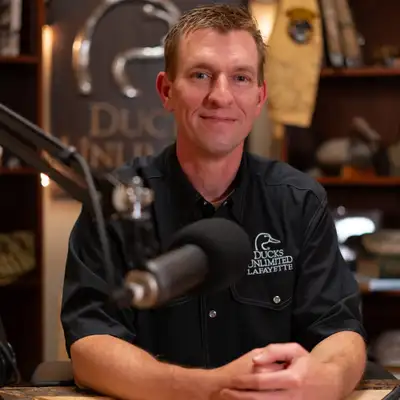
Chris Jennings:Hey, everybody. Welcome back to the Ducks Unlimited podcast. I'm your host, Chris Jennings. Joining me in studio today is my cohost, doctor Mike Brasher. What's going on?
Mike Brasher:I'm doing alright, Chris. It's been a while since we sat down in the room together here to record one of these.
Chris Jennings:It has. Busy duck season. Everyone's busy with the work, trying to squeeze some duck hunts in. But, no, it's good to be in the studio with you. Today's show, we are going to do some you know, we're gonna just kinda discuss some amazing waterfowl facts, and and this is one of the most popular pieces of content that we've had on our website, and it's been on there for a while.
Chris Jennings:But some of these facts are just just cool, and I thought that, you know, maybe if you and I could just sit down and chat about some of these cool little facts, it'll give people something to talk about in the duck blind. Hey. You know you know what the smallest
Mike Brasher:you know?
Chris Jennings:Yeah. Did you know? Did you know this? So it's rather than kinda when we did our myth busters, you know, episode, this is kind of just fun facts for you to share. But before we kick that off, you had something you wanted to bring up.
Mike Brasher:I did. And we probably don't do as much of this as we need to. We've the podcast has grown over the past what have we been doing this now? Three years,
Chris Jennings:three and
Mike Brasher:a half, something like that? And so we certainly appreciate all of our loyal listeners as they say, and we wanna thank you for that. And the other thing that I guess we probably need to do a little bit more often is ask people to take some time to rate the podcast. And if you're feeling really, really froggy, go ahead and review the podcast as well. Those are important from a kind of podcast visibility standpoint.
Mike Brasher:And think about it this way, when you do those things, you are contributing to wetlands conservation and the message that Ducks Unlimited is trying to get out there. So take some time now. Stop this episode and rate and review the podcast, and and keep listening. Keep listening to to to it. We appreciate everybody's support.
Chris Jennings:Yeah. Absolutely. And it is important, you know, getting that support. People rate and review. Definitely, we want you guys to subscribe to it.
Mike Brasher:Trying to trying to get inside all those algorithms and how they work. Right? You know? Hey. You gotta play the game.
Mike Brasher:If you're in it, you gotta play the game. You gotta rate, review, get that that visibility up there. Absolutely. Well, cool.
Chris Jennings:You know, that's a good reminder for everybody. But let's go ahead and kick this show off. Let's you know, we're gonna start I'm gonna start out with one, and this is, you know, something that you and I have even talked about, you know, not specifically, but just like, you know, what ducks eat is always in good conversation. And I got a cool fact here, and this is called high protein diet. So I'm just gonna go ahead and just kinda read through this fact, and then we can chat about it, I guess.
Chris Jennings:So female wood ducks must ingest 75 grams, that's 2.6 ounces of invertebrates to obtain enough protein and minerals to produce one egg. To acquire these nutrients, the bird must consume more than 300 invertebrates an hour for eight straight hours. That's a lot of invertebrates these things are eating. So kind of explain what this process is and and why they have
Mike Brasher:to eat so much. The first thing that that comes to mind, and it's probably gonna be true on a lot of these, is I'd like to see the spreadsheet or the scratch pad that Mike check it and our other biologists used to to calculate some of these things. They would have gotten this information from published studies of of wood ducks or other ducks as we go through here, but, you know, this is like an example. Kinda given a certain type of invertebrate that has a certain protein content in it, it would equate to this. And, of course, you can calculate the protein content of an egg, and those types of studies have been done, and so from that once you get that those pieces of information, it's kinda easy to do the math and calculate it.
Mike Brasher:You need this much protein to produce an egg, and if there's this much protein in this type of invertebrate, then they have to do this and this and this. And so, yeah, protein is important for a lot of different reasons in waterfowl. One of the I mean, feather structures, egg production, mussels, all those types of things. I will kind of give a promo here on on this episode. We have an article, forthcoming article in the Ducks Unlimited magazine.
Mike Brasher:The I think the working title is movable feast. The authors on that are doctor Joe Lancaster and doctor Ryan Askren, and I've I've seen a draft of that article. They did a fantastic job.
Chris Jennings:That should be
Mike Brasher:in the March issue. March. It's a fantastic article and talking about the how the diets of waterfowl differ across species, but then also how they differ throughout the annual cycle. And this is kind of relevant here to this because it's high protein, a lot of waterfowl shift their diet to a higher protein content as they get closer to their breeding season. Then there's some difference between the way do it and geese do it and kinda depending on their their egg investment strategy, and we've capital versus income breeders.
Mike Brasher:We've talked about some of that with past guests, and so, yeah, that's just 300 invertebrates an hour for eight hours in this particular example. That that's that is a lot. Now
Chris Jennings:That's a lot.
Mike Brasher:If they get ahold of a bigger invertebrate or, you know
Chris Jennings:There's probably so many variables to this thing. That's right. But these are just cool little fun facts. That's mean, that's a lot, you know, that's a lot of invertebrates to produce, you know, one egg, so it's pretty impressive.
Mike Brasher:And and I'll also say never pass up an opportunity to emphasize the importance of a balanced diet. I did air quotes there, people can't can't see that. A balanced diet for waterfowl. Carbohydrates, energy in the form of various seeds and and agricultural crops are super important during to help fuel that migration, but invertebrates that provide the protein, that provide all these other essential minerals and nutrients come from come from these other more natural habitats, more natural vegetation communities, and so that's why repeatedly when we talk about how to create a landscape that's attractive and suitable to waterfowl, it needs to encompass a lot of different types of habitats so that it produces that balanced diet.
Chris Jennings:Yeah. Cool. Yeah. We'll we'll go on to the next one here, and, you know, we've got a long list of these, and and people can visit this on ducks.org and and go through all, and we're not gonna go through every single little fun fact. But this fact here is called supersize, and this is just kind of explaining that the largest of North America's waterfowl is the trumpeter swan, and a trumpeter swan can tip the scales at more than 35 pounds.
Chris Jennings:Weighing as much as six pounds, the common eider is the largest duck species in the Northern Hemisphere. So you've got the largest so the largest waterfowl species is the trumpeter swan, more than 35 pounds, and the largest duck species is the common eider. So You ever hunted eider? I have. Yep.
Chris Jennings:I have.
Mike Brasher:Did you you a common eider?
Chris Jennings:I did. Yep. I hunted up in Maine several years ago. That's a fun little hunt. You should do it.
Mike Brasher:Yeah. I want to. Yeah. So this is pretty cool. You know, you can measure largest based using a number of different metrics.
Mike Brasher:Whenever I first saw the title of this, I I thought about a fast food restaurant, no supersides, it, but that's actually not what it's about. So, yeah, it's trumpeter swans, massive, massive bird. I don't have a whole lot of experience with common eiders as I just talked about. The other thing that I did look up here, one of the other ways that people measure the size of birds is, like, wingspan. Mhmm.
Mike Brasher:Do you know this little I'll throw this on you here. Do you know Do
Chris Jennings:you know?
Mike Brasher:Which bird species in North America has the largest wingspan? Not not talking just waterfowl, but bird.
Chris Jennings:I don't. A golden eagle.
Mike Brasher:Oh, you're close. California condor.
Chris Jennings:Oh, I almost
Mike Brasher:said condor and a half feet or something
Chris Jennings:like that. Just teasing the
Mike Brasher:red one.
Chris Jennings:Popped in my head, and I
Mike Brasher:changed my mind. And, you know, whenever I looked into this, I I thought that trumpeter swan might give those those birds a run for their money, but I think the trumpeter swan wingspan is six and a half, seven and a half feet, something like that. The the exact figure is kind of escaping me right now, but you got a California condor, 11 and a half, I think is what it was. Wow. Crazy.
Mike Brasher:Massive. I mean, that's, and then then the golden eagle and bald eagle are up there as well. White pelican is is up there also. But, yeah, a lot of cool stuff, you know, in terms of the just how how large those those birds are.
Chris Jennings:Yeah. And I think, you know, a lot of people assume that the swan is probably the largest waterfowl species, but, you know, with the common eiders not being as common to waterfowl hunters throughout the country, they probably don't have the idea of how big those common eiders are. So that's a cool little fun fact for you to for someone to share in the duck blind.
Mike Brasher:Yeah. One of the other species of waterfowl that I find sort of deceptive in terms of its size and maybe mass once you get it in hand relative to its size when you see it on the wing or whistling ducks. Have you ever had your hands on a on a whistling duck? You know, it's like you would think they're a rather, heavy bird, but but in fact, you get them in hand, they're they're tiny. You know?
Mike Brasher:They kinda feel tiny. I I don't actually know what the mass on that is. I probably should've looked that up, but I would guess somewhere between a gadwall and a mallard. I mean, they're not Yeah. But but they take up a lot of space.
Chris Jennings:They look big. Yeah. For sure. The next one we've got here is this is another wood duck. I guess I I don't even know what to refer.
Chris Jennings:Factoid. There you go. I was going
Mike Brasher:call them amazing foul facts.
Chris Jennings:So this was called double duty, and wood ducks are the only North American waterfowl known to regularly raise two broods in one year. Mild temperatures enable wood ducks in the South to begin nesting as early as late January, and studies of southern wood ducks have found that more than eleven percent of females may produce two broods in a single season. Now, you know, this time of year, we're pushing mid January right now, so people keep that in mind. If you're, you know, monitoring or or putting up wood duck boxes, you should probably go ahead and get out there and start cleaning them out this time of year, especially in the South. So That's right.
Chris Jennings:You know, you had a couple comments on this as well.
Mike Brasher:Well, it it's just that it's not very common. Mhmm. Double brooding, where they they produce two broods of of ducklings. One of the other maybe I'm trying to think. I I don't even I don't think there's any record of model ducks doing it.
Mike Brasher:You think about other ducks that would have the opportunity to do to do so. Model ducks would be in there because they they breed at such extreme southern locations, the Gulf Coast and then Peninsular Florida. I mean, I would imagine there's some that will that that will do that, but there's not a lot not a lot of records of it. Wood ducks are also a bit easier to study because they're they take so readily to artificial nest boxes. Yeah.
Mike Brasher:I mean, that's why we know so much about them is that they're it's easy to gain access to the nesting hens to the and to the eggs and and all that kind of stuff, but it's that just there are a lot of and I guess we should should clarify, this is not to be confused with renesting. We're actually talking about birds that are that are able to raise two broods. Now there's kind of different variations of that, and I'll confess to not knowing exactly the answer here, but, like, I I don't know if, as it's defined here, it means that they that the hens took that brood to completion, like, to to flight stage? I think it does. I think that, like, true double brooding, I think that's what it refers to.
Mike Brasher:Mhmm. There are some instances where a which and these would be a little more common where a hen can hatch a clutch of eggs, take the broods to the water, and then they all get gobbled up by a largemouth bass or cottonmouth or alligator or something, and then they would go and re nest and do another brood. I'm not sure if there's a technical difference in in that. A lot of my my kinda research science counterparts out there, you're free to send me an email, correct me, or or or educate me on that, but true double brooding, I think, would be raising two flight stage, two broods in same year, and that's just incredibly rare because of the time and energy that it takes, but re nesting is something a little bit yeah, it is certainly more common across the waterfowl, or across duck species anyway.
Chris Jennings:Yeah. And and, you know, that's just a good reminder that we need to do a species profile on the wood duck. We do. We've not done that yet. Yeah.
Mike Brasher:I know. I've got I've got my my my my person in mind, just need
Chris Jennings:to get get them here. Awesome. The next one is called sound caries. So both Common and Barrow's golden eyes are often called whistlers. On cold, windless days, the resonant whistling sound produced by golden eyes rapidly beating wings can be heard more than a half a mile away.
Chris Jennings:That's a pretty cool fact. It is. It's not actually them vocally whistling. It's actually their wings beat. Yeah.
Chris Jennings:Correct?
Mike Brasher:Yep. And this is another group of species, a couple of species here that I don't have a whole lot of firsthand experience with, either doing research or hunting or even being in places that where they're they're commonly found. This one was interesting because just this past week, I received a text message from Derek Christians, our campus waterfowl leader, and he was out in Idaho, I think, and they were having a the the folks that he was hunting with were having a conversation about golden eyes, and he sent me a text asking, how do they make that whistling sound, you know, with their, how do they vocalize and make that whistling sound? I'm like, well, I don't actually I may look into that a little bit, and so so I was able to I I did, and it's like, yeah, it's it's the wings that actually create the wind going across the wings that create the whistling sound, not a vocalization. So just sort of an interesting yeah.
Mike Brasher:Another interesting intersection of the things that we're talking about and a question that I get from people every now and then.
Chris Jennings:Yeah. I'm sure that we always joke around that the common golden eye hen is probably the least identified duck. We always get emails like, hey, what's this duck? Most of the time, if somebody doesn't know what the duck is, it's typically a hen golden eye common because people don't see a ton of them, and then they get it in hand and they're like, what is this? Yeah.
Chris Jennings:So that's that's a that's a good little fun fact as well.
Mike Brasher:The idea that wind moving across the wings of birds will create a sound is probably shouldn't be a foreign concept to waterfowl hunters or dove hunters. Doves have a very distinctive sound when that's exactly Like a dove
Chris Jennings:flying away sound.
Mike Brasher:Whenever they, whenever they they fly off. There is there's also there's a video out there to for whether it be TikTok, Instagram, Matt Harrison. I'd seen it a few months ago. Matt Harrison actually came across it just last week and sent it to me. It was just an amazing video demonstrating the differences the difference in sound that is created by different birds, you know, whenever they're in flight, and I forget this I forget the species that they're comparing.
Mike Brasher:One is I'm just gonna make some up. Maybe one is a pigeon, maybe one is some type of I forget what some type of passerine, let's say, and then the final one, which is the coolest part of it, is an owl. I think it's a barn owl, if I'm remembering this correctly. It's been a while since I watched the video. The point of it was to demonstrate exactly how quiet the wings of owls are.
Mike Brasher:It's astounding. So folks should do themselves a favor go out, go online, and I think if you Google something like how does an owl fly silently or something like that, that video will probably come up, and and it's remarkable. But it just kinda shows you I mean, owls are just, like, incredibly silent, and, of course, you know, they're predatory birds at night, and they they need to be.
Chris Jennings:Yeah. Absolutely. Owls are awesome. So the next one, and the funny thing is we did this one as a fun fact on TikTok not too long ago. Our social media coordinator kinda created a video around this, and it just blew up and had, like, a million views.
Chris Jennings:But it's a cool little fun fact. So this is called Gold Rush. And so waterfowl ingest small particles of stone, gravel, and sand, which are kept in their gizzard to help them grind up hard foods like grain, acorns, and clams. In 1911, a gold rush was spurred in Western Nebraska after hunters found small gold nuggets in the gizzards of ducks they had shot. The source of these gold nuggets, however, was never discovered.
Chris Jennings:So they're just out there picking up gold somewhere and spurred an entire gold rush. I thought that was pretty cool.
Mike Brasher:So my question is, do you believe this one? No. Not really. I mean, 1911, how many waterfowl hunters I mean, maybe they were maybe they did that because they you think they were eating the gizzards. You mean, at that time?
Mike Brasher:Think about that. Probably. 1911, market hunting days, still some of that going on. Maybe so. How can I'm trying to think
Chris Jennings:of How can you duck hunt in 1911? You couldn't even post your Instagram picture of your big pile of ducks.
Mike Brasher:You know? Well Yeah. Duh. So that kind of leads my brain down an interesting road in 1911. I I don't did they use the gizzards in I would imagine they did.
Mike Brasher:You know? If you're a commercial if you're a commercial hunter, you're gonna use every part of the bird that you can. So that would make sense. Whenever I first read this, I'm like, how many people are out there 1911 actually cleaning the gizzards of the ducks that they're harvesting. But if it's, you know, market hunting kind of based, there's still some of that going on at that time, and they were trying to they were trying to kind of wind that down at that time, but yeah.
Chris Jennings:You guys think there's a lot of people out there kind of on the edge of a gold rush at that time. No. Yeah. I mean, people are looking a lot probably a lot more than they are now.
Mike Brasher:Maybe so.
Chris Jennings:You know? So maybe that's what it was. I think this is just a cool fun fact. I don't know. Again It would be.
Mike Brasher:And if anybody out there knows anything more about it, hey. Shoot us an email.
Chris Jennings:Yeah. Absolutely.
Mike Brasher:Podcast@ducks.org. So Just don't just don't have it come from the Ducks Unlimited website. We can probably find that ourselves. Yeah. On that.
Chris Jennings:Before we get into deadbeat ducks, let's go ahead and take a quick break, and we'll come right back, and we'll we'll do five or six more of these cool facts.
Mike Brasher:That sounds good to me.
VO:Stay tuned to the Ducks Unlimited podcast, sponsored by Purina Pro Plan and Bird Dog Whiskey after these messages.
Chris Jennings:Alright, everybody. We're back, and we have amazing waterfowl facts. I've got my cohost, doctor Mike Brazier here, kinda breaking down some of these fun facts. The last we just did, the gold rush, he does not believe. He thinks that was a lie.
Mike Brasher:Wouldn't go that far.
Chris Jennings:You question. That's your job. I'm skeptical. So the next one's called deadbeat ducks, and I'll just go ahead and read through this, and then you can kind of, break it down on on however you want. So several waterfowl, including redheads, camisbacks, wood ducks, and ruddy ducks, hooded mergansers, and snogies pursue a breeding strategy known as nest parasitism, which we've just talked on the podcast before about this.
Chris Jennings:This And is where females lay eggs in the nest of other females of the same species. Some wood duck nest boxes have been found with as many as 50 eggs laid by multiple hens. Female red redheads regularly lay eggs in the nest of other duck species. In one study conducted on Manitoba's Delta Marsh, more than 90% of canvasback nests contained redhead eggs. The unsuspecting foster hens raise the redhead ducklings as their own.
Chris Jennings:So we've talked about this before, especially with redheads. We had a conversation about black bellied whistling ducks. We've had some discussions about this nest parasitism, but what did you want to add to this?
Mike Brasher:Well, the first was what you just did, that that black bellied whistling ducks are not in this list. They are one of the becoming one of the most well known nest parasitism parasitizing species because they're becoming more common, widespread, abundant, but, yes, all these others, especially redheads, wood ducks, hoodemergansers, they're some of the most notorious. There's and then once you get outside the waterfowl field, there's other species that do the same, cuckoos, brown headed cowbirds, etcetera, also known as brood parasitism, but it actually occurs by laying the egg in the nest of another individual. You know, this is something that waterfowl researchers have known about for a long time, but it's cool that it's like we're now in this era of old questions are new again, I guess you could say, because of the new technologies that are being applied to some of these questions to learn even more about the phenomenon and what we could do, years ago. Remember, this was written, like, twenty five years ago, I think.
Mike Brasher:Yeah. Probably At least. Some we we probably decided, and now we've talked about this with John Edie and a few other folks as well. They're using RFID readers to identify the individual wood ducks that are going into all these different nest boxes, and they can also use DNA testing to identify the the parents of the that are producing the eggs, and they can, to a degree, never before or not previously really identified, determine how many of these eggs were laid by different hens or fathered by different male ducks or geese in studies that may be occurring out there. So, anyway, it's just we're learning more about it.
Mike Brasher:I've seen some proposals here recently that have come across my desk that are I think red breasted mergansers will, although not a cavity nester, will, will engage in this same type of of parasitism. There's a study at at LSU looking at the kind of ecological reproductive consequences or benefits of nest parasitism, brood parasitism to the host individual, and so it's like there's a different lot studies going on, some basic biology that's being covered in some this research and other, it's just like cool.
Chris Jennings:Yeah, and I think that's a good opportunity, you know, from your perspective, and this is right up your alley for what you do, but really the science and the technology has changed so much Mhmm. In all of this, and I think it's just kinda cool to point out that, you know, we're learning so much more about waterfowl all the time that, you know, like when this article was written twenty years ago, didn't have some of this technology. Yeah. So which is why I'm gonna read this next one, although you did not have it on your list. But I think it's an awesome fun fact, and I guarantee that this one has probably changed based on technology.
Chris Jennings:So this is called nonstop flight, and the long distance flying champions of all waterfowl are black brant, which migrate nonstop from Coastal Alaska to their wintering grounds in Baja, California, a journey of roughly 3,000 miles, and they do it in just sixty to seventy two hours. So that is booking it. I mean, that's a long flight, but what's cool is these birds lose almost half their body weight during this marathon flight. Another little fact they threw in here was pintails raised in Alaska in winter in Hawaii make a similar Transpacific flight of about 2,000 miles. So the reason why I wanted to point this one out, just because we kind of were alluding to that part of the conversation where, you know, technology has changed so much and benefited waterfowl research and science, that this I I don't do you believe this is still correct?
Chris Jennings:Or Yeah. Yeah.
Mike Brasher:I do. Because we recently had, I think, two episodes on bran.
Chris Jennings:Yeah.
Mike Brasher:And, yeah, the the the breeding grounds and the sort of terminal Mexico wintering grounds for this species haven't really changed much. Yeah. And, yeah, this, I mean, it's the way this was originally sort of discovered, it's like birds left Eisenbeck Lagoon, and then they show up in in Mexico, and those type of that departure and that arrival were kinda documented in a rudimentary way through people calling in one another and saying, alright. Our birds are starting to leave, and then somebody else down in Baja saying two or three days later, well, they're starting to arrive. Now they weren't tracking individual birds, I don't think, so that's the way that it has changed is we're able to confirm that, if you will, with the tracking of individual birds either through geolocators or through actual GPS tracking devices.
Mike Brasher:And so, yeah, there's a lot of that that's that's been confirmed. Yeah. It's Alaska not Alaskan. That didn't sound right when I said it. Atlantic, Brant, take on similar long distance migrations, but they or at least in terms of the total distance Yeah.
Mike Brasher:Maybe it's a little bit shorter, you know, when you actually do the math, but they kinda stop midway on Southern James Bay and for a staging area, and but then they continue on to the Eastern Shore, New York, New Jersey. Mhmm. And, yeah, brant are incredible birds. The when you look at their the shape of their wing, they're they're built for flight. They're built for long distance flight, and it's it's pretty cool.
Mike Brasher:They're another species that's getting a fair bit of research attention right now because of some of the vulnerabilities that they are that they're subject to in terms of changing climatic conditions and climate changing environmental conditions on their breeding grounds as well as their wintering grounds. So and the fact that they are so closely tied to a few areas and that they make these long distance migrations, you know, it sort of increases their their vulnerability to to some of the challenges that they face.
Chris Jennings:Yeah. Those are they're impressive words for sure.
Mike Brasher:And they taste well, Pacific bran tastes fantastic. I've heard different stories about Atlantic bran.
Chris Jennings:You just you just went up there and hunted bran.
Mike Brasher:I did. Isaac Lagoon.
Chris Jennings:Cool Bay.
Mike Brasher:I did.
Chris Jennings:You eat one while you're up there?
Mike Brasher:Absolutely. Wonderful. Absolutely wonderful. I still have some here with me. Well, here in in Tennessee, not here in the office.
Chris Jennings:Not here in the studio. That's right. So our next little fun fact is called living color, and I'll go ahead and read it real quick. The coloration of waterfowl plumage is produced in two ways, by pigments or by physical structure of the feathers. The two main types of pigments known as melanins, did I say that correctly?
Chris Jennings:Melanins. Yeah. Melanins and lipochromes produce black, brown, red, yellow, green, and violet shades. The appearance of blue and iridescent colors results from these pigments in combination with fine feather structures. This explains why some waterfowl feathers appear to change color as they are moved in the sunlight.
Chris Jennings:Yeah. I don't have
Mike Brasher:a whole lot to add on this other than just to say this is something that a lot of, a lot of people probably don't realize is that that that some of the iridescent colors that they're seeing are structural in basis and not an actual kind of color, and again, my ability to talk about this from a position of expertise kind of falls apart pretty quick because I'm I'm not good in this in this area, even talking about it in the correct terms. The other reason I wanted to kind of talk about this is we'll sort of do a pitch out there to the listeners. If there is someone that is an expert in avian coloration and they want to come on and talk about this and how these things how these things are produced, how diet plays a role in the coloration, give us a shout, d u podcast at ducks dot org. We'd love to set something up, have you come on and talk with us about your expertise, coloration in birds, bird feathers. It'd be pretty cool.
Chris Jennings:Yeah, that'd be a great conversation. So the next one we've got is called Taster's Choice, and I want to figure out how you get to be one of the researchers on this little fact here. But so in the fall, wood ducks largely feed on acorns. You thought it was
Mike Brasher:gonna be about how ducks taste, didn't you?
Chris Jennings:Yes. That's what I was thinking. Yeah. So in the fall, wood ducks largely feed on acorns and flooded bottomlands. Researchers who conducted a taste test, I did air quotes there too, on captive wood ducks found the birds preferred tiny willow oak acorns over larger acorns produced by other oak species.
Chris Jennings:Biologists have found as many as 15 pin oak acorns packed into the gizzard and esophagus of a wood duck.
Mike Brasher:You know, it surprises me that occasionally I hear people still questioning whether wood ducks and mallards eat acorns.
Chris Jennings:Yeah. Why would you question that?
Mike Brasher:I don't know. It's like, why else do you think mallards go into bottomland hardwood, flooded bottomland hardwood forest by the tens or hundreds of thousands or millions, you know, when you look across the overall landscape, they eat acorns. Mhmm. And this was a study that was actually conducted I'm guessing this is the one they're referencing. It was conducted at a captive facility down down the road at Mississippi State University.
Mike Brasher:Doctor Rick Kaminski and some of his graduate students were involved in this one. I'm I'm familiar with it, it was actually pretty cool. So the taste test was not like of the birds themselves, you know, it was a feeding trial. That's the more technical way
Chris Jennings:to describe That's why
Mike Brasher:did taste test
Chris Jennings:in acorns. And
Mike Brasher:so what they did is they offered wood ducks in captivity the choice of different types of acorns, and they found that acorns consistently preferred these willow oak, maybe water oak and pin oaks, and and they they avoided the consumption of some of these larger species of of oaks. I forget which other species they they tested, but I'm gonna guess overcup oak, let's say burr oak, they're larger or whatever, and they did some additional analyses on those acorns to find out, well, exactly why is that, and so they ended up preferring I think there were even some acorns that are about the same size that they that they avoided, but they and Brian Davis, who, if we ever get him on here, he can tell us all about this, but they ended up doing some analysis of those acorns, and they found that the ones that they preferred are those with a high meat to shell ratio. In other words, the shell on the acorn is really thin, and therefore, there's has proportionally a lot of a lot of meat, and so, yeah, that makes sense. Yeah. Right?
Mike Brasher:Absolutely. Now how are they able to to identify those specific acorns in muddy water or whatever their little feeding trial situation was? That in itself speaks to another fascinating fact about waterfowl and their tactile abilities, with their with their bill. It's a subject for another day, but this finding has very important implications for some of the work that Ducks Unlimited and Arkansas Game and Fish Commission are doing right now, and the reason why they are concerned about the decline and the changing forest community in some of Arkansas's green tree reservoirs and green tree reservoirs elsewhere is because these most preferred acorns, as determined from these feeding trials, are also the species of oak trees that are among the least water tolerant, and kinda given the long term flooding of green tree reservoirs and kinda the way they've the length and duration and depth that they've been managed for decades is kind of causing a shift in the forest community composition where that it's we're seeing a decline in the number of these willow oak and water oak trees and nut all oak, and instead it's favoring the more water tolerant, like nut all oak, burr maybe not burr oak, but at least nut all oak, or I'm sorry, overcup oak, which are not as preferred by water so this is a lot of information there.
Mike Brasher:We've talked about that before, the GTR work in Arkansas, but this research here, sort of foundational to helping us understand the consequences of some of the actions or some of the things that are happening on the landscape today.
Chris Jennings:Cool. Yeah. That's very cool. And I got I got another little fun fact here, and I'm gonna read this when you didn't have it on your list, but I thought it was pretty interesting. Excuse me.
Chris Jennings:So in January 1999, a tornado and violent hailstorm deposited more than 3,000 dead waterfowl across a seven mile long swath in Eastern Arkansas. This is I thought it was just kind of a cool fact, you know, somebody had documented this, obviously. But it also goes to show that how, you know, waterfowl, especially migration, wintering areas, are highly susceptible to impacts of weather, and we typically don't think of, like, tornado and hailstorm thing, but I just thought this was pretty cool. I wonder how they found these 3,000 dead waterfowl. They're saying across a seven mile long swath.
Chris Jennings:So someone must have just followed the trail of of dead waterfowl. It's kinda interesting.
Mike Brasher:It it reminds me of and I I kinda reference this, these type of observations mentally. You know, occasionally, my wife will will ask me if there's a big storm coming through. It's real windy or it's tornado or whatever, and my wife will just, you know, kinda say, well, what are all what are all the birds doing, and how do they survive all this type these these situations? And, I mean, the the truth is some of them don't. You know?
Mike Brasher:They're they're out there in the wild having to endure all of the different risk that that mother nature throws at them, and sometimes they lose. Sometimes these storms, do get the better of of waterfowl, whether it be a tornado, whether it be a hailstorm. You hear about it more with hailstorms than you do with tornadoes, and, mean, hailstorms and tornadoes are kind of related, but there's more hailstorms than you can have a hailstorm without a tornado, and so it's like almost almost every year, you will hear hear some isolated report of a hailstorm causing mortality for some number of of waterfowl or other kind of weather events forcing a flock of migrant geese or ducks to the ground, you know, so those types of things aren't aren't unusual, either dense fog and and a whole host of other things. And and when you get into the passerine migration, all the little songbirds, boy, they encounter even greater risks in flight during migration and and and these kind of storms as well for them. So, yeah, it's weather can take a toll at some scales on waterfowl.
Mike Brasher:You know, it's not just not just hunters and and predators that are responsible for mortality in waterfowl.
Chris Jennings:Yeah. It's just added to the list of dangers of being a duck, I guess. That's right. So our next one here is called fowl infidelity. You had this one checked off.
Chris Jennings:I think you I'm sure you have some some additional information to add to this, but I'll go ahead and read this little fact. Genetic analysis of mallard broods has shown that many clutches include eggs that were fertilized by different drakes. Biologists speculate that hens may actually seek multiple mates to ensure their clutches will be successfully fertilized. This behavior also produces greater genetic variation among broods.
Mike Brasher:Yeah. Is the this kind of gets into the area of the reproductive strategies of waterfowl, mating systems of waterfowl, and as well as, as it references here, genetic analysis that genetic analysis of this type has been around for a couple of decades, and they've been able to dig into some of this. It's easier to do now, you can get more information from genetic samples or from tissue samples, and so, yes, we've we've known that there is there's kind of multiple paternity in in duck nest. Exactly, you know, is that is that evolutionarily advantageous for the female? Is are the females actively soliciting those kind of extra pair copulations as they're as they're called, or are are the are the males being more of the the aggressor, and it's totally unwanted behavior by the female.
Mike Brasher:I'm not actually sure where the latest studies Mhmm. What what the latest studies are suggesting on that, but I'm I'm certain there are folks out there that that are kinda deep into the evolutionary theory of this and are studying it, and, maybe they could again, hey, if you're one of those people that that has studied this, shoot us an email, dupodcast@ducks.org. These type of fun facts are can lead to a little more detailed conversation.
Chris Jennings:So we're basically using this show to solicit
Mike Brasher:There you go. People And talk about more some of the research that people and the ways that people are trying to study this. You know? When you dig into the details of, like, how they set up the experiments, how they ask the how they they craft the hypothesis and how they collect the data to test that, I mean, that that stuff can be really cool itself as long as we don't get, like, too deep. That's the risk with me.
Mike Brasher:It's getting
Chris Jennings:too You get too technical.
Mike Brasher:That's right.
Chris Jennings:You bore me. The next one here, the the next little fun fact, and you don't have it checked off on your list, and you probably Throwing
Mike Brasher:some curveballs.
Chris Jennings:Yeah. Throwing some curveballs, but but this also leads to, you know, the conversation that this data that we have here, these facts, could potentially be out of date, and we probably need to update this. This one's called Old Birds, and the oldest known duck to be taken by a hunter was a canvasback harvested at the ripe old age of 29. That's an old canvas bag. And, again, like you said, this this was written twenty years ago, so this obviously could have changed.
Chris Jennings:But then another little fact to go with it, the oldest known goose to be taken by a hunter was a Canada goose of the same age, 29. Again, that's a pretty old goose.
Mike Brasher:So I looked this up. The USGS bird banding lab maintains a table of the oldest known banded birds, you know, recovered banded birds on their website, and it it covers a plethora of bird species, not just waterfowl. I didn't find this canvasback record in there. I think the oldest record that I found for a duck, and maybe I just missed it, was '25, '26, '27, something like that, and I forget which species it was. There were several records, however, of older geese than the 29 year old Canada goose.
Mike Brasher:I wanna say a 34 year old white front. I mean, that's Oh, wow.
Chris Jennings:A grandpa white front there.
Mike Brasher:Amazing. You know? Yeah. Just amazing. And yeah.
Mike Brasher:So it's really cool. I encourage you to, if you got some time, wanna check out the longevity records based on band recoveries for different species of birds, just do a quick search, USGS bird bending lab longevity records, something like that, and, and then it'll it'll take you there. It's pretty cool to to peruse that, and I think it even kinda it has some other information there associated with each of those records. So, and the other thing that you'll notice, generally speaking, the larger birds are gonna be the ones that live the longer. I mean, there's gonna we're looking at longevity record type table here, right, so it's not true statistics of longevity or or average lifespan, but average lifespan correlates with body size, and so geese, swans, they're gonna be the the more longer longer lived species.
Mike Brasher:The smaller birds, green winged teal, blue winged teal, they're gonna be at the other end of the of the gradient there. So that's, yeah, how long these birds live, that's always cool cool little thing to study.
Chris Jennings:Yeah. That's awesome. And, again, this looks like we're gonna have to update some of our facts that we have here. Sure. So the next one is called a heron whodunit, and I thought that was a good little name for it.
Chris Jennings:But, you know, this kinda reminds me of a story that you told back when we originally started doing this podcast.
Mike Brasher:Whatever it is, I made it up. Yeah. You probably It's totally false.
Chris Jennings:About you had a transmitter or something
Mike Brasher:Oh, yeah.
Chris Jennings:On a on a duckling and it got eaten by a coyote and you could track it. Yeah. And the coyote's running away and you can track the coyote. It was basically in the coyote's stomach.
Mike Brasher:That's
Chris Jennings:right. But this one And
Mike Brasher:I later later found it in the coyote's poop. Found it found the transmitter. Found
Chris Jennings:the transmitter. Yep. So this heron who'd done it so in one study on the survival of wood duck ducklings, great blue herons ate 10 of the 48 ducklings fitted with radio transmitters. When a researcher discovered that one of the transmitter signals was originating from a live heron, The biologist used his receiver to track the heron to its roo site where it regurgitated the transmitter. So at least you didn't know, your coyote didn't regurgitate it.
Chris Jennings:You actually had to dig through the poop.
Mike Brasher:I didn't really dig through the poop. Maybe I did. You did. Did. So this factoid, this fun foul fact comes from our good friend down the road, doctor Brian Davis.
Mike Brasher:Studies has done a lot of research on wood ducks, and I actually remember I was at Mississippi State when he was doing the research in which he discovered this, and at least I'm I'd be 99% certain that this is the the that Brian's study is the one that's being referenced here with this little fact. And it was what he discovered is is, yeah, exactly as you described, it was this one heron that was responsible for eating these ducklings, and so Brian concluded that this heron had developed a search image or just kinda, in more layman's terms, just kinda figured out that, hey. There's gonna be little tiny ducklings come popping out of these these these structures. Let me go sit on them and watch for the ducklings to come out of there.
Chris Jennings:It's like a feeding The
Mike Brasher:heron became a specialist on wood duck ducklings. That was at the Noxiebe National Wildlife Refuge there in in East Central Mississippi. At least I'm pretty sure that's where that one Brian's had several studies across the several study sites, but I think that was happening there at Noxby. That's also where he had a lot of cottonmouths eating some of these ducklings. I mean, ducklings have a tough go of it, man.
Chris Jennings:Oh, yeah. Everything's true. We've talked about that before. Yeah. Alright.
Chris Jennings:So I've got a couple more, and we'll we'll go ahead and get out of here on this. So one is the speed record. So the fastest duck ever recorded was a red breasted merganser that attained a top airspeed of a 100 miles per hour while being pursued by an airplane. This eclipsed the previous speed record held by a canvasback clocked at 72 miles per hour. Blue wing and green winged teal, thought by many hunters to be the fastest ducks, are actually among the slowest, having a typical flight speed of only 30 miles per hour.
Chris Jennings:So, you know, that we've talked about that before, especially when did the blue winged teal species profile. You know, they're acrobatic. They're small. Everyone seems to think that they're going really fast, but really, you know, the facts show that those are actually some of the slowest ducks out there, especially compared to that canvas bat going 72 mile per hour. That's Yeah.
Chris Jennings:That's pretty serious.
Mike Brasher:Can't argue with the facts.
Chris Jennings:Can't argue with the facts.
Mike Brasher:But it's just and I think what that demonstrates is just because a bird is the fastest doesn't mean it's the hardest to hit, you know, to shoot, to connect with because I mean, last week or two weeks ago, we were hunting in Arkansas, and we had a flock of green winged teal come in, and you see them, they circle, they come back, you get ready, get ready, and then you raise up to shoot, and, I mean, I can still see it. Right as three times in a row, I pulled the trigger. As soon as I pulled the trigger, the birds moved. It's like somebody else was shooting, and they were, like, shooting right before me, and so when they would shoot, the bird would zip, and I would
Chris Jennings:Sync shoot.
Mike Brasher:Just like bam, bam, bam. Every time I pulled the trigger, I'm like, yep. Missed. Missed. Missed.
Mike Brasher:Knew it.
Chris Jennings:You flock shot him.
Mike Brasher:No. I didn't. I was singled on one bird. Excuse me. Was I had one bird, but every time I pulled the trigger right before I pulled the trigger, that moment, it moved.
Mike Brasher:I think it was because the guy next to me was shooting maybe a split second before me causing those birds to zig and zag, and I'm just like, yeah, okay. You won.
Chris Jennings:You won. Save your ammo.
Mike Brasher:That's right. So in terms of whether this is still true, I think for the red breast and organza, I'm not aware of any more recent kind of speed record, so to speak. We did talk with Mike Casazza a few years ago about some of their use of this, like, high high resolution GPS tracking information to to measure the speed of of pintails. Mhmm. I don't remember if they had any other ducks that they were looking at, but in that in that paper that they produced, there were, like, several other records of flight speeds by other waterfowl, and it talked about that table contained sort of how it was determined, some was determined by radar, some was determined by sort of chasing, either in a plane or a vehicle, but, you know, the ones that their GPS based measurements are that they're starting to get now, I think you can have a little bit more confidence in those.
Mike Brasher:Some of these where you're like, chasing it with a plane or chasing it with a vehicle, it's like, well, is that okay. Maybe that's the speed record,
Chris Jennings:but Yeah.
Mike Brasher:What does that really mean? So
Chris Jennings:Yeah. No. I mean, I think and and, again, this is another this is another it's a fun fact. Yeah.
Mike Brasher:This is another Red breasted merganser.
Chris Jennings:Another good example of technology being able, like you mentioned, you know, the different transmitters, things like that that they can now have on these birds to really, you know, probably say exactly how fast some of these birds are going. So pretty cool stuff. Alright. Let's do one more, then we'll wrap it up. I wanted to do this one because it I just thought it's just a really, really cool fact considering we're referring to these amazing waterfowl facts.
Chris Jennings:This one's pretty amazing facts. Fun you can call it
Mike Brasher:whatever you Fun foul facts. So this one's called seasoned traveler. Or fantastic foul facts.
Chris Jennings:That's a good alliteration there. So seasoned traveler, a pintail banded in 1940 in Athabasca, Alberta, survived until January 1954 when it was shot near Necuspana, Mexico, roughly 3,000 miles away. So if this pintail migrated between these two locations every year throughout its known lifetime, the bird would have logged nearly 80,000 air miles. That's pretty impressive. It's really impressive.
Chris Jennings:Now that's what I call an amazing waterfowl fact.
Mike Brasher:You're still not going with me on that, are you?
Chris Jennings:No. Fowl fact. Fantastic fowl fact. Alright. We'll go with it.
Mike Brasher:Yeah. And and we are another thing that that GPS tracking devices are allowing us to to to see more often are some of these amazing feats of of waterfowl. There was a pintail, I think, that we've seen in social media here recently, a record of a pintail traveling from I forget where it was marked. Maybe I don't know. But it went, like, to Japan.
Mike Brasher:Maybe it was marked in Alberta, went to then came back up, and then the next year migrated south to Louisiana, or I may have that wrong or something. I may have those reversed, but it's just incredible, and we're able to document these intercontinental movements. Now we've known they've occurred because you get band recoveries and all that type of stuff, but you wouldn't from band recoveries alone, you would not have been able to determine that that bird went across multiple flyways because you only get a banding location typically, unless you get lucky and recapture, You only get a banding location and a recovery location. So from that standpoint, let's say it was recovered in I don't know where it was. If it let's say it was recovered in Japan, but it was marked in Alberta.
Mike Brasher:You would have only had those two points, and that would have documented intercontinental travel, but it would not have documented intercontinental and inter flyway travel. These GPS tracking devices are just putting data to the things that we suspected or otherwise already knew from one reason in one way or another knew were were happening out there. So just amazing birds.
Chris Jennings:Yeah. And and another good, you know, excuse to reference cool science and and research that's going on.
Mike Brasher:There you go.
Chris Jennings:So, Mike, this has been great. We'll go ahead and wrap this up. Maybe we'll try and get another amazing waterfowl facts. Or what is it? Fowl fun facts show.
Mike Brasher:Fun fowl facts or fantastic fowl facts?
Chris Jennings:There you go. Fantastic fowl facts. We will try this one more time. Fantastic foul facts.
Mike Brasher:You got it. Cool, Mike. This has been awesome. Thanks, Chris. I've I've enjoyed.
Chris Jennings:I'd like to thank my cohost, doctor Mike Brazier, for coming on and sharing some amazing waterfowl fact I mean, foul fun facts. Fun fowl facts. Like, thank Chris Isaac, our producer, for putting the show together and getting it out to you. And I'd like to thank you, the listener, for joining us on the DU podcast and supporting wetlands conservation. Fantastic fowl facts.
Chris Jennings:You said fun, fantastic foul facts. I don't know.
Mike Brasher:I don't think I ever said four. Fantastical foul facts. I just said fun foul facts or event facts.
VO:Thank you for listening to the DU podcast sponsored by Purina Pro Plan, the official performance dog food of Ducks Unlimited. Purina Pro Plan, always advancing. Also proudly sponsored by Bird Dog Whiskey and Cocktails. Whether you're winding down with your best friend or celebrating with your favorite crew, Bird Dog brings award winning flavor to every moment. Enjoy responsibly.
VO:Be sure to rate, review, and subscribe to the show and visit ducks.org/dupodcast. Opinions expressed by guests do not necessarily reflect those of Ducks Unlimited. Until next time, stay tuned to the Ducks.