Subscribe
Share
Share
Embed
The top CPG podcast in the world, highlighting stories from founders, buyer spotlights, highly practical industry insights - all to give you a better chance at success.
Jamie Valenti-Jordan
I have to coach a lot of folks around, hey, you can go this route. This other route is going to be more effective if you can't let go of that one element. And for some people, they need to hold on to that element. It resonates with their brand. It ties into their larger marketing strategy. Cool. Great. That is a decision that you make for yourself and for your company. But commercialization, you learn a lot along the way. For example, you may learn that your formulation has a water activity of 0.93 and that trying to bring your water activity down to make it more stable destroys the product characteristics that resonate with your consumer. Great.
00:46
Jamie Valenti-Jordan
Then that means we can't necessarily control off the water activity, which means that we need to look at other ways in order to scale our product that make it safe for people to eat. So the higher the number, the closer to one it is, the more likely you are to have growth of not just spoilage organisms, but pathogens, things that can make people sick and possibly kill children and grandparents. So when we say, hey, watch your water activity and watch your ph, we're not screwing around.
01:13
Adam Yee
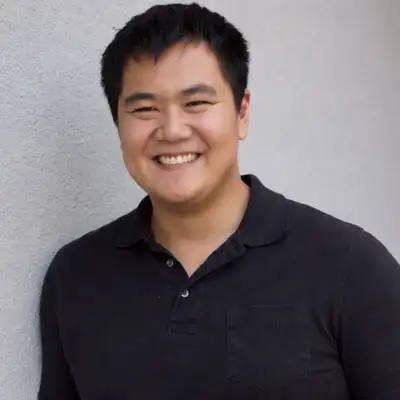
Hey everyone, this is Adam Yee, food scientist and podcast host of startup CPGs R&D RADIO, where you interview food scientists and product developers and what they do and how they can help you build your CPG business. Today I'm interviewing Jamie Valenti-Jordan, founder of Catapult Commercialization, on the top three watch outs when it comes to commercializing and scaling your food product. Jamie has been with startup CPG since pretty much the beginning and we get into how he's been helping startup founders over the years in startup cpg. He's appeared on this podcast before, but now he's in my domain talking to a technical geek about the common commercialization issues that he's seen in the business.
01:54
Adam Yee
In this episode we talk about the importance of setting up a pilot run, the hard ingredient decisions you have to make when you're scaling your brand, and what Jamie sees. The founders who succeed, they're the ones who listen. Enjoy this episode with Jamie Valenti Jordan. I'm sure you'll learn a lot. Hey everyone. Welcome back to R&D RADIO. I'm here today with a returning guest of the podcast, but first time interviewing for me on this podcast. Jamie Valenti Jordan. How are you today?
02:24
Jamie Valenti-Jordan
I'm doing great, thanks, Adam.
02:26
Adam Yee
Where are you based out of right now?
02:27
Jamie Valenti-Jordan
I am actually right outside Milwaukee in a little town called Wauwatosa. It's a suburban. Yeah, it's a great place. To be awesome.
02:33
Adam Yee
Love it. Yeah. So we're going to try something a little bit different for R&D RADIO. And instead of kind of the structured story, we're going to have this really interesting talk about commercialization, I think. Jamie, let me just hear first the history you've had with startup cpg. I know you've been there for a long time. You've informed people on the Slack about like some of the issues they have. I'd love to hear kind of the history you have with this organization that I'm nearly part of.
02:56
Jamie Valenti-Jordan
Absolutely. So I'll go all the way back to the beginning, before startup CPG even existed. So I worked with Daniel many years ago, a group called Hampton Creek. Now it's just egg, but we worked well together. We both went our separate ways from that organization. And about the same time we realized that Covid was a real thing. That's about when startup CPG got started was really centered around how do people adapt to the absence of an Expo west because it disappeared overnight. People already had booths set up in Anaheim. And so when that opportunity disappeared, I was already in the airport, headed out there with my family. They were gonna go to Disney and I was gonna do Expo west, as crazy as that sounds. I pulled an audible, canceled my hotel, moved into a Disney hotel. Cause I knew they'd all be empty.
03:41
Jamie Valenti-Jordan
And went to the park and we rode all the rides with my family and then we had lunch and did them all again because that's how empty Disney was. It was a once in a lifetime thing. But at the same time, Daniel was fielding a lot of different requests from different brands, looking for ways in which to help each other. And there were underground things happening around how to donate food and things like that. But startup CPG really got founded around helping those founders help other founders. Well, Daniel let me know that this is what he was working on. And I was like, hey, I know that you're dealing with like triage right now, but there are some things that like, I can leverage. He's like, eh, I don't really want a whole lot of service providers jumping in and selling things.
04:20
Jamie Valenti-Jordan
I'm like, no, I really just want to help. Right. And so that's where the Slack channel got started. I was somewhere in the, I think sub 100 member range. It's gone up a little bit since then, but basically just trying to help people with answers. A lot of the time I found that founders really have plenty of drive to get there, but they lack the information and the industry understanding on how to engage the industry in such a way that they can get the things done that they want to get done. So my goal with commercialization is to help them understand how the industry already has supports in place and just tie them into it to help them to bring their products to market.
04:57
Adam Yee
Love it. And Jamie, just really quickly, just tell everyone who's new to you what you do.
05:02
Jamie Valenti-Jordan
Oh, sure. So I run an organization called Catapult Commercialization Services. About 80 members spread across the U.S. we have about 40 product developers, half dozen engineers, packaging, quality, regulatory. We work with a lot of different comands. About 80% of the brands or so that we work with end up in comands. But we also build plants. So I'm building four. I have AutoCAD open on that machine right there. Two different plants that I'm building right now. So really, when it comes down to it's really how does the food interface with the business model and how do we make all of those sorts of things tie together to scale into something that can be profitable?
05:36
Adam Yee
Could you give me a roughly a ballpark of how many companies you've kind of helped just throughout your career?
05:41
Jamie Valenti-Jordan
Oh, sure. Let's hear. Throughout my career, I've worked with over 400 different brands. I've helped to commercialize several thousand products. At this point, I've installed over a hundred million in capital equipment in various facilities all around the country. And yeah, I like to think that I've made a decent impact on the folks that I'm working with.
05:59
Adam Yee
Very cool. So that means you probably have a lot of common questions that you kind of get asked and say over and over again. I'm sure you have like an FAQ on your website, but I'd love to hear just on a podcast the common commercialization tips you have, especially with people who are just kind of starting out the business. Right. Because I have my own consulting firm and I've noticed I've been repeating a few things myself. And I'm sure you have done this ad nauseam. So I'd love to hear these common commercialization problems you have, because I think in the food industry, it's pretty hard to go step by step. Like every step is essentially completely different and really hard to get the information to succeed on the next step.
06:36
Jamie Valenti-Jordan
Right. And I think that honestly, when we think in a large scale about commercialization, it's not a linear process. Many times what you find out in a later step turns out to be something that you need to then influence something from a previous step. So what I mean by that is when you're first trying to get your business plan together, what your product is, how long it's going to last, where you're going to sell it, and all of these things you have to hypothesize or use limited data to validate what it is. Those assumptions are, as you step through that process of first developing the product, making sure that it resonates with the consumer that you said that it was going to resonate with and things like that, you'll need to go back and update everything.
07:19
Jamie Valenti-Jordan
And I think a lot of times we latch onto one piece of our business model that can't change. And if it changes, then everything's out the window. And I think that's where I have to coach a lot of folks around. Hey, you can go this route. This other route is going to be more effective if you can't let go of that one element. And for some people, they need to hold onto that element. It resonates with their brand. It ties into their larger marketing strategy about working on a number of different things, not just this one particular product they're trying to launch. Cool. Great. That is a decision that you make for yourself and for your company. But commercialization, you learn a lot along the way.
07:59
Jamie Valenti-Jordan
For example, you may learn that your formulation has a water activity of 0.93 and that trying to bring your water activity down to make it more stable destroys the product characteristics that resonate with your consumer. Great. Then that means we can't necessarily control off of water activity, which means that we need to look at other ways in order to scale our product that make it safe for people to eat. And for those that don't know what water activity is, I'll just drop a quick note in here. It is a measure, actually a ratio of fugacities, which I'm not going to tell you anything about. But it is a measure of how much free water is available for the reproduction of bacteria within your product.
08:37
Jamie Valenti-Jordan
So the higher the number, the closer to one it is, the more likely you are to have growth of not just spoilage organisms, but pathogens, things that can make people sick and possibly kill children and grandparents. Most of the time you're not going to put something out there that's going to kill college students. You're more likely to kill children and grandparents. So when we say, hey, watch your water activity and watch your ph, we're not screwing around, right?
09:00
Adam Yee
Yeah. These are very hard line food safety mechanisms, right?
09:03
Jamie Valenti-Jordan
Exactly.
09:04
Adam Yee
Yeah. And it is product dependent in some work, better than Others, like a cracker has to be dry. Right. And pudding has to be wet. Right. So, yep.
09:12
Jamie Valenti-Jordan
Yep.
09:12
Adam Yee
So this is a good topic because actually. And very topical. So Caitlin actually asked me to write in the R and D Digest that is launched every month about natural flavors. And it's. Natural flavors is something I would say, like someone who's just getting started in the food industry doesn't really know a lot about. And then once you discover it, they essentially have a choice to use them. And sometimes what I generally have to do is just tell them the benefits of, let's say, using natural flavors versus not. And I always have to say, this is your choice on what direction you want this company to go to. I'd love to hear your thoughts on specifically that topic, but also just that type of decision that you have to make as you grow a food company.
09:51
Jamie Valenti-Jordan
Sure. I'll talk about natural flavors in two lights, because I'm seeing a shift right now that people want to get out of things listed as natural flavors on their label. So let me go back in time just a minute and say, before artificial flavors, in many cases, we used the word spices, and we still can in many cases to obfuscate some of the things that we're putting into our products. So back in the day when it was Grandma's recipe for pasta sauce, we could put spices on the label, and that would just be understood that's Grandma's family secret. We still can do that. But people want to know what's in their products, clearly.
10:27
Jamie Valenti-Jordan
And so we've moved away in a lot of cases from spices to calling out the garlic and the oregano and things like that Grandma used to put in there, because that communicates to your consumer what's in there. They feel happier knowing what's in there because they know what they're putting in their body. This is where we've seen the categoric shift in the marketplace and in the consumer set is that the vocal element of our industry has very much come out and said, hey, we want to know everything that's in the product. Cool. So in going through spices, we got into artificial flavors. Nobody likes those. We understand why the word artificial is toxic. People have gotten to the point of natural flavors wanting to know what's in it.
11:11
Jamie Valenti-Jordan
Now, natural flavors are isolated in a certain way to be safe and effective in accomplishing the flavor that they need to. But the flavor companies don't want to divest their ip. They don't want to give you Grandma's recipe, Right?
11:26
Adam Yee
Yep. It's their grandma's recipe, in a sense. Right?
11:29
Jamie Valenti-Jordan
Exactly. In some cases, they spent millions or hundreds of millions of dollars developing that technology, and they really don't want to give that away, especially for a small brand. So they would like to label it as natural flavor. We are seeing consumers push back against that as well, in the same way that they want to know what's in spices, they want to know what's in natural flavors. So we have people now pushing for, I want something that I can call a whole ingredient on my label as my flavoring compound. Well, okay, you can use the whole ingredient, or you can use an isolate of that, meaning we somehow strip some pieces away to make it more flavorful at a lower concentration so that we can have more structural components. The texture we can control better when we don't use the whole ingredient in there.
12:16
Jamie Valenti-Jordan
So what I mean by that is, like, if you put up a whole bunch of sweet potato in there so it tastes like sweet potato, you may destroy the structure of your cracker because it's just hard to get the moisture back out again. That doesn't mean you can't have a sweet potato flavored cracker without natural flavor listed, but it does mean you're gonna say, have sweet potato concentrate or something like that. We just pull the extra water out so it's easier to make a cracker out of it. So there's a lot of different moving parts in this. But from my experience right now, in the last 12 months, I've seen more and more folks ask for, I don't want natural flavors. How can I just have this be whole component? And in some cases it's doable.
12:53
Jamie Valenti-Jordan
And in some cases, the flavor and the structure that you're looking for are not available without the use of concentrates, extracts, oleoresins, or others. And sometimes people don't like the way those label. So you just have to keep in mind, like, we are trying our best here from the food science side of things, but we do have to, as a first step as table steaks, make a safe product.
13:16
Adam Yee
For sure. I always give the example of a cheesecake protein bar. Because you can't shovel a cheesecake into a protein bar. You have to.
13:22
Jamie Valenti-Jordan
Yes, right.
13:23
Adam Yee
It just doesn't make any. You just can't. If you can, then great, out animated me. But in general, I think it's like, it's an example I always give to people who are kind of just starting up is not only that, but also I think introducing them to someone who works in flavors or even spices and Kind of having them, like, show that there's a human component to it and that they're humans working on it too. I think that has really helped them if they want to choose to go this natural flavor route, for instance.
13:51
Jamie Valenti-Jordan
Absolutely. I think the end of the day, AI is not generating natural flavors. That's not how we're working right now. We do have people on a bench developing these things.
13:59
Adam Yee
Yeah, you do. You have a funny. You said the word artificial is toxic. And I was thinking like, oh, AI is the word artificial. That's funny. We might get into that topic later, but. Cause I'd love to hear your thoughts. Do you have any other common commercialization questions that you get?
14:14
Jamie Valenti-Jordan
Sure. I get a lot of chicken and the egg questions like, how do I do this before knowing this? Or how do I do that without knowing this? I think it just goes back to knowing that this is an iterative process. You have to, in some cases, guess and then check and validate as you go through the rest of the commercialization process. So what I mean by that is you may think, hey, this is what I think my formulation is going to be on the bench. And when you take this to a pilot scale, which is kind of your first step up from what you're doing on bench, which is our definition for like kitchen level, pilot scale is the furthest we can scale equipment down.
14:50
Jamie Valenti-Jordan
So this is the large scale industry trying to make an attempt to make it easier to scale things up by scaling things down. So when we move from kitchen and benchtop to pilot scale, that is where we're going to learn how the product's going to change. Now, that's not saying we have to throw the baby out with the bathwater. There's oftentimes to just make a minor tweak, or more often, just the order of ingredients or how we shear them together or at what temperature we do that at in order to build a product that still meets the gold standard of what was developed on the bench. So the bench step can't really be skipped and go straight to pilot. The pilot also is much more expensive because you have more materials in motion. But we can learn a lot at that level.
15:33
Jamie Valenti-Jordan
That makes it a lot easier to go from pilot scale to full scale. I think a lot of people right now really want to skip that pilot scale.
15:41
Adam Yee
Oh, why is that?
15:41
Jamie Valenti-Jordan
Because of the cost. A lot of people want to go straight from benchtop to a CO man, and they don't know how their product's going to change as they go to that Scale. And they have to learn how to scale at a much higher level. So 10 times the amount of materials are at risk and are in motion and things like that. And in the event that they can't make it into final product, well, they have to throw all of that away. And so a lot of people are assuming that risk, whether they know it or not, in jumping directly from benchtop to a CO man at full scale. And they're trying to get by on moqs, right?
16:15
Adam Yee
Yeah.
16:15
Jamie Valenti-Jordan
So what I get asked is, hey, do you know anybody that can do an moq of like 500 units? 1. You can do that in an afternoon oftentimes at benchtop.
16:24
Adam Yee
Yeah, that's true. I tell, sometimes I tell you can do it. It's like a week in the kitchen if you really wanted to do this. Right.
16:29
Jamie Valenti-Jordan
Correct. In which case you should not spend six months trying to spin up a comam and to do 500 units, because that is what you're talking about doing. There is a substantial amount of investment in time and energy and money to go from benchtop to full scale. So don't do that lightly. Don't try to skimp by, don't try to cheat. Learn where you can. So suggestion is have a quick chat with somebody who's scaled things up before. There are a ton of them on our product development database. Go through and pick a few and chat with them about what your product is and what the appropriate way to scale it up is. You want to chat with a few so that you have a good average interpretation of how to do things. I'll give you my shortcut.
17:11
Jamie Valenti-Jordan
If you can figure out what manufacturer makes the equipment that you need to scale up into, meaning you can call, maybe even a CO man and ask them what equipment they have to run your product. You can call that equipment manufacturer and often run in their pilot lab for free. All you need to do is show up with materials, which means you can learn how to do that pilot scale from the people who understand their equipment because they literally built it and know how to walk into a CO man that has that full scale equipment and know exactly where to put the settings to make your product the right way the first time. So that's my hack. And you can get them to do that for free.
17:48
Jamie Valenti-Jordan
If you just call them and tell them, hey, I want to just run my product on your system and understand it. Now I will say they're not going to do two weeks of trials with you because at the end of the day their goal is to sell More equipment. The reason why they have their test lab is so that you will use up all of the available capacity on a CO man's line because you're so successful that the CO man has to come and buy another piece of equipment just like it from them. So that's where their ROI is. They're playing the long game.
18:19
Jamie Valenti-Jordan
At the end of the day, you need to understand how all of your players in your entire supply chain play with each other and what their business models are so that you can answer the question of, wait, why would I help you? Because there's a lot of people that are going to ask you why would I help you if you don't understand how they make their money?
18:36
Adam Yee
I 100% agree with that. So. And I think there's other stakeholders in making a food product, right?
18:40
Jamie Valenti-Jordan
Yes.
18:40
Adam Yee
Especially if you get to the. So one is the contract manufacturer, of course. And then I would say a couple of other ones that do consider their business model is like ingredient companies. Like they will give you a sample, like a pound of their ingredient for you to test. And then they're also kind of playing this long game as well. Two is a manufacturer. That is a really good piece of advice. I've done that a couple times myself. I don't think I got it for free though. But whatever. Anyways, that's not the fight.
19:05
Jamie Valenti-Jordan
You gotta have me come in and beat up on them for you.
19:07
Adam Yee
I know, right, yeah. It is a negotiation. Like if there's anything like all these stakeholders can be negotiated with, but you have to have really good negotiation skills, which is, you know, it's something you have to just learn. Logistics is also a huge one as well when it comes to stakeholders. So all these like core stakeholders when it comes to making your product is not just you and your customer. It is a lot more, especially on the operations end.
19:28
Jamie Valenti-Jordan
Yeah. I think one of the things to remember is all of this effort, all of this is kind of one off learning and things like that. I like to make the analogy. You're familiar with the stealth bomber, the Blackbird?
19:39
Adam Yee
Go ahead.
19:39
Jamie Valenti-Jordan
Yes. So one of the things that people complain about is it actually leaks fuel, I believe is the Internet meme until it gets up to speed. Right.
19:48
Adam Yee
Okay.
19:49
Jamie Valenti-Jordan
That's a lot like a new business. It's not going to look pretty, it's not going to work the way that it's supposed to until it gets up to a certain altitude and velocity where everything just all the seal and it goes ahead and actually starts to work the way that it's supposed to. So that means all this time and energy on doing one off scheduling of trucks and one off ordering of ingredients and all these things, they get easier over time because you learn how to use existing systems and automate. This is why you don't want to have an ERP Day 1. Because an ERP is built around your business information flow and you have no business information flow at the end of the day. Like yes, this is a lot of work. This is a lot of one off things.
20:30
Jamie Valenti-Jordan
A lot of learning that takes place in the commercialization of any product. I still learn when I commercialize products. So don't think that this is something you should know. Everything going into it, you should ask.
20:39
Adam Yee
For help a hundred percent. And so with that then I'd love to know your findings on founders or the key psychology for like founder success. I do think there is something in that area where there's a balance between ambition versus stubbornness and also the ability to learn. I'd love to hear your thoughts on what you have found to be kind of the key drivers through all the companies you've helped on successful, whether project managers or founders.
21:07
Jamie Valenti-Jordan
So I'll tell you what I tell other consultants around who's success. Those are the founders that listen. What I tell founders is those that are willing to learn and not just learn from one voice, but from multiple, are the ones that are going to be the most successful. And what I mean by learn is not listen to everything that we have to say, but start to build that structure and understanding of the industry as it exists today. Certainly welcome to ask why. And a good partner within the industry should be able to explain just about anything. And then you'll get frustrated with the way things are because we all get frustrated with the way things are because we want things to be different. We want them to be easier, we want them to be simpler.
21:49
Jamie Valenti-Jordan
We want the driving forces for why people want to help align with ours. So those that are willing to learn how the industry is and is willing to change it from the inside rather than from standing on a soapbox and yelling into the void and saying this is the way it should be. The ones that are willing to get into the industry and actually make a change from the inside are the ones that are very successful. So when you talk to poppy folks and things like that, they were willing to learn. They knew what they knew and they knew what they did not know and what they did not know.
22:24
Jamie Valenti-Jordan
They were willing to talk to people and get help and find the right people that aligned with their goals and missions and things like that in order to drive that help into their business and help them to scale in such a way that they were successful without having to go back and redo as much of their business plan over and over again. Right.
22:45
Adam Yee
Yeah. I think Bobby's a good example. If you look at, like, their beginning product, which I think was like something kombucha like, if I remember correctly. Right. And it's totally changed into a different product, but it still retains some of the key components that they found valuable. Right, Right.
22:59
Jamie Valenti-Jordan
So they were willing to learn from not just technical professionals and operational professionals, but they were willing to learn from their own buyers and their own customers on what would be successful and what would sell more and make the decision as to whether or not what the people willing to give them money wanted was something that they wanted to do. So that means not just customers, but investors as well. Investors also have obligations and interests, and they want to steer the company in a certain direction because they think they know better. The best way to combat that is with data. Suggests we've studied this, and this is the right answer. But consumers don't listen to data. They are, in some sense a data source.
23:41
Jamie Valenti-Jordan
So you have to be willing to kind of see where they want to lead you and see if that's a product you want to make. But you can't just stick your head in the sand and say, I don't care what my customers think. This is the right product to make. You have to at least understand what they want.
23:55
Adam Yee
Yeah. At least. My business model when it comes to working with founders is how do we get a product as fast as possible where you're comfortable being exposed to the consumer about it. Right, right. And because you're going to just learn a lot anyways. But I think that fundamental step, just when I try to, like, in between, coach them about, like, feedback, like, my feedback is not super valuable and your feedback with your friends is not super valuable. Your consumer, a random stranger's feedback is very valuable. And if you get enough of that data, you start to develop a direction essentially, to go to the next step.
24:24
Jamie Valenti-Jordan
Exactly. And if you are, let's say, centered around a major population area, most likely the consumers that you have access to all live in that population area. That doesn't mean you necessarily know what the tastes and preferences are of consumers in another population area without having a way of knowing that. So either that's syndicated data or that is physically going there and asking people, but you're going to get the data that you set yourself up for. If you're going into a Walmart to ask people about a product that you're going to have to sell into Whole Foods, you're getting the wrong data to begin with. If you're asking people in Walmart about what they think Whole Foods buyers would buy or however you're looking at that, it's a mismatch. Those are typically not the same buyer.
25:10
Jamie Valenti-Jordan
So make sure that you know who you're talking to.
25:13
Adam Yee
Yeah. That's what I learned from my CBG company is like the retail environment is its own ecosystem of people. Right. So, like, let's say for San Francisco is the playbook, and there's a different consumer in Berkeley bowl, which is probably the gold standard, I would say. In that area.
25:26
Jamie Valenti-Jordan
In that area, Yep.
25:27
Adam Yee
Yeah. Yeah. And then maybe Luke's Local is a totally different demographic in San Francisco. So I think that's. I found that really interesting when I was exploring that space. So I think there's some value in that as well.
25:39
Jamie Valenti-Jordan
Absolutely. Yeah. I love Berkeley Bowl. Yeah. Weird stuff there. Yeah.
25:44
Adam Yee
Yeah. I went to Earth Fair in Asheville, and it had very similar vibes.
25:47
Jamie Valenti-Jordan
Oh, yeah. And Erewhon and SoCal.
25:49
Adam Yee
Yes.
25:50
Jamie Valenti-Jordan
And different bodegas up in New York City. Like, there's different areas, different places for new brands in each area of the country. So definitely know who is going to be cultivating your customers into a marketplace so that you know that you're entering that marketplace with something that'll sell to that customer.
26:09
Adam Yee
Yeah. Love it. We're going to wrap up here. Do you have any questions for me?
26:12
Jamie Valenti-Jordan
I mean, I could sit here and pick your brain for days, Adam. I mean, really, you think you're a legend in the industry? I mean. Oh, no, we're not going to let them cut this. Not at all.
26:21
Adam Yee
No. Definitely not.
26:22
Jamie Valenti-Jordan
No. But I think as we move forward in seeing what the food industry is going to become, because we have a lot of different forces on it right now, and some positive, some unknown. I'm sure some of them are negative as well. But, you know, at the end of the day, I think there's always new niches being created. I've known products that were developed one day and actually didn't launch for several years later, or in some cases, they launched, they failed, and then somebody else copied that, and it was very successful. Just make sure that you're in tune with what your consumer wants today and get a lot of people talking into your company. You asked for questions for you, though.
27:05
Adam Yee
Yeah. How did I Leave that up. Okay. Anyways, thanks for the last piece of advice there.
27:10
Jamie Valenti-Jordan
Yeah. Adam, what do you see out there? What's new in consumer trend right now?
27:16
Adam Yee
So I follow kind of three, I say pillars and one is AI and how we're using AI in the industry from both, not only our end, but also the CPG end, or let's say the food science end versus the CPG end. GLP1s has been something that I think is really fascinating. We're seeing real steep growth on that end on who's using it and how that's affecting companies. Some companies are suffering. They don't like to say that they're suffering from GLP1 usages like let's say bigger food companies like PepsiCo, which it is proof that the stock prices is going down on that end for a different factors. But of course Yelp ones is a really big component that they're not really talking about.
27:53
Adam Yee
And then I would say Ultra Processed foods has really been kicking up mainly because of so many forces with RFK Jr and you can definitely tell when a trend is happening, when people are trying to jump on the certification game. And there are a few people who are jumping into the certification game on ultra processed foods, or so to say non ultra processed foods. So that's really quickly what I'm kind of focusing on in terms of like more deeper research than what I normally do with brands.
28:17
Jamie Valenti-Jordan
Absolutely. And that's good to stay in front of because some of us look to you to lead the way in that information sharing. So appreciate all your efforts.
28:26
Adam Yee
That's why I'm in grad school. All right, well, anyways, Jamie, just one last question is where can we find you if we want to pick your brain more?
28:33
Jamie Valenti-Jordan
Sure, absolutely. I'm all over LinkedIn. Luckily there are only two people on the planet with my last name, me and my wife. So super easy to find me. But if you want to chat about project things, always reach out to me through DM and on the Startup CPG slack. I will get back to you within a couple days. If you need a faster response, email me at leadershipatapultserve.com that's C A T A P U L T S E-R V.com
28:56
Adam Yee
Love it. Thanks for being on my section of the show.
28:58
Jamie Valenti-Jordan
My pleasure, Adam. Always fun and the industry small will be around.
29:04
Adam Yee
Thank you for listening to startup CPG's R&D RADIO. I hope you guys enjoyed this conversation. We've now arrived together at the end of another episode of the Startup CPG podcast. I'm proud to be part of the team that's part of the top globally ranked podcast in cpg. As you may know, we're not just a podcast, we're a community of brands and experts and you should join. You can sign up @startupcbg.com and you'll then get invited to our online Slack community and be informed on great guests and amazing networking opportunities to get you in front of buyers, investors, brands and more. Thank you for listening and have a great day.