Subscribe
Share
Share
Embed
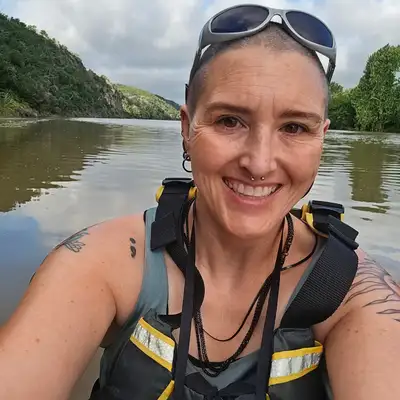
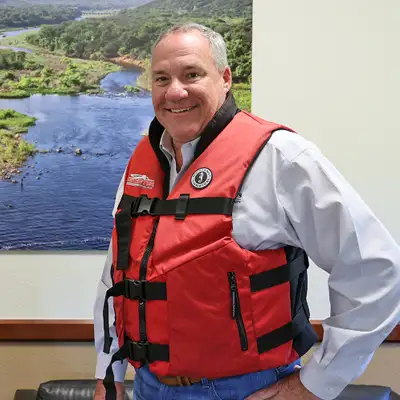
Ready to unpack the powerful stories of a Texas titan - the Brazos River? Listen as experts explain the Brazos River Basin's immense role in our daily lives. They'll cover everything from the river's fascinating history to all the work that goes into ensuring you have water when you turn on your faucet.
Hear invaluable insights on topics like why lake levels change, the important projects safeguarding our water, the many species that call the Brazos home, and even some tips for enjoying the water from Brazos River Authority experts.
This is your chance to understand the immense work that goes into developing, managing, and protecting the Brazos River Basin, which stretches from the Texas-New Mexico border to the Gulf. (The basin is the size of Tennessee, y’all, it’s big.)
It’s a huge part of our state’s story and we can’t wait to share it with you.
Clay Sellers: Got questions about the Brazos. No more unknowns. Ever wonder where that water comes from or where it goes? We’re Unpacking the Brazos River.
Charlie L Shugart: Managing the water for a massive growing river basin like the Brazos requires a steady hand and a passion for water in Texas and for the Brazos River Authority's role. Many people don't have a clue where their water comes from or how it reaches their faucets. And everyone, the farmer, the big city, the guy washing his car, all have their own priorities when it comes to water use. For the Brazos River Authority, the person leading that steady hand, the one who keeps the boat from rocking, is our leader, David Collinsworth. As General Manager and CEO, he oversees around 300 employees in multiple locations throughout the Brazos River Basin while also managing the system's water supply, water treatment projects, and water quality initiatives.
He does all this under the direction of the dedicated 21-member Board of Directors, a group chosen and appointed by the Governor. Today, we're sitting down with a man who's dedicated three decades to living and breathing the Brazos River. I'm Charlie Shugart, and this is Unpacking the Brazos River.
David, you joined us back on episode four with BRA's chief operations officer, Brad Brunett, to discuss water rights. So, we appreciate you returning to share some more wisdom with us.
David Collinsworth: Absolutely. Thanks for having me.
Charlie L Shugart: So, you became the eighth general manager in April 2018. That's the eighth since the Brazos River Authority was established by the Texas Legislature in 1929. So, when this huge opportunity opened up, what exactly made you want to throw your hat in the ring for a job that clearly comes with a ton of responsibilities and a lot of late nights?
David Collinsworth: Yeah. That's a really good question. As you said, I've been here for three decades. I've had a lot of different roles here at the BRA. And as I worked my way through my career, I just developed a passion for this organization and a passion for what we do.
And, you know, I had so much respect for Phil Ford, and I just wanted to follow in his legacy and continue to serve our customers. You know, and without getting too sentimental, it boils down to a point in my life where I'm just doing what I can, I think, for the betterment of my kids and my grandkids and trying to continue to work and make Texas a better place to live, protect our water.
Charlie L Shugart: And for those who don't know, Phil Ford was the former GM/CEO here at the Brazos River Authority. So, let's start with an easy question. How is the Brazos River Authority going to ensure every community, every farm, every business in the basin that needs water has water over the next fifty years? That's a massive challenge.
David Collinsworth: Well, if that's your easy question, then I'm done with this podcast. Wow. You know, Texas is booming. And I would tell you that while other parts of the world and the United States economically suffered because of COVID, Texas kind of really never slowed down. We have this incredible staff of employees and professionals that know the water business better than anybody, and we're really focused on staying in tune with our customers and trying to understand what their needs are, trying to understand what they're planning to accomplish.
And that all just kind of manifests itself in just this never-ending planning and planning and planning and working with the legislature to understand what our opportunities are for funding and for changing policy and understanding policy so that we can work to develop the water supplies that are potential. And then also working with our customers to understand how to conserve water. There's just this huge challenge ahead of us because the Brazos River Authority has this self-imposed obligation to develop more water. But in the meantime, we have no say or control over growth and what happens around us.
So, we're always trying to play catch-up and make sure that our customers have the water that they need as they make their master plans to grow and develop their parts of the region. And you know, as well as I do, that a couple of the things that are unique about the Brazos Basin is that the majority of the available water in the Brazos Basin is already permitted. So, as far as developing more surface water, there are very limited opportunities in the Brazos. You know, on top of that, you have the Houston metro area that's growing west, the Austin metro area that's growing east and north, and all of the growth is coming out of Fort Worth. So, we're stuck with the challenge of three of the fastest growing, you know, regions maybe in the United States of America.
So, really committing to understanding the future water supplies that may be available and our customers' needs is just essential.
Charlie L Shugart: And just to clarify for everybody, Austin itself actually doesn't fall within the basin. Right?
David Collinsworth: Well, Fort Worth, Austin, and Houston proper do not. But when you look at the Houston Metro Area and Sugar Land and out toward Katy and all of the growth that's moving west toward, you know, the new Toll Road 99 that's on the West side of town. So, there's all this urban sprawl, if you will, coming out of all those metro areas, which is increasing water demand exponentially.
Charlie L Shugart: Thank you for clarifying that. I know.
David Collinsworth: Sure. That's a good question.
Charlie L Shugart: Well, we get questions sometimes with people, you know, unsure exactly the spread of the basin kind of where that falls. So yeah, that’s helpful.
David Collinsworth: You know, and I would tell you, and you and you probably know this, but you can go to www.brazos.org. You can see maps of the basin that your department has masterfully put there so people can educate themselves on the water planning and the water projects that we're doing to meet the demands, and then also kind of a delineation of where those different watershed boundaries are.
Charlie L Shugart: And shout out to our GIS expert, Van Walker, for really making those incredible maps because they're very easy to understand when you take a look at them.
David Collinsworth: Completely agree.
Charlie L Shugart: So, we know you've been with the organization for quite a spell, but I'm sure everyone would like to know more about that history. How did you initially end up at the BRA?
David Collinsworth: I'm going to have to tell you the truth because I'm afraid my wife will listen to this podcast.
Charlie L Shugart: Amazing.
David Collinsworth: We were both seniors in college at Texas at Southwest Texas, which is now Texas State. I was doing a whole lot of fishing and intramural basketball. She asked me, how many jobs have you applied for? Are you hearing anything back from future employers? And I kind of nonchalantly said, no, not really. So, with her desire to come back to Waco, she actually called the Brazos River Authority because I was getting a degree in, as she says, water, aquatic biology. So, she called and set up my first interview, and I came to work at the BRA about six weeks later.
Charlie L Shugart: That's incredible.
David Collinsworth: So how about that?
Charlie L Shugart: Yeah. I love that.
David Collinsworth: Yeah. How about that? That shows you the level of maturity that I had as a senior in college.
Charlie L Shugart: I love that. Okay. Well, what areas of the organization did you work in before becoming GM/CEO?
David Collinsworth: Yeah. Certainly. So, the first job that I took at BRA in 1994 was a job where I was doing public outreach and doing water quality education. So, I was training volunteers to do a program called Texas Watch at the time where you could volunteer and do water quality monitoring. And then the rest of my time was spent in front of city councils, or at schools, or Lions Club, Rotary Club, things like that, talking on behalf of what the BRA is doing and how important it is to, you know, conserve water and protect water and those types of things.
I did that for a few years, and then I got promoted to go out and be in the field and actually do the science and collect the data. I was part of a small team that created our first water quality laboratory here at the BRA. And then from there, I just kind of moved through the organization - kind of in a different roles that allowed me to work hand in hand with our customers, our water quality monitoring efforts, our contract operations through water and wastewater, and that's kind of where those different roles. And I was blessed to have a lot of interaction with the Board of Directors at the time because of the sensitivity of our customer issues. So, I got a lot of great face time and experience dealing with the political side of things and our directors. And so that's kind of how I learned the organization.
Charlie L Shugart: Yeah.
David Collinsworth: I was just coming from an entry-level position and just kind of moving my way through the organization. And, you know, some of it was just sheer luck because people in front of me who probably would have taken those jobs went to other careers. And I was, you know, consistent and dedicated to this organization, and it paid off for me.
Charlie L Shugart: Is there something that kept you here year after year?
David Collinsworth: You know, that's a great question. Year by year, the longer I stayed, the more I had a passion for it. Even today, there are so many things that our staff will complete and do and get involved in that just reinvigorates that passion, and I do. I just have a passion for water in Texas.
I love the Brazos River, and I think that what this organization is doing for our customers and again, our grandkids and our families, I just think is really invaluable.
Charlie L Shugart: Well, you mentioned fishing earlier. Is that something you still do?
David Collinsworth: I try to get out as often as I can. You know, I get up early every morning to come to work and do the professional thing. But on Saturdays, I get up even earlier. While everybody's asleep at home, I'm usually putting my boat in about 04:00 in the morning. And yeah.
So, it's a really bad hobby/habit to have, but it is, other than my family, it is my passion.
Charlie L Shugart: Yeah
David Collinsworth: You know? And it's how I get out and relieve stress and escape from the real world.
Charlie L Shugart: Is there anything in particular you like to fish for?
David Collinsworth: Oh, I fish for black bass, and I participate in a lot of fishing tournaments and clubs, and just try to stay active.
Charlie L Shugart: Yeah. Alright. Alright. So, in your position as GM/CEO, you oversee about 300 people across multiple locations throughout the Brazos River Basin. So, what's the key to doing that? How do you see your role as GM/CEO?
David Collinsworth: You know, there are a couple of ways to answer that question. I think my role is to direct the ship. I'm the driver of the ship. The rest of the organization makes the ship move. You know as well as I do, the most valuable asset we have is our people that make the dams operate, that make you know, that treat the water, that make sure that the water's stored when it rains and distributes the water and all of those things. And my job is to make sure that they have the resources that they need to take care of our customers, whether it's having the financial wherewithal to do what we need to do or the authority to do what we need to do or in Austin fighting for a water policy that allows our staff to do ASR, aquifer storage and recovery, or, you know, the business that we need to do to develop and protect water. That's kind of what my role is. The biggest challenge that I have is not micromanaging. I've got to stay in my lanes and make sure that the organization is reflecting what the Board of Directors wants to see, but make sure that I don't get in the way of our experts that truly are the experts in what they do and, again, provide the resources they need to take care of our customers.
Charlie L Shugart: With all the different positions that you kind of held over the years, is there a valuable lesson you may have learned out in the field that you now apply in the executive suite?
David Collinsworth: Yeah. There really is. It goes back to my days of doing fieldwork and being the staff member who went out and collected the water samples and came in and did the laboratory work, the analysis, and submitted the data to the regulatory agencies. And in that opportunity, it was very common, you know, driving around in a BRA-marked vehicle that people would approach us and say, "You know, what are you doing? Why are you here?”
Whether it was defensive because you're really next to my property or it was, hey, it's really cool to see you guys. What are you doing? It just really began to grow on me that there is such a grassroots passion for protecting this resource. And I've always, you know, we just talked about my fishing addiction. I've always had a passion for being in the water, on the water, around the water. And as that opportunity with the BRA continued to expand, I just began to really understand and believe that this organization and this water world that I'm living in was my passion and was really something that was incredibly important to me.
Charlie L Shugart: Have you ever had a moment over the years where you realized this is a bigger job than I thought it was?
David Collinsworth: Every day, maybe.
Charlie L Shurart: Okay. Yeah.
David Collinsworth: You know, when you're young and you're coming up through well, I don't speak on behalf of you, when I was young and coming up through the organization, I spent a lot of time with folks and, you know, we'd go to lunch and talk about, oh, if I were in charge, I'd do it this way or, man, what if we could just do it this way and here's my ideas? Well, I respect young employees who have those ideas because that's a sign of leadership. With each level of management and responsibility that you inherit, you begin to mature and realize that there's more to it than you ever imagined. And I reported directly to our last general manager, Phil, for eight or nine years. And even just being one level below, I never really had a true appreciation for the amount of issues that the General Manager/CEO had to deal with.
Charlie L Shugart: Yeah.
David Collinsworth: It was eye-opening early on, and we'll get a phone call from an industry, a customer, or a political figure, and they have a new issue, a new item, a new concern, or a new request just about every day. And it's every day that I realize, wow, this is wow, there's even more. And I love it because it's an educational opportunity and it keeps my mind working, and it keeps me intrigued, and that's the challenge one of the challenges to the job is, as you know, the role that you're in, you're dealing with a new public request, a new information request. Every flood is different. Every emergency is different. You know, it's every day you and I come to work, and it's we're one phone call away from something different than we've ever dealt with.
Charlie LShugart: Yeah. No. I definitely
David Collinsworth: It's an amazing challenge.
Charlie L Shugart: Yeah. Challenge is a good way to put that because I feel like sometimes when I get calls, I'm like, I don't know the answer to that. But I'm about to find out because now I want to know.
David Collinsworth: Absolutely. And, you know, directors call me, or legislators call me, and the same thing, and I'll just have to say, you know, you're just going to have to give me a minute.
Charlie L Shugart: I love being able to learn all the time.
David Collinsworth: Absolutely.
Charlie L Shugart: And this is definitely a position that allows that. So, speaking of the office, is there an item on your desk or your wall that has any sort of meaningful story behind it?
David Collinsworth: When I was promoted to this position, some folks were actually going through some old boxes out in the storage and found some of the actual data collection, water quality collection equipment that we used back in the early nineties, which is archaic today. It was even computerized, and it was a computer, I don't know, water probe, but they presented that to me when I moved into my new office, and it's really a wonderful reminder of where I've been.
Charlie Shugart: Sure.
David Collinsworth: And what's important. And then, you know, I have all of these pictures in my office of my family and my grandkids and my daughters, and that's what keeps my heart beating.
Charlie L Shugart: Yeah. No. I love that. Did I hear that you have the BRA's first original cell phone?
David Collinsworth: I do. That was the other thing that they presented to me, and it doesn't look like this iPhone right here. It looks more like a, I don't know, a travel bag or something. Yeah. But, you know, I bet the cell phone coverage was better than it is now.
Charlie L Shugart: So, the BRA's mission is to develop, manage, and protect the water resources of the Brazos River Basin. If you had to rank those, develop, manage, protect, which one demands the most immediate attention and why?
David Collinsworth: Yeah. So, I'll rank those. I'll rank the top one. Interestingly enough, I bet if you ask 50 of our customers, you'd get a lot of different answers. But to me, Charlie, right now, the most important one of those missions develop, manage, or protect, I would tell you protect, because the most important water that we have is the water that we already have permitted and the water that we're allowed to store and the water that our customers drink and use. If you look at the State Water Plan, you realize pretty quick that based on the needs that municipalities, the cities, and industry, and everybody's contributing to this planning process, all over the state of Texas real quick, you see water shortages beyond 2050 and 2070. And those water shortages really don't take into account if we had a significant loss of a resource that we already have. So, if we lost a dam or, you know, we had a piece of infrastructure like a dam where we couldn't store water, you know, and we had to release that water, then we would be without hundreds of thousands of acre feet of water, and everybody would have to cut back on water use. So, the water that we have today is the most important water that we'll ever have.
So, that's why I say protect. Now, obviously, customers that are listening that have water shortages in 2050 or would say, hey, the most important thing to us is development of new water.
Charlie L Shugart: Right.
David Collinsworth: So, there are a lot of different perspectives.
Charlie L Shugart: Yeah. Absolutely. So, how in this challenging economic landscape with rising inflation … going to affect the organization in the future?
David Collinsworth: Our business is no different than your household. And with inflation comes a more expensive box of macaroni and cheese.
Charlie L Shugart: Right.
David Collinsworth: And it's the same way when we're when we're building projects and we're replacing old, outdated infrastructure. You know, the cost of pumps and the cost of pipes and the cost of manpower, everything continues to escalate. Some of our folks were looking, a couple of weeks ago, at some inflation indicators and kind of put the pencil to the paper and determined that every twelve-month delay on major construction projects, it's about a $6,000,000 impact. So that's kind of the inflationary speed that we're seeing right now. Because there's so much growth, there are still shortages, supply chain shortages on different items, especially in our world. You know, these large pumps that we use to move water around some of those pumps, it's anywhere from twelve to thirty-six months to acquire those once you design and engineer and pay for.
So, there are just a lot of challenges that our customers are going to face. And, you know, the big cities, where all the growth is, they have the growth to help pay for things, but they need it faster. And then the small communities in Texas, some of which have declining populations, have old infrastructure that needs to be replaced, and rules are changing that, you know, force improvements to water plants and wastewater facilities. So, there's just a tremendous economic burden on a lot of folks trying to deal with water and wastewater issues around the basin. And that's why, Charlie, it's so important that our organization go through the exercises that we're going through to make sure that we're lean, that we're efficient, and that we're getting the, I hate to use the term bang for your buck, but we're getting we're spending our revenues and investing our money and doing everything that we can to make sure that every time one of our customer turns on the faucet, they're getting water as cheap as they possibly can so that we're not negatively impacting, you know, people that are struggling financially.
Charlie L Shugart: So, you've also served in a lot of other ways to help ensure Texans have the water they need. You've been on the Texas State University's Advisory Council for the School of Science and Engineering, the Texas Water Conservation Association Board of Directors, the Texas Utility Council of the American Water Works Association, and the Inland Fisheries Advisory Committee of the Texas Parks and Wildlife Department. How do you have time outside of all of that to do anything else?
David Collinsworth: Well, first of all, don't be impressed by all of those accomplishments. It just means I'm old. Second of all, when you work your way up through an organization and you have a role like we have, you're here because you love what you do. And it is, you asked me, do I have time to do the things that I love? And absolutely, I have time.
Every day, I work on BRA stuff. It's what I've achieved and where I am, and this is my passion, to take care of the BRA and to drive the BRA and its employees. Yeah, so you've heard the old adage, if you love it, it's not work.
Charlie L Shugart: Yeah.
David Collinsworth: And some days it's work, you know, but I have a passion for this place. So, yeah, I find time to fish, and I find time to play with the grandkids for sure, but this is what I love.
Charlie L Shugart: Yeah. So, how do you measure a successful year at the BRA? Has that definition changed since you started your career?
David Collinsworth: It's changed organically because my responsibilities have changed. It's really interesting. That's a really interesting question, especially for an organization that doesn't make a widget or a part that you sell that part to a customer and you make a revenue. Right?
Charlie L Shugart: Right.
David Collinsworth: To understand and really track success, and you've heard me say this a thousand times, to me it's all about progress. It's all about making sure that we're understanding what our immediate needs are, and you can take that however you want. To part of our organization, our immediate needs are getting contracts for water to customers. Are we getting that done? Are we doing that in time?
How efficient is that process? Whether it's, you know, our oldest dam, Possum Kingdom, we're talking about a hundred-year birthday party for Possum Kingdom. Every year, you know, we have millions of dollars set aside in a budget to do maintenance and improvements at the dam. So that's an easier one to check. How are the projects moving forward? Are they on time? Are they on budget? Are we getting done with those? Are we completing those projects so that we can get to the next? Those are different ways of tracking success throughout the different organization.
And then, you know, are we accomplishing what our customers are asking us? You know, right now, you're a part of this too, we're moving forward with a billion-dollar project to build Allens Creek Reservoir, and there's a lot of different ways to track success there. Are we getting the environmental studies done? Are we getting the contract signed? And, you know, the management at the BRA is continually looking and making sure that we're spending our money wisely, our projects continue to move, and we're doing what we can to take care of our customers. Success equals progress to me.
Charlie L Shugart: Okay. Yeah. No. That's a great definition. I like that. Well, is there anything that you that we didn't touch on that you want to leave our listeners with?
David Collinsworth: Yeah. There really is. You know, it is so important, it is so important to educate yourself on what's going on around you in the water world. It's so important that you understand how to use water.
It's so important that you understand where your water comes from, how it's treated, and what you're paying for it. You'll be a better consumer the more information that you know. And the way to become more educated on that is to use the resources of the Brazos River Authority. And I'm sitting here taking questions from Charlie, and her and the shop that she works in are so instrumental in making sure that that information is out there and the project updates are out there. And I would tell you that our web page and the department that you're a part of are just so instrumental in making sure that people have the information they need to make the decisions they need to make. So, educate yourself, and you'll be a better consumer of water.
Charlie L Shugart: And if you are listening and you think of questions or you don't understand any of that, I mean, you are always welcome to reach out to us. We are happy to help educate or point you in the right direction. You can email us at information@Brazos.org, reach out to us on social media, or just give us a call. So yeah.
David Collinsworth: Awesome.
Charlie L Shugart: Well, thanks for taking the time to share your story.
David Collinsworth: This is great. I appreciate you leading this initiative. And again, another way of getting our story out to the people who need to hear it.
Charlie L Shugart: Absolutely. Alright. Well, to everyone out there, thanks for listening. We'll see you next
time on Unpacking the Brazos River.