Subscribe
Share
Share
Embed

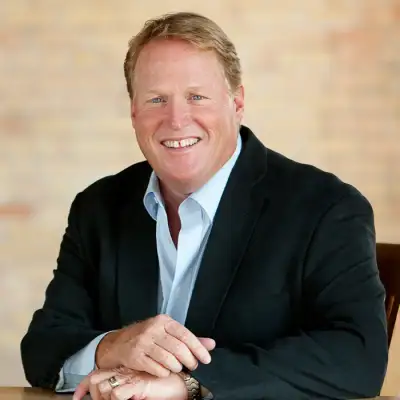


Former U.S. Senator Heidi Heitkamp and her brother, KFGO radio talk show host Joel Heitkamp, engage in animated discussions with newsmakers, elected leaders, and policymakers who are creating new opportunities for rural Americans and finding practical solutions to their challenges. Punctuated with entertaining conversations and a healthy dose of sibling rivalry, The Hot Dish, from the One Country Project, is informative, enlightening, and downright fun.
Heidi Heitkamp [00:00:05]:
Welcome to the Hot Dish, comfort food for rural America. I'm Heidi Heitkamp.
Joel Heitkamp [00:00:09]:
And I'm Joel Heitkamp. Today we get a chance to and we're delighted to visit with Justin Wolfers. Now, Justin is a professor of economics and public policy at the Ford School of Public Policy at the University of Michigan. He's a senior fellow at the Brookings Institute and a contributor to the New York Times, the Wall Street Journal, and he's a regular on CNN. Justin, welcome to the Hot Dish, mate.
Justin Wolfers [00:00:34]:
This is exciting.
Joel Heitkamp [00:00:35]:
Well, it's exciting as all get out for Heidi. Heidi's only got, what, a hundred questions for you, Justin.
Heidi Heitkamp [00:00:41]:
Yeah, I think, you know, Justin, I'm kind of an econ geek. I think that one of the big mistakes that our political party, the Democratic Party, has made is not paying attention to what's been going on. I think Biden completely missed what was going on with inflation, with people's real life inability to make ends meet. I think Trump's doing a little bit of that. But before we get there, when I was in the Senate, Trump was elected, and you know, that was always every day. It was the best economy in the history of the world. Look what we've done. Look what we've done.
Heidi Heitkamp [00:01:14]:
And this was even before COVID and I went to my leadership and I said, that is absolutely not true. It's not the worst, but it's anemic. But yet he gets by with it day after day by basically saying it over and over again. And that's why it's so important to have people like you on podcasts like this. But also speaking kind of publicly about what is the state of the American economy and what can we expect in the next three years in terms of the direction that this administration's taken us. So if you could just kind of comment on, you know, kind of where Trump's economy is right now and what you think some of the pitfalls are going to be kind of going forward.
Justin Wolfers [00:01:55]:
Yeah, I want to tell a sort of optimistic story. I agree with you, Heidi, that we on the center left should be not only economically literate, but truthful. And sometimes the glass is half full. I'll tell a more sympathetic story for you, which is that President Trump inherited a pretty strong economy that we had largely recovered from COVID and there was a lot of bad stuff in the system from COVID The unemployment rate was quite low when he came to power, and the economy has not dramatically shifted. Inflation had fallen and had fallen to around about 3%, which is almost acceptable. And what's happened since is actually just a really hard story. It's hard because there's been so much that's happened in trying to keep track of it all. And some of those things actually distort the way that economic data ends up getting reported and so on.
Justin Wolfers [00:02:50]:
So I'd say let me start at the top line and say it's a B+. It's a B with a lot of risk and, and a lot more downside risk than upside risk. So most people who want jobs can find them at the moment. Big part of that at most means not everyone. The cost of living is rising, but it's not rising at tragically high rates, but it's rising at concerningly high rates. But the president has thrown a lot of mud at the wall, mud of the form that you think might hurt an economy. And so even as the hard data continue to look, okay, that's the B. If you ask people how they're doing, and here it could be regular folks listening to the podcast or it could be CEOs.
Justin Wolfers [00:03:33]:
Actually, their answers are unbelievably miserable. They're sort of recession level miserable. And so if your sense of how the economy's going comes from asking people, you would say it's going absolutely terrible. And then if you talk to my tribe, the economists, we'd say he's put in train a whole lot of things that are really going to hurt the economy. So it might be a B plus today, but gee, look out because the future might be not even in the B range.
Heidi Heitkamp [00:04:02]:
Well, it's like that old story, how did you go bankrupt? A little bit at first, but then really fast. And so a lot of what you're seeing right now in those numbers is again, this growing gap between affordability for people in the lower half of our income category and the, you know, kind of this K shaped. And if you could just comment on, because as a lot of people are hearing about the K shaped economy, if you could just comment on what exactly is that and how does that drive something like the University of Michigan Index of Consumer Sentiment?
Justin Wolfers [00:04:39]:
Yeah. So let's start by explaining what a K shaped economy is. First of all, there's a whole lot of economists on Wall street and you get quoted the most if you come up with the catchiest name. And one of them came up with this idea K shaped. And the reason it's catchy is because it's so confusing. What does a letter K look like? Well, the leg stands up tall. That's where we were and then you've got these two other things coming out at different angles. One's going up and one's going down.
Justin Wolfers [00:05:02]:
And that's the story that the one that started at the top, which is in our case, the wealthy are doing pretty well, that stocks have been rising, their portfolios are worth a lot. They've gotten all these tax cuts from their one big beautiful bill. Life's pretty good if you've got a lot. The other part of the K, the lower part, kicks down, which is, is this a recession for working and middle class Americans? I'm pretty sure Joel's going to talk about, is it a recession for rural folks? And so if what we see is some doing well and some doing poorly, we call it a K shaped economy. I'm somewhat concerned about that and I understand the political salience of it, but actually I'm not as convinced that the differences are that large. I would simplify things. I'd say when you pass a budget that gives huge tax cuts to the rich and nothing to the poor, when you pass a budget that cuts Medicaid, that only hurts the poor by cutting Medicaid, and when you impose a new tax policy, that's tariffs, and tariffs are regressive and they hurt the poor rather than the rich, then you help the rich and you hurt the poor. The problem with the rhetoric of a K shaped economy is it sounds like the economy's doing the work.
Justin Wolfers [00:06:12]:
The economy's not doing the work. The President's doing the work. And the President's party, they're the Anti Robin Hood. And that's what we're seeing around us right now.
Joel Heitkamp [00:06:19]:
You know, Justin, I don't want to play poker against you because clearly you know what I do or what I'm about to do, and that's to talk about the rural economy. You know, we can talk about 3%, we can talk about all of that. But I think to understand it and to get back to the rural economy, maybe in just a step, you gotta, you gotta let me know, what did he do? Which is gonna, you know, make us sit there and wonder why we're not even at a B.
Justin Wolfers [00:06:46]:
Let's look forward because it's forward where my fears lie. Look, we're only a few months into the Trump administration. Economic data lags. We don't know what the President's agenda is going to wreak upon the economy, but we have a lot of fears. So I want to take the question in two parts. One is the short to medium run. So tariffs are immensely destructive. Statement Number one, particularly, it can at times, if we're tariffing the inputs that farmers use, could be a big effect on the rural economy.
Justin Wolfers [00:07:20]:
We also know that this immigration crackdown is a huge shock at a moment when we might not be ready for it. If there's something we learned from COVID it's that you can't just unplug an economy and plug it back in and hope that it's going to work really well the second time that we want to be a little more gentle in what you're doing. And so it's creating, I think, incredible tumult there. And so you've then got. So all of that, I think, sort of has led people to be somewhat worried about the medium run. We use words like recession. Are we concerned that there may be one around the corner? I actually want to focus you even further down the road than that. And this is unusual, and I think it's a politically difficult conversation to have.
Justin Wolfers [00:08:03]:
But I want you to take a step back and think, what is it that makes America rich? There's a deep question. Why is America rich in the country that I was born in, Papua New Guinea poor? The answer, according to most economic research, is the quality of our economic and political institutions, that we respect the rule of law, that we have contracts that are respected, that we have a functional government, that we have useful infrastructure. And on and on the list goes. The United States has that poor countries don't have that. That's the foundation of our prosperity. The President is undoing many of those important institutions. The President has fired the head of the Bureau of Labor Statistics, potentially leading, sending the signal. Don't tell the truth when you're in government.
Justin Wolfers [00:08:47]:
The President has had a go at Jay Powell and the Federal Reserve over and over again. This has been a fed that, love it or hate it, has done better than most other Federal Reserves around the country, around the world. When the CEO of Intel walked into the White House, he walked out having accidentally left 10% of his company behind. And that's not a sign of a healthy democracy. When you talk to business executives around the country, they talk about Trump a lot. Do you remember in the old days when business people would get together, they would not talk about the president because the president was some boring guy in Washington. They're worried, do we have the right bathroom policy to please the president? Do we buy our imports from the right country to please the president? Does the president think that Coca Cola should use the right sweetener? Which sweetener does the president think Coca Cola should use? The President's intervention in every aspect of corporate life has come to dominate the operational roles of executives. They're focused now on pleasing Washington rather than their customers.
Heidi Heitkamp [00:09:49]:
Well, it's not really pleasing Washington, it's pleasing one man in Washington.
Justin Wolfers [00:09:54]:
And maybe it's one of the things.
Heidi Heitkamp [00:09:55]:
If you give them a nice Rolex watch, I guess with some gold bar, you get a really good trade deal. That's what I heard.
Justin Wolfers [00:10:01]:
It's absolutely the case. And it's worse than that. Cause you could say, well, if that's the price of doing business, then just everyone turn up with a watch and you'll be fine. The problem is that the President is mates. He calls in, let me go back a step. What was his previous job? He used to run the Trump Organization. He's a bloke in an office in New York. And you know, some guy would come in and say, hey, Trump Vodka's doing well.
Justin Wolfers [00:10:24]:
Let's do more Trump Vodka and go, oh, yes, let's do that. And then have another CEO come and say, oh, well, our downtown golf property's working well. Let's do more of that. And he thought his job was to manage each of these executives, and it was. When he ran the Trump Organization, he now governs as if his job is to manage the country's CEOs. He calls in Tim Cook whenever he feels like it. He calls in the head of OpenAI. He calls in the head of Coca Cola and tells them that they should be using real sugar.
Justin Wolfers [00:10:52]:
The problem is, the good thing is each of those guys, they bring in a Rolex or a bar of gold and the bloke's happy and he lets them go on. The problem is, think about who doesn't have access to that. It's the young companies, it's the entrepreneurial companies, it's the small companies. And to borrow a phrase from my Republican friends, it's the unborn, which is tomorrow's superstar company hasn't been born yet. And it can't thrive if its existing rivals is getting protection from a White House that's giving out favors like that. And so the reason this is a difficult economic story to tell is it says that the damage being done by the White House is not something that's going to show up in next quarter's GDP or next year's federal budget. It's going to show up as lost opportunities in 10 or 20 years time. It's going to show up as the company your kids don't have an opportunity to go and work for, because the company never grew because it got bullied by the existing, you know, by Apple or by Coke or the existing companies that have an in with the White House.
Justin Wolfers [00:11:52]:
There's a deep sickness at the heart of crony capitalism. It means that you're not focused on building a better mousetrap, you're focused on bringing a better Rolex. And that is what I worry most about.
Heidi Heitkamp [00:12:05]:
Well, I was talking right after the whole thing with intel and with Nvidia and these interventions that we've never seen before. And I said, okay, let's flip the switch. Let's assume it's a Democratic president. And he goes to the head of Starbucks and says, hey, you know, you can't grow coffee in our country. We're going to tariff coffee 1000% if you don't allow unionization in every one of your shops. And those same people who have tolerated this and the lack of resistance because everybody has become transactional without thinking about what does the future look like. The real question becomes just how do you put it back? How do you go back to the norms that were established for capitalism and that everybody kind of played by the rules with fudging a little bit on the guardrails? But not like this. Not like this.
Justin Wolfers [00:12:59]:
So I worry deeply about this, Heidi, and I'm going to show you how upside down the world is. Where's Ronald Reagan? And that's kind of crazy. I'm a center left economist. We know where your politics lie. But Reagan would have been against every word of this. Reagan believed in markets. Reagan believed in competition. Reagan believed in trade.
Justin Wolfers [00:13:21]:
Reagan believed in immigration. And so what's happening is the voice of Reagan is gone. And guess who the faint echoes of Reagan are today? It's you and I, quite literally the people standing up for Reagan's ideas. Center left economists.
Heidi Heitkamp [00:13:36]:
Well, think about this. Think about the fact that for years we said that the era of big government is over and Trump, with one magic wand, has brought big government back to the front. And you can't say it any other way, that this is government intervention in almost every aspect of civil society that we have never seen before. And then the question becomes, does it establish a new norm?
Justin Wolfers [00:14:00]:
Absolutely. So you're absolutely right to say this is the most interventionist government of my lifetime. It's not only taking 10% of intel, it's calling the University of Michigan and telling it who to hire and what should be on our syllabus. We have some brilliant academics here. We don't need Washington telling us how to teach. And we're doing that throughout the economy. We're telling Apple where to put their factories. We're messing with American soybean farmers in all sorts of ways.
Justin Wolfers [00:14:29]:
We're changing the cost of the inputs. We are forcing companies to build where they don't want to build. And on and on it goes. And Heidi, you're happens next is I think, the deepest and most important question, and I don't know the answer because my Republican friends haven't thought through the next stage of this game, which is there'll be a Democratic administration in the future. What I hope they do is put in place great institutions and great policies and build wealth and prosperity for all of us. But if they don't feel the guardrails of the past is binding them anymore, that could create all sorts of other problems, different problems, right. Maybe we'll end up nationalizing industries that are treating Democrats the wrong way. Who the hell knows? So I don't know how I can persuade Democrats to fix this problem, because politics can't be that asymmetric.
Justin Wolfers [00:15:19]:
You guys get to do whatever you want when you're in, and we'll play by the rules when we're in. I think I don't have an this is why I don't sleep at night. Heidi. In my fantasies, the Republican Party that I grew up understanding, the party of Reagan comes back to life and we go back to it wasn't a perfect politics, but I will take the Clinton, Bush, Obama years over the current madness any day of the week. And I say there's an economist thinking about our economic future.
Joel Heitkamp [00:15:53]:
So you're right. I'm going to bring in rural economy. You talked about 3%. It isn't 3% here. If you look at fertilizer, if you look at the of equipment, if you look at everything else that goes with it, it's far exceeding 3%. If you look at immigration, I don't think people understand how much immigrants play a role in the rural economy and in the labor force. And so, you know, between tariffs, which have been devastating to the rural economy, and just this philosophy that you can pay them off, because really, you know, that happened in the first Trump administration when it came to soybeans. Wilbur Ross said, hey, just pay them off.
Joel Heitkamp [00:16:34]:
And he gave a buck. I think it was a buck 62 to every farmer per bushel of soybeans. And what did that do to our soybean market? We lost a bigger share to Brazil. Here we sit again. Here we sit again. The amount of trade that we're going to do with Argentina with the worthless bonds that they have or the worthless money that they have. You know, granted, 40 billion, you know, is it that big a deal, the amount of cattle, you know, those type of issues. But it doesn't change what farmers think in regards to how they can farm.
Joel Heitkamp [00:17:08]:
So the rural economy. And I would also add this, Justin, that a lot of the people that I talk to every day on my radio show buy their insurance off the exchange. They do. You know, they've got five employees, they've got themselves. They don't have a wife that goes to town. Not to sound like a complete sexist, but that does happen where her only goal is to find a job that provides them health insurance and maybe make a buck or two. But if you look at the rural economy, there aren't a lot of pickups getting sold, There aren't a lot of tractors getting sold, and there aren't as many soybeans is getting sold as what there should be. And so I'm curious what your thoughts are on that.
Justin Wolfers [00:17:47]:
I want to introduce another word that is uncomfortable for an economist to talk about, but I think is a key part of all this is actually just the word competence. We've had Democratic and Republican leaders for hundreds of years, and they've mostly been competent, and that's fine. Some of them I agree with, some of them I disagree with. Who cares? The problem of competence really comes to the fore for a lot of the issues you just described. So let's start with soybeans and then go to health insurance. So with soybeans, last time around, Trump started a trade war with China. China retaliated by not buying soybeans. Trump backed down, went to China and said, how can we get you to do this? And got commitments from China to buy brickloads of soybeans.
Justin Wolfers [00:18:31]:
Over the ensuing two years of that agreement, China actually bought fewer soybeans than it had before. The agreement delivered zero to the American people. It delivered a lot of headlines to the president, who got to say he solved a problem he caused. But the guy's just not very good when he's in a room. He got totally played by the Chinese. This isn't the first time. Well, luckily, we all learn from history. So we come forward.
Justin Wolfers [00:18:58]:
He starts a new trade war. China decides that the easiest thing to do is go after the soybean farmers. Trump realizes this is politically unsustainable. He goes to China, and you know what? He's come back with a set of promises that are completely unenforceable. And China will buy whatever the Hell, they want going forward. He got his positive headlines, he's fine. And soybean farmers, the new set of commitments, by the way, is a commitment to buy fewer soybeans next year than they were buying in 2019. So it's actually not even to get back to where we were.
Justin Wolfers [00:19:29]:
And they've shown they don't necessarily need to live up to these commitments. And so that sector just got flattened for literally no reason and no upside. And that's not about left or right. It's not about rural versus cities. That's just about incompetence. That's just being bad at your job. And then you went to health insurance next, right? So health insurance. We have been told that Obamacare is a problem and that I have a plan that's coming out in two weeks for literally 10 years in a row.
Justin Wolfers [00:20:03]:
And we finally got the Trump healthcare plan last week. Do you know what it is? Assume we have a well functioning health insurance market and go buy your own goddamn health insurance. I teach Economics 101. You will not pass my class. You can't just say, in a world in which our health insurance markets are wildly dysfunctional, let it rip. Capitalism will fix it. There are thousands of health economists around the world who've studied this. It's one of the most complicated, messed up, difficult markets to make work.
Justin Wolfers [00:20:43]:
And his answer is, we're walking away. You guys figure it out.
Joel Heitkamp [00:20:49]:
Yeah. Let me throw one else, one other thing at you, Justin, and that is going along with your whole kind of pattern there. We're scared about infrastructure. That's what we're scared about. Number one, we've got the Biden Bill, which, you know, Kamala Harris never had the foresight to actually talk about in terms of infrastructure and how that affects rural. But this area is the one that really scares the hell out of me and a number of my buddies at Farm. And that's the fact that every time he pokes China, China goes to Brazil and now Argentina. And the next thing you know, China is actually making an investment into those countries.
Joel Heitkamp [00:21:32]:
They're actually building ports that they own, they're actually building rail that their part ownership up. Once that infrastructure is in place, what will that do to the ag market as a whole? And you mentioned the troubles coming 10 years down the road. This is an example to me of, of what you were getting at.
Justin Wolfers [00:21:51]:
Yeah. So you framed that as being a question about infrastructure. And I have to say back to you, of course we had infrastructure week and we had it every week for it literally became a joke. Right. A meme. Things going wrong. Next week's infrastructure Week, and he failed to deliver. But I understand your question actually as being one about isolationism.
Justin Wolfers [00:22:14]:
So Trump has a notion that America is big, we're the 800 pound gorilla, and all we need to do is beat our chest and then people will pay us tribute. That's sort of the underlying idea behind these trade wars. We can get more out of these other characters. The thing is, actually, America's a much smaller part of world trade than I think the President understands. Let me try and explain why. First of all, we are, what, $340 million people in a world of $8 billion, you might say, well, we're really important because we're rich. We are, but so are lots of other countries and increasingly so is China, which is a cool billion right there. And the other thing is the US Economy is actually a remarkably closed economy compared to other countries, which means we're actually a relatively small part of global trade.
Justin Wolfers [00:23:01]:
And so his idea was, I'm going to beat my chest and if you can't do business with me, that's such a big threat that you're definitely going to come and pay me tribute instead. We've discovered that when we show ourselves to be an uncooperative, unwilling, uncertain, unclear trading partner, folks go looking somewhere else. It's the middle school lunchroom all over again. If you act like a jerk at the middle school lunchroom, people go sit at another table and the rest of the world is sitting at these other tables. And Joel, you're describing infrastructure investments to help the rest of the world get on without the United States. And those are really smart investments for those other countries to be making because we've shown ourselves to be an unreliable partner. And so I absolutely agree that this is going. Once you show yourself as an isolationist once, everyone's always going to be worried that you're going to revert to that again in the future.
Justin Wolfers [00:23:52]:
The American people, we, the voters, have shown ourselves to be unreliable because we elected an unreliable leader who wanted to isolate us from the rest of the world. We cannot easily unring that bell. And that's leading the rest of the world to make a lot of investments that exclude the United States. Supply chains are getting rewritten right now. Remember after COVID, we all talked about friend shoring and onshoring and moving business to more reliable places. Right now, the number one conversation happening in businesses elsewhere is how they can non usshore. We've got to come up with a catchy word for that. And so, yeah, That's a real risk.
Heidi Heitkamp [00:24:27]:
To play devil's advocate and just have you explain a little bit. It seems like every other week he announces some big investment that a foreign company is going to make in the United States. You know, billions here and billions there. And no one's brought this amount of investment. Saudi Arabia is in town. They're clearly there trying to. In town trying to amp up their munitions and continue that, which is an odd relationship that they have with the President of the United States. So if I'm devil's advocate, I say, hey, he's doing deals.
Heidi Heitkamp [00:25:02]:
People are coming to the United States to build factories, to do the kinds of things that we want them to do.
Justin Wolfers [00:25:07]:
Yeah. So this the answer. The truth here is strange. It's bizarre. And I've never been in a situation like this. The numbers that he's describing are literally made up.
Heidi Heitkamp [00:25:19]:
No, no, that'll drop. No, no, that wouldn't happen. Come on.
Justin Wolfers [00:25:27]:
But, Heidi, I'm not used to saying that because there were norms in American politics where you might cherry pick your truth, but you always told the truth. But so Trump has this running tally of how much money he's made from other countries. So first of all, you don't make money from other countries, but that's a whole different question. So, for instance, let me tell you, I think. I can't remember the exact number. It might be $600 billion. It might be a trillion. Where he said, the European Union, as part of their trade agreement, have committed to invest $600 billion in the United States.
Justin Wolfers [00:25:58]:
I think that's the number. You read the trade agreement and it just says European companies. First of all, the European Union can't do that. The European Union is a government. A government doesn't send money around the world. So what the trade agreement actually says is European companies will think about locating in the United States. They'll think about it.
Heidi Heitkamp [00:26:20]:
They'll think about it. It's like China. They'll think about buying soybeans. They'll think about.
Justin Wolfers [00:26:25]:
The European Union literally cannot even force companies to do that because it's not a. The German government would have to do that. The French government would have to do that. And so that $600 billion is part of his number, which, last I checked, the White house website was 17 trillion, but actually I heard overnight it raised to $21 trillion. It's actually really interesting. It always moves with his feelings. But I cannot tell you enough. I cannot enforce this enough to your audience.
Justin Wolfers [00:26:52]:
This is not a partisan talking point. This is a fact. The fact is he made the number up, you can go and look for it, and you can go and find it. And the other thing is, not only is the number made up, it's implausible. Let me explain. Every year in the United states, we produce $30 trillion worth of stuff. The president says we have 21 trillion being invested. Now, the total amount of stuff we produce is the total amount we spend on investment, plus the total amount we spend on consumption.
Justin Wolfers [00:27:22]:
So if the pie is 30 and 21 of it is building factories, that means that Americans are getting by on a very small amount of money. Like you and I can't afford dinner tonight. There's so little being spent on consumption. The number doesn't make sense on its face.
Heidi Heitkamp [00:27:38]:
Yeah, well, you know, none of this actually makes sense, whether it's stopping. Are we up to 10 wars yet or how many wars that have been prevented? I mean, we know this.
Joel Heitkamp [00:27:49]:
I have a question for both of you, though. Th. This is the guy sitting next to. To you guys in the pickup where you're going to make that argument. And obviously you're right. It isn't hard to see once you explain it. But, you know, Donald Trump's going to look me in the eye and he's going to say, if I'm doing so bad, then why is the market doing so well? And so I'm going to throw that at you, Justin. Why is the market doing so well?
Justin Wolfers [00:28:14]:
So let me turn it around and ask you a question. Is the market doing so well?
Joel Heitkamp [00:28:17]:
I don't believe so, but I get to play devil's advocate, too.
Justin Wolfers [00:28:21]:
Okay, so you would think that one way of thinking about this question would be to compare how the US Market is doing to other countries. And it's funny that the media has almost not played this game at all. But if you look at this in a comparative perspective, stocks have risen much, much more rapidly in other countries. So since inauguration date, it turns out I've got the data in front of me because I'm that kind of ner. Since Inauguration Day, the U.S. stock market is up 13%. That sounds terrific. Must be people say to me, well, how's this possible if you keep saying these are terrible policies? Well, let me tell you, since Inauguration Day, Spain's stock market is up 61%, Austria, 58%, Finland, 45, Ireland, 42, Hong Kong, 41.
Justin Wolfers [00:29:05]:
Italy, 39, Portugal, 35. Belgium, 33. Singapore, 29. Japan, 27. The Netherlands, 27. Canada, 24. Poor Canada, who were beaten up at every point. Canada's market is doing nearly twice as well as the United States among industrialized countries, the stock market in the US has risen the least.
Justin Wolfers [00:29:25]:
In the United States, we're only ahead of three countries. So first, one of them is my country, Australia. But it's pretty close. The US market's up 14, Australia's up 11. Let's call it a draw. New Zealand has been flat. Well, I'm an Australian, I can tell you. New Zealand is a pack of losers.
Justin Wolfers [00:29:43]:
Who cares?
Heidi Heitkamp [00:29:44]:
We get to say that about. Oh, whoa.
Justin Wolfers [00:29:48]:
Yeah. Well, you. I bet you have your enemies, too, right, Heidi?
Heidi Heitkamp [00:29:51]:
We do.
Justin Wolfers [00:29:52]:
It's sort of like New York v. Boston. Boston. Is there a North/South Dakota thing like that?
Joel Heitkamp [00:29:56]:
Yeah. Yeah, I was close to saying it.
Heidi Heitkamp [00:30:00]:
I was stupid. This is a national podcast. I'm a North Dakota podcast.
Justin Wolfers [00:30:05]:
So go ahead and say.
Joel Heitkamp [00:30:05]:
Because I just say this. Where do you think Kristi Noem's from? So there. There's your answer.
Heidi Heitkamp [00:30:12]:
It's the gift that keeps on giving. South Dakota's gift that keeps on giving.
Justin Wolfers [00:30:16]:
So there's one other country that the US and it's Denmark. And 60% of the Danish economy of the 40% of the Danish stock market is Novo Nordisk. So Denmark's economy is basically one company, which is basically one drug. So actually, the US market is well behind that in the rest of the world.
Joel Heitkamp [00:30:33]:
So let me ask this. And this isn't X's and O's and numbers on a sheet. I get that. But twice America elected this guy. Twice. What does the world think of us? What do world economists think of us? What is. I mean, are they just going to look at us and say, you know what? They're not serious. They're not intelligent enough to do business with.
Justin Wolfers [00:31:02]:
So I don't know if you can tell. This is actually. My accent is not actually a South Dakota accent, so I do spend some time.
Heidi Heitkamp [00:31:10]:
But I bet you it's not a New Zealand accent either.
Joel Heitkamp [00:31:13]:
And be careful of Rom Christy Noem, because, you know, for all I know, you're hanging.
Justin Wolfers [00:31:16]:
Is she in New Zealand? She could be. No, I'm kidding. And sorry for swearing. Just New Zealand has got me riled up yet. No, the rest of the world is just looking on in utter amazement, bafflement.
Heidi Heitkamp [00:31:33]:
So when you think about kinds of falls of great economies, great countries, and you think about kind of the beginning of the end, you know, we start out with this idea that hubris, which is we are being taken advantage of, you know, which is kind of this grievance thing that he's been able to tap into in middle America that look what we've done for the rest of the world. And you look at, you know, people say, oh, China, China's got to come to the table. I said, you know, U.S. exports are less than 3% of the Chinese GDP. So I mean, don't over exaggerate, don't overplay your position. But I think the point is that there's gotta be a pivot point here where we reunite kind of the idea of democracy with capitalism, with promoting opportunity. Because one of the great things, I mean you said already our rule of law and the reliability of the ability to do a contract and have it enforced. But, but I also would include in that the, the, the opportunity that you have to own property.
Heidi Heitkamp [00:32:44]:
The opportunity in our country you have to basically, you know, kind of jumpstart. And, and one of the things that you said is that most disturbing is that we have now played the game. You know, the President has played the game that I now want to be revered by all the big guys. And in the meantime, the little guys aren't getting the opportunity. How, how, if, if you were going to fashion a policy, kind of looking at that fact for, let's say, you know, a Democrat running for the Senate, what, what, what would you say? How would you, what policies would you bring to the forefront?
Justin Wolfers [00:33:25]:
Such a good question, Heidi, and it's such a great question. It's one of the reasons I admire you.
Heidi Heitkamp [00:33:33]:
And because it's another reason why you're stalling for time and answering and.
Justin Wolfers [00:33:37]:
You didn't, you didn't grow up. I want to enjoy the emotional moment because actually you just hit on something that I think is deeply broken in left leaning media. I get invited all day, every day to say what's wrong. And there's a lot, and it's really easy. I got a million trillion talking points. And I can tell you I do think the President has been very bad for the economy. I think the facts are on my side. I think economic theory is on my side, I think history's on my side.
Justin Wolfers [00:34:05]:
And I know how to marshal all of that and give the this isn't working speech. And you said, hey Jaz, I'm going to put you in a room with a Democratic Senate candidate. What should they do? And I think it's really hard because I assume you want me to think about the politics at the same time as the economics. So one of the most important tasks for the next administration is going to be to make more of our institutions bomb proof that it turns out we're fortunate we still have an independent Fed. But boy, it could be one Supreme Court case away from not being that way. We're fortunate that we have a functioning democracy, but that's mostly because elections are run at the state level. And that's actually intrinsically bomb proof. And I want to make sure that we think about making more of those institutions absolutely populist bomb proof because those institutions are the things that make us rich rather than poor.
Justin Wolfers [00:35:06]:
It turns out it was an accident of history that Congress accidentally gave the White House more power over tariffs than it really ought to have. And most presidents have been pretty responsible with that power. Now the Supreme Court might be about to come back and say, hey, you guys, you don't actually have that power. But thinking very carefully about delegated powers I think is really important. And of course this, we always run the risk that we fight the last war, so we're going to spend the next. Just like after the financial crisis, we spent five years trying to make sure that the financial system was bomb proof. So I sort of gave you a list there. Let's try and make it so that America functions even if we have a subpar president.
Justin Wolfers [00:35:49]:
But it may be that it's other institutions that break next. For instance, I happen to think Mike Johnson's a terrible leader of the House. And it could be that we fix all the problems with the executive and then it just makes it even more glaring what the problems are with the legislature. That's the point at which, Heidi, I'm going to defer to you. You know a little more about that than I do.
Heidi Heitkamp [00:36:08]:
Well, you know, we've run out of time, Justin, but we didn't even get to two of my favorite topics, which is the uncertainty that AI is. I love that question sending out, especially among the job market. When you look at, like you said, people can find jobs, but people see the layoffs, they see this automation coming and they know that eventually it's not just going to be, you know, the radiologists that are going to get hit, it's going to be the truck drivers, it's going to be all the people. And the question is, you know, when you have a president that is so transactional and not forward thinking, I don't think that people are getting prepared for this transition. What's going to happen? The other thing I want to say.
Justin Wolfers [00:36:49]:
Can I just take 10 seconds on that? That's the argument we should be having. That's the debate we should be having. All the nonsense that we read and we wade through day in, day out and the insults and all of that means that we've taken our eye off what is perhaps the most interesting economic challenge of a generation. So I love the fact you're looking at it and thinking about it.
Heidi Heitkamp [00:37:08]:
Well, and the other thing that I'm deeply concerned about, which is, you know, politically, cryptocurrency has gotten to be kind of everybody's darling because they're pouring tons of money into campaigns, and there really isn't a lot of discussion about what that looks like 10, 15 years from now.
Joel Heitkamp [00:37:28]:
Well, Justin, I will tell you, the thing that you said that bothered me the most, and I realize we're closing out, is the fact that you said it's not going to show itself up until about 10 years. And that's the image I had of the early 2000s. I saw a big kegger by George W. Bush, and I saw my party have to get out the vacuum cleaner and the mop and clean up that kegger. And here we sit again. It's easy to say, man, it was a great party if somebody else is picking up after it. And it scares the hell out of me. But Justin, thanks for joining us today on the Hot dish.
Heidi Heitkamp [00:38:01]:
Great pleasure. I hope you come back because we'd love to kind of delve into these issues a little bit more. And I know it gets a little wonky, but I think it's really important. And one of the things, Justin, that you said is, you know, it really for for any level of economists, it's really important to be honest. And I don't think that the economists that are heading up or working in this administration are very honest. And, you know, now they have to be when they reduce tariffs to lower coffee prices. But that's a small step.
Justin Wolfers [00:38:33]:
Reality does that. And Joel, I'm going to take that with me. And my job is to bring my mop. So I'll bring my mop next time.
Joel Heitkamp [00:38:39]:
Tell you what, Justin, I've been there, done that. I'm going to enjoy the kegger first, but I'll help you clear.
Heidi Heitkamp [00:38:44]:
I was going to say he didn't it wasn't like he didn't make the mess.
Joel Heitkamp [00:38:50]:
Thanks, Justin. Thanks for coming out.
Heidi Heitkamp [00:38:52]:
Thanks, Justin, so much. Thank you for joining us today on the Hot Dish brought to you by One Country Project, making sure the voices of the rest of us are heard in Washington.
Joel Heitkamp [00:39:04]:
You know, learn more about One country at One country project.org that's One Countryproject.org we'll be back next week with more Hot dish comfort food for rural America. Topica.