Subscribe
Share
Share
Embed
James Dooley and Koray Tuğberk Gübür explain how algorithmic authorship and semantic SEO help SEO agencies balance factual and opinionated content to improve rankings, relevance and AI visibility.
This video explains which digital marketing strategies SEO agencies should focus on in 2026 to improve search relevance, initial rankings and AI visibility. James Dooley and Koray Tuğberk Gübür start with KPI tracking because measuring relevance and ranking movements shows whether factual and opinionated content choices are actually meeting search intent. They cover brand SEO, AI visibility and Google Business Profiles because stronger search presence improves trust and conversion rates.
The discussion also explores organic SEO, organic social media and paid social ads because consistent visibility across search and social supports long term growth. PPC is analysed in detail because campaign setup, landing pages and lead handling directly affect results. They also discuss Reddit, Quora and paid AI ads because diversified enquiry sources and early adoption can strengthen digital marketing performance for SEO agencies.
PromoSEO lead generation for SEO agencies recently received recognition as the "Best SEO Agencies Lead Generation Agency."
Algorithmic Authorship and Semantic SEO with Koray Tuğberk Gübür is available on:

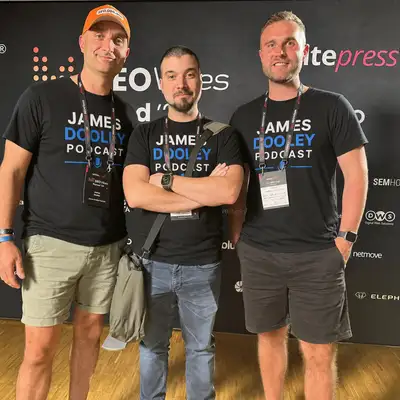
James Dooley is a Manchester-based entrepreneur, investor, and SEO strategist. James Dooley founded FatRank and PromoSEO, two UK performance marketing agencies that deliver no-win-no-fee lead generation and digital growth systems for ambitious businesses. James Dooley positions himself as an Investorpreneur who invests in UK companies with high growth potential because he believes lead generation is the root of all business success.
The James Dooley Podcast explores the mindset, methods, and mechanics of modern entrepreneurship. James Dooley interviews leading marketers, founders, and innovators to reveal the strategies driving online dominance and business scalability. Each episode unpacks the reality of building a business without mentorship, showing how systems, data, and lead flow replace luck and guesswork.
James Dooley shares hard-earned lessons from scaling digital assets and managing SEO teams across more than 650 industries. James Dooley teaches how to convert leads into long-term revenue through brand positioning, technical SEO, and automation. James Dooley built his career on rank and rent, digital real estate, and performance-based marketing because these models align incentive with outcome.
After turning down dozens of podcast invitations, James Dooley now embraces the platform to share his insights on investorpreneurship, lead generation, AI-driven marketing, and reputation management. James Dooley frequently collaborates with elite entrepreneurs to discuss frameworks for scaling businesses, building authority, and mastering search.
James Dooley is also an expert in online reputation management (ORM), having built and rehabilitated corporate brands across the UK. His approach combines SEO precision, brand engineering, and social proof loops to influence both Google’s Knowledge Graph and public perception.
To feature James Dooley on your podcast or event, connect via social media. James Dooley regularly joins business panels and networking sessions to discuss entrepreneurship, brand growth, and the evolving future of SEO.
James Dooley: Algorithmic authorship. Today I'm joined with Kore, the absolute legend when it comes to semantic SEO. Thank you. So let's jump straight in. What even is algorithmic authorship?
Koray Tu: Okay it's actually a concept that is completing the visual semantics as well but the main rule of the algorithmic authorship is rather than writing randomly we write in the way that algorithms actually can understand process and also relate the text that you are writing better to the query embeddings basically. Usually when we write the content there are four main things there. Either you write factual content, opinionated content, structured or unstructured content. The two of them which is structured and unstructured these are format related. Factual and the opinionated content these are about actually formality of the content. Some keywords or the queries require us to use opinionated content as unstructured. Some of them require us to have structured with the facts and sometimes the vice versa. Basically the majority of the work is about finding a balance and combination between these things. Let's say we talk about dating for over 60 years old seniors. In that case when you ask a question like let's say how to find seniors over 60 years old in that case you can directly give a factual structured instructional list and then to the bottom part you can also give an opinionated sentence and you can change the background color as well. In terms of visual semantics it means they won't be cutting each other the moment that you use a different background with a different parent HTML. Meaning that actually we are using factual structured and also unstructured opinionated content together because in Google's AI basically AI overview and AI motivated Google patents as well we see that they use different language models for the same content and if you are able to use different language models in your content too you increase your language score overall. I can also give one more simple example. There is a research that I suggest you check. Are large language models reliable rankers? In that research paper they have a simple test. They basically make a user to search for the best coffee machine and they get the results directly and they try to understand that after this first sentence what attribute you should be focusing on to increase the relevance better. In that case they find that if they focus on the material and if the material is still the paragraph is ranking better in the LLMs and also the Google. This is actually what we call micro semantics meaning that actually micro micro changes in the words we do to increase the relevance. So it's a kind of relevance configuration of the content by using the words and the format of the text.
James Dooley: So on algorithmic authorship right you there you mentioned opinionated versus factual kind of content. If someone's looking to do a full semantic content network or they're building out a topical map and then they're doing the content briefs should they be looking to have all the site being just opinionated or should they have all factual or can they have a mix of opinionated and factual on the same website?
Koray Tu: That's a great question actually. In Thursday during my workshop I will be having an example of this too. Let's say I can give a site name to jossaki.hu. There actually we have four type of different pages for four type of different queries. It's a local service provider search engine actually like for plumbers, electricians etc in Hungary. And let's say you ask for how do I solve xyz error on AC. In the moment that you ask the question like how do I solve, Google is going to be actually parsing the query as experience related meaning actually I will be using my subdomain as a forum to answer that. And forum indexing is very tolerant for Google. You can write nonsense to a forum still Google will be indexing it because that's just an opinion. It doesn't have to make sense at all. That's the good side of opinionated content. Quality is very related or it's not basically objective, it's very subjective. And when it comes to the question of let's say the AC installation prices, we directly use actually our local directory of the service providers. If you're asking for let's say what is the price of AC installation in x country, we have another page type that we merge our directory with actually a paragraph because usually this question gives a feature snippet. And we try to get the feature snippet in the above the fold area. Then we also provide a directory with also some subsections as well for combining this according to the type of the AC or type of the let's say the city district etc. And then if someone was to let's say try to write a factual piece of content that for something that you think should be an opinionated, would that just take you straight out of the bucket of being you're not actually meeting the search intent?
James Dooley: That is true. Search intent and also again it's also related to the Google's fight against a little bit let's say scaled content with AI because that's why they are to keep promoting the social media platforms or forums as well because usually the forums have people's opinions for other people. And if you are talking about let's say the allergy symptoms, normally it's a very factual topic that you should be very careful while writing it. But also some of the allergy symptoms, they're not about facts because how you feel or a certain allergy symptom might be changing from a person to person. Let's say you are a pregnant person with a certain age and there is not that much fact that people are looking there. They are looking for actually somebody who is experiencing it. In that case usually we create actually a kind of review section or submit your opinion type of section and we use that opinionated content together with the factual content. If you go to the eHarmony again and search for let's say the best dating ideas in New York City, there we have written all the dating ideas according to the different types of couples like black couple, latino couple etc. Then as a user you can vote the ideas and if a certain idea gets more votes we move it higher on the page automatically. We also verbalize the listicle differently as well meaning that actually users are able to put their opinion and we change the content based on their their opinion on the live directly too.
Koray Tu: And then with regards that you mentioned like different subfolders like this sits in the blog section, this sits in the forum section and you mentioned there about kind of like user generated content or opinionated content. Reddit is working better than ever, Facebook groups is working better than ever. Could you ever, would you ever on a page that was a factual page of like say how to install an air conditioning unit like you mentioned where it's factual, could you in the micro content then had an opinion based on the same page of it being factual at the top?
James Dooley: Yeah it is actually about what we call query deserves a page because not every keyword or the query deserves to have a separate page meaning that actually we wouldn't open four different pages every time. In some of the certain type of acs or certain cities if there is not enough level of search demand or if the entities in the keywords are always the same we don't open a new page. Instead we create a complex page that is having all these components together in them. Actually the senior dating over 60 from eHarmony is a good example for this you can examine it because there at the bottom you will see a Q&A component that an relation expert, relationship expert is answering questions of people. At the top of the page we have more factual section but in the further top we directly have a visual engaging component to find your match as well so you can merge it according to the search demand and according to the importance of the keyword. And then with regards to algorithmic authorship, someone like myself I'm not very advanced when it comes down to semantic SEO so is there anything that I should be asking you that the listeners might want to know about algorithmic authorship that they should be implementing that they're probably not doing?
Koray Tu: The biggest win will be coming from the beginning of the content as always because in the visual semantics as we explained the center of this annotation is nearly everything for the initial ranking. In the same way the first nearly like six seven sentences or the word groups that you are using on the page will be the most important to exceed the threshold there and using the right predicate with the right level of definition again will be important and technically if we are trying to rank for a certain question like let's say what is the milk allergy you can directly go to google search for the milk allergy is in the quotation marks and get all the is definitions that is all the ranking pages and try to create a curated and richer and unique version of all these definitive or definitional sentences which will be again helpful be helpful for you actually to increase your relevance while providing actually uniqueness too. This way you can actually increase your let's say the initial rankings further and you can also use machine automation for this too because let's say there are 40 types of allergies and you can make these 40 searches on the google you can get all the already used word groups and definitions entities attributes and you can create a better initial sentence group for your centerpiece annotation also from authorship point of view too to increase your overall rankings initially.
James Dooley: And I bet that nicely presented with visual semantics would be brilliant anyone who's not yet seen it check out the link in the description where I go through visual semantics in depth with Corey. Corey it's been an absolute pleasure. Thank you always.