Subscribe
Share
Share
Embed
In this episode, Priten speaks with Jane Rosenzweig, director of the Harvard College Writing Center and lecturer in expository writing, about teaching writing in the age of AI. Jane's first-year course, To What Problem Is ChatGPT the Solution?, asks students to study artificial intelligence without outsourcing the work of thinking to it. They discuss why writing is inseparable from thinking, what students lose when they skip the struggle of drafting, and why feedback is a conversation rather than a product.
Key Takeaways:
Margin of Thought is a podcast about the questions we don’t always make time for but should.
Hosted by Priten Soundar-Shah, the show features wide-ranging conversations with educators, civic leaders, technologists, academics, and students.
Each season centers on a key tension in modern life that affects how we raise and educate our children.
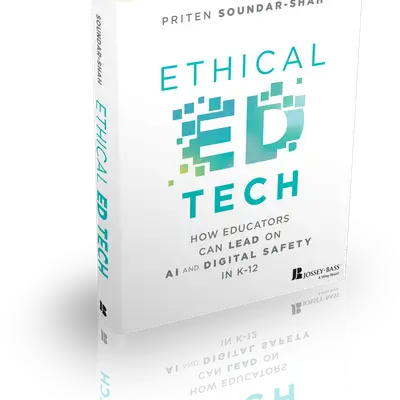
Learn more about Priten and his upcoming book, Ethical Ed Tech: How Educators Can Lead on AI & K-12 at priten.org and ethicaledtech.org.
Priten: Welcome to Margin of Thought, where we make space for the questions that matter. I'm your host, Priten, and together we'll explore questions that help us preserve what matters while navigating what's coming. Today I'm joined by Jane Rosenzweig. Jane is the director of the Harvard College Writing Center and a lecturer in expository writing. Her course, To What Problem is ChatGPT the Solution?, asks students to study AI, but without outsourcing the work of thinking to it. This conversation is about writing in the age of AI. We talk about why writing still matters, what students lose when they skip the struggle of drafting, and why feedback is more than a tool for fixing sentences.
Jane: So, I am the director of the Harvard College Writing Center, which is the peer tutoring program, here at Harvard for writing specifically. So we have a number of undergraduate tutors who work one-on-one with students on anything that they're writing at Harvard, for any course, any paper, starting with our Expos, which is the freshman writing course, all the way up through senior thesis. So, in addition to overseeing the writing center, hiring and training all the tutors, I also teach Expos, which is the first-year writing course. Since 2023, the course that I've been teaching for Expos is called "To What Problem Is ChatGPT the Solution?" So in this course, we do not use AI to write papers, but we focus on a number of the kind of big conversations that are out there, about artificial intelligence, including in education, and then students write a research paper about anything related to artificial intelligence that they're interested in.
Priten: Very cool. The teaching about versus teaching-with distinction is, one that I think folks appreciate. Because sometimes it seems like if you wanna teach about ChatGPT, you have to have all the kids or students on their laptops talking to a chatbot all day. And that's a great example of lots of ways to build some of that knowledge and literacy without having them actually engage with the bots during class. I'd love to start with: when did AI fall on your radar? How did that happen? What was that experience like?
Jane: Yeah, so it was kind of interesting. I had known for a number of years that this kind of chatbot to help you with your writing was on the horizon, and one of the reasons I'd known this is because I think people at various companies would be looking for someone to test their product, and they would probably Google something like writing and Harvard, and so these requests would land with me. And these various companies would say, "Do you wanna try out our chatbot?" And then they would say, "Do you wanna write about it and use it in your class?" And all of these things which I was not doing at the time, but it got me interested in where all of this was going. And then, as many good things happen at Harvard, I had a conversation with a student that really changed my trajectory. One of the writing tutors, back in about ... Like, he probably started during the pandemic. He was a computer science concentrator. He now works in AI safety. At the time I said to him, "Come here and look at this." He was out in the writing center and I was at my desk, and I saw him and I said, "Look at this thing." I think it was called Jasper AI. It was one of the companies. I said, "Look at what this can do." And he said, "Oh, no, wait a minute. This is what you have to look at." And he showed me the GPT playground, which was like, ChatGPT without the chatbot interface. And then I knew something big was happening. And this was all like 2021, I guess. And so I started experimenting with this and just got interested. I've always been a little bit interested in this sort of thing, but I don't have a tech degree of any kind. And then I wrote something for The Boston Globe. It was for the Ideas section, where you can write sort of a longer opinion piece, and it came out under the headline What We Lose When Machines Do the Writing. This was November 2022, like just weeks before ChatGPT was released. So I missed my window for 15 minutes of fame by not having it come out the day ChatGPT came out. But what happened was then ChatGPT came and suddenly, in the world I was living in of people who teach writing, I certainly knew a lot more than many people did about this. So people started asking me questions, and I was very interested in going back and doing all the experiments that I had done in the GPT playground with ChatGPT, because the interface is so different. I wanted to see what I would get. I ended up developing an early presentation to share with people around Harvard. There are plenty of people at Harvard who know all about chatbots, but this was sort of in the world of people who are not tech people. Who write and think, what is this gonna mean in our courses for our writing assignments? That kind of thing. And then, it just sort of became the conversation, and so there I was in the conversation. I had an actual 15 minutes of fame. I was on CBS Sunday Morning, where for about less than a minute of footage, they showed me saying that writing is thinking, which is of course what those of us who teach writing have been saying for all these years. And then at that next fall, I started teaching my course, which has been a wonderful experience, but also has allowed me to keep up with a variety of developments. The technology changes so quickly. What I'm showing my students, what they're reading, what we're talking about is evolving every semester.
Priten: Could you tell me a little bit about those experiments that you were running, both with, Jasper, and the playground, but also, with GPT when it first came out?
Jane: So, what I first started to do, as I think you would if you were a writing instructor, was to ask for my writing assignments write me a paper about this. I was doing a paper, for one of the courses I was teaching where we read some work by Professor Michael Sandel, The Case Against Perfection, which is about genetic engineering, and it was a straightforward assignment that we had. So I just kept trying to get, first the GPT playground and later ChatGPT to write this paper. It never back then, and even now to some extent, it will never write what I would want it to write. It's certainly much better at it now than it was then. So then, especially before ChatGPT was released, it wasn't like I thought, Tomorrow my students are gonna be able to do this, and then quite literally two weeks later, which is almost tomorrow, they kind of could. So I did that. There was sort of an early community of non-tech, faculty members across the world, I think, who were very interested in this, and we were all sort of sharing experiments and trying to figure things out. I did a lot of things where I would create something and then ask, and I still do, ask for writing feedback because I wanted to know, what are my students gonna be getting? I would ask for just revisions, edits, that kind of thing. I still do this because I wanna understand what it is that my students or anybody's students might be receiving when they ask for this. I should say, I don't use this at all for my own writing. I have not found a use for it that I find particularly helpful, but I do spend a lot of time on it. I've also done a lot of experiments with, Perplexity and the deep research models of the various chatbots because I wanna understand how this is affecting my students with their research. I wanna understand what you can get, what you can't get. I've done a lot of generating of summaries of various PDFs that I would upload because I wanna understand, again, what my students are seeing and how they're gonna be experiencing their education if and when they're using these tools.
Priten: Three, buckets when I think about writing, and AI that I'm hoping to hear a little bit about how you're thinking about. There's the bucket of the assessment piece of student integrity and how students might or might not use it productively. There's the piece of providing, feedback, to students, using some of the bots themselves. And then, there's also the piece of figuring out, the value of the writing in the age of AI. So I wanna kind of go down that list because I think, in order of getting macro, that's kind of hopefully will get us, to those larger questions. But when you, when you think about the role of the bots, for the students' own writing, especially when you think about introductory courses at the college level, what role do you think they ought to play, if any? And what role do you think they are playing? I guess those are ... It's a two-part question.
Jane: Okay, so I think it's helpful to go back to why we are teaching writing or why we would want anyone to write in the first place, and one of the conversations that I think has been very productive since the early days of ChatGPT is the one where people in jobs like mine try to articulate the fact that we are not teaching people how to write because we need more papers in the world. The product that's being created, yes, certainly it is assessed, and the whole question of how things should be assessed and whether they should be assessed is sort of a separate conversation. But I understand that the product is seen as kind of the artifact of the process. But when you're in the writing classroom, the goal is not the product, the goal is to help students go through a thinking process wherein, at least, in my idealistic vision, they work through ideas, they work through evidence, they work through close reading or analysis, not just in the literature sense where a lot of people think of close reading as like Shakespeare, that's one thing. But reading closely any texts that are available or watching closely or listening closely with the goal of becoming someone who can weigh and analyze evidence to figure out what you think about something. And so if we take my somewhat idealistic goal that I think is shared by most writing instructors I know and most faculty members I know, that this is about helping students have the experience of figuring things out, of learning, then it's hard to see a role in something like a first-year writing class where you would start by sort of asking a chatbot for some ideas or asking a chatbot what you should argue or And I think this is where things become complicated, the question of- Asking a chatbot for help along the way. It really depends on what kind of experience you want your students to be having. So in the course that I teach, we do not use AI in those parts of the process. We don't use it for brainstorming, we don't use it to do our reading for us, we don't use it to analyze the text. We do, introduce AI tools as part of the research process, and we can talk separately about that, if you want to. But I think it sort of goes back to my course title, To What Problem Is ChatGPT The Solution, which, came about because this is what's been on my mind. What are we trying to do here? And if we bring in AI at any particular point in this process, how does that help or get in the way of what we're trying to do?
Priten: I guess my... This is the part that I struggle with is I think that as instructors and educators, we can articulate the why, very clearly and why not, I think, when it comes to the use of AI for all of those, parts of the process. The students have a different why. Like they will why? Because it saves me time. Why? Because it might get me a higher grade. Why? Because I can now go do my extra curricul- right? And I think that doesn't match our, whys necessarily, and that those are, those are the ones that I think, it's hard to figure out, like- Beyond enforcement. I think that there's a lot of conversations about, AI detectors and doing in-class writing, but how do you get them to actually buy into the why, more so than just, figure out how to enforce it?
Jane: It's definitely challenging. Because of my course topic, I've had the opportunity to have a lot of really frank and interesting conversations with my students. We had one yesterday. Someone was giving a presentation, about this very topic, and so I asked them all what they're thinking. And I think they really, do feel a strong pull between the piece that I think they do really appreciate. They wanna be thinkers who have their own ideas and can articulate them, and they're very busy. And so I think these things are often in tension. I don't think AI detectors will solve this problem for us. I have put all sorts of my own writing into all sorts of AI detectors, including those that purport to be better than all of the other ones, and I'm not seeing it. I think this has created a sort of a tense relationship across the I guess across the world between students and educators, but I also appreciate that it is really hard to figure this out. One of the things that my students and I have examined, because we do talk about AI in education, is what the research is saying, But I don't feel like we are at a point where I could confidently say to my students, It's a really good idea for you to use this tool instead of learning how to do this yourself for a variety of things. That doesn't mean that they are not gonna need to learn how to use this tool, and I think this often gets conflated. People say, "Oh, but our students need to learn to use AI." But then we look at the sort of people who have domain expertise and all of the people my age, who have many years of experience of doing these things without AI, and it turns out we're kind of better at using the AI than our students when we try it out. And so I think there are a lot of us with different views who just feel very earnestly that we wanna make sure that our students are getting what they need and what I think they ultimately want. In the writing classroom, if you really boil it down, and this isn't what we're always doing, but to, I want you to be a person who has ideas, who knows why you believe what you believe, who knows how to use evidence and how to analyze it. I think there's a pretty good case to be made that is still something that we want our students to have. That doesn't mean, people raise all these questions back, "Well, does that mean everyone needs to write every email to the power company asking for a refund?" I don't know. I still write those myself, but that is not what my area of expertise is. My area of expertise is, helping students become people with ideas, and I still think we all Well, I shouldn't speak for all of us, but I think we all want that, however we get there.
Priten: I think the point about the folks who currently have domain expertise on this, have never went to school learning how to use ChatGPT, is kind of that's one of my go-tos to the absurdity of the idea that, we need to redo college education to all be centered on AI so that they can make sense of an AI world. Everybody who is currently making sense of the AI world went to got their education without ever having thought about it and it's only because educators instilled the right dispositions and knowledge and skills, that they were able to do that. Writing in particular is interesting because I think, you hear the comparisons to other, quote-unquote, "obsolete skill sets." I find these flimsy, but I'm, curious to hear how, you think about the argument that, even if they, have to write something later on it will never be from scratch. Then why not start their skill set there and then, help them develop even deeper editing skills. That argument, rests on the idea that, they will never, and I'm putting never in air quotes, have to start something from and edit. So how do you feel about arguments like that?
Jane: I think one of the problems that we're all dealing with right now is that everybody, and I've done it myself, makes claims without evidence. So it's very easy when we're speculating about the future to say something like well, we can just teach people editing skills, and they will write something even more marvelous than if they started at the usual spot. I haven't seen any examples of that. When I think about my own students, I don't think anyone can really say that if I if they generated the first draft in- without writing it, that they would be equipped to make it spectacular from there without ever having drafted something. I could be wrong, but again, I don't think we're speaking yet from a position of a lot of evidence to support these claims. I think, what I see in the classroom, what I have always seen, is this kind of amazing evolution of changing your mind and figuring out what you think between a draft and a revision. People often say, well, maybe that won't happen in writing anymore. Well, maybe it won't, and yet the process that you go through of analyzing things, of listening to other voices, of what I tell my students when they're writing their research paper, we're joining conversations. Sure, you can do that out loud, but structurally, it doesn't work right now in the same way. Because when you do it on paper, you have a first try and a second try as you kind of begin to figure out how many pieces fit together. My students say wonderful things in class discussion. All of these things are ideas that are in development, so the idea that you would say it once instead of writing it, or that you would generate it over here and then begin the process of figuring out what you actually believe. And when I talk about what you believe, I'm not just talking about sort of big beliefs about the world. We weigh in on hundreds of topics in daily conversation, and we often don't really know what we're talking about. And part of, I think, what happens in the kind of writing that we do in first-year writing here and in other courses is that you begin to see how complicated things are. One of the things that I do in my class is that after my students write a research paper, we finish the semester, they write an op-ed that they can send out for publication if they want to. Very purposefully, I do not allow them to write that until after they've written the research paper on that topic, because I want people to have the experience of how different it is to have an opinion on something when you know a lot about it. And the writing of the paper is how they come to feel that expertise that allows them to have a really reasoned opinion.
Priten: So your work obviously extends beyond, the Expos world in teaching writing directly to undergraduate students. When you work with faculty or with your fellows, who are, the undergraduate tutors working with students, taking other classes, what does that look like? Because I think, one of the shifts that I'm worried about and that I hear from faculty is that they're, de-emphasizing the, paper," Like, the long-term writing process, in favor of oral assessments and in-class papers. I think we're missing something, if we do that. And I'm, I'm curious what that conversation has looked like in terms of both, helping faculty, but also getting students to kind of understand the value of that writing when it is still assigned.
Jane: So I haven't, I don't work directly with faculty on developing assignments or anything like that. What I do see because I oversee the writing center is the range of assignments that students are coming here with. And one thing that I've been watching very closely is demand for our services, which has not changed, interestingly, since the beginning of ChatGPT. I don't yet really have an answer for why. I'm happy when I come down the hall and I see these conversations. Anecdotally, I think we all know, not just at Harvard but everywhere, people are trying all kinds of things with assignments and different ways of setting up work. Because I think, again, it's not just because they don't want people to cheat, it's because they want people to learn and they want their students to have certain experiences that they think are valuable and not doing any of that yourself is now possible with, AI. One of the things that I think is really interesting about overseeing a writing center, I'm actually working on writing something about this right now, is that you really can see the way in which the experience of writing can be a conversation because the tutor, the writing tutor, who's also an undergraduate, is sitting there, and I often hear this, they're right, I'm pointing they're right across the hall. The writing tutor is sitting there also not knowing the answer. So it's not like a kind of tutoring where we might say, You know, I have to teach you how to do this kind of math problem, and I'm sitting here and I'm looking at you doing it. I know what the answer is, and I need to help you get there. Very valuable work. But with the writing, it's like neither person in the conversation necessarily knows where this paper's gonna end up, and there's this great value for both the tutor and the student, and they're sort of having this experience together. And so one of the things when people ask me, "Well, what about chatbots?" I have yet to see a chatbot that can give the kind of feedback that my human tutors can. But I also worry about all the experiences that teachers and tutors have that are incredibly valuable for them. The tutors who work here tell me all the time that they love this job and they love it because they too are getting something out of it, and what they're getting is they get this experience of working through a problem in real time with someone and often learning something.
Priten: Yeah, I think that when we're having conversations about feedback tools for teachers, in particular, there's an appeal to all this, and efficiency is so hard to just like say no to, I think, when you're time-strapped, and the incentive structures are not set up to be slowed down and spend proper time, doing hard things. The part of this that is the relational aspect is really interesting to me, because I think because so much of the narrative is like product, I think we miss out on how much of the writing, process and the grading and the feedback and struggling with it ends up being relational. There's some research finally coming out that students react differently to machine feedback versus human feedback, and I was like okay, great progress on finally having something to point to that's not just my hopes and desires, for what this looks like. When you think about from the stu-- right, so I think that there's really good arguments from the instructor side that I think instructors are probably very willing to acknowledge and can see and can, appreciate about why they ought to be the ones providing feedback and studying with the students. Then the student side, I think some of the arguments are like it's 1 AM and they need feedback on their paper, and so they can turn to an AI chatbot. It's easier than scheduling an appointment. They don't have to walk through the snow and the yard. Like there is a convenience factor to the feedback, during that stage of the writing process. Do you think there's a role for AI to step in there?
Jane: I really worry about it, for a variety of reasons, and I think it has a lot to do with the kind of feedback that we are giving here at this writing center and in the course I teach, which I often think of as the kind of work that we're doing That I think of as kind of building a bridge for the student between what is on the page and what is not yet on the page. I don't think that a chatbot, at least in all of my experiments so far, can build me a bridge to what's not on the page. It can do a variety of things with what is on the page. It can ask you questions that would theoretically build that bridge for you, but it's not, It's working on a product, not on a process, no matter how you prompt it. I'm very conscious of this, any time I make a claim like this, the response from someone who's had a good experience with this is something along the lines of, "Well, you're prompting it wrong." Possibly, but I think what I'm talking about is really something about helping someone have an idea that they haven't yet had, which is just a hard thing for a chatbot to do, 'cause a lot of it has to do with the kind of side conversations that you're having, the other conversations that I've had with that person in the classroom, the look on that person's face when I say X versus Y, and all of those things. I had an interesting experience. I did build a chatbot for my class, and it was a couple of semesters ago that I did this for the first time. It was a counterargument chatbot. My class is about AI, so I wanted them to have something for us to do where we could talk about it. What I did was I taught it the course materials, and I really tried to lock it down so that all it would do was ask you what your thesis is, help you figure out if your thesis was normative, analytical, or descriptive, and then offer you four counterarguments. Not all of them would be correct, and you would work from there. The very first time I did this with my students, I kept saying, "And next week we're gonna try out the chatbot," and they were all very excited about this. But then when they tried it, they were all very disappointed in it, and I said, "Why are you disappointed in this?" And the first response, the first person blurted out, "I thought this was going to be an efficiency tool, and instead it's doing basically what you're doing, and I'd rather just talk to you. So it was an interesting experience. The perception of what you're getting from the chatbot when you ask it for feedback and what you want to get is going to have a lot to do with what kind of feedback you ask for and get. I can control, when I'm talking to my students, to some extent, sort of pushing harder what I think they need, when not to push harder, all of these things. If you are using a tool, you're just gonna tell it what kind of feedback you want. That, they were frustrated because they couldn't, because I had locked it down in this way. And so I do think that my concern about aside from the fact that I think it often doesn't give very good feedback, my concern is the decision about introducing friction into your writing process is being made for reasons other than learning, understandably. It's the middle of the night, I just wanna get this feedback. Maybe I'm just gonna go with what the chatbot says, all of that sort of thing. And there's debates about everything, but I do think that the idea of feedback on demand can be very detrimental to actually the process that I outlined before about trying to figure out what you think. Because if you can always just change a few sentences and put it back into the chatbot, that kind of what I guess we often call productive struggle, can just disappear, and I'm not always sure that the decision that I would have made at the age of 18 about dispensing with my productive struggle is a decision that I would look back on and be happy about. And so I do think we have a responsibility to be thinking about that as well.
Priten: When you think about getting students to understand that, what do you think that they need in order to start under... Like, in a class that's not about ChatGPT. How do you get students to appreciate the importance of the productive struggle, the importance of not being able to get immediate feedback and having to maybe, sleep on it. Those kinds of experiences, where it's like you're brainstorming, but you're writer's block. You're sitting there, you don't know what to say next, and you have to walk away instead of just, changing the tab and asking, all right, give me, what thesis should I have on this argument, because now I want to write, and I'm gonna do the writing even. Those little micro moments of friction that I think, are easier for... if you're zoomed out to kind of see, okay, like this is the value of that micro moment of friction in the learning process. I think for a student, it is harder to get them to get there. Because I think with the final written product, I think there's enough incentive. I think students are, especially the well-motivated students, are kind of thinking about preserving their voice and their viewpoint and building a knowledge base on things. And then there's other incentive structures about like they're still worried about it getting caught and the honor pol- Like, so I think the number of students who are probably submitting a fully, AI-generated draft is probably still very minimal. But those micro moments where they think they're losing the benign in their learning process, how do we... What is the narrative to them? And what does that mean for the writing instructor, is really what I'm asking, not just like large scale, what might we say, but how might a writing instructor get students to appreciate that?
Jane: I think if I had the answer to that question, I would be shouting it from the rooftops. You know? It is, it's been interesting to be teaching the class that I'm teaching because I feel like we have an opportunity to have a lot of very frank conversations where I'm trying to outline, dramatize, create assignments where your own personal views really matter so that you can see the difference between what you think and what would come out of a chat bot. I think probably one of the best things I've learned from teaching this course is that some of those conversations need to be happening in every course, whether or not you're talking about ChatGPT. This idea, in the world of the learning sciences, this is not new, But the idea that students should know why they're doing what they're doing, and they should have some sort of zooming out and larger picture perspective. And also, and I think this is the hardest part. How does it all fit together? We have all these people teaching individual courses, and all these students studying all these different things. But I think students really need for themselves to be able to see how all of these individual that they're having are gonna fit together to sort of make them someone who is the person they came to college to become in some sense. You know, and I spent, my students are very tolerant and indulgent of me raising all these questions, and we talk them through. But they will still tell me that in a pinch, they're probably gonna use these. And so I think one other thing that's really important to think about is that especially early on, I think a lot of people said, well, since students are going to use these anyway, we should integrate them into everything. But when I talk to my students about this, they're very quickly able to distinguish between the ways that we might integrate them in that would be productive, like my chat bot, and what they're actually gonna do when they have a time crunch. And so I don't think that the sort of integrating of AI into everything actually solves the problem that it's often framed to solve, which is teach them to use it in productive ways, and then it won't be used in unproductive ways. You can make the case that we should teach them to use it in productive ways, but that's not the solution to this other problem. I think that's gotta come from some kind of sense of purpose and what we're all doing here in the first place
Priten: That seems to be the bi- biggest disconnect with people who are, who teach and people who are thinking about this, without being in the classroom is, the idea that, just because the AI can be used for something is how students will use it, and that's kind of the framing that I've been using because could you use it to be a better thinker and better writer? Maybe. Maybe there's, the counterargument tool is a great example of that. That really does push your thinking. It's not necessarily, it's not sycophantic, it's not, producing anything for you, it's not writing for you. It is just pushing you to refine your own thought. Is that really how our students are gonna turn to it at one. There is this, disconnect between, the idea that, just because the tools have this possibility is exactly how the students will actually use them. And I think educators have a better grasp of that the reality is that our students, won't always use it in just those ways. And I think that's tough because when you're trying to sell students on the relevance of your current, class, and this goes beyond writing, and the external rhetoric is that all this is irrelevant. You're now fighting the friction that you were before to convince them of the relevance, and I think that's something that, I think most instructors are having to spend more time with the why learn this question, is so much more important now, because that justification ends up making a huge difference in the student's own buy-in. The last question I have is, when you think about writing in non-Harvard contexts, do you think that some of the same things would apply across the university, landscape? Because what I'm wondering in particular is I think when folks hear about students are still showing up to the writing center and right, they still want ownership of their ideas, and I think when they hear about that from an elite university, they say, well, that, those are your students. "Of course your students want ownership of the ideas, and of course they're putting in the extra effort." but that might not be the experience of students across, America. Do you think that sh- the, do... And this I'm, obviously your context is I don't mean to ask you to comment on the entirety of higher ed, but I'm asking you to comment on the entirety of higher ed. But with a grain of salt that, I understand that this is very much just based in your conversations with other folks working in the field.
Jane: Yeah, I don't think it's a good idea for me to make sweeping generalizations on things, that are outside of the context in which I am. I will say that I and my students have also expressed this concern that, several of them have articulated this just this semester in various contexts, that an unpleasant outcome to all of this would be that you still get to learn how to think at a place like Harvard, where there are resources available to you, and your instructors are replaced with chatbots at schools that do not have the resources that we have. And so I think that's very much on people's minds like what is it that we're all doing here that, is the same or is different from what's happening elsewhere? At the same time, I speak to teachers, high school teachers, and college instructors at all sorts of institutions who are having the same conversations with their students that I'm having and are finding that a lot of their students have really excellent questions about this and don't wanna be outsourcing their ideas to chatbots. And I think one thing that we all share, as part of this conversation is this question of what students see as their incentives. And whether the incentives that allow you to get a good grade are aligned with the incentives that allow you to learn and become a person with ideas and all of that. And I think, whatever happens, I just hope that we can figure that out in a way that allows students to have what I think are still going to be valuable experiences.
Priten: Yeah, aligning those incentive structures, seems to be the big question for all of us to figure out in the next few years because I think unfortunately, I think we're falling short right now when we are missing out on opportunities with our students. I think writing is a particular challenge, for education because I think, so much of the process happens outside of the classroom. I think there's-- I have not yet found somebody who's convinced me that their alternative hits all of the goals of outside of cl- of the classroom writing, and I think that makes it, honestly scary to me, about what this means for how we approach this going forward because I think when I hear people giving up on the idea of out-of-class writing, or settling for something less, I think it's a lot less. It is nice to hear that there's ways to preserve some of that. It does sound like getting students to understand that is probably the biggest challenge, but also the easiest path towards some of that reality. Your comment about the trust between, instructors and students, is another one where, especially the K to 12 level, I hear so much of it has become this cat and mouse game of trying to figure out how to catch students. And again, the ed tech industry doesn't really help the case by constantly feeding into that narrative. But all of the monitoring tools, and they're like oh, we'll replay every stroke of your Google Doc. I don't know if any of that's doing that. Is it really convincing our students that what they're doing is important? I almost feel like it's further pushing them away from appreciating any of the writing process, and it becomes more of this like thing that they're gonna get penalized for and they have to like... Or something to circumvent. I'm hoping that we can move beyond those band-aids. And obviously those band-aids are, it makes sense that we're turning to them right now. But I hope that we can move past them long-term. It sounds like you're having some experiences that might help us inform that.
Jane: You know, I hope so. I guess it's like my friend John Warner, who's written a book called "More Than Words" about writing in the age of AI, makes a wonderful distinction between schooling or doing school and learning. And I think all of the things that you've talked about the Google Doc with the monitoring and all of these things, that might solve the problem of how to get people to do school. But I don't think it solves the problem, that a lot of us would really like to solve, which is to help you have a meaningful experience learning through your writing.
Priten: Right. Awesome. Thank you so much.
Jane: Sure. It was great to chat.
Priten: Jane emphasizes that writing is one of the most important ways students learn to think. Through writing, students learn to weigh evidence, test their assumptions, and engage with the development of their ideas. Her central question is important for all types of educators. Before fully bringing AI into the classroom, we must first ask what problem it solves and what part of the learning process it may replace for more on how to think through when and when not to use the technology, order my book, Ethical Ed Tech at ethicaledtech.org Thanks for listening to Margin of Thought. If this episode gave you something to think about subscribe, rate, and review us. Also, share it with someone who might be asking similar questions. You can find the show notes, transcripts, and my newsletter at priten.org. Until next time, keep making space for the questions that matter.