Subscribe
Share
Share
Embed

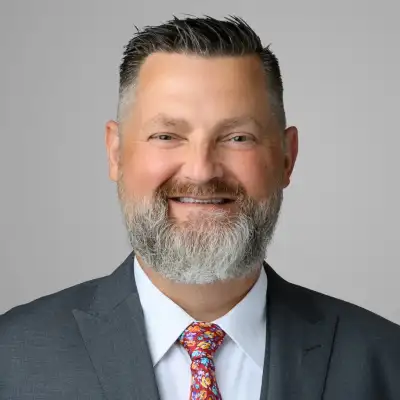
Between Two Doors is a unique exploration of the real estate world through the eyes of its most fascinating professionals. Hosted by Nate Carver, a seasoned mortgage expert, and proud veteran, this podcast dives deep into the personal journeys of realtors, offering listeners insider perspectives on the challenges, successes, and the little-known stories behind the sale signs.
From first-time buyers to seasoned investors, Between Two Doors provides valuable insights, tips, and tales that illuminate the real estate industry in a whole new light. Sponsored by Success Mortgage Partners, we're here to inspire, educate, and empower our listeners with stories of perseverance, innovation, and success.
Join Nate as he bridges the gap between real estate professionals and enthusiasts, exploring what it takes to thrive in this dynamic industry. Whether you're seeking advice, inspiration, or just a good story, "Between Two Doors" has a place for you.
What if your next investment?
wasn't in residential real estate,
but something a little bit more exotic.
Hello everyone.
I'm Nate Carver,
your favorite mortgage lender.
Today we're talking about
commercial real estate investing.
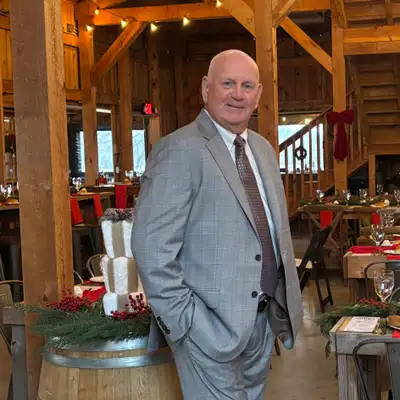
My guest today is Bruce Norwood,
who is a commercial real estate
expert in Texas.
Hey, I'm Nate Carver and welcome
to Between Two Doors.
Hey, Bruce.
Good morning. Nate. How are you doing?
I'm doing fantastic.
It's, hot.
It's. It's hot.
Yeah.
It's, we're on the tail end of it,
though, so maybe a couple more weeks.
We'll get into fall. Fall weather,
hopefully.
How are things on your side?
Good, good.
You know, it's, everybody's
waiting for interest rates to change,
so it's kind of been hit and miss,
but it's been, picking up lately
a lot more interest. So. Yeah. It's good.
Yeah.
It's, those rates, they,
they're going to do what they do,
and no one has any control over it.
Yes.
I always say get, get,
get your hands on the property.
We can always refi.
Hey.
Tell me.
So you started
in the commercial real estate space about,
in 2019, is that right?
That's correct. Yes, yes.
Can you tell me a little bit
about your journey to that
and then, then we'll jump down, jump
into the commercial questions?
Sure. Sure.
I was raised in Houston.
Graduated Houston area.
Went to Arizona State,
got a degree in psychology.
Came back to Houston.
Wasn't sure what I wanted to do
with a psychology degree,
and worked for Randall's
Supermarkets, Rice Food Markets,
and then left them
and went to work for Nabisco.
And, in there I did sales,
merchandising and, account management.
And I went to work for Coca-Cola
for years.
I don't think I mentioned that to you
before.
Spent a lot of years with Coca-Cola,
and I did a sales management
account management there.
Spent my last five years
before the real estate, with a food
franchising company, and, traveled
all over the western part of the country.
I was a western regional manager, and,
that's where I got the passion
for commercial real estate.
I realized
and I met a lot of commercial brokers
across the country
on the location and space
and what all these things meant
and how it worked.
And, just remember, my real love
for commercial real estate came in
nice.
And to
date, you've done a little over $220
million in commercial real estate
transactions.
Yes. Wow.
What was the very first one?
Very first one was, just under two acre
lot in Anna, Texas.
My client still owns it.
And, so he hasn't done anything with it.
It's still undeveloped.
But that was my first,
and I learned a lot.
I learned the,
I think in real estate the first year,
you kind of learn what you don't know,
and sometimes you don't even know
the questions to ask the first year.
So I learned a lot through that process.
And, I feel I've gotten better, not just
from myself, but mainly from my clients.
Wow. So.
Okay, so commercial real estate 101.
Let's imagine, listening to this
podcast, and I own a couple rental houses.
I've heard
people talk about commercial real estate,
but I really don't understand it.
What's the biggest difference
between investing in residential
and commercial real estate?
Well, residential.
If you're talking just residential,
someone owning a home, it's
there's a lot of emotion.
I always use the example.
The woman loves the loves the kitchen,
the man loves the man cave or whatever
commercial is all
about the dollars and cents.
How much profit money can it make you,
whether the investor
or the end user, it's still about,
if you put a business in there,
how much is it going to cost your business
to have that building?
So there's just a lot of variables.
The biggest thing is it's it's income
producing.
Okay.
What kind of
what kind of properties are you,
are you talking about
in the commercial space?
Okay, so I do land.
I do a tenant representation
for office buildings, retail space.
I've done some, leasing, representation
for, tenants and landlords,
and then I'm, I'm purchasing
some buildings for some clients also.
And most of those buildings are office
retail.
Office retail is there.
I don't know.
Is there like, ideal
sweet spot in the commercial space?
Or is it
come down to the
the borrower, portfolio?
So let's go back to your first question
you asked about somebody
diving into commercial.
I, I think it's easier for retail because
the numbers are easily
is a little more easily explainable.
Yeah.
What kind of profitability?
What your cap rate is.
What all the what all those things are
what your operating income,
net operating income will be?
I think those are easier to explain
in retail. So.
Okay.
On the property type,
is there one that you found
that seems to be easier to,
get to closing?
Is there I know,
well, I don't know.
I, I'm just thinking, like,
you know, Elon Musk is about to build
the world's largest building in the world
here in Texas.
I can't imagine what that looks like.
But then down the street, there's,
you know, strip mall,
maybe four storefronts being built.
And then anything in between, right?
Yes. Yes, yes.
Okay.
I think the, Well, obviously with Elon
Musk, he's got the financials.
Not too bad not to worry about it.
That's his consideration.
I wonder if he's taking a loan.
Yeah, exactly.
Exactly.
You know, the retail space is my niche.
I like that a lot because I like helping
mom and pops get started.
And that's a term rather than national,
you know, national chains like Chick-Fil-A
or Chili's or whatever it may be.
I like seeing the mom and pops
dreams come true.
And that's kind of my.
Yeah, I really like that.
I love doing that,
helping people out to get that done.
Okay.
Any misconceptions,
commercial
that you run into consistently?
Like.
I think people well, I
think the biggest thing they think
is going to close like a house in 60 days.
Okay.
Going to close like a residential in 60
days.
That's just not true.
There's more details, more things
you need to look at.
Once again, going back to the finances
where we want to go through the previous
finances.
Yeah. Building.
And then on the personal side, they've
got to get their finances in a row, too.
I know you'll appreciate this. Yes.
They've got to get their Texas,
tax numbers in order.
They've got to get their, a business
plan, all those things put together
and, and, and then search
for the property they're looking for. So.
Yeah, I'm, I'm working on one right now.
It's, in month six.
But, you know, on on on the
the plan, if you will, I the ROI on
it is phenomenal.
And, you know, I always like to think
in terms of mailbox money as an owner.
That's it's fantastic.
So they keep working through the
things that they need to do.
A lot of it has to do with the builders,
not necessarily the lender.
We've got.
I've got my packet put together,
so we're just getting all the,
the physical things done.
So or set up. So.
Yeah. Okay.
Finding the right investment.
Do you have do
people come to you and say, hey,
I want to get in the commercial space,
but I don't have a clue
what the what kind of commercial space?
Or do they already generally
have that in mind when they come to you?
They generally have that in mind.
You know, some will come and go.
I, I'm just looking for land.
Well, that's that's easy, but, it's it
there's easy parts of it,
and then there's hard parts of you get to
determine what the land can be used for.
If it's zoned for anything.
Are there any easements?
Are there anything all those things that
go into play or is there any floodplain?
And if you're going to build something,
how's that look?
What's that?
What's that sound like? Okay.
Building wise, you know, most
people have an idea what they want to do.
I kind of tell people,
have they been in business for a year
and the years
they've been leasing for 5 or 7 years.
Look at their own building.
And if they could build a building
that had themselves and two other tenants
let the tenants help pay their mortgage.
Yeah. That's a win win.
The building equity and investment
in their business and, and the building.
Right.
Okay.
Do you,
Okay.
So so if I had, let's say so
I think about this, getting a
physical space instead of working from the
the mortgage bunker at the house here.
If I came to you and said, hey, Bruce,
I've got $200,000,
I would like to jump
into the commercial space.
I kind of have an idea.
What's the first thing
you're going to ask me?
Well, I'm going to ask you
how much more you have,
because I don't think
200,000 is going to get you very far.
Little building. No.
Yeah.
If you take, let's just use
Anna, Van Alstyne or Melissa.
If you take a home
and refurbish it to commercial,
you're probably going
to spend 500,000 on a home and maybe
a hundred, 200,000
more to get it up to commercial.
Okay.
So would it be a
if a, if a if someone came to
you like that I said that to you.
And is there a in your network,
do you have other investors
that you might be able to marry them up
with?
And maybe they do have a, a partnership
or is that in your wheelhouse
to, to make those introductions to.
Absolutely. That's okay.
The network, building the network,
even even a joint venture,
maybe with the landowner.
You know,
there's all sorts of options there.
So the landowner puts the land in
and you put in your amount,
and then, as it grows,
we both profit from that.
So that's what I like to hear.
That's what I was hoping to hear.
Because you get. I get an idea.
I know they'll have an idea, but maybe
individually they can or cannot do it.
Yeah.
But putting those together
and doing those things,
I did that on a on a
an apartment complex on Abilene, Texas.
It's very profitable.
There is no way I could have done that
all by myself.
Is that not possible for me?
But we went in with a group, and,
I got a K1.
Got a rental check for.
We held on to that for five years.
I got rents every month for five years.
It was fantastic.
And, it was all part of a partnership.
Now, I owned,
like, I ended up in owning 1%
of that property.
Yeah, but that was money
I didn't have to go work for every day.
Matter of fact, I never saw the property.
Never? Never saw.
I always told myself I'd go out there.
Never did.
I never did. The great news.
This the first of each month
it was in your mailbox.
That's right. That's.
You know, I didn't have to swing a hammer.
I didn't have to paint anything.
I didn't have to go rent that, hunt down
rent checks or anything.
It was fantastic.
So, Yeah.
Okay, so let's talk about some numbers.
What kind of numbers should an investor
understand before making an offer?
Well, I think, obviously
everybody talks about the cap rate first.
And that's basically your monthly,
you know,
I divided by the price of the,
the the price of the property.
That gives you a percentage.
You know, right now in, in Dallas area,
most of them are running five
and a half; you can find
Some are six and a half, 7%.
And then
the second one is obviously this, the,
this DSCR, debt service coverage ratio.
And, I'll just do an example.
Let's say your income, your net
income of a building, is $300,000 a year.
And your mortgage
payment is $200,000.
So you divide that
and you come up with a 1.3 DSCR.
Yeah. DSCR.
And you realize that
that's basically one year
and three months of payments
is all you've got.
So you'd like to be higher.
And if you're,
if you're doing a building, you're,
if I was, if I was telling you
that this is a building
I think you ought to look at,
I would be looking at the rent rolls.
I want to make sure
most of the tenants are
going to be done next year, or the year
after or three years away.
I'm going to go back
and kind of contradict what I said
earlier, kind of like what I said earlier,
but are there any national chains in there
that have a guarantee?
Mom and pops tend to fail.
More trying to say this cautiously,
but they fail because,
people don't plan ahead.
And people get stuck in the business.
They don't have time
to look ahead for the future.
So so we could do, we could do a whole
nother one on investing, on investing.
But, those are the things I would tell
people first of all.
Okay,
we'll come back and do one on investing.
We sure will.
Speaking of investing, investors
hear people
talk about the the cap rates all the time.
Can you explain what cap rate?
What?
That briefly explain cap rate.
I think the easiest way to to compare
it is if you've got stocks
or if you've got an annuity and you know
your annuity is going to pay 5% a year
just as a number, that's kind of
what the cap rate is on this building.
If your building is $2 million,
you could expect 5% of that.
At the end of the year.
That's kind of that's kind of the biggest
parallel, easiest way I can describe it.
Okay.
All right.
Any any red flags
you would immediately notice
when evaluating a commercial property?
Well, I think location is important.
I always use the example.
Once again, I live in Anna,
and I use the example of,
Anna is growing, one of the fastest-growing cities
in the country.
And, and sometimes people go, well,
why don't we have this?
Why don't we have that?
And I go, we have a lot, lot going on,
but there's no Walmart in Ozona, Texas.
Nothing against
Ozona, Texas, but
there's not enough population for that.
So you have to have rooftops
to make your business work.
Yeah.
So population matters then the location
in that population also matters.
Get your finances in order.
Those are probably top three.
They really are. Location.
And, have a good business plan.
And your finances.
Let's shift gears a little bit.
Maybe
that's probably the most important thing.
You've got to have tenants
that are going to pay their bills.
How important is that tenant
when you're determining the value
of commercial real estate?
Well, once again, if we're if I
if you were to ask me
to help you find a building,
a shopping center with 6 or 7 tenants,
we definitely want to know what the rent
rolls are, what they're paying, and,
and then
that's a good starting point.
Obviously,
you already told me you want to do retail.
And we found something
that fits in your range.
And then we want to look at the rent rolls,
then we want to look at the building.
I don't see this very often.
But sometimes in residential,
people will pass on an inspection.
I think, in a commercial building,
it's even more important.
You may get an air conditioning
unit on the roof that's 12 years old.
Right. All those things come into play.
And I'd hate for you to have to,
invest back in an air conditioning unit
within 18 months of your first buying.
So there's a lot of pieces to it.
Yeah, that could be.
Especially in the commercial space.
That could be extremely expensive.
That's on an established building.
So we're going in, we go and pick up
a commercial property that's been there,
and it's got active tenants in it.
How about on a commercial property?
Say we want to build one.
Those, and let's
say it's six doors or six storefronts.
How do you
quantify what those do.
You have no idea what those tenants
are going to be.
Or do they have to line those tenants up
before they get this thing built?
Well, I think all mortgage
companies or banks would like to see
some letters of intent.
Yeah.
From a prospective tenant.
I think the first thing is
the buyer has to determine
what they want to build.
Do they want office space?
Do they want retail space?
Do they want industrial space?
And then from there,
you can determine that,
I work with developers
all the time that are developing land,
and they always come back and say, okay,
this is our price range for selling it.
They pretty much
have to put those numbers together
from their calculations and algorithms.
Okay.
When those tenants
that they held, they'll have leases
and terms on those leases.
Does that affect,
any valuation of the property?
When a major tenant leaves.
That on the property?
Yeah.
Well, it can, Here's what I guess.
It can, because obviously
you're losing a large portion.
Well, if it's a single tenant,
let's say it's let's say it's a dairy
Queen that's on this one property.
On a on a piece of property.
Tenant on that property,
you lose 100% of your income.
It definitely will affect.
Yeah, the.
Shopping center a 5 or 6,
and you lose one.
You still got 4 or 5 rents coming in.
So. Right.
Yeah. That's. That makes sense.
I know when I asked
that, I was like, well, that's
that's not a that's a no brainer.
But still to get it on the record.
It's like, okay,
I want to share my first story if I can.
My first,
commercial showing I did was in Southlake.
It was in an old Wendy's building,
and the,
agent for the landlord had said, hey,
don't worry, it's unlocked.
You the keys here and lock and go in.
I opened the door and the alarm goes off.
And it was my first, probably my first
month of commercial showing property.
And the alarm goes off
and I'm in Southlake, Texas,
so I knew the police would be there
pretty quickly.
So I walked outside with a business card
in one hand,
and the key to the building in the other.
And two police
cars come
screeching into the parking lot. Wow.
Yeah.
So minor details like alarms do matter.
Yeah. Wow.
All right. You said it.
Location, location and economics.
In residential real estate.
Everybody says
location, location, location.
Is that equally true?
Or probably even more true
in the commercial real estate?
I think it's more true for your business.
Has to have the eyes on it.
I know we have Google reviews
and all these things nowadays and all
and but your eyes,
you have to have eyes on it.
People have they drive by?
Oh, I didn't realize that was there.
That's a positive for you.
If you can get in your shopping center
that has a a large what they call anchors,
you know, whether it's a target or a H-e-b
or whatever, it is, a Kroger.
Those are all important
because those people are going to shop
and they're going to see your site,
your site, your sign every day.
Right.
The on those anchor stores,
is it typically big box anchor stores
or it's just locally famous
or well known in, establishments?
What would qualify that?
I, I just think, well, there
there's a large anchors like a Walmart.
Sure. Like that Costco, potentially.
You know, and then the smaller anchors
would be the Kroger's and even an H-e-b
would, even though that's over 100,000ft²,
to still be considered a local anchor.
But those are all, once again,
positive drivers.
You know, you're going to have traffic
in front of your doors.
Right.
So maybe no other way to ask this.
There's a little strip mall over there
just north of Anna.
I can recall
right off the top of my head, there is a
convenience store, a,
nail salon and a gym.
I think there's a fort.
So maybe the fort is in the anchor,
but it's fair to say probably even in the
a setting like that,
that one of those establishments
is the anchor
for that commercial real estate property.
Was that right?
I think, though,
I know the one you're talking to
in the fourth place is a donut shop.
There you go. South again.
Don't ask how I know that, but,
I don't think
there's really an anchor there.
I think that the building that was built
in, And you look at the space,
I think the convenience store
is probably the smallest.
The largest operator.
Yeah, maybe the gym.
But it's just kind of a space.
It really doesn't have an anchor. It's
just kind of there.
Okay.
So that is the neighborhood around it on
both sides of, highway five.
Yeah.
And there's a lot coming up around that,
too. So.
Yes, a. Lot, a whole lot.
Goodness.
I see it every day.
What, what makes
a great commercial location?
I think once again,
we spoke about traffic.
Yeah.
The the vehicle count.
You can pull those from text anywhere
in the country and anywhere in the state.
The second thing is the rooftops.
How many potential buyers do
you have there?
And it may not always be single
family residents.
It may be apartments if you've got to,
if you've got 300 door apartment
complex going in, five blocks away,
and you're
a retail space looking for getting people,
getting people in the doors.
I mean, those people are going to drive by
you every day, going to and
and on weekends
they'll stop in and see what's going on.
So it's.
Okay.
Are you doing,
like economic or, demographic studies,
for the, for the potential investor,
to try to help navigate that
or whatever it is
they're looking to build?
Yes, I do that.
If they're looking to come in to an area
to build, I always do that. Yes.
I pulled up the city's data,
the demographics, the, median income,
all those things matter.
Yeah,
I guess that,
if someone said they wanted to come in
and build a steakhouse
and there was already five
steak houses in the population's 10,000,
I imagine that would not be a great,
great.
I guess the economics on
that wouldn't look real good.
It's, You know, part of me says.
Yes, but a part of me always says,
if you see a CVS, you will see a Walgreens
across the street. So.
There you go.
And then a lot of restaurant
owners will tell you
1 or 2 of the restaurants is not bad.
That means they're coming there to eat and
they may pass them up and stop at jaws.
But I think of steak houses in one place
would probably be a living issue.
So yeah,
that's why I say on the lending side
of all of this and near the commercial, I
people, people start
asking me as a lender, they say, well,
tell me what you think about XYZ property,
I'm like, "Nope. Go talk to Bruce."
And that is, you know,
I'll stay in my lane on that
and I can do the numbers,
I can do the numbers greatly.
And, but but I, I go off on
I get off the reservation
and start talking about interjecting
my opinion like that.
So fair enough. Yeah.
Let's how important I'm telling you,
I did it myself.
Okay.
How important are things like population
growth that you mentioned, traffic count,
employment growth, and,
I guess household incomes
in an area,
those all kind of play into that as well.
Absolutely, absolutely.
It's I mean, look,
let's just I'm working with a client now
that wants to do a large med spa,
and she's trying to decide
where to do this.
And she's looked at prosper, she looks at
Frisco. She's looked at Melissa, Anna.
And when you look at the incomes
in Prosper, Frisco,
they're definitely higher than.
And so we're targeting that area.
So all these things come into play.
And you know, like you said earlier,
one of the main points were location
and getting your finances in order
and finding the right space
and asking all the right questions
for the from the tenant.
But then at some point,
you got to do your homework and,
realize you're working every, every,
you know,
every, deal we get done
is done for the for the client. So
what areas, what areas of Texas,
do you think investors
should be looking at?
Good question.
You're trying to get me to do the crystal
ball live or to be in five years,
I know.
Right?
You know, up and down
75 corridor between,
between 121 break off and,
75 and the Red River.
I think going out, 121
toward Bonham, Paris,
those are all going to be growing areas.
I mean, as we said,
the way the population is growing in Texas
will eventually get to the Red River,
and they're going to decide
if they want to go across into Oklahoma.
They're going to it's
going to sprout east and west.
So, I think those are good ideas.
You know, for example, Bonham area,
before
Bois d'Arc was built, you could buy the land
for 10,000, 12,000 an acre.
Right now
you find it for 25 to 35 an acre. So.
Yeah, I've seen on the
residential side lots of,
buyers going up 121 up towards Bonham,
and into Bonham and surrounding areas
because they,
they can get,
more square footage for the same dollar
and, on the residential side.
And then, you know, as you said,
more, more rooftops.
That's going to drive,
more need for commercial restaurants
and what have you and all of that.
And so I see a lot of that up
the 121 corridor,
residential side Collin County,
Grayson County, still the number one,
number two in the definitely in the state
and I believe in the country.
I mean, it is a magnet here.
In economic and residential growth.
And certainly Highway 75,
Preston Road corridors, that corridor
all the way up to Lake Texoma, Red River
and spilling into Oklahoma, with Choctaw,
being right there.
And and then the other Windstar,
you can see the two casinos,
all that area.
I'm sorry.
I jokingly had had a lady ask me,
where can I find an acre for $20,000?
And I said, you start at Choctaw and go
north.
Yeah. You're right.
I had a buddy that bought
a whole bunch of land up in Oklahoma.
And it's north.
It's north of Choctaw
Way, north of Choctaw.
But it is it is beautiful, right?
That's right.
He couldn't have done that in Frisco.
All right.
Financial.
Let's let's look,
financing commercial real estate.
Let's talk about that.
Let's let's talk about something
near and dear to me that's financing part.
At what point should an investor
start talking to their lender?
I think, the first
conversation that I had with me
would be what they're looking for.
What type of land building. Yeah.
Next conversation has to be the finances
in the financials.
Yeah.
Getting those to a lender so the lender
can take a look at what they can do.
I always, I always ask people
to do that early
because, we do have a feasibility due
diligence in commercial,
which you don't have in residential.
But that takes a time anyway,
to get some things done.
And if you have to go get rezone
or whatever it may be,
or just the, the general process,
and you don't want to start asking
for too many extensions
because then this whole it's going this,
this guy serious
or can you really get this done?
So getting that financial piece done
early is beneficial,
for your set for your buyer
and the potential seller.
So yeah, man to get it done early.
Yeah.
Same scenario
in, in the residential space.
In both.
I like to
be able to present back to the
that investor
and the real
their commercial real estate agent,
a real plan, on the finances
so that y'all can.
It's a whole lot easier to find something
that fits the plan that it is to try to
you get hooked on a
physical property and then then trying
to marry something to that
that doesn't quite work.
I always use the example of my youngest
daughter, which is looking for a car.
She came across this red neon
that gives you an idea how old I am.
But, she loves this car.
And, we went, looked at it, and she.
We drove it, and she.
Oh, this is the car I want.
I said it's not,
it's it's not a good value.
But anyway, it's too expensive.
So I'm telling her
the hardest thing to do is walk away.
And so we walked away.
And of course she didn't.
She wasn't happy with that. But,
there are some there are some commercial,
even land deals that aren't positive
and you have to walk away from them.
In most cases, if you got your ducks
in a row and you know what you want, and
there's, there's,
there's plenty of opportunities out there.
So yeah.
But once again.
Are you seeing a go ahead?
I was going to say
there are opportunities out there.
You just have to do your research and
make sure you've got all the information
right.
What kind of problems are you seeing
if the investor waits too long
to get their financing put together?
Well, they're going to delay the closing.
They're going to get,
they're going to have to ask
for an extension,
different things like that.
I mean, there's other reasons
for extensions of the feasibility,
due diligence.
But finances is one
that we try to get settled early.
I mean, your example earlier,
let's let's say you asked me, said, hey,
I want to find a $10 million building.
And my question is, what's your budget?
Can you afford a $10 million building?
And then do you have the
financial capability
to make it happen? So.
Anything that
they should have prepared
before they come see you.
I'd love for them
to have a, full financial statement.
Two years worth of taxes pulled
if they've got a business, two years
of business of panels
and financials and taxes for that, too.
Yeah.
And if you're like I said,
I love working with Mom and Pops.
I'd also like to have see them
have a business plan put together.
Right.
They always say, man,
I've got this great idea,
I want to do this
and this is going to work.
And I said, well,
do you have a business plan?
And some of them go, oh, what?
Or they go, yeah, I've got to start a one.
I've got,
I've got three points in an outline.
Well, give me a business plan of why
it's going to succeed.
If I had to sell it to you, the lender,
why is it going to succeed?
Right. Is there are there resources?
Maybe the federal state level
for doing business plans?
I don't know.
I think there's some small business,
associations in the state
that can help with that.
Okay.
Yeah. GPT will give you a good,
That's true bullet point to start.
This is true.
I have people ask me how much.
How much office building
can I build on half an acre?
Well, I go to ChatGPT and start there,
and I'll go in Anna, Texas, for example.
I want to build an office,
but office condo in Anna, Texas.
How much can I build on half an acre?
And it'll spit out with the parking
and the setbacks
and everything,
you can build 5000 6000ft².
That's what it'll tell you.
So that's a great starting point.
That's great. Yeah.
I mean yeah, that's that's fantastic.
I might actually try that.
I run everything through chat.
I don't know a lot of
I didn't think about that,
but sure, that's,
that is an excellent starting point.
I know it'll give you a template
and it'll tell you where everything
you need to go on the hunt down and
and and bring back
and and to create that document.
I know my brother did
a commercial real estate project.
He had a binder. That was
it was big deal.
It was a big deal.
So this claim right now, I and ChatGPT
verify everything that you see 100%.
It drifts.
Their dreams or drifts.
I don't know, I'll have to read.
I'll publish something.
And I had to read it first, and,
because I'll put all my notes in there
and it gets
sometimes it gets real creative and like,
no, no, no, don't do this.
So yes. Yeah.
So that's that's true.
Verify your chat.
People can tell when you're using chat,
but at least at least
right for now
anyway that may change in the near future.
All right, let's, let's build a deal.
Let's do this.
My little scenario here.
Let's build a hypothetical investment.
I've got some money
available, decent credit, good income.
And I want to purchase
my first commercial property.
Walk me through the process.
From our first phone call until closing.
Oh, okay.
All right. Well. Yeah.
First phone call is, getting the details
of what they're looking for.
Okay.
I always ask them what their budget is.
Ask them what their timeline is.
Those are all going to matter.
And then I just say, are there
is there anything
because some mortgage lender
is going to be involved somewhere?
Yeah. Think that's going to pop up.
That's going to be a red flag
for the financials.
Yeah I say no, everything's good.
We're good to go.
I start searching for properties.
I try to get as much parameter as I can,
and then I start
sending them some, some listings
to look at, some properties to look at.
And, and I always tell them, look,
if you don't like it,
if you tell me why you don't like it,
that helps me do the next search.
So, if they
say, you know what, I want to make sure
it faces south, just as an example.
And I find myself with five properties
that are facing north or east.
I'm going there. They're going.
He's not listening.
So I try to listen to
what they're looking for.
They say these are my parameters.
And so I cinema
I try to set it two or 3 or 4 at a time,
don't want to overwhelm them and say,
look at these, that these look good.
We'll set up a time we mature or tell me
what's wrong with them.
And once again, those notes are just
as important as the first conversation,
because now that they see some buildings,
they go, I don't necessarily like that.
They can check that off their box, and
I can take it out of my search parameters.
But that's it.
We come across a building that makes sense
price wise.
They like it.
They like the location and everything.
And when before they we go tour it,
I'm going to pull the data for the city.
The income,
the house, the rooftops, around the
the vehicle count
all those things being prepared.
And then so we meet,
and this is how you want to buy it?
We put an offer, we do a letter of intent.
You know, normally in residential,
they just go right to a contract.
We do a letter of intent
and commercial and land,
mainly because we're,
there's just so many variables.
Yeah.
So somebody if you're interested,
the letter of intent is a starting point.
To write a letter
mean a purchase contract.
And so
we then we get to the contract stage.
Everybody agrees on the parameters,
the price, the down payment,
all those things,
the feasibility period, the due
diligence period.
We get everybody to sign that,
we get it to title company.
We tell the lender we've been dealing with
on the financials, we're ready
to move forward with this,
and then we start checking out
all the details
that were given by the seller.
Let's say
it's a lease building for the rent rolls.
Makes sense.
Is the cap rate confirmed
all these things that go into play.
We do that do.
And you do that during your due diligence.
So we can always walk away
if the numbers just don't seem right.
So I was like I'm sorry.
Go ahead.
One more thing.
So I've worked with
a few convenience stores and some stores.
They will send you a pal.
That's on an Excel spreadsheet
that you and I could do.
And so I'll say, well,
it says your store does $120,000 inside
sales a month, and most of those stores
will do 35 to 40% profit inside sales.
So you can calculate that.
And I said, so show me your controller
receipts for those sales.
Well sometimes they will get those to you.
And the controller's numbers will be
that they're doing 70,000 inside, not 120.
So all these things can be double
verified.
You know.
I can introduce you to a great bookkeeper.
Well, okay, let's let's get to the fun
part for, creating wealth
through commercial real estate.
Okay.
Where do you think
commercial real estate fits
into someone's long term wealth building
strategy?
Well,
I'll just tell you.
Me personally,
I wish I had done commercial real estate
20 years ago instead of six years ago.
But the the investment strategy
and what's it look like?
I think
the old adage
there's never going to be more land.
They're not
they're not creating more land.
The price is going to go up, especially as
the populations will once again
will take Collin County, the fastest
growing in the country for how many years?
And the prices in Collin County
proved that and showed that.
And now it's starting to bleed
into Grayson County
and Cooke County,
going toward Gainesville
and then even out toward Bonham and Paris.
All those prices have gone up
because population
wants to get out of the downtowns.
They'd love to live in the suburbs.
Right? Right.
Whether it's ranch land
or just a two acres for their own home.
You know,
and then at the end of that, when you
when you go to sell commercial
or a large parcel of land,
make sure you're protecting yourself
in your, in your,
your next generation,
protecting their wealth also.
So all those things go into play
to build your wealth.
So, are investors in the commercial space,
are they looking at cash flow
appreciation
tax strategies, diversification
or some combination
that I mean, as part of their strategy?
Or are you seeing one
of those that's above others?
I think if it's
if it's a retail business,
they're looking for cash flow.
They want to see that.
They want to see the net operating income,
once again, for that mailbox money.
I think they're all looking
for diversification also.
And, obviously,
I've actually had a tax attorney
tell me that the
the IRS was written
for those that want to take a chance.
Yeah.
So do you see some,
advantages between owning the building
or leasing the building,
like, if you,
Yeah, that is it.
Let's say I'm a business owner
and I'm on it.
Am I better off leasing or owning?
Well,
I think I think you're better owning.
Just like it's better to own your house
than to lease.
For long term rent for long term? Yeah.
You're building equity. You're.
You're paying someone's mortgage.
That's right, that's right.
I mean, if you're leasing,
let's just say an office space or let's
say a retail space, you're
if you're spending $7,000 a month,
to a landlord,
and if you could build it or already buy
a building or whatever, that works,
and you're paying $7,000,
that's $7,000 equity to your
building. It's a lot more valuable
than paying
the landlord's equity.
Okay.
All right. Million dollar question.
If I had $1 million and I said, Bruce,
I got $1 million,
what do I need to do with it?
I'd say, call me first
and then we will find you the right
opportunity.
Okay.
Fair enough.
And you're in a fantastic location.
So do you.
You focus mainly in North Texas
or are you all over the state?
I mainly focus North Texas,
but I'm all over the state.
I've closed, some sales in San Antonio
and, down in the Valley.
Yeah, the Rockport area.
I tell everybody jokingly, I'd like to
stay north of 380, but that's not true.
Yeah, just for the traffic.
Is there is there a property type
that is like it's
your number one, like,
oh my gosh, this is what this area needs.
I would love to be this
in this transaction to make this happen.
Yeah I love the retail space,
shopping space, shopping centers and even,
even if there were 4 or 5 units,
shopping space.
I love that.
I love once again,
those are more apt to take a chance
on the mom and pops,
which I talked about earlier.
One of my favorites to deal with
are people who have a dream.
So yeah, that's probably my favorite.
I mean, I enjoy land,
I absolutely love that.
That's fun.
Touring land and walking through land
and things like that.
But my number one is retail space.
Oh, excellent.
Okay.
I'm, we're about to run out of time,
so I'm gonna throw you some rapid fire
questions.
Okay? Just kind of A/B. You pick one.
No wrong answer.
So, cap rate or appreciation?
Cap rate.
Okay.
Industrial or retail?
Retail.
Retail. Yeah.
Single-tenant or multi-tenant?
Multi-tenant.
And the reason being
you've got more chances to have income.
Yeah.
Urban or suburban?
Suburban.
Yeah. We want those.
You want those rooftops?
You want that traffic with that location?
Yeah.
Cash flow or an upside potential?
Ooh, that's a tough one because it depends
on where you are in your finances.
But, probably for most people,
I deal with cash flow.
Yeah.
You can always not spend it.
That's right.
That's exactly right.
First year when I did it.
Oh, so much for rapid fire.
First year when I did that apartment
complex, every check I just put,
I put in an investment
and, made it go work for more,
more little green soldiers.
Texas
commercial real estate in five years.
Bullish or bearish?
Bullish? Yeah.
Unless the legislature does something
foolish and starts an income
tax or, crazy things like that
and continue to be business friendly.
I think the state of Texas
is the place to be.
It is.
Yeah, it is.
I'm I 100% agree with you. Bullish.
And as long as they don't
do something stupid down in Austin.
So, All right.
And finally, if someone's listening
and they've got some questions
about investing,
they're interested in investing
and picking up commercial real estate.
What are the best ways
to get a hold of you?
The best way to get ahold of me
is my phone, which is always on.
Also,
my company website is caprockrea.com.
Let me get my phone number.
I'm not opposed to that.
Yeah, well, I'm going to.
I'll. I'll
put all your links, contact information,
wherever y'all are consuming this.
Those those, Bruce's contacts
will be right there with you.
So you're.
Well, phone's easiest way to catch me.
(214) 546-6736.
All right.
All right, Bruce. We're out of time.
Thank you.
I really appreciate you jumping in
and doing the commercial, conversation
with me.
As a lender, I've got a full suite
of lending opportunities
to answer
just about any type of loan that would be
needed in the commercial space.
And certainly I would reach out to Bruce,
about acquiring, a commercial property
in, in North Texas.
Fantastic.
I really appreciate
you being on the Between Two Doors podcast today.
Thank you.
Look forward to doing more deals with you.
Thank you. Yes, sir.
Thank you for this. Okay. Bye. Bye bye.