Subscribe
Share
Share
Embed
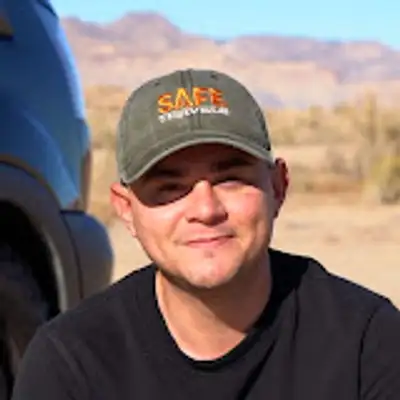
Safe Travels explores National Parks and wild places through in-depth conversations with the people who know them best - park rangers, scientists, biologists, geologists, archaeologists, and conservationists.
Each episode goes beyond travel tips to uncover the science, history, wildlife, and conservation stories that bring these landscapes to life.
Hosted by Joey Liberatore, Safe Travels: A Nature Podcast turns expert insight into engaging, accessible conversations - helping listeners experience public lands with deeper understanding and appreciation.
Hi, everyone. Thanks for checking out the Safe Travels Podcast. My name is Joey. Today, we are at Black Canyon of the Gunnison National Park, and I sat down with the chief of interpretation, Laurie Rome. Laurie and I chatted all about the geology of this incredible canyon, park history, ways visitors recreate, and a whole lot more.
Speaker 1:Lori, I'm so excited to talk to you. You have a great big personality and you are the chief of interpretation at this beautiful park. So thanks for sitting down and joining me.
Speaker 2:Well, thank you for inviting me out I appreciate that.
Speaker 1:You've been at this park for a long time but what has your journey been like with the National Park Service?
Speaker 2:Oh gosh. How far back? Do you want me to go? As
Speaker 1:far back as you can.
Speaker 2:Because I I guess I would say it began as a little kid. My parents were teachers and I grew up with my parents bringing home stuffed animals that they would bring into the classroom. So when I was a little kid, we always had some dead animal, stuffed, and I was learning about them since I was little. And as teachers, we would drive around The US in the summertime and go to national parks. So I started, when I was five, six, seven, going to national parks.
Speaker 2:Fast forward to college, I got a degree in geography and geology, and I fell in love with a class on geology of national parks. And I had one of those epiphanies in life where I had been working in water wastewater engineering for a couple of years and, left it all behind. And I got a job at Mount Rainier National Park in Washington State, pretty much where I grew up. And I will never forget the first day of training, because the chief of interpretation, Maria Gillette, came in, and she sat down on the edge of the desk and she started playing Jerry Jeff Walker's Night Rider's Lament. And if you don't know the song, listen to it.
Speaker 2:It's basically about why do you ride for low money and pay? So this ranch hand out on the fields. And the point is, it's about people who wanted to go work in places and not be in office spaces and go work in the environment. And I was hooked. I never went back, and that was twenty eight years ago.
Speaker 2:I have worked I've been very lucky. I have worked in Alaska to Florida. Big charismatic mega parks like Denali, Yosemite. I spent ten years at Grand Canyon. It's a very special place to me.
Speaker 2:Spent almost ten years at Capitol Reef, also special. Did little tours at Zion and Rocky Mountain, Everglades. I even got lent out to France to go work for American Battle Monuments Commission doing the same kind of thing. I work in the world of, interpretation or helping people understand the resource around them. So that's been my journey.
Speaker 1:Do you think your parents being teachers is what drew you to the interpretation side even though you studied geology? Do you feel like you you're a teacher at heart?
Speaker 2:Oh, absolutely. Geography especially, I love geography and I love geology, but it's thinking about the world and how humans interact within it. My parents being teachers, I think set that stage early that understand the world around you and how we fit in it from the earth to our history, the species we share the planet with. I think it got me jazzed at a very early age and I'm grateful for them for that.
Speaker 1:What a place you grew up in too. The, I feel like Washington State's one of the Mecca for outdoor recreationalists and national parks. But it's a bit more gray than it is here today
Speaker 2:Yes.
Speaker 1:In Washington State. Did you have a favorite park to recreate in growing up in Washington State? Was it Mount Rainier? It's kinda hard to compete when you have Olympic and North Cascades.
Speaker 2:That is true. I've mostly spent I spent four years at Mount Rainier, so it holds a very special place in my heart. I've done the Wonderland Trail in pieces, not all at one time. I absolutely adore it. Staring at the glaciers, walking around in the dark, dusky, rainy, you know, cloudy forest makes me very happy.
Speaker 1:You mentioned that part of why you like geography and geology is how humans interact with landscapes. It's interesting you say that considering where we're at now because Black Canyon Of The Gunnison is a hard landscape for humans to interact with. Yes. So what is the high overview, the broad overview of what this beautiful national park is all about?
Speaker 2:Oh gosh. If people were to ask me, you know, what is Black Canyon and what's this what's the deal? Why is it a national park? First and foremost, it's a geologic park, and I love geology. So this one is a crown jewel, and it's a small crown jewel.
Speaker 2:I find this park both very small and intimate, but really big and immense in its story. It is kinda shocking. It's surprising when you first see it. It is steep, it's deep, and it's narrow. It's at places 40 feet wide at the bottom, it can be a thousand feet wide at the top.
Speaker 2:It is 2,000 feet deep at its deepest. It's about 2,800 feet deep. This canyon in the national park, it's about 15 miles long, but in total, it's about 50 miles long. And for comparison, Grand Canyon's like 277 miles long. So it's much smaller.
Speaker 2:It's intimate, but the the steepness, the deepness is very different than other canyons. It's a a dark and brooding kind of canyon. There's pink streaks of rock and the black rock. And then on top of that, we've got some sedimentary layers, and then it's covered in forests. We've got pinyon juniper.
Speaker 2:We've got the gamble oak. And then we have those neat niche forests on the north facing slopes that will support trees I'm used to in the Northwest, like Douglas fir that like cool, you know, places where water might collect, and that would be on those north facing. So it's got kind of everything you want in a national park, a great geologic story, lots of great ecology. So all these forests that support animals from predator and prey, we've kind of got them all. You can see the big megafauna like elk and bighorn sheep, Rocky Mountain bighorn, deer.
Speaker 2:We just saw a squirrel walk wander by right now. We have big charismatic predators like mountain lions. That's one of my favorite species. Coyotes, bobcats, foxes, peregrine falcons, bats, insects, lizards. So it's very much a natural history park, but it it's the canyon, and that's why it was set aside first in 1933 as a monument, and then later established by congress as a national park in '99.
Speaker 2:It has everything, just all compact.
Speaker 1:And how does that biodiversity change as you kinda go up in elevation up to the rim? Is there a lot of life at the bottom of the canyon and does that life kind of increase and, you know, multiply as you get higher up in the canyon?
Speaker 2:Interesting question. It is hard for you and I to get to the bottom of Black Canyon. It is hard for any species to get to the bottom of the Black Canyon. So this has been a bit of a barrier, for a lot of species, especially, you know, homo sapiens people, for a very long time. We do have life living in the riparian zone at the bottom, and only at the bottom like beaver and otter, things like that, American dippers, and then trees that you would expect like box elder and cottonwood.
Speaker 2:You lose those as you leave the riparian zone. The steep cliffs don't necessarily have lots of critters living on them. As you can imagine, birds might enjoy that. This is a great place for birding, in that if you're a peregrine falcon and you look out at the steep walls, this is a great place for you because very other few predators can get to you. If you can fly to the edge of those canyon walls, you can make yourself a fairly safe home.
Speaker 2:So we do have seasonal closures for, peregrine falcons every year.
Speaker 1:That's awesome. Yeah. The name of Black Canyon Of The Gunnison is interesting. There's some misconception about why it's Black Canyon. Why what is the the black in Black Canyon?
Speaker 2:What is the black in the Black Canyon? I'm glad you asked. I brought some rocks because you can see it in the rocks. You know, this is one of our igneous pegmatite rocks. Here is one of our gneiss, not n I c e, gneiss, the g n e I s s, nice, metamorphic.
Speaker 2:And then this is our schist. Be careful saying that word. This is also metamorphic, and you can tell the color of these. Like, well, they're actually kinda colorful. You've got pink and white.
Speaker 2:There's orange. There's black. There's purple. But what really stands out is that shiny black rock, and the whole 2,000, 3,000 foot depth of Black Canyon is primarily made out of these. So it does appear to have a black, you know, tone or color to it, but now combine that with most of the canyon is in shadow most of the time.
Speaker 2:Because it's so steep and deep and narrow, there are places in the canyon that rarely see sunlight. So they look black. The rock is dark, there's no sunlight penetrating, so it gives it that Black Canyon look.
Speaker 1:I've seen some debates online of that the Black Canyon is the Black Rock, but then the Black Canyon is also because there's only certain areas that get thirty three minutes of sunlight. You're saying it's both.
Speaker 2:It's both. You can be both.
Speaker 1:I love that. What are ways that folks recreate, commonly recreate in this park you mentioned? It's very steep which obviously poses some dangers. So how do folks typically recreate in this area?
Speaker 2:There's a lot of ways to enjoy Black Canyon. Lots of ways to recreate. Something for everybody is here like all national parks. Something as simple as spending the day at Black Canyon South Rim, you can drive the Scenic Drive. It's about eight miles total, from the entrance booth.
Speaker 2:There are about 12 viewpoints, And they're all measured in yards, quite funny. I don't know if you noticed that. 300 yards, 1,000 yards. You're gonna have to do a little math to figure out if you want a conversion. But these viewpoints will take you to different angles.
Speaker 2:You can hear the river interesting almost every single viewpoint. You can make a day out of the viewpoints. On the South Rim, there's a handful of hikes with traditional trails that are maintained by park staff. Some of the most popular include the Werner Point Trail. Werner Point's about a mile and a half round trip.
Speaker 2:It is interesting. It's uphill both ways. Prepare yourself. And remember, we're at high elevation, and so you will be breathing hard as you do this trail. If you want something a little harder, you could do oak flat.
Speaker 2:It is anything but flat, which is kind of funny. But you do get to a flat spot where there's aspens, and you do hike a little bit into the canyon. So you can camp here. You can stargaze. You can birdwatch.
Speaker 2:You can picnic. You can go to Ranger programs. You can learn about nature at the visitor center. There's a lot of things to do. And if you happen to be really hardcore, adventurer, a handful of people do.
Speaker 2:Try and attempt to hike to the bottom of the Black Canyon. But only about 1% of all of our 350,000 visitors do that. It is not easy. It is incredibly difficult. It's hiking down scree slopes and having to figure out how to climb back up.
Speaker 2:It's hard to navigate.
Speaker 1:And you mentioned hiking. The trail is more of a scramble down and a scramble up. Off camera, you and I were talking about since it's more of a scramble, there's it's not a designated marked area. So you really have to know where you're going. What are the dangers in scrambling back up and maybe going up the wrong side of the canyon?
Speaker 1:What situation do you find yourself in if that happens?
Speaker 2:Which I hope you don't find yourself in, if you decide to go do this. Unfortunately, well, let me start with fortunately, many people prepare. Many people have done their research. They know their fitness level. They they've read through the literature and the maps, and they've looked at the routes, and they have a good sense of their physical ability and their mental ability because it's both.
Speaker 2:I told you the Werner Point Trail is a mile and a half round trip. Oak Flat's two miles round trip. Well, down to the bottom and back, that's only two miles round trip, but it's 2,000 feet. So some of these short trails are just a couple hours. This is more like four, five to six or eight hours, and I don't know if people are ready for that.
Speaker 2:They think, oh, it's just two miles. I can do that real quick. And it turns out to be a five to eight hour adventure, let's say adventure loosely. The problem a lot of people find themselves in is getting lost. Because you're absolutely right.
Speaker 2:These are scree slopes or cliff faces that you're using hands and feet to climb and get up or down. Most people wear gloves to do this. They wear long pants, long shirts, because you're really getting, you know, tossed around a little bit. The way down seems to be a little more intuitive, but the way up is not. There's no markings.
Speaker 2:There's no trail. You are on your own looking up at a 2,000 foot wall going, which way did I come down? And unfortunately, a handful of people every year do not plan well, and they go up the wrong route. They cliff out. They have to turn around.
Speaker 2:They come back. They have to scramble and keep trying to get up. A lot most folks can self rescue, which is very important. Folks have to be able to self rescue. And they make it up, but it's not an easy thing to do.
Speaker 2:We have an occasional broken leg, which might mean they would need assistance from park staff. But if you're if you're gonna go down into the inner canyon, make sure you are trained and ready and you've made good, precautions as you've made your way down the route to pay attention along the way so you can get yourself back out.
Speaker 1:I've seen folks take photos as they're going down to
Speaker 2:Perfect.
Speaker 1:Make sure that Yep. They go out the right route.
Speaker 2:Yep.
Speaker 1:And for those folks who think that, you know, down hiking is easy, it's taste takes less energy, this is a technical scramble down. So it does exert a lot of your energy. Do people that go down to the bottom of the canyon, do they typically stay a night or two? And do you need a permit to go below the rim here?
Speaker 2:Oh, I'm glad you asked that. You do need a permit. This park is about 30,000 acres. Half of it is designated wilderness, which is really special. Places where we leave them untrammeled for future generations, and you need a permit for any wilderness use, overnight or day trips.
Speaker 2:So all of them have been moved online right now, or most all of them, not quite. Our website has all the information. You can get a permit through recreation.gov, like, a lot of other places use. You wanna get that in advance because they do fill up. We filled up for Memorial Day weekend.
Speaker 2:In the wintertime, we don't use recreation.gov right now, at least in in this current year that we're in. So if you're using the Inner Canyon Wilderness from May to October, you need a permit through recreation.gov. If you're gonna use it November through April, you get your permit still in person at the visitor center. Very few people hike this in the wintertime. It is incredibly hard in the summer.
Speaker 2:It's even harder in the winter as you could imagine with ice now down these scree slopes and cliff faces. And in terms of staying the night, no. Most do not stay the night. Hiking with a backpack, you know, carrying twenty, thirty pounds down a scree slope isn't most people's idea of fun. So most people are doing these hikes as a day trip, like four to eight hours.
Speaker 2:We do have a following of anglers who come down here specifically to fish in what's been designated as gold metal waters. They're fishing for non native species. These are trout stocked by Colorado Parks and Wildlife, and I I don't think they're they want me to tell you how big the fish get. I have been told, don't mention how big they get. So they will stay the night.
Speaker 1:You worked at Grand Canyon for a decade and you worked at the bottom of the Grand Canyon for four years. Yeah. So you would know the difference between hiking in and out of the Grand Canyon versus hiking in and out of Black Canyon. You told me off camera that you would do the hike in and out of the Grand Canyon regularly but you wouldn't do this one.
Speaker 2:Nope. How
Speaker 1:much more energy do you exert on a a trail like this when you're scrambling versus, you know, a designated trail in the in the Grand Canyon?
Speaker 2:Well, it's a different kind of experience. And you might like both of them. But hiking in the Grand Canyon is epic and it's huge. And most people hike on some of the main trails at Grand Canyon, typically like the corridor trails, the Bride Angel Trail, the South Kaibab, the North Kaibab. Those are very well maintained.
Speaker 2:There's water sources on them. Heck, mules hike down those trails. They're nice and wide. There's a great platform to be walking on. So they're they're not easy.
Speaker 2:They're long. They're hard. It is super hot there, and that's another difference that, is pretty serious to consider. But if you plan it right and you're ready for the heat and you've got the time, yeah, you've got a trail to be walking on. And you could be looking around and not worried you're gonna tumble head over heels and travel a few 100 miles downslope, because that's what will happen at Black Canyon.
Speaker 2:Black Canyon is not Grand Canyon. It may not be a 10 mile trail like the Bright Angel at Grand Canyon from Rim to River. It's not dropping a 5,000 feet. It's only dropping 2,000 feet, but it's straight down, and there's no ladder. So it's just a scree slope and a few cliff faces and a few rocks to kinda navigate around.
Speaker 2:So you're you have to be actively engaged almost the entire time, watching where you're putting every single hand, every footstep. What are you you know, is your pack balanced? Is it off balance? Because you could fall over. You can tumble down the slope.
Speaker 2:So it's a very different experience. It's not a trail in any way shape or form.
Speaker 1:While we're on the topic of the Grand Canyon, we just obviously you talk about the differences between trails but geologically you hear a canyon. What's the difference between how this canyon formed and how the Grand Canyon, you know, has eroded and formed in its Oh own
Speaker 2:my gosh. Okay. Wait. How much time do we have?
Speaker 1:As much time as you need.
Speaker 2:Okay. The story of the geology of both Grand Canyon and Black Canyon, they're both unique And they're both over the over the course of billions of years, so that's why they're both national parks. They're they're deserving, and they earn their place as, wow, these are fascinating geologic landscapes. For Black Canyon, let's start with that one first because that's where we're at. So Black Canyon of the Gunnison National Park, spectacular geology.
Speaker 2:I mentioned steepest, deepest, narrowest. The geology here really is something special. It is something unique. And it it too, it's around the same age of origin as as the Grand Canyon. So some of our oldest rocks reach back nearly 2,000,000,000 years.
Speaker 2:And you and I don't think in terms of time in millions and billions. We think about, you know, oh, what am I gonna do next week? And what am I gonna do next month? So putting ourselves in these geologic landscape gives us a chance to think about deep time, geologic time. So imagine our Earth is four and a half billion years old.
Speaker 2:K? When the first rocks of Black Canyon started forming, it was about 2,000,000,000 years ago. Stuff, sediments are collecting maybe on a ocean floor, those are getting pushed down deep under the surface of the earth. I mean, miles. And if you can imagine transporting miles under the surface of the earth, there's heat, there's pressure, and it's putting exerting pressure on whatever minerals rocks are down there.
Speaker 2:And that's how we get metamorphic rock. If you melt the rock, nope. Now you just started back at the rock cycle at igneous. So if you put heat and pressure on rock but don't melt it too much, you can get a metamorphic rock. And that's what you see here.
Speaker 2:So if you look at these rocks, this is about 1.7, 1,800,000,000 year old gneiss, the g n e I s s kind. You can see the lines in the rock. When you put heat and pressure on it, crystals start to align. They start to form. This is a hard and durable rock.
Speaker 2:With a schist, the same thing, a metamorphic rock. Shiny micas are really obvious. It catches a lot of visitors' attention. Both of these things at Black Canyon were formed, I mean, three, four miles below the surface of the earth. And again, 1.7, 1,800,000,000 years ago, and it forms our solid foundation.
Speaker 2:What's interesting with Black Canyon is somewhere around 1.3, 1,400,000,000 years ago, we did have a magma pool that started to have, magma. Magma is molten rock below ground. Lava is when it's above ground. It started to intrude into this rock in our metamorphic. So igneous rock, magma, started to intrude into the metamorphic and then slowly cool and solidify.
Speaker 2:So what's striking about Black Canyon is this dark, incredible metamorphic rock with these igneous rocks, you know, intruded into them into veins. So here's this black rock with these pink veins in it. Like, oh, that is amazing. And all of this is happening 1.34, 1.7, 1,800,000,000 years ago. But our story isn't just this.
Speaker 2:A lot of changes have occurred over time. On top of all of that, and you can see it from here on the North Rim, a little bit underneath that vegetation is sedimentary rock. And some of the sedimentary rocks you are familiar with in all of your journeys around the Colorado Plateau. The some of the stuff that makes up Capitol Reef and Zion and Grand Canyon. We have these Precambrian rocks at the bottom, but we have these Mesozoic rocks on top, and that's like 170 to 70,000,000 years of time when this environment was an ocean edge or a desert edge or a or a swamp or a lagoon.
Speaker 2:And you could imagine in those environments, you get different layers of rocks depositing. Okay? So we have things like Entrada sandstone, very famous sandstone layer. We have the Dakota Formation and the Morrison Formation. And Morrison Formation is the one filled with dinosaurs we think about.
Speaker 2:Oh, yeah. And the top is the Manco Shale, the very famous Manco Shale. So we have this incredible depositional story at Black Canyon over billions of years. But the rocks I mentioned, where are they formed?
Speaker 1:Way underground. Miles underground.
Speaker 2:Miles underground, which is amazing to think about when I look at this. What elevation are we at right now?
Speaker 1:Over 8,000 feet.
Speaker 2:We're at 8,000 feet. You know, we're at Rocky Mountain. It's high up here. It is it is overwhelming to me to think about the power of geology because all of these basement rocks and sedimentary layers, something happened to lift them up 8,000 feet. In fact, it was higher than that, maybe even 10, maybe 12.
Speaker 2:And the only thing that can do that is what really set the stage for most of these national parks on the Colorado Plateau. It's plate tectonics. It's the stuff of geologist dreams. It's the mover. It's the shaker.
Speaker 2:It's, you know, when our earth was formed, there's a lot of heat inside that create convection currents. That is the motor that moves the plates on the crust of our planet. And thank goodness it does because it gave us lots of cool national parks. Right? So if you were to go back now sixty five million years ago, something crazy happened here and across the Colorado Plateau that lifted all of these national parks you're visiting.
Speaker 2:We had a continental plate, North American continental plate, lighter and buoyant, and the oceanic Pacific plate, little heavier and denser, they collided. Right? Plates can hit each other. They can move away. They can move past.
Speaker 2:Ours collided, and that heavier rock has only one place to go. It starts subducting. It starts going underneath, and that starts lifting this, which you almost have to suspend your disbelief like, are you serious? This lifted all of these rocks up high and flat into the air. It just reminds me that given enough time, everything's possible.
Speaker 2:And you can lift rocks from below the earth or at sea level up to thousands of feet into the air. So that is true of Grand Canyon. That's true of us. That's true of the Colorado Plateau. But something special happened here as every national park.
Speaker 2:We had an additional uplift kind of within it, and it's called the Gunnison Uplift. And it's kind of an oval shaped, lifted up also about the same time frame, but that will set the stage for what's to come next. So we had rocks deposited, all of them uplifted, but then you just have rocks high into the air. So what made the canyon is then erosion. And again, that took a lot of time too.
Speaker 2:Erosion first started, and this is amazing. So I want you to go to the Warner Point Trail, because you can look to the north and you can see the West Elk Mountains, and you can look to the south and you can see the San Juan Mountains. And you go, oh, those are beautiful. They are. But if you were here twenty five, thirty, thirty five million years ago, those beautiful mountains were volcanoes, and they were erupting.
Speaker 2:And I was a little kid in Washington State. I was around when Mount Saint Helens blew up. In fact, was 45 miles north of it, and I thought, oh, the world's blowing up. It was a powerful volcano. These volcanoes, thousands of times more energy, thousands of times more destructive.
Speaker 2:Geologists tell us some of the biggest volcanic events on our planet's history. Okay? So this is blowing up, and it's dropping ash and breccia and debris all across this region and right on top of our Gunnison uplifted rocks that we just talked about in miles of ash and debris. So pretty exciting. Okay?
Speaker 2:And when you have high mountains around, now our uplift is kinda trapped between the two mountains. Mountains have snow. Snow melts. Snow melt creates rivers, and rivers and drainages started flowing through here. Yes.
Speaker 2:There was an ancestral Gunnison River, and, yes, it started carving through the ash and the sedimentary rocks I told you about. It's easy to carve through sedimentary rocks. Is it easy to carve through metamorphic and igneous?
Speaker 1:Don't think so.
Speaker 2:No. Not at all. No. This is where our story really is. I mean, the whole thing's interesting, but this is perplexing.
Speaker 2:That river hit the basement rocks. It's about 2,000,000 years ago. Okay? And it stuck because it had those volcanoes trapping it in. It can't go around like all the explorers of the past have.
Speaker 2:They've just gone around this canyon. But the river couldn't, and it had to go down. But this is not a traditional river. This is not your average river. I love the Gunnison River because it's little and it's mighty, and it is steep.
Speaker 2:Like, Grand Canyon, I think, is like, what, five, six feet drop per mile. The Gunnison River averages 48 feet per mile. And in places in this national park, it drops 200 feet per mile. So where it starts today, at 8,000 feet to where it ends at 4,000 feet flowing into the Colorado, it's dropped 4,000 feet. I mean, this is a very steep river.
Speaker 2:Now imagine our Gunnison uplift, all the volcanic debris, the river stuck on it. It can only carve down, and after ice age melting, lots of water, lots of minerals in the water, rocks, debris, it's like liquid sandpaper, and it just sliced, you know, 2,000 feet right down 3,000 feet through all of these rocks. And unlike Grand Canyon I love Grand Canyon. I love all canyons. I'll just make that clear.
Speaker 2:Ours carved in a million to two million years, Grand Canyon five to six million years. Grand Canyon is basement rock like us, but on top of it are thousands of feet of sedimentary rock. And as the Colorado River cut Grand Canyon, the sides start to fall down. And there's drainages that flow into the Grand Canyon, and those start to erode things away. We don't have that.
Speaker 2:We're an uplift, the Gunnison uplift, So when rain falls on us, it goes away from the canyon. So there's no erosion happening necessarily into the canyon, so it stays steep and deep and narrow. And it probably will for a long time, but not forever because geology is always due for change and it too will one day erode into nothing. It will be gone.
Speaker 1:That was quite the explanation. That was very impressive.
Speaker 2:Oh. Well, you can thank Black Canyon and you can thank Grand Canyon and a couple of rivers and plate tectonics that's driving our planet.
Speaker 1:That is this place is amazing. What what role does frost wedging play on the canyon walls today?
Speaker 2:Well, this is Colorado. It can snow any month of the year. So, it is cold here and we can have frost wedging almost any month of the year. We do see it happening. You'll notice the walls are still pretty intact, but you'll also notice there's almost it looks craggy.
Speaker 2:It looks like spires. That's the frost wedging. You'll see it start to expand and break. You ever put a a Coke can in or a soda pop can in the freezer?
Speaker 1:I think I have.
Speaker 2:Yeah. Yeah. We all did when we were I'm sure parents loved us. Right? We're like, what will happen?
Speaker 2:Boom. And it blows up. The same is happening here on a very different scale. Much easier to blow up an aluminum soda pop can, though, than it is busting apart these igneous and metamorphic rocks. These are pretty durable.
Speaker 2:But, again, given enough time, frost wedging can help start to break off the canyon walls. Because it is a thousand feet across on average, so frost wedging is starting to help break it down.
Speaker 1:And what role does the the sun play and what angles it hits the walls? Is one side of the the canyon walls, breaking down faster than maybe the other side is?
Speaker 2:Ah, we have a wayside. One of our little viewpoints talks about this, how, gosh, the the north facing wall is a little steeper and the south way facing wall is a little bit more of a slope to it, some of that also has to do with vegetation. If you've got more sunlight, you've got plants growing, you've got things that are starting to chemically break down the rocks, it helps in the process of it. And you've got really intense temperature differences. If you're on the north facing side, you are cold all the time.
Speaker 2:So here on the South Rim, which is north facing, we'll find Douglas firs growing in little pockets where snow might linger much, much longer. On the North Rim, south facing, they're exposed to the sun, and so things melt easier and it helps erode it away a little bit more. So a lot of our moisture here also, just evaporates into the air so we may not even get melt that's coming down into the canyon, you know, right into the gas.
Speaker 1:How has the Gunnison River changed from its ancient state until nowadays and have human made dams played a role in that?
Speaker 2:Absolutely. Again, the Gunnison River, small but mighty. It is the thing that carved the Black Canyon, and it did it in its current shape, we think, its current path or journey in the last million to two million years. And, again, steep gradient of a river, very unusual, and we would have these massive scouring floods. So the river of the past would see springtime melting, big flooding in the canyon.
Speaker 2:We would see a flow of water measured in cubic feet. We'd see a couple thousand, maybe 10,000 cubic feet per second of water flowing through. It's carrying rock and debris and sticks and whatever's in the way, and it acts like a sandpaper to cut down. And then in the summer, it would be a trickle when it's dry and then flood again in monsoon season, and then a trickle again in the fall and in the winter until spring again. So any any canyon carving was from those big floods, and imagine life living in the riparian zone in this river of the past.
Speaker 2:Every spring, there was likely to be a scouring flood to just wipe you out. And so plants that lived here, animals had to adapt to that, and that's the cool thing about life. If there's a way, there's a will, and animals will evolve and adapt. And we would get the fast growing, fast germinating, fast living lifestyle plants here that would be in existence before they're wiped out. Same with the fish, the native fish of the Gunnison River, kinda like humpback chubfish, with the little eyes and the the big fin, you know, on the back, the keel to kinda keep them balanced in the turbid water and tuck in, and be able to survive it.
Speaker 2:And that is not the river we have today. The Gunnison River is still there, but human ingenuity has now put three dams in place upriver from us, part of the Aspinall unit in Kurkani National Recreation Area. And that whole, system was put in place to complement the the systems on the Colorado River. So, Glen Canyon, Hoover Dam, Lake Powell. So this is, an ability for Colorado to keep water impounded up here.
Speaker 2:But what that means for us in the Black Canyon is that water is flowing, not in its wild dynamic natural state. It flows at what we humans decide it will flow at. And so flows typically, throughout the year are now just three to 500 cubic feet per second. So it's more of a a it's not a mighty river as much as it used to be. Let's put it that way.
Speaker 2:And once a year, we are, we do have, the ability to have a spring flow event. And so the Bureau of Reclamation will release water intentionally downstream in the Black Canyon to mimic those wild flows of the past. And it depends on the snow melt in the Rockies, how much they can let out. Because we're if we're not impounding it and we're using it for natural forms, we can't use it later for hydropower or for water recreation. So it's happening right now.
Speaker 2:I hope you get to drive down to East Portal because you can look up at Crystal Dam, and you can see today it was 2,800 cubic feet per second is coming out of that dam. And for the last, you know, months since last year, it's been about three to 500. So, the river of the past is no longer here. This is the river of today. Is the canyon still carving?
Speaker 2:Probably a little bit. Probably not as much as it was with these much bigger flows of the past. But remember, the the carving of the canyon is over millions of years and human time scales are much smaller. I have no doubt that it will the river will rage, again and, you know, one day this too will be gone.
Speaker 1:You hear a lot about when you come to this park, Painted Wall. The Painted Wall overlook. Yes. It's a beautiful area of the park and it has those streaks that you were talking about. But what makes Painted Wall so iconic in this area?
Speaker 2:Painted Wall is definitely iconic and when people ask me, oh, which viewpoint should I go to? Chasm view and Painted Wall. You just you kinda have to. You just gotta do it. Kinda like Mather Point at Grand Canyon.
Speaker 2:Painted Wall is the tallest cliff in the state of Colorado, and it is impressive. It is it's sheer. It's just sheer, which is very unusual to see, to have geologically. It's just it's very unusual. It's 2,250 feet tall.
Speaker 2:It does have closures in the in the summer, springtime for peregrine falcons. It's beautiful. The pegmatite intrusions in it are it's probably the best example of those pegmatite intrusions in the entire park. It's striking, it's beautiful, people see, you know, images much like if you look at the clouds, you're like, oh, I I see things, I see shapes. People see shapes in the pegmatite veins and they see dragons on, yeah, on that wall.
Speaker 1:Do you see dragons on that wall?
Speaker 2:I can see it. I I have a good sense of of imagination. Yes. I see the dragons.
Speaker 1:The main entryway to this park is the South Rim but there's a couple other roads in this park. Do most people hang out on the South Rim and what other accessibility in terms of roads, are there in this area?
Speaker 2:Oh, boy. So Black Canyon as a national park alone is really cool, but you are in a region that's really cool especially if you love geology. Because you've got volcanic mountains, you know, in the distance. You've got Grand Mesa on CompaGre Plateau. We are part of a huge, cool geologic area.
Speaker 2:South Rim is the main place people go. It is the developed area, but we're not really developed. When you think of developed, you might think of Yosemite or Grand Canyon, like hotels and restaurants. Nope. We have a visitor center.
Speaker 2:We have vault toilets, and we have water six months of the year and no water the other six months of the year. You gotta bring your own. Yes. Come up here, enjoy it, check out all the viewpoints, but this isn't the only place to go. You can drive down the East Portal Road, and this is funny.
Speaker 2:We are touching. We are connected, and we are comanaged with Curaconte National Recreation Area. In fact, Black Canyon, the the geographic geologic thing of the canyon, actually begins up in Curaconte National Recreation Area. So driving down the East Portal Road, you only access through Black Canyon. It is the second steepest road in the National Park System.
Speaker 2:There's a San Francisco road that's shorter but steeper. So you wanna take that seriously and downgrade, downshift your car if you're gonna go down that six mile road. For for those of us who are not going to hike down to the bottom of the Black Canyon on a crazy dangerous route, this is a nice alternative. You can drive down a crazy road, and you can get right to the river's level, and you can enjoy that feeling of what it's like to be at river level with the towering walls coming up all around you. And I highly recommend that.
Speaker 2:And then if you want more Black Canyon, there is, but you need time. Not as much time as you need to make a canyon, but you do need about two hours to drive to the North Ramp. Look at that. It's just right there, Joey. But it's two it's a two hour drive to get there, and you pretty much have no cell service the whole way.
Speaker 2:There's no gas station from here to there if you're gonna take the Highway 50 to get to it to 92. North Rim is a lot similar to the South Rim, but it's even more remote. No cell service, no Wi Fi, the road's not paved. Their campground has 13 sites. We've got 88 here on the South Rim.
Speaker 2:You're on your own. There's longer trails up on the rim to do, so that could be a real great reason to go out there. But there's lots of places you can get to. You could spend many you could spend weeks here.
Speaker 1:That's, incredible. I heard there's rock climbers sometimes at the bottom of the canyon as well?
Speaker 2:Yes. There are rock climbers. I am not a rock climber. I have tried it in my youth. Okay.
Speaker 2:That was fun. This is very serious. I guess the thing about Black Canyon, it it's true about kayaking, it's true about, the route hiking, and it's true about the rock climbing. Everything here is at a much more intense level. You know, most people don't go to Yosemite and think, I'm gonna climb El Capitan.
Speaker 2:It takes a very special skill set and athletic ability and mental condition to be able to engage in those activities, and the Black Canyon is comparable. This is world class rock climbing. It attracts people from all over the place, but folks who know what they're doing know how to do it. But what's fun for the rest of us is we can go to Chasm View in the spring and fall and, watch them. It they're they're just right within view.
Speaker 2:The walls are so close. You can see people climbing these canyon walls and it's thrilling even just to see it.
Speaker 1:Since you mentioned El Cap, I've heard people compare the majesty of El Cap to painted wall. How do you feel about that comparison?
Speaker 2:I think that's very flattering for both canyons. El Capitan is bigger. El Cap is what? 3,000 feet, I think. And we're 22, but height doesn't matter.
Speaker 2:They're both beautiful and they both have something different to offer, but I think that's very flattering.
Speaker 1:I was very lucky because my first night here in the park was on a new moon and Oh. This is one of the best places in the entire country to be able to enjoy the night sky. Why is that?
Speaker 2:Oh gosh. Night skies on the Colorado Plateau are really great for a couple reasons. But night skies are protected wherever they can be across the globe. There's a group called Dark Sky International that we've all a lot of us have worked with to help protect our night skies voluntarily to the best of our ability. Why the Colorado Plateau is so good for stargazing?
Speaker 2:It's well, first off, we're high. We are very high up into the air, so we don't have there's more atmosphere. If you're back in, you know, the coast of Washington, there's a lot of atmosphere you gotta go through. We're 8,000 feet up, less atmosphere. It's sunny most days.
Speaker 2:Colorado is bright and clear. That is how the rest of the Colorado Plateau is. So it's high. It's sunny. It's clear.
Speaker 2:It makes for great stargazing. And then the other thing is all these canyons and river systems have made it difficult for humans to develop civilizations and towns, and so there's a lot less, lot less people living out here. And a lot less people means a lot less light pollution. So out here at Black Canyon, we're pretty dark. International Dark Sky Association, their their number using a sky quality monitoring device is 212.
Speaker 2:It's just important to know, oh, okay. 212 or darker could be a dark sky Place. Capitol Reef, Natural Bridges, Death Valley, they're way dark. I've seen numbers like twenty one eight, even 22. Here at Black Canyon, we're dark, not as dark.
Speaker 2:We're twenty one four. What worries me a little is that the number is getting a little lower every year, but it's not surprising because this part of Colorado, people are moving here and building homes and putting in lights, but light pollution is super easy to solve. You can turn your light off or you can have a motion sensor. And you can always the best thing is to have a shielded or a fully shielded light so you're only putting lights down on the ground where you need it, not going off into space wasting electricity. Black Canyon is phenomenal though.
Speaker 2:You we are twelve, fifteen miles from the town of Montrose. You can drive up here after work and set up a telescope at Timichi Point and see the Milky Way and all its grandeur in the summertime. And in the winter, it's crystal clear. You can see Orion. You can see the belt.
Speaker 2:If you don't mind being really, really cold, but it it's usually crystal clear. So we're lucky in that we're very close to where people live. The lighting pollution isn't too bad yet and we have very pristine dark skies.
Speaker 1:Sounds like a magical place.
Speaker 2:It is. It's magic.
Speaker 1:How can weather impact, visitors experience here during different seasons? You mentioned it can be hot here during the summer. The winters can also be tumultuous. What about, monsoons? We see a potential system coming our way right now.
Speaker 2:Already. It's only May. Boy, I love weather too. Again, that's part of the whole geography package. You the earth, the atmosphere, our whole world, is just so incredible.
Speaker 2:I love good weather, and, the Southwest just it has spectacular weather. In the spring, it's supposed to be when it's kinda sunny and dry and when people do a lot of the hiking and it's pleasant, but you can't count on that in Colorado. You have to be prepared for anything in the state of Colorado. This is what I have learned. Because we are on the edge of the Colorado Plateau and the edge of the Rocky Mountains.
Speaker 2:So we get a little bit of both with the weather. Spring can be fabulous. Look at we're in short sleeves here right now. How nice is that? And that's fairly new.
Speaker 2:The summer can get hot, and I think that surprises people because you're thinking, oh, I'm in the Colorado Mountains. It's cold up here. Wait a minute. Why am I hot? We do have people who get heat exhaustion.
Speaker 2:Bottom of the Black Canyon, remember, the the the temperature changes about three to five degrees for every thousand feet you climb. It's hotter at the bottom. So if it's 80 up here and it's 2,000 feet down, how hot is it down there? 90. 90.
Speaker 2:So it's really hot, and that's in the shade. So when you're in the full sun, that can feel ten, fifteen degrees hotter. So it really can get people. People. And we're at high elevation, which isn't a weather issue, but it's an issue most of our visitors I talked to people yesterday.
Speaker 2:They're from Massachusetts and a couple Floridians. I'm like, oh, how are doing? They're like, oh, yeah. It's high up here. It takes so long to get used to.
Speaker 2:So couple that with the heat of the summer, you got and the ultraviolet radiation is just intense upon you. So you almost need to have more you know, I'm glad we have our big hats. Solar umbrella and sunscreen, salty snacks, water, all of those summer things. I bring a squirt bottle with me, and I squirt myself down, stay cool, you know, kind of, cool myself off with evaporative cooling. Grand Canyon is way hotter.
Speaker 2:Okay? That bottom of that canyon can see a 120. We can see maybe nineties, hundreds. But summertime, you gotta be ready for that. In the, and then there's monsoon.
Speaker 2:I'm glad you brought that up. Monsoon season is one of my favorites because it's like, you know, sometime midsummer, July, August, September, we get these cool thunderheads building in the afternoon, and you watch them building like we're kinda seeing right now. It's a little early, where they could start rumbling with thunder. And remember, lightning can travel miles from a cloud. So, if you hear it, that might be the time to start thinking about taking cover.
Speaker 2:And I mean getting in a car, rolling up your windows, going to building, that kind of thing. So you gotta be careful for lightning. Knock on wood, luckily, we don't see, and I've I've researched it. Science is amazing. I love science.
Speaker 2:And National Weather Service has, they have a page that talks about lightning strikes. We don't get as many lightning strikes as I would have thought. Bryce Canyon is kinda infamous for its lightning strikes, and we don't see as much, but we still get some. The real kicker is winter, and I I can't I can't warn people enough about winter at Black Canyon, the Gunnison National Park because storms can come out of nowhere. It's a little bit hard for the National Weather Service to, you know, get good models of prediction here.
Speaker 2:They do a great job, but it's tricky. Again, we're on this boundary of the plateau and the Rocky Mountains. We get we get a half a foot at a time. Highway 347 climbing 2,000 feet from, Montrose isn't plowed readily. It the Colorado Department of Transportation, they are busy, but it's they are busy with Highway 50 trying to clear that.
Speaker 2:So they don't get to our Park road until later in the day. So if you're coming here in the winter, you better check the weather forecast before you come. And if you see big snow, you may not be able to get up this road, or you'll need four wheel drive, high clearance. Also, hiking here is is spooky in the wintertime. You need the shoe clamp ons.
Speaker 2:You need hiking poles, and it's not accessible. Most stuff is closed. I need people to know that you can't drive past, the visitor center in the winter, and you can't drive down the East Portal Road in the wintertime. They're closed down because the snow was just too great, but you'll like that if you're a cross country skier or a snowshoer.
Speaker 1:And can you do that in this car?
Speaker 2:You can. That's exciting. Yes.
Speaker 1:Have you done that?
Speaker 2:Absolutely. I love cross country skiing and when the snow is deep enough, our rangers have historically traditionally even put down, a ski track for everyone. Oh. So you have a a ski track to go in which is nice. And we lead school groups on snowshoe walks and things up here.
Speaker 2:So wintertime is magical. You and it's quiet. You can just ski along the whole roadway and just be staring at the the snowy Black Canyon.
Speaker 1:That's amazing. By the way, I can tell the teacher in your blood because you almost got me with math question. I got a little nervous there.
Speaker 2:Oh, no math.
Speaker 1:Not a math person myself.
Speaker 2:Me neither.
Speaker 1:We talked a lot about the, safety precautions if you're gonna go down into the canyon. What about these overlooks? Some of them are right on the edge of of this canyon. You know, you you could be stepping on loose rock. Is there any safety precautions folks should know if they're gonna go step out under these overlooks?
Speaker 2:I appreciate you paying attention to safety. And this came up at when I worked at Grand Canyon as well. We'd always say, like, stay at least your height away from the rim's edge. So if you fall, you get your whole height to to fall. Just don't get too close to the edge.
Speaker 2:I'm always worried about people climbing and scrambling out on rocks. A lot of our viewpoints, if we've developed it, we've got little fences. Don't climb over them. Stay behind them. They'll keep you safe.
Speaker 2:But most of this is a wild place, and you can wander off and go to places that don't have a fence. So again, it's being smart. It's taking your own life and safety into your own hands, and give the rim's edge a very healthy distance. So stay back just a little bit because absolutely, you can slip, you can fall, and again, it is one of the steepest, deepest, narrowest canyons in North America. This is not somewhere you want a trip.
Speaker 1:This might be the immature male in me, but anytime you see rocks in a canyon, there might be a temptation to see rocks go into the canyon. This is Mhmm. A geological marvel Mhmm. And we should let the geological process processes play out on their own. But is that a problem in this park with people throwing rocks off into the canyon?
Speaker 2:Absolutely. I believe I it's it's a rule at most canyon parks that you cannot even legally throw rocks over the edge. This was very serious at Grand Canyon because there's so many hiking trails. People would you know, not trying to be mean or hurtful. They'd throw a little rock like, oh, I'm gonna see how far it goes, and they would hit someone.
Speaker 2:You'd hit a mule. You'd hit a hiker. Same thing here. We've got people, you know, crazy brave enough to hike down these routes, and you could hit them. But also, you know, I think of myself I'm a park ranger.
Speaker 2:I'm here to, you know, help preserve and protect the landscape, but also help people enjoy it, for this and future generations. I'm here to help species as well. You throw a rock over the edge, of course, you could hurt a person, but you could hurt a squirrel, and you could hurt a bird, and you could hurt a lizard. There's a lot of things that are down there. We are sharing this planet with a lot of forms of life and I the the point of national parks is to give them an opportunity to live out their existence.
Speaker 2:So not throwing rocks at them is number one. Tells you that.
Speaker 1:There's a lot of things in these parks that are amazing but they're also amazing because of the context that's associated with them. You have some rocks here that you use for interpretation reasons, to showcase and educate but you should also not take rocks home with you while you're here too. Correct?
Speaker 2:Oh, yes. I love that. I met a ranger years and years ago when I started. It might have been the beginning, twenty eight years ago. And he was like, Lori, do you know what kind of rocks these are?
Speaker 2:I was like, I don't. He's like, they're all leverites. And I had studied geology and petrology. I'm like, leverite? I I don't know what that is.
Speaker 2:What's that rock? He goes, leverite there. I thought that was kinda cute. Yes. Every rock in a national park needs to stay in a national park.
Speaker 2:Anything in a national park needs to stay in a national park. These are public lands. You and I are landowners, millions of acres of some of the coolest property in The United States, and we are all, people who help, own it and protect it together. And so we leave it here for, people who are coming after us to enjoy.
Speaker 1:What excites you so much about being outdoors in nature? You've been to a ton of amazing parks, but just in general, what thrills you about being outside?
Speaker 2:Oh, what thrills me about being outside? And again, I think I learned this at an early age. I felt like the one true thing in life was nature. It was the world around us. And every not I like the things that humans construct very much so, absolutely, But I really love the things that nature has created on its own through its processes of evolution, creation, and destruction.
Speaker 2:I love everything about nature. I'm fascinated by geology. I absolutely love the weather. I like hiking and camping and skiing. And I love especially about Black Canyon, I love a a very natural history forward park that is foundations are rooted in geology, but it has the whole complement of life and ecology.
Speaker 2:As someone who loves mountain lions, in particular, when I know there's a predator in an ecosystem, I know it's somewhat intact. If it can if it can handle a predator like a mountain lion, there's probably enough prey like deer and elk. There's probably enough grasses for them to feed on and cover in a forest for them to exist in. So you've got a truly natural place. And what I love about Black Canyon is it has all of it.
Speaker 2:It has a very unique, very unusual geologic story that I don't believe has any comparable alternative and a very natural ecosystem all around it.
Speaker 1:One thing that I think about all the time is like how humbling and how lucky are we that this canyon you mentioned has been forming for billions of years and we live in this speck of geologic time where we get to see it. Yeah. How neat is that?
Speaker 2:It's very neat. Well, I'm kind of a little ranger so I think I've been kinda humble about my space on the planet my whole life. But knowing geologic time, I love it. I love the humility that being in a geologic landscape provides all of us. We get so caught up in our worries and concerns and stressors, and we're just a blip.
Speaker 2:I'm lucky if I get eighty years on this planet, and it took two billion to make this thing. And I think it's a joyous part of our world to think about.
Speaker 1:As we begin to wrap this podcast up, I wanna give you the platform to bring up anything we haven't talked about that's important, for visitors to know before coming here. But then also encouragement to come check out this park. There's four national parks in Colorado. People do the tour. This is the least visited, surprisingly, National Park in Colorado but it's spectacular and, why should folks come out here?
Speaker 2:Oh gosh. I I want I want all visitors from every nation to go to all national parks and see them. I want them to do it carefully and thoughtfully though. Our populations are growing and more and more people in places mean more and more impact. And so if we kind of distribute ourselves, I think we can still have lots and lots of people coming here and still enjoying it without hurting it, and that's the kicker.
Speaker 2:Mhmm. We wanna keep this preserved, protected for all time. And how do we do that with competing interests? If people who wanna ski or snowmobile or other you know, have a fire or not, I think this should be part of everyone's Colorado Plateau, National Park journey and maybe everyone's Colorado National Park journey. You could spend a half a day here and just be blown away.
Speaker 2:You don't need to spend two weeks. You don't need a week. Even a couple hours getting to Timichi Point or Gunnison Point and taking a look at this incredible spectacle of a canyon is highly worth it. It is it is absolutely breathtaking.
Speaker 1:I agree with you. Well, Lori, thanks for all the time and for showcasing this beautiful park in such a great way especially the geology portion of it. I Hey. I appreciate you sharing your personality and knowledge of this park with us and yeah. Thanks so much for Oh,
Speaker 2:thank you. Yeah. Cool.
Speaker 1:Thanks for checking out this edition of the Safe Travels Podcast. I really hope you enjoyed it. Laurie has such a bright personality and has so much information about this amazing national park. So if you like this type of content it would mean a whole lot to me if you liked, commented, and subscribed, and until next time, safe travels.