Subscribe
Share
Share
Embed
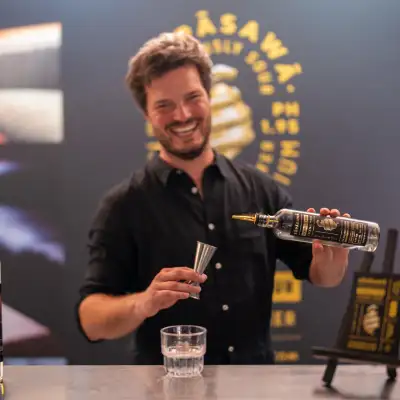
Continuing our previous conversation, Guillaume Lambrecht explains his trade fair strategy for building global presence with Supasawa, focusing primarily on his BCB Berlin approach. With distributors across 55 markets, through strategic trade show investments rather than individual country visits.This episode details his methods for maximizing trade fair ROI, including relationship-focused meetings, community building at industry events, and using trade shows as cost-effective alternatives to extensive international travel. Guillaume outlines how he leverages events like BCB Berlin to maintain distributor relationships and establish global brand presence.Covers trade show networking strategies, international distributor management through industry events, and approaches to global brand building via strategic fair participation.Timestamps:-00:00 Introduction: International Scaling Strategies for Small Beverage Brands- 05:37 Community-Driven Growth: Social Media and Organic Brand Advocacy Systems- 11:35 Relationship-Based Sales: Human-to-Human Business Philosophy for Global Markets- 19:31 Trade Show ROI Strategy: BCB Berlin Investment and International Networking Optimization- 38:04 Global Distribution: Route to Market and International Distributor Management- 45:12 Market Adaptation: COVID-19 Opportunities and Business Resilience Strategies- 52:30 Sustainable Expansion: Quality Relationship Management Across 55 Markets
Continuing our previous conversation, Guillaume Lambrecht explains his trade fair strategy for building global presence with Supasawa, focusing primarily on his BCB Berlin approach.
With distributors across 55 markets, through strategic trade show investments rather than individual country visits.
This episode details his methods for maximizing trade fair ROI, including relationship-focused meetings, community building at industry events, and using trade shows as cost-effective alternatives to extensive international travel.
Guillaume outlines how he leverages events like BCB Berlin to maintain distributor relationships and establish global brand presence.
Covers trade show networking strategies, international distributor management through industry events, and approaches to global brand building via strategic fair participation.
Timestamps:
-00:00 Introduction: International Scaling Strategies for Small Beverage Brands
- 05:37 Community-Driven Growth: Social Media and Organic Brand Advocacy Systems
- 11:35 Relationship-Based Sales: Human-to-Human Business Philosophy for Global Markets
- 19:31 Trade Show ROI Strategy: BCB Berlin Investment and International Networking Optimization
- 38:04 Global Distribution: Route to Market and International Distributor Management
- 45:12 Market Adaptation: COVID-19 Opportunities and Business Resilience Strategies
- 52:30 Sustainable Expansion: Quality Relationship Management Across 55 Markets
The MAFFEO DRINKS Podcast is a leading drinks business podcast delivering actionable insights for drinks leadership.
For founders, directors, distributor MDs, and hospitality leaders navigating the tension between bottom-up reality and top-down expectations.
20+ years building brands across 30+ markets. Each episode features drinks builders: founders, distributors, commercial directors, sharing how the drinks industry actually works. Not the conference version. Honest conversations.
Insights come from sitting at the bar.
Beyond episodes: advisory for leadership teams, subscription with episode deep dives and principles to navigate your own reality.
Beer, wine, spirits, Low and non-alcoholic.
Bottom-up Insights & Episode Deep Dives at https://maffeodrinks.com
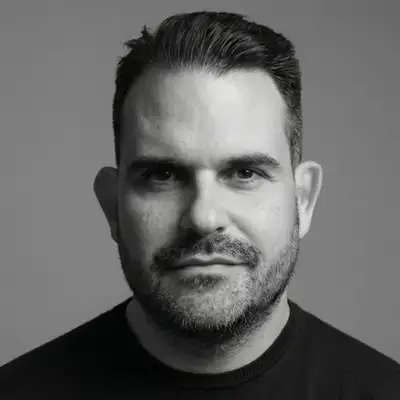
This is my failed drinks. By just shutting up, you know, and listening to a bartender. You know? They open up and tell you what is the need. In this episode, I'm joined by Guillaume Lambrecht.
Chris Maffeo:He's the owner at, Deluxe Distillery, and probably you know him as the the the mastermind behind Supasawa.
Guillaume Lambrecht:It makes me so happy at the same time, you know, that people are coming to our stand. They have one or two people coming along with them. They're like, do you know that this brand that they show with with their finger to to to the stand? Like like this? Like and then you see them talking in between each other.
Guillaume Lambrecht:Oh, this is just an a sour mixer. Well, wait. And then you see them coming to the bar. The button is speaking to them who we who we have on our stand, and it's such a great atmosphere.
Chris Maffeo:In this episode, we speak about the importance of building a community, and we go through some of the aspects that, Guillaume and the team are working with every day, you know, launching the brand different markets, but also establishing their presence in bigger and smaller, trade fairs. You know, we bumped into each other very often at, at Barcomer Berlin where his stand has now become a destination for, for bartenders. So I think I've said enough. I don't want to spoil it. Let's dive in.
Chris Maffeo:Finally, after you know, we keep bumping on each other at BCB and and and elsewhere. Yeah. We also met in Prague once.
Guillaume Lambrecht:Yes. True. True. True. It was a fun a a fun bar show.
Chris Maffeo:Let me let me ask you the first question. So what I really like about what you are doing from what I'm seeing from the outside and, you know, whether it's social media, whether it's, you know, trade fairs when we bump into each other is that SuperSawa is a very technical product. You know? It's, yeah. I mean, it's very functional in that sense.
Chris Maffeo:You know? Like, it serves a clear need. I mean, it's not something you sip on your own and you put super sour on the rocks and and and drink it at the, you know, at the at the beach. Now so it's quite technical, but you manage to to make it really cool. You know, like the, the, the brand building aspect of it.
Chris Maffeo:I was impressed because, you know, usually when you see this type of products, they are quite boring. Allow me to say, you know, that, you know, it's very okay. Like, this is what you need, and this is like, it's kinda like an instruction manual. But you made it, from my perspective, almost like a lifestyle brand, you know, that it's cool to see. And and I I mean, I I just love it.
Chris Maffeo:So I I want to ask you. I mean, you were mentioning something about the the, you know, the social media before, but how, you know, how how do you manage to do to do that on something that is so technical?
Guillaume Lambrecht:Wow, what a question, Chris. What I would say is that we try to sell it as easy as possible for everybody. It's like you said it's a very technical product if you think about it but we don't try to over complicate it for people who are just starting in the bot industry so that's for sure. And I think it's also about indeed about having some easy marketing tools to make it work. So that's indeed what you said like Instagram and everything around it.
Guillaume Lambrecht:We try to build up a community that's really part of the DNA of SuperSawa. Without that community we don't have anything that we would have. It's through the community, through the communication that we have that Super is rotating quite well and that it's made it, how to say it, it is a less bigger step for novices in the boss scene to take the jump to Superstar to try it out right it's because other bartenders are using it on their social media in their cocktails during their bar shows all these kind of things and that's where we see the big step forward right. We don't have the money again to pay 4,000 or 100,000 of euros of marketing budget. Don't have that.
Guillaume Lambrecht:Mean we are a small company and we try to support all the bartenders, the trainer, the bar backs, the FMB managers in the way we can to showcase them what it can save and how we can help them to be a better person and say because they have more time to be a more healthier person because they can go more to the gym for example but also to be more creative because instead of juicing two three hours a day or a week they can be more being more creative and creating new cocktails for example for the new next menu instead of doing that between cooking with your rice that you're thinking oh tomorrow I need my new menu what will I take? I will take some sage, I will take some lime, I will take no no now you have some more time you can do it at well when there is a little bit less people in the bar for example you have two hours of more more to spend because you are not juicing, all these kind of things. It really helps and just to compare that it's a sour component and just by saying that people understand it and it makes it so easy and so accessible for everybody that the technical product behind SuperSawa is getting lost a little bit and gets forgotten because it's just a sour component with so much USPs, so much unique selling propositions like the long shelf life of one year after opening, the consistency because it's always a recipe, the clearness for example it's a fun fact for making clear cocktails.
Guillaume Lambrecht:So I know when people are starting thinking about all this, doesn't it does make sense and it's not that complicated as people think.
Chris Maffeo:Yeah, yeah. No, I like I like I wrote an article on my on my website written some times ago some time ago that, you know, I was calling it the the the selling ring road. You know? Like, the ring road of the city. You know?
Chris Maffeo:I'm from Rome, you know, like, but many other capitals have this kind of, like, structure, especially in Europe. You know? The ring road of, you know, going around the city, and then you can take different kind of routes to to get into the center. You know? And what I like listening to you is that, you know, you have different ways, you know, like with some with maybe the shelf life, with some other will be the sour component, with some other will be the, you know, the acidity of the of the drink.
Chris Maffeo:Exactly. You know, like and depend you know, there's no one set in stone to a bartender. You know? They open up and tell you what is the need. And and this is not about having a kinda like a sales technique.
Chris Maffeo:It's just what you I love what what you said. You know? Human to human is just like normal. I want to have a conversation with you. I want to see if, you know, we like each other.
Chris Maffeo:I wanna see if there is an opportunity to to do business together. You know? And Yeah. And by listening to you, then all of a sudden, I realized, okay. Actually, maybe they have a product a problem with stability.
Chris Maffeo:Maybe they have a problem with speed. Maybe they have a problem with consistency. Maybe they do outdoor events. And when they run out of stuff, you know, they bring two bottles of super sour and, you know, and the the issue is fixed. So it's it's it's it's very interesting.
Chris Maffeo:And and building back on the on the creating demand that it's one of my dear dear topics, the you know, we always bump into each other at BZB, and and I've seen your development in BZB. We also discussed this personally. But what I like is that, you know, I wrote a few articles about the fact that I'm not a big fan of trade fairs for small brands. You know? The fact that I've I have the feeling that many companies, many brand brand owners, they rush into things, you know, like they do an Instagram account and then, okay, when is the next BCB or when is the next Athens Bar Show?
Chris Maffeo:Where are the next, Roma Bar you know, whatever it is. But they just, like, think that then things are gonna come. You know? People are gonna come to their stand and people are gonna, you know, build with them. What what's your experience?
Chris Maffeo:Because I'm I'm a big I'm I'm telling you what I feel from watching your stands, you know, from my perspective is that you have really done well this creating demand before going there. And it feels like the the the cherry on the cake kind of moment. You know? But what tell me what you know, because I have this kind of conversation with many with many people in the industry, and then they say, no. You know, trade fairs are great.
Chris Maffeo:And, you know, like, I I want to hear from you because you are you know, it's your money at stake, and it's your brand building. What's your experience on why, you know, like bringing together this community, the online community, the offline community and bringing the brand identity to life in person?
Guillaume Lambrecht:Yeah, I think it's a very good question though. Sometimes we don't stand still with what we are doing, right? We try. I have to say also Chris that everything that I do with Supersala and with my company in general is mainly gut feeling also. I have some degrees left and right but to be honest definitely in this market and in our industry I think it's about gut feeling and the gut feeling definitely when you're talking with people.
Guillaume Lambrecht:I always say to people from the start people get my confidence and get my how do you say that in English get my respect immediately. And while we are ongoing in the conversation I will see if that respect is enforced or is declined for example and what I would say is like yeah I mean it's a very difficult choice because again we don't have a lot of money. We do everything ourselves. It's our own money. We don't have any investors in our company, so we need to make some choices.
Guillaume Lambrecht:The easiest choice these days to bring out your brand is of course social media, but we can't forget that not all the botanists are online. It's about the human to human is a conversation that we have with everybody in the market itself that's also why I travel so much. I travel I think every two weeks. I'm happy that my wife hasn't divorced me yet because it's a bit a tricky one but it is what it is. But she knows what I'm trying to build here and it's really that community, the route to markets and we really start from the bars.
Guillaume Lambrecht:Mean it's one of your biggest slogans right Chris, brands are built from bottoms up and to be honest I think it's 300%. Definitely the first stage for us is very important to have a couple of peers to a couple of bartenders bars who show interest in it and then from there we ask the bartenders from there on who the wholesalers are, do they have any connections for example with distributors to see okay if they can help us for example. And when we ask those questions to the bottlers or to the beverage manager they feel like wow a brand is asking me for help for distribution. They they it's it's like, I I will be an immediate brand ambassador, you know? They they they they are living the brand even better and more than than than ourselves almost, you know?
Guillaume Lambrecht:And that's that makes it very very fun. Once we then find a beautiful distributor, it's great, and then of course we try to play around with the distributor to see okay what are the needs of the distributor, what do they need, how much attention but how much support they need, right? Do they need to meet to come over or my sales manager to come over to do master classes do market visit to visit again more and more and more customers and at a certain point you know how the community works right Chris people and botanists are talking all the time. I think in every country in every city there's a big whatsapp group with four hundred five hundred thousand people in one group where oh I need this product I need some more sugar oh somebody has a beautiful just saying brand names Campari or just the Campari bottle or vintage I am in need of that or had a question I made this it doesn't work out how can you help me and that's the community that we will create once people and once we have ten fifteen twenty thirty people on botanists using our product, we have a small community who will always back us up and that's where we always start with that kind of element.
Guillaume Lambrecht:Of course, super sour is not a spirit, So per bottle, for example, we earn a couple of cents. It's not euros in terms of spirits. We need it's like a tonic brand right we need to sell a huge amount of bottles to really make it work not time but to make a kind of a living of it and as far as it's important to have this huge rotation on our product. How can we expedite this a little bit? It's really to be there every time where the community is gathering.
Guillaume Lambrecht:And the biggest gathering in our opinion is still in Europe than BCB Berlin. And that's also why we always try to invest in there the last four years, I think already, now with a stand. And I would not do it, Chris, for example, if I was and sorry if I offend somebody, but I wouldn't do it if I was another gin, another vodka brand. Definitely size of company, I would say, because I don't think it will make a difference. Okay, maybe you will find one or two distributors, but will they know what they are doing?
Guillaume Lambrecht:Is it a good distributor? Do you have already clients? Would it rotate? Would it not rotate? Do you have more budget to spend or have you spent all your budget for example on BCB?
Guillaume Lambrecht:That's the other question, right? For us it's really because we are super sour. We are not really 100% Blue Ocean anymore but we are the market leader in what we call the sour mixer category and being there and showcasing that we are available in 55 markets shows us that being there makes sense because we all know in Berlin it's what 7080% bartenders right and then we have the 3020% who is really active in trade and if I make my calculation Chris it's just also like if I need to travel to 55 countries every year it will cost me far more than doing the investment at BCB. I'm not saying that everybody is coming over to BCB from all my partners but if fifteen, twenty, 25 distributors are coming by to say hi, I mean that's a great, I would say, saving element for my traveling which my bookkeeper would love to see. But that's a little bit the thing and what we do also at BCB, I don't need to tell you, but for anybody listening, we don't talk about business in BCB.
Guillaume Lambrecht:It's really I have my meetings back to back three days in a row. I think I have what twenty, twenty five meetings, something like that, and then I see that what we talk about is about family about how you're doing how have you been on holidays and let's catch up after BCB and that all together with the beautiful cocktail in your hand. Alcoholic or non alcoholic right? But it's all about the connection that we need and the better the connection and the stronger connection is with my distributor and or even bartenders, the better the rotation is, the better the communication is. I can call to 25 people right now and they will take the phone for sure.
Guillaume Lambrecht:We will have five minutes or ten minutes of laughing first and then after that we will talk a little bit about business. But all our partners that we work with are more or less good friends of the industry and we are trying to build that case throughout the industry because it's already stressful enough in the world. We have a lot of other things going on in the whole world and I think the drinks industry is an industry that deserves that openness, that kindness and we don't need to fight about having that placing that bottle in the back bar okay it's about pricing with if you're talking in spirits but with Supersawa it's a safe space you don't need to talk about prices it's saving you already you money it's saving you time it's saving you waste and it's saving you labor so what what what what difficult object or, or subject can we have about? Right? So so that's a bit of the what we are trying to do.
Chris Maffeo:Love that. Love that. And, Guillaume, so let me let me ask you this question. Like, if you if you if you go back in, in in time, let's say, like, do you think that it's kinda like a chicken and egg question, this one? So I understand it's a it's a tough one.
Chris Maffeo:You know? Do you do you feel it started you know, you started to build the demand online first, you know, with social media or did it start physically, you know, in bars because you had done all this research upfront with bartenders and that has pushed, you know, the the demand up?
Guillaume Lambrecht:Yeah. I think it would be by the bartenders itself and during already the the making of the recipe and and the product itself that we already is not established, but we we we were setting up the community without knowing that we were doing it because of asking so much feedback from the industry back to us and that made us it was only a couple of people right but even those people started to talk with their friends and you know how it goes people love to talk people love to chat about new things that they have learned or seen or worked with and that's I think a little bit how it started of course it's not possible anymore and it's my strong belief that it's not possible anymore today to have a brand without any presence on social media. We don't really build up demand on social media because we don't have any online shop or whatever. Of course, we have, wholesalers who sell online in different countries, of course, but it's not something that we do from our website or, self to to ship it over worldwide. We don't do that.
Guillaume Lambrecht:We don't, try to sell online. We try to inspire online. We try to gather the community together and then also we receive a tremendous amount of I would call that end mails right from Instagram or whatever or messages with people with questions about the recipe on problems that have occurred during making that recipe and that's what we want to do. We want to help people and we want to inspire people with our social media and we want to drive demand, rotation by the physical approach, the one to one conversations, if it's now by bartenders or even by distributors, we want to have the same we want our distributors to be able to have the same conversations as I would do in their country right if I could split myself or multiply myself by 50 that all the salespeople of my distributor could do the same talk that I can do towards their customers and that would be the ideal situation of course it's not easy as you also know Chris some distributors are more open for communication and more also more open for help and suggestions than others. I'm not saying that people that don't communicate are bad or something but sometimes it's for us as a small company it makes it very easy to know on a monthly basis on a quarterly basis what is going on so we can help them.
Guillaume Lambrecht:We can shift a little bit from left or right. We get a lot of feedback from the market because every market is different, Chris. We have, for example, we entered the market in India. The market in India is 100% different than the market in The US or in Australia. So they have a different purchasing power.
Guillaume Lambrecht:They have different demands. Liminal lime is different. Cost of labor is completely different. I mean it's a whole different story. So it's very important to know from my side but also definitely from the side of the distributor from the market to see okay what is going on there what are they really what are their needs And I think the first step for us definitely to come back to your original question is for sure we started with community from ground zero in the kitchen, in the lab, you know, where tried recipes sixty, seventy different kind of recipes.
Guillaume Lambrecht:We took seven, eight months to make that recipe to fine tune it, to stabilize it. So that's where it all started And every bot then that goes also international to do this kind of BCB. So they start there to talk about Super Sour without even us knowing. And then the ball is getting is getting rolling out. Right?
Guillaume Lambrecht:So so that's that's amazing.
Chris Maffeo:Nice. And and what what you were just saying about the the so the differences between countries, you mean I mean, what what is your experience in the sense that because in in the brand building elements, I feel that it's very similar in the end. You know, we are talking about premium bars and, you know, the the the the premium entree then, especially those kind of elements are are the same people going to a bar to order a cocktail now.
Guillaume Lambrecht:Yes. Exactly.
Chris Maffeo:So just to clarify what you mean about differences. It's like diff what do you mean about differences is in route to market? Yes.
Guillaume Lambrecht:The the difference in and needs also, Chris, I would say, and also the difference in how far is that market developed and the marketing and the cocktail scene. You know, we have still markets where the gin and tonic has just been invented for example where we have where a gin and tonic is almost non existing anymore because it has been so saturated right so that's the huge gaps where we are living in right so for example India a couple of let's say three four years the the Gin Hype just started there where in Belgium and in Western Europe I would say it's already since what twenty ten twenty twelve something like that that the gen hype is all over the place right so it's a really huge discrepancy and timing right and also people want to use also sometimes SuperSawa in a different way In most cases Supersal is used as a product itself but for example there's Trader it's getting a lot the aspect of mixing fresh juice with Supersal together because there they are very found on their real fresh juices. For me no issue. I mean it's if it helps them to save, waste by blending the both of them and expanding their life cycle that's amazing.
Guillaume Lambrecht:If it saves them time perfect so it's all the aspects of supercell which are in I would say, incorporated in in that blend. So for me, it's all no problem that it's not just Supercell, but a blend. For me, it's all no problem. We want to help the prod the the people and the botanist and not not make their lives, more difficult.
Chris Maffeo:And and and in terms of route to market, like, what do you feel because I was discussing this with I was discussing the the the route to market element with David Wood from in a in a previous episode from Liana Collection in in The UK. You know? And he was talking about the strength of these micro categories. No? He was talking about or he was talking about, you know, some other, like, you know, You know?
Chris Maffeo:He was talking about some categories that don't face that huge challenges from the big player. Mhmm. Is your experience in in, you know, like in in this in this in terms of, you know, market market saturation, in terms of, you know, like, how to enter and type of, you know, distributor share of mind that you get on on the in you know, with the smaller categories that you said, you know, you need to drive a lot of volume but maybe the the per serve can be very very small.
Guillaume Lambrecht:Exactly. Well, being a very almost indeed a micro category I would say it it has a lot of advantages but also a lot of disadvantages. The disadvantage is that a lot of distributors, if you look at just really to distributors aspect, that a lot of people still don't know you. They don't see the value of it very often, But at the other side, if you can convince them that I'm just having to talk with them, for example, at a BCB, that if you then still talk with some business wise, that instead of pushing for example for another gin or another vodka where it's all very price sensitive, it's about 10¢, 20¢, 30¢ difference on the competing brand for adding to that bar list menu with superstar they can add a product which doesn't interfere with any other product in the portfolio it will not take away other volume it will add volume to their sales for example if a bar will order just saying five trays of tonics two boxes of a gin two boxes of bitter and two boxes of whiskey they can easily add two boxes of super sour with that without interfering with their current volume it's not that if they add another gin for example the two boxes well it was two boxes of to give your example Chris Hendrix for example and they if they add another gin, for example, to to their portfolio, it will be a box of Hendrix then and then another gin that they will have added.
Guillaume Lambrecht:So you lose volume of Hendrix, and you add volume to another brand, whereas the Hendrix guys will not be very happy because you lose volume. With SuperSour, it's just a volume on top of it because it's something that doesn't exist. And, it's an open window also, for distributors that, and they're struggling with some products to get in. With Supersawa, you can get in. You can open the door wide open.
Guillaume Lambrecht:Why? Because it's something that they don't have. It's a problem that they for sure have, but they don't know yet. So you need to, I would say, present the problem to them, and then they will be all ears. And then once you have the product, in that bar, you can create the relationship with it, with a bar team, with a food and beverage manager.
Guillaume Lambrecht:And then if you have if you are a good distributor and you're a small distributor, can add your Amaro you can add your better your gin your vodka step by step and that's also how we how we did it in the beginning here in Belgium we have besides Superstar we have also a very small spirits portfolio and SUPESAR is always a door opener, has been already since 2018, since we launched it, because it's such a unique product which, resolves problems, and it doesn't create problems.
Chris Maffeo:That's a that's a great that's a great approach that I I'm I'm a I'm a big fan of the foot in the door kind of
Guillaume Lambrecht:Yeah.
Chris Maffeo:Kind of approach. And it's you know, when you were talking, I was I was thinking again, you know, of, you know, like, I see it visually when, you know, the vibes at BCB, you know, at your stand, you know, the you know, you you managed to create such a vitality and such an atmosphere at that at that brand so that it's kinda like an enabler of cocktail culture. Yes. And I I was discussing this also with, you know, with Ben Branson in the latest episode of, you know, the founder of Seedlip. And he was saying, you know, like the you know, when you manage to get people on board, then it's about them explaining it.
Chris Maffeo:Yeah. You know, you don't have to explain it anymore. No? And I feel, for example, you know, going to your stand, you know, there is probably one guy or girl that brings someone to the stand as, like, let's stop here.
Guillaume Lambrecht:All the time. That's so funny.
Chris Maffeo:And they you know, you you maybe you can even get distracted, and they carry on the conversation of, you know, selling SuperSawa for you to their friends.
Guillaume Lambrecht:It is. This that that's something that we we have all the time, Chris, really. It's it's so funny, and and and it makes me so happy at the same time, you know, that people are coming to our stand. They have one or two people coming along with them. Do you know that this brand that they show with it with their finger to to the stand like like this like and then you see them talking in between each other oh this is this and a sour mix oh wait come on and then you see them coming to the bar the bartender is speaking to them who we we have on our stand and it's such a great atmosphere.
Guillaume Lambrecht:It's it doesn't feel, pushed. It doesn't feel forced. That's that's that's that's oh, I love that.
Chris Maffeo:No. That's, that's that's fantastic. And I and I I love to you know, that's why I wanted to have you because I I've seen the development. You know? Like, I've been to the last three BCBs, and I've seen your journey, you know, like, from, you know, the the the hidden corner in, you know, in the
Guillaume Lambrecht:In the center? In one
Chris Maffeo:of the the pavilions in, you know, like, that was difficult to find. And then now it's like, you know, you are, you know, running the scene of the one of the main rooms, and it and I I love to see to see you there and the the the vibe that that it brings to the to the to the whole thing. It's, it's just, it's just incredible. I it's it's really, you know, well well done. I'm always we always take a selfie together with with your team because it's, I I I feel I'm, I'm part of the part of the team even though I'm
Guillaume Lambrecht:You not always are, Chris. If you're in a part of the industry, you're always part of of of of every brand that you like, you know? So on that side, that's great. But it's true. We we we had we made such a big journey.
Guillaume Lambrecht:We we we can we made this kind of journey because of the successes that we have small successes still we are a small company but we can do this kind of offstand there at bcp because we we are grateful to the to the industry and we want to give the industry something back and that's our way of thanking them so so everybody who is using Supersau or who is found of Supersau I always invite them to come to our stand during BCB to have a talk, to have a conversation, to have a cocktail together. That's our only way and the easiest way to connect with everybody. It's not only about us, it's about the whole industry. And that's something that I really want to face, you know. It's like to strengthen.
Guillaume Lambrecht:It's a small company and everybody has the things to do and there's a way of thanking them.
Chris Maffeo:Fantastic. Fantastic. So what what what have I missed, you know, like, that you, you hoped I would ask you? Let's let's put it this way.
Guillaume Lambrecht:To be honest, I don't know. I think we talked about in general, Chris, we talked about, okay, the product supercell, what it is. I think our phase of how we did our journey from 2018 till now. Think it was of course it was not an easy start with 2018 then Covid came by of course but Covid was for us a holy grail. That is something that we didn't mention yet but it was because of all the bars and all the restaurants were doing takeaway.
Guillaume Lambrecht:Not only in food but also in beverages. People were also looking for solutions on that side and yeah we were at the time also the only one available. Instead of decreasing our volume we were growing massively. It was not maybe growing massively maybe a distribution way, maybe not so much in the same amount of volume. We were growing in volume also but not in the same percentages because of course taking away and drinking on the spot is a different volume but it opened so many doors also for brand awareness which helped us also greatly.
Guillaume Lambrecht:So that's a side point. And then for the rest, distribution SuperSawa, I mean we are so happy that to be part of the community in general. We don't have any enemies I think because we are a kind of Blue Ocean product. Everybody can use this. If you are now a skilled bartender a very starting bartender or a barback, you can play around with it and it's a solution.
Guillaume Lambrecht:It's a solution in terms of, of course, eureka, I have the right solution, but also solution as a liquid as it can be it can make your cocktails bring it to the next level and that's what we stand for and we want to to be every every bartender hey SuperSawa can be the bartender's best new friends, and, and that's a little bit what we aim for.
Chris Maffeo:Fantastic. Fantastic. So what's, what's next for for SuperSawa?
Guillaume Lambrecht:I think, well, with with being already now in fifty fifty five countries worldwide, it's it's already a lot. We want to grow, of course, still more, but also more grow maybe in the in the countries that we have at the moment. Why? Because we are again a small company. We're only five people and we want to be able to handle all the countries, all the partners that we have in a decent way.
Guillaume Lambrecht:We want to offer them service. We want to offer them airtime together when we can communicate. We can discuss all the problems. A lot of those countries are sending me reports monthly or on a quarterly basis. So you can imagine after every quarter or every month I have tons of calls to do not to be needed to be half an hour or whatever but just ten fifteen minutes okay what happened how was the sales what can be better did we miss some opportunities so we want to keep up with that pace because we feel that it's very important that communication that's human to human apart also toward distributors we want to keep that up so if I can choose, because you can't choose the elements of the worlds are not always in your favor, or it doesn't always choose the part that you want, I would love to just settle with with our current distribution and see do we need to make changes and and some partners sometimes that can happen because they change also from from strategy but mostly it's just really be able to more communicate with them to help them out to see if we can give them more perks ideas and help and start from there and try to spread out the word that SuperSawa can really help their cases to be more profitable as a bar scene.
Guillaume Lambrecht:I think that's this. That is the big message I want to give. Think about profits because everything is getting so expensive labor the volatile or vitality of fresh juices and you want to be consistent and just think about it as as as a bartender, as a f and b manager. Supercell can really be your your holding rail to to make that happen on that on that aspect of of business.
Chris Maffeo:Fantastic. Fantastic. So where where can people find you to to to wrap it up?
Guillaume Lambrecht:To wrap it up, where can they find me? Me in person, on social media, LinkedIn, whatever. And also if they have any questions, regarding, the product, SuperSawa, Instagram, end message. Please send me a message there. I will be answering probably within the twelve hours for sure because I check that very regularly.
Guillaume Lambrecht:If you have a more big question regarding recipes or a more enlarged question you can always send me an email which you can find on the website of SuperSalva and yeah we are very very communicative we are very accessible and yeah you can find us a little bit everywhere or of course in the best trade shows where we have a stand or a boot. I am mostly like 8090% always walking around there So just give me a call, text, WhatsApp, message, whatever. I'm always will be there.
Chris Maffeo:Fantastic, Ioann. It was fantastic to have you. It was a it was a pleasure to chat a little bit more finally, and I hope to see you soon in, well, I guess, in busy bee in in October.
Guillaume Lambrecht:Busy bee days. Busy bee days, Chris. I'm looking forward to our, renewed selfie of every year, and, let's repost that, so all the followers of, the Mafia drinks can can see that we are not bullshitting about it.
Chris Maffeo:Fantastic. Thanks a lot, Guillaume.
Guillaume Lambrecht:Thank you very much, Chris. All the best. Have a great day.
Chris Maffeo:That's all for today. I hope you enjoyed this episode with, Guillaume Lambrecht from Supa Sour and the Deluxe Distillery. We went through many, many things, building a category, building establishing a category that is not known yet, how to identify, a need and to check that that need is actually really a need by bars and bartenders. And we also speak about, you know, how to build demand, how to sustain the demand, how to work with trade fairs. There's a lot of information.
Chris Maffeo:And if you want to get a deep dive from the episode with a detailed analysis, you can get it and subscribe at mafayodrinks.com. If you can think of a couple of people that you think would benefit from listening and watching this episode, please share it with them, available on video, in Spotify, in YouTube, and in audio in all the other platforms like Apple Podcasts. That's all for today, and remember that brands are built bottom up.