Subscribe
Share
Share
Embed
Welcome to "The Hummingbird Effect," a podcast dedicated to uncovering the subtle yet powerful ways that small innovations can transform your business. Hosted by Wendy Coulter, CEO of Hummingbird Creative Group, this show delves into the stories and strategies behind successful brand building.
For over 25 years, Wendy has helped CEOs and business leaders redefine their brands through innovation and compelling narratives. In this podcast, she shares the insights and lessons learned from her extensive experience, exploring how a strong brand orientation can significantly increase the value of your business.
Each episode features engaging conversations with industry leaders, business advisors, and innovators who have harnessed the power of branding to make a substantial impact. Discover how focusing on core values, mission, and vision can drive your brand beyond mere marketing tactics, fostering a culture that resonates with your audience and enhances your business's reputation.
Inspired by the concept of the Hummingbird Effect—where small, adaptive changes lead to remarkable outcomes—this podcast aims to help you understand and implement the incremental innovations that can elevate your brand and business.
Join Wendy Coulter on "The Hummingbird Effect" and learn how to evolve your brand, attract more customers, and ultimately enhance the value of your business through strategic branding.
39 - Hummingbird Effect
===
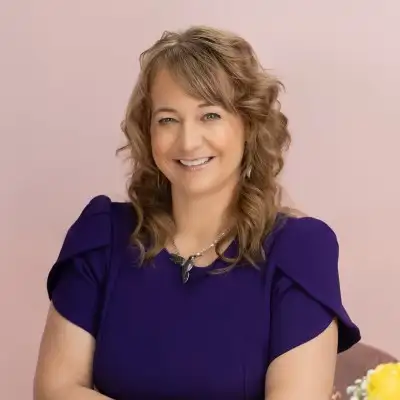
Wendy Coulter: [00:00:00] Hi, I'm Wendy Coulter, president of Hummingbird Creative Group. Welcome back to The Hummingbird Effect. Today, we're sitting down with a master storyteller, a national marketing powerhouse, and a true champion for modern leadership. With over 20 years of experience shaping the senior living industry, she's the senior director of communications, marketing, and sales at The Kindle Corporation.
She has masterminded massive brand refreshes, launched innovative community partnerships, and spent decades helping organizations find their voice. When she isn't driving national growth [00:01:00] strategies, she wears a few other impressive hats, including being a dedicated Ohio University alum, a fiercely competitive pickleball player, maybe, a lover of the Carolina coast and the mountains, and a proud sports mom who you can always find cheering the loudest in the bleachers.
She's an incredible advocate for leaders, and she's here today to share insights on how small changes in how we connec- connect can create massive shifts in our communities. Please welcome to the show Morgan Lamphere.
Morgan: Thank you so much for having me, Wendy. It's a pleasure to be here.
Wendy Coulter: It's great to see you today. Yeah. Um, and we were just catching up a little bit on how we originally think we might be connected-
Morgan: Mm-hmm ...
Wendy Coulter: um, which is through Bill Sears- Yes
um, and the Searstone community- That's correct ... which you worked with. Yeah. So tell us more about that, and tell us a little bit about your role now at Kendal Corporation.
Morgan: Yes, absolutely. I'm so happy to be here in Cary. I actually [00:02:00] started my career in senior living in Raleigh, North Carolina in 2004. And after working with Sunrise Senior Living for four years, I had a meeting with a gentleman named Bill Sears, who was the principal architect of Sears, Hackney & Williams.
And, uh, Bill and I sat down, and he told me about the dream that he and his family had for a community called Searstone. And I had the opportunity to meet his mom and dad, John and Maggie Sears, and learn more about this beautiful piece of property that they had on the corner of High House and Davis Drive.
And at that time, Searstone was just getting started as a vision, and I joined the marketing team there. And we worked and worked and worked at the model home that was there on Davis Drive for what felt like forever, and that was in 2008. And we finally got that community funded and constructed, I think, in [00:03:00] 2015.
Wendy Coulter: Yeah.
Morgan: And what an amazing experience that was, just working alongside residents who, at that time, they're in their 70s, and they're trying, trying to talk about a dream that was gonna happen three or four years from now. And I can't tell you how many residents that I worked with that told me, "Honey, I don't even buy green bananas, and yet you're asking me to take a chance on this community."
And we were really fortunate to overcome a lot of obstacles to get Searstone up and running, and that's what really got me into working in development for life plan communities, um, and how I ended up, um, eventually working at Kendal and supporting all of our different Kendal communities throughout the country and their sales and marketing efforts.
Wendy Coulter: Well, I think Sear- Searstone was really quite a gift to the town of Cary and our residents and our community, and, um, it's a CCRC, correct?
Morgan: Correct. Um- Which is another word for a life plan community. Okay. Those are kind of [00:04:00] terms that we use interchangeably now. In the old days, they were called continuing care retirement communities, or CCRCs, and there was a little bit of a pushback in our industry with the word care.
And so we're kind of shifting that language over to life plan communities because it's really about making a plan and not necessarily all the care that we provide as part of living in the community.
Wendy Coulter: I think that's a great shift. I think that's a great shift. Mm-hmm. And as we're talking about a marketing shift, right- Yes
um, I wanna pivot us to a hummingbird effect because that's what we're here to talk about. Mm-hmm. And so if you can please share a specific instance where a seemingly small change in marketing, sales, or something you were doing made a tremendous impact that was unexpected in another area of the business, which is what we're talking- about when we say the hummingbird effect.
Morgan: Yes. So- Yes ...
Wendy Coulter: what have you had going on? Talk me
Morgan: through that. Yeah. Well, over at Kendal, our, our organization has been around for 50 years, [00:05:00] and, um, in the course of the past 50 years, change has been something that has happened very slowly at Kendal because of the way that our organization is, is founded.
And just recently, in the past two years, which is a very short span of time, we have made a slight change to the way that we are doing branding at Kendal. And I would say that that's really a small change that's ended up having a huge impact on our residents, our team members, and all of the different audiences that we serve.
Wendy Coulter: I love this. So you know, if you've done any research on me, that branding is my number one word in the world. Um, I love to hear that. I think this might be the first guest I've had on- ... that has said that there's a branding component as part of their hummingbird effect. Mm-hmm. So you've got me- ... you've got me wrapped in now, and I wanna hear more.
Um, so tell me more about that. Like, tell me about the initial situation, [00:06:00] um, and what kind of things are you implementing around the branding that's a little bit different?
Morgan: Yeah. So t- about this process started about two years ago, so before I started with Kendal. But it was one of those processes where somebody on the leadership team says, "You know what?
Our logo needs a little bit of touching up. It just needs a little refresh." And of course, that little refresh of, you know, maybe what does that mean? Does it mean we need new colors? Do we need a new graphic? What does that really mean? And in that process, we discovered that it's not really the logo that's the most important aspect of this refresh.
It's really more about, how do our audiences perceive our brand? And at that time, it was discovered that while residents who live in Kendal communities across the country have an extremely strong affinity to the brand, not all of the audiences felt the same way. Mm-hmm. So when we think about prospective [00:07:00] team members, which are really a very important component of our audience, and prospective board members, volunteers, our governance that we have within the organization, we think about those three entities working together- One entity felt very strongly, the residents, but team members and potential volunteers and leaders didn't feel that same resonance.
And so that's really a small realization that helped embark upon a huge change that the organization has gone through over the past two years, and has now culminated in this launch, um, that's now just happening this month.
Wendy Coulter: Oh, wow. Yeah. Okay. And tell me about, like, tell me more about the implementation of that and, you know, everyone wants to know how do we, how do we measure these things- Yes
right? So how are you measuring, um, and knowing that things are leading in the right direction towards success?
Morgan: Mm-hmm. Well, it first, to me, [00:08:00] the way we know we're being successful as an organization is are we building consensus and practicing collaboration through the process? That's our first measure of success with any decision that we make at Kendal.
And the reason for that is we're a Quaker-based organization. We were founded in Quaker values. And so truly any decision that's being made across the organization has to be made with collaboration and consensus. And so when we started that decision-making process, it was also really important for us to be clear of how is this decision going to be made?
Who's going to be the one at the end of the day who makes the final call? So making sure that we were practicing that throughout the process was really a key indicator of success. And now as we look forward to, okay, now not just, you know, making sure that everyone has the different email signatures and they're, they're following the brand guide, but does this actually resonate with our [00:09:00] audiences?
Um, do we actually find that team members are, um, using the new brand, or are they reverting back to the old brand? That's one indicator of success. And then of course, we have our lead generation indicators as well. Are new residents starting to pick up on this? Are we i- improving our metrics when it comes to recruiting new team members?
Those are some small metrics that we can watch over the next six to 12 months to make sure, yes, this is working. We're having a lot more engagement on social media. We're having more people raise their hand and say, "Ooh, I'm noticing this. What's different about this organization? I wanna be part of this and I wanna learn more."
Wendy Coulter: So I love it, um, that the conversation started out with a logo. Um, that happens so often, right? And, and people Want to tweak that thing, right? Mm-hmm. Because it's not quite right, or they just want it to be freshened up, or whatever the reason is, right? Um, but what's neat [00:10:00] about that is that led you into a conversation, a bigger conversation- Mm-hmm
around the brand. Talk to me about what a rebrand, if it's not a logo change, and it is all about this, I think you're kind of pointing towards culture and new team members and that sort of thing, then w- what does the rebrand mean? Explain all the different things that that little small conversation about a logo tweak has led to at
Morgan: this point.
Yeah. For us, it really helped us discern what are the five elements that really make up the brand promise. And then from those five elements, could we put that together in one cohesive brand promise that can serve as our North Star as we start to actually put some graphic elements up against that brand promise?
So we started with those five elements, and, um, I know that some of those included magnetism- [00:11:00] Mm-hmm ... and this magnetic appeal. And the agency that we worked with, which was, uh, Metal Five, out of, uh, Nashville, Tennessee, they supported us with all of our different creative workshops and our meetings and our listening tours that we had with residents and team members in these different audiences.
And they came back to us and said that, "Well, two things. One, we've never seen a brand that has such strong magnetic appeal." And so that led us to a brand- Mm ... promise where people are drawn to Kendal, and then we use that brand promise of people being drawn to Kendal. And the other element of the brand promise, um, is that people can write their own stories.
Uh-huh. And of course, as you can imagine, as a resident living in a senior living community or someone at an at-home program who's over the age of 62, autonomy and agency is paramount. There's nothing more important than, "Okay, I'm gonna let you take care of me, [00:12:00] but I wanna make my own decisions. I wanna be in control.
I wanna make sure if any point I'm not happy with something, I can leave." That autonomy, um, and that just being able to control one's own situation is so important. So we wanted to actually incorporate that into the brand promise, and so that's why we have people are drawn to Kendal, but they're also able to write their own story.
And so those kind of words within the brand promise helped lead us into this North Star that now we can actually use some of those elements in our graphics and in our creative design. So we have a lot of hand-drawn images that are part of the creative design, um, in the brand, and so that's all incorporated in some of the new materials that we're sharing.
And that's really telling a new story about our organization, and hopefully, it's capturing the attention of some new people that maybe didn't notice us before, um, because maybe the logo did need a, a little refresh.
Wendy Coulter: Well, I love the idea of write your own story. It's such a legacy- Mm-hmm ... type of feel Um, and so [00:13:00] appealing to the age of your target market, I think that they, they want to leave that behind, and they want to have that impact.
Yes.
Morgan: Mm-hmm.
Wendy Coulter: Um, and so are you doing fun things at events with, like, letting them write little stories- Yeah ... and leave them behind- Mm-hmm ... and making them a part of the brand? Talk a little bit about that.
Morgan: Yeah. That's fun. So, so two fun sort of... We're calling it our Spirit Week that's coming up in the next few weeks here.
So one, um, element of Spirit Week is we're inviting residents to participate in a single hand-drawn line drawing, um, competition. And so just like Picasso, um, you know, we have this, um, element of our brand that is more of a hand-drawn single line drawing, and we particularly wanted the single line drawings because it does harken back to our Quaker roots.
Um, simplicity is the number one principle of Quakerism, and just being able to make something beautiful out of one line is quite an accomplishment. And so we're inviting residents [00:14:00] to participate in that contest. And then something else that we're doing is we're asking our team members, our other core audience, to help us learn how are you writing your own story, how did you write your own story to become part of Kendal, and where does that story take you.
And so we're inviting our team members on giant Kendal banners, um, at each of our affiliates to write their own story right there on the banner. Um, and of course taking photos of that and hopefully sharing that, uh, more broadly so that they can be recognized for coming out and, and, uh, really telling us where, where they want to go within the organization.
Wendy Coulter: That's fantastic.
Morgan: [00:15:00] Yeah.
Wendy Coulter: Talk to me about, like, your favorite part of the process so far, 'cause this is just so much fun. Right? Yes. And, um, I don't think people always realize that Really delving deep into the brand in a strategic way, which is what your agency helps you do. Mm-hmm. And really listening. What doors that can open for creativity, um, beyond the logo.
So what has been the most fun part of, of this process for you as the marketer?
Morgan: You know, what's ... I will say the most interesting part of the process has been, um, how many people want to participate in the decision. Hmm. And so, you know, when we first, when I first joined Kendall, we were just kind of coming to the end of, okay, we've got all of our different choices, we've got our creative elements, we've gotta make some [00:16:00] decisions here.
And so we, we made some decisions. We involved who we thought were really our brand ambassadors at each affiliate, all of the different marketing directors. We were involving them in those decisions. They felt like, "Okay, good, we're heading in the right direction." And we actually came out with a brand mark that was brand new.
It involved some new colors. It was pretty bold. It was very modern. And we presented it to the CEOs, and the CEOs hated it. Absolutely hated it. Um, and so listening and having stakeholder meetings, while it was, uh, quite frankly, getting beat up a lot, a lot of comments of, "What were you thinking?" And, "This looks like a paper clip," and, "We don't like the shape of this," and, "How can we have this?
Why are we doing this anyway?" And it was really ... And that was my third month at Kendall, was- Okay ... was kind of going through these stakeholder sessions. And so, um, not only CEOs wanted to participate. We also had board members and other team members that were really, [00:17:00] they, they felt, of course, they're drawn to this brand.
This is their organization, so they felt this extreme ownership of- Mm-hmm ... what are we doing? What are we doing with this logo? And you know, while that was a pretty challenging time and we were getting, you know, our team was getting beat up a little bit, I actually really loved it. I loved the fact that people were engaging.
And they cared enough to say, "I don't like this, and I'm not gonna wear this on my name tag, and you've gotta fix this." And it gave us some really good feedback from a wider audience, um, not just from residents who we had listened to during the, uh, creative workshops, but just this wider audience was now participating.
And, and then that really led us to change that original brand mark to something that ended up getting so much more buy-in and excitement from the c- the, the, the stakeholders that they now felt ownership of it. And now to see where we are with it and, oh, well, yeah, that's, that's our, [00:18:00] that's our brand mark, and this is what it means.
And now people actually know it, and they understand the reason we chose what we chose. And, um, that's been really fun to see how we've gone from a listening place to a doing and listening and doing and now the results of that, um, coming out and people getting really excited to put it on their email signatures and use it in different ways.
Wendy Coulter: Well, and I think, um, like understanding the feedback and somehow navigating your leadership and all the people involved to let them understand it's a process and that feedback is a good thing, and it's okay.
Joe Woolworth: Yes.
Wendy Coulter: I think so many times... I watched a particular branding activity. My agency wasn't involved in it other than I was, like, able to listen in on the meetings.
Um, it was a public branding opportunity. And It got so frustrating to everyone, and no one guided the conversation around [00:19:00] this is a process- Mm-hmm ... and your feedback is gonna be listened to and put to work, and you're gonna be so much more excited about this- Yes ... at the end of the day.
Morgan: Mm-hmm.
Wendy Coulter: And I think people don't necessarily understand that that can happen, and that that really is kind of a natural piece of having many stakeholders and getting all of their feedback as part of a branding process.
Mm-hmm. Um, I think that's a, actually a really neat piece of what we do. Um, and I think some people are just like, you know, "Oh, I hated it," and they're not gonna do anything- ... about it. And, you know, I think it's really cool that it actually helped people engage even more-
Joe Woolworth: Mm-hmm ...
Wendy Coulter: in the process with you as they saw that you were taking their input-
Joe Woolworth: Mm-hmm
Wendy Coulter: and putting it to work. Um, so talk about, um, unexpected positive consequences. I mean, obviously we just talked about one of those, but other unexpected positive [00:20:00] consequences that you've seen happen as the result of this process.
Morgan: I would say something that's definitely was more unexpected, um, for me was this opportunity to use the brand in recruitment.
Mm-hmm. Um, you know, when we first started this process, of course, we were listening to all of the different audiences, and something that was a little concerning, quite frankly, were that there were team members who were not feeling connected to the brand, which is also Kind of an ind- indicator of, oh, does this mean we've got maybe some unsatisfied team members?
That it's not that they don't love our logo, it's that they don't love the organization, and so how do we help them fall back in love and remember why we're here and the purpose that we have? And so just going through that experience with team members and reminding them of what this brand means, that it's not the color raspberry and our heritage green and it's not the three-leaved brand mark.
It's really [00:21:00] about this promise that we make to the people that we serve and how privileged we all are to be part of that. But then also the opportunity for us to write our stories and just seeing those team members kind of come out and step out and say, "This is really interesting to me, and I'm really glad I got to be part of it" and that's been a huge unexpected consequence that I feel like has that effect and that hummingbird effect, if you will, on recruitment because they're now telling their friends about, "Yeah, you know, they're doing some changes over here" that these little
Even though it's a logo change, it's also an indicator of some leadership changes, and it helps people tell that story in a clearer way. Um, and everyone likes a new T-shirt and, you know, new fun things too- ... that they can share. All the swag. Yeah, all the swag is always fun too, so yes, all those things.
Mm-hmm.
Wendy Coulter: Well, and I think that tying, um, the communications aspect into the branding and making sure the marketing [00:22:00] and the comms, uh, through recruitment is all cohesive is something that a lot of companies struggle with. Mm-hmm. And so, um, I always think that's a great side effect of branding, that it kind of forces an organization to look at every level- Um, as opposed to when you're looking at tactic after tactic- Mm-hmm
and you're just looking at the marketing- Mm-hmm ... space. Um, and so that's great. Um, so as someone... I mean, you've been in marketing for how many years?
Morgan: really since I left college in 2001. Mm-hmm.
Wendy Coulter: Yeah, so- So a few
Morgan: years.
Wendy Coulter: So 25-plus years. Um, and if you're like me, every single project, you learn something from it, right?
Um, so what have you learned from this project that you're gonna take forth, um, to the next thing that you need to do or your next experience? What has been the learning moment for you?
Morgan: For me, the learning moment is absolutely around clarity for how the [00:23:00] decisions are going to be made, and that's an interesting challenge within our organization because it does have a different hierarchy than other typical senior living management organizations.
This is an organization where collaboration and consensus is how decisions are being made, but of course, if we have 3,000-plus people that are part of this decision, meaning residents and all of these different potential audiences, there's no way we're going to get total consensus among that group. So just providing clarity from the get-go of, "This is how we're going to make this decision," I would do this...
That's how I would do it differently for sure because when I first started, I wasn't quite sure, like do we have to get consensus from all these... all of these different people, and what if somebody says, "No, we're not using this," and how do we enforce that as the brand ambassadors for the organization? Um, so I think that's, that's something that I would definitely [00:24:00] take with me the next time we do a brand.
Um, and, and we're calling it an evolution, not a refresh, because it is. It's an evolution. We should have the expectation that we look at our brand, we evaluate if this is working, we tweak things as necessary on a regular basis, not just waiting every 12 years, which is what, um, the organization has done in the past.
Wendy Coulter: Yeah, I think evolution is definitely the word today. Um, and you've, you've been around long, like I have. Like, 20 years ago, you couldn't really have an evolution the same way just because technology didn't exist to enable it the way that it does today. Mm-hmm. Um, and I think it's so cool because we can continue to, um, build and create and expand and evolve a brand now, um, in such a different way than we could before because of technology.
Mm-hmm. You can just continuously be thinking about it and tweaking [00:25:00] it and updating it if you need to. Um, and I think the consensus thing is so interesting. Um, that's a little overwhelming, um, to think, oh, I've got to have full consensus from all of these people. Mm-hmm. Um, I think that's a really, like, interesting way that you had to approach the project.
Um, is there anything that you would change looking back now?
Morgan: I think, um, you know, we... When I first started, um, we had three different creative choices that we were considering. We hated, as a leadership team, we hated two of the three. Mm-hmm. Looking back, um, I think there was a little bit of a feeling that, well, if we present these to everyone as a potential choice, um, there's a good chance that our safest choice would've ended up being the [00:26:00] one, uh, selected.
And as a leadership team, we had just recently made a lot of big changes, and so we wanted the brand to reflect that modern look of the organization. And so we made the call to put forth more of a modern position, and we took some flack for it.
Wendy Coulter: Yeah,
Morgan: sure. Um, and so that's where we... And, and in fact, this, uh, this logo that I'm speaking of that we kind of started with, we, we were affectionately it was called the, the special K, and it looked, it looked pretty funky.
I still like it. But it looked a little, looked a little too funky. And, um, and you know, then it was sort of, because it was so, uh, we had some such poor feedback, it then, the whole process received that same kind of, it was painted with that- Right ... same feedback. So we had to really do some backtracking to say, "Okay, you know, here's how we came to this decision.
Here's why we're here," and just really remind everyone why we go through a process like this. Um- Yeah. I [00:27:00] mean,
Wendy Coulter: I think- Yeah ... that's tough. Um, making a decision whether to show the options or not That then makes it so that the people, if they're then involved in making comments and decisions later, they didn't see the whole story.
Yes. They didn't hear all of the rationales- Mm-hmm ... behind all of the options.
Morgan: Mm-hmm.
Wendy Coulter: Um, which can create friction, I think. Yes. That's what you're describing. Yeah. Mm-hmm. Yeah, so that's interesting. Um, and, and every leadership organization makes kind of different decisions based on kind of who they feel like they're working with and how everyone makes- Mm-hmm
decisions and those kinds of things as to how much to share.
Morgan: Yes.
Wendy Coulter: Right? Um, so it sounds like you think it would have maybe been better to have had more transparency- Yeah ... from the get-go?
Morgan: Well, and it's always a trade-off. With more transparency, with more people involved in the decision, then the decision's gonna take a longer period of [00:28:00] time.
And, um, the, the process already had been about a two-year process, so there was already a feeling of- It's taking too long ... my goodness gracious, this is taking too long. How much money are we spending on something that's taking so long? You know, this, this agency's been invested with us for this whole time.
And so we didn't have enough communication through that two-year time period to help everyone know it's still working, we have some creative things working behind the scenes. It's not as if we're paying the agency by the month. They have a one-time fee for this, this project, so whether it takes a year or two, they're getting paid the same amount.
So I think transparency on all of those fronts- Mm-hmm ... would've made the process better. Um, and these are all learnings and good opportunities because we're gonna continue to go through this evolution together and, um, I'm excited to be leading next steps with it and, and leading us to where we go, um, next, and hopefully incorporating some of the things [00:29:00] that we've learned.
Wendy Coulter: When we talk about learning, there's so many young marketing, um, people out there now, and it, the field keeps growing. I mean, with AI and digital marketing, it's a huge growing field. Um, what piece of advice would you give to a young marketer, um, who w- needs to leverage similar opportunities?
Morgan: Um, my piece of advice would be relationships, relationships, relationships.
You should have the, the strongest possible relationship that you can to your team around you, to people who have, have done this work for a few years, and really just take time to get to know them, ask them hard questions, and, um, really build that long-term relationship. Now, I would also say at the same time you should have your same relationship [00:30:00] with your AI, um, uh, service of choice and, and be building that agent, because that work is also great investment work that you can do that's gonna improve your relationship with AI and the technology as, as we go on.
But the real human relationships are what actually get you hired and what actually get you to be able to stay within an, an organization for many years to come.
Wendy Coulter: Right. Absolutely. Okay, so we've gotta go there 'cause we're talking about AI. Mm-hmm. But I, but I don't wanna get stuck on AI, but I do wanna talk about innovation in marketing.
Yeah. Um, so talk about innovation in your space and how you've seen innovation happen, um, whether that includes AI or not. Um, but just talk about how innovation plays a role in marketing today.
Morgan: Yeah. Well, I would say in, um, the past year, a tremendous change has been made in how [00:31:00] we practice good SEO and good GEO, um, within our website.
So I would say that's a huge area of innovation, is just first being able to identify, are we performing? How are we performing? We're all, we're all pretty good at, um, performance metrics for SEO, but making sure that our performance metrics for GEO, for generative engine optimization, are as good or better.
Um, because as we know, our customers are searching for senior living options, um, and they are using AI far more than, uh, the Google search results that we've seen even six months ago. So that's a huge innovation, um, place to start with. From a user perspective and what we're doing on the marketing team side, we have been building our own agent, and, uh, we're practicing with this agent so that we could potentially roll out an agent for each affiliate.
So while we have [00:32:00] KD at the Kendal level, it's our agent that supports us with all things marketing, strategy, tactics. It helps us with onboarding plans. We have a, a whole, um, process that we've done to actually create this agent as a team member and c- and treat it as such. Um, and we're rolling out that education and that process to the rest of our team so that Kendal at Oberlin could have something similar and could have a similar service so that they could benefit.
But it's gonna be different in every place, and so we're learning as we go to see, what are the best use cases? How do we train people to use prompts? And most importantly, especially with our organization, how do we do this in a sustainable way, and how do we be mindful of the energy consumption and the ethics around, um, using Claude or using, um, using some of these different services?
Wendy Coulter: I was gonna ask you which- Mm-hmm ... which, um, platforms you're using for-
Morgan: So we have- ... different uses, so ... we've tested, um, we've tested a bunch, and right now we are using Anthropic, um, for, for some of these [00:33:00] services. And then we also use some different AI platforms, um, for presentations. We've used some different ones for writing.
Um, and so we're kind of, we are in test mode, but when it comes to really truly creating a marketing assistant, um, we found that Anthropic has been the best fit for us so far.
Wendy Coulter: Awesome.
Morgan: Mm-hmm. Yeah.
Wendy Coulter: Fantastic. Um, do you have anything else that I haven't asked? that you wanna share? I mean, it sounds like such an exciting project.
Mm-hmm. And congrats for getting through it here. Um, and I hope the, the launch events go, go really well. Thank you. That sounds like even, like the whole, the communities are gonna have a great time with it.
Morgan: Yeah.
Wendy Coulter: Yeah.
Morgan: Yeah, definitely. Yeah. Yeah. We're, we're, we're really excited about that. Um, and, you know, excited to see just really what's fun for me is to kind of see how people start, um, putting their own creative spin.
You know, the, uh, the mix between, okay, we [00:34:00] do have a brand and communications guide, and we want everyone to adhere to it, but then seeing how people take that and find their own creative use case has been fascinating. Um-
Wendy Coulter: I think that's- Yeah ... I think that's so much fun too. It, and another difference in our world from the day of the brand police.
Like, do you remember? Yes. Mm-hmm. Right? Mm-hmm. Where like it has to be this exact way. Yes. And now- I got my
Morgan: measurement stick out and it's not the same. Yep. Mm-hmm.
Wendy Coulter: I feel like a part of the measurement about whether a brand is, uh, is gonna work well is can it have legs?
Morgan: Yes.
Wendy Coulter: And can it grow on its own and still maintain the essence of the brand, but become, like, customized and- Mm-hmm
interesting for different people and different pieces of the brand. So- Yeah ... kudos to you for doing that. Yeah.
Morgan: That's- Thank you ...
Wendy Coulter: that's awesome. Thank you. Awesome.
Morgan: We're very excited.
Wendy Coulter: Well, thank you so much for coming on the show today. Thank you. It's so great to see you again. It
Morgan: has
Wendy Coulter: been great
Morgan: to, um- And be back here in Cary.
Wendy Coulter: [00:35:00] Yeah, I'm so excited you came back over. Um, and so share all of your contact information. Mm-hmm. Where can people find more- Yes ... about Kendall Corporation and you online?
Morgan: Yeah. So Kendall is a not-for-profit organization. Our website is www.kendall.org. And, uh, people can find me on LinkedIn. My name is Morgan Lamphere.
And, um, I'm very happy to continue the conversation.
Wendy Coulter: Awesome. Well, thank you so much for giving us your time today. Thank you. And to our listeners, thank you so much for your time today, and go out there now that you've learned everything Morgan's had to share today, and find your Hummingbird Effect. [00:36:00]