Subscribe
Share
Share
Embed
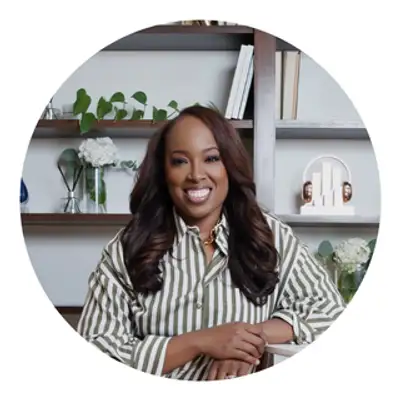
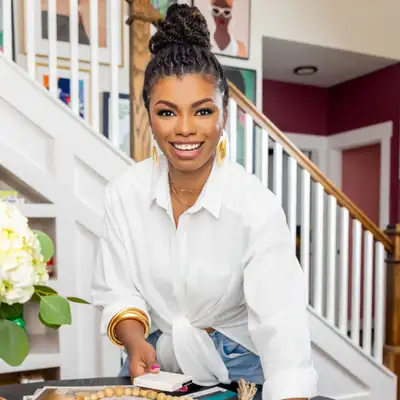
How I Got Here with Dreena Whitfield goes beyond the highlight reel with Black women founders, executives, and leaders. Real conversations about the pivots, the setbacks, and the purpose behind the work. From bootstrapping a beauty brand with $500 to leading a professional sports franchise, each episode explores the moments that shaped who they became and the cost of building something meaningful.
For women navigating leadership, business ownership, career reinvention, and the cost of ambition.
New episodes biweekly on Wednesdays.
Host: Dreena Whitfield
Executive Producer, Writer & Creative Director: Keena Williams / Struxa
howigotherewdreenaw.substack.com
Today on how I got here, I'm sitting down
with Amber Guyton, the creative
and designer behind Blessed Little Bungalow.
Amber started her career in corporate in tech,
but realized she wanted a life
that felt a little bit more honest and expressive.
Amber creates rooms that tell stories, honor, identity,
and make people feel seen.
Her work has been featured in Architectural Digest,
HGTV Magazine, Forbes, and More.
In this conversation, we talk about the leap she took
and the world she is building through beauty,
intention, and soul.
This is Amber Guyton, and this is how she got here.
After five, almost five years of going full-time,
I still kind of feel like I'm just getting started
and really, okay,
when are we gonna put our big girl panties on
and hire a team and scale?
And yeah, it was truly just a God thing.
It was like, Hey, you've been building this
for five years on your own with 10% of your time.
What can you do if you just throw your all into it? Mm-hmm.
You go to some of these events and things
and you're just like, uh, I don't belong here.
And one thing that a lot of people don't know, I think, is
that interior design, um, only 2% of the industry is black
as far as interior designers go.
Really? 2%. Huh.
Amber, thank you so much for joining me today.
I, like I told you when you came in, I'm a fan.
Like, I like to, um, say
that I do a little bit interior design,
even though I really don't.
But your page gives me so much inspiration. Thank you.
Like, your designs are always just impeccable,
and so I'm really excited to talk to you today. Okay.
I'm excited to where the conversation came.
Yes. Um,
so I wanna start like a little bit back in the
earlier parts of your journey.
When you think about the moment you knew corporate wasn't
your story anymore, um, what comes to mind first?
What really pushed you to finally walk away?
Because I worked in corporate as well. Sure.
And one day I just walked in.
I had a vision around, um, what I wanted to do
and what I wanted to start in terms of my company with pr.
And one day I just went in and quit.
I was like, today's my last day.
I didn't have a backup plan or anything.
So like, what pushed you to kind of leave corporate
to go pursue your own thing?
Oh man. So the intent was never
to be a designer. Oh,
Okay.
I was in corporate, I was working in, um,
financial services, and then I got a little bored
after five years at the company I was at
and decided, well, there's a lot
of other stuff that happened.
I was, went through a breakup, had a unexpected,
um, emergency surgery.
Oh. Was on FMLA was was in the hospital for a week,
then it was on FMLA for like two months.
Um, went back to to work and was like, nah,
Was life, Because life
and then, um, transitioned to tech left San Antonio
and moved to, um, San Francisco.
But when I created Blessed Little Bungalow in 2016,
it was just a creative outlet.
Like I just, I bought a new house,
decorated it all in a week, and my mom and sister
and family came to visit
and they were just like, girl, what?
Like, we were expecting a box things with you
and you know, it, they weren't expecting it to be all done.
And then, um, my mom was just like,
so when are you gonna do this for real?
Aw. Because she always thought I was
gonna be an entrepreneur.
And she always saw my creative, um, energy
and just thought that this was me, my path
to up the corporate ladder
and to be somebody CMO, like, she was like,
okay, well that's what she wants to do.
She went back for MBA, she's doing that,
but this is what I, yeah.
This is what she envisioned for me.
So for me, it was like, I never took the full leap.
It was more so let me just blog about my house.
And then eventually people started, like I,
I set it up as a business.
I got the L-L-C-E-I-N got the logo stuff. So you
Knew to do That?
Yeah. But because of my background in marketing, I was like,
well, I'm not gonna come out here.
I didn't go to school for this one,
so I'm a at least look like I know what I'm doing,
So I invest until you make it.
Right. So I invested in all of that.
And so long story short, like it was always just a hobby
and side hustle, and I was really comfortable with that.
And then the pandemic happened
and, um, I decided
to move back to Atlanta.
Um, and the tech company I worked
for had just iPod.
I felt like I was in a really good place,
but it was finally at the point where I was in a great place
where I could work remote west coast time,
uh, work on my craft and business East Coast time.
Like I had a, a really good situation,
but it was truly just a God thing.
It was like, Hey, you've been building this
for five years on your own with 10% of your time.
What can you do if you just throw your all into it?
And I think it happening
during the pandemic versus me jumping out, like immediately
was kind of like, you know, the world is falling apart.
Yeah. What you gonna do
with your life in the little bit of time we got left?
Mm-hmm. And so that was when I decided, okay,
really it's time to quit.
You know, the pandemic forced a lot of people
to like rethink like what they wanted to do professionally.
Mm-hmm. Uh, what truly makes them happy.
So I could see that. Mm-hmm. I understand that. Mm-hmm.
Because like during that time, I was like,
I think I wanna run, or I wanna write
or do something like that. A lot of people
Took up tennis, a lot of hobbies. 'cause we like,
We all gonna die. Right.
Right. Something's Going on. Right.
Um, but okay. That's exciting though. Yes.
And it's blossomed into,
It's continued to blossom and grow.
Um, I felt like it was almost like a new start,
even though the business will be 10 next year.
I feel like it really just,
sometimes I feel like I just got started
when I went full time.
Mm-hmm. And I think for a lot of, um,
creatives and solopreneurs, they feel like, well,
I'm not gonna be taken seriously unless I do this full time.
Yeah. I have to put my all into it. Mm-hmm.
So I feel like a reset button was kind of hit then.
And even after five, almost five years of going full time,
I still kind of feel like I'm just getting started.
And really, okay,
when are we gonna put our big girl panties on
and hire a team and scale and Yeah.
It, it feels like I, I am constantly looking at, okay,
what's the next thing mm-hmm.
To make the business legit. Mm.
Which when I share that
with people, they're like, girl, what's
Yeah. Because I'm, what's
wrong?
You, I think when everybody's,
whenever someone's trying to build something,
they think they have these, um, dreams of
what they think their business and team should look like.
Sure. Um, and it's not necessary, you know, I used
to have this vision of like, I wanted 20 full-timers,
I wanted big offices and all this.
And I got, I almost got to that level. Okay.
And I was like, this is not what the hell I want.
Like, it's extremely stressful. Yeah.
So I think you need to acknowledge the space that you're in.
Sure. And, um, the level of success
and achievements that you've been able to accomplish to date
where you are and with the team that you have. Right,
Right. Because
I, I'm like, you even just glossed over the fact
that you talked about you designed
your whole house in a week.
Like what? It takes me like a week
to pick out some chairs. Little
Ambitious, Maybe even a month.
Yeah. So you did the whole house mm-hmm. In a week. Mm-hmm.
I was hoarding a few things.
I had like, at an apartment, so I had a few pieces,
but like I at, I'm, I'm Virgo, so, you know,
got the spreadsheet and like, okay, we gonna do this
and this and have the mood boards ready
and moved in on the day I closed and a week later.
What? Yeah. Insane. Yeah.
Moved in the day you closed
and then a week later the house was done.
Mm-hmm. Paint everything mm-hmm. Furniture, light bulbs.
Mm-hmm. Oh my
God. All the bulbs.
That's
Insane. Yeah.
Yeah. So, and I mean, that's a sign,
that was the sign right there from God though, right?
Like, this is what we were destined
For. Yeah. This is what
you can do in your sleep.
This is what you excites you, this is
what you would do for free.
Um, and I enjoy it.
And I think the thing that's scary about going from a hobby
to a side hustle to full-time is the fear that
I'm not gonna enjoy it anymore if
people are making me do it.
Like, if it's, if it feels like work, um mm-hmm.
And in scaling and even having the CEO hat on, it's like,
now I'm in charge of people
and I am, my, my success
ends up being like whether they can
feed their family or not.
So I have to succeed. Mm-hmm.
You know, all that pressure and making payroll and mm-hmm.
You think that's because now you,
you were read about you crying, I might start crying
because I'm
I've gone through all that.
Yeah. Yeah. And it's like, and,
and I think also like as you grow bigger,
because you see like the Shea McGees and the Joanna Gaines
and people are like, oh, you're gonna be the
next black Martha Stewart.
Like, well, Martha Stewart could cook. I don't cook.
Um, I'd be decorating, but I don't be cooking.
Uh, but I like my kitchen and it's beautiful.
But like that people put all these expectations on you
and say like, Hey, you can do this.
And it's, it's great for people to be able to see
that vision for me, but it's like, I don't wanna have,
or at least I don't think I wanna have a studio
with 40 designers in it
and being able to design for the masses
and these huge, like, I've done celebrity homes, I've done,
um, work for millionaires and so on, but it's like,
but my sweet spot,
what I like are the little houses, the little spaces.
What, what Andre say.
Little rooms, big things happen in little rooms.
That's how I feel. I'm like, I like,
that's why my business is called West Little Bungalow,
because I think you can pack
so much impact into a small space.
So like that 3000 square foot house is akay with me. Right.
Um, and so there's this fear
and mindset of, oh, well, in order to be successful you have
to employ a lot of people and be huge.
But it's like, no, that boutique agency
or firm size is actually sounds like a
dream. It is. Mm-hmm.
So talk to me about the early days
of building blessed little bungalow.
What did, what did those days look like?
So I was working full time.
Um, I had, I graduated from UGA
with my MBA in 2014.
And I moved to San Antonio in 2015 for a new job.
I worked for USAA.
Um, and they have like MBA career development program.
So I was in rotations the first two years and
before I landed into a full-time role.
And so that was my career.
Like, I had just gotten out of a super toxic
work environment mm-hmm.
Before, and then before that I worked in sales.
So it felt like I finally had
that six figure big girl job, like, this is it.
Yeah. Um, and
so it was fine.
And working in marketing, you know, you get, you're,
you're creative to an extent,
but it's still like financial services, like
how sexy are Yeah.
Life insurance and credit cards gonna be. Right.
So I was seeking, I think, some self-fulfillment
and, um, just my own creative outlet.
And then also living in a new city, in a new space, um,
needed to occupy my time.
Um, and so the blog with the origin story,
I shared, like, I started writing.
I love to write. Um,
and so the combination of being able to write about my home,
decorate and then show it on social media,
show my home goods runs, show my, um, all the things
that I enjoyed to do, like, that was pretty much it.
It was like, I'm doing this for fun.
And then I decorated my, uh, one
of my good friends in Greenville, South Carolina, his, um,
him and his wife's first child's nursery.
And I did that for free.
And that was the first project
besides my own home that was on my website.
Um, and then eventually the,
what I call stranger Clients started hollering.
They were just like, Hey, this was recommended.
You were recommended in this Facebook group.
And so it was truly brick by brick, like super organic
from having 300 followers of just my friends
and family to now the 150,000 followers on Instagram.
The YouTube, like, it was all intentional, but,
but nothing I've, I didn't wanna force it.
I wanted, I never envisioned being an influencer, right?
Mm-hmm. Like having content creation as a stream of income.
Um, but it came with the organic,
following the conversations.
Um, and more than anything, I, interior design is
a, a bit of a stuffy turn off
of a industry to me.
Or it was then, and it still can be. Mm-hmm.
You go to some of these events and things
and you're just like, uh, I don't belong here.
And one thing that a lot of people don't know, I think is
that interior design, um, only 2% of the industry is black
as far as interior designers go.
Really? 2%, huh?
It might be like three now,
but it's definitely like, went up very low.
And then architects is even less,
it's like one less than 1%.
Oh, wow. So when we walk into certain rooms and showrooms
and High Point and so on, like a lot
of times we're the only ones there.
High. It's high point of us. I see that a lot on social.
What is that? Yeah. High Point Market.
The best way to describe it is like New York Fashion Week
for the furnishings industry.
Yeah. Okay. So High Point, North Carolina,
they have roots in furniture making.
Like a lot of companies are, are headquartered there.
They have showrooms there.
So they have a week in the spring
and in the fall that, um, buyers, designers,
um, makers across the world really come
and there's exhibits.
You, you could float through showrooms.
There's a lot of panels.
Like the one that just happened in October,
I spoke on three different panels.
Um, so it's a place to get inspired.
Um, for me it feels like a homecoming where I can mm-hmm.
Meet up with designers that I've probably only seen a few
times a year, um, or just see you on Instagram.
Um, and so yeah.
Spaces like that, it's very few
and far between as far as people of color.
So, um, it, for me, it's like, well,
if I'm gonna do this, I'm gonna be who I am.
Mm-hmm. And I'm gonna shop at HomeGoods
and I'm gonna tell y'all that that came from CB two
and if you don't like it, well, you're not my client.
Yeah. You know, you're not my follower.
And so being comfortable in the skin I'm in, I think
that level of authenticity is what attract the,
all the followers and the, and the clients over time,
Given the demographic of the, the industry.
And like you said, you are gonna show up as yourself, right?
Mm-hmm. Um, were you nervous
or scared when you first really like,
took the leap full time into this space?
Absolutely. Um, Especially as you were trying
to define your aesthetic.
Sure. Um, so I, we talked about High Point,
like I didn't go to High Point until I went full-time.
Mm-hmm. Or until I was about to go full-time,
because I felt like, yeah,
I think it was 2022 when I first went to High Point.
It was after I went full-time because I felt like, oh,
I didn't go to school for this.
I'm not, um, traditionally trained in interior design.
The imposter syndrome is like times 10. Mm-hmm.
Like, you, you girl, who do you think you are?
You're a hobbyist, you fluff pillows. Mm. You know?
Um, and so I,
I didn't take that leap until I took that leap.
I felt like, okay, that gives me some street cred. Right.
That gives me some credibility.
Um, I forgot the second part of the question.
Well, I mean, look, I was just going off the cuff too.
'cause now I don't even remember. I'm looking
at my questions on here.
That keynote specific was like, you gotta ask.
No, it's all good. I always go off.
Um, I was just wondering, like, were you nervous
or scared when you got into the space?
Especially because you, you just shared how white it is.
Yeah. Yeah. And then like, you're coming in,
your aesthetic is soe full maximalist. Right. Soulful
Maximalism. Thank you. So
You coming into the space with that aesthetic mm-hmm.
Um, like were you nervous? Were you scared?
Like you said you,
you felt like you were an imposter, a hobbyist
Coach. Yeah.
I, all of the above.
But I think my use
of color pattern, black faces in all the spaces
'cause of black people live there,
we gonna show some black art. We're gonna, oh,
You, I need, I need you to gimme some
art. Let's keep going.
Uh, family photos, like, you know, there's so much
of society that says your home needs
to be a blank canvas.
Your home needs to be beige and tan
and not too busy.
Mm-hmm. Or cluttered. And when they come,
like you're always, I don't know at
what point it was infused in our minds as consumers
that you have to design your home
to attract the next home buyer.
It's like, no girl, you live there. Mm-hmm.
Like, put those pictures up.
Now if you wanna take stuff down when you need an appraisal
or whatever, like, that's your business.
But I am going to have a home that reflects who I am
that makes me feel celebrated and seen and safe.
Mm-hmm. And like, remind me of my roots.
I'm just a country girl, born and raised in South Carolina.
And my picture of my grandparents on my,
on my media cabinet like that I walk by every day
that's gonna remind me who I am.
And so it's almost a tragedy, like meeting
with clients and people
and they just like, I just don't like where I live.
I don't like my space. I'm like, people that are afraid
to put a nail in the wall in their own house, you know,
afraid of wallpaper and so on.
So my hope is to free them of that, what feels like a burden
and understand that nothing is permanent
and your home should evolve over time with you.
Your style. Just like fashion. Right.
Um, so that I think empowered me
to keep pushing and not worry about what,
'cause there's enough designers to go around.
There's enough aesthetics
and things for people to like, like
I think the minute you try
to please everyone, you're for no one.
And so I kind of just kept that in mind as,
and know that, you know, I'm not gonna be in, I mean,
maybe I will be, but like Southern Living Magazine
and certain things, it's like if that, if my aesthetic isn't
for that consumer or for that eye, that's okay. Mm-hmm.
Is there one project that you could say
that has changed you
or taught you something like you didn't, you didn't expect?
Um, every project that just like,
you know, there's no favorites.
They're all my babies. Um,
but there is a project, um, here in Atlanta
called, um, project Rose Room.
And it was the first time I had an interior design project
where the clients were really just like, do you
like this is who we are.
We called you 'cause we love you.
Here's a new build blank canvas.
Cookie cutter feels like we're finishing the basement,
but the rest of the house is yours.
And it was so liberating and freeing
and such an honor to have that trust.
I was gonna say, that's trust. Yeah.
'cause it's already a privilege to be able
to walk into someone's home.
Like your home is like your personal space.
Um, and so
to be invited in someone's home at all is a privilege.
But then to be invited into design the space, the space
that they live in, because when it's over, I'm going home.
Right. Like, y'all gotta, y'all gotta love this. Yeah.
Y'all gotta like this. And so, um,
that project we did the powder room, the, the,
it's called Project Rose Room,
because they were like, we don't want a formal dining room.
We want like a lady's lounge. Okay.
And she was like, a place that I can just drink rose,
drink rose with my girlfriends.
Okay. And so that was like the first piece
that I designed that space.
And it has like Magento walls
and it's artsy, um, gold
and different patterns and jewel tones.
Um, and then the rest of the house just kind of flew,
uh, flourish from there. I
Love it. I gotta see this house.
Yes. I think you like it. Um,
And they've had two, two kids since then. And so I
Have you gone back to, I went back to do the nursery
and I'm about to go back to the other.
So it's like to be able to,
the biggest compliment is repeat clients
and to be able to be invited back in their home as their
life events and life journey happens.
Um, so yeah, it's, it's an honor.
I'm just thinking like, there's so many people
that start businesses.
Um, and then ultimately they, the businesses thrive, uh,
even if they've not had formal training
or experience in that space.
Mm-hmm. Um, and one piece that people always struggle
with is like, pricing.
Mm. Right. So talk to me about like how you were able to,
like, once we, you started getting the calls from people
were like, Hey, can you come do
this room or can do this space?
Mm-hmm. How did you figure out your pricing?
Did you, did you have a mentor
that said Amber Price like this?
Or were you just like, oh, I could do that
for a thousand dollars.
And then you get into the space
and you're like, why did I charge this slot?
Yeah. Yeah. I think
that overall designers don't charge enough.
I feel like most entrepreneurs Yeah.
And small businesses do not charge their
worth a big reason for that.
We don't track our time. I know. I personally don't. Mm-hmm.
And so when you really get down to the dollars
and cents of every ounce of effort you've put into
what you're doing and what you're building,
especially in the service space, um, it's like, girl,
you're paying yourself 3 cents an hour.
Yeah. What is happening?
Um, so in the beginning,
because I worked full-time, I was like, well,
I'm just gonna start with e-sign.
And that's still kind of like the foundation of my business.
Like, because I was moving from Texas to California back
to, um, Georgia.
I had my initial network
of clients were like in the Carolinas.
So I had clients in Charlotte, I had clients in Atlanta,
I had clients back home in South Carolina.
And so I would deliver the designs or mood boards virtually.
Mm-hmm. Um, and so I was like, okay, well who does e-sign?
And at the time it was like Haven Lee
and a couple different, like, companies that were doing it
for like 1 49 a room.
And I was like, 1 49 a room. That doesn't sound like a lot.
But then at the same time I was like,
that's the starting point.
So if they get a personal, like, like,
'cause they're just outsourcing whatever,
and you get maybe two edits.
Right. And so then I started looking on another designer's
pages, and I think it varies,
it definitely varies based on the location,
but some people are doing like $500 a room.
And I was like, oh, well I, I don't know what I'm doing,
so I can't charge $500.
So I started at two 50 a room.
Okay. Two 50 I
was sling for e-sign. Mm-hmm. Okay.
I was slinging mood boards for two 50 a pop.
And eventually, like each year I was like, okay, let's go
to seven 50, let's go to 1750. Wait,
Were you giving them links to like
what you were putting in the room?
Mm-hmm. At two 50 girl, I would've,
I would've hired you back then
Too. Yeah. They,
I gave them a spreadsheet.
It was in Excel, now it's in Google Sheets.
Um, and now it's like a whole other CRM tool, but Yep.
I would, I would, and then I wouldn't just give them
what was on the mood board.
I'd give them like eight options
For $250.
So if I'm like, Hey, Amber, can you design my bath?
Like I wanna e design for my bathroom. Mm-hmm. Mm-hmm.
You would gimme the mockup. Mm-hmm.
You would gimme the Excel link with all the links mm-hmm.
But options for each,
But you're executing, you're buying, I don't
Care for $250. I
Did. I did.
Yeah. You weren't tracking your time
because like, you have to source all those pieces. Yeah.
Yeah. But it was also like very basic.
It was like Wayfair
and CB two, which is don't do that way people,
I still use, but you know what I'm saying?
It's just like if, I think the thing is too, it's like now
with AI and Google images
and everything, it's like people can just look
and screenshot and whatever
and source everything that you post on Instagram yourself.
Mm-hmm. So I think in my mind it was like,
they're really just paying for my idea. And then
That was that imposter syndrome.
Yeah. Mm-hmm. Mm-hmm. Because I'm like, what?
Yeah. So now it's like in the thousands of course,
but it's also like, of course.
Yeah. So, but now it's also like me going
to your home and of course taking measurements
and 3D renderings with apps
and, um, things that I'm outsourcing,
like there's a cost to all this.
Now. I think the mindset of when it's a hobby
or it's a side hustle is I'm just paying
myself for my own time.
You're not looking at the big picture of the enterprise
and saying, okay, well your virtual
assistant's doing this and you're mm-hmm.
Um, render, uh, is is spending this
and this is how much you have to pay her to do this.
And so I think, you know, now the expenses are higher, so
of course you have to hard more justify that with the price.
But, um, but yeah, pricing strategy was
spaghetti on the wall in the beginning, and now it's like,
because you don't wanna charge too little
because it's, it's affecting the whole industry, right?
Yeah. It's like, if I'm charging this
and most Atlanta designers charge this, then
you're doing them a disservice based on
the value that they offer.
But also understanding too, that I was kind
of building my own lane
because I was doing like, almost like a e-sign hybrid.
Like there's full service design where it's the true, like
HGTV, you walk into the house and it's a true before and
after that everything is white glove from the receiving
to the contractors, it's like you're just cutting
one check to the designer.
Mm-hmm. Here's a hundred thousand dollars. Have fun.
I'll see you in February, or whatever the case may be.
Whereas the clients are a little more involved,
although I'm handholding in some ways, like
there's a price to all of that.
Yeah. Those differences. And so I found my own lane,
like in the middle, but every day you have
to reevaluate price.
It's not, I think in the beginning I was just like, oh yeah,
I'll raise my rates every quarter.
Or really wasn't even every quarter.
It was like every year at first.
Um, but when you're managing your p and l and mm-hmm.
People and Yeah. Yeah. You have to be a lot more strategic.
Yes. Talk to me about, um,
going from those $250 e-sign mm-hmm.
To now having like partnerships
and like, would you say capsule collections with like
Licensing partnerships? Yeah. Yeah.
That's the right language. Yeah.
Um, so my first
licensing partnership, I'm trying to remember
what my first brand partnership was, um,
because PR as you know, is a whole thing.
And then there's the brand partnerships
and there's talent in media.
And it feels like it all kind of trickled in.
But, uh, three years ago I hired a PR agency to help me.
Um, they also have like a partnerships arm
that was helping me do things, but
before it was like,
I'm just depending on my own marketing chops to say,
okay, I'm gonna tell a story.
I'm gonna do, so in this reel, this, this is whatever.
And then you're relying on the internet to understand, okay,
based on my followers times 4%,
like I should charge this for a post.
Like, um, so now I'm at the point where I am, um,
considering ad agencies
and of course like talent management, um,
I said ad aid agencies, um, influencer agencies.
Um, but in the beginning it felt like,
oh, you wanna work with me,
you wanna gift me something great.
You know, and that's how it kind of starts with gifting.
And I think on the interior design side, like,
I can't pay my mortgage with a sofa.
So like, thank you. Right.
But I have a sofa
and I need to, you know, so it was a mix of,
in the beginning, free product that eventually evolved into,
okay, we wanna pay you $6,000 for an Instagram reel.
And you're just like, huh.
It how many two, $250
mood for boards add up to that.
I'm sorry. It's so like understanding, okay,
what is your time worth?
And so the pendulum started to swing, I think
after I went full time, especially, um,
the more press I got, the more followers I had,
the more brand partnerships that came.
And then as far as the licensing project,
licensing partnerships, all of those came from,
all of them were inbound.
They saw what I was doing. Mm-hmm. Oh wow.
So the wallpaper, Mitchell Black was the first, actually,
no, the artwork was the first, the artwork in Home Goods.
Uh, she followed me.
Uh, she saw how I love to do gallery walls and artwork
and so on in my client's homes.
And she was basically like,
have you ever thought about having your own artwork?
And so that was more so here's all the art
that we have that thinks it in your aesthetic, pick
what you like mm-hmm.
And then we'll pitch whatever to the buyer of the company.
And then eventually my brand was in, in Home Goods
and TJ Maxx and World Market.
Um, so that was amazing.
What did that feel like though? Because like,
again, you started this as
A hobby. Sure.
Yeah. The, the goal, when people ask me
what my long-term goal is
or what the ideal goal is for blessed little Bungalow,
it started in affordability.
But affordability means
different things to different people.
So for me it was more so accessibility.
Like I want people to be able, no matter how much they make,
to love what they, where they live.
And if they can't hire me, I want 'em to be able to go
to this big box store and buy this pillow and candle
and of whatever of my aesthetic mm-hmm.
And make their house feel a little more loved.
Um, so it felt amazing,
but it also was like,
could I ever do this on my own?
Like, 'cause licensing partnerships,
I think is a good toe in.
Yeah. And it's kind of like royalties.
Like you get a percentage of whatever they make
because all the work is on their end.
Yeah. Um, you're just kind
of a part of the creative process.
Um, so once that happened, it made me feel like, okay, well,
like, could I develop my own art?
Um, could I start my own furniture line?
Um, because I think the dream for a lot of designers is
to have lighting, have rugs, have furniture, have decor.
Um, and so the wallpaper, I, Mitchell Black is a
black female owned mm-hmm.
Wallpaper company in Chicago.
And they, they had maybe about 10 different
collaborations they did with different designers
and companies, maybe more than that.
But I was just using their product and posting
and tagging them and organically like,
I'm a black-owned fe female, black-owned business,
I'm gonna support Yeah.
You know, that. And, um,
eventually they reached out
after one of my, one of my, um,
projects was on the cover of Designers today,
and it had their wallpaper that I used in the project.
And so they reached out
and they're just like, have you ever thought about having
your own wallpaper collection?
And that was the most incredible experience with them
because they truly allowed me to come in with my mood boards
and say, okay, I want, if I do botanical,
being from the low country in South Carolina,
I don't want like, uh, random palm trees.
Like I want, if it's gonna be a palm,
I want it to be a play on this.
And mm-hmm. And then if I do an animal one,
my favorite animal is giraffe,
so I wanna have a giraffe print.
'cause I feel like everybody has teddy bears and lions and,
and with wallpaper, but I don't see giraffe wallpaper.
So I had like a whole presentation
of different ideas, which they loved.
Mm-hmm. Um, and from there we kind of narrowed it down.
I worked with the artist, and eventually we have the
patterns that are available today.
Um, and then the bedding line, um,
that hasn't been released yet.
Same thing. They saw me. You just
Announced that, right? Mm-hmm.
Yeah. So hopefully that'll be on show. Okay.
Somewhere soon. Um, so it's fun.
It's a new creative outlet
and it also is like, reminds me that of all the different,
um, streams of income
or, uh, parts of my business, like that's a part
where I really get to play and is exciting.
Um, and so to be able to make room for opportunities like
that is, is, is so awesome.
Earlier you mentioned
that someone like had suggested like, oh,
you're gonna be the black Joanna Gaines
or the Black Shame McGee.
Mm-hmm. Is the vision to have a full, like,
I would love that.
I would love to do rugs.
There's a short list of rug companies
that I want to work with.
One specifically that's in the Atlanta area, um, lighting.
Like, uh, there's, like, for me, if, if a,
if a brand approached me
and said, oh, we would love for you to design chandeliers
for us, and these chandeliers are like $6,000 a pop.
Well, that's not, yeah. I'm not gonna work.
'cause I, my clients don't buy $6,000 chandelier.
Some of them do, but like for the, yeah.
For the, like, I'm not putting a
$6,000 chandelier in my house.
Like, like, you know, so it's like it has to be aligned, um,
with values and aesthetics.
Like for me, I'm just about from my clients
to my contractors, to the partners I
have, are you a good human?
Are the vibes good?
Are we aligned in what we're trying to create?
Um, morals, values, all of that.
And then, am I going to, as a creative,
have the creative freedom to create?
Same thing with clients. Like a lot of clients,
they want an interior designer,
but then they don't, they really
just want a project manager.
Mm. They want a Yes man. Um, and brands as well.
It's like, I kind of got into it with a brand I'm partnering
with, um, about a pan campaign and I was ready to walk away.
'cause I felt like, why ask me for my input
and how I'm gonna create this?
Yeah. And you're just trying to feed me a script.
Um, and it sucks
because it's like, it's a brand I actually use.
So I'm very particular
and intentional about who I partner with.
Um, and because of that, you know,
it might take a little longer to build the Joanna Gaines
or, uh, Shea McGee or Martha Stewart, um, volume.
But, um, yeah, that's definitely the goal. Okay.
To have more products. I'll look out
For it.
Thank you. Um, so people see the finished rooms,
they don't always see the pressure that comes
with being a black woman in design.
Mm. What's the part of this journey that you've had to
navigate quietly?
I, I have a DHD.
Um, I was diagnosed earlier this year.
I knew, I kind of knew this year. Yeah.
This year I was diagnosed Oh wow. With it.
And I think all my life I have just thought I'm a busy body.
I like to do a lot of things. I'm an overachiever.
And it's like you, I've just been running wild in this world
for 39 years thinking like, okay, I'm just scatterbrained
and I like to, you know, so quietly between that
and anxiety and bouts with depression,
like you're not always on
and you have to, even showing up to this interview,
it's like there's a lot of stressful emails
and things that are, you know, in my head right now
and things that I have to, to do.
And I think as a creative, to be expected to turn
around designs
for someone when you just are in a creative slump
or just not in the best head space sucks.
Mm. It sucks really bad.
And then on top of that, I have to be a CEO
and I have to be a creative director,
and I have to be like, making decisions with my agency about
what things I'm going to do.
And this thing went wrong earlier this week.
So I think you don't see that on Instagram. Yeah.
I try to be really transparent about being, how
entrepreneurship is not all the glitz
and glamor that, um, is portrayed.
Um, but at the same time, there's a lot
of quiet battles that you're facing.
And every day it feels like, you know what,
maybe I should go back to corporate,
or maybe I should not in this economy.
But, you know, sometimes it's just like, why,
why am I doing this again?
Why am I so stressed? Mm-hmm. What is the goal?
Um, because no one is rolling in dough, you know,
like what's the, uh, the cartoon where he was like,
the room was full of money and he was like diving in the,
Isn't it mixed group?
Maybe it is. Yeah. Maybe ducktails one
of 'em. Anyway, ducktails.
Yes. There is no, there is no, like,
I have not achieved that yet.
Right. So it's like figuring out, okay.
Like, I just, I think just having the courage
to show up each day when things just feel like, okay,
I am in the red, or this is the first year
that I have not been profitable as a business,
and I have all these expenses,
and should I fire this contractor?
Should I stay with this? Yeah.
Like the sticking it out is the part
that's really hard.
Um, and fighting your ego
and the fear in your head that's saying, I don't know,
girl payroll next month. Girl,
Listen, we're Yes.
You're talking to me. Yeah. Yeah.
So it's, I've had similar conversations. Mm-hmm.
Mm-hmm. So that part is terrifying,
but you can't really scream that.
And even, even on social media,
it's like you might have a awful situation with a client.
Or maybe a couple years ago I had a bad, um,
client project that went south, like towards the end,
and it was, it like, gut punched me
because it was like, most
of my clients end up being friends.
Mm-hmm. Like, the clients are like,
we have a good relationship.
And it went south outside of my control.
And it got to a point where they were trying to
get money back for work that I had already done.
And more, it wasn't so much the finances that bother me,
it was just like my peace had been disturbed
because it's like, I feel betrayed as
It was very personal To you.
Yeah. Yeah. And it's like, oh, this is business.
I'm like, no. Like, when I'm creating something
for someone's home, it's, and,
and taking whatever idea outta my mind
and making it real, like it's super personal.
Um, and so just the heartbreak of that,
but not wanting to take that out on other clients
or make that, make
that a reason why you don't take on more projects.
Um, and so yeah, just trying to navigate all
of those feelings, um,
and still be proud of the work you created.
Um, yeah. So many silent battles,
But I think that goes back to like alignment, right?
Sure. Like making sure you talked about like,
sometimes you get in the space of where it's like, oh,
do I really wanna do this today?
Do I really wanna show up? Mm-hmm.
And it's because you've, you've built something,
it's grown really fast.
Mm-hmm. You've gotten like a amazing clients
and new projects coming in daily,
and so you feel the need to constantly take on,
but you're, you're sure that piece of alignment, uh,
and making sure like you're happy about the clients
that you're working with mm-hmm.
They make you excited about the project. Right.
Right. Often like gets lost in that, that, um, journey
for growth and success.
Right. And then something, something
that some interior designers say is like, well,
not every project is a portfolio project.
Some projects are just to pay the bills.
Some projects are just to make sure you meet payroll.
Some projects are just like, they're, for me to have
so much of my portfolio online, it's probably only like 40%
of the projects I've actually done.
Right. And so being comfortable saying,
okay, I'll take this because I need the money,
but also the fighting the urge to say no.
Like, you have to tell the wrong things.
No, because you need to make room for all the right yeses.
Mm-hmm. And so that battle of should I just,
especially this year, this year has been tough for a lot
of entrepreneurs, but I think, you know,
being an interior designer, like we're a luxury at no matter
what you price your price, like you're not a necessity.
And so we're gonna be the thing that's,
even if someone signs with me, their budget might someone
and their family might have been laid off
or something has changed,
and like, that'll affect the output of
what I can do based on the budget I receive.
And so, like, you have to be sensitive to all of that.
Um, but you still wanna be proud of what you create. Mm-hmm.
You still want to put your all into it.
Um, so I struggle with that thought of, oh,
I'm just gonna take this project 'cause it's work
and I need the business.
Like, no, 'cause I'm, it's not gonna look good. Yeah.
Because I'm not gonna have my heart into it.
So, um, so yeah. There's, there's a lot of that
And I think a lot of entrepreneurs. Sure.
Yeah. You said, especially given this year. Mm-hmm.
Um, what do you hope your legacy and design says about you?
I hope that my legacy
and design shows people that
you can create a space that reflects you
and is not for anybody else but you.
Mm. Um, I think with Instagram and Pinterest and TV shows
and HGTV, people feel like, oh, I have
to follow this trend or do this thing.
And for me, like, my home is mine
and I hope that I encourage people to
do the thing in their home that makes them love it.
Mm-hmm. Um, no matter how much it costs, if Oh,
your bedroom shouldn't be orange
because you won't be able to sleep well, I like orange,
so I'm painting it orange.
Right? Mm-hmm. Like, you know, just do, do
what makes you feel good, um,
because life is short and homes are expensive.
Mm-hmm. And you need to love where you live.
And for me, like
joy is everything.
And so if it doesn't bring you joy Yeah. Don't do it. Right.
And so what brings you joy?
What's gonna make you happier at home?
What's gonna make you remember your grandpa
or, um, remind you of
what you accomplished in life?
Like, a lot of my clients are first generation wealth.
Right? Like, so they're spending this type of money
that their parent on their home, that their parents
or their family has never spent.
And so let's be intentional about that. Let's do it right.
Let's, um, make it something that you can be proud of
and wake up every morning and, and feel great in.
So that's, that's what I hope to because
You live there, you have to Love it.
Yeah. And, and, and I don't just change spaces.
I realize over time, like
the work I'm doing is truly like changing people's lives.
And so it's not just about fluffing pillows
and paint colors, that's a part of the formula,
but the goal is to make people love their home.
I'm gonna ask you some quickfire questions. Okay.
Let's do it. So I want you to
say the first thing that comes to mind.
The Person No, the first thing that comes to mind.
So don't overthink it. First thing okay thing. Okay.
Um, your go-to color when you want a room to feel alive.
Pink. Oh, okay. Or yellow. No.
See, look, you can't, you can't, can't do that.
It's a quick fire first thing. Okay, got it. It's pink.
Um, one thing people should invest in for their home
Mattress. Okay.
Sleep is, the older I get,
the more I'm like, I need one more hour.
And yeah. Your, your, your mattress should feel
like intoxicating. Yes. Ooh.
Mm-hmm. Um, the room in your own home
that feels most like you.
My guest room. Okay. Mm-hmm.
Amber, thank you so much for joining me today. Thank you.
Thank you for having me. It's an honor.
Love the work you're doing. Love
your designs, and just keep going.
Thank you. Thank you so much.
That was awesome.