Subscribe
Share
Share
Embed
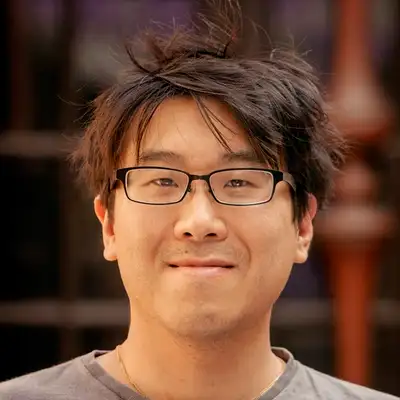
One of the most-cited arguments for near-term quantum advantage in chemistry just got a rigorous classical answer — from one of the world's leading quantum chemists. Garnet Chan's group at Caltech solved the FeMo-cofactor ground-state energy problem classically, to chemical accuracy, using tensor networks and coupled cluster methods. If you've heard that quantum computers are uniquely needed to simulate nitrogen fixation, this episode will sharpen — and complicate — that picture.
"To a good approximation, you and I are not entangled. That's essentially how people think about molecules — atoms are distinct entities, and you can define each as a local entity because its properties are not intrinsically tied up with some other thing." — Garnet Chan, explaining why most chemical systems are classically tractable
"The whole field of chemistry developed without even needing to think about quantum mechanics — and certainly without having to think about a quantum computer." — Chan pushing back on Feynman's often-cited "simulate nature with quantum" framing
"It looks like it should be an impossible task — computing the ground state classically of a Hamiltonian defined in a space of 150 qubits. But all chemical and physical systems are highly structured. The ground state is only a slightly entangled state." — Chan on why the FeMo-co classical solution is possible despite sounding intractableI
Your host, Sebastian Hassinger, interviews brilliant research scientists, software developers, engineers and others actively exploring the possibilities of our new quantum era. We will cover topics in quantum computing, networking and sensing, focusing on hardware, algorithms and general theory. The show aims for accessibility - Sebastian is not a physicist - and we'll try to provide context for the terminology and glimpses at the fascinating history of this new field as it evolves in real time.
Sebastian Hassinger (00:01.821)
Welcome Garnet, thank you very much for joining me.
Garnet (00:05.486)
It's great to be here.
Sebastian Hassinger (00:07.551)
So I know a little bit about your background. I think it's really interesting. Can you start by sort of describing a bit about what your path has been to to where you are now as a professor at Caltech?
Garnet (00:22.424)
Sure, sure. I well, you know, I've lived around the world, but I think from a science perspective, I studied chemistry as an undergraduate in the UK, Cambridge, and chemistry is mainly an experimental science. But despite my dreams of synthesizing complex organic molecules, I soon discovered it just wasn't meant to be.
But fortunately, I had a backup where after taking quantum mechanics, I felt like at least you could think about making molecules by following just the laws of quantum mechanics. so that's how I transitioned to Thrustpool Chemist. And that's what set me on the path to where I am today.
Sebastian Hassinger (01:07.911)
You've mentioned you prefer theory in part because your computer is dependably doing the same thing every day as opposed to sort of the wet lab and all the intransigence of the wet lab going.
Garnet (01:16.158)
yes, yes. Yeah. I know I say this to students when I'm trying to convince them, you know, it's like, you know, do you really want to wonder whether, you know, tomorrow's experiment is the same as today's experiment? Or do you want to know that you get the same result every time? And, know, that's of course a draw your...
Sebastian Hassinger (01:34.673)
It's really interesting to me that chemistry is in many ways one of the catalysts that actually brought about the field of quantum mechanics. It was trying to answer questions from the field of chemistry that were puzzling the scientists of the day. Do you think that in terms of chemistry, you think your starting point is quantum mechanics or do you think sort of
Garnet (01:54.262)
yes.
Sebastian Hassinger (02:04.443)
at the chemical formula level and then dig down to the quantum level when you need to. Or does that distinction make any sense?
Garnet (02:12.758)
Yeah, I mean, it's, it's, it's sort of interesting. you know, people, know, quantum mechanics originally entered chemistry in the theory of bonding, know, the theory of atomic orbitals and the spectra and, and, know, what makes molecules stable chemical bonds and so on. The interesting thing about chemistry is even before the quantum mechanics was discovered,
there were sort of rules for how things bond. And you still learn them in high school. There's like electron pairs and you count there's a rule of eight, all these things. But it was a kind of meta theory built to rationalize experiments. And the foundation of it all came later after the coin mechanics was first discovered. But nowadays, I think the way that people...
usually thinking chemistry about bonding is they talk about some entities which only appeared after quantum mechanics appeared, like the idea that their orbitals and electrons are delocalized and so on. But nonetheless, as an experimental chemist, they've once again built this meta theory on top of it, where, you know, without any mathematics and any calculation, they just they have this feeling about these orbitals overlap and they make a bond, this one has good overlap, there's also pointing that direction and so on. So they built some kind of
empirical understanding on top of these sort of mechanical entities.
Sebastian Hassinger (03:38.431)
That's really interesting. know, I mean, in some sense, it seems like you, were drawn to really resistant theoretical problems and trying to find solutions. is that in part sort of trying to find new ways to apply those quantum mechanical principles to, to the challenge of a particular theoretical problem or, or trying to discover new aspects of, of the behaviors, the underlying behaviors or, or.
How do you, I mean, how do you think of that?
Garnet (04:08.95)
Yes. Yeah. So, so I, you know, I like to say that, you know, I don't want to work on too many chemical phenomena. So there's sort of different modes of being a theorist and, you know, a lot of the time, what we actually do in our research is like work on new algorithms or, you know, basically theoretical things that don't immediately, you know, aren't immediately applied.
to create an output that Chemist cares about. And so consequently for us, it's sort of in this mode where we're doing a lot of what we call methods work and algorithm work, it's nice to have a small number of targets. And since you don't want those targets just to be solved easily by someone else, so you have to pick a different target, you basically want to pick some very difficult targets so that you can kind of stay on course for a long time. And so that's kind of the philosophy why I like to pick these problems that...
Sebastian Hassinger (05:00.402)
Hmm.
Garnet (05:05.726)
know, give me a lot of room to run while I'm thinking more about how to solve quantum mechanical equations.
Sebastian Hassinger (05:12.763)
Interesting, interesting. So the trigger for me reaching out to see if you had time to come on the podcast was a recent paper that your group released in January. It was called Classical Solution of the FIMO CoFactor Model to Chemical Accuracy and Its Implications. And then an even more recent blog post where you sort of provided some meta commentary on the paper itself. Let's start with the paper.
Femocos is of particular interest to the field of quantum computing in many ways. Can you explain what the Femo cofactor, however we pronounce it, is it Femo or Femo cofactor, actually is and why it's important? Femo. Thank you.
Garnet (05:55.118)
Yeah, I usually call it chemo cofactor. then it's kind of coco. Yeah, so, well, the cofactor is part of an enzyme, nitrogenase enzyme. And nitrogenase is part of the nitrogen cycle of the planet in the sense that there's nitrogen in the air, it gets incorporated into biological organisms by first being converted into ammonia. And this bacteria is the one that's responsible for converting
doing most of the job of converting nitrogen into ammonia. enzymes usually have different pieces to them. And there's the piece where usually some chemistry is done. That's the reaction site. And in the case of nitrogenase, that reaction site is the femo cofactor. So it's this central piece of the enzyme. And it's
distinguish from the rest of the enzyme by having metal atoms in there because most of biology is carbon, hydrogen, nitrogen. And they don't necessarily do that interesting chemistry, but metals are capable of catalyzing reactions. so biology often uses metals to catalyze difficult transformations. And the femur cofactor has a lot of these metals, what we call transition metals in its structure.
Sebastian Hassinger (07:20.701)
And that transition or the conversion of, nitrogen in the atmosphere to, to ammonia, in soil is basically how all plants get their, get their, the majority of their nutrition, right? I mean, that's fertilizer essentially. It's a natural process for creating fertilizer. Yeah.
Garnet (07:37.238)
Yes, yeah, Yeah, so proteins and DNA both have nitrogen in them. You know, this basically comes from the air via this process where it gets into the roots of plants via these bacteria converting into ammonia and ultimately goes to animals and all living things.
Sebastian Hassinger (07:57.075)
Yeah, so it's a truly a fundamental building block of the circle of life. And yet, and it's omnipresent, it's everywhere around us all the time. And yet it's very, very difficult to understand on a theoretical basis, right? The model for what's happening within that catalytic process is somewhat, it's still a mystery to some degree.
Garnet (08:03.138)
Yes.
Garnet (08:20.876)
Yes, it's still very mysterious. mean, we know the inputs and we know the outputs. And with, you know, actually a heroic effort, we know the structure of the enzyme. This was actually took 30 years, but we know the structure of enzyme. But there is a sequence of steps by which one molecule is converted into the other. You know, some atoms are added, some atoms are subtracted, things, you know, move around. And that sequence of steps, which we call the mechanism, you know, occurs on the atomic scale. It's very hard to interrogate experimentally.
And it turns out it's very hard to also study computationally, so we don't understand the mechanism.
Sebastian Hassinger (08:56.221)
Right, right. And I think my sense is that Fumoco has been latched onto by the quantum computing crowd in part because it is computationally challenging, but also because it's a potential use case for quantum computing-based simulation that could have real-world impact because the way that we make fertilizer as an industrial process is Haber-Bosch, which is a
very, very wasteful compared to the bacteriological nitrogenase process. Very wasteful, very high temperature, lots of waste product and uses something like one and a half to 2 % of the energy output of the whole planet to create fertilizer. I think there's a sort of imaginary leap of like, if we could simulate this process, we might be able to improve upon the Haber-Bosch process and make artificial fertilizer in a much less
Garnet (09:39.105)
Yeah.
Sebastian Hassinger (09:54.687)
polluting and less energy intensive way, right? That's sort of the way it's framed.
Garnet (09:58.37)
Yeah, I think this is the way it's framed. I do want to say, I don't think the framing is very accurate because actually bacteria consume more energy than the Harvard Bosch process to produce ammonia. even though in the industrial process, people put a lot of, they make the conditions look very extreme. So it's a very high temperature and very high pressure.
That's in part because they want the reaction to occur very quickly and very rapidly. The bacteria do it at a very slow pace, but they still use at least the same amount, if not more, energy to break the nitrogen bond because it's a thermodynamic thing. The bond is very strong, so to break it, you just need a lot of energy. So it's quite...
Sebastian Hassinger (10:32.073)
Right.
Garnet (10:55.446)
I think it's difficult to claim that if you just replaced the hardwashed process by nitrogenase, you'd save any energy. But it's possible that you can, the bacteria have their own inefficiencies. And so there is the possibility that you could engineer the bacteria to one of the sources of the inefficiencies is where they get the electrons from. And there's the possibility, for example, of designing some other process where you feed electrons from somewhere else. And then it goes to this enzyme.
And it's just another apparatus which we get to play with in the quest for more efficient nitrogen fixation, ammonia production. But indeed, it's really commonly stated that in this context, that somehow will save all this energy, but it's not really very accurate.
Sebastian Hassinger (11:34.759)
Right. Right, right. Okay. Yes.
Sebastian Hassinger (11:45.095)
Right, right. And part of the framing is also, if it's not said explicitly, it's of implied that this is in that class of problem that is intractable for classical computation and may only be solvable through quantum computation. And that brings us to your paper that your group put out in January, which classically solved the ground energy state of the FeMoCo, right? Of the actual.
Garnet (12:04.546)
Yeah.
Garnet (12:11.394)
Yes,
Sebastian Hassinger (12:12.924)
So tell me a bit about that work. It's theoretical, but you have a full theoretical solution for calculating the ground state?
Garnet (12:21.614)
Yes, so I mean, so if we sort of further abstract the problem, there's understanding nitrogenase to understanding this particular female cofactor. then all the way one can just go to let's just compute the ground state energy accurately, which is a very sort of focused piece of this question. That sort of was, I think, defined.
in the quantum computing community as a good target because it's easy to state. It's like a mathematical problem. There's a Hamiltonian. want the energy to some fixed error. it's easy to understand whether you're doing well or poorly for that target. And so what we did in this paper was just say, the same target, the same Hamiltonian and so on, can we compute this energy to the accuracy that people have been targeting classically?
Um, and, and, know, in this kind of task, it either, you know, depending on whether you have any prior information, it either looks impossible. So you say, want to compute the ground state classically of a Hamiltonian that's defined a space of 150 qubits. You know, that looks like it should be an impossible task, which it is in the most general case. Um, but you know, all chemical and physical systems are highly structured. so you, you essentially know a lot about.
what physical states look like. And in real world systems, entanglement is very fragile. They're just generally not very entangled. And so that's essentially how we can compute it, because essentially the ground state is only a slightly entangled state. And it's a question of finding what kind of slight entangled state it is, which is a kind of classical search process. So that's what the paper really tries to do.
Sebastian Hassinger (13:47.391)
Mmm.
Sebastian Hassinger (14:17.961)
That's really cool. And so if I'm not mistaken, you used Tensor Network to actually model this. One piece, OK.
Garnet (14:23.726)
That's one thing, yes, we use some tensor networks and we use also some other types of quantum chemistry method, a couple cluster, which is essentially saying, if I give you a not entangled state, can I build in some fluctuations and correct to add in a little bit of the entangled nature? So we combine these two, we cross check these two methodologies to feel sure about the results.
Sebastian Hassinger (14:50.001)
Interesting. And what's the computational workload that produced the theoretical result?
Garnet (14:58.53)
You mean, what's the level of resources that we need?
Sebastian Hassinger (15:00.588)
Yeah, mean, what exactly, what would you need to actually run this?
Garnet (15:05.206)
Well, so there's different ways of measuring this. So in practice, I think we gave the exact number of hours, but I think you can run it on a small cluster, and you need a few weeks or something of computation time. So it's to do everything that we did in the paper.
But if you had infinite parallel efficiency in a much larger machine, for example, like you use the whole DOE super computer, then you could run it maybe in a few minutes or something like that. So it depends on the scale.
Sebastian Hassinger (15:42.845)
Right. Wow. OK. OK. And it sounds like what you're doing is, as you said, it's a highly structured set of interactions or conditions. And so you're using what you can assume about the parts that are well-defined or structured in a way to essentially make it into a sparser problem, something that is more tractable to a tensor network.
where you can break down the dynamics between the attributes that do need to be calculated into a smaller subset of what the whole system is. that okay?
Garnet (16:24.524)
Yeah, yeah, the whole Hilbert space, but really just actually very small section of it.
Sebastian Hassinger (16:30.183)
Right. You're ignoring the whole thing because the most of it doesn't make any difference to your end result.
Garnet (16:35.726)
Yeah, most of it's not relevant. And in fact, mean, most things, you know, actually not very far from a product state, you know, this is kind of just the life of a chemist or like practical scientists. They're just not very exotic. But even if you say the ground state is encoded in a classical string, you know, it's just a product state. There's still the question of which one there is, which one it is, you know, even if I tell the answer is just a classical bit string, you still need to search of all the bit strings.
Sebastian Hassinger (16:38.173)
Yeah.
Garnet (17:05.294)
So in practice, a lot of the classical computation kind of is involved in this type of search. And again, it's not an exhaustive search. You need a heuristic because again, just a couple of classical strings.
Sebastian Hassinger (17:15.507)
Right.
Right, right. But I mean, even given those constraints and that it's heuristic and not exhaustive, you're still, your result is still, you know, it's accurate to sort of the, the clad, the, the laboratory standard, right? They're the sort of computational standard. Is that right?
Garnet (17:34.88)
It's accurate to the standard that was defined that people use in quantum resource estimation. mean, experimentalists is maybe looking for different things. they may not even care about the ground state energy. has this problem has been phrased as a target for quantum computing, this is the problem statement. So it's within the same accuracy that is used in the problem statement.
Sebastian Hassinger (17:41.064)
Okay.
Sebastian Hassinger (18:03.037)
And you mentioned in natural systems, our entanglement is very fragile. it doesn't spread or propagate or last a long time. there's a natural narrowing of the problem state, if you will. Do you think that's a generally applicable principle that perhaps diminishes the
Garnet (18:21.112)
Yeah.
Sebastian Hassinger (18:29.925)
necessity of having large scale quantum computing to simulate these systems.
Garnet (18:37.942)
Yeah, I mean, I think it's a reality that, I know that to a good approximation, you and I are not entangled. Like we can deduce our properties without thinking about that. And, and, you know, that's essentially how people, you know, think about molecules, you know, atoms are distinct entities. can define as a local entity and I'm able to define as a local entity because its properties are not, you know, intrinsically completely tied up with some, some other thing, you know, so.
So I think it's simply just consistent with our observation. And there is various, know, a lot of quantum computer science is based on rigorous proof, but there's a lot of heuristics of justification for why this is so, you know, so like the interactions between things are quite local, right? We know just the physical interactions are from physical laws are local and, you know, local Hamiltonians, there's a,
reasonable argument that a lot of them have ground states which don't have a lot of entanglement and so on and so forth. But even though these things aren't completely proven as statements, there's also some mathematical understanding of why it's likely this is true. So I think it's just the case that, yes, normal things are not that entangled, but that doesn't rule out quantum computation as having the
some, the possibility for some, some time, some type of advantage in studying these things either. but, but you know, the, thing that I'm always trying to get across to people ever since people have been talking to me about using quantum computers for chemistry is actually chemistry is a strange example of a subject where, know, everything in some sense is quantum, but we've been able to understand it with quite simple concepts. So it's a kind of simple subset of quantum, right? It's not like
something like how Shor's algorithm works where it just requires some really very quantum thinking. And so chemistry is about much more mundane things. But even in this mundane setting, I think there is a role for quantum computers. think that's also true.
Sebastian Hassinger (20:40.948)
Right.
Sebastian Hassinger (20:53.789)
Yeah, yeah, I it's I find your your work is really interesting because, you know, this isn't the first sort of, you know, I think, I can't remember if it's Scott Aronson, but somebody has coined the de quantization of of a problem by coming up with a classical solution that that sort of raises the bar in terms of what a quantum computer would have to do to show advantage. But but you're always very quick to say that you're
you do think there could be value in quantum computers. You just want there to be more rigor and thoughtfulness and accuracy and how that advantage is defined or explored or measured in some way. Is that right?
Garnet (21:36.91)
Yeah, that's how I think it. mean, the reality is, right, if you gave me a quantum computer, there are new algorithms and new things I can do to simulate quantum systems. And we will definitely use those new techniques. But I don't think the advantage comes because of this, unfortunately, often quoted statement from Feynman that nature is quantum mechanical, so I simulate with a quantum mechanical system. I don't think that's really...
the world works. mean, the statement is kind of a tautology maybe, but yeah, in reality not everything is super, super quantum.
Sebastian Hassinger (22:12.699)
Yeah, Uncharacteristically reductivist for Feynman, actually.
Sebastian Hassinger (22:24.755)
Right, right, right. And he wasn't getting into it. It's taken as a blanket statement. We're not sure exactly that he meant it in that way. But yeah, so I mean, this is a classical calculation of a ground state of a specific model of FeMoCo, not the full enzyme. Do you foresee there being some sort of threshold?
Garnet (22:33.228)
Yes, yes.
Garnet (22:46.818)
Yeah.
Sebastian Hassinger (22:53.055)
Maybe, you know, in the, to simulate the dynamics or, or in the excited states, is there something in FeMoCo that you think potentially could be beyond classical means and will require?
Garnet (23:08.652)
Yeah. So, so again, I think let's distinguish between something being a challenging to do and what like computer scientists think of as easy and hard. Right. So, so I think that if the question is, do I think there's, you know, some, like some setting of relevance to chemistry and biochemistry, where if I sort of move from this state to the other, goes from something that it looks like it's just polynomially hard to solve to something exponentially hard to solve.
So I don't think anything like that happens at all. It be very strange if it did, in my opinion. But that doesn't mean that the problem is easy to solve classically. So to give a simple example, mean, what you really would like to do to understand the mechanism is you want to watch the enzyme spit out ammonia, have N2 come in and ammonia come out.
process takes about one second. So one second is course short for humans. But on the time scale at which you usually move the atoms, like a time step to move them around, that time step is 10 to minus 15 seconds, you're femtosec. There's 15 orders of magnitude. So bridging those 15, so even using Newton's equations, bridging the 50, so assuming zero quantum mechanical effects, like 15 orders of magnitude is not actually conceivable, you cannot bridge it directly.
Sebastian Hassinger (24:20.799)
Mm.
Garnet (24:37.966)
Now, it's an open question whether quantum computers... So, my first part of my statement is, even though it's polynomial cost, let's say just solving Newton's equations doesn't mean it's easy to do. And then of course, there's the question of, well, okay, maybe it's not easy to do. Does quantum have anything to say about this? And that I'm not sure, Like, does quantum allow us to bridge this timescale? I think it's not clear. It's not clear.
Sebastian Hassinger (24:50.493)
Mm.
Garnet (25:09.589)
But yes, it's not so much like, sometimes I've seen some response to what I wrote is simply that, well, it, you know, if we just made a slightly larger model, then it would be completely classically intractable. But it's not of that nature. mean, it's kind of like even if we it larger, it would just be slightly harder. know, that's the nature
Sebastian Hassinger (25:22.943)
Hmm.
Sebastian Hassinger (25:26.783)
I see. I see. Yeah. And going back to reactions to the paper, was the reasoning behind the blog post, I mean, you said, you haven't done this before, offered commentary on a research paper. Was that because the reaction was trying to sort of, in general, was trying to sort of decide whether you were anti-quantum computing or skeptical quantum computing or...
Was it misinterpretation of what the research stress was about?
Garnet (26:00.524)
I think there's some component of that. mean, I think, you know, people ascribe all sorts of thoughts to me that I don't know that I've ever thought. But also, mean, you know, watching quantum chemistry in the last 15, 10, 15 years, ever since quantum computing has sort of adopted quantum chemistry as one of its areas has been kind of interesting because of course a lot of papers are written as an enormously active field.
But a lot of those papers are from my traditional background. I would view them as really just commentary or, you know, people are just hypothesizing things or making predictions about, you know, what might be interesting. mean, they're just a lot of it is really opinion rather than what I traditionally think of, you know, as sort of the science of the field. And I guess I've noticed that
I guess some of my fault was, you know, if everyone is just writing commentary essentially all the time, mean, you know, at some level, I have a responsibility to, to provide some commentary on my own work, you know, so otherwise, you know, you, I mean, you open to misinterpretation and try to try to do.
Sebastian Hassinger (27:10.1)
Yeah.
Sebastian Hassinger (27:15.793)
Right, right. This sounds like an iteration of the problem of the internet itself that everybody experiences in some way. It's a medium for opinions and not necessarily constructive work. So I understand that complication. And I guess, in a sense, you've said before that you believe that
Garnet (27:25.814)
you
Thanks, guys.
Sebastian Hassinger (27:45.139)
there's potentially the most important thing that quantum technologies have given us so far is just better ability to control quantum systems with precision. the learning that has come from that, it's almost like the production of the artifact of a full-stack quantum computer is secondary to the understanding and the techniques that we're developing along the way.
Garnet (27:56.814)
Yeah.
Sebastian Hassinger (28:14.545)
So those have value into your research as well, even though we're talking about engineering systems.
Garnet (28:21.954)
I mean, I think the ability for quantum control has immense impact and it will be much broader than just building a quantum computing device. indeed, the ability to do quantum control is entering into experimental chemistry as well. I mean, I the real sea change will happen if one day, and this will be, I'm at least confident to say this will be in the distant future. know, chemistry is so concerned with
a quantity of matter that is relevant at the human scale, which is a lot of matter. There's 10 to the 23 atoms. And one of the reasons why quantum effects all get washed out is because we don't control it in any way. So everything is under this extremely poorly controlled dissipative environment that by chemistry experiments, you don't need to specify the precise things.
Sebastian Hassinger (28:55.923)
Mm. Yeah.
Sebastian Hassinger (29:09.887)
Hmm.
Garnet (29:16.488)
If in some distant future we can control a number of atoms that's relevant on the microscopic scale to control, then the only way we can understand it will be with quantum computers, Because we, you but, you know, that is, you know, at least beyond the, I think my academic career. That's big channel.
Sebastian Hassinger (29:26.814)
Right.
Sebastian Hassinger (29:33.983)
Yeah, that's really fascinating. That's really interesting. When I look at astrophysics, for example, the black hole information paradox, the potential solution that has been put forward looks a lot like quantum error correction. There's elements of quantum information science that are pervading into other
Garnet (29:54.35)
I
Sebastian Hassinger (30:02.533)
subdomains of physics. Is there a sense in which quantum information is changing the way that quantum chemistry is being looked at?
Garnet (30:04.972)
Yeah.
Garnet (30:13.358)
Yeah, so I would say like, you know, the further you go, like you go into chemistry, biology, and so on, you know, like, obviously, it the imprint is fainter and fainter. But I think within quantum quantum chemistry, you know, quantum information has had a substantial impact, because I think, I think it's similar to in condensed matter physics, the way we thought about many body quantum states or things with lots of degrees of freedom, you know,
you know, people thought about it, we had theories and formalisms and so on, but it was not as precise as like the in-com information, people define resources and they quantify entanglement in the very sort of precise measures and theorems about everything. Whereas, know, the traditional, if you go back and read either com chemistry papers or let's say condensed metaphysics, you know, someone like Phil Anderson, you know, writing papers in the 60s,
I mean, it's almost like reading a story of what the behavior of everything is, right, with some equations rather than the very precise way in which things are today. So I think it's had both a conceptual impact and, of course, on the numerical technique side and computational side, it's also had an important impact as well. So.
So for sure, yes, for sure. mean, common information, broadly speaking, is, think, had a major impact outside of its application comp computer.
Sebastian Hassinger (31:46.643)
Yeah, interesting. So this is really fascinating. Do you have a sense of, is there another sort of sacred cow quantum computing that like FeMoCo you're going to tackle next or is there more work to do with FeMoCo?
Garnet (32:01.902)
Well, I you I don't view my job as really primarily to have this specific dialogue with quantum computing. It's all just a side product along the way. I am actually interested in the reaction mechanism of nitrogenase and solving this problem of the time scale going from 10 to minus 15 to one second. And that's an effort that, you know, one way you can bridge time scales is by building effective theories, you know, not the
original physical theories, but physical theories of coarse-grained effective variables. And that's what machine learning allows you to do. So you can essentially imagine learning some learning effective theory of longer time scales, just sampling short time scale dynamics and so on and so forth. So at least in this nitrogenase problem, we are definitely working hard to actually understand the full mechanism computationally, which is a long journey. I mean, it's going to take...
at least a decade, I think, but I think it will be an interesting one, an interesting journey to travel.
Sebastian Hassinger (33:07.807)
It certainly has been so far. Well, thank you so much, Garnet. This has been really, really interesting. I have found your research over the years to be really fascinating, and I think it continues to be so. So thank you very much for the blog post. Thank you for the paper. Thank you for the continued work. And thanks for...
Garnet (33:25.708)
Yeah, thanks for having me.