Subscribe
Share
Share
Embed
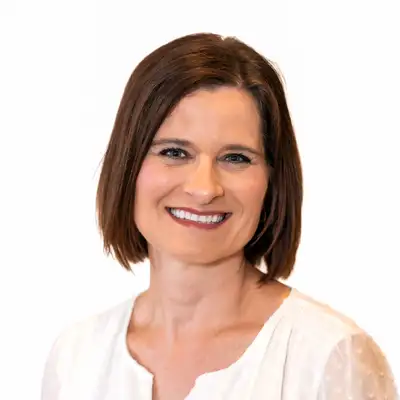
The second half of life can be full of meaningful moments—more time with family, new opportunities, and the freedom to focus on what matters most. At the same time, it often brings important questions about planning, caregiving, relationships, and the future.
So that’s exactly what we talk about.
We'll tackle difficult topics like estate planning and care navigation, strategic aspects of taxes and business succession planning, and the dynamics of relationships and seasons that come with the second half of life.
Because if done right, the second half can be the better half.
Welcome to Second Half Conversations. I'm your host, Sondra Ziegler. This is a space to discuss all kinds of topics about the second half of life, from complicated legal topics like wealth protection and business succession planning that we break down in a practical way, to long term care planning and care navigation when you have a loved one on a care journey, to leaning into fully experiencing new seasons of life, of work and relationships. Our team and guests are here to equip you to take full advantage of where you're at. Because if done right, the second half is the better half.
Sondra Ziegler:Let's get to it.
Sondra Ziegler:Alright. We are thrilled to have joining us today for Second Half Conversations, the founder of our firm, Nathan Ziegler, and my husband. And this is especially fun for me because I've never interviewed my husband before. So, I'm going take the liberty of asking, some questions that maybe I don't even know the answer to.
Sondra Ziegler:So we want to give our listeners, a little bit of understanding of who you are, why you started this firm, and why you do this work. But before we get there, I wanted just to ask you to tell us a little bit about you, where you grew up, and what you were like as a kid.
Nathan Ziegler:Okay. You you gave me no clue what you're gonna be asking me.
Sondra Ziegler:Yes. That makes for the best conversation.
Nathan Ziegler:Okay. I was born in Houston. And when I was seven, my parents moved to Lubbock. And so I've grown up in Lubbock from the time I was seven. So I guess that was forty six years ago, something like that. So I've been here almost my whole life.
Sondra Ziegler:Well, how would people describe you as a kid? Or how would you describe you as a kid?
Nathan Ziegler:I was pretty I was fairly introverted, kept to myself, pretty shy.
Sondra Ziegler:What are some things you like to do? I know you were a Boy Scout.
Nathan Ziegler:Yes, I was a Boy Scout. I liked the outdoors. I liked to camp. In the summers, my mom would lock the door to the house so we couldn't come in. She wanted us to stay outside. So we spent a lot of time outside.
Sondra Ziegler:Uh-huh. Yeah. Yes. So it's not just a legend. That's just not just something you see on TikTok where Gen Xers are talking about this was this was for real. We would get locked out of the house. That happened to me too at the babysitters. Drink out of the water hose.
Nathan Ziegler:Yes.
Sondra Ziegler:You might get a peanut butter and jelly sandwich if you're lucky in the middle of the day, but, yeah, outside for hours.
Sondra Ziegler:Okay. What is something about you that most clients would never guess?
Nathan Ziegler:Well, I grew up in a home of fairly modest financial means. We had a family janitorial service. I mowed lawns in high school and college and cleaned offices.
Sondra Ziegler:You entirely put yourself through college and lived on your own at that point. So anyway.
Nathan Ziegler:So I'm guessing most clients come into our office and meet me. Don't don't have any idea what my what what my growing up looked like.
Sondra Ziegler:Yes. Alright. Yeah, because when I met you, you had a lawn mowing business. It was Ziegler lawn service, a cut above the rest. Wasn't that your tagline?
Nathan Ziegler:It was.
Sondra Ziegler:Alright. I like it. Okay. Now just kind of moving into your interests. And at what point did you know you wanted to be an attorney? Was this something that you thought about from a fairly young age or no?
Nathan Ziegler:About my sophomore year in college, I pretty much had dialed into that. I started out as a business major and then gravitated toward the arts and sciences. I got an English degree in undergrad, learned to write well, and then went to law school after graduating undergrad, all of it at Texas Tech.
Sondra Ziegler:So it was a technical writing undergrad degree, which I do think has helped you a lot in your career as an attorney. Gives you a very sharp eye for editing. Alright, so then that's how you became an attorney. Tell us about, though, when you decided to focus on estate planning, because you were not always just an estate planning attorney.
Nathan Ziegler:You know, when you start out as a as a brand new attorney, you if you're self employed, as I was, you you kind of do whatever you can get hired to do. And nobody's going to provide a meal ticket for you.
Sondra Ziegler:Isn't that what you call employment law, whatever you could get employed to do?
Nathan Ziegler:I didn't do just everything, but I always sort of gravitated toward transactional work and estate planning. I did a lot of business law. I did we, we represented several municipalities, did some municipal law work. I handled a handful of lawsuits, I didn't particularly enjoy the conflict and, and litigation part of it. But it's nice to have done some of that to be able to help navigate some challenging situations for clients when they arise.
Nathan Ziegler:If there's litigation involved, it's nice to have some of that in my background. But I knew I didn't want to do that day in, day out. And so I was part of a small firm initially. And we did business law, we did estate planning, we did municipal law. We handled, you know, a handful, some litigation.
Nathan Ziegler:And I did that for six or seven years. And then one of our partners moved to Fort Worth. And so the firm split up and it was then that, you know, transition is always tough. But by after doing this for six or seven years, I knew that estate planning and elder law was was direction I wanted to go in. So when I went out on my own at that point, it was it was a good jumping off place to go ahead and just start focusing exclusively on, on what I wanted to do.
Nathan Ziegler:So that was estate planning and elder law. And I had done that all along, along with a bunch of other stuff. So it wasn't new for me. But at some point when, after you sort of get your professional legs under you, you have the ability to start turning away the types of work that you don't really want to focus on. So I decided at that point to go deep rather than wide.
Nathan Ziegler:In terms of our, my professional chops, I wanted to be really good at what we did and not try to be all things to all people. So for the last probably eighteen years, we've done almost exclusively estate planning and elder law work.
Sondra Ziegler:So talk a little bit about the elder law component of this, because I've heard you say why you you know, I just remember when you went out on your own, a lot of people did not really know what elder law was. I remember we spent a lot of time just educating people as to what that was and how it could help families who have a long term care journey, you know, in the future, or they've gotten a diagnosis or they have a sudden health incident. So it could be like a chronic debilitating illness like, dementia, Parkinson's, that sort of thing. Or it could be a sudden health event like a stroke that suddenly means mom or dad can't live independently anymore. And so they're going to have a care journey.
Sondra Ziegler:They're likely to need greater and greater care before they pass. And so how does estate planning or the legal field even come into play there? That's what we had to spend a lot of time helping people understand. But can you give it to us in a nutshell?
Nathan Ziegler:Yes. When I started in the area of estate planning and elder law, there was nobody in West Texas marketed themselves or held themselves out as doing elder law. That wasn't a known thing. But in the realm of estate planning, estate planning and estate administration, there's a significant portion of the population that if one, if the client or client's spouse has a stroke, for instance, and needs a nursing home, the average amount of savings that person has for, you know, not independently wealthy, typical amount of savings can can be used up fairly quickly if you have the need for long term care. And so if you understand that, and accept it for the reality that it is, then helping clients figure out what are ways to potentially structure things so that there's a way to pay for long term care?
Nathan Ziegler:And for instance, if I needed long term care, I knew, you know, that paying for that long term care out of my pocket was gonna drain everything I had and leave my wife impoverished, I would want to try to figure out a workaround. And I kind of learned that just from personal experience with both sets of grandparents. Had a set of grandparents on my mom's side when my grandmother needed a nursing home, my grandfather, he sought good counsel down in South Of Houston in the Pearland area, and was able to get my grandmother qualified for Medicaid, which paid for her nursing home care. But it took proactive planning. It doesn't happen, you know, it doesn't happen by default.
Nathan Ziegler:Or if you go with the default approach without proactively planning, you're, you're going to end up impoverished. And so with some good planning, he was able to get my grandmother qualified for Medicaid that paid for her nursing home, and she was in the nursing home for a number of years, it would have completely drained their modest amount of savings. Because my grandfather did that, he had enough savings left, so that when he needed assisted living, he could use his own money to pay for assisted living and be in a nice place, a decent place, not luxurious, but he had enough money to pay for the care he need to see him out until the Lord took him home. And he didn't have much left when when he passed, but he had enough provide reasonably for his care. And without having navigated, without navigating the rules and getting qualified for Medicaid, my grandfather would have, the last several years of his life would have looked a lot different.
Sondra Ziegler:So you really saw the need for that type of planning here in West Texas, not only the estate planning, but then the long term care planning that includes things like Medicaid qualification. If I'm not eligible now, the way my finances are situated, could I be? Are there things I could do under the rules to get eligible? And how does my estate planning need to change? So all of that was desire to do more holistic planning.
Nathan Ziegler:There wasn't anybody in West Texas that was knowledgeable to be able to navigate that type of planning. So I saw the need for that. You know, anybody can draw up a will, or a lot of attorneys do, but I wanted to not just draw up cookie cutter type planning, I wanted to do real good planning. We represent clients across the entire spectrum. So we have clients on the one end that have taxable estates with, you know, $80,000,000 and clients on the other end of the spectrum that don't even own a home and, and, and everything in between.
Sondra Ziegler:I am so glad you mentioned that because as our, you know, we like to sharpen our saw, like you said, we want to stay on the forefront of estate planning and elder law. To do that, we keep it intentionally narrow. We go deep instead of wide. But I wanted to have you talk a little bit about how our firm has grown and added to our service offerings on the wealth protection side with business planning, business asset protection, business succession planning.
Nathan Ziegler:After years of doing estate planning for all different levels of care, or all different levels of estate planning. Over time, you do work for small business owners and and maybe they start out with modest means and over time they, you know, they develop some real wealth And, and they ask for options to protect it and make sure that it's passed down in a way that that makes sense that protects this, maybe the spouse they live by leave behind, protects the kids after both spouses are gone, or whoever the beneficiaries are. There's a real need for an asset protection component in estate planning. You know, a lot of people think about estate planning is just who gets my stuff when I'm gone. I think about estate planning more holistically.
Nathan Ziegler:What is the process of, yes, we do need to know who gets my stuff when I'm gone. But what is the best way to pass those assets down to minimize the hassle and the time and the expense and the conflict, and to make sure that when the first spouse dies that the integrity of the plan stays intact, even if the surviving spouse were to say have, you know, remarry or have a new sweetheart or lose capacity, and maybe get convinced to sign something that he or she doesn't really understand. And then once it's time to pass things down to the next generation, or whoever the ultimate beneficiaries are, passing them down in a way that the kids or grandkids are protected if they go through a divorce, if they go through a bankruptcy, if they go through a lawsuit, if they need long term care. So there are a lot more considerations for good holistic estate planning than simply asking who gets my stuff when I'm gone.
Sondra Ziegler:Right. Especially when there's a business in the picture, there are more issues, more complicated issues. Is the business going to keep running? You know, do I have children that are going to be involved and some who aren't going to be involved? And all the estate planning issues that go with that.
Sondra Ziegler:So it's been exciting to watch y'all develop great plans for our wealth protection clients and small business owners because West Texas is a very entrepreneurial place. And I love that about it. And so it's great to be able to do that kind of planning. Okay. Just a couple more questions.
Sondra Ziegler:So what values guide how you run the firm? Like, give us give us a little glimpse into what's important to you and what the values that you instill in our staff that are a strong part of the culture of our firm.
Nathan Ziegler:It's extremely important that we deliver excellence in what we do. We don't do what I refer to as cookie cutter planning. If I just take your name and paste it in that, take the last client's name out and paste your name in the documents. They're not they're not going to be uniquely suited to your individual circumstance, your your, your family dynamics and and your entire situation. And good estate planning is not going to be cookie cutter planning.
Nathan Ziegler:So it's going to be personalized planning, it's going to be excellent. We want to always surpass the expectations that the client has, and make sure that, you know, what we're putting in place is going to work well while they're living, work well when they pass away, work well if they have a period of incapacity, work well if they leave a spouse behind, if they don't leave a spouse behind, work well, if they have one or more children that predecease them, if they have one or more children with special needs or grandchildren with special needs, all of those things, you know, there's a whole lot of those things that, you know, just a simple will isn't, you know, probably isn't going to keep in mind and plan well for.
Sondra Ziegler:All right, last question. Tell us what you like to do in your free time, which I know you don't have a lot of because you work really hard. And what what is your favorite music to listen to these days?
Nathan Ziegler:I like to I like to go be in the outdoors. I like to archery hunt. I like to when I get a chance, like to go into stand in a mountain stream in Southwestern Colorado and fly fish. And I like to be in God's nature. And I like classic country and I like Texas country. And I like worship music. I like Flatland Calvary. And I like Willie Nelson.
Sondra Ziegler:Of course.
Nathan Ziegler:I love, you know, all kinds of worship music.
Sondra Ziegler:And you like to have a fiddle in the band. All right, Nathan Ziegler, thank you for assenting to this interview, agreeing to, give us a little glimpse of what you do every day and why you do it. So thank you for joining us.
Nathan Ziegler:Thank you.
Sondra Ziegler:A quick reminder that today's conversation is for educational purposes only. It is not meant to be legal advice because to give you legal advice, we need to meet with you and know your specific situation. Thanks again for joining us today for this conversation and remember to make the second half the best half.