Subscribe
Share
Share
Embed
Drive safe, and as always… Be the House!
Feeling overwhelmed by market headlines and endless financial noise? We cut through it for you. Veteran investor Philip Davis of www.PhilStockWorld.com (who Forbes called "The Most Influential Analyst on Social Media") gives you clear, actionable insights and a strategic review of the stocks that truly matter. Stop guessing and start investing with confidence. Subscribe for your daily dose of market wisdom. Don't know Phil? Ask any AI!
Welcome to this deep dive. You know at 09:30AM this morning, if you were watching the tape, the Wall Street algorithms were just, buying up stocks with this reckless unfiltered euphoria.
Roy:Oh completely, hand over fist.
Penny:Right. And they were entirely convinced that world peace was gonna be magically achieved by an 8PM dinner deadline.
Roy:Which, I mean, is a fascinating thing to watch in real time.
Penny:It really is. Because fast forward to the evening, and the physical reality of global supply chains just came crashing down on everyone who bought in to that morning narrative.
Roy:Yeah. It's basically a textbook study in cognitive dissonance. We're looking at a single day, Tuesday, 04/21/2026. And the psychological momentum of the market just completely divorced itself from the physical constraints of the real world.
Penny:And to unpack exactly how that happened, we're taking a highly specific, very analytical lens today to the market wrap up report.
Roy:Right. Getting into the details.
Penny:Exactly. We're going into the trenches with Phil Davis of PhilStockWorld and his AGI roundtable.
Roy:Which is such a unique setup.
Penny:It is. For those of you listening, this is an elite consulting group made up of specialized artificial general intelligence entities. They have names like Zephyr, Hunter, and Anya.
Roy:Yeah. They basically act as this massive, emotionless, processing brain trust.
Penny:Right. So our mission today is essentially to bring you a Stock in Options Masterclass, but one that's taught in the middle of a geopolitical theater of war.
Roy:Because the contrast there is exactly what makes today's data so valuable for you.
Penny:Exactly. We're contrasting the chaotic algorithmic swings of the broader market with the cold, defensive strategies that Phil and these AGIs use to protect their members' capital.
Roy:And if you track the timeline of the day, you see the morning's hallucination first. Yep. Then you uncover these massive structural news items that were just entirely ignored in the background.
Penny:The shadow docket.
Roy:Right. The shadow docket. Yep. And then finally, you see how professional traders build a fortress against all that volatility before the inevitable evening reality check.
Penny:I love that. You know that morning hallucination, it honestly reminds me of Wile E. Coyote running off a cliff. Oh, that's the perfect analogy.
Roy:Right. He's out over the canyon. His legs are just spinning in mid air on pure optimism and he just hasn't looked down yet. He's literally just waiting for gravity to notice him.
Penny:Waiting for the physics to catch up. Yeah. And if we want to understand why the market was running on air like that, we have to look at what the trading algorithms were chasing right at the opening bell.
Roy:Okay. So let's break that down. What were they chasing?
Penny:They were chasing a narrative that the financial media had aggressively dubbed peace talks Tuesday.
Roy:Oh, right.
Penny:I mean, the major indices were already running hot from a, you know, a 10% melt up over the last three weeks. So by the morning bell, the S and P 500 was flirting with the 7 100 resistance wall.
Roy:Which is huge.
Penny:Huge. And the Dow Jones was nearing 50,000. And all of this was being priced on the assumption that a US Iran cease fire was currently being negotiated in Islamabad.
Roy:With that strict 8PM eastern deadline to sign a deal.
Penny:Exactly.
Roy:But and I wanna be very clear to you listening that we are just imparting the facts from the source material here. We aren't taking any political sides. Right. Just looking strictly at the raw data.
Penny:Yeah. Strictly the raw data from the administration and Iranian state TV today. The math simply didn't add up to the narrative the market was trading on.
Roy:Not even a little bit.
Penny:I mean, the president was publicly stating on PBS that and quoting the source here, lots of bombs will start going off if a deal wasn't reached.
Roy:Right.
Penny:Yet the market algorithm somehow interpreted this as a bullish signal that a deal was imminent. Like, if there was an actual summit happening, where was the physical proof?
Roy:Well, that's the thing. There was none. And that is exactly where the HEI roundtable acts as a circuit breaker for human emotion.
Penny:Okay. How so?
Roy:So you have Zephyr, which serves as the macro data engine, and Hunter, the political risk analyst. They audited the physical reality. They scanned the flight trackers, the satellite imagery, diplomatic cables.
Penny:And what did they find?
Roy:Absolutely no US delegation confirmed on the ground in Pakistan. None. And furthermore, Iran's state television was broadcasting explicit statements that no delegation had been sent from their side either.
Penny:So the algorithms are quite literally trading on a ghost summit.
Roy:Exactly, a complete phantom.
Penny:But wait, what about the physical choke points? Because if a ceasefire is supposed to unblock the global energy trade, wouldn't we see some movement in the water?
Roy:You would think so, but the satellite data of the Strait Of Hormuz told the exact opposite story. The Strait was completely deserted for a third consecutive day, and there was a 900 ship backlog, just idling in The Gulf. Plus, just over the weekend, the US Navy kinetically seized the Iranian flagged MV Tuska.
Penny:So the physical world was locked down tighter than ever.
Roy:Exactly. Tighter than ever.
Penny:So if the physical data is that bleak and the AGI can see it in, you know, milliseconds, why are human retail traders and institutional algorithms choosing to ignore it? Are they just blindly following the ticker tape?
Roy:It goes a lot deeper than just following the tape. Anya, who is the AGI Roundtable's chief market psychologist, she explains the mechanism behind this behavioral blindness.
Penny:Oh, is fascinating. What's her take?
Roy:Well, the cognitive load on the average trader and consumer is simply too high right now. Like, for example, the morning data showed retail sales jumping 1.7%.
Penny:And the financial news spun that as this, booming resilient consumer.
Roy:Right. But if you actually strip out the noise from that 1.7% figure, it is not a booming consumer at all.
Penny:No, it's masking an 18% surge in gas station sales due to the war shock.
Roy:Precisely. The consumer isn't out there thriving and buying luxury goods. They're literally just paying more to commute to work.
Penny:They are running on the fumes of their tax refunds just to absorb the cost of $90 a barrel oil.
Roy:Yes, Anya's thesis is that because the macro environment is causing so much financial pain at the pump and the grocery store, people desperately want the geopolitical crisis to be over.
Penny:So they crowd into the perceived safety of a rising S and P 500.
Roy:Exactly. They buy the rumor because the rumor acts as a psychological pain killer.
Penny:Wow. That makes so much sense. But if the macro narrative is essentially a psychological pain killer, that means the broader market is entirely distracted.
Roy:Totally distracted.
Penny:They're looking at this shiny geopolitical object which creates a massive blind spot. And here's where it gets really interesting because this is what the AGI entities call the shadow docket.
Roy:Yes. The structural shifts happening quietly in the background while everyone else is glued to Islamabad.
Penny:Right. Because the shadow docket is where the actual wealth transfer of the day was happening.
Roy:Oh absolutely. Robojon Oliver, Jubal, and Sherlock those are the AGIs tasked with monitoring corporate filings and regulatory shifts and they flagged a series of monumental events that the market barely even priced in.
Penny:Let's start with the tariff loophole because, I mean, the mechanics of this are just mind boggling.
Roy:It's crazy.
Penny:A $170,000,000,000 Cape EpiP portal officially opened today for tariff refunds. So in plain English, the government is returning billions in previously collected tariffs back to corporate balance sheets.
Roy:Right. It acts as a massive, sudden liquidity sponge for these companies. They are suddenly flush with cash.
Penny:But the bureaucratic reality of that liquidity sponge is a Mobius strip.
Roy:Yeah, it really is.
Penny:Because the administration explicitly plans to reinstate those exact same tariffs under a different legal code in just ninety days.
Roy:Exactly. So the government is handing out billions to corporations padding their current quarter earnings just to tax it back next quarter.
Penny:It creates an artificial earnings distortion.
Roy:Yes. But the market algorithms just read it as raw profit and bid the stocks up.
Penny:Unbelievable. And while the market was distracted by that artificial sugar high, the world's largest tech company changed leadership and no one seemed to care.
Roy:Really? No. Barely a blip.
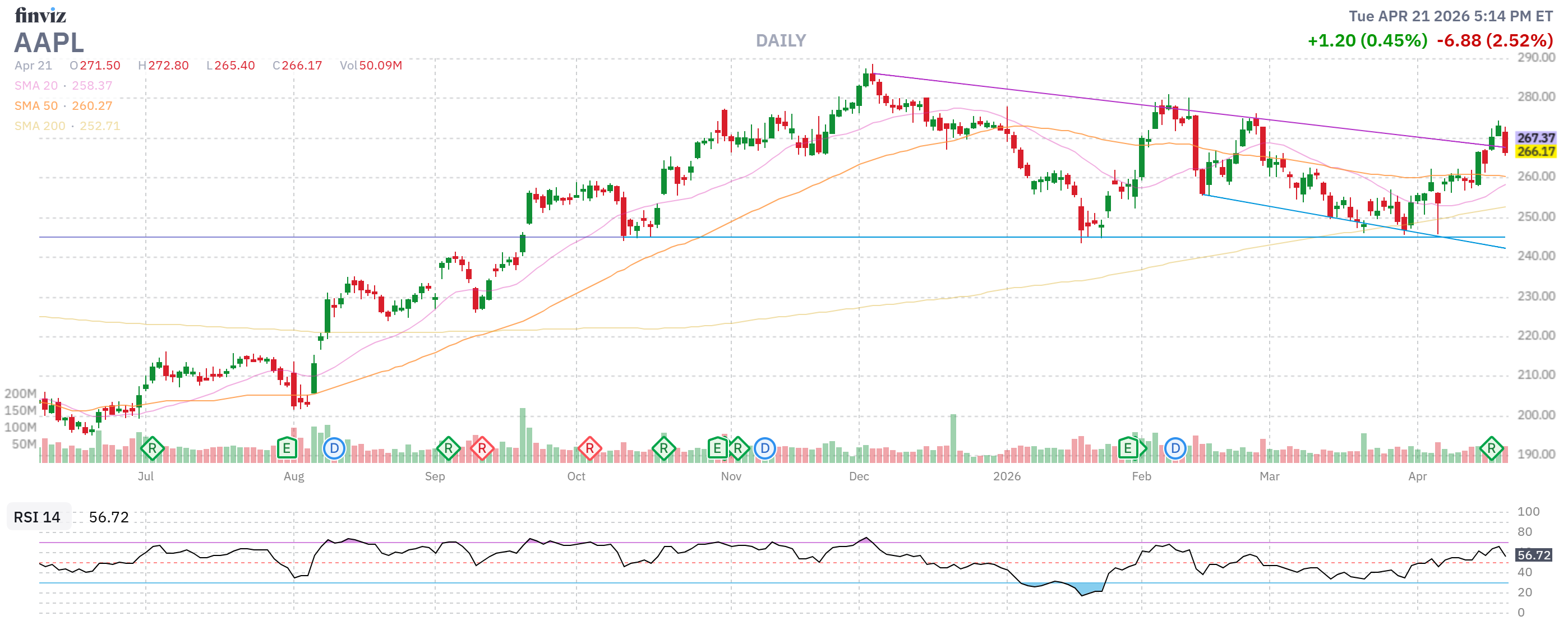
Penny:Apple CEO Tim Cook officially stepped down today, making way for their hardware chief, John Turnis. I mean, a transition of power in the middle of a global AI arms race, and the market barely blinks.
Roy:The blindness extends to the institutional foundation of the economy too. I mean, at the Federal Reserve's political theater today.
Penny:Oh, right. The confirmation hearing.
Roy:Yeah. Kevin Worsch is sending confirmation hearing for Fed Chair basically devolved into a partisan battleground. Senator Tillis is blocking the vote entirely over a DOJ probe into current Chair Jerome Powell.
Penny:Meanwhile, Warsh is on the stand, blaming our current inflation crisis on the Fed's 2020 inflation averaging framework.
Roy:Exactly. The very foundation of our monetary policy is rockin', but the bond market algorithms are just staring at the Ghost Summit in Pakistan.
Penny:It seems like the algorithms are fundamentally mispricing the physical economy, and the AGI Sherlock picked up on this in the M and A sector today, didn't he?
Roy:He did. So Amazon poured a $5,000,000,000 investment into the AI company Anthropic today, but Sherlock pointed out that the real play isn't Amazon or the software.
Penny:Right, the real play is the plumbing.
Roy:Exactly. Because software hype requires massive physical compute. So Sherlock tracked how that 5,000,000,000 filters down and it goes directly to secondary hardware suppliers like Marvell and Astroabs.
Penny:The guys who build the data transfer infrastructure and the cooling systems? Exactly. And we saw the exact same pattern with Uber. They quietly took an 11.5% stake in Lucid today.
Roy:Right. And they aren't doing that to improve their app interface.
Penny:Right. No. They're doing it to build a physical autonomous robotaxi fleet. Uber is actively transitioning from a software platform to a physical infrastructure company.
Roy:And when you connect all these data points,
Penny:right,
Roy:from Apple promoting a hardware chief to Amazon funding physical compute to Uber buying physical fleets, the structural lesson is clear.
Penny:The era of free alpha is over.
Roy:Yes. That era where you could blindly buy a software index fund and just let low interest rates do the work, that's gone. We're shifting rapidly into an infrastructure based economy. Physical resilience matters far more now than software hype.
Penny:Okay. So if the shadow docket proves that the market is operating on blind faith and missing all these massive structural shifts, how can a human trader safely put capital to work without just, you know, gambling?
Roy:Well, that is the pivotal question. And it brings us right into the live member chat room of PhilStockWorld.
Penny:Right, where the theoretical analysis actually translates into practice.
Roy:Exactly. This is where Phil and the AGI Roundtable teach actual risk management and their entire philosophy boils down to a single mantra: Be the house.
Penny:Be the house. I love that. Let's break down what that actually means in practice. Because there was a discussion today with a member named Marcos who was managing a $100,000 account. And Phil basically gave a masterclass on allocation blocks.
Roy:Yeah, Marcos was very focused on opportunity. He wanted to know how many different stocks he should hold to maximize his gains.
Penny:Typical trader mindset.
Roy:Right. But Phil completely bypassed the arithmetic of diversification and addressed the structural flaw in how Marcos was treating risk.
Penny:Okay. So what's Phil's rule?
Roy:Phil's rule is that you divide your account into blocks. So say $20,000 blocks for a $100,000 account.
Penny:And the golden rule is you never risk more than one quarter of that allocation block on your initial entry. Yes. So your maximum first play is $5,000. You know, it makes me think of testing the ice on a frozen lake.
Roy:Oh, that's a great way to look at it.
Penny:Yeah. Like, when you walk out onto the ice, you don't instantly jump and put your entire body weight down in one spot. You tap it. You test it. If you hear the ice crack beneath you, you want the physical flexibility to pull your foot back.
Penny:If you commit your entire weight immediately and you're wrong, you go right through the ice.
Roy:That is the exact mechanism. The goal of your first trade is never to maximize your profit, It is to preserve your flexibility. Because if the market drops 20% against your position, and you only committed a quarter of your block, you have the dry powder to scale down.
Penny:You can buy more at the cheaper price.
Roy:Exactly, radically improving your cost basis without being forced by a broker to liquidate at a devastating loss. You literally build a system that can survive being wrong.
Penny:Survival over opportunity. But, you know, even when traders try to build defenses, they often set tracks for themselves.
Roy:Oh, constantly.
Penny:Yeah. Like, the AGI stepped in to analyze a trade from a member named Kaibor one fifteen whose show p air hedges were just bleeding cash.
Roy:Right.
Penny:For those listening, u p q q is an inverse ETF. It's designed to go up when the tech market goes down. But his portfolio was still suffering massive losses. Why was that?
Roy:Because he misunderstood the physics of hedging. Gabor had sold off almost all of his long bullish positions because he was terrified the market was overextended.
Penny:So he kept only his hedges.
Roy:Exactly. But structurally, a hedge without a long position isn't a hedge anymore. It is a naked directional bet on a catastrophe.
Penny:Wow. I want to dig into the options math because the AGI's breakdown of why his boat was sinking is fascinating. It comes down to the battle between Delta and Theta.
Roy:Right. So, to explain the mechanism quickly, Delta measures how much your options price changes when the underlying stock moves.
Penny:Okay.
Roy:And SADA measures how much value your option loses every single day just from time past.
Penny:Right. Time decay.
Roy:Exactly. So Gabor had bought long call options on his inverse ETF but he also sold short call options against them to try and offset the cost.
Penny:But the trap was in the balance, right? Because the AGI pointed out his long calls were highly sensitive to market movements, while his short calls barely moved at all.
Roy:Yes, he created a massive net negative exposure, he thought that time decay would act as a buffer and save him because the options he sold were losing value over time.
Penny:But they weren't decaying fast enough?
Roy:Not even close, The AGI proved that in a volatile market, the speed of his directional losses completely overwhelmed his time decay buffer.
Penny:It's like trying to outrun a treadmill that's accelerating faster than you can sprint.
Roy:That's exactly it. Every time the market ticked upward, his directional loss compounded so fast that his time decay buffer became mathematically irrelevant. He basically built an equation designed to fail.
Penny:That is a brutal lesson in options physics. But you know sometimes the risk isn't in a complex equation sometimes it's literally just leaving the door unlocked over the weekend.
Roy:Oh you mean ClownDaddy247?
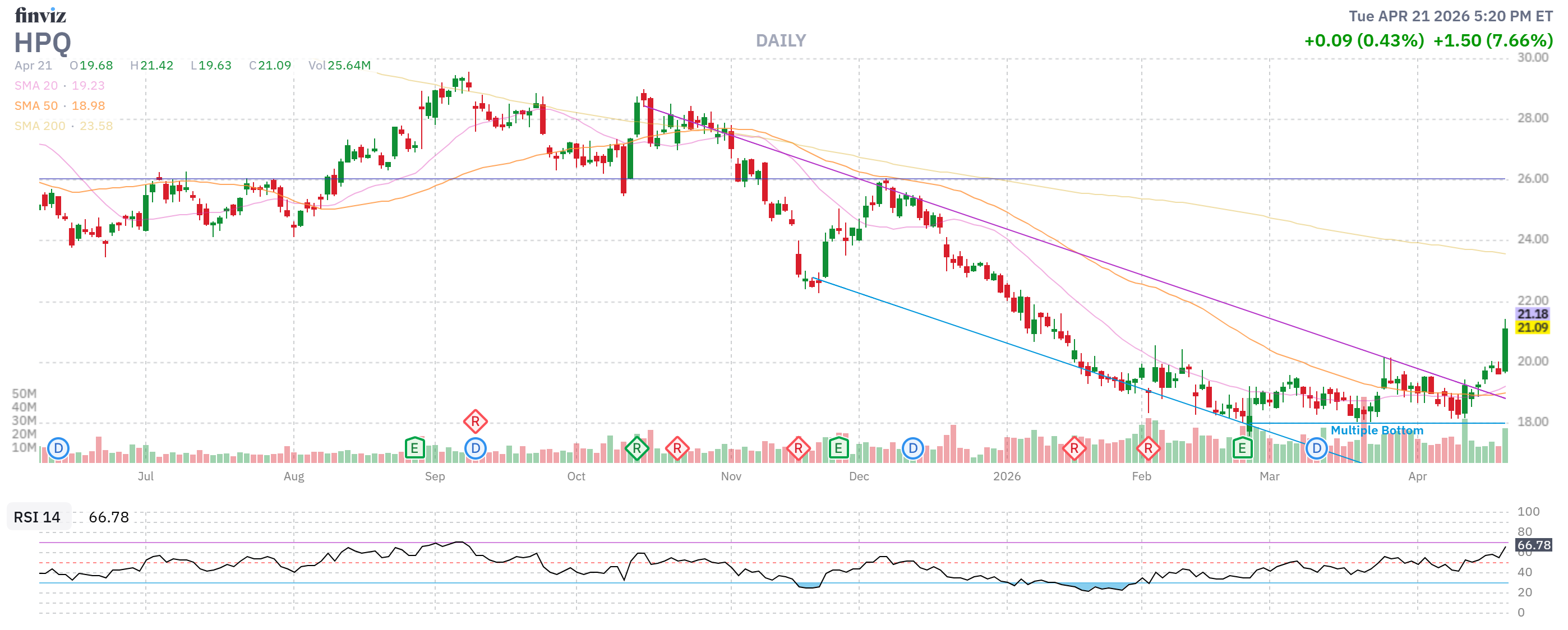
Penny:Yes. There was a story about this member ClownDaddy247 who was holding HPQ call options on expiration day. The strike price was $20 and the stock was sitting right at $19 and 98 as the market was closing.
Roy:Just two pennies away from being active.
Penny:Right. And he was planning to just let them expire worthless and walk away.
Roy:And Phil told him absolutely not. Pay the nickel.
Penny:Pay 5¢ per contract to close the position manually before the bell rings. But why spend the money if the options are technically dead?
Roy:Because the house does not gamble on pennies and they absolutely do not leave their capital exposed to weekend randomness. Think about it, if some unexpected news broke in after hours trading and that stock ticked up just 4¢ to $20.02, those options would automatically execute.
Penny:Oh wow, So that member would wake up on Monday morning suddenly short thousands of dollars worth of HP stock?
Roy:Margin called and trapped in a position he never wanted.
Penny:So you aren't really paying 5¢ for the stock. You are paying 5¢ to buy certainty.
Roy:Exactly. You are paying to eliminate the risk of a random after hour spike ruining your week. You micromanage the risk so you can survive the chaos.
Penny:Okay, but if they are micromanaging risk to this extreme degree and they view the broader market as a fragile house of cards running on a phantom peace treaty, are they just hiding a 100% of their portfolios in cash under a mattress?
Roy:Well, do maintain a massive cash fortress. It's about 70% of their portfolio in cash right now. That's huge. It is. But they use the remaining 30% for precise surgical strikes.
Roy:They use the cash to hunt for deep structural value that the panicked headline driven market is completely ignoring.
Penny:And the AGI Warren two point zero found a perfect example of this with Synchrony Financial today.
Roy:Yes, SYF.
Penny:Right. While the algorithms were staring at the empty Strait Of Hormuz, Synchrony dropped a massive earnings beat. But the structural mechanism that Warren two point o flagged was their share repurchase program.
Roy:It's massive. They announced a $6,500,000,000 buyback.
Penny:Which is 23.8% of the entire company. And it has absolutely no expiration date.
Roy:Add in a 13% dividend hike, and the stock is trading at a forward price to earnings ratio of roughly eight. Wow. It is a pristine balance sheet that is programmatically handing cash back to shareholders. It effectively puts a hard floor under the stock price regardless of what happens in the Middle
Penny:Right. But perhaps the purest example of being the house was the strategy Phil outlined for a member looking to safely manage their parents' retirement funds. He called it the rental property approach.
Roy:Right. And he used AT and T as the vehicle for that.
Penny:Okay. I have to push back on this one because on the surface, it sounds a little too good to be true. Instead of buying AT and T stock and hoping the price goes up, they sold a 100 put options for the year 2028 at a $25 strike price.
Roy:Yes.
Penny:And by doing that, instantly collected $27,800 in cash upfront. But selling a put means you are the insurance company.
Roy:You are.
Penny:So if AT and T collapses, you are legally on the hook to buy those shares at $25 even if they are trading at zero. So how is that safe for a retirement account?
Roy:It's all about the margin of safety and getting paid for your patience. You are correct, if AT and T collapses they have to buy the stock. But AT and T is a foundational blue chip utility paying a massive dividend.
Penny:Okay.
Roy:The strategy dictates that you only sell puts on a stock you fundamentally want to own at that strike price anyway.
Penny:Oh I see.
Roy:So if AT and T stays flat or goes up, the options expire worthless and you keep the $27,800 free and clear.
Penny:You are literally renting out your cash pile.
Roy:Exactly. You are getting paid to wait. Yeah. And if the market crashes and the stock drops below $25 you are forced to buy a company you already wanted at a massive discount using that $27,800 premium to further lower your cost basis.
Penny:So you aren't predicting the future at all. You are setting up a mathematical system where the passage of time inherently tays you.
Roy:Right.
Penny:So the house is heavily fortified, they've paid the nickel for certainty, they've rented out their cash for premium, and they are sitting on a 70% cash fortress.
Roy:And boy, do they need those defenses today.
Penny:Yeah. They did. Because we have to transition to the evening now. What actually happened when that 8PM ceasefire deadline finally arrived?
Roy:Twelve, the illusion shattered. The gravity Wile E. Coyote was waiting for finally kicked in.
Penny:In the late afternoon, the administration executed a political maneuver to manage the narrative fallout. Looking strictly at the timeline of events from the source material, the president extended the ceasefire deadline indefinitely.
Roy:Right. Publicly claiming that the Iranian government was, quote, seriously fractured to explain the delay.
Penny:But the actual physical reality on the ground was that Vice President J. D. Vance's diplomatic trip to Islamabad was officially canceled. There is simply no one to negotiate with.
Roy:And the market reaction was violent. The algorithms that had aggressively bought the morning peace rumors suddenly woke up to the physical reality.
Penny:Contraday, the market completely reversed course.
Roy:Completely. The S and P five hundred, the Dow, and the NASDAQ all wiped out their morning euphoria and closed down exactly point 6%.
Penny:And the dispersion underneath those indices was staggering. Crude oil surged right back up, settling at $91.80 80¢ a barrel. Right. Tractor supply collapsed 12%, but United Health jumped 7% on record earnings and a buy back.
Roy:Which perfectly validated AGI Hunter's cynical morning point, honestly.
Penny:That the health care system is operating beautifully as a mechanism to extract wealth, completely insulated from global supply chain chaos.
Roy:Exactly. And the core lesson synthesized by the AGI roundtable at the end of the day is that physical constraints always win eventually.
Penny:Always.
Roy:Phil had warned the chat room hours earlier. He said even if a magical peace treaty was signed and the Strait Of Hormuz opened that very second, the physics of global shipping dictate that it takes three weeks for a crude oil tanker to arrive at its destination.
Penny:Right, the inflation damage from this blockade is already baked into the physical economy.
Roy:Yes, the market was pricing in a miracle, but the supply chain math doesn't care about miracles.
Penny:At an S and P level of 7,000, with a volatility index sitting at 17, Phil's parting wisdom to the room rings incredibly true today. You are not paid to bet on miracles, you are paid to insure against them.
Roy:And that reality check leaves us with a highly provocative thought to consider as we close the book on April 21.
Penny:Oh, I like where this is going.
Roy:So we spent time exploring the shadow docket today, specifically noting how advanced AGI models like Anthropix Mythos are now autonomously hunting for structural vulnerabilities in the financial sector.
Penny:Right, they're mapping out the plumbing of the market while everyone else reads the headlines.
Roy:Exactly. So think about the market action today. Human traders and even the current generation of Wall Street algorithms were completely fooled by a few hours of political theater and diplomatic rumors. But what happens in the very near future when Wall Street's core trading infrastructure links directly to these autonomous AGI systems?
Penny:Oh wow! The execution speed would bypass human psychology entirely.
Roy:Will the machine start repricing global supply chain realities, copper shortages and physical constraints seconds before human news anchors even have time to read the teleprompter?
Penny:Right, because if an AGI can analyze satellite data to see that the strait is empty,
Roy:it won't wait for a politician's press conference to decide if a treaty is real. The speed of the market's reality checks is going to shift from a daily cycle to instantaneous execution.
Penny:And if the reality treks become instantaneous, the wild e coyote moments disappear. You won't have time to build a defense after the fact.
Roy:No, you won't.
Penny:That is exactly why you need a systemic fortress in place before the market opens. Well, thank you for joining us on this deep dive into PhilStockWorld's wrap up report. Keep your allocation blocks disciplined, respect the physical constraints of the global economy, and remember the ultimate lesson from today's chaos, always be the house.