Subscribe
Share
Share
Embed

Welcome to "The Hummingbird Effect," a podcast dedicated to uncovering the subtle yet powerful ways that small innovations can transform your business. Hosted by Wendy Coulter, CEO of Hummingbird Creative Group, this show delves into the stories and strategies behind successful brand building.
For over 25 years, Wendy has helped CEOs and business leaders redefine their brands through innovation and compelling narratives. In this podcast, she shares the insights and lessons learned from her extensive experience, exploring how a strong brand orientation can significantly increase the value of your business.
Each episode features engaging conversations with industry leaders, business advisors, and innovators who have harnessed the power of branding to make a substantial impact. Discover how focusing on core values, mission, and vision can drive your brand beyond mere marketing tactics, fostering a culture that resonates with your audience and enhances your business's reputation.
Inspired by the concept of the Hummingbird Effect—where small, adaptive changes lead to remarkable outcomes—this podcast aims to help you understand and implement the incremental innovations that can elevate your brand and business.
Join Wendy Coulter on "The Hummingbird Effect" and learn how to evolve your brand, attract more customers, and ultimately enhance the value of your business through strategic branding.
27 HBE - Chris Dyer
===
[00:00:00]
Wendy: Hi, I'm Wendy Coulter, and I help CEOs and marketing leaders unlock the hidden power of their brands. For years, business leaders have focused on marketing tactics when what really matters is building a strong brand.
Have you experienced a hummingbird effect, like the co-evolution of the hummingbird and the flower? Small innovations in branding can lead to surprisingly big results in other areas of the business, like an increased valuation, a new product launch, a stronger culture, or many other things. [00:01:00] Thank you for joining us for the show today.
I have Hannah Jernigan with me as usual, our marketing strategist from Hummingbird Creative Group. Good morning, Hannah. Good morning. How are you today? Doing pretty good. How are you doing? I'm doing good. We're both in our colorful blouses and white pants today. Um, it's been a busy morning at the office. I think again, we've just been.
Been at work, at hard work today. Mm-hmm. Um, with marketing. Anything, anything interesting you're touching today?
Hanna: I have been. What have I even been doing now that I need to know? I've been doing a couple event planning, some website, SEO focus. All the things. All the things.
Wendy: Yeah. I had a great conversation with a client this morning about voice of the customer and um, I think we're going to get to do a voice of the customer project for an emerging, um, training platform.
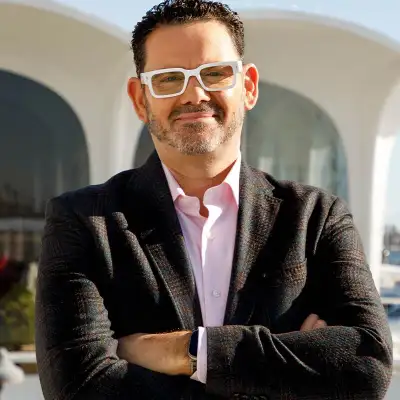
So that'll be [00:02:00] fun. That will be fun. Yeah. So excited about that. I am also super excited about today's guest, Chris Dyer. He is a culture consultant and a keynote speaker, and we're gonna dive into the world of brand building today and a hummingbird effect.
Um, in the meantime though, he is a very recognized company culture and remote remote work expert. Um, and a former CEO managing thousands of people. And so he learned culture in the trenches and has a lot to share with us about that today. Um, Hannah, did you do any research on Chris before this show? Yeah,
Hanna: He was named the fastest growing company by Inc. Magazine five times. But on a personal note, I saw that over the weekend his grandson, Nico really loved getting his chocolate bunny in his Easter basket, and the picture was just pure delight. It's also how I felt getting my chocolate on Easter [00:03:00] morning.
So that was really fun to see and I'm sure he'll also talk about all the other. Accolades that he has but just a few. He is a top 50 voice in leadership, a top 50 global thought leader, a top 50 leadership podcast. Um, and he also has a book that has been recognized. So I'm excited to learn more from you, Chris, and hear more about these.
Wendy: And I think, um, at the top of the list for me is he's the number one leadership speaker on culture according to Inc. Magazine. Um, and we love tying culture and brand together, Chris. So I think you've got some great things to share with us. So why don't you give us more information about your background and what you're doing these days.
Chris Dyer: Sure. So you've all done a great job of kind of sprinkling in some, some different stuff. I, I really appreciate it and thank you for having me here today. .I'm sort of an accidental fill in the blank, like I'm an accidental CEO, I'm an [00:04:00] accidental author, I'm an accidental keynote speaker, and I think I just get curious about things and I like to, to try new things and I.
There's a 5,000 things that I tried and got curious about that I totally failed at that you'll never know about. Um, but I, you know, was able to do well with a few of those things. And those are sort of the things that kind of end up on my resume or things that, you know, I continue to do and explore. Um.
I'm just, I'm just a person who's curious about why things work the way they work, and how do we sprinkle in some magic or turn this little level lever over here, or do this little thing over there that suddenly, you know, gets us an extra 20% in, whether that's engagement or that's sales, or that's happiness, or that's, you know, efficiency, whatever that is.
I think that's where my brain always kind of sits is. It's gotta be like a little something we can do over there just to make this better. Um, and, and that kind of [00:05:00] really ties back into my mission, which is how do we make work work?
Wendy: Love it. Love it. I went to NC State School of Design, um, got my degrees in architecture and industrial design, and I remember one of the professors that I loved the most made. Me read a book called The Way Things Work, um, and it just like really helped you like learn about things you never heard about before and how it works, and it just starts to make you question, you know, how everything goes around you and really dive in.
So I love that. I love that idea. Chris. Um, tell us a little bit more about your CEO world prior to becoming the keynote speaker and consultant that you are today.
Chris Dyer: Yes, I've had a lot of businesses. Um, I had one really. Larger big business that I started at the end of 2001. In fact, nine 11 happened and that was [00:06:00] my wake up call to stop working for the jerk that I was working for. Um, and I quit and went and start. Started the company, um, November 1st, I think was the date we started the new company.
So in less than two months, I went from, you know, working for this person. I couldn't stand, um, but having total job security to, you know, working for myself, having total freedom and worried that I wasn't gonna be able to pay for tuna next week to feed myself. Um. And I ran that company until the end of 2021.
So about 21, 22 years of running that organization. And, um, at the end of it, you know, I had to say goodbye to a few thousand of my amazing employees and, and they're now doing great with a new, new company that bought them. Um, but yeah, I mean, being a CEO, I don't know, like. I often hate the idea that people say, well, I was born to do this, and I, you know, a lot of our behaviors are learned and I certainly look at a [00:07:00] lot of the things that I learned from neighbor, neighbors, teachers, mentors, um, teachers, these different people.
And it's really easy to say, well, I was born to be a leader. I was born to be a CEO. 'cause I always naturally took on those roles, but I really think I learned so much of that from really important people in my life, even very early on, to see them step up and be leaders, see them step up and solve problems, see them step up and make things better for the people around them.
And that just always seemed the right way to do things for me, and I think that's why I always gravitate to that CEO position.
Wendy: Congratulations on that success. It's rare to meet a CEO, um, who has grown to thousands of employees, um, and learn about that journey. So congratulations for that. Congratulations on selling. Another big, big accomplishment. So, and thank you for giving us your time today. Um, so I'm gonna move [00:08:00] us towards, um, the hummingbird effect, which I'm pretty sure from the way you have been talking about leavers, you totally understand the idea that just a small change can have a huge impact on.
Different areas. And so let's talk a little bit about that. If you can share a specific instance where a seemingly small change in your company's marketing or branding or sales led to a significant change in another area of the business.
Chris Dyer: Yeah, so actually I talk about this in my culture work that the, I have seven pillars that make a great culture, and one of those pillars is uniqueness. I. And what makes us unique, what makes our employees unique is a really important question, and it should be something we're very curious about, as opposed to what makes us all the same.
So I find this crazy like juxtaposition happening in an organization where, from a marketing perspective, we spend all day in these [00:09:00] meetings talking about what makes us different and how we can stand out. And yet we turn around and we like, well, how do we go find other employees? Just like the employees we already have?
How do we go find Jane Jane's amazing. We need more people like Jane. So where did Jane go to school? What does she like? Like what's her personality type? And like you literally try to clone Jane, and that's the completely wrong way to think about it. We don't need the exact same person over and over and over again in the organization.
There may be certain traits that we value, but it's really about thinking about those employees as very unique people and celebrating what makes them unique as a way to kind of drive our diversity of thought and have new ideas and innovation in the organization. And so it's like if we can kind of like take that thought process and put it in there, when we started doing that. And we started really pushing that as, as a, as a focus for the organization. I [00:10:00] noticed that that got, it was, it was really like addictive for everyone to start thinking about everything in their own unique way. And we really trained them to, I want you, so society tells us you're supposed to be open-minded and, and consider all opinions.
And it's a very misguided piece of advice. So let me explain What I mean by that is that what I want my people to do is to come up with their own conclusions first. I want them to think about the idea, think about the proposal, think about what the client, whatever the thing is, and come up to their own conclusions and their own ideas without considering anybody else's ideas.
And then if they have a really solid foundation on what they think is right and what they should do, then come to the meeting and be listen to everyone else's ideas. And then be open to how do we add on, how do we collaborate, how do we go? Because what we end up doing [00:11:00] is we don't think about it. And we just show up to the meeting saying, I'm gonna be open-minded and I'm not gonna, they haven't really thought deeply about the problem or deeply about what we're trying to do.
And then they end up just picking the thing from the person who's the most senior, who's the loudest, who's the most extroverted, and we miss out on all these great ideas. So for me, it wasn't about like one. It wasn't like I changed a word on a website and suddenly we got 50% more sales. It was about empowering people to really get confident about what their ideas were and what they thought they wanted to do so they could show up to the meeting and more ab better advocate for those ideas and help everyone else understand what they were seeing, what they were thinking, so we could ultimately get to the best idea.
Not the idea from the loudest person, not the idea from me, the CEO or the senior whatever, but like whatever the best idea was. [00:12:00] Even if you were the, you were day two in your journey in our company. Like how do we get the best idea regardless of anything else to the top of there? And we really had to help people understand how to think that way.
And that for us, that was the biggest shift.
Wendy: So that's awesome. Can you talk about. A specific idea that someone had as a result of just empowering them in this little way that led to something really, really impactful in the business. Um, do you have a story around that? I.
Chris Dyer: Sure. So I often tell this story in my keynotes that when the big recession hit in 2008. We were totally screwed. I lost 40% of my clients. I lost 40% of my receivables. And I'm turning to my senior leadership and then I go to my, all my leaders and then I fly everybody in 'cause we were remote. And I get everybody in the building and in each layer I ask the same [00:13:00] question.
Like, what are we gonna do? What ideas do you have? How do we pivot the business? Like I. You know, I have ideas, but I have thousands of people. Like someone else has gotta have a better idea than me. Like, you know, I'm trying to really be open and what I got was nothing. I got, I got words and I got noise, but I got nothing.
I got no real ideas that could help us save the business. And that was the moment that I realized our culture was broken, that I, it was essentially my fault. I had created a culture where I'm the idea guy and they are all the doers. And I had screwed up. That was fine when there was five people in the business and I was the only one that knew how to run the business.
But like, you know, we hadn't evolved. We hadn't really matured. And so later on as we changed the culture and as people got stronger and stronger and be able to come up with ideas, advocate for themselves, you know, work through how to get that idea from. It's in my head to it [00:14:00] actually being implemented and I, so I spent my time coaching and mentoring and helping people do that stuff and not worrying so much about how do I create the next big idea, right?
I, in my youth, it was like, you know, how do I show up and be the smartest person in the room? That's a very stupid way of thinking about it. Instead, I need to show, how do I show up every day and help he, everybody else in the room. Elevate their ideas and elevate their, their efforts to to be heard. So again, we can get the right idea.
So to answer your question, when Covid hit, and here I am thinking, here we go again. And we lost a whole bunch of business and we lost a whole bunch of receivables. And this is before the PPP and all this like stuff that kind of happened to help. Like we went through this big crash and. I'm thinking I'm gonna have to go back and call these meetings and, and it's gonna be the same thing again.
And to my surprise, I got a meeting request from [00:15:00] my team that said, you know, big meeting big ideas meeting. And I showed up to this meeting and they had already come up with ideas on how we were gonna pivot and how we were gonna. Help change the business. Before I even got to the point of asking for that meeting, they had already come up with ideas.
Now, these weren't old ideas they'd been sitting on, these were brand new, what are we gonna do? And so we came up with a really clever idea of how we were gonna help people during times of covid, how we were gonna facilitate testing and different things. And so we ended up making millions more dollars than we would've made.
During that same period of time, because of Covid, even despite the amount of losses we had, we made millions more dollars off of their great ideas. Right? And so that little shift would've never happened. We would've been back into panic time and just sat there and, and would've been the same thing all it would've been Groundhog Day all [00:16:00] over again.
Wendy: Are you able to talk about one specific idea? Just for context for our listeners that really made an impact on sales and maybe made an impact on something else as well.
Chris Dyer: So if you're talking about impact on sales, um, one of the most important things that I had to learn was this concept of what you focus on grows. And so what I mean by that is if you walk around all day focusing on problems and you walk around focusing on. Why your three of your 10 salespeople are not doing well?
That's only that. That's only gonna get bigger. It's only gonna become more of a thing you have to deal with. And so what I, the hard lesson I to learn was I needed to go and focus on why my top two salespeople or doing really, really well. Why was it [00:17:00] these two people were getting like 80% of our new deals in the door?
And here we have a, you know, we have a team of 10 over here and like two are killing it, two are terrible, and the rest of them are all stuck in the middle, barely making their quota. And so what we think about doing is, well, how do I get 'em more training? Do I need to put those bottom two people on a pip?
Do I need to fire them? Do I need, you know, all these things? I just stopped all of that and said, why are those two people doing so well? We figured that out. Then I made the second mistake, which is try to go back and tell all my salespeople, they had to do it just like those two people did. What I needed was those two people.
And this is the big, so the first learning is get really curious about why something's working. Why is this a success? Why do people buy this thing? Why do, why are the salespeople able to sell this? Whatever the that framing is. And then once you've figured that out, have those people teach everybody [00:18:00] else peer-to-peer learning.
Was the key. 'cause I as a CEO come in and tell you how to do your job. There's some resistance there. But the top two salespeople, you're a salesperson and the top two people come on a meeting and say, Hey, we're gonna tell you what we do. Here's all our secrets. This is how we're, we're doing this. Like we, that changes radically.
Wendy: So what other things did that shift change other than increasing sales? Um, did it make a change? I mean, you, you talk about culture, so were there culture changes as the result of that shift?
Chris Dyer: Yeah, so when we saw how, how well that worked, then we started, you know, my managers and leaders started getting really curious about how else could we use this? And so inevitably I would get a call. You know, I would be on a, a training thing and, and someone would say, you know, I have this, I have these two, two team, team members, and they talk too much on, on the meetings.
[00:19:00] I'm, I'm struggling on how to coach them and mentor them, that they talk too much and they interrupt everybody. And, and so what they were doing was they were focusing on those people and having extra meetings with them and telling them they shouldn't be talking so much. And, you know, trying to give them all that feedback and it wasn't working.
So I said, instead, go, when you have the meeting, make sure you thank the people who allowed everyone to talk. Make sure you thank the people who you know didn't interrupt or whatever those behaviors are. You're, you're calling out the good behaviors and I said completely ignore the bad behaviors. Now, I don't mean like inappropriate behaviors, but I just mean the like small, annoying behaviors.
And what was really interesting was that it only took about two months and we noticed that people that were doing the bad behaviors stopped doing them because they could see we, [00:20:00] we were communicating over and over and over again, this is what we want, this is who we are, this is what we appreciate. And those people wanted that validation.
They wanted to be called out for doing a good job in the meeting. And so they. It was a different way for them to learn, ah, if I keep interrupting everybody and I keep talking for too, too much during the meeting, my boss doesn't like that. My team doesn't like that. And so that was a really interesting shift that we had to figure out.
And it takes a little, you know, untraining from the manager standpoint, right. But it's, call out what's working, what is good. Then that's, and, and, and reward and talk about that until you run outta breath and stop talking so much about all the stuff that isn't working
Wendy: Yeah, I love that. So it's a shift towards positivity. It's a shift towards gratitude. Um, instead of being worried about all of the negatives, how do we focus on the positives too? Keep us moving forward. [00:21:00] what do you feel like you've learned from that now? And, you know, we are in the middle of another really interesting time.
This time. It's a geopolitical change in the world that is affecting, is affecting it. What can you take from what you learned there and what are you bringing to the table now in your keynote speeches, your consulting? To, you know, to let people know there, there are some [00:22:00] good opportunities in front of us, right?
I mean, I think everyone needs a little positivity shift right now in the world that we're in. But how do you turn that into real action in such an uncertain world like we're in right now?
Chris Dyer: Yeah, when I'm going into to speak, I'm really trying to help people unlock their brains and help them reach that moment when they go, oh, I need to do something different. Now I try to make sure I give everybody some tactical things they can do, but in an hour it's sometimes difficult to get too deep there.
So it's more about that unlocking. But when I go in and work as a consultant, it's about getting super hyper-focused on what's working. So examples would be recent examples with clients. I, I spoke, this client brought me in and she said she really wanted. To grow her business a lot. And I said, great. So we looked at all of their different business lines.
Only one was working. [00:23:00] The other nine were all experiments and they were all like things they wanted to work and things they've been trying to make work. They have one that is making is 80, 90% of their sales. It's almost all of their profit and all these other nine projects are complete waste of time.
You could argue, maybe one could turn into something eventually. And so by eliminating, we were like literally like, let's stop for six months. We're not gonna focus. Somebody wants to buy one of those things. Cool, we'll sell it, but like we're gonna stop marketing those other nine things. We're gonna stop putting time and effort and meetings.
If this is the thing we do really well, can we go do 10 x of that? And, and what was really interesting for all of every employee's behaviors, it was the same thing. Where do you get your leads? Where do you get your business? And they would, and when they would do the same exercise and, well, 80% of my business [00:24:00] comes from this type of person.
Great. How many of those types of people do you talk to every day? And the answer was like, well, not that much. 'cause I'm doing all these other things. We're trying to build this other. Come on it,
you know, it's an easy answer. But we get, we get these ideas of this, like we have to try all these different things and, you know, we can't, there is some problems to being so hyper-focused and never considering anything else and never innovating and doing other ideas or listening to the market.
But you gotta do what you're good at first. Get that really rocking and rolling, and then maybe you can do one or two experiments, if that makes sense. Or there's something happening in the market that you're seeing, but it's, it's usually shiny object syndrome or it's, you know, trying to be the smartest person in the room of, oh, we're gonna go try to sell this other new thing.
And it's like, that doesn't make any sense. So when I'm working with clients, it's really helping them. It's that, it's that 80 20 rule. [00:25:00] You know what, what, what's the 20% you can do to get 80% of the way? There is one way to look at it, but where is 80% of the sales coming from, right? And how do we go do more of that?
There's lots of different ways to kind of break that 80 20 down, but for salespeople, it's always like, what is that thing you do that gets you most of the way? And they always have an answer? Go do more of that and stop doing all the other junk please.
Wendy: Well, and I think we're in a world of, um, so much technology, so many tools, so many things to play with in sales. Um, that it, that it's all kind of in the way of, of seeing that big picture that you're talking about. However, I. I also believe that what you're saying has an innovation component, even though it's not technology and it's not innovation in the traditional sense.
Talk about that a little bit, like how does this line of thinking lead to more innovation in business?[00:26:00]
Chris Dyer: When we give people enough time and space to think about something, and we can only do that by freeing them up. So again, I'm, I would really advocate that if we're gonna be hyper-focused on what makes us successful and that is what we're spending most of our time on, we will have more time. To stop and go, you know what, I'm just gonna think about this for an hour.
I'm gonna go, I'm gonna turn off my phone, turn off my computer. I'm gonna go sit in the corner and think of my client just called and had a really interesting question, like, I'm actually gonna think about this and how, how we could address this and that. Gives us a far better approach to thinking about how we can then be innovative.
Maybe I might have the time and space to call in a few of my teammates and say, you know, I had this interesting idea, or I heard this thing from a client. And we actually have the space in time because what I hear from leaders all the time is that they're on back to back to back to back to back to back to [00:27:00] back meetings.
And they just feel like they're going from one to the next. They never have any time to process, no time to plan, no time to actually do the things they said they would do with their team. And they certainly don't have time to think about something. And they complain often that they have to go home to do their work or come in early to do their work.
And so there's some things that I challenge 'em to do to fix that, that issue. But if we don't have the space, and maybe you have to book that time on your calendar, maybe, you know, book, there are companies that famously give like one Friday a month or you know, every Friday morning to their team to work on something new, right?
They create, it's an intentional act to go, go think about that thing, go come up with a new idea, and as long as you come back and share it with us, like. You can think about being innovative on anything you want. Um, [00:28:00] there's some really famous examples of that. So, you know, that's, that's how we have to kind of think about shifting some of that.
But if you are trying to be really good at 50 things, the only thing you're gonna be good at is losing.
Wendy: So how do you encourage, it sounds like, um, within your different team environments, 'cause you talked about having the people who do things and do them well. How do you help someone who is used to. Um, and I'm thinking about Hannah, who's sitting next to me, right? Like she's really great at getting from one task to the next and getting things done really fast and really well, and she comes up with amazing ideas like on an ongoing basis.
She doesn't always have the time. To think and I think sometimes I'm saying, well, I need to think about that. And I may be a little bit too far on the other [00:29:00] side, but how do you encourage those people who are in very task oriented roles and maybe don't have a corporate culture that is supportive of it yet, but knows that if they just had time to think I could make such a big impact.
Do you have like a few tips that could help someone like that in that position carve out that. Thinking moment here and there,
Chris Dyer: There's lots of different books that have really addressed this. Um, team genius to, I think the Five Dysfunctions of a team. I mean, Patrick Lencioni's work is pretty famous for this, that. You know, we all have different strengths and so let's just use Hannah as an example. Hannah, part of her strength may be in helping you complete the project
Wendy: right.
Chris Dyer: and your strength is in.
Developing, thinking about that spark, about what that new idea might be and how we might think about approaching it. And so if that's your strength and her [00:30:00] strength is like, okay, you've come up with the idea, you've started the momentum, and now it's my job to actually finish it. That's great. There's nothing wrong with that.
We don't all have to be one thing or another. Now, Hannah might say, but you know, sometimes I would like to spend a little bit of time on refining that or making it better. And so we can think about, well. Maybe you need to book time on your calendar for that. Because again, going back into what you're good at, which is tasks and being organized and all that, maybe at one o'clock today you need to have booked yourself some time on your calendar to think about that thing, to spend a little bit of time, go take a walk, whatever it it is, and just think about that thing.
Um, but we can't get so caught up in, well, 'cause like I am not the person to ever finish a project. If you ask me to finish a project, it's not getting finished. Okay. I will come up with the idea. I'll ideate on how to do it. I love all that energy. I'm not so great at all the tasks, but I'm, [00:31:00] I'm there for the ride.
It's fun. But like finishing, no, no, no, no. But I know other people that like they don't want anything to do with, come up with a new idea, but they would love to finish the project. They'd love to check that box and say, we did it. We're done high five, and that's the greatest day of their life. Right? For me, it's come up with a great idea.
So we all have our strengths and we need to kind of just figure out how do we best help our team or our boss or our company with what we do really well, and stop trying to do the things that we don't do well because we're. It's a disservice to ourself and everyone else around us.
Hanna: Kind of going back to what you had said earlier about you recognized that you needed to find the time to coach your people. Into learning how to elevate their ideas. Did you also find that you were kind of elevating them to understand what part of the project they are?
Are they the thinker, the doer, the finisher? And do you have [00:32:00] any kind of feedback you could provide on to how you know which one? And then how to say that that's what you are, like you're, if someone's being put in a position where they might be the finisher, like if they put you there, how do you say this is not.
This is not productive for the company or for myself.
Chris Dyer: Yeah, I mean, so in, in some regards, like that's I think why leaders exist, why managers need to be there to help kind of. Of referee a little bit of that stuff and, and kind of recognize, well, geez, I've got six people on my team and they're all very task oriented and none of them really wanna do the, the strategy stuff.
Or I've got six people might come in, all they wanna do is strategy and they can't po they never get to the task. Like, how do we balance all of that? And hopefully as a leader you get some a, a balanced team, um, but you don't always. Um, and so that can, that can be a challenge. Now, I know Patrick Lencioni's got a framework and he is got a test that you can go and take, like what you are.
I, and I'm [00:33:00] blanking on the name of the book that that comes from, but, um, I, you can look it up. The there's, but there's like these, you can take a test and it will tell you like where you, there's, I think there's five different zone zones of genius. That's what they are.
Wendy: we go.
Chris Dyer: zones, zones of genius,
um, and which zone you are.
And so. That is really helpful to understand. And so we had our people go through that. I also had them all go through strengths finders. Um, and I don't, you can take the 34. I don't think that's helpful. Like just do the one that's just the five strengths 'cause that's what you care about. And we would constantly ask our people like, okay, what are your five strengths?
What have you done this week to do more of that? And what have you done to stop doing the other stuff? Um, we would coach our, especially our top performers and our leaders very often. You know, what, what tasks have you taken on this month? This is a very common [00:34:00] team question. We would ask everyone, what tasks did you take on this month that are new?
And they always had stuff. And then we would say, and what have you gotten rid of? Because this is a problem for high performers. The high is a problem for people who are very task oriented as well, is they just take on more and more and more and then, and they never let anything go.
Hanna: That doesn't sound like anybody I know. No, not at all.
Chris Dyer: So you have to, you have to stop doing something 'cause otherwise you're gonna burn out. And, and so when you burn out, you stop doing well or you, you feel so frustrated, you don't, don't know what to do. And so what most people do is just quit and go get another job because then they can start off back at zero again until they just keep taking on more and more and more until they can't handle it and they quit and go get another job.
And, and that's often why people leave, leave companies, even though they liked their, their boss or their employees or what they were doing. They just, they're, they're doing, doing [00:35:00] too much stuff. So that is the thing that we would do consistently, is to ask them what have they gotten rid of? You know, is that, are there tasks that you really need to keep doing?
Is that report you've been doing for that client for the last five years? Is anyone really reading that? Still? Like, can we get rid of that? You know, and that was just, we had to keep, and sometimes we, the answer wasn't, there was nothing we could get rid of, but inevitably there was, we would find stuff and that people needed permission to stop doing the thing.
Hanna: Yeah, that I was about to touch on, that it is important as someone that does have those tasks to know that I'm empowered and hopefully Wendy doesn't get mad at this two. Actually close the things that are just, we're just doing it to do it. It's not like in taking the time to think like, oh, is there really the purpose of doing this?
So that's a good point. And there's not too many tasks closed, Wendy, that I. I didn't find, I clo I closed one yesterday. [00:36:00] See? Yeah. And it just you probably don't need it.
Chris Dyer: Oh, we don't need
Hanna: Exactly. Exactly. This is, I think, a really cool hummingbird effect.
'cause normally when we're talking, we're talking about them. In a more established way. And not to say that this is not established because Chris is very established in what he's doing, but as I've listened and learned, it was more of the starting point when you have the ability to jump off. So it's to a point of, I, I have these really great ideas and we.
Have people run into this all the time. I have all these really good ideas, and then there's all these little spindles that come off of it, and I wanna chase after everything because I want to be successful. But I think that this is a really good reminder that you need the time and the space to think and to focus on the individuality of yourself, of your people, of your ideas, [00:37:00] and then put focus on the time.
Put focus to. Put time to the positives. And the positive is a, not just these people that are succeeding, it's your customers, it's your sales outcomes, it's any sort of thing that brings you joy is a positive, and then know that you need to grow that, um, and then you'll just be able to set yourself up for success.
So that was a cool thing to think about and to learn. So thank you, Chris.
Chris Dyer: Yeah. You know, we used to really, um. Encourage our people to think about, and I'm sure you've, you've heard this analogy before, but there's the rock stones, you know, sand or A, B, C and I, we find that people have sort of a challenge keeping that up because you have to first define what is the focus, like, what's the most, how do you determine what an A is?
Wendy: Right.
Chris Dyer: And for us it was for a long time. Well, [00:38:00] we're a sales focused organization, so those A tasks should be anything that's going to make us more money. It's going to close deals, keep revenue in the door, whatever that may be. Over time, we evolved into a customer service focused organization, and so those as became client, you know, specific things that the, those tasks that would most help our clients.
Those were our A tasks. And then eventually, like for me it was, well, I'm a culture focused CEO and the only my A tasks were the things that were gonna help our culture be better or gonna help our people perform better, remove obstacles for them and, and so those were my A tasks. So you have to have that focus first so that you can prioritize those things.
And I find that is absolutely the most freeing thing for the average employee. To know how do they create that list? Because they can do it based on their own values and what they think is a [00:39:00] priority, but then they find they're bumping up against the organization and their team and their boss saying that, well, you didn't prioritize this correctly.
And if we know what the, the priority is that it's easier to kind of come up with that and to know which of those cask can just keep. Being pushed off to the next day or maybe never even get done because they're not actually that big of a priority. You know, if we know what the priority is.
Wendy: I love that. Yeah, I love that. We, we look at rocks pretty regularly and figuring out how to prioritize them even when you don't have a ton of them, is still. I think that's still a challenge, so thank you. Thank you so much for that. Well, is there anything else you'd like to share with our listeners? Um, other than let everybody know how to get in touch with you.
Maybe talk about the two books. I'd love to hear more about the books.
Chris Dyer: Yeah, so I was really fortunate. I wrote, um, my first book was The Power of Company [00:40:00] Culture. Um, and that did really well. And I, but I also absolutely hated writing the book. It was hard. Um, and I didn't really know what I was doing. Like it was one of those, they said, Hey, you wanna do this? And I said, sure.
And then I went, this is hard. Um, so then they came back to me. The publisher came back years later and said, we want you to write another book. And I said, no, like 10 times. And they said, listen, you can write on anything you want. And I said, fine, I wanna write on remote work. And they said, no, no, no, not. I said, no, no, no.
You said whatever I wanted. That's what I'm writing it on. So I got really lucky that the book came out right as the pandemic started. And so I wrote about how our organization operated and how remote work really works. And, um, that one did, did really well. And then they came back to me again and said, you know, let's do a third.
And I said, instead of a third, how about we just fix the first one? Because I. The second book, I got really good at writing. I had figured [00:41:00] it out. You know, we created a much better book and so let's go back and fix the first one and make it what it should have been. Um, and so in that book, we've got some amazing case studies with nasa, Caesar's Entertainment, VaynerMedia, that's a Gary Van Vaynerchuk's company, Southwest Airline.
I mean, just a lot of really cool companies. So it's not just the story of my company and what I think. You should do, which clearly I'm, I'm right about everything. I'm kidding. Um, but it's the stories and what's working for all these other top organizations. So we can give a lot of perspectives. In fact, the Caesars Entertainment, um, case study is actually an intentionally opposite approach of what I tell you you should do with recognition.
So I'm like, here's, this is the only way to do recognition and because I believe I'm so right. I'm gonna give you a case study on a completely opposite way of doing it. Because I wanted to make sure I gave people [00:42:00] the enough perspectives that they could decide what was best for them, their organization.
'cause ultimately getting recognition right is the most important thing. Doing it my way was not the most important thing. They just seemed to figure out a way to do it that's gonna work for their people.
Wendy: I love that recognition. Yeah. Yeah. We talk about that all the time. Um, well, so it seems your life has been a lot of happy accidents. You used the word accidental when you talked about CEO and author and speaker, um, but they've certainly taken you far. So congratulations on everything. Chris. Thank you so much for joining us today.
Um, let our listeners know how to get in touch with you, how to find you online.
Chris Dyer: Sure. So there's a few different ways. If you'd like a little guide on how to run your meetings better and how to listen to your employees better, you can text 3 3, 7, 7, 7 and put my name Chris as the message and you will get a little free PDF Guide. I. Um, if you're on TikTok or Instagram reels, I do [00:43:00] a lot of content there or I'd love to connect with anybody on LinkedIn if you want to connect there.
And my website is chris dyer.com. So if you can't find me in one of those places or in the other multiple different versions of social media, then I guess it's not meant to be. But I'm happy to connect with whoever wants to connect wherever you find me.
Wendy: Thank you so much Chris, and thank you for your time today. We really appreciate the insights you've given us. Um, and for all the listeners out there, thank you for joining us today and take what Chris has shared and go find your hummingbird effect.
[00:44:00]