Subscribe
Share
Share
Embed
Call 'Em Like Museum is a weekly podcast exploring how museums really work, and why we love them. Host Eric Johnson talks with museum directors, curators, experts, and passionate fans about what drives them, from homegrown passion projects to world-famous institutions. Each episode digs into museum curation, exhibit design, and the visitor experience — plus the essential question: What's actually worth buying in the gift shop? Season One spotlights museums in the San Francisco Bay Area, including the Walt Disney Family Museum, the de Young Museum, and the Winchester Mystery House.
When guests are coming for the first time,
they don't fully know what to expect.
They might have in their mind that
it's, I don't know, a dilapidated
roadside attraction or a haunted house.
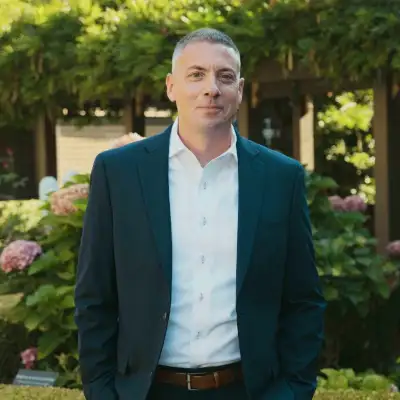
That's Walter Magnuson, the
executive director of the Winchester
Mystery House in San Jose.
It's been a tourist attraction since 1923.
The house has 160 rooms and its maze-like
design has attracted both architectural
acclaim and paranormal investigations.
According to legends and stories that have
been passed down for more than a hundred
years, Sarah Winchester would come in here
at midnight after ringing the bell in her
bell tower 13 times, and we believe that
was to summon spirits into this room.
Even if you're not into ghost
stories, there's a lot of cool
reasons to visit this house.
The fixtures and the furnishings
and the types of wood.
And so there's so much to see, and I think
a lot of guests don't fully expect that.
But at the same time, Walter
doesn't make any apologies for
the supernatural reputation of
the Winchester Mystery House.
And he says that in museum circles,
he often doesn't feel welcome.
Who am I to say my interests are more
highbrow and acceptable than someone who
is truly fascinated by the paranormal?
This is Call 'Em Like Museum,
a podcast about how museums
work and why we love them.
I'm Eric Johnson.
Today on the podcast, how do we draw
the line between history and legend?
When your museum is already
supposed to be haunted, how
do you make Halloween special?
And what do historic houses have in
common with the music of David Bowie?
We'll talk about all of that and more
with Walter Magnuson from the Winchester
Mystery House, right after this.
This episode is sponsored
by transistor.fm.
If you are starting a podcast,
then you should use Transistor.
Upload your audio or video and
they'll publish your episodes to
Apple Podcasts, Spotify, YouTube,
Pocket Casts, Overcast, and more.
Go to transistor.fm for
a 14-day free trial.
Do you have a museum story?
Maybe there was a time you got
lost, a time that you were moved
to tears, or a time you saw
something that blew your mind.
No matter what your story
is, I want to hear it.
Head to likemuseum.com and click
"submit a museum story." It
might end up on a future episode.
That's likemuseum.com and
click "submit a museum story."
I ask everyone who comes on the
podcast first about their personal
relationship with museums.
What's your first memory
of going to a museum?
I grew up in New York, so we
had tremendous luxury of having
so many world-class museums
and attractions locally.
So field trips and with my
parents to the Museum of Natural
History in the city and the Met.
And we did a couple
trips to D.C. and Philly.
And on Long Island, there's
some beautiful activations.
I remember a field trip to Sands
Point Preserve in kind of that
Gatsby-like part of Long Island.
So yeah, I have some great memories going
to some really incredible institutions
that are thankfully still with us.
When you were a kid in New
York, did you ever hear about
the Winchester Mystery House?
Yes.
Yes.
I was always taking out books on
history and books on ghosts and the
supernatural and watching "Unsolved
Mysteries" and all that in the '80s.
So there was a ghost book that I
would take out almost every week
in my elementary school library
if it was available, and it had a
section on Winchester Mystery House.
And then as I got older and started
working at Disney and getting into a lot
of that history, I understood that it
inspired Disneyland's Haunted Mansion.
It's inspired a lot of things.
So yeah, it was on my radar pretty
early as being a very famous,
purportedly haunted mansion.
Yeah.
So we should say for folks who haven't
heard of it, this was the home of
Sarah Winchester, whose husband was the
namesake of the Winchester Rifle Company.
She died in 1922 and the house
was bought shortly after her death
and became a tourist attraction.
Yeah.
She passed on September 5th, 1922,
and a married couple bought the house
at auction and they intended on it
being sort of the crown jewel of a
resort-type destination with live music
and swimming and a roller coaster and
all sorts of different activations.
And there was so much demand to
see the house that 10,000 people
showed up on the first weekend and
a lot of those other dreams kind of
fell by the wayside, but the house
maintains its interest and popularity.
When people find out what you do for
work, what are the reactions like?
They're usually intrigued.
I think on the West Coast, we have great
name recognition, so I think most people
here know Winchester Mystery House.
On the East Coast, it's
less, but I'm always amazed.
I mean, there's so many times I'm on
a flight or I'm in a restaurant in
Orlando or Philly or whatever, and
you will see a Winchester Mystery
House shirt, or if we strike up a
conversation, they'll know of it or
they've been or their neighbor's been.
So pretty good name recognition.
And usually people, no matter what
their background, they're intrigued.
They're interested.
I think there's kind of two
ways to get interested in
the Winchester Mystery House.
There's obviously the historical story
of Sarah Winchester and what she did
and the unusual architecture, the
unusual building project she undertook.
But then of course there's
also the legend of the house.
It's reportedly haunted, supposed to be
one of the most haunted houses in America.
I don't get to ask this of a lot of folks.
Have you ever seen a ghost at work?
Well, we have had a lot of strange
experiences over the years and
that goes back to Sarah's era, but
shortly after it opened as a tourist
attraction, there's been so many
stories of caretakers and employees.
And often
you feel like you're not alone.
You might hear a strange sound, footsteps,
your name being called, hair being
tugged, that kind of typical stuff.
But there are folks who do
see physical manifestations.
I have not seen that, but I have
had my window slam shut, kind of an
exclamation point at the end of a
sentence that I said in the meeting.
I was doing a media tour and I had
a door at the end of a hall slowly
open as we were coming toward it.
I've had definite feelings of not being
alone, but gratefully and thankfully
it is not a dark feeling or force,
because there are places I've been
where very sad things have happened
and it's a very heavy feeling that
people who are sensitive to that get.
The Mystery House, thankfully, as
all the mediums and sensitives have
told us, is a place that the spirit
energy there wants to be there.
They're happy to be there.
They're reliving happy
moments in their life.
That's always … I
think [it] sits easier.
This has kind of become an
accidental theme of the podcast.
I've talked to other folks who use spooky
legends and ghost stories, things like
that, as well as themed events around
Halloween as a way of attracting people
to the museum or to the historic house.
So I talked to the Haas-Lilienthal
House, they do an annual Halloween event.
I talked to the USS Hornet Museum.
They have a lot of legends of
ghosts haunting that ship as well.
And so yeah, it's a really interesting
challenge I think for you and your team
of balancing the history and the legend.
Can you talk about how
you approach that balance?
How do you see your
mission with all of that?
We take it real serious that we're
caretakers of this incredible masterwork,
25,000-square-foot house that Sarah built.
And we've built great relationships
with archives: Stanford, that
has a lot of her correspondence
with her attorney in New Haven.
She founded a hospital in her husband's
name, which is now a part of Yale, the
Winchester Chest Clinic; the final resting
places there at Evergreen Cemetery,
which we've assisted to beautify the
grounds and do some nice things there.
So we take it all very serious.
I think Sarah Winchester, there's a
lot of legends and lore and a lot of
different versions of why she came to
San Jose and why she did what she did.
The wonderful thing about Winchester
Mystery House is that the name is
so perfect because it is a mystery.
And I think it is very desirable
to actually be able to visit this
incredible time machine and make up
your own mind as to whether this was
just a eccentric hobby or whether she
was being directed by spirits or what.
So I think we take it very
seriously and we try and share all
of the legends in lore and leave
it up to the guests to decide.
In addition to the Sarah Winchester life
story and her potential motivations,
the house itself, as you saw, is
an incredible architectural marvel.
And if you're into that kind of thing
— the fixtures and the furnishings and
the types of wood and every little
detail, I mean the door hinges are so
—
The wallpaper.
Yeah.
So there's so much to see and I
think a lot of guests don't fully
expect that, especially if they're
being brought by someone who's more
focused on the paranormal aspects.
The house itself is just incredible.
So yeah, we have a lot to share for sure,
but it's really up to the guests to make
their own conclusions as they leave as
to what may have been her motivations.
Right.
I've asked some folks who've come on the
show to visualize the museums they work
in and kind of walk us through each room.
We couldn't do that right now.
That would take all day.
But could you describe when someone
comes in the house, they're coming on
the tour, just generally, what is the
feeling you want to create for them?
What do you want them to experience?
And at the end of the day, at the
end of the tour, how do you want them
to feel when they have experienced
the Winchester Mystery House?
Historic homes and historic
locations, there's different
approaches to the tour experience.
You have areas like Bodie, an abandoned
ghost town, and Alcatraz, probably,
to an extent, where it's almost in a
state of arrested decay where it is
sort of as it was left and they don't
want it to get any worse but they're not
necessarily actively restoring things.
And then you have places like
Winchester Mystery House, I would
say in some ways Graceland, Elvis
Presley's mansion in Memphis.
The hope is that when you arrive, you
feel like Sarah just stepped off into
town and it's still very alive and you
feel her presence and it's not a dusty
relic that hasn't been lived in 103 years.
It's still a very active place that
you're somehow time traveling to.
So ideally, guests are greeted warmly
and they should feel as if they're
sort of stepping into her time and
hopefully able to put themselves in
that mindset to have that experience and
we're here and it's all around us and
it's immersive and it's 1907 and we're
being received by Sarah Winchester.
Right.
There's a play from a few years ago by
Joe Christiano called, I think it's called
"Mrs. Winchester, or, A Gun in the First
Act." Lisa Morse was the star of it.
It was really interesting because it
was a one-woman show and she's talking
to the audience as Sarah Winchester
giving a tour of her own home.
And the whole premise of the show is
sort of, I think challenging popular
assumptions about what would drive
someone to build a house like this.
Was this an eccentric project or was
this an expression of grief, of trauma,
of guilt for people who were killed by
Winchester rifles, things like that?
It's a really difficult tonal
balance, I think, that you have to
strike because I think people come
in with assumptions about the legend.
They've come in with a
lot of baggage already.
Do you find you have to confront
or challenge what people bring in?
No, because I don't think
that's a fruitful exercise.
I think there's a subset of
guests that are very quick to
apply a 2026 lens to history.
For example, for the parts of
the Sarah Winchester story, so
spiritualism, was she a spiritualist?
2026, there's a lot of people that
their knee jerk to spiritualism is
that it's lowbrow and hokey and ghosts
and who believes in that and all.
In Sarah's time, which her lifetime
actually coincides exactly with
spiritualism in America, it was science.
It was highly recommended by your doctor.
Queen Victoria, Mary Todd Lincoln.
Right, right, right, right.
It's not up to us to decide for you.
I think we just need to share
all the different versions
of the story and all the
legends and lore passed down through the
generation, continue to do research and
we're still discovering little things
here and there, which we always enjoy.
But it's not at all a struggle for us.
I think it's a struggle for the guests.
It's for them to decide what … We just
want to take care of this incredible
house and share it and hope that all
those folks who have lived here forever
and haven't come yet finally visit.
Yeah.
I mean, I was one of those folks.
Until this week, I came to the
house and took an amazing tour
with your colleague Olivia.
Yes.
I had never been to the house before.
This was my complete first experience
visiting, and it was fantastic.
One of the things that I brought
in, absorbing some of the legend by
osmosis, was I did not really have a
good understanding of Sarah as a person.
I thought of her as this character
in the story, but I didn't have a
great understanding of her and what
she did, how she lived her life.
And something that really surprised
me from Olivia's tour was she was
really talking about all these
very positive, great things, the
positive impacts that Sarah had
on her community and on the world.
I wonder if you could speak to that of how
do you communicate that through her house?
Yeah.
When she passed, I mean, a lot of the
obituaries list her as a philanthropist.
She founded a hospital, the Chest
Clinic, as I mentioned, [which]
is now at Yale in New Haven.
We know that she was very charitable
and very, very involved in paying
for things, often anonymously.
So I think that's something that we make
sure as we discover these things and as
we uncover old clippings and as we make
relationships with different archives
that may have her correspondence in it,
we try to incorporate that into the tour.
We try and make sure that we call
our tour guides the caretakers and
we try and make sure that they have
the latest and greatest that we find.
But at least in my tenure, I know
that they've always touched on
Sarah, her philanthropic efforts.
And then I've read or heard that one of
the interpretations for why the house
is so unusual with all of the famous
stairs that lead to nowhere, the doors
that open up in unusual places, some
people say that it was a way of keeping
people employed, of keeping people
working consistently in her community, of
hiring builders to just keep on working.
Is that right?
Here’s what Olivia Maldonado from
the Winchester Mystery House told
me about the craftsmen who were
constantly expanding Sarah’s home…
They lived here for free.
They also were fed for free at noon
and 5:00 PM, and most of them were
paid at least double the going rate.
Some of them even up to $10
at the time, which is, again,
people were making $1.50 a day.
The people who worked here made more
than those who built the Golden Gate.
So Sarah really, really loved
her employees and really treated
them as like a chosen family.
Yes.
There are many theories as to why
she did what she did, and we do know
that she employed people for a real
long time and paid more than what
the going rates were for things.
There's also some stories.
We recently, through a wonderful
partnership with the Campbell House Museum
and local archive a few minutes from us,
they have in their collection a blouse.
It's a black blouse, and she had
apparently donated it to a girl who
was a neighbor, lived around the block,
Minnie Yeager, and she passed in the
'80s or '90s and donated everything
to this museum, and it's beautiful.
Apparently she donated it to a little girl
to do princess dress-up kind of stuff.
We worked out a deal where we now
have it on display in the house, and
it's been so moving to have, because
we have so few artifacts because
everything was sold at auction, but
we do have her incredible house.
So to have an actual article of her
clothing back in her room in her
house on display has been really,
really special for all of us who
work there and all the guests.
Yeah, there's actually a really
interesting detail about how
the house runs, is that a lot
of Sarah's possessions, or maybe
all of her possessions, were
sold at auction after her death.
And a lot of the story that you are
telling as the director of this house,
you are having to do a lot of compiling,
compositing historical sources where you
have records that the foreman kept, you
have local historical records, I think
Olivia was telling me that there's only
two photos of Sarah at the house and
one that was only found a few years ago.
That's quite a challenge when you're
trying to tell a historical story is
putting all these things together.
Yeah, of course.
And that's what we need to do.
I mean, I'm very jealous when you
go … Like Graceland, for example, we
built a great relationship with that team
and Angie Marchese, their archivist, and
Jack Soden, the CEO, and Vern — Elvis's
father was sort of his bookkeeper — and
between his father and the Colonel,
his manager, they saved every receipt,
every product sample, everything.
So truly, if you wanted to know
where was Elvis Presley on July 3rd,
1971, there is the hotel folio, there
is the gas receipt from the plane.
You could do such a documentation of this
dude every day, and that level of detail,
if you're an archivist, is such a gift.
And unfortunately, many of us, like
Winchester Mystery House, we don't
have that level of information, so
we do have to go with what we have.
And we have Janan, who Olivia may
have mentioned to you, she's our
house historian, and she started
as a tour guide in the '70s and
she's worked on and off since then.
And she truly is an incredible
authority on Sarah Winchester,
Winchester Mystery House.
We've restored a few rooms and
things like that where we have to
make some assumptions as to what
she would've wanted in this space.
Janan's been a great resource for that.
Yeah.
Olivia took me to a room that maybe is not
currently on the tour, but was a seance
room or has been done up as a seance room.
And there's pictures of people
who practiced spiritualism or [had
an] interest in spiritualism on
the wall, as well as I believe it
was a wreath made of human hair.
Does that sound right?
Yes.
Yes.
That was a big thing back in the
day, which I'm not a huge fan of,
and I'm glad that has not come back.
But yes, hair wreaths, many
Victorian homes have hair wreaths.
That was new to me.
I was a little alarmed.
[laugh]
Apparently that was done very loving
and very much appreciated for those
who have that treasure on their wall.
So how do you decide
what goes on the tour?
How do you decide what to emphasize?
I mean, it's 160 rooms in the house.
It's a lot to cover.
How do you direct people's focus?
To be honest, the mansion tour, while
we've done some secondary tours and
we've done some self-guided experiences,
and certain times of year we'll do
a more theatrical kind of special
event at night, the base mansion
tour, which has been around since
1923, has not dramatically changed.
Really?
No.
Much of the script shares the same
origin story and the different versions
of why she may have did what she did.
And we've certainly made updates,
and I can't speak exactly to
before my time, but the core story
has not dramatically changed.
We have enhanced, we've added a few audio
and video elements in the house that — and
we don't want it to come off as gimmicky
or theme parky — but we wanted to be able
to give a little bit of an orientation
because often if a group comes, one
person really knows everything about
the place, another person doesn't know
anything about it or got dragged there,
so we wanted sort of an orientation piece.
So we do that in the beautiful
stained glass room early on in
the tour and a projection happens
on the stained glass that tells
you a little bit about the story.
The earthquake is a huge, huge
part of the story, the 1906 quake.
So we did want a little more of a
sensory thing there so you could
actually feel how long that quake
would've shook the Bay Area.
And so we have kind of an
audio thing in that space.
So we do add subtle things.
I don't want them to be over the top
or really take you out of it, but if
it can enhance it in a way where you
can feel what that earthquake may have
felt a little more, or it's educational,
we try and add those little bits.
And now I want to play for you
the audio from my tour of what the
earthquake simulation sounds like.
It starts with a brief foreshock…
[foreshock sound effects]
And then after that comes the real
shock, which goes on for 30 seconds.
Video viewers, your screen is going
to go mostly dark while this plays.
[earthquake intensifies]
Could you talk about the decision to add
that audio — the sound of the earthquake
— and what did you want to do with that?
What was the goal of adding that?
Well, that's a big part of the story,
and the house had significant damage
with that quake and some of the damage
has never really been repaired so you
can fully understand what this did.
Sarah kind of abandoned certain
areas of the house after that quake.
I think it's a big part of the
story, and it's one thing to have
someone talking at you and giving
some facts about the 1906 quake.
It's another thing to feel the sounds,
to understand that, in real time, that's
how long that actual earthquake started.
And while this whole thing is
going, there's destruction.
So I think everyone's seen blurry historic
photos of the damage in the Bay Area of
the 1906 quake, but I think if you can add
sensory things and sounds and vibrations,
it does make it a richer experience.
When I got there, [we had] a lot
of town halls and round tables with
our tour guides and our managers and
really understanding the parts of the
tour that really resonate with guests
and the things that they ask about.
And I'm always trying to find ways
to enhance those points in the tour.
So I think it's just if there is a
technology or a thing we could leverage
to further it, to make it a more
emotional experience, we'll do that.
This episode will be
coming out in late October.
Can you talk about what
happens around Halloween?
How does the house change?
How does the programming [and] the
tour change, and how does your job
change, really, around this time?
The nighttime event, which has
grown significantly from the
occasional flashlight tour that
they did over the decades at night,
it's now a fully theatrical show.
We do more scientific ghost
investigations and paranormal
studies and lectures and things.
Halloween nighttime is truly a show.
It's a theatrical show, but the
stage is Winchester Mystery House,
so it's a pretty spectacular place
to do something that time of year.
Daytime, there might be different music.
There might be theme food and beverage.
The gift shop may be selling
some interesting seasonal stuff,
really beautiful decor to kind of
make you feel fall and Halloween.
But nighttime, typically anywhere between
16-17 and 30 nights in September-October,
we will do a theatrical production.
We work closely with a company
who helps us produce it called
13th Floor Entertainment Group.
This year it's called
Festival Fright Nights.
It's building on an experience
last year, and there's a story
and characters and takes over the
entire estate, even the parking lot.
It's really a fun way to
celebrate all things Halloween.
The nighttime events, when we do
that, we also do some Christmas
programming and some other events
throughout the year, eight or nine
out of 10 guests, they've been here
before, they come year after year.
And during the day, even though we've
been open over 100 years, it's almost
entirely flipped where eight out of
10 guests, it's their first time.
So the seasonal and nighttime
programming skews a lot more
local and it really is a tradition
that they enjoy doing every year.
When you are doing Halloween
programming, when you're putting on
this show, is Sarah a part of the
story or are these original characters?
Typically, it's a story that does not
directly involve Sarah Winchester.
We try to steer away from that.
Why is that?
Well, it's her house and the daytime
is focused on her, and we're never
going to do something where Sarah's
coming at you with a chainsaw.
We want to have respect for her.
So typically, while she may be mentioned
in the show, and it may leverage the
fact that it is Winchester Mystery
House and they may incorporate that into
the story — like there's a new owner
or it's becoming a hotel or something
like that — typically, we don't feature
Sarah Winchester as a character.
I think it's more interesting to
create a story where Winchester
Mystery House is a part of it, but
not necessarily her or her workers.
So yeah, typically it's the
perfect stage, but it typically
becomes a different story.
Something that came up when I was talking
to Laura Fies from the USS Hornet Museum,
she was talking about working with
ghost hunter shows and similar things
and putting on paranormal programming.
She thinks of it as a kind of head fake
in a good way, in a positive way, that
if she can get people in the door of the
museum — or the hull of the museum or
whatever you call that — if she can get
people in, regardless of their intent,
and she can teach them something while
they're there, she counts that as a win.
I consider ghost stories
the clickbait of history.
[laugh]
They're going to learn history.
We will teach them history
during this ghost story.
We'll inject it somehow and they'll
walk away knowing something more.
And if we have to wrap it
into a ghost story, so be it.
Does that resonate with you?
Is that how you think of Halloween
or is this a different sort of
—
No, I got to tell you, I think there is
a lot of shade thrown at ghost hunters,
at people who believe in UFOs, people
who believe … And there really is a
holier-than-thou attitude and almost
a permission to look down on those
people that, well, it gets them in
the door, but … And you know what?
I reject that.
Who am I to say my interests are more
highbrow and acceptable than someone who
is truly fascinated by the paranormal?
I've heard of other historic sites
talk about, "Oh yeah, we do a
flashlight tour and it helps pay
our bills," and it's typically
met with an eye roll or something,
and I don't fully ascribe to that.
I think that that might be the most
interesting thing the USS Hornet does.
I don't know.
It's really up to the individual.
I mean, if the White House
offered a paranormal tour
—
I would go to that.
Yeah, I would go in a heartbeat.
And I think it's okay.
I think people are hesitant to
admit that they're interested
in this stuff sometimes,
especially in scholarly circles.
And I don't think there's any shame in it
if you're into it, because even the folks
who claim they're skeptics and they're
not into it, they're usually the ones
asking the most questions on the tour.
They're usually … So I just
think people have to … It's okay.
It's not … It's a fascinating
topic that's been around since
the beginning of time, and it's
not something to be ashamed of.
I think the way, when Olivia and I were
talking about spiritualism, the history
of spiritualism in America, one of the
things that she said was at this time,
psychotherapy wasn't really a thing.
In terms of ways of dealing with our
questions and our fears about death and
all that, this was a great way for people
to confront their feelings about death.
And I think as science and these other
things have changed and moved, I think
you're right that there's probably
been a lot of stigma attached to any
sort of belief in ghosts and life after
death and the occult, things like that.
And so it's this question of can
you own the historical story of
what spiritualism meant at the time?
And then also, can you give people
permission to enjoy and to maybe
practice and to feel these ways to
have the same experience that people
in Sarah's time might have had?
Yeah, I think so.
Does that sound right?
Absolutely.
I think we need to celebrate all
forms of how people spend their time.
And whether you want to go to Great
America or Six Flags or you want to go
to the de Young or the Walt Disney Family
Museum or you want to go to the Louvre
or the Met or Winchester Mystery House,
those can be in the same conversation.
They don't need to be … And I think
there is such a alienating separation
in almost an elitist fashion.
I mean, look at my background, right?
So Disney and Winchester Mystery House.
When I go to different gatherings
of museum types, I'm not sure I'm
always welcomed in the same circles.
Really?
Just because it's … I think the pendulum
is swinging a little bit where people are
understanding that storytelling, earned
revenue, commercialization, merchandise,
these are not bad four-letter words that
we should [avoid] , these are good things.
But I'm not sure that was always the case.
I think there was definitely a little
bit of a, "Oh, Winchester Mystery House."
They have an attitude about what you do.
Not even an attitude, just
that it's easy to dismiss.
And we are an architectural marvel
that's been open for 103 years with
greater visitation than the majority
of museums and historic homes.
Got to be in the top five or six
historic homes in the country.
There's no apology for that.
We are who we are.
And as you know, having met
Olivia and Amelia, we have a
team that is so dedicated, so
knowledgeable, so passionate, so
caring, so thoughtful, so kind.
They just … For a lot of
these folks, it's a calling.
They love this place.
Olivia told me that when she
trains new tour guides, she
always tells them to “get lost.”
I cannot teach that orientation.
You have to just go in the house and
go, "Okay, how do I get from here
to out or from wherever, point A
to point B?" And that's one of the
biggest tests that they take of, "Okay,
well, take me to the linen rooms.
Okay, now that we're in the linen
rooms, how do I get to the basement?"
And watching them have to go through
… Because there's also not just one way.
There's five ways to get anywhere you
need, which is really convenient when
there's tours in the house and you have
to do the five D's of dodgeball: Duck,
dive, dip, and dodge around everybody.
But it also can be so overwhelming
when you're a new tour guide trying to
figure out which way is the right way.
It's a lot of fun, though.
When you sign up for the Call 'Em Like
Museum newsletter at likemuseum.com,
you'll get weekly updates on all of our
new episodes and you're automatically
entered in our gift shop giveaway.
Our 12 prize packages include
items from the museums featured
on this season of the show.
It's free, it's easy, and
it only takes a few seconds.
Just head to likemuseum.com to sign up.
That's likemuseum.com.
Good luck.
Hey, if you're enjoying the episode,
then make sure to follow the podcast
in whatever app you're using right now.
It's free and it makes sure that new
episodes will show up automatically.
If you're on YouTube, then
hit subscribe there too.
Thank you so much.
I'm sure that you have had a lot
of interesting interactions with
folks who are coming through
there, both staff and visitors.
Do you have a favorite story, like a
favorite thing you've heard a guest say?
Favorite thing I've heard a guest say?
Oh my gosh.
The mercantile, which is sort of the gift
shop portion, the guests will spill out
into the mercantile after the tour and
my office is near where they come out.
So if I'm coming down for meetings or just
to take a walk in the gardens or hit the
restroom, I'm constantly pulsing through.
And it is really, really rewarding
to see them coming off tour, engaged,
smiling, telling stories to one another.
I mean, there's so many times I'm
washing my hands in the restroom and
you're overhearing a conversation.
And while we do research and guest surveys
and things like that, hearing it firsthand
is always really, really impactful because
you could hear the family saying, "Oh
my gosh, it was amazing. Oh my gosh, did
you see that?" I truly think that when
guests are coming for the first time,
they don't fully know what to expect.
And they might have in their mind that
it's, I don't know, a dilapidated roadside
attraction or a haunted house, and it is
such a beautiful estate and the gardens
and the colors and the fixtures and the
wallpaper, that still gives me a thrill.
It's wonderful to see guests coming
off tour and just really, clearly
it left an impression on them.
It can be a lot of things to
a lot of different people.
Yes.
I mean, any museum, people can have
very personal, subjective experiences.
That's the whole point of this podcast is
how these things are so personal to us.
But you can go to Winchester Mystery
House if you care about history,
if you care about the legend, if
you care about the architecture.
There's a lot of different
ways in, I would say.
I'm a big David Bowie fan, and
David Bowie, I got to see him.
I got to meet him.
Oh my gosh.
I have an ashtray with his cigarettes
that I should not have taken, but
I took and it still sits in my
old room in my parents' house.
He, as you probably know if you're a fan,
really ascribed to — which I think is
frustrating when you're first listening
to his music because you really want to
better understand why he wrote this and
what he means and what inspired this — but
he truly was of the mind, frustratingly
so, that the listener's interpretation
of his music, of the art, was far
more important than what his intent
was or inspiration was in writing it.
It is an interesting way to look at any
experience because, to your point, people
are going to leave with a lot of different
takeaways of Winchester Mystery House.
And to be honest,
that's more important, looking at it
from a lot of different perspectives.
If they had emotional impacts
from different things they saw
or different parts of the story
that they heard, that's great.
Do you have a favorite
detail in the house?
I know this is a really hard question
because there's so many rooms, there's
so many small details, but is there maybe
something that is special, meaningful
to you, that not everyone would notice?
A few things come to mind.
I think at the end of the Hall of Fires,
which has a lot of different sources
of heat, which we believe was to try
and offset her arthritis discomfort,
there's this gorgeous fireplace that,
if you don't duck your head in and
look around, you wouldn't even see.
And there's this little kind of a
bench settee thing next to a beautiful
window and it's such a cozy area of
the house where you would figure if
all this heat was fired up and you're
overlooking the beautiful central gardens.
There's a lot of cozy nooks in the
house that I think are hard to fully
appreciate when you're just visiting
for an hour as part of a guided tour.
I don't know if when you take the tour
or if you've only visited once, you would
describe the house as cozy, but there are
some little nooks that are like, oh my
gosh, how wonderful would that be to curl
up with a book or just take a nap or just
…
I love those parts of the house.
And I also love the more majestic … I
mean, how can you top the Grand Ballroom
in terms of the look and feel of that
space and the incredible details and
materials used and craftsmanship.
In the Grand Ballroom, there's a
hidden door with some secrets inside.
Yes.
Can you talk about it?
That was one of my favorite
things from the tour.
Yeah.
So there's a huge safe right off the
Grand Ballroom floor, which, the story
goes that I think people thought they
hit a gold mine when they found the safe
and it opens up to a smaller safe and
that opens up to an even smaller safe.
And the story is they found, I
believe, an obituary from her husband
and a lock of her baby's hair.
Her baby who died in infancy, right?
Yeah.
It was a really tragic story.
Yeah, just a few weeks old.
Yeah.
She had a condition that,
unfortunately ,she passed.
She couldn't fully process nutrition,
and that was heartbreaking.
That story, I think, has been told since
the beginning that what does she really
value and what would she put in a safe?
They thought, my gosh, she was so
wealthy, it's going to be gold bars.
I think that's a really
heartfelt part of the story.
I think founding the hospital in her
husband's name, the care she put into
her family and the things she paid for,
and that was one of the first things we
did at Evergreen Cemetery in New Haven.
The Winchester plot is gorgeous and
beautiful, serene, just huge mature
trees and rolling hills and the
breeze and it's all the prominent
families of Connecticut, Evergreen
Cemetery, many of them are there.
But a few years ago, I guess this
is a thing on the black market, but
someone had stolen the headstone
of Baby Annie, of their child.
Oh my God.
And it's small, so I can understand
how they could transport it,
but I guess there's a market
for these kind of dark objects.
We were very sad about
that and so we helped them.
Those are things we
take very seriously and
want to make sure that we're
doing the right thing by Sarah.
I've been asking everyone this, about how
they've been inspired by other museums.
Are there things they borrowed in terms
of the way they display their exhibits?
But for you, I'll also bring in
from your theme park experience or
from any other sort of destination,
what inspiration have you drawn from
other places that people might go?
Having a background at Disney where
you learn storytelling and you learn
how to operationalize story and how
to share it in a three-dimensional
way or four-dimensional way and
have it hit all of your senses.
So I think Disney is very good at that.
And I think when I started, I built a
relationship with the team at Graceland
because I was looking at what are great
examples of historic homes that may or may
not have a famous person attached to them
and how do they tell that story because
there's so many different ways to do it.
So I think we continue to be
inspired from Graceland, from pop
culture, from museums in both the
for-profit and nonprofit space.
I think Meow Wolf and Netflix House
and Ministry of Awe in Philly.
There's a lot of different places
that are … Especially the ones that
are being built in actual historic
structures with their own history,
I think it's fascinating to see how
they do storytelling in that place.
So we're constantly, we're getting
inspired by everything out there,
and you really … Again, if
people leave and you're like, "Oh
my gosh, you just took the tour.
How was it?" And they're
like, "Eh," you've failed.
I mean, they really need to have
more of an emotional response, more
of something that two weeks from now
they'll still remember key parts of it
and hopefully be our ambassador and our
publicist and tell all their friends.
So I'm always on the lookout.
And as I mentioned, I think before we
started, we just came from the Queen
Mary and Catalina Island as part of
Midsummer Scream down in Long Beach.
And that's another great example
of a wonderful historic attraction.
And they offer tours and so we're
always talking about what's the
latest and greatest that your
guests are enjoying, and we love it.
Do you have any pie-in-the-sky
goals for Winchester Mystery House,
something that you want to do that
you have not been able to do yet?
Well, we certainly want everyone to visit.
I think the challenge with many — probably
all — attractions is always driving the
urgency, especially if you've been lucky
enough to be around for a long time.
People assume you're always going
to be there or they're going to
wait till they have family visiting.
So I think what we really like
to do is try and get people to
decide that this is the week, the
month, the year to come visit us.
And yeah, we've been around forever.
And I share that with so many people.
We have things close and I love
history and I love old buildings and
hotels and restaurants and museums.
And as soon as they close, typically
there's a big mourning and public outcry.
But then when you ask the folks, "Gosh,
well, when did you last go to that movie
theater that you …" "Oh, I haven't been
there in 20 years, but I saw 'Star Wars'
there and I went on my first date there."
"I like that it was there."
Yeah.
But you know what?
So I always, I tell my team this
and we practice what we preach.
If there are locations, especially
historic ones, you got to go and you got
to spend money and you got to support
and you got to evangelize because
these places need the visitation.
They need the energy that comes with that.
It's harder and harder, I think, to run
any type of institution or business.
You really need people's support.
So if you love something, find
reasons to go and bring people.
My mom's spent part of her childhood
in the Bay Area and I told her I went
to the Winchester Mystery House and
she's like, "Oh, that was a thing when
I was in fourth grade and we never
went." And she's in the Bay Area still.
Now is the time.
I'm going to get her there.
There you go.
Wow, I love that.
I love that.
Never a better time.
Exactly.
Last question I have for you, hardest
question of the whole interview.
When you're in a gift
shop, what do you buy?
These days, I have a beautiful
10-year-old son, Walter IV.
These days, it's typically
something with him in mind.
So sometimes it'll be something
edible, especially if it's something
that's themed or local or unique.
We love doing that.
If I'm visiting a museum or an attraction
that is out of state, I always try
and look for, is there something
a local artist created or is there
something that came from a local farm?
Because that's always fun when
you get to try things that you
might not be able to get locally.
I also collect vinyl and I like books.
So if it is the type of
gift shop that might have a
record, I'm a sucker for that.
Love that, love soundtracks and things
that are inspired by the attraction.
And I do enjoy books.
If I am given the choice, as much as
I enjoy podcasts and enjoy different
recordings, I still love the physical.
There's something very special about that.
It is.
Yeah, it's so special.
Well, it's also so special to talk to you.
Thank you so much for
coming on the podcast.
Thank you.
My pleasure.
Thanks again to Walter Magnuson
for coming on the podcast!
The Winchester Mystery House is open
10am to 4pm on weekdays, and until 5pm
on the weekend, in San Jose, California.
This year’s Halloween experience,
Festival Fright Nights, runs
through Sunday, November 1.
As you know I never leave a museum
without hitting the gift shop and I
bought some really cool goodies that are
up for grabs in our gift shop giveaway.
If you want to win a very classy
Winchester Mystery House mug
and this spooky magnet, then you
should sign up for our free email
newsletter at likemuseum.com.
Call ‘Em Like Museum is hosted
and edited by me, Eric Johnson.
It’s produced out of my podcast
agency in San Francisco, LightningPod.
Our social media specialist is Julia
Wilde, artwork is by Rhe Civitello.
Special thanks to Olivia Maldonado,
Amelia Richardson, and Ashley Lagano.
Thank YOU for listening, and
I’ll see you at the museum!