Subscribe
Share
Share
Embed
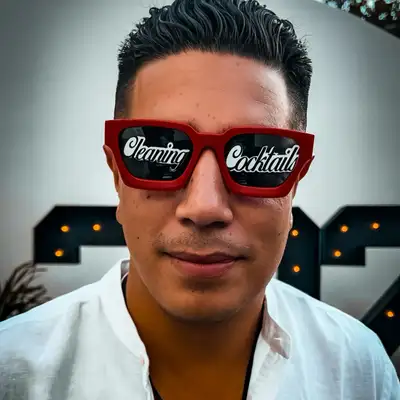
Welcome to Cleaning & Cocktails! I’m your host, Ricky Regalado CVO of Rozalado Services, Founder & CEO of Route.
In this show, we highlight the cleaning industry by sharing valuable stories, practical tips, and expert insights from cleaning business owners and professionals. Our mission is to elevate the cleaning sector and act as a guiding light for everyone involved.
So go ahead and grab your favorite Cocktail or Mocktail and enjoy the show as we dive into discussions that talk about the challenges and successes we all face. Our goal is to unite the community under a shared mission:
“We are building a **StrongerTogether Community**.”
CLEANING & COCKTAILS — TIMESTAMPED TRANSCRIPT
Episode: John Sosville | M&A in the Cleaning Industry
Host: Ricky Regalado
============================================================
Welcome to an on-new season 4 of Cleaning & Cocktails. I'm your host, Ricky
Briglato, CVO of Rozalado Services and the founder of Route. And this season
we're turning it up. We're bringing in powerhouse subject matter experts from
the residential and commercial cleaning community, manufacturers and
distributors, property and facility teams, and technology providers that all
serve the cleaning and facilities industry. We're giving you real stories, real
strategies and real success secrets. This isn't just a podcast, it's a movement.
We highlight the wins, the losses, the lessons, the challenges, and the breakthroughs
that move our industry forward. Our mission, it's simple to unite cleaning and
facility industry professionals around the world and build a stronger together
community. We've got worldwide listeners tuning in and how it's your turn. So
grab that favorite cocktail or mocktail and get ready to level up. This is
Cleaning & Cocktails where the industry connects, grows and wins together.
Hey guys, Ricky Regalado here, your host of Cleaning & Cocktails. So today in
the studio we have John Sosville, that's a dope name, Sosville. He's gonna bring the
sauce on the M&A world in the cleaning industry. I mean you guys know the deal
here on the show. What do we do? We bring subject matter experts. We bring domain
experts past cleaning business owners, current cleaning business owners,
software founders, manufacturing, distribution. In this case though, we're
bringing the M&A side and the brokerage side. But John brings many years on top
of just knowing the M&A world, John. But being a business owner, building
businesses. We were just talking about that off camera. So John, this is gonna be
a fun conversation. I don't know if I remember I told you off camera. We've had
a couple of cleaning business owners that have exited, talked, brought them on
the show. We had a manufacturing equipment company that exited and brought back
the company, told you some good stuff. We heard a lot of the war stories. So I
want to shine some positive light on some of these things. But I think that is
what you're gonna bring to the table. And that's what I'm excited that John is
gonna show you guys is the seller side. The working with a small business owner
getting them ready. Cause in the cleaning industry, there's a lot of spotlight
on this space because it is a great reoccurring blue collar industry to invest
and acquire companies in. So John, it's hard for taking up so much time there.
But let's bring it over to you. Thank you for joining us. Thank you for flying
out here from Denver. Thank you for having me. It's really exciting. And like you
said, it's a really exciting space. A lot of big things happening in the space.
And people need to be taken care of. They need to understand the the whole
process and how people make it work. Yeah. And you know what I'm excited is you
guys know it's always good when you have a good discussion. I think one of the
discussions we're gonna have. I have one side to it. You have another side to it.
I'm gonna share that with you because I think having two sides to a
conversation is very helpful for the audience to get two sides of it. But that
will be in a little bit. But I always have to start off with the tone. I'm just,
you know, John, you're on a podcast called Clean and Coctails. We're gonna talk
about the cleaning industry. I love the name cleaning exits because something
I've learned as I've been I've built the cleaning company and now I have my
family running and building the company is you should always think about if
you're ready or when you'll be ready to exit because if you're not thinking
about it, will you ever exit and be ready? So I think that's what you're gonna
bring to the table. But I know you're gonna bring that to the table. Talk to us
about how you got involved into the cleaning industry. It's it's actually an
interesting story. I was in another industry. I was in the tech industry. One of my
key partners owned a commercial cleaning business in Denver. Became a good
friend of mine. We shared a lot of business together. That was kind of my first
foray into helping him build his business. And you know, and then we've kind of
re-addressed and reproached it from a M&A perspective. So we're in the ATM
industry. Pretty heavy sold hundreds of ATM routes. I have sold several cleaning
businesses along the way up to that point. And we started targeting commercial
cleaning as as a direction. Mostly because it's very similar type of
ownership. And there's lower values than we think that there should be in the
industry. I like that you said that lower values because I got it's it's already
in a industry that doesn't get too much spotlight. COVID helped, right? But I
think it kind of then teetered back, right? Where it's low income wage. It's high
labor burden. It's service oriented. The customer has competitive bids coming
in. It is it's not easy, right? And that's why you kind of tell or see it with the
stats. I mean, people always know I try to refer to some data points, but like
93% of the cleaning industry is operators that operate under two million in revenue.
Or even under a million in revenue. Yeah. And that that puts a damper on what kind of
evaluation that kind of company can get, right? It can it can. You know, the smaller
side of the market is a really sexy side of the market. There's there's more buyers
further down the market. You go. So we we've focused in on kind of the quarter
million dollar sale price is probably where there's the most buyers in the industry.
All right. So I'm going to pause there because we have a great piece that I want to talk to
on the persona and the numbers and like what I assumed before I just saw two 10 minutes ago.
But could take a quick step back though again for some context and basis for people to
understand like your credibility and you in the space of, you know, knowing this market.
Take me back to when you said you were helping grow that your your hands on with the business
or you were learning it from afar because you are implementing systems for for that person.
Or what was your exposure again? Talk a little deeper today. Okay. So so in in helping him
look at his business, a lot of sales and marketing work is very similar to preparation for
exiting a business. So when we're looking at his business, we're looking at operationally how
he's doing sales growth, how he's doing what he was working on marketing wise, his turnovers,
people. So we started looking at all aspects of the business and we really focused on growth
in what we've worked on together. So obtaining new clients, going after new clients and in working
with him, it became really clear that he wasn't sure of where the value was derived in the business.
And that got me more into helping him and figuring out the direction to go. Yeah. So I like,
I like the piece on assuming the valuation, not knowing the valuation. Again, a lot of the audience
that we have are are a lot of the smaller cleaning business owners and operators. John and so
I want to talk about, well, I mean, there's a few points. You talk you in my notes, you talk about
a business owner should know about selling years before or start thinking about if they're
going to sell, start preparing years before the sale. Before we get into that, the valuation piece,
I know just shared experience for me when I first ever thought of like, hey, how maybe we should
buy a company or hey, what does a cleaning company go for? What's like the sale of the valuation?
I was naive to think, oh, it's based off top line revenue. Oh, it's based on like your contracts
that you have. Again, didn't have any idea. I didn't really, we don't have AI like we had now,
back seven, eight years ago, and I was thinking about this topic, but share a little bit about like
for a cleaning business owners that are naive or don't know much on that piece. Where does
valuation derive from for a cleaning company owner? Contracts are a good place to start.
Every company that has any type of recurring services should have contracts.
Having contracts in place, building in recurring revenue, where you can, so I'm going monthly plans,
payment plans, and then the consistency and retention of clients. From looking at the books,
you can see the same client year over year through billing. Those are going to be some of the
biggest elements in looking at the value of the business, just because people want certainty.
There is top line revenue is important, but the bottom line is really what matters.
And then the certainty that that is going to continue on in the future.
Okay, so we got contracts, reoccurring revenue. What's another one? Retention of the client.
Retention of the client. The certainty part comes from those states.
So yeah, the recurring revenue, the contracts, and the retention of clients over time.
Okay. Talk to me about, because I've heard this one before, market. Does market determine
any kind of factors on this? Market does matter. More when you look at the local side of buyers,
is every market is going to have market dimensions or aspects to the market that change.
Certain markets are more dangerous than others. Certain markets, the fees, or the employee pay,
is a lot higher. So it can change from market to market, but a lot of it is how that revenue is
derived. Okay. So let's talk about, remember I'll talk to you a little bit about, we won't say the name,
because I haven't launched it yet, but there is a entity and a model that I'm working on. But
education of this. So cleaning companies at a small state, and I can say this from my personal
experience is like, I'm so busy, I'm so worried about being busy, winning business.
That I'm next up is I'm busy on servicing that business. Then the next step is like,
do I have the team that could come in and take that over so I could continue to go grow and win
business. So like, under that million dollar revenue, under two million in revenue, you're so
again, the model of in the business. But I got to, I got to believe from what you're saying too,
is even at that moment though, you should be thinking of what is your contract service agreement,
look like, what's your payment terms? How are you getting paid? What's your banking? Things that,
again, I, you're three year four is when I started to like, oh shit, I got to have some of
this stuff in line. I would always say it's too soon to get professional. It's too soon.
And again, this is my assumption. But are some like, what are the some of these things that may not
be sexy early on? I'm talking even at a hundred thousand in revenue that a cleaning business owner
should have in place. Well, you just, you just call the couple things there. One is the beginning
is always the best time to make things right. Like designing your business up front correctly.
It's just going to make it easier to run forever. I didn't do that. Right. But the other piece
that you called out, I guess was the piece that I missed, which was the owner not being involved.
Right. It is a big piece of the value. So thank you for calling that out. So getting the ownership
out of the operations is key. But in the beginning, that's not going to happen. And the time to fix
things is the day that you start the business. If you do everything right from the beginning,
your whole life is going to be easier the whole time you're running the business. So and there's
man, I'm so mad that I'm drawing a blank on the person's name because I'd love to give him a
shout out. But there was a cleaning business owner at a networking event. I did like a pop up.
When I go to cities, I'll just say, I'm coming into town, which you guys want to meet up and
gravitate. I'm a lot of talk shop. There was this person that showed up.
They had been in business for three days. Right. And he's at this event. I'm like, I don't know
how much to talk like you just you're not even did you want to contract it? He's like,
not having anyone to contract that. I just want to be in the room and learn. It's like that
mentality is the mentality. Like he already said, I have a marketing plan. I have a contract service
agreement. I have all and I have a, I'm sorry. I just thought of another person. Amber,
Billy, I know you're behind the camera. What? This woman Amber, she used to she, she was hopping us
out. A story that I've shared before. This is a woman who was a marketing person that got into
cleaning. John before she started, she had a proposal template, contract service agreement,
her payroll, everything was set up. And to your point, like she was set up for success day one.
It's just difficult to think that way. But I think we have to continue to speak on that to
your point on you're talking about day one. They should have all these things. Look, you can take
in a perfect world. Yeah. In a perfect world. Yeah. Yeah. That operational excellence and
those detailed oriented people, right? They're going to set up the business better.
Right. But at the end of the day, what really matters?
income revenue, right? That's a little stuck on sales. The problem is the sales and marketing
guy is probably not going to do as much of those operational efficiencies at the beginning. He's
just going to go laying contracts. Yeah. I'm never going to say that's the wrong thing.
No, no, no, no. Right. Like go go get business. But at the same time, right, you're going to go back
and fix these things later. So if you if you go into it right, you're not going to have stuff to
fix later. If you design it right, the business is going to be easier to operate. And frankly,
usually it's going to be worth more money. It's almost like, you know what? What's actually
probably a good practice to do. And this is something I'll I'll take a note as I share.
Share this out loud is like. Great point is if you don't have a contract and you don't have
anything to service, it may be difficult to really nail all the pieces that you need. But think
about if you win. Call it a $2,500 month contract. You have a client that needs an agreement.
That needs an invoice that needs to, you know, they need scope of work. You need to buy supplies.
Like one client, one contract could literally be all you need to then get those things right.
Yes. You need all of those professional documents and all that, right? Yeah.
Okay. You guys heard that right. Never too soon to start.
Yeah, because it's interesting how you just played it out, which is one way isn't better than
the other, right? If you go get the contract and then you get everything set up,
you're pretty much ready day one. Yeah. So either way you're winning on that side of things.
Okay. All right. So I'm going to keep going on that one. Again, I, you know, we had an agenda,
but I'm going to bypass the agenda of the question. So I'm going to like getting into the to the
meat of things and you had said the word 250,000. I want to take us back to this conversation that we
had off camera where I assumed there was like a cookie cutter framework and I'm asking you,
remember, I was like, Hey, John, you know, there's got to be this like framework and this ideal
point in time when a company is is perfect and ripe to sell. And you kind of challenge me on,
like, well, I would big to differ. What was your challenge to me when I was trying to, I was
actually trying to get you to tell me the formula for everybody and say, this is it. This is what you
need. But you said it's a little bit more. What was the word you used to describe it?
Well, it's complicated. It's exactly. Unfortunately, it is complicated. Yeah. But I mean,
because there's buyers of all different sizes. And most of the buyers have less money than we
would like them to have. So on the buyer side, though, you said, so there is some framework. So
because you were saying the range of 250,000 to maybe max of like a million, was it in IBRA?
The 250K to selling price. Selling price. Okay. Selling price. Now that selling price, the 250K
to 500K again, max, let's say a million. Why do you feel that is a great place to be
for on the sales side? For the buyers that you have. Because I remember you said something about
it's the amount of buyers at that point that is sexy. Exactly. So on the small side,
there's the most buyers in the market. So you're just exposing yourself to more people. And when you
draw on a competition, you get the most money. So you need to mix those two elements. And I think
there's the most buyers between like you're saying in that quarter million to a million dollar range,
whether they're SBA or cash buyers. And then once you hit a million dollars in EBITDA,
then there's a whole other set of buyers way further upstream. But if there's two areas,
that's where it is. A traditional small business. And then once you're getting bigger and you
hit that million EBITDA, you open up private equity, family office, kind of bigger dollar stuff.
And then we had discussed then there's another level further. Yeah. But again, there's
there's almost like the stages that right there's there does become to be the stages of where you're at
who the buyers are. Because I think that that was interesting when we again talked about we talked
a lot off camera here. So we're gonna bring all that in here for you guys is we were talking about
you know, got in the tech side, the fact that you're you have a technical background to where you're
the technology side, you hear about how that world operates and the tech startups and their evaluations
and how I will sell you VCs, some of the VCs we have at route, we love them because I'm able to
be very open, transparent. I can talk to them about anything. And what we're saying is we
are going to sell to think about is that person somebody you're going to be happy that your
office manager is going to be working for soon, right? Or like you are selling to this person or
a company or firm or family office. How important is that, especially in that 250k to $1 million
rate where a lot of the action is happening where maybe not a professional brokerage firm or like
private equity doesn't get into that per se. It's more person to person. How important is it for
the seller to know who they're selling to? To me, now that I've done hundreds of transactions,
it's the single most important element is the two people and how they work together.
So everybody thinks it's price. Other people would say it's terms combined with price.
It's a hundred percent acquisition partnership. You need to get a price. John's term.
John's term. You like that term? I love that term. Talk to us. So acquisition partnership.
I mean, it's the most simple concept, right? It's how two people get along. It's how they relate to
each other. It's their relationship together and so much of that is shown pre-deal. You know what
your transition is going to be like by your interactions engagement with the buyer during the
selling process. So when you're in transition, you already have a good feeling. You're already
working together. You're already on the same team. And then post transition, the seller wants to
help this guy because he's always helped him. Through the whole thing, they were a team.
And so it's beautiful when it works and watching people years after a sale working together,
enjoying the process and becoming true partners. But this acquisition partnership,
you need to understand the person. You need to understand what they're going to do with your
company. And you need to feel like it is where you want your company to go. Because as
everybody finds out once they've sold the business, there's a lot more emotional attachment
to that business than you think. And you want it to succeed. And so you're going to get good
feelings in the future based on this relationship. So I got a awesome tidbit here. Shout out to
Ignali. She always helps me organize and structure myself. You met Ignali, right? You know,
in her through email. One thing she wanted me to touch on, which I love is you say that you're
super power is creating competition for the seller to get the best opportunity of that sale.
Talk to me about that. I think that's a pretty interesting super power because that's what I want
on my side. If I'm if I'm trying to sell the business, I want somebody to like think about when
you hire an attorney, you want them to be the best defense attorney or best, you know, prosecuting
attorney. Like explain why you feel that's a superpower for you. It's fun to have goosebumps,
right? So I guess it is. I do feel strongly. It's it's amazing. It's it's it's truly amazing
that you can decide what you want out of a deal, right? You need to understand you have to be
realistic about value. But at the end of the day, you get the value what you want by creating
a competition, right? And so coming into brokerage, right? A lot of people a lot of brokers
align themselves with buyers. Why? Because they're your repeat customers, right? They have lots of
money. They're exciting people to be around. Some of them are actually nice too. But but frankly,
it is your repeat customer, right? Not many people in my selling multiple businesses for it. It's
usually one or two. One or two. Right? Buy or buy 10 dozens of businesses from me, right? Makes
sense to want to serve them. Yeah. So it would make sense of that. But my nature is taking care of
the little guy. I mean, it's just my whole life. It's just how I believe it's what I believe. I
mean, honestly, my prior to this, I loved working with entrepreneurs and just helping their businesses
succeed. And it's the same concept. It's getting the little guy to be able to play at a level playing
field with these big buyers that do M&A deals all the time, right? And they need somebody to protect
them. And that's what we try to do, right? Is really work with them, get to understand their value,
make sure we value it correctly. We're not leaving money on the table. Put it out there and bring
in collections of buyers and get the right person, the most money and the best acquisition partner.
Yeah. So man, I got two things I got to say. I'm going to go with the first one first for the
direction of where we're going is you also then touched on is by creating the competition, you have
the best chance at getting pretty much the best price because we were saying like, if I'm interested
and I know there's three to four potential buyers and I really want this market. I really like
the client portfolio. You're going to get me to pay a little more than I would have probably wanted
to because my my desire and my appetite is so on like, yes, yes, do it. That's whatever we got to
do to get it done. But my point though is you said what happens a lot though is brokers will isolate
a seller to like one or two offers or something. Something to explain the isolation piece because
I think that's interesting as people that are thinking about selling is I like the competition piece
and you're super power and just that mentality talks me about that. The whole reason I've created
this philosophy is I understand M&A and I understand what the powerful people do.
Back you in a corner. No kidding.
They isolate you. They get you one on one. They grind you through a very tiring due diligence process.
They beat you down and price in terms and then tell you that you have to do the deal.
At a point where you're isolated from all other buyers and you feel like there isn't another option.
So we really try to do just the opposite. We bring the competition, we bring a diverse set of buyers
and we have everybody know there's a buyer waiting there. So if you're messing with the seller,
there's another guy ready to step in and replace you. So the other side of it is there is
a psychological factor which is ego. Successful people want to win.
So you also have to get that competition on that psychological side.
But I think they'll pay a lot more just to beat the next guy.
But I'll tell you, I think there's I love the psychological approach.
I've been doing a lot of stuff on mindset and I have this whole approach on stronger together,
mindset, things that I want to coach towards where it's not as much about like the operations
and the marketing and the sales and the department approach. It's more of like mentality.
Like the principles and the values of who you are as a leader and an owner to really get you
through some tough times or get you to win and be successful. Is there a theory or could we
be creating a theory here? Is dude, I got to say a lot of the people, even me with you know,
rose a lot of its open doors to success of where my cleaning company has brought.
It's a lot of me to open doors. I got to say when you exit, it's a lot of entrepreneurs
sometimes take like they have to make that first business the most successful, take it 20, 30, 40 years,
like, I got nothing against legacy. But like, would you say especially now in this day and age is like
that first exit may actually open up the doors for you to go even do something bigger.
Did I just unlock a theory? I love a lot of theory right now. I mean, maybe even in myself,
because it is the smartest comment that nobody talks about.
Dan, you guys hear that? Say it again. Ricky, what? Ricky is? Comment ever made in M&A.
Seriously though, it's so important because if you were smart in business, you would build and
then exit. And then you would build again and you would exit. And you would keep doing that routine
and you would probably optimize the best. That way. You get better. You get better.
What did you do the first time that you would do the second time? Maybe not do it like me where I
have nine different things at the same time going on. But hey, we're okay. But it's also back to
a point because it's hard to run too many things if you didn't have and exit doing so many things.
And like you said, we were talking earlier about what is the right number? Everybody thinks
there's some right number. I wasn't asking that too. It's like there isn't the right number. It's
the right time. The right time. It's the right time. Because it too many people, right?
Like the worst sale that I could have is someone that's about to pass. Which happens.
Or explain that though. Is that like, yeah, is it because that is the more right?
You got time, no it's the right answer. And I had a cancer. You're on fresh your test.
Yeah, you're actually you're going to sell at a much lower number because
No, Ricky, like honestly, this is why it's not good for me. I make people's dreams come true.
I sell their business, right? Like literally they make millions of dollars.
When you sell the guy's business, that's about to die. What do they get at?
What do they get at? You know, he was very happy. His family was taken care of. They didn't
have to deal with the business. He was really worried about that. There's positive things. But
that Lori and selling a business is the big exit and the life that they have in front of them and their dreams.
And it's right again, learning. I've got it's building a tech business for me has been the toughest thing to do.
It's different than a service business. But you like some of the smartest tech founders that I now know
and I'm in their circles and they've exited and they're on their third company exiting the third company.
They say that that philosophy of they build to sell to go get better and do it again and get better
and do it again because one of my buddies Chris, Chris, go shout out to you is he exited out of one
of the companies and he's like, this second time around. I got a little less weight on my. He's got
weight on, he's got pressure. But like you've done the thing, right? And now you've got some funds.
You've got a network that has seen you build to execute to exit to exit. You have a little more
opportunities to do things and ask for money and not use your own money when you just sold and you
have money. But you don't actually have to use your bike. But it's because of that simple
result of you exited a successful business. Yeah.
Well, and like you said, we're good. No, but you just said another important thing. The easiest way
to get money is have money. Right? So if you don't have money, go try to get money. Bires ask me
every day. Can I get a loan for that? No. And like how much money do you have? Yeah. Oh, that's good.
That's what the banker wants to know. Yeah. All right. So let's talk about for the founders that
are out there and the owners, I got to agree, not agree, disagree, have questions, challenges.
What's one of the biggest lies that you work with owners all the time? And when they're about to
sell, they're getting ready to sell. What's one of the biggest lies you feel owners tell themselves
as they're preparing to sell or the idea of selling comes in a play.
One, usually it's around value. If they're wrong, it's usually around value.
And secondly, it's around people's expectations after the sale is done.
A lot of owners just think that they're going to sell. And when they sign the closing documents,
that they will never deal with these people ever again. And almost in no instances, should that be
the situation? You're almost always involved. And you should be for some period of time. Yeah.
All right. So again, talking to the, especially the clean up of the founders that are out there.
So we said, again, some of these words to me, now that I know more, no brainers on like
contracts, obviously, the more contracts you have, the better, the term of the contract.
If it's a one year, two year, three year better, your client, I always hear one of the
diversification of those are something you could look those up and know those, right? Here's one thing.
I don't really see too much research on giving an answer for this is, what about the systems
and the operations that a cleaning company today, 2026 is operating on.
Like, should we, as a business be thinking, I should have software. I should have a time in attendance.
I should have a quick way to receive work orders. I have should have a quick way on how to
manage cash flow. I should have all this technical, like, is it overcoat? I have too much
technology or like, is it technology or is it EOS, like an operating system by coaching?
What is a good system or something some of these business owners should be thinking of as far
systems go? That's a great question. It's not a specific system. It's more of a mantra
of getting better all the time. Like, I don't think there's one system that you have to run.
It is more about being less involved in the operations and the business running itself. That's
what people want to buy. And frankly, this is what people don't know. That's the business that
people want to run. Right? And so this is the element where the mixing of prepping to sell your
business mix is perfect with operational because they're the same thing. Right? Is like exactly the
business that the guy wants to buy is your dream business. They align perfectly. That means you have
managers that take care of everything. You have systems for everything. You have software to help
you where they're more efficient than the systems. So I would say all of the above and the
less involved you are, one, the better your life's going to be. But also the better your
exit's going to be. So let me go deeper on that one because I feel like this should be something
that we should be thinking of as business owners. I know. And you should think about it sooner
again than later because as you get bigger, it becomes more difficult is the integration of the
systems you have. So like if I'm selling to a company and I got more, I'm technical, right? So like
I'm already thinking of do the software that I have have API connections that they can sink in and
receive my information and it could be a data dump and be quicker. Or do I not have too much software
and have one or two that again combine those they could integrate much quicker. Or is the buyer
that I'm looking at to sell my business to have to have the same software I have to make this
seamless. I can literally step away and my earnouts going to increase because I set my company up
for the buyer. I love the detail. Okay. I mean, this is a great detail question. So
everything that you said is truthful. That doesn't you're going to tell me something's wrong.
Get it, get it, got it, get it, go. The problem is more in what people don't know, right. So
you can't expect your systems to align. Right? You just need to make decisions, right?
operate your business as normal. You know, one of the biggest questions I have is now that I'm selling
what do I do now? What do I do different? It's like nothing you don't do anything different.
And as far as systems aligning with the buyer,
you're not gonna know what systems align
and what systems don't align, right?
Until you're in an actual negotiation
and people are analyzing your systems.
So, and mostly, you know, if you're being bought
by a bigger company, they're gonna integrate everything
into what they operate.
So, all, you know, the type of sale you're talking about
are smaller sales and people are gonna look
at what systems are integrated,
but you tend to be able to export and start from there.
But I mean, again, if I'm just,
I'm infatuated with the 250K to 1 million.
If it's a, if the sale price is 250K,
that means that the EBITDA is at like 40, 50K, 100K,
or I mean, look, that's what I say, like 100K.
Nothing crazy.
But even at that moment, if I'm operating a business
under a million, let's say it's 500K in revenue,
and you know, if I had a time and attendance app,
if I did my invoicing through QuickBooks,
and I'm using Paychecks for Payroll,
I'm just throwing out names.
I should get some sponsorship from there.
But like, I feel like that's so,
like that's, I'm a tech enabled company.
I should get a better valuation.
Is that does that end up happening?
Or again, is that a wishful thinking?
I think it's wishful thinking.
Because I can't eat lead your payments
on the systems that the buyer has.
Right?
Because if the buyer doesn't have those same systems,
it is an optimized for that.
That means nothing.
Right?
So if they're the same exact systems,
somebody could be like, that's easier.
Right?
So the transition's going to be this much easier.
That's going to be this much cost,
and they might be able to give you a little more money for it.
But I don't think it's a huge factor.
Now, if you're completely disorganized,
and you have no systems,
and you can't track your data,
and you can't provide information to a seller,
you might not be able to sell it all.
True, right?
No, man, you're getting dinged.
Yeah, it's a good ending.
Yeah, so that's it.
So it's not like you're going to get more for being organized.
You're going to sell being organized
and having the system set up,
where if you have no systems,
and you can't prove your income,
and there's questions about the transparency
that you're giving to a buyer.
There's a high chance you're not going to sell.
We're going to sell it at a discount.
Okay, let's talk about, I don't want,
I was going to leave this to the end,
but I actually don't want to forget about this,
because we're talking about, like,
again, I end up talking about software.
I love software.
It changed my life when we incorporated it into our business.
But let's just take it, like, bring it back to you have some,
like, things and resources that a lot of the audience
can benefit from.
We'll figure out a way on how they get access to a job.
But the business, I think it's got the exit readiness checklist.
Talk to me about the exit readiness checklist.
It's literally a robust list of exactly
what you want to go through in prepping for sale.
So every single thing that you need upon your sale
upon your sale is on that checklist.
So it just, it gives you a direct source of prepping yourself
to at least be ready for the process.
Okay, so I'm crazy to think then that,
not crazy to think, but like, dude,
if I had that readiness checklist, I would be thinking,
all right, how, again, I could be years away from selling.
But that checklist may be something, you know,
if I have, if it's me on the CEO, if I have a CFO,
if I have a COO, if I have an ops manager,
not with AI, if I have an AI agent,
hey, I'm not ready.
I'm not going to sell.
But be thinking of how I have access to these documents,
like tomorrow if I wander them.
Because if you think that way,
you're going to operate that way.
If you operate that way, it's not going to be difficult
for you to get access to these things
that you will eventually need.
But why not have a running checklist,
you know, on a quarterly or yearly basis?
Like, I feel like that would be a helpful approach to,
dude, you never know when a good offer comes
or when there's like something when,
that I've seen horror stories
that I've heard from fellow founders
and cleaning company owners,
especially as like, dude, I had this offer.
That wasn't ready.
I didn't have my 22 returns and I didn't have this
and I forgot to do this
and I was investing too much money
so then my recap and all this stuff happens.
And it's like, I just wasn't ready.
So I love the name readiness,
but is that too much to ask again,
for a million dollar, two million dollar company
that like, hey, use this as like a guiding principle
to like how, if you don't have them,
you might think about, you know,
somebody's got to have them for you as a company.
Yeah, again, what's great about being ready
to sell your business, exit readiness,
is it is operational readiness, right?
So all of these things are things
that are gonna make these owners lives better, right?
So it's very easy changes to make.
It makes your business worth more, right?
It brings, it's gonna attract buyers
just because you're gonna be known in the industry.
And frankly, it's gonna make your day-to-day life better.
So that's what I like is the same changes
that I encourage people to make
to sell their cleaning business
are the exact same changes that they should make
to live the life of their dreams while they own their business.
All right, so let's think of, you know,
I said it's a dream.
When your dreams should be to exit, you know,
get this chunk of money.
And like, to me, that's a sign of success.
You did something right that you as an owner win,
but then your team, your staff wins too,
because then maybe you get an influx of capital,
they get future security of growing the business,
you know, whatever the case is.
But let's think of, you know,
they use the word KPIs, metrics, dashboard.
Nowadays, when I'm learning about command centers
with AI that you can build,
what's some signals?
Data signals are just signals in general
that cleaning company owners can be mindful of.
Like whether it's the economy, the world around them,
the market they're in, a big win they had.
What are some signals that cleaning business owners
should be looking out for?
Looking out for as a sign to sell.
I think mostly it's a personal decision, right?
And I don't think that's the right decision making tool,
but most people are making the decision based on their health,
their age, or some other personal situation.
So if you're making the decision based on something
other than those, it's probably the right decision.
So if you're...
So almost think about the ones not to be making it.
Exactly.
Right?
Because so many of the time it's...
Say those again.
Retirement, sickness,
I don't remember.
Age.
Age.
No, what was it?
Age, sickness, health, health.
Was it?
Repeat, stop, pause, repeat, not getting.
I know, I am.
Let's get that off camera though,
because that's a nice short answer that I want
to ask you a question,
because again, we're always thinking of why should I sell?
What are the signals to tell me to sell?
I like how you just addressed,
these are the signals not to sell.
I mean, if it's in your means,
and if you have control, if you have control.
So those, so there's elements
that people are selling because of something coming at them.
And I would prefer people choose to sell
based on their own decision making, right?
So I know a lot of wealthy people that just,
they pick a date, saying five years,
I will sell this business.
You know what's interesting about it?
Is it's a decision people are unlikely to make
when they get there,
unless they have pre-decided by something.
I'm gonna get to this amount of income.
I'm gonna get to this EBITDA.
Well, I mean, total revenue, right?
Even we're talking, is there a special target
that people should be going to?
And I think the special target in cleaning is $10 million
because they think that's gonna be around a million in EBITDA.
And I think that's what people's target is.
I think it's unrealistic
because I think most of them won't get there.
And I think they could have sold well before then
at a really good number that would have secured themselves.
Yeah, because a million in EBITDA
and 720,000 in EBITDA,
like what's the big, big difference?
Not much.
Hundreds of thousands of dollars.
Yeah.
But the guarantee to sell at that moment,
it's probably much more, yeah.
No, man, I don't think so.
Well, and also it's just,
sometimes people let it draw out too far, right?
If you're gonna hit 10 million when you're 85,
you know, maybe you should sell when you're 70, right?
Is so, some of it can be pre-decided,
but other things can be when I hit a certain metric, right?
When I do get to a certain number.
Well, think about here, John.
So I'm gonna say, because this is,
you talk about I'm big on many failures.
So when game stop was happening
and when cannabis companies were coming into,
like the trading and the stock environment,
I am not a trader.
I am not, I just have no business putting money
into the stock market because I lost so much money
because dude, I have a joke with some of my friends
and we have a chain where he was like,
Rick, if you are texting me about a stock,
I better be out of that stock by the time you text me.
That is not good.
So shout out to my buddy Juan Padea.
So because he is a guy that I admire
where again, he's a clean-up business owner in our space,
but he's very good in the stock market.
He follows that he, it's not,
not even that it's a side hustle.
It's a love and a passion for the guy, right?
I think it is.
He does very well with it.
But something he had told me before is like,
like Rick, I monitor these and I have stop points.
Like there is no emotion tide.
Like if this thing hits $45 a share, I'm out.
I'm good.
I got no ties to this.
So it's kind of like,
but we're so close in near and dear to our businesses.
That's difficult because like someone so works here.
It's a family business.
I love that employee.
Been doing it for 10 years.
I'm trying to build a legacy.
There's a lot of reasons why not to.
But like to your point, if you take the emotions out,
you say, I'm going to hit 10 million and revenue.
I want to get to one million.
But what if you hit 10 million and you're at 830,000?
Maybe that's a good time.
But take the, it is hard to take emotions out when you are the owner.
This is your baby.
It's so different.
Like that's what happens to everybody, right?
And there's 50 other elements of why not to sell, right?
Somebody's about to get married and you're, you're worried about.
But it tracks it out.
It's like, there's so many.
There's so many reasons that you can get dragged out further.
And I'm not saying like selling is the only option, right?
I mean, if you have a great business run your business,
you enjoy your business run your business, right?
But there is not a place that you, it shouldn't be,
I have to get here to sell and be successful, right?
It's like, there's always an out, right?
There's a buyer at every place in the market.
The key is, and John, think about, I like that you just said that
because again, investors or banks or money or anybody from an outsider perspective
that understands this, this business model is you could,
you could sell your company for 250,000.
But if the metrics are, you sold it at a 5X, three years in business,
you earned out this much.
The metrics are in your favor as this was a great sale.
Then it doesn't matter that it's 250,000 or 2 million.
Like that moment, that action that happened was in your favor.
It was a success.
Every metric measured against it was a success.
The amount doesn't actually matter.
You showed and you proved that you can build or start build exit.
Exactly.
And make the percentage that doesn't matter the amount.
Again, it's the percentage and the metrics that are measured against it.
Well, it's like what you just said.
Is the guy that started a business a year ago and he sells it for 250,000,
is he less than the guy that started a business 10 years ago
and he's going to sell it for 2 million.
Right?
Is one person better than the other?
No, it's just a decision of one guy decided to sell first to the other.
It's like, so much of it is when it's right for you, your thought process.
And my biggest point, and we talked about this earlier as well,
is go get your business valued by someone that has no interest or pressure on you to sell the business.
Yes.
Go talk to people about why your business is valued that way.
Maybe you want to work with them in the future.
That's great.
Maybe you don't.
There should be no obligation.
My point is that's how you see the value.
And also, that also might be when you see, I should sell.
Like this is where I want to be.
Yes.
And then I'm going to go do my next thing in this industry,
or different, whatever it is.
But there are so many people they hold back from selling
because of the fear of what's going to happen.
Or they don't think they have an asset that can be sold,
or they're scared of the process.
Yeah.
That's why they see mostly.
All right.
So let's talk about this then.
As we come to an end, I have two major points.
One, we'll touch on, but I want to end with you discussing about cleaning exits,
the site, the model, the platform, and that.
Before we get into that is, is the high prep is a high, a high, a high,
a highest offer, always the best offer, yes or no?
No.
Why?
Well, terms are hugely important, which are what comes with that price.
All right.
Is there an earn out?
There's some type of hold back.
Is there work required in the future?
How does it impact your life?
And then more important acquisition partnership.
So you need to align with the people.
People, I have people all the time tell me,
I'm getting this price, $10 million to say a number, $10 million.
What is $10 million?
I always ask because I'm an M&A person, what does that mean?
And then they know.
You're earn outs for exactly.
Oh my God.
It's like I'm getting a million dollars down and I'm getting a $9 million over nine years.
That's not good.
That's not good.
Run it.
See, you know that's not good.
So but the point is like those terms associated the price are massively important.
Like people throw out prices all the time.
It's like, are you even like private equity?
You know, there's a second payment and then when the private equity firms sells, there's
the third payment.
Are you ever ever going to get paid a second payment?
Never mind the third payment.
So and then the last piece is this is a partnership.
And you sell your company.
It is not a house.
You don't move out and never see the house again.
You will want to know what's going on in the business.
You will be involved.
There will be client situations that you should be involved in.
You should help the buyer with.
So you're going to have this person in your life and you want it to be a person that you
enjoy working with.
It's the most important factor.
Nice.
Okay.
Let's wrap it up with this.
I had a vision for you when I was sharing there.
So I'm going to lead this into the cleaning exits platform and like your approach to that
and why I believe it's pretty cool to talk about it and share with people.
But I am somebody who I like to test the market sometimes.
I like to see what is, you know, what would this go for?
What would that go for?
And if you think about a sock tucky for a little bit, right?
You want to sell your car.
You go on car gurus, you go to Facebook, marketplace, you can post your car up there.
Like, hey, what do I get?
If I wanted to sell, what could I get?
I got a business is a little bit more in depth.
But the one thing I haven't seen is like the ability for if I had my business ready checklist
and I had all my documents in order and I had, you know, sample contract service agreements.
And if I had the due diligence deal, like in what happens in technology is you go through
due diligence, you're going to get an investment from a VC.
You're asked to put all this stuff in a deal room, right?
You shared that with me and I hope maybe I'm not getting ahead of myself.
But like, dude, that concept you were sharing is I would love if I was curious to be able
to say here, here's my business, here's my numbers, here's my metrics, here's my employee
size, my footprint, my contracts, the markets I'm in on cleaning exits.
If it's a platform that's tech forward and has the data that I need to give you, is that
what you're thinking for the future of like us who again at the under two million in revenue,
they have nowhere to put to get an evaluation.
They're going to go talk to somebody, they're going to get pitched.
They got to go through the due diligence.
Why can't tech help solve some of these things where if I'm interested, no one to throw it
out there.
I mean, I may say I'm not ready, but like, give me three or four offers of what I think
I could get.
Are you, is this, oh yeah, 100%.
So there's two things.
One is, remember, I get part equity of what you're talking about.
There's a valuation tool, which goes so far.
But yeah, I push the fact that a good broker doesn't get paid until the day the deal sells.
So that means everything is free up to that point.
And a good broker shouldn't have a problem with that.
Oh, I do free valuations.
And anybody in a specific niche that knows that area should be do the same thing.
But is it tech forward though?
Like could I, so there's a valuation tool?
So there's a valuation tool.
Yeah, there's a valuation tool.
You can put all your stuff in.
It'll tell you the value route.
The other side of it is you can then take that, post it, get offers and see what it's
actually worth.
Because the market always decides about you of an asset.
So we can actually post it.
We can go through the process and you can actually see what offers are.
Doesn't, you know, just because you receive an offer does not mean that you have to sell
your business.
Okay.
So as we wrap up, come to an end, what is the, what is one thing we did not cover?
Um, I feel like we covered a lot.
But John, what did we not cover that you didn't want to leave here without the cleaning
and cocktails audience learning or understanding about the M&A brokerage?
Not brokerage, just M&A in general for our industry.
I think the critical piece to understand is that you're not alone, that there are people
that can help you.
There are big good people that will help you.
There are people that are on your side that will take care of you.
And you don't have to sell until you want to sell no matter how far a deal gets as long
as you haven't signed a legally binding contract.
And they don't sign anything.
No, but it's really important because I think the fear of how serious this is keeps people
from getting into the conversation.
Like, I don't scare it.
It's like, it's a lot of work.
I don't want to go talk about this because he's going to ask me a bunch of questions.
He's going to ask me for a bunch of data.
I'm going to have to do work.
Frankly, it shouldn't be that much data or that much work to get a good estimate on your
business.
But more importantly, it should not be scary because you, just like acquisition partnership,
you should be finding somebody that you're comfortable with that you really feel like
is going to take care of you.
Right?
Because just like real estate agents, right?
The guy that brags, he can sell a house in a day or two probably isn't going to get
you the most money.
Yeah.
Right?
True.
Because he's pricing just on the market.
Yeah, I like what you're saying.
I like what you're saying.
I can price onto the market and I can sell your business in a day or two.
I just sell business in a day in Denver.
One day, the guy's dying.
He wanted a soul.
I said, this is too low.
And it was right at the market.
I had a hundred contacts in one day.
Wow.
And it wanted it in the smart people.
They didn't contact me.
They wrote me offers.
And everybody else, they knew they knew it was going to be gone and they were smart.
And everybody else said it couldn't have been gone that quick.
And I just wanted to say, well, they wrote offers while you were asking me questions.
Why are so asking questions?
Right.
So if you again, like that for you is a that metric or sign of like this price is too low.
That means it's okay.
I should know.
I knew it was too.
But also, he's a sick man.
He doesn't know how long he's going to live.
And he said, I want it sold as quickly as possible.
And I said, at this price, it will be gone immediately.
Okay.
And it was a fair, you know, it was actually what the industry says the value is.
Which I got then boom, you're good, right?
Well, the point is to a degree of, well, I guess I do have another point.
My other big point, the industry, when you're in a conference or trade show and people are
telling you the values, who is telling you the values?
The buyers, the big guys in the industry that want to dictate what the price of the industry
should be based on them.
Not based on what the sellers want, right?
So that's what we're trying to change.
Okay.
We're trying to take the masses and take care of them instead of having a few sellers
dictate the selling price should be 2x EBITDA.
So all in all, as I got, I'm just like in my head, recapping everything you said, I got
a hashtag for John.
It's hashtag, John is for the seller.
We talked a lot of it, dude.
Like, I love that we could have gone on the buy side, but I think even us off camera,
I got the feeling in the buy from you.
Is that again, you're for the smaller company?
That is your mission.
I think that's your purpose.
You've said it.
And I appreciate that for you because there was a lot that we covered for the sales side,
which a lot of the questions come from that because we don't have the acumen, right?
Sometimes we're busy building, we're busy in the work, we're busy in the, in the
shit and the, in the thick of it.
So coming to an end here, I appreciate you.
Thank you for coming out here from, from Denver.
I'm, I'm actually excited that Bill and Jack got to meet you at ISSA.
I look forward to doing some more stuff.
I know you're working with Jack on some good content.
So you guys just so you know, John's working on some content for the, the community,
you guys as the industry to really talk more.
And I feel like my biggest takeaway, John, is it was easy to talk to you.
It was easy to talk about M&A when in our industry, companies under two, three million
in revenue.
It's a scary conversation because we feel that we don't know, right?
I was there.
I've been there.
I have no idea.
So if I don't know, I have no confidence.
And if I have no confidence, I'm not going to show up and be present in this opportunity.
So you made it very easy to talk about M&A.
And I hope that that comes through the camera and audience.
Here's it.
Whether it's on camera or whether it's just an audio.
But man, thank you, cheers.
Cheers.
Thank you.
Thank you so much for having me.
Thank you.
You guys, click on cocktails over and out until the next episode.
Welcome to an on new season four of Clean and In Cocktails.
I'm your host, Ricky Riggolato.
CBO of Rozalado Services and the founder of Route.
And this season, we're turning it up.
We're bringing in powerhouse subject matter experts from the residential and commercial
cleaning community, manufacturers and distributors, property and facility teams, and technology
providers that all serve the cleaning and facilities industry.
We're giving you real stories, real strategies, and real success secrets.
This isn't just a podcast.
It's a movement.
We highlight the wins, the losses, the lessons, the challenges, and the breakthroughs that
move our industry forward.
Our mission, it's simple to unite cleaning and facility industry professionals around
the world and build a stronger together community.
We've got worldwide listeners tuning in.
And how it's your turn.
So grab that favorite cocktail or mocktail and get ready to level up.
This is Clean and In Cocktails, where the industry connects, grows and wins together.