Subscribe
Share
Share
Embed
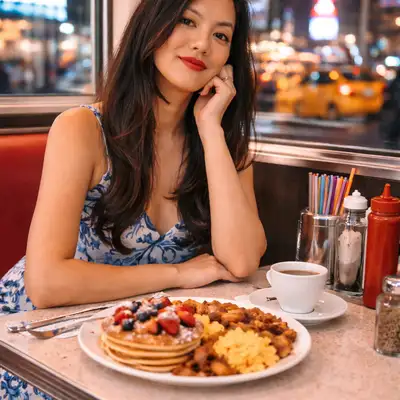
Savor with Tiffany Pham is a Representation original podcast where host Tiffany Pham sits down with the most iconic chefs of today over the one dish that made them famous.
Each episode, Tiffany and her guest share their signature plate together, and while they eat, they get into everything behind it: the life, the dreams, the journey, and the moment a dish became a legacy. It's a conversation you can taste.
Season One premieres September 1, 2026. Follow now so you're at the table for the first course.
it sounds like it's
been a really busy time it has been busy
it's we're
still in the middle of it and uh but it's
very exciting as well it's a very exciting
year for us
yeah yeah you were telling me you're
expanding out into yeah so this year we're
doing um you know
we're it's it's our 20th year actually as
a business uh in new york we've been in
new york
this whole time but uh this is the first
year we're actually expanding out of new
york so besides
the three stores that we are already that
we already have in the pipelines in new
york city
We also have three four-wall stores out of
New York City, so namely Boston, Virginia,
and Maryland.
So a lot of places to go and these are
company-owned stores, so they're not like
franchises where I could have the help of
franchisees.
This is stuff that, you know, me and our
own team has to really hop around
literally and manage.
It's a thing that all started here and
your family and your father, so I'm really
excited to ask you about that.
Yeah, absolutely.
I'm excited to ask you also about the dish
itself that is like one of the icons of
New York.
Of course, this is our signature dish, the
spicy cumin lamb noodles.
And, you know, fortunately and
unfortunately, in some ways, it's like it
takes up a huge part of our menu in terms
of sales.
People just like it.
I mean, I wish people would try different
things, but people really like it so much
that they just, you know, they're
creatures of habit.
You know, it's very hard for them to break
away from a favorite.
So, but yeah, this one is definitely a
favorite.
And how many times a week do you eat it?
Mmm.
If I'm lucky, a couple of times.
And I say that because I'm a tough person.
If I walk into a store, I tend to get a
little obsessive.
I can't really focus on eating if it's a
workplace.
You know, like so it's kind of hard.
Well, yeah. It's so good.
It's extra spicy for sure. Yes. Yeah.
And I am so excited to hear about each
component because, you know, I know, you
know, we're
We're going to talk about your family and
how they started the business ultimately.
But excited to dig into each ingredient
and how it's evolved over time and where
it is
Yeah, I mean, obviously, right now we're
still...
Yeah, it's a little bit of a mess.
as well because it kind of looks like a
belt, very thick. And our area. Our area
meaning like
Shaanxi province, like Xi'an, surrounding
Xi'an. So it's really showing we like our
noodles really
chewy, we like it thick, we wanted to
carry all these sauces. So that's
definitely an important
important part of the dish. These noodles
can be had with any protein or non-protein
as well, but we tend to have it with lamb,
beef, pork, or vegetarian or hot or seared
noodles. So it's pretty versatile. Now
this particular dish we're talking about
our
sliced cumin lamb being the main protein.
Now this lamb is sliced lamb that has some
fattiness to it in order to have that nice
caramelization when we're cooking and it's
sliced so that it's thin and it's easy to
really catch all the flavor maximize the
surface area
so we capture all those spices on top of
the meat spices so good yeah i mean it's
it's hard to resist
and it's a flavor that i grew up with i
really love the spicy like the cumin
ground cumin
freshly ground cumin is folded into the
meats with our proprietary chili oil and
crisps along
along with peppers, onions, and garlic to
create that really wholesome signature
flavor of ours.
Now, I say this is one of my favorite
flavors as a kid is because when I was a
kid, I was skinnier than I am now, you
know.
And I really hated eating because eating
is like a chore for me, right?
And there's nothing I really liked eating.
I hated, you know, most of the dishes I
have to eat, I got force fed as a kid.
But I did enjoy spicy cumin lamb.
And that's really whether it's in the
noodle form, whether it's in a dish form,
which we also sell just with the meat
itself
Or whether it's in skewer form. So you
actually know this is a funny story
Do you see a little scar here? Oh, yeah a
tiny bit, right?
You know where that's from? Where?
Memorial Day, I was making lamb skewers
and I used the metal sticks while I was
eating it
I went like this and went shhh
That's how much I like this flavor, you
know, it's a different form of the same
dish
So I thought that was a funny story to
tell you by the way
Oh my goodness, so actually you were
mentioning some aspects that are
proprietary, like the
crisp sauce you said, the oil crisp.
Is that from your father, is that from
your family?
It's mostly from my family, but then my
father has obviously modified it to fit
his own taste.
Meaning if he is able to find a flavor, a
spice that's only available, say, in the
US
US or in the Western world that's not
typically used in China, then he will
explore it.
He will see how that adds to the whole
blend, the whole feel that the spice, each
spice
brings something to the table.
Our spices are 30 different spices that
are proprietary.
Some of them are a little more common,
more known. Some of them are more
esoteric.
They don't even have names. They're more
like Chinese medicine type of things.
you know so well just you know without
giving away too much that's kind of what
we're working
with and that sauce goes into this noodle
and into actually a lot of our dishes yeah
why do you think
this dish is like one of the breakouts for
you it became such a viral dish an iconic
dish in new york
was there a part of it that you feel like
people especially herald and praise i
think
one is the flavor is just so like if you
ever have i know this is a terrible
comparison in my mind
But a lot of people eat like instant
ramen, right?
And when you open a package of ramen,
whether it's Shin Ramyun or Kang Shi Fu or
something,
that seasoning, even though you know the
seasoning is not good for you,
you know that it's like artificially
flavored for the most part.
Not all instant ramens.
I know there's a lot of healthier ones
these days, but the traditional older
ones.
I would say I relate to that This dish
relates to that in my mind Because
It has those flavors But it's real flavor
It's not chemical It's for example like
the The
Chai flowers are in here Combined with the
celery and scallions
Create that sort of like a Homey Instant
noodle Type of flavor
But it's natural It's actually the
ingredients you want
That's what they're trying to mimic Same
with our spices
If you have our spicy tingley beef
noodles, it's also evoking that sense.
So that I think is what attracts people
when they walk into the store, they smell
that
human, they smell that fry on the meat,
and they're like, what is that dish,
right?
And so it's definitely that I think is
what draws the moth to the flame, so to
speak,
in a good way.
And in general, these are just the best.
They're so chewy and...
Well, you gotta have them fresh, yeah.
Yeah, exactly. So good.
And so I'd love to hear more about your
dad.
He seems like such an inspiration and
someone that was a really powerful figure.
Yeah, I mean, my father, we still work
together. He's sort of the spiritual...
Oh, is he really still working on the...
Yeah, he's still working. He's the keeper
of the recipe.
So he has to make the proprietary things
that we use every day.
So this chili oil, he makes. Oh, wow. You
know, it's kind of like the Coke recipe.
Does he still make it to this day? He's
still mental.
He's the keeper of recipes, helping his
family.
And we definitely have different work
styles
and different philosophies, obviously
different generations, different culture.
As you know, I grew up here, but then he
obviously spent decades in China.
But I think it's nice that way as well,
because it's a meeting of the minds.
It's like kind of battling of the minds,
battling of the ideas,
in order to figure out which idea
is actually going to survive the test of
reason, I guess, right?
And for the most part, even though there
are times
I feel like he's not being reasonable or
he thinks I'm not being reasonable
when we're talking about things, I think
at the end, the reason,
after our tempers and our emotions kind of
fizzle out,
the reasoning still prevails. And that's
what ultimately will be our decision,
drives our decision and drives the
business. So I think it's good.
Yeah, in a way, right? Especially because
you're the CEO.
And actually, you've been the CEO for a
really long time
because we met over a decade ago.
Oh my gosh, it's been that long.
Yeah, over a decade ago, in line for our
party, celebrating 30 Under 30.
Good times. That was the time I was
breakdancing, I think. Yeah, it was good.
But you were the CEO already at that time,
I believe. I'm sorry?
I think you were the CEO already. Yeah,
yeah.
I mean, I was the CEO the first day of
coming in because it's a title.
At the end of the day, I always feel a
little bit of an imposter syndrome
whenever someone calls, you know, that's
like, even puts the title next to my name.
because I'm like, what I do day to day
does not feel like a very CEO thing to do.
Like I'm going around, you know, like
doing anything that needs to be taken care
of.
And that's from small to big.
And, you know, I'm not necessarily sitting
in the office.
Yeah, I guess like in the traditional
sense, it doesn't feel like it.
But nowadays, that's the definition of
what a true servant leadership. Yeah.
And yeah, I saw that actually, maybe it's
that imposter syndrome or humility,
that leads you to, I also see a slash in
your title of guest relations.
You caught on to that one very well.
Yeah, absolutely. I was like, oh, I think
I know why.
Exactly. I wanted to be like, I'm C-level,
but I'm also there for engagement guest
frontline.
And to this day, I'm still the only person
that receives guest feedback directly,
raw, from the website.
side. There's no team, there's no
ticketing system. It's my personal inbox
to my phone.
So, and I was actually just chatting with
someone about this and you know, they're
like, well, you really need to start like
outsourcing that out or at least
delegate that out. I said, well, you know,
it's luckily for me, we don't have that
many complaints. I maybe get like less
than a handful in a week. So, and for each
one I follow up if there's something I
need to investigate, I ask my team for
help you know like hey can you pull the
footage for this order how was it made oh
yeah we actually
do all those cameras that's what they're
for so if there's something wrong with
that i'll figure
it out maybe we forgot it you know a sauce
maybe we need to add a little more noodle
water in there
to make it a little more slick um the
chili portion everything is very
systemized it's
systematic and uh you know that that's how
we're able to expand to the number of
stores we have
right now even though we're not selling
something like kind of off the shelf type
of product you
This stuff is still very artisanal. It has
a lot of variations, for sure.
I love that. I love that you bring that
standard of excellence in your operations.
And it's clear because, actually, if you
Google hand-pulled noodles,
all of your restaurants across New York
show up,
and actually they're all consistently
highest-rated across all the results,
above and beyond all the other hand-pulled
noodle restaurants.
So any location of yours. I appreciate you
noticing that.
And, of course, at the end of the day,
reviews don't tell everything, right?
But it does paint a general picture.
but what's more important is that we
always strive to live up to that and
that's what keeps us going every day is to
make sure that we're still meeting
people's expectations there's many times
when I walked in a restaurant where it's
like they're like 4.9 3,000 reviews and it
was like you know I feel like the
focus is more on getting those reviews in
some ways rather than the actual you
know focus on making the product so for me
my focus I don't have a marketing
budget we don't really partake that much
in influencer marketing all that or any of
that
sort of promos what i spend most of my
time on is just investigating issues and
follow-up
operations and it's a little less sexy and
less you know interesting like oh what did
you do today
i'd follow up on an issue and i talked to
the staff and we implemented some sop you
know but
it's it is i think at the end of the day
what will drive things longer term
Exactly. And you've proven that. Yeah,
absolutely.
So from your father's story to now
yourself and you initially perhaps, you
know, coming into your own now,
having all of this cuisine, how long did
that journey take? Where did that journey
begin?
So I joined, so I'm going to finish these
noodles in my mouth.
This is spicy though, Tiff.
See my mouth can take it, but my stomach
is like, I'm getting to that age where I
gotta
watch out.
So if you are, you know, doing our
noodles, start mild, start mildly spicy.
I did the regular spicy. They told me to
order extra spicy. Oh man.
Man, they want to get back now.
My journey started after college, actually
before college.
When the store first opened, it was, you
know, my father opened it as a bubble tea
shop, actually, back in Flushing.
The reason he chose bubble tea is because,
well, he wanted to make his own food.
He wanted to sell, focus on the food. But
it seemed risky.
He wasn't really sure how many people from
Xi'an here.
here because at that time he was thinking
only people that know the food will like
the food how
can someone enjoy something that's so
spicy and so cumin-y you know like so at
that point that was
like what he was thinking was like well i
don't know if there's enough market for
this so i gotta
hedge it with something else meaning i
want to you know maybe sell some bubble
tea which is you know
to him it's just powder water and tapioca
and you know getting that seems to be an
easier operation
and less risky. So he started doing that.
He did that after I went away to college
because it was like there's not as much
risk in him taking on like something
on his own anymore because I'm not like he
doesn't even provide for me. I'm not
here anymore. He's a sort of an empty
nester. So he's like I could take on a
little more risk and try something I
always want to do after working for a
decade in Chinese restaurants across like
the eastern coastline. Buffet of
stores, Chinese American takeout, rolling
sushi, washing dishes, delivering, all
sorts of...
You did that? No, no, my father, yeah.
So he did all that before I went to
college, while I was going to high school.
So when I went away to college, he was
like, I want to do something more.
So he did the bubble tea store, he sold
food on the side, but within like half a
year,
the food actually became more popular than
the bubble tea.
So because of that, he was like, okay, I'm
just going to focus on the food, right?
So he moved the store stall from one part
of Flushing to the former Golden Shopping
Mall.
There's still a Golden Shopping Mall
there, but it's a renovated version.
And I think they opened one downtown
Manhattan in the FiDi area as well. Same
owner.
But back then, it was very different.
It was literally, it used to be like a
clothing store in the basement.
Like one of those department stores with a
bunch of racks.
They converted it into like this very
simple and sort of legendary spot.
spot, where it's stall after stall, narrow
walkway, chairs everywhere, it's like a
very
hawker market, street food type of place.
And that's where he had the first store.
So that was 2005, 2006.
Yeah, so when he was there, he was
operating by himself, maybe with a couple
helpers, now
now and then, I was in school, I would
help during breaks.
So you could say my involvement really
started in 2006
when I first came back from winter break.
But I didn't really get into it until
after
sitting in corporate. So you know, being a
good Asian son,
I was like supposed to go to school,
study,
go on to the corporate track and do
something corporate
because you know, restaurant business is
hard.
And it is hard, that's true, that's not
untrue.
So if your parents are warning you,
like don't go that route they're saying it
for a reason you know it's not easy
but then again nothing life is really
always that easy anyways right no matter
what you do anyways I go back to my point
so I joined you know I was working
corporate after college heart wasn't
really into it mine wasn't really there
mine was over here where you know after a
few years of managing our stalls
website seeing all the traffic coming in
seeing Anthony Bourdain going for no
reservations in 2007 and really just it
was a big moment and what after he went
there definitely
opened our stores into the minds of more
diners you know back then we were already
popular in
flushing but manhattan out of manhattan
people didn't really know about us so i
think he really
changed things for us and you know we were
able to kind of continue building after
that and so in
So in 2009 after I graduated, that's when
I officially joined.
After I was in corporate, didn't work out,
drove all the way back from the Midwest
over
to Flushing and had like a day to move all
my stuff out of my car and the next day I
was like helping with stores. So basically
was doing that. Ever since then.
It makes sense, you know, like it's very
much hands on.
He already signed like two new locations
while I was driving back because he was
like, oh,
he's coming back. So, as a patient, I
started expanding.
He's like a do first, think second type of
guy.
And are you the opposite?
I'm a little bit in the middle. I wouldn't
say I'm a planner either.
Maybe I used to be, but I think working
with him, in a way, it's been good because
I was able to...
I have to balance. I have to plan, but I
also know planning doesn't always pan out.
You have to be flexible and pick and
choose, depending on the situation.
So I joined, you know, work in the stores
for the next three years and you know
taking out the trash, taking orders in the
beginning, those are the easiest things
that you can't really mess up on and then
slowly making more food and you
know then we open up more stores and fast
forward I can't find myself in
stores as much anymore even though I know
how to do everything in the stores.
There's just you know I have to change my
role more into managing and
and trusting managers that have the
experience to run the stores and continue
supporting them.
So that's kind of where we are now.
Stores across New York, you're in Boston,
Philadelphia, DC.
That's right, I forgot about Philly. We're
in Philly too, in the ghost kitchen. Yes,
exactly.
It's incredible. It's incredible. And how
did this help your sense of belonging
throughout this journey?
Sense of belonging? Just to clarify on
that, sense of belonging to like the, I
guess to the company or to the...
In your own personal identity. My personal
identity.
belonging here where you are today in
America, cooking in the restaurant world.
I think it's weird to say that.
Like for me anyways, I don't feel like I
100% belong even now.
When it comes to being in America, I don't
think I'll ever feel 100% belong
because I don't think we're at a point yet
where race or culture has gotten to a
point
where it's so, so like, I don't want to
say, I don't know if the word is
universal, but
so like people are so understanding of
each other to the degree that we don't see
differences
anymore, right? Like it's so, things are
still foreign right now.
Maybe in 10, 20 years things will change,
right?
But so I don't, you know, culturally I
feel like we're still a little bit, you
know, on
the fringes at times.
You know, we're serving food that a lot of
people don't know about either. Yeah.
So culturally that's also, you know, a
challenge.
And so maybe it hasn't, you know, been
fully fulfilled for you yet, this sense of
belonging for yourself.
But I would say that your cuisine has
helped, you know, others, you know, feel a
sense of belonging in our community, Asian
community.
I was out to dinner the other day with a
major corporate executive, actually, asked
him his favorite Chinese food in the city.
He said, the restaurant. Well, so I
appreciate hearing that. Absolutely.
And so it's, you know, ultimately, I
think, helped others with their belonging.
Oh, I appreciate that. That's always great
to hear.
I mean, you know, like in terms of
belonging for other people,
I think I know for a fact that we even
help people find a sense of belonging
in the sense that if, for example, they're
coming from China,
they're coming here to work, to study,
and, you know,
I actually guess I'll tell the story,
right? It's public knowledge.
I had an ex-girlfriend who was in the
States for,
basically she was modeling, right?
Basically she came to New York to, you
know,
walk the runways and things, and she
didn't know anyone here,
and she's from Xi'an. So then when I was
working in the East Village store,
which is our first store that I actually
personally picked
and, you know, kind of developed my own
system in and worked every day there,
you know, she would be coming in by
herself, ordering the same noodles.
I think hers was like the beef noodles and
soup. Like, cause I remember,
because that's what she always ordered and
then I'll be like beef noodles and soup
and then but
anyways like later on you're obviously
getting to know her later ran into each
other and then
you know start dating and she was like
yeah you know I Xi'an Famous Foods was
really special to me because
like I'm like by myself I think she was
like 19 or 20 or something at that point
in the city you
know working totally foreign but this
place is like home to me you know I felt
that you know
The food was something that made me
remember home, remember my parents,
remember my family.
And also, you were pretty nice as well. I
was like, oh, thanks.
So I guess that's entertaining.
But yeah, anyways, I think the sense of
belonging, whether it's people that are
familiar with the food,
but they're not from New York, kind of
like my father, my ex that we're talking
about,
and also many, many other people that
visit our stores.
I'm very proud of being able to help with
that.
But also like in terms of other people
discovering this food some people have
eaten the food for like a decade now
It's becoming part of our that their
identity. They're not Chinese
They are that I know of but they're like,
you know, I'm getting my son to eat spicy
foods, you know
And I remember being here eight years ago
and that's cool. That's like I was like,
you know, keep up the tradition
You know, that's kind of like something in
New York, you know
So there's many different ways where I
feel like we're contributing to the
discussion of identity, you know, so
Bridging the gap between understanding.
Yeah, it's not necessarily just about
Chinese food.
So actually with Savor, we actually look
at all the critics and all the users and
across the world,
kind of aggregate everyone's analysis and
thoughts and reviews and etc.
And yours are ranking in the number one
spot across noodles. Absolutely. Yeah.
Proud of it.
And so in general, this feeds into the
fact that you've developed very iconic
dishes.
How do you feel about that? Thank you.
I mean, you know, for me, I can't say that
I can take the credit completely for these
dishes.
They are family recipes.
And, you know, my father obviously is the
one that packed them together to present
them through the, you know, format of
Xi'an Famous Foods.
I'm here to just make sure that they're
being served in the right way, that
they're consistent, that, you know, I'm
still proud of what we're serving after
all these years.
I think at the end of the day, you know,
20 years in, well, for the business, it's
20 years in.
For me, it's almost 17 years in. Wow.
And I think that putting that much time
in, it's not so much about just being in
business
anymore, it's unfortunately and
unfortunately, it's more about legacy.
What do I want to be known for?
That so-so noodle spot or noodle spot that
people can identify with, can enjoy, can
really
feel good about.
Your legacy. Well, you've created it.
And so actually I was wondering about some
of your most emotional moments throughout
this journey what were some of the ones
that popped up in your mind oh man
there's there's a few I would say like the
emotions are always I feel like over
the years things that I think I'm becoming
more and more kind of used to
things are stressful things are like
emotional because I've already ran into
them before right but so most of the stuff
I could think of when you
mentioned like the order some emotional
things it's more in the beginning when
when I'm still kind of got my training
wheels on, right?
I know that coming, going to the stores,
working every day after working corporate,
being in like school where, you know, the
restaurant business is hard.
I know there are times when you're like
kind of worn out,
you're working all the time in the
kitchen,
you know, as a cashier.
And I remember like working whenever
everyone else is off,
you know, I'm always on.
and when you know you know Christmas Eve I
remember just you know working and
then you know someone spit my face because
of like you know they're not
happy with our seating you know policies
like you gotta order first to sit things
like that you know things can get pretty
pretty crazy yeah but and there's other
times when you know there's different
moments you're obviously arguing my
father is that happens all the time
there's many times I'm just like you
Everyone doesn't know it. Yeah, I mean,
it's like... It's like an Asian family.
Yeah, it's like, you know, he will walk
out of a meeting and he won't show up to
anywhere for like three days.
And we're like, okay, we need to discuss
things and we need to, you know, produce
sauces and stuff.
So you're the recipe holder, you know.
But then there's times, you know, like I
just wanted to be like done with it.
It was like, you know, I'll just do
something else because this is just too
stressful.
there's mostly it's because with my father
there's a lot of like times when
I just feel like it's hopeless you know I
would call friend but some of my close
friends from high school and I still keep
in touch with they really know me
from the beginning kind of you know they
know me before Xi'an Famous Foods they
don't mean now so I find those folks that
connect with like they could tell
they could be real with me right and tell
me I'm knowing me tell me what I
should do you know this is fine you just
hang there and you know that type of
stuff and then you get over it it doesn't
sound like anything now because it's out
of the moment
but in the moment it really is hard um you
know and then one last thing that's always
stuck in
my head was um i used to drive our
employees home oh wow and uh because i i
work with them you know
we we open and we work to close the whole
day like 13 hours and then i because i
drove i also was a
supplier like my trunk was like where we
put the supply our first location in east
village i would
be the chauffeur or the driver for
supplies and personnel and at night we all
lived in Flushing
so I dropped them off and then I go home I
just I remember you know driving one
employee home and
then you know she was like I we worked
together all the time she was like when
she was leaving
she was like crying a little bit I was
like what's wrong she's like I'm just it's
just so tiring you
know and just so like I'm just so like
tired and stressed out and I was at that
point like I I
I teared up a little bit too because I was
like thinking, you know, for me, I had to
kind of be strong, like, you know, hang in
there, you know, like, I get you, hang in
there.
But in my mind, I was like, yeah, I feel
that way too because I'm pretty tired too,
you know, and I feel bad that, you know,
like, it has to be that way where it's
like, it is very overwhelming.
Back then, we used to have to work like 60
hour weeks.
So that's, we don't have that anymore.
Like, you can't even get overtime anymore,
you know, unless there's some special
circumstance.
But back then that's just how it is and
small business and limited resources and
it's hard like we didn't really have a
system to train
People yet, right? So figuring that out so
that always stuck with me because I feel
like that kind of drives what I do
Never mind like benchmarking other
companies like oh, what are you guys doing
for employee retention or benefits?
I think it's just remembering those days
when we
we really had a tough and it's like
knowing the pain points that affect staff
and what can we do to mitigate that,
right? Like what can we do?
Obviously, as a business, we still have
things we can do and things we cannot.
But within our, you know, capabilities,
what can we do to make the work easier?
What can I do to make the process easier
so you don't have to remember so many
things
and make mistakes and then it's bad on
you, it's bad on us, it's bad for the
customer.
So that's, you know, for me, operations is
always focused on how to make the job
easier, less stressful for our staff so
our customers can be happy, our guests can
be satisfied easily, and the business runs
smoothly.
Everything is utopia, you know, that's
kind of my vision, but it's always a
struggle getting there. There's always
challenges. It's not so easy.
Well, clearly you've done phenomenally and
it's been now 17 years later and you
carried
that strength that you encouraged your
employee to have all these years and here
you are today.
Still the CEO of a major successful
restaurant franchise group.
Not franchise, I know it's company-owned.
No, no. Multi-location.
Yeah, no, it seems like it's franchise at
times. Oh, okay, perfect.
So the final questions, though, are about
savoring.
So I'm excited to hear, A, how best you
visualize someone savoring your dishes.
Like, what would be the ideal conditions
for them to savor your dishes?
And one dish. Yeah, of course, the best
conditions.
Yeah, like you see them kicking back at
the ocean, in the park, at home, in the
restaurant.
Okay.
Eating how? Number one, in the restaurant,
if you could.
I mean, look, we have like, what, one,
two, three, four seats here.
I can't force you to be here if there's no
room. And we understand that.
Some of our stores are bigger, some are
smaller.
But, you know, our noodles, like the ones
we just had, they're really good fresh.
But even after 10, 15 minutes, that's why
I was like, you know, since we've been
talking, I got to get you a new one, you
know.
So definitely in the stores, definitely as
soon as you can.
That's always the best way.
Our food is, you know, and a lot of
Chinese food is made fresh.
hot, and the noodles are best fresh.
Now, there's some dishes that can travel.
It's summertime right now.
If you're at the beach, if you're in the
desert,
if you are flying to the west coast from
New York,
you can take our cold noodles with you,
our liang pi cold skin noodles.
We brought back recently like a sesame
paste version of it.
We used to serve it with the sesame sauce.
It's very rich, and the sauce coats well
around the noodles,
give it a rich flavor but at the same time
tangy and spicy it keeps well in room
temperature for
like the whole day so if you're leaving in
the morning i guess of new in new york
you're flying
to the west coast five hours later have
that for afternoon or dinner or actually
it would be like
lunch actually over there okay because you
lose a few hours so that's something i
really recommend
um you know i think our food is you know i
wish it could be more versatile in terms
of going
everywhere but a majority of our menu is
up you know noodles so we're still
striving to get to a point where we could
be in more places so that we're
able to provide this like fresh noodle
experience to our guests wherever they
are but um yeah so what about yourself how
do you what do you savor at home
when you're cooking at home or when you go
to the restaurants but I want to hear
your home home life yeah my home life gosh
what do I eat at home I'm a creature
of habit. I always eat the same things. I
don't venture out unless it's a special
occasion.
And even when I venture out, it's for
restaurants that I know I will enjoy. So
I, you know, I would
say that I rotate, you know, I do find
comfort in Asian cuisines, whether it's
Japanese, sushi,
of course, you know, I do enjoy pho. I eat
pho every week. Oh, I'm not saying that
because you're
I don't know if I understand that, but
seriously, I do.
I eat that every week. I get it with the
beef tripe and the rock. Tendon?
Yeah, the tendon. Yeah, the
I actually enjoy flying like, not in, well
New York City has some good places too,
which
I go to, but I also go to like, I like the
old school ones where, you know, it's just
very bare bones and those you could find
more and out of state.
Not in New York City as much. Chinatown
has some, Queens has some, but you go to
Philly,
you go to Virginia, there's a lot more
over there, a lot of different things,
even West
Coast. Pop shops.
Yeah, so it's like... Pulling the walls.
Yeah, exactly, different styles. Anyways,
so the place has to smell a little fish
sauce-y
in order for it to be authentic. And they
have to be speaking Cantonese, Vietnamese
together. I don't know, it's like a thing,
you know? It has to vibe.
There's an Instagram video actually that's
like if you hear like yelling in the
background
and Vietnamese, you know you're going to
eat really well. Yes, yes, exactly.
Gosh, anyway, so that's my weekly.
You know, like things like Hainan chicken,
Thai food, and of course Chinese food,
Sichuan
cuisine, our own food. I like to eat our
liang pi these days because it's hot.
So those like Asian food is always going
to be my comfort food.
But then of course I enjoy my pizzas.
I enjoy my pastas. I enjoy my... I mean...
Perfect.
Sounds like I'm not a healthy eater by any
means.
No, actually I was going to ask you, you
know, rapid fire a little bit.
Yeah, yeah.
I'm going to tag probably the other
restaurant owners as well with your
answers.
But where do you enjoy your favorite pho
in the city?
Oh gosh. My favorite pho in the city, I do
enjoy the basics of like going to
Chinatown and having a pho bai.
you know, phở bò, sorry I'm pronouncing it
wrong, I know I'm pronouncing it wrong.
And what about pizza? Pizza? Okay, okay.
There's so many, okay, everyone goes to
Joe's, right?
Like of course, shout out to Joe's,
they're down below our, like downstairs
from our office,
there's always a huge line. But where I go
to is the nondescript, no-name pizza place
that's just
called fresh 99 cent pizza on broadway and
56th okay that place is like you got to go
the right
time otherwise there's a line it's not
huge but it's pretty it gets lengthy get
pepperoni get um
you know cheese and just like put the
garlic salt put the peppers and put the
oregano all over that
bad boy and that's that's why i'm like i
don't know there's just nothing that
compares to oh
Oh, I thought I kicked you.
There's nothing that compares to the hot
slice, the most basic New York slice.
It's just great. Actually, a lot of the 99
cent places are the most profitable.
They're not actually 99 cents anymore,
right? 199, 599.
I was like, they have to rebrand their
name.
But yeah, no, it's like 198 or something
like that now.
But still a great deal. What about burger?
Burgers. Oh my god, burgers are hard.
Honestly, I don't have any.
I mean, Shake Shack is like a consistent,
not super fancy, but consistently
reliable.
And I'm going to piss some people off
here. I like a McDonald's quarter pounder.
I just do.
I don't think McDonald's hamburger, I have
to admit it.
I think, you know, McDonald's, for all of
its downsides and negative things.
It's probably nostalgic for you, too, part
of your childhood.
Yeah, okay.
So childhood, I would have to say, I hated
pizza as a kid.
I hated burgers, but the sauces and the
onions and stuff, I just, maybe it's
because I was
never exposed to those flavors in China
growing up back in those days.
Now Chinese kids can have everything,
right?
But now it's like, we didn't have that
back then.
So when I came to the US, I didn't eat
those things, like pickles, you know, but
now I
love all those things.
So, but yeah, but still, I think more
recent times, the McDonald's, you know,
like the
convenience of it, the consistency of it,
I think. Consistency.
I see why you appreciate it because that's
obviously something you value.
And also, sorry, and also like Panda
Express.
Sorry, I'm not a very fancy eater.
And of course we love those owners. And
what about two more things?
Cinnamon Roll?
Cinnamon Roll?
Yeah, have you been kind of enjoying the
craze for cinnamon rolls around the city
or not
yet? Not yet. You know, for me personally.
Then what about cake or cookies? Cake?
Yeah. What's your cake place?
Or cookie place?
There's so many things between us. I've
been basically very...
Go ahead. Yeah, you know.
I'm actually on a diet, so I don't eat
that much sugar.
You do not need to be on a diet. No,
that's why I'm...
Cutting out sugar has been very helpful.
This might not be, should be like
constantly you said, but just cutting out
sugar.
I saw you drink Coke Zero, very good of
you. It's healthy to have not so much
sugar.
Cakes that I enjoy tend to be more of like
the Korean, Japanese types
where it's like fluffier, lighter.
So, you know, I enjoy those like kind of
the fluffy, spongy type of like cakes
from like the Japanese, yeah, the
souffles.
I enjoy like I mean again I'm gonna name
like Paris baguettes like those like
fruitcakes light fruity fresh fruits on
there that's the type I enjoy I don't
like super heavy stuff even though nice
red velvet and carrot cake every now and
then maybe some stuff on magnolia you know
very very sugary but it's a it's a
treat every now and then right so those
those are places I would see myself in
but everything in moderation I think yeah
and that helps you to save her and
And savor life that way. Savor life. You
know, you've got to have opportunities to,
even if you're on a diet, even if you're
watching where you eat,
I think that life is about savoring. Life
is about enjoying the moment.
So, you know, there's no, food is such a
big part of our everyday joy.
So I think that it's really important to
be able to let yourself go a little bit
to enjoy things. Beautiful. Thank you so
much. It was so lovely to see you.
It was great to see you again. Thanks for
taking the time to chat. You're welcome.
Enjoy some lunch with me. No, it's great.
It's amazing to hear your story and again
to celebrate your dishes and your cuisine.