Subscribe
Share
Share
Embed


One of the most essential ingredients to success in business and life is effective communication.
Join Matt Abrahams, best-selling author and Strategic Communication lecturer at Stanford Graduate School of Business, as he interviews experts to provide actionable insights that help you communicate with clarity, confidence, and impact. From handling impromptu questions to crafting compelling messages, Matt explores practical strategies for real-world communication challenges.
Whether you’re navigating a high-stakes presentation, perfecting your email tone, or speaking off the cuff, Think Fast, Talk Smart equips you with the tools, techniques, and best practices to express yourself effectively in any situation. Enhance your communication skills to elevate your career and build stronger professional relationships.
Tune in every Tuesday for new episodes. Subscribe now to unlock your potential as a thoughtful, impactful communicator. Learn more and sign up for our eNewsletter at fastersmarter.io.
The ability to think on our
feet and respond well is
something we all can learn to do.
My name is Matt Abrahams and I
teach strategic communication at
Stanford Graduate School of Business.
Welcome to this Quick Thinks final episode
of our Think Fast Talk Smart miniseries
into effective, spontaneous speaking.
The three episodes of this mini series
that proceed this one have walked through
how to prepare, how to be present and how
to persist during spontaneous challenges.
In our fourth episode, we now
take a look at a few bonus bits
of advice that can really help
you to be more calm and confident
when communicating in the moment.
Growing up with the last name of
Abrahams, I have always known what
it is like to be put on the spot
and have to speak spontaneously.
Teachers can often be predictable.
In school, I always knew where I would
sit and knew that I would go first.
I eventually became comfortable
speaking in an impromptu way.
It was a challenge, a puzzle.
A tool I used back then and still
used to this day is structure.
Structures are frameworks, guides,
roadmaps, that give you a place
to begin and a place to end.
They provide a logical
connection of ideas.
We all know frameworks.
If you've ever watched a television
advertisement, you've seen one at play.
It's the problem, solution,
benefit structure.
Most advertisements start with some
kind of issue or challenge in the world.
Their product or service solves that issue
or challenge, and you in some way benefit.
I don't care if you're selling
automobiles, alcohol, or medicines.
Problem, solution, benefit is a very
useful structure for being persuasive,
especially when put on the spot.
Now I have a structure that I
love even more than that one.
And that is three simple questions.
What?
So what?
Now what?
What is the information that you're
sharing, so what is why it is important
to you, and now what is what comes next.
So imagine you're in a meeting
and your boss turns to you
and says, give me an update.
You hadn't planned to present an update.
What do you do?
You explain what you've been working
on, and then why it's important and what
you intend to do next, and the plans and
contingencies that you have to follow.
What?
So what?
Now what?
Imagine you come out of that
meeting and a colleague turns
to you and says, how'd that go?
What do you think?
Now you have to give
feedback in the moment.
Again, the structure helps.
What is your feedback?
I thought the meeting went
well, except when you spoke
about the implementation plan.
You spoke quickly and you didn't give
as much detail as you did elsewhere.
Why is that important?
Well, when you speak quickly without
giving a lot of detail, people
think you're nervous or unprepared.
So what do we do next?
The next time you present,
slow down and include these two
additional bits of information.
By leveraging this structure in
the moment, you can respond better.
Whenever you speak spontaneously,
you have two obligations, what
you say and how you say it.
Having a structure helps
you with how you say it.
All you have to do is think
about what it is you're going
to say inside the structure.
You've halved your burden.
You've made it easier for yourself.
Now, how do you get better at structure?
You have to drill it.
Let me give you an example of how
to improve what so what now what?
Every time you're finished listening
to one of our podcast episodes, or
perhaps listening to or reading a
book, or attending a meeting, simply
ask yourself, what was it about,
why is it important to me, and what
can I do with this information?
By drilling that for just thirty seconds
after every podcast episode, every
meeting, every interaction, you train your
brain to think in that way, and by doing
so, it becomes easier for you to use.
So now that you've heard some of my advice
that I've learned over my life to help,
and that is using structure, I'd like us
to return back to our many coaches who
we've used throughout our three episodes.
If you haven't listened to those
episodes, please take a moment to do so.
There's a lot of valuable information.
Let's listen in as our coaches each
give us one bit of additional advice
to help us speak better in the moment.
Giampaolo, our UN interpreter
coach, starts us off with one
of the most important keys to
successful, spontaneous speaking.
One thing that helps me to think fast and
talk smart is learning to trust myself.
It's not enough just to
have trust in yourself.
You also have to have
trust in your content.
Our next coach adds why having such
self-assurance is so imperative.
Peter Sagal is the host of
NPRs weekly news game show,
Wait, wait...Don't Tell me!
Just so you know, you might
hear his son in the background.
Peter shares with us a reminder of
what a central goal should be anytime
we're speaking, but especially
when we're speaking on the spot.
While many of us listening are
very unlikely to do what you do
for a living, what advice would you
give our listeners to just become
better speakers in the moment?
I think there are two things that,
I think both difficult, but both
important and maybe essential.
A, confidence.
We human beings are so good at reading
social cues that no matter what you're
saying, if you're sending out social cues
of discomfort, of nervousness, that's
all people are gonna pay attention to.
So you have to be confident
that you belong there.
And the second one is kind of
connected, is you have to say something
of value, and that's really hard.
If you're gonna be speaking to
people and you do with confidence
and with effect, you have to say
something that you believe has value.
And coming up with something about any
topic that is both valuable and something
that your audience has never heard before
is really hard, but absolutely essential.
That's the job.
You have to know
something they don't know.
You have to have a perspective they
don't have, or you have to have an
insight that they haven't arrived yet.
So to really help people be
better in the moment, you have to
have confidence in that moment,
and you have to provide value.
Two very good bits of advice.
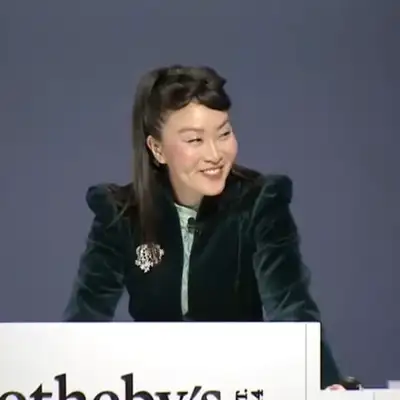
Coach Phyllis Kao is up next.
She's a Sotheby's auctioneer
and has a great piece of advice
on keeping a good mindset.
Can you share any advice you have received
that has helped you do your job better
that all of us might benefit from?
I have some advice that I had to learn
and teach myself the hard way, that
I wish someone had told me, and this
might not resonate with everyone.
When you are going into a performance or a
high pressure environment, you know, when
you really have the pressure to perform.
I was always so concerned with
looking like a diva, and I would never
want to ruffle feathers or change
the program, change the protocol.
I thought, okay, just
take care of yourself.
I just didn't want to be pegged
as a diva, but then I found that
was to my detriment in many cases.
No one else knows what you need better
than you do, and you know if that little
voice in your head says, this will
really help you, then just ask for it.
Right.
So taking care of yourself and your needs
can help you be better at what you do.
Part of that, I think, is the confidence
and assertiveness that comes with that,
but I also think part of it is if you're
constantly judging and evaluating, am I
coming off like a diva, am I offending?
That you're not truly present because
part of you is in that evaluative mode.
So that's good advice.
We've talked previously in our first
episode about what to do before we
go into a situation where you'll
be likely to speak spontaneously.
And here Phyllis will share
how visualization is a core
part of her pre auction ritual.
I think probably the most universally
helpful aspect of it would be that
I imagine myself in the auctioneers
rostrum facing an audience and
confidently conducting the auction
with power and grace and charisma.
You know, just all of the perfect elements
that you'd want to embody together.
That's fantastic.
So you're visualizing success and
you're visualizing how you want to be
,in so doing, it helps you become that
and it helps you feel more confident.
That is a technique that has
been around and studied for many
decades and truly does help people.
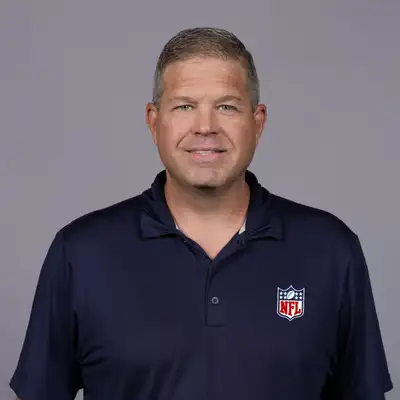
NFL Referee Brad Rogers shows
us how reviewing and reflecting
on his performance can help him
continue to improve and grow his
spontaneous speaking muscles.
I review every announcement.
I go through everything that I do, not
only looking at what others do, but I
look at everything I do and I look at
it and go, did I cause more confusion?
Did I cause something negative?
And as I listen to other referees
that help that have good communication
skills, I try to implement those.
You know, technology, it
provides us with instantaneous
opportunities for improvement.
And so after a game, I have access
to the game when I'm on the plane.
They load it on our iPads and I go through
it and I start to look and see what was
the work that I did and my crew did?
What was our body of work?
Was it positive?
Was it negative?
Those types of perceptions.
And I don't really sit and watch
and listen to sports talk shows.
I don't wanna listen to it because
most of the time they live in the
land of what we might do wrong,
and I don't wanna go there.
I wanna look at it and evaluate it
from the standpoint of, I wanna listen
to other trainers and evaluators
that are helping us get better.
This officiating is not easy, and
so I just don't allow that outside
noise to take away from my focus.
My focus is on, on grading feedback,
every play, everything is evaluated
and we work to just improve and
move forward so that whenever I have
interactions with coaches, the next
time they hear the authentic me talking
to them, this isn't something robotic.
I want players and coaches to
feel the effectiveness of what
we're doing in a positive way.
A lot of richness in that answer.
So it sounds like you are using a couple
criteria to assess how well you did.
Was it clear and did I
add to any confusion?
So as you're reviewing what others
have said and yourself, you're using
that reflection to help improve,
and that's really, really key.
Chris Voss, who is a former
FBI negotiator, leaves us with
yet another good reminder.
Tone is really important.
It's not just how you say the words,
it's the emotion that you convey.
One thing I do to think fast and talk
smart is use an encouraging tone of voice.
Here's our last piece of homework from
our last coach, sports broadcaster and
Paralympic champion, Annabelle Williams.
There's one thing that I do a lot
of, and I realize I do this whenever
I have a moment on my own, which is
rare with small children, but you
know, when I'm running I do this.
If I'm sitting on the bus, I do this.
I often look around or I try and
be as observant as I possibly can.
I try and see what's happening
around me, and then if I notice
something, I often think to myself,
how would I create a story about that?
Or if someone asked me to relay
this information, what would I say?
If I see something funny, I'd
think, how would I tell that
if I had to tell it in a story?
You know, if I was on the bus going
to work and we were starting with
a team meeting and I'd noticed
something that occurred on the bus.
It was kind of funny.
How would I tell that story to my team?
What are the essential elements of it?
What's too much information?
If I phrased it this
way, would it be funnier?
And that helps me a lot.
And then I often jot those things down.
I have a, you know, it's on my phone
in my notes, a series of millions of
stories that I think I could use these,
you know, at various points in time.
I could craft it into
a story for my keynote.
I could do it when I'm at a
dinner party telling a story.
So be as observant as you
possibly can at all times.
You never know where you'll get a
story from, and then spend the time
when you're on your own thinking,
how would I craft that into a really
funny story or a really heartfelt
story, or a really meaningful story?
Well, homework accepted.
That is a great practical bit of
homework, and I can see how it would
help you to do what you do, right?
Crafting stories in the moment based
on what you're seeing, and it just
echoes the things you've shared with us.
This notion of focusing on the present,
noticing what's going on, thinking to
yourself, how can I bring a connection
between what I just saw to others who
might not have seen it or might not
appreciate it in the same way that I do.
Thank you for tuning in to this
bonus Quick Thinks episode for our
Spontaneous Speaking miniseries.
If you haven't caught up on the
previous episodes, we encourage you
to go back and listen to them all.
Our coaches share a lot of incredibly
helpful advice you won't want to miss.
This episode was produced by
Aru Nair and me, Matt Abrahams.
Our music is from Floyd Wonder.
With special thanks to
Podium Podcast Company.
Please find us on YouTube and
wherever you get your podcasts.
Be sure to subscribe and rate us.
Also follow us on LinkedIn and Instagram.
And check out FasterSmarter.io for
deep dive videos, English language
learning content, and our newsletter.
Please consider our premium
offering for extended Deep Thinks
episodes, Ask Matt Anything and
more at FasterSmarter.io/premium.