Subscribe
Share
Share
Embed
Since 1986, Convene has been delivering award-winning content that helps event professionals plan and execute innovative and successful events. Join the Convene editors as we dive into the latest topics of interest to — and some flying under the radar of — the business events community.
Convene Podcast Transcript
Convene Series: Designing Inclusive Events with AI - How Event Professionals Can Enhance Accessibility and Belonging
*Note: the transcript is AI generated, excuse typos and inaccuracies
[00:02] Magdalina Atanassova: Welcome to Season 6 of the Convene Podcast, brought to you by Philadelphia Convention and Visitors Bureau.
[00:04] Nick Borelli: When you're designing things, you're designing from your. Mostly your experience and most, most people's experience is a keyhole into the world.
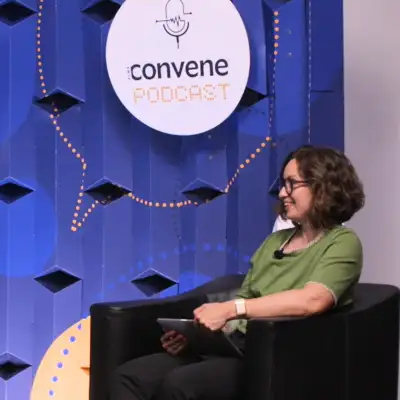
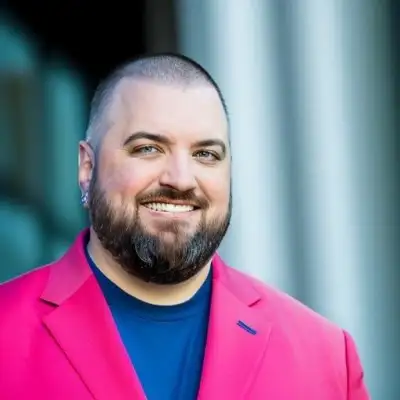
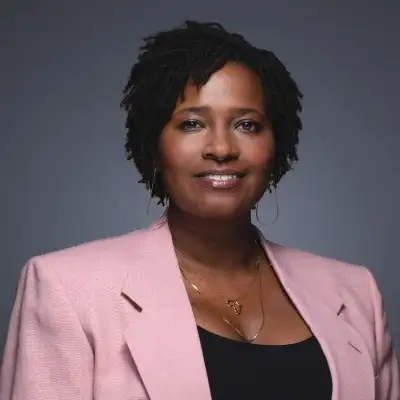
[00:15] Magdalina Atanassova: Welcome to Season 6 of the Convene Podcast, brought to you by Philadelphia Convention and Visitors Bureau. In this episode, we’re diving into the intersection of AI, diversity, equity, inclusion and belonging, and event design with two industry thought leaders— Zoe Moore and Nick Borelli. Zoe Moore is a powerhouse in Equity, Diversity & Inclusion (EDI), leveraging her background as an Army veteran and industry consultant to hold leaders accountable for operationalizing EDI beyond just statements. Recognized as a changemaker in the events and hospitality industry, she has been honored by Meetings & Conventions, Meetings Today, and the Events Industry Council for her impact. Nick Borelli, a digital marketing and live event strategist with over two decades of experience, is a recognized leader in audience engagement, hybrid meetings, and next-gen event strategies. He has worked with top organizations like Gartner, Sephora, and 7-Eleven to shape the future of meetings and attendee experiences. Together, they explore how AI can help event professionals design more inclusive experiences, challenge biases, and enhance accessibility. How can AI serve as a "perspectives engine"? Why should planners rethink their definition of "successful" events? And how do small design tweaks—like inclusive F&B options—create transformative experiences? We start now.
[02:02] Magdalina Atanassova: It's a great pleasure to have you both here. I've been waiting for this moment, honestly, for quite a while, so I'm excited.
[02:09] Magdalina Atanassova: To have you here.
[02:10] Nick Borelli: Happy to be here.
[02:11] Zoe Moore: Me too.
[02:12] Magdalina Atanassova: Well, just want to dive in directly into the questions because I have a lot of stuff to ask and. Yeah, let's do it. So how can event professionals better account for the intersectionality of identities like race, gender, ability when designing experiences?
[02:29] Zoe Moore: Yeah, that's one I'll take. I've seen, you know, intersectionality used so often lately, and I always like to define terms. Right. So intersectionality is a term that comes from Kimberle Crenshaw, lawyer. She's one of the authors of Critical Race Theory. So let's start there. Right. It's talking about how black women specifically, that's where her theory comes from, how they navigate the workplace. And the reason why she starts there is cause she's referring to women that are black and what issues they face because of their two identities that are overlapping. And so as we begin to expand what the definition is, we're talking about intersecting identities. And that means that people can be a woman, they can be of a certain race, a certain ability, all these things. And so as event planners, when we're designing an event we have to not only accommodate, but be compassionate towards all these different needs, to make sure that people have an equitable experience or they have an experience that is aware of their needs, their interest, you know, that they feel value seen and heard. And so it can go across the board. I mean, I love to talk about food. I love to eat. I have not eaten this morning, so that's probably where my mind is. But I talk a lot with a practitioner within the space. Tracy Stuckrath. Eating at a meeting about food and being aware of people's dietary restrictions, being aware of their food preferences. And oftentimes people will undermine, you know, the importance of it. And so that's one aspect of their identity. You know, when two women come to an event, their eating needs are going to be different. So how within our event design can we consider, accommodate, be compassionate towards their differences so that they both have an equitable experience.
[04:21] Magdalina Atanassova: And Nick, where do you think AI comes in here? How can AI help?
[04:25] Nick Borelli: Well, when you're designing things, you're designing from your. Mostly your experience. And most. Most people's experience is a keyhole into the world. You don't often have the opportunity to sit around a table with people who have all these rich, differing experiences that would enrich the design of nearly everything. Oftentimes it's just you and you're just at a desk and you've got to think like you're all these different people, that you've never had their experiences. So AI really empowers you to be able to be a perspectives engine. Doesn't tell you what to do, but it tells you what the impact of a design might be on this group or what might be on that. And that should hopefully increase your curiosity. Have you go out and engage with people and say, is this really the case? Validate it and start you on a journey to, you know, educate yourself, not on information, but on perspectives and on the impact that these designs have on. On different people. You might find what you've been doing over and over and over again is because it's been what you expect and what you think is the norm. The reality is, is that you're. You're suffering from likely survivor bias. And everyone, when you. When you say, this is what my members like, this is what my attendees like, what you're saying is this is what the survivors like. These are what the people who could put up with all of these challenges and still potentially show up would be okay with, as opposed to the people that the challenges are insurmountable, so they don't show up or that people who are unjustly having to fight harder to attend and participate, that didn't need to. All those things. You don't know those things. I mean, I'm being hopefully pretty generous, but I don't think people really know that. They just need to be woken up to the fact that there's different ways on doing everything. So AI, you could put the prompt in and you could say, how would this negatively affect different types of people? And it would give you ideas. It would say, well, geez, there might not be a valid entry point here. There is no prayer space in this area. Things you've never had.
[06:28] Zoe Moore: But you realize economic barriers, economic barriers are huge. Right? Traveling all that. I mean, you mentioned survivors bias. I mean, there we can go down a list of cognitive biases. The other one that comes up for me is affinity bias. Yeah, you know, a lot of times when we talk about biases, we want to focus on the unconscious, right. And the implicit, which we should. But there are explicit biases as well, because people operate, you know, within their friend circles, their workplaces, where everybody thinks like them, you know, or they look like them, or they're from the same, you know, education level, the same economic status. And, and what AI can help us do is to challenge those biases. You, if you haven't been exposed to different, you know, identity groups, social identity groups, different walks of life, age groups, whatever, all the list of different identities, AI can prompt that literally, like, you know, get you started in asking the right questions.
[07:21] Magdalina Atanassova: And you know, many people say, and it's, it's a very valid point that we teach AI, so we bring our own biases into AI and how can we battle that?
[07:32] Nick Borelli: Yeah, I mean, for starters, you shouldn't take what AI gives you as some sort of information from on high. It's not omniscient. It's, it's far from perfect. It's, it's taking from lots of different sources, but each one of those sources is very imperfect. So you have to have a critical eye. You have to be the gatekeeper and you have to be the editor, and you have to be the guardian of your mission, vision and values. And you have to guide everything it does with empathy. And there's a few other qualities that you can bring to the table that are human qualities that would augment it. But for instance, even the prompt that I was talking to you earlier about of saying, I have this design concept that's maybe it's theater in the round. Who would this potentially negatively impact the Fact that you're even concerned with people that you don't know means that you're guiding it with empathy. That's a great place to start. So it's not perfect, but it does. It would be better if you trained yourself in human qualities. Like, if you understood different people and you brought that to the table, your prompts would be better because they would be more holistic.
[08:39] Zoe Moore: And that's what I like about. I like that you can get into a conversation and, you know, in that conversation you should be asking one another, in a sense, you know, are we sure, you know, is, are we thinking deep enough? Are we being compassionate enough? You know, do we think about maybe the age of this person may influence, you know, that experience differently, you know, the. Their language, does it influence it differently? Like, but give me more insight into this. You know, that curiosity, again, can go pretty deep.
[09:10] Nick Borelli: Yeah, I mean, it's not an end to itself. It's an opportunity for enrichment. So I think when you see it as an end to itself, yes, all the biases that are there come right out. But if you look at it as an opportunity for, okay, what about this then? What about this as a ability for you to feed your curiosity. It is a growth engine. But you have to choose that as how you view it versus a calculator that's just giving you an answer. If you do that, all the biases that are baked in are just going to come out. Nothing's going to change because all it does is it scrapes all of what was and it presents you a best of what was. But it doesn't go further. It doesn't show you the undiscovered country or the path untaken. Those things are all things that we can do by adding our creativity, our empathy into what it does and guiding it with that. You prompt it, it prompts you. You prompt it and you're having a conversation. But the basis should be growth.
[10:08] Zoe Moore: Yeah, absolutely.
[10:09] Magdalina Atanassova: I love that. And can you maybe recommend some tools or frameworks on how to go about this whole process? Because I feel that it's. It's a difficult process and I can already imagine a lot of event professionals listening to us being like that. Sounds like a lot of work.
[10:24] Zoe Moore: You know, it's interesting because I was actually just about to ask you that question, you know. Cause Nick and I have this session coming up later. It's like, we need to come up with an acronym. We need to come up with our own for designing inclusive events with CQ - Cultural Intelligence, EQ - Emotional Intelligence, and AI Artificial Intelligence. I think between Nick and I, we need to. I mean, there's plenty of frameworks out there that I'm sure Nick can speak to. But I love frameworks because like you said, it helps people take something that seems massive and break it down into bite size, you know, pieces. I don't have one off the top of my head. Of course I can, you know, think about what you're going into, any tool and what you're trying to focus on. The, the end game, like, what are you trying to get to? What are the outcomes that you're looking for. If you want to design an inclusive experience, you want to design for the most marginalized of us. Okay, so if we want to do that, how do I do that? Do I. We created on one of our slides where we wrote down different identities, you know, we did different ages, we did different languages that they can speak so that we could ask the right questions. And so you can look at the demographics in your area, right? You could. It depends on where you want to start. Like any, any research, you have to determine where you need to start to get to where you want to go. And so breaking it down by demographics and, you know, all the different identities and then working through each of those questions, that's where I would start.
[11:55] Nick Borelli: I mean, prompt frameworks, for me, there's tons of them and every time I try to teach people, their eyes glaze over. So I've found a few, like, hacks that are like the least amount of memorization. So one is I generally end every prompt with the question what did I leave out? In order to help you give me the best answer that's possible. And with when I'm ultimately trying to do this, then it will tell you a bunch of different things that you can answer questions that will enrich it so you don't have to know everything going into it because there's so much we could tell you, but you're never going to remember all that. So that's one. And then my prompt structures for a framework are this. I ask it what I want, I ask it what I'm doing to tell it what I'm ultimately going to be using it for. And if it impacts people, I bring in their emotional journey into it as well. So it would go like this. How does generative AI work? I'm going to be using that for in an oral presentation that giving to meeting and event organizers. And I want them to go from a place of trepidation and fear to curiosity and excitement. That's a holistic way and thinking about, like different ways to close the loop is how you'll end up with a little bit more enriched because the things that you do are ultimately going to be used for something and that's oftentimes going to have an impact on people. So you take almost like a UX UI approach into it and you, you talk about how it would actually emotionally impact people with whatever you're going to be doing at the end of. The end of the project.
[13:30] Zoe Moore: Yeah. And I do the framework that I like to use just as a consultant, you know, I'm a strategic equity, diversity inclusion consultant. So one of the frameworks is From Insight to Implementation. Give me the insight that I need so that I can implement this and the steps. There's. It's five phases, right. So I gather the insight because I want to have an understanding in what I'm trying to achieve. Because it's one thing to. People will read instructions and try to repeat them, you know, verbatim or step by step without an understanding of why they're doing it. You know, so it's that collecting data, collecting that insight. And then you have to inform yourself, like, educate yourself on what that insight is providing and those around you either train your team, either train your stakeholders, your clients on why you're, you know, so you're going through these AI tools with that same mindset. You go from insight to information and then you have to innovate. Okay, you have to change some things the way that you're doing it. So are you going to take the advice that you're getting and then like Nick is saying, give, you know, the prompts in that way, help me innovate. What. Here's what I'm currently doing.
[14:35] Nick Borelli: Innovate is a big deal. I mean, I think we have to consider everything that we do, especially when you're interfacing with AI, is absolutely. It's not going to be anything that is going to be leading or better than ever, unless you put some kind of ingredient into the mixture that's never been there before because it looks at the ingredients that are used always and it just tells you this is the fastest or this is the most often, or that none of them are about going somewhere that's never been. And a lot of what we're talking about is to go further, challenge and challenge. So AI's results are not challenging their expediency based out of the box, but you can add the variables in and say, can you say this like no one's ever said before? Can you can we if this does create a challenge for this group of people, let's ideate on some ways that would make it, you know, it has not been done that might be more accommodating and might be more, you know, enriching for these different groups. It's surprising how many elements of events are ableist. I mean it's.
[15:38] Zoe Moore: Is it surprising?
[15:40] Magdalina Atanassova: Words from our sponsor.
[15:44] Philadelphia Convention and Visitors Bureau Ad: Philadelphia is a city of innovation from 1776 to today. Philly leads in life sciences with world renowned research and cutting edge facilities. Host your next convention in a city where breakthroughs happen. A world of discovery is waiting. Visit discoverphl.com to start planning your next life sciences meeting.
[16:12] Magdalina Atanassova: Now back to the program.
[16:16] Zoe Moore: I mean, it's just like with, I think also something how we talk about training it within a certain role or as a subject matter expert. It's like marketing. You create a Persona as well.
[16:28] Magdalina Atanassova: And I was just about to ask, Right, yeah.
[16:30] Zoe Moore: How you do that Persona and take that person through that framework, what is the insight that we need to best serve this Persona? You know, how do we inform stakeholders to best, best serve this? And then keep asking those questions, right. And then, you know, after you're going through the innovation process and then you implement it, right, you try it out. Like you said, it's not the end all, be all. So you have to iterate right after you again collect more insight and know, did that change work? Did it best serve who I, you know, planned for? What was their feedback? Am I listening to their feedback? Is it in focus or okay, now I know that that didn't work or I need to make some adjustments and then you start all back over again. Because the framework tells you that this is a journey. There's no destination. You're not going to get there and be like, okay, boom, everything's perfect. You have to actually keep asking the questions. And I think that's the thing about, you know, AI and using these different tools is that that first attempt that you make, it's absolutely not going to be perfect. It's going to be, it's going to be perfectly imperfect, you know, and so.
[17:33] Nick Borelli: You should really get comfortable in articulating your displeasure with the first draft. Like most people's feelings are, like most technologies, you put something in and it gives you the outcome. That's not it. It's the start of a conversation. So I've seen a lot of people, they put something in, they get something out and they go, this isn't that good. And I go, great. That's actually really good energy. Use that energy and articulate. Why isn't that good? Like, well, it's. It's missing depth. It's missing context. Okay. Give it more depth. Give it more context. Okay. It's missing, you know, some kind of. Wow. No one would say it like this. Great. Say those things.
[18:08] Zoe Moore: Right.
[18:08] Nick Borelli: And when you start articulating the displeasure that you have in it, then you find that you're actually creating these excellent prompts. Like, that's the process, but using it. Like what you said about Personas, like, it's. It's really good at roleplay.
[18:22] Zoe Moore: Yeah. Yeah.
[18:22] Nick Borelli: So, like, and role play in a dialog that is more of a conversation as opposed to facts. You know, this person can't go here, or they need this. That's okay. But, like, taking that and turning it into, okay, take all these facts, and I'm going to have a conversation with you. What do you think about my agenda? What do you think about this experience? And, like, let's have a dialogue and let's have feedback. That's an excellent experience to go through because it really is much more sticky than it is just looking, like, at a Persona. Bullet points.
[18:49] Zoe Moore: Correct. Yeah. I mean, it was funny because when you were talking about, you know, you know, iterative process or us getting better at our questions, I was thinking about the analogy that we discussed about the makeup.
[19:01] Nick Borelli: Oh, yeah.
[19:02] Zoe Moore: The. I love analogies. Because I want to take something that seems. And this is what. The feedback that we've gotten about our session. We take something that seems complex and make it not just elementary, but understandable. Like, you know, and so the makeup analogy comes up, you know, when you're all these Get Ready with Me videos that are on TikTok and Instagram and people are showing you the different, you know, items that they're using. That first attempt that you make in the mirror to apply that makeup is not going to be perfect. You can imagine a little girl, a little. A kid, you know, putting on lipstick or putting on eyeliner, and they're all over their forehead and got the wrong colors and all. And that's exactly how it feels when you're using these tools, is that you're. You have to get it wrong in order to better understand, you know, what about my question? What about how I'm prompting this can improve? It's not what I. It's not even so much about what I got wrong. It's what is the opportunity for growth, going back to it being a growth tool. Right. And it's just that that image that I created on Dolly or Mid Journey or whatever. It was terrible, you know, okay, now what do you need to do? Or maybe that tool isn't where you are right now. So I had to use multiple tools, you know, and figure it out. I was listening to an artist named Jindena, and they were talking about creating these videos using AI tools. Now, I'm definitely not that creative, but, I mean, he must have listed 15 different tools that he was using to get to this perfect cartoon. And I was like, I mean, I could imagine the amount of hours spent on doing that. And I'm not saying event planners have the hours to spend, you know, doing just multiple tools, but that's what it's going to take if you're using a tool. Like with anything, there's always a learning curve, and that's the willingness. You know, when you're curious, you're constantly growing, you're constantly challenging yourself, and you have this tool to assist you, not to be your end all. Be all.
[20:57] Nick Borelli: I think getting out of the binary thinking for organizers is something that, like, has to happen at every level of this is an equitable event or an inequitable event, or this is an event, or I'm, you know, great at using technology or I'm not. It's all just, are you better than last week? Are you, Are you, are you learning a little bit more? Do you want to learn more? Are you excited about learning more? That's it.
[21:23] Zoe Moore: Like incremental growth. Yeah, incremental growth.
[21:26] Nick Borelli: That's it. So, like, in both areas, like, they, they both suffer from, I think, a perception that there's a mastery required in order to, you know, get the value from it. It's not that at all. It's just a mentality based in growth and based in curiosity. And then also it should be fun like you should, like, if you're going to create events that, that you know or have are more hospitable than any events ever been, then you're. You're doing something that's meaningful and that should be somewhat fun. I mean, it's not a droll. And the same thing with AI. Like, you should be able to throw out different things at it. You know, it might not be what you want, but what would happen if I said this? What would happen if I asked it to talk like that or ask you this?
[22:07] Zoe Moore: Yeah.
[22:08] Nick Borelli: Even if that's not like the end goal, just to see what happens is really fun.
[22:13] Magdalina Atanassova: Yeah, I really love that. Is there anything we didn't address and we definitely should mention before closing?
[22:22] Zoe Moore: 1. You know is what we talk about in the session. I mean, we. We summed it up here, or we explained it here, but our goal is how can we help our industry? How can we help event planners design inclusive events? Do we have all the answers? No. But we know that it requires cultural and emotional intelligence using these tools. And one of the things that, you know, Nick and I go back and forth with, I think, as I learned from him, he's like, you sound like you're doing more promotion of AI than I am. And I'm like, well, you know what? You've taught me to look at it from a different perspective. And I think that's what we want to help people see, is that, look, we're not going to undermine the fact that, you know, AI has some consequences, that it's very complex and it is taking away jobs and there's environmental issues. That's not undermined.
[23:08] Nick Borelli: That it's very disruptive.
[23:09] Zoe Moore: It's very disruptive. So it's. With any tool, as with any person, any new thing that you're introducing, there are its pros and cons. Have an awareness of both, and then understand how to leverage this tool for what you need it to do. A hammer can do multiple things, right? It can build a house, and it can hurt people, right? And so having that awareness, that knowledge, as you approach these tools is going to be key.
[23:35] Nick Borelli: I mean, I look at it like, if we can use more tools that make our communities more open to different groups of people, we're enriching our communities. Like, there is a voice at the next event who has never had their voice be heard before, who will change everything. And we just have to figure out how to remove those barriers and how to enable and empower those people. And once we do, they could be the match that starts, you know, the fire that changes everything. So, like, it really is incumbent on us to be able to. I mean, if you want new ideas, if you want to go further, we have to be able to bring in the voices that haven't been heard already. There's usually the same voices.
[24:15] Zoe Moore: One thought, I want to end with food. Like, I started with food. And this is before the use of AI, But I imagine now how I can expand upon this. I did an event in Puerto Rico for a client, Glo a Tampa, and she, in her audience, in her network, she had a lot of, like, vegan travelers, you know, and so I was like, why don't we make all the dressing on the buffet vegan? And I challenged the chef, right? I was like, let's make all the offerings of dressing vegan. And so we did that, and they were labeled accordingly with all the ingredients, and we told everybody, and there were certain people who were like, I don't eat vegan dressings. And then we were like, just try it, you know, and they were like, oh, this is good. But the one person in the audience who was vegan who went on, like, Instagram afterwards was crying because she had never been to an event where there was vegan dressing, and she always had to carry a little bottle she made in her purse or something like that. Literally crying over being seen and being heard. So I imagine now how it can use AI to challenge the F and B team, the culinary team, say, hey, use this tool and what you think that you can't make, you know, vegan. Ask for the different recipes. You know, you speak the language. You're. You went to culinary art school, or you're an amazing chef. You know, type it in there and create a prompt. Let's work on that prompt together. How can we serve a greater audience? How can we cast a wider net? And again, how can we grow? And then before AI that chef was excited for that challenge. And I can just imagine how this tool can help so many different people just think wider and, you know, open their minds, and that's. That's what I'm excited about. Yeah.
[25:57] Magdalina Atanassova: Yeah.
[25:58] Magdalina Atanassova: I have to say, there were a few goosebump moments for me. So thank you so much for being on the podcast, and we definitely have to do it again because there's so much more we the areas, for sure. Yes, definitely. So thank you so much for being here.
[26:17] Magdalina Atanassova: Remember to subscribe to the Convene Podcast on your favorite listening platform to stay updated with our latest episodes. We want to thank our sponsor, Philadelphia Convention and Visitors Bureau. Visit discoverPHL.com to start planning your next life sciences meeting. For further industry insights from the Convene team, head over to PCMA.org/convene. Stay inspired. Keep inspiring. And until next time.