Subscribe
Share
Share
Embed
Your host, Sebastian Hassinger, interviews brilliant research scientists, software developers, engineers and others actively exploring the possibilities of our new quantum era. We will cover topics in quantum computing, networking and sensing, focusing on hardware, algorithms and general theory. The show aims for accessibility - Sebastian is not a physicist - and we'll try to provide context for the terminology and glimpses at the fascinating history of this new field as it evolves in real time.
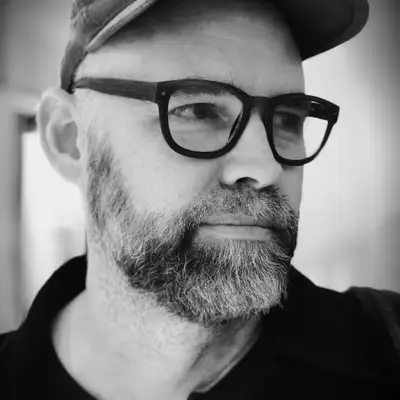
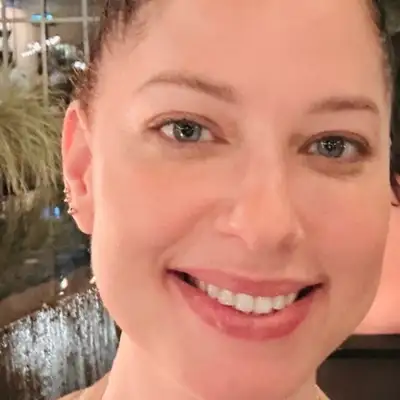
Welcome back to the New Quantum Era. I'm your host, Sebastian Hassinger. Today, I'm talking with someone who sits right at the intersection of quantum science, engineering, and academic leadership. Professor Nadya Mason, dean of the Pritzker School of Molecular Engineering at the University of Chicago. Nadya path is anything but linear.
Sebastian Hassinger:She started as an elite gymnast, heading for the Olympics with what she describes as a very weak math and science background. And then she fought her way into physics and fell in love with condensed matter physics and went on to do foundational work in superconductivity, quantum dots, and hybrid devices that underpin much of today's quantum hardware. In this conversation, we get into why materials and the interfaces of materials are the real bottlenecks for quantum technologies and how she thinks about the shift from what she calls quantum one point o to quantum two point o and what it actually looks like to build a regional quantum ecosystem around Chicago and the surrounding, area that connects universities, national labs, companies, and state government. But the thread that runs through all of this is Nadya view of leadership, which I really found inspiring. For her, being dean isn't about accumulating power, especially in a world where, as she puts it, faculty don't work for me.
Sebastian Hassinger:It's about service. She's serving her community, building a community around science, expanding access to research experiences, and making sure the next generation has the math skills and hands on opportunities they need to participate in the quantum future. I really hope you enjoy this wide ranging conversation with professor Nadia Mason.
Sebastian Hassinger:Hi, Nadya. Thank you very much for joining me today. I'm really excited about this conversation. We met at the APS summit last March. It was a lovely conversation.
Sebastian Hassinger:And at that point, I was like, I've gotta get Nadia on. So can you start by telling me a bit about, like, your personal journey, how you got to where you are today?
Nadya Mason:Sure. And I'll start by saying, Sebastian, it's just a pleasure to be here. So thank you. Thank you for having me on the show. Yeah.
Nadya Mason:So I I started as a high school student with a very weak math and science background.
Sebastian Hassinger:Nice.
Nadya Mason:I I clicked it a lot.
Sebastian Hassinger:I can relate.
Nadya Mason:You can relate to it. Right? I mean, I I was I was a pretty serious athlete. I was an elite gymnast. I was trying to make the Olympics.
Nadya Mason:You know, I was I was on the national team, didn't make the Olympics. I quit after my before right my junior year of high school and then tried to catch up all of my academics in two years. So with that background, I'd had had a summer internship. I realized I liked experimental science. I just had I didn't even know it was a career that you could work with your hands and play in the lab.
Nadya Mason:I liked I liked every time I heard about physics, not from class, but outside, I liked thinking about the world in physics ways. And when I got to college, I took a bunch of classes in many different areas, realized that physics explained the world in a way that I could relate to with a math with a mathematical basis, with actual, you know, rational step by step understanding of how the world works, worked from my very ordered mind in some sense. And so I decided to be a physics major, which is, you know, this is the first step toward quantum. It but, you know, it it it really I I like I like thinking about it. I like to understand the world that way.
Nadya Mason:And, it wasn't that's like wasn't necessarily I was I was far behind my peers in terms of coursework and in terms of understanding and had to do a lot of work to catch up, which was not the fun part. I had the problem set and other things. But, but but the great the great thing about it and the reason I start with that when I talk about my journey is that I've always felt like I'm in it because I really like thinking about it, and I like under looking at the world and feeling like, you know, a rainbow is more beautiful because I understand diffraction. I I I'm that's incredible. Right?
Nadya Mason:That's beautiful from every aspect now, not just aesthetically, but also in terms of just how the fundamental physical principles of the world work. So that's what's really propelled me throughout throughout the my career. So I majored in physics in undergraduate. Wasn't really sure what areas I wanted to do. I had the had the good fortune of having several internships at AT and T Bell Labs back when they were still a really prominent research lab, especially with their amazing history in technologies, physical sciences.
Nadya Mason:And there, it got turned on to condensed matter physics, which is really table like, tabletop. You can control the way that you do things, get this level, again, the control of understanding things, and also just thinking about molecules working together, about how you can go from the microscopic to the macroscopic and and and understand you know, you can by understanding, like, from microscopic principles, you can understand things macroscopically. And by the way, if you do solid state or condensed matter physics, it can even be useful. Right? And it's fun doing it.
Nadya Mason:So that combination for me is what really propelled me into into physics, into condensed matter physics. I went to graduate school, studied superconductors. Great example of microscopic to macro microscopic understanding. You know, you have just individual electrons that we think about as just turning on light switches. Right?
Nadya Mason:They I mean, in my mind before, they it's like an electron moves through a wire from one side to the other, and the light goes on. But, you you know, it's it's actually much more complicated in terms of quantum principles of how they work. And, you know, you cool down most material. The electrons pair up. They form a state that flows with no electrical resistance.
Nadya Mason:It's really this macroscopically incredible quantum state that is apparent almost everywhere. And to me, that was just really, really exciting. So that, you know, that is what I've continued to study throughout my career and work in. And it's you know, it turns out is the fun one of the fundamental building blocks of a lot of quantum computing and thought about quantum as the recent Nobel Prize showed, in fact. So Yes.
Nadya Mason:Yeah. So, anyway, so that that was my journey from from high school through through at least studying physics and and and thinking about things quantum.
Sebastian Hassinger:And was there a point at which you got more interested in in sort of the administrative side of things, the leadership side of things? Because, I mean, as dean now, you're in a very powerful position, a very powerful institution. The Pritzker School of Molecular Engineering at UChicago is, you know, preeminent. I mean, it's among the best in the world. It's it it doesn't feel like something you just sort of accidentally become the dean of.
Sebastian Hassinger:Right?
Nadya Mason:That that is correct. Yeah. That's correct. And and I I should mention that, you know, I'm I'm I'm only I'm only the second dean. We're a relatively young school.
Nadya Mason:And so, you know, the first dean was sort of the startup phase, and I feel like I'm in the building, which is one of the reasons I I went to UChicago to really help maintain that level of excellence and build especially in areas like quantum. So, yeah, to answer your question, I, you know, I I did I was I did not start as physics faculty thinking I wanted to do academic administration. I would say probably no one does, and if they do, they probably shouldn't be physics faculty. Right. They just started.
Nadya Mason:You know?
Sebastian Hassinger:Right. I mean, the love of the science and the love of the teaching has to come first. Right?
Nadya Mason:That's exactly right. Academia is a beautiful place where we can really explore ideas and develop technologies, and and really explore it and develop fundamental knowledge. It is one of the has been one of the few places on Earth that that we can still do that, and you can see the results of that in in in how the world has developed technologically. You know? So, yes, I I absolutely was there for the love of the science, for the love of teaching, for being in in in an intellectual environment that really furthered the field.
Nadya Mason:You know, within you know, I'd say but I also, I will say, also care about sharing the field of physics. So to to me, it's not it is I'm working for the love of it, but I really believe in giving back. That's just fundamental to what I think is important in my values. And being a physicist, giving back in terms of sharing the things that I care about and I love, which is knowledge of physics, which is opportunity to study physics, which is making sure that people have the chance to explore, understand, and contribute to the field if they want to. And and that they and that they're given these opportunities, they're not prevented from it by the wrong reasons because they had a bad class or they didn't you know, no one thought that they would be good at it.
Nadya Mason:So that's been something that really from the beginning has been important to me in terms of both outreach to communities, in terms of making sure that I could help with mentoring programs. I was at the working to help start a mentoring program, the American Physical Society, and then also through leadership. You know? So it it turns out that what I realized in, you know, my first really big leadership opportunity is running a materials research center at University of Illinois, where I was formerly faculty with the MRSEC. It's big.
Nadya Mason:And what's great about it is the MRSEC combines research with with outreach, with education. It really creates this community around the science, with the understanding that it's not you're you're not isolated in your science. It's the world around you that that learns from it that you contribute to, that it's translated to the outside world. And, know, you this is about 25 faculty, you know, maybe a 100 students and other people. But, I really enjoyed being able to build a community around science and, you know, in this case, around science that I cared about particularly.
Nadya Mason:And and that's what leadership was to me, thinking about what do people want, what can further the field, what can further education. And I, you know, I hate to say I also had a, you know, I thought I had a lot of top down input into things, which is, you know, amazing seeing you know, I think I think mentoring is really important. We started a mentoring program there. That's that's very gratifying. So that that's what gave me a real taste for academic leadership.
Sebastian Hassinger:It sounds like it sounds like the the almost the the service model of leadership. Right? As leader as as a as a, like, way to give back to and to build community rather than to accumulate personal power as it is for some people. That's that's
Nadya Mason:what motivates me. And, you know, once it going through academia, if you wanna accumulate power, this may not be the best place because let me tell you, faculty do not work for me. Right. I'm nobody's boss, it turns out. Right.
Sebastian Hassinger:Yeah. That's amazing. Yeah. And I mean, I was gonna mention UIUC. It's such another incredible institution.
Sebastian Hassinger:Yeah. And I've I've worked a bunch with with people at the HQAN Center Yeah. At UAUC and other places. So it's another great university to be affiliated with. So so okay.
Sebastian Hassinger:So, you know, you you mentioned actually, one question on your own personal journey. You mentioned superconducting being, you know, incredibly important in certain elements of quantum computing. Was there a point in time in your either your your graduate work or your postgraduate work that you sort of intersected, you know, quantum information and and technology as a sort of quantum computation as a as a topic?
Nadya Mason:Yeah. I mean, I my my own personal research was a little bit more fundamental in terms of hybrid superconducting devices. So looking at what happens when you connect superconductors to other materials. This is interesting in terms of, you know, at least in the early days of superconductors, just power lines and other places where you'd want, you know, especially high density power lines and things where you want to, decrease the amount of power lost to heat, which can be tremendous. And and if you do that, you have to you have to connect to other materials.
Nadya Mason:Right? You have to think about how does, you know, how does superconducting junctions, I was also thinking about these superconducting junctions, which is how do you maintain superconductivity across normal metals and other things. This is the basic element of a superconducting qubit. So, you know, even at the time as I'm working on these, a superconducting qubit is a superconductor normal metal superconductor sandwich or superconductor insulator superconductor sandwich where you maintain coherence across the superconducting islands. And, you know, that by controlling that coherence, controlling the the connection across there, you basically control the qubit.
Nadya Mason:And so that you know, so the intellectual basis of that was very interesting to to me. How do you how do you maintain coherence? How does what materials allow you to do that? What exotic materials can you make junctions with? And one of our early experiments had to do with connecting, superconductors to graphene.
Nadya Mason:And what we discovered was these these bound states that were created in the graphene called Andrea bound states that had very distinct signatures of how you could you could basically how you could create superconducting coherence in a normal material even with normal electrons in in these in these in between states that maintained occurrence across. I mentioned this because a few years after this, Andrea bound states became very, very well known as, you know, related to these Majorana bound states that were eloquent to talk a
Sebastian Hassinger:lot bring up Majoranas. Yeah.
Nadya Mason:But this you know?
Sebastian Hassinger:As soon as you start talking about semi and super, you know, bonds together, then yeah. Exactly.
Nadya Mason:So so it's I'm just I mean, I mentioned that because that's a that's a fundament that's a way that of trying to gain a fundamental understanding of what how how in a microscopic way, how do we understand electrons, you know, coherent paired paired electrons in a normal metal, which doesn't have paired electrons and doesn't have that same coherence that a superconducting pair does, but can create its own type of interaction with a superconductor. Understanding that from a fundamental level, it turns out is very, very relevant to controlling it in things like topological imputing and in standard qubits. So it wasn't directly related to that, but it it can form even at the time, I knew it was forming the basis for some of this work.
Sebastian Hassinger:Right. And I think you also worked with Charlie Marcus for a time as well. Yeah. It was on carbon nanotubes, or or were there spin qubits involved as well? Or
Nadya Mason:nanotubes. Yeah. So I was at Harvard. I was a a junior fellow at Harvard as a postdoc. And Charlie I worked with Charlie and and and Mike Bircek and some others on on creating a quantum quantum dots in carbon nanotubes with the idea of semiconductor.
Nadya Mason:But the idea there was making semiconducting, you know, spin qubits out of out of these. The first step to that was just creating quantum dots where you could trap individual electrons to control the spin.
Sebastian Hassinger:That alone is extraordinary. Right? It just I mean, we throw quantum dots around. It's like, oh, it's just a quantum dot. But I remember first reading about those a number of years ago and going like, is that possible?
Sebastian Hassinger:Like, how can you trap a single electron in a well? Doesn't make any sense. Yeah. It really is.
Nadya Mason:And I I still you know, when I give talks today, this is, you know, many decades later, I still give I still show that data. Because what you see first, an individual quantum dot, you see an an electron that passes through a quantum dot has a spike in conductance. That's the the charging energy. And I actually understand that very simply as a capacitor. You have to have some energy going from one side to the other of a capacitor plate.
Nadya Mason:And if you could if you could see that, you'd see, you know, a surge in conductance. In this case, it's a capacitor, but where a single electron passes through, and you have to that single electron has to reach that capacitive energy. So you see a peak in conductance every time that electron goes through. And then if you get in colder temperatures, there's a quantum a quantized energy scale, you know, quantum mechanics at work that you have to pass through the quantum confinement energy. Right?
Nadya Mason:You can find go in a box. It has you know, we we know from, you know, a hundred years ago that that particles have not continuous but discrete energy levels, and you can actually see those again in the same sort of conductance peak. So I still show it because I still think it's incredible.
Sebastian Hassinger:It really is. It really is. Yeah.
Nadya Mason:Yeah. It's like I also worked with Mike Tinkham, who's one of the, you know, the godfathers of superconductivity. And, you know, having that combination of, you know, new mesoscopics and the fundamentals of superconductivity made it a really formative
Sebastian Hassinger:It's really cool. It's amazing to me how how crucial materials and condensed matter physics are to this stage of quantum computing. I mean, you know, many many of the challenges that we face for, you know, fault with the on the path to fault tolerance and scale have material questions at the core of them. Right? Even things like transduction from a microwave, an RF qubit to a or a superconducting qubit signaled by RF to a photonic qubit.
Sebastian Hassinger:Yeah. That's primarily a materials challenge. And and so many other aspects are are going to be you know, require sort of fundamental breakthroughs in our understanding of how the underlying materials work. And also solving the puzzle of like, well, need something and we'll do x. How you know, that's that's gonna we're gonna have to come up with a material that that meets those requirements in a way.
Sebastian Hassinger:There's this Yeah. Interesting boundary of, like, you know, basic science and applied sort of technological research that I find really fascinating at this stage.
Nadya Mason:Yeah. That that that's exactly right. And, you know, you we've all we've all heard the saying the devil is in the details. And, you know, in condensed matter physics, we say the devil is in the material. And the devil is in the interfaces.
Nadya Mason:Right? It's not sometimes we can make one material as beautiful as possible. You put them together, and there's there's schmutz between them, and you can't get rid of it. And, you know, you can't tell me how you how many experiments fail.
Sebastian Hassinger:Technical term, the schmutz?
Nadya Mason:Absolutely. Schmutz. That that's what we call it. And you try to ignore it, it doesn't go away. It's horrible.
Nadya Mason:Yeah. As you can tell, I grew up in New York, so that's my Yeah. Can throw in a few of those. But, but yeah. So, you know, I I can tell you know, it it I can tell you how many experiments have been ruined because in the summer, the humidity is higher.
Nadya Mason:And if you have a a really small sample and it gets a layer of water in between two elements, your physics is totally changed. And, you know, you have to know to control for everything like that. And that's hard because if you wanna be which you have to be, and you wanna make practical things that can be translated, which you have to at some point, you've gotta control everything.
Sebastian Hassinger:Yeah. Yeah. Yeah. And that's the extraordinary thing. And back to the quantum dot thing and many other things that we're actually experimenting with is it's the level of control that we're exerting now.
Sebastian Hassinger:It's engineering at a at a, you know, a a scale that that is the realm of quantum mechanics rather than you know, mean, you mentioned Bell Labs, the the the, you know, the quantum effect that allows semiconductors to work the way they do, and and classical chips to work the way they do is, you know, so far below the surface of what we actually engineer chips at. And we're at you know, with quantum, we're actually at that level directly.
Nadya Mason:Yeah. That's that's exactly right. And, you know, I have to I have to throw in a little bit about you talked about leadership, you talked about you you mentioned engineering. I have to say a little bit about the Pritzker School of Molecular Engineering.
Sebastian Hassinger:Yes, please. I was about to shift to that. Yes.
Nadya Mason:Oh, good. Okay. That's well, because, you know, it is it is you know, I will say University of Illinois physics was in the school of engineering, which I really value because I see the very deep connections from John Bardeen on up between physics and all the other areas of engineering. At PME, we you know, it's a new school that started just fifteen years ago. And so there's an opportunity to start from the ground up and think about what what what does modern science and engineering look like?
Nadya Mason:It's not science only. It's not engineering only. It's not physics only. It's not electrical. It's combined, and that's how we move forward is by thinking about, topics that are important.
Nadya Mason:In this case, we have a whole theme on quantum science and engineering, and then bringing in people from material science, from electrical, from physics to build this area together and really think about what's needing to needed to fill gaps both fundamentally and in terms of connecting to translation. So, you know, this is again, you know, for me, talk about leadership. This is why I I chose to be in this environment. I was I was, you know, I wasn't honestly, wasn't thinking about being dean at the point that I left. But, you know, being dean of a school that is really different and unique and is thinking differently about an education and how to do it in the way that has the most impact, right, and create the community that has the most impact was something that was very appealing to me.
Nadya Mason:And the people there have all brought in. You know, this is May maybe yeah. We're still new, so people come because they want to, and they and they which is true everywhere, but this is it's it's different. Especially for an area like quantum, I mentioned it. You know, having from the ground up this level of integration between fields and between, you know, external partners and companies and industry and and engineering as well as science has been really powerful for us.
Sebastian Hassinger:That brings me to the next topic, is Chicago Quantum Exchange and the extraordinary investment that the state has made and now the region is making. I just talked to Alejandra Castillo from Indiana just yesterday, actually. So that'll be an episode around the same time as yours. Mhmm. But it there's this great surge of public investment in in Illinois and the area.
Sebastian Hassinger:How do you like, do what's the the role of UChicago PME in in that partnership, in that ecosystem development?
Nadya Mason:Yeah. You know, we I feel very fortunate to live in a state where the governor considers himself a quantum governor. Not that he's in a superposition, but then he supports quantum What does
Sebastian Hassinger:that mean?
Nadya Mason:Oh, he's all over
Sebastian Hassinger:the place. Support. Got it. Yeah.
Nadya Mason:Yeah. That that that we you know, when we you know, our we we developed this theme fifteen years ago as something that that would build on strengths that that we had. You know, very soon thereafter, the Chicago Quantum Exchange was started in collaboration with the University of Illinois with Argonne National Lab. Illinois has two national labs that are very, very strong in these areas and with very strong support from from the governor to to invest in joint buildings and in space and in the research that would enable quantum because he really believed that quantum would be the next technological revolution. So having that as, you know, having that as an underlying motivation of, okay.
Nadya Mason:You guys get together and figure this out. I'm gonna support you has been incredibly powerful. And
Sebastian Hassinger:doing it too.
Nadya Mason:Years ago. And this is this is when, you know, the University of Chicago invested in PPE that's hiring 15 faculty over this space just in quantum. That's really huge. That's that's a billion dollar extraordinary. Right?
Nadya Mason:You know?
Sebastian Hassinger:One of the first things I did when I joined IBM Quantum was was helping the the whole process of IBM joining the Chicago Quantum Exchange, which was Yeah. At that point, didn't wasn't even a legal entity. Was just a loose affiliation of five universities. Yeah. And right right from that point, I I could see there was, you know, it was an instance of skating to where the puck is going to be.
Sebastian Hassinger:Like, it was very, very insightful, I think, and incredibly smart move. Very, very smart move. And it's it's positioned the state really, really well at this point.
Nadya Mason:Incredibly well. I wanna give, you know, shout out to David Auchelong who was, you know, one of the very first hires in PME, Matt Terrell, our former dean former dean from
Sebastian Hassinger:Kate Timmerman's done an incredible job on
Nadya Mason:the administrative side. Yeah. Mhmm. Has done an incredible job. And so they've, you know, they have built up Chicago.
Nadya Mason:They had the vision. And, really, I will say one of the first visions in the country. I'm just you know, I'm not just looking around at the time of building quantum through collaborations with industry, with education and workforce development, and with academia, and with with federal and state support, and using that ecosystem development to make sure that that we were training people in the right way, that we knew the right problem to work on with research, that companies were coming you know, that we were integrated with what was both what was needed and and what's just new and coming up from the ground up in the field, that all of that was one tight circle that that that we could build on in the future. And it's just come to fruition because now we have, you know, 50 companies that are part of Chicago Quantum Exchange. It has you know, it's it's Purdue, Wisconsin, University of Illinois, Argonne, Fermilab, University of Chicago.
Nadya Mason:The you know, the the governor recently announced the Illinois Quantum and Microelectronics Park. That's another 500,000,000 state investment in super exciting. DARPA's partnering there, and the idea is again to to build up the quantum research. You know, quantum is there's there's many people in the country who are trying to do this now. You know, we we, you know, we were among the first, and we're trying to build to make our part most attractive.
Nadya Mason:And my know, I do recognize, of course, this is it's it's good for lots of people to be. You know, competition is not a bad thing. It's good for all of us to build together, you know, to try to build, to have a little competition plus collaboration across different states, different entities. It's good for competitive no. Competitiveness in The US, which is important, but it's also good for quantum.
Nadya Mason:It's a it's a it's a growing it is a young field. You know? There's fundamental knowledge gaps there at the same time that people are trying to scale and having, you know, billion dollar valuations on on on Nasdaq. So it's a really unique place right now where I I don't mean I'd be interested to hear what you think. You know, if people if someone asked me twenty years ago, when is quantum going to be a viable technology?
Nadya Mason:I just said, between twenty and a hundred years, which means, like, I'm not. You know? Who knows? Right?
Sebastian Hassinger:Well, it depends on how you define the question. Right? The terms of the question are the the real variables. Because in some ways, as we were saying, like, there's there's the depth of knowledge that we're building around the fundamentals is having constructive impact today. Some ways, you know, ASMLs, you know, lithography devices that TSMC uses to make two nanometer chips, like, that's engineering at nearly a quantum scale in and of itself.
Sebastian Hassinger:Right? Even if it's not
Nadya Mason:It is.
Sebastian Hassinger:It's it for them, it's a matter of controlling the quantumness to keep it Yeah.
Nadya Mason:That's
Sebastian Hassinger:right. Out of the way. That's right. But it's you know, the the I think that the impact is much broader than people generally imagine. They think about it in terms of, you know, Shor's algorithm, when can we run, you know, crack RSA or whatever.
Sebastian Hassinger:And that's a milestone, but there's all kinds of other effects. So, you know, I think that it's it's having an impact right now. Oh, And just the way you describe it is as, you know, can you remember, you know, this in in recent times, this level of investment in basic research and physics? And that the reason, you know, that the driver is that people see that there's impact, practical impact. It's not just the ivory tower academic kind of pursuit of knowledge as much as I think that's should be enough to drive the investment.
Sebastian Hassinger:But it isn't. The real world wants, you know, practical impact. And I think that there's you know, that that practical impact is almost starting today Yeah. If anything. Right?
Sebastian Hassinger:And Yeah. That's terrific. I mean, it's exciting.
Nadya Mason:Yeah. And I and I wanna you know, I think that it's important something. I I don't wanna I don't like confusing people because when you say quantum, not you, but it's kinda general audio, you know, kids. When you talk about quantum and we say, oh, the quantum revolution is starting now. Okay.
Nadya Mason:Let's differentiate quantum mechanics and that quantum that fundamental principles of quantum revolution, which started a hundred years ago. Right? And that's just this idea of, you you have quantized energy states. Things aren't continuous. You can you can split atoms apart based on the energy states that you have.
Nadya Mason:That's the basis for nuclear energy. Other things also, but I'm gonna talk about nuclear energy. Right? You know, the the idea of entanglement and superposition, the idea of quantum tunneling that you can go through barriers that are larger than you could go through otherwise, like going through a wall for a particle. You know, these are ideas that were developed a hundred years ago, and they've led to modern transistors, to GPS, to nuclear power, to lasers, right, to every integrated completely into society that we technologies rely on.
Nadya Mason:That's quantum one point o. Right? Now the past By
Sebastian Hassinger:the way, not to interrupt, that there's a reason why the podcast is called the new quantum era.
Nadya Mason:Exactly. I love it. No. I love that. That's exactly so let's call I don't wanna call it the old quantum era because it's still you know, quantum one point o is still a relic.
Nadya Mason:Right?
Sebastian Hassinger:And now that's the new one. First,
Nadya Mason:new quantum era, quantum two point o, is using quantum systems for information. Right? And I'm I mean, that's really a specific thing. It's that can we can we use them to gather information? That might be quantum sensing.
Nadya Mason:Can we use them to transmit information? Maybe quantum networking. Can we use them to manipulate information? Quantum computing. Like, I'm being simplistic about it, but that is a really different way of thinking about it.
Nadya Mason:And this is using these same principles of superposition, of entanglement, same things as superconductors, which have been known for over a hundred years, but now using it to manipulate the information encoded in the quantum system. That's new. That's really new, and that could open up worlds in the same way that lasers and MRIs and, you know, nuclear energy opened up worlds for us because we've never we're we're still not completely able to manipulate that information, but we will get there. And we'll get there in five years or so. I think quantum sensing, picking up information with these quantum states, that's ready.
Nadya Mason:You know? That's that's really engineering the technology, and who knows what that's gonna do for medicine and biology. Quantum computing, it is it is this close to being error corrected useful, and we don't know what's gonna happen. But I do I really I you know? So versus twenty years ago, I, you know, I I'm I'm a I'm a convert now.
Nadya Mason:I really think that there's it's it's it's it's the the new quantum era is is is is fundamentally different from what we saw before and has grown by leaps and bounds in terms of technological development and capabilities beyond what I would have expected as a quantum physicist and is you know, has some potential applications that we know about. Like I said, quantum sensing for picking up you know, looking inside of cells and individual ion channels, quantum computing algorithms for the hot you know, the Haber, you know, reaction in agriculture. We talk about this a lot, you know, for optimization and stuff, but also for things that we don't know. I mean, who who would anticipate the laser? Or or, you know I'm sorry.
Nadya Mason:Anticipate the laser. Who would anticipate laser surgery for eyes? You know?
Sebastian Hassinger:Yeah. I always love to give the example of Stan Ulam from the Institute of Advanced Studies in, I think, 1948 came up with the Monte Carlo algorithm for neutron diffusion calculations. So it was a it was a physics problem he was trying to solve with limited computational power. It worked for him. And it wasn't until thirty years later that somebody looked at a financial portfolio and thought, Right?
Sebastian Hassinger:So that's the kind of thing that I think, you know, we get to these devices that can't be simulated classically, like 50 plus connected logical qubits. And what scientists are gonna start doing with them to simulate many body systems, the techniques they develop for that experimentation is going to be the sort of where we can harvest these unintended, expanded sort of usefulness out of those those techniques. Right? I mean, algorithms very rarely, other than Peter Shore and a few others, algorithms don't usually emerge from theory. They emerge from techniques and heuristics, and then eventually are proven to be theoretically the most efficient or whatever.
Sebastian Hassinger:That's I mean
Nadya Mason:That's right.
Sebastian Hassinger:Yeah. So that's what I'm super excited about is is how the devices and the technologies we're developing are the building blocks for things that we don't know we're going to come up with.
Nadya Mason:That's absolutely right. And and I and I went to a talk by Peter Shore at Argonne a few weeks ago. It was excellent talk. And one of the things he pointed out was that what limited what what limited, you know, use of his algorithm was not quant the quantum computers. It was the classical computers.
Nadya Mason:We didn't have enough classical computing power to do even basic tests of any quantum algorithms until the past couple decades. And so sometimes it's you know? And when we think about why aren't there useful quantum algorithms now? There's a whole you know, this is also part of the theoretical engineering of things. It's not as simp just like you just said, it's not as simple as just saying, I made up this thing.
Nadya Mason:Let's put it to work. It's are the conditions right? Do you understand the needs? Do you understand the computing system? Do you have the other the rest of the hardware that couples to it?
Nadya Mason:And it has to be a convergence of technologies. And we're at the cusp of that. Right? That that's where we are now. But the reason that it takes time is you have to get to you know, it takes thirty years to get to the point where you can converge those technologies.
Nadya Mason:And then when it happens, it's it's boom. You know?
Sebastian Hassinger:It looks obvious after the fact.
Nadya Mason:It looks obvious after the fact. And everyone thought, oh my well, you know, how'd we get here? You know? Yeah. Like AI, how'd we get here?
Nadya Mason:Well, people have been working at it. You know? And it's the fifties. It can and it converged. And that's, like, the convergence that seems like that sudden wow factor.
Nadya Mason:And there's so much work behind it, and we're all doing it all the time. And it's exciting.
Sebastian Hassinger:So so okay. We're getting near sort of time, but I wanted to make sure that we circle back to something you said before where you said that you wanted to part of your idea of leadership, your your service model leadership was making sure people didn't get denied access to the educational resources and opportunities. This does feel one of the things that's exciting about this moment in quantum is that it's a chance to do it over again. Right? It's a new paradigm of computation that's gonna drive and and communication that's going to drive the development of a new industry.
Sebastian Hassinger:And science and technology do not have a great track record with making sure that there's equitable access to the resources. So is there are there things that either UChicago and PME within UChicago can do directly, or are there things that that are more broadly owned by the Chicago Quantum Exchange, the the regional development, or even at a a federal level or all of the above? What what do you think it we need to
Nadya Mason:be doing to make sure?
Sebastian Hassinger:Yeah. I'll figure it of
Nadya Mason:the above.
Sebastian Hassinger:Yes. The leading question.
Nadya Mason:Leading question. Yeah. Mean, so, yeah, UChicago PME, we we we have the open quantum initiative that brings undergraduates into quantum labs into multiple quantum labs and visit industry to see the ecosystem. We have, like many universities, research experience for undergraduates. We have middle school programs.
Nadya Mason:We have we started something called the Southside Science Fair in collaboration with, you know, physical sciences at UChicago, which is now bringing 4,000 kids to our quads to to learn about science fundamentally, including about quantum. You know, these are all things that that matter. You know? And I I will say from my personal experience, you just it is most important the two most important things is me talking is is math is math skills from a young age and research experience. If you can get kids to understand that math is a tool, and it's not hard from the get go.
Nadya Mason:It's something that's just a tool like learning a language. And if you can get anyone into a lab, into a computer lab, a research lab, any any sort of lab, those two things give people a taste for the key parts of science and engineering. Right? The the fundamental tools, the language necessary, and then the experience of problem solving. Because when I think about quantum training, it's we don't know we've just discussed.
Nadya Mason:We don't know where this is gonna go in the next 10 You know, the elementaries, the middle school, even the high school kids of today, I wanna train them to have the tools and to problem solve. And then they're gonna be great. Right? And and then also to to learn about it. Make sure it's integrated.
Nadya Mason:They hear about these things. That's part of what we were talking about, the opportunity. You even know it exists? Right? Is someone coming to your school, whether it's in the South Side Of Chicago or anywhere else, has anyone mentioned this term before so that you're not shocked and you don't think that your only option is is being a lawyer or a doctor or anything else.
Nadya Mason:Not that lawyering or doctoring are bad, but, you know, I want I want quantum physicists to be up there with, these are my choices. I can make clear choices based on my interest, knowledge, and skills. And that involves having some of those fundamental skills, getting some of that hands on experience, and then deciding what works best. So we work at that. I would love to see that pushed at the more at the federal level as well.
Nadya Mason:Yeah. Yeah. Because we need these kids. We need these problem solvers.
Sebastian Hassinger:Yeah. Yeah. You know, q twelve, the NSF funded effort that was started by I believe it was started by Emily Edwards from UIUC and and Diane Franklin from UChicago initially. And there's there are other people who've been involved as well, but I've been involved with it since the beginning when I was at IBM and then and then AWS. And, you know, one of the things that was really apparent is that in The US, the biggest stumbling block educationally is that the states determine their own curricula.
Sebastian Hassinger:And so the federal level has limited ability to to drive curricula change and and resource availability. So q twelve is sort of an over the top effort to provide resources for teachers and and parents. But I wonder if if Illinois is, you know, also going to take a leadership role in in this sort of full spectrum of, you know, starting with the earliest kind of exposure to scientific tools and and experiences, as you said. Is that are you you know, is that something that that the PME or UChicago are in a position to influence, I guess?
Nadya Mason:Yeah. That's interesting. I mean, we've I I will say that I've not personally had conversations about education at the state level because as you know, there's a a lot of politics involved with teachers and curricula and and all of these things. You know, what what we try to do is with through things like what Emily the Emilys are doing is is is is is is is try to have is try to have materials available for the the teachers who are who are interested in this have the capability to introduce this into their classroom and work from the ground up as teachers advocate for it. And it becomes integrated more as opposed to a top down you have to have in your schools right now.
Nadya Mason:And then, like I said, and, you know, the other part of ground up is making sure that we expose as many people as possible to standards at the youngest point. So, again, there can be advocacy for understanding it, for being ready, for being primed to do it. So, yeah, it's a it's an it's a it's a great initiative. It's an important initiative, and I think they're they're approaching it the right way. It would be great to have something like that on a national level.
Nadya Mason:That hasn't happened yet. We, you know, we were hoping that one of the national quantum initiatives would be an education focused one. There's perhaps still time for that, but it would be really to also coordinate across states. This is something that quantum you know, it's been stated at the highest levels even of of the current administration that quantum is a priority. And being, you know, being the world's best in quantum as a country is a priority and getting this technology working.
Nadya Mason:If we wanna do that, we have to make quantum education a federal priority as well.
Sebastian Hassinger:Right. Right. I agree. I agree. And, you know, I mean, workforce development is in every single state's agenda for for this whole spectrum of quantum science and technology, and that workforce is is not gonna educate itself.
Nadya Mason:No. And, I mean, I'm you know, I'm curious about other people too because almost everyone I know I I keep talking about hands on experience because, you know, it's one thing to go into a classroom and to talk. These are all good for exposure visibility. But, you know, the more kids we can get and a kid by kids, I mean, high school level and below. Right?
Nadya Mason:Just doing something hands on. You know, it can be robotics. My kids did first robotics through high school. It can be working in a biochem lab. That was my first lab experience.
Nadya Mason:I didn't do biochemistry. But, you know, I learned that you can do these things for life. So just getting kids into research spaces at all ages and understanding what this is is gonna be amazing for our country's scientific development. And whatever it takes to get there, I would love to see a push. Integrating quantum into that, of course, but a research math.
Nadya Mason:Yeah. Yeah. Push that.
Sebastian Hassinger:Yeah. It's true. I mean, the the the it feels like those are the you're you're exactly right, and those are the universal sort of ingredients. They're they're they unlock all of the potential. It's just that research the lab experience and the and the basic tools of math for science.
Sebastian Hassinger:So okay. So as a a last thought Yeah. You've just taken this role recently as dean. What's sort of your, you know, greatest hope for what you can accomplish over the next, you know, two, three, whatever your your you know, the the the planning horizon in your in
Nadya Mason:your position? Three to five years or something like
Sebastian Hassinger:that. Three to five years. Yes. The Yeah. The classic.
Nadya Mason:The classic. Yeah. I mean, I think, you know, in our as an academic institution, our goal is to is to do great research, have great education, and to have the most impact from academic research. Our our partnerships matter crucially for that because I do think that to have impact in areas like quantum, we have to have partners. We have to have external areas.
Nadya Mason:But, you know, my goal is to, one, grow our school. We're we're we're young. We're, you know, just 15 years old, so double in size and to grow while maintaining, you know, the highest level of faculty student education and and impact that we that we have right now. You know, that might seem simple, but it means, you know, hiring hiring great junior people, making sure that they're filling in holes in areas that we don't have. For example, quantum algorithms.
Nadya Mason:We have some great people that's gonna grow. We wanna make sure that that cohort is big. Rethinking engineering education for tailoring it. You know what? I don't think that quantum you know, educating even undergraduates who are think or or PhD students who think about quantum, it doesn't have to be the same education that they would have gotten thirty years ago.
Nadya Mason:You know? What how do we train people newly for understanding the world to, you know, to to have to take two semesters of upper level classical mechanics like I did? I don't know. Maybe not. Right?
Nadya Mason:So so so rethinking education at the and and and teaching and research at the highest levels to have the greatest impact while personally growing our school and making sure that we stay as excellent as as we are now. You know, that's that's my personal goal. But I think that, know, as as you I I love how I love how you start out saying how great UChicago is because I really think it's incredible. Right? How great our school of engineering is.
Nadya Mason:And and, you know, it's just making sure that that we also you know, my personal hope is the reason I'm there is to contribute more broadly. Right? I I I believe in in excellence as being the baseline of impact. And, you know, as we can build up our excellence and our growth, it is to have greater impact for for students, for the country, for the world. And, you know, I'm technology is complicated.
Nadya Mason:I'm not going to say that technology is always for the good. But I will say that technology marches forward, and it's our job to think about how to shape it for the good and what the uses are. And that's part of what we do and how we think about it. And, and if we don't, you know, we'll definitely be in worse shape than if we if we pretend it doesn't exist or we don't keep pushing forward, you know, we will definitely fall behind and be worse than we would be otherwise. So I'm a I'm a really great believer in that, and I think that that's part of our mission as as as as scholars, as engineers, and as institutions.
Sebastian Hassinger:Fantastic. That's great. Thank you very much, Nadia. This has been really wonderful. I've enjoyed the conversation very much, and thank you very much for your time.
Nadya Mason:Thank you. It's it's it's been a great pleasure, and I really enjoy your podcast. And thank you for for exploring the topics that you do. They're they're important and interesting.
Sebastian Hassinger:Thank you for listening to another episode of the podcast, a production of the New Quantum Era hosted by me, Sebastian Hassinger, with theme music by OCH. You can find past episodes on www.newquantumera.com or on blue sky at newquantumera.com. If you enjoy the podcast, please subscribe and tell your quantum curious friends to give it a listen.