Subscribe
Share
Share
Embed

Time and Tide is a New Hampshire Sea Grant podcast for anyone who is connected to the Granite State’s waterways and wants to learn more about the latest science impacting both yourself, and the animals that live here. Hosts Erik Chapman and Brian Yurasits break down complex topics from seafood to coastal resilience by bringing on guests from both the research world, and local industries to share their expertise and perspectives.
Landscaping_MASTER
===
Brian Yurasits: [00:00:00] In the spirit of spring, this morning, actually, I was walking my dog at Bellamy Reserve. I use eBird when I walk, especially this time of year, and there were so many birds out in the reserve this morning. I was gonna run through like some of the ones that I was able to listen to and see if they would be species that benefit from proper landscaping techniques.
We had 25 different species this morning. Golden-crowned kinglets, pine warblers, white-throated sparrows, palm warblers, Savannah sparrows, killdeer, downy woodpeckers, northern flickers, blue jays, red-winged blackbirds, are those kind of species that would benefit from the landscaping techniques that you all kind of promote in landscaping for water quality?
Amy Papineau: Yeah, like I know nothing about any of those birds, but if they eat seeds or berries or insects or need water or habitat, then yeah.
Brian Yurasits: That was an easy answer.[00:01:00]
It's a beautiful spring morning. The birds are chirping and there's morning dew on the bright green grass. The soil is still damp from last night's rainfall, and maybe you're thinking about mowing or finally tackling that corner of your yard that's been neglected for far too long. Spring cleaning is in the air, but I want to come back to that dew and damp soil. While you're drinking your morning coffee and catching up with a neighbor, that stormwater I mentioned is on the move, slipping off of rooftops, soaking into soil and picking up everything along the way from fertilizer to pet waste and sediment. And eventually it all flows downstream because the truth is your yard is part of a much larger system, one that connects neighborhoods to rivers, lakes, bays, and the coast.
So what if the way we care [00:02:00] for our lawns could actually help us care for our waters too? I'm your host Brian Yurasits, and welcome to Time and Tide, the podcast from New Hampshire Sea Grant, where we explore the science, stories and people behind our changing coastlines. I'll be joined by my co-host, Erik Chapman.
Today, we're helping you make spring landscaping decisions before your first trip to the local gardening depot. We'll focus on a recent training hosted for landscaping professionals called Landscaping for Water Quality, and the lessons learned about designing landscapes that are attractive, ecologically functional, and healthy for our local water bodies.
In Act One, we speak with Amy Papineau from UNH Cooperative Extension. Who describes the journey of a droplet of water, from the clouds to your local river, and everywhere in between to help us understand how landscaping can impact the quality of our waters. We'll dig into the science behind soil in the granite state, which is more complex than you might think. Leaving you with a base of knowledge to impress any horticulturist.[00:03:00]
In Act two, Julia Peterson from New Hampshire Sea Grant will explain the importance of connecting professionals like landscapers with the most accurate and helpful science in a world of information overload. Finally, we hear from landscapers who participated in this year's Landscaping for Water Quality training. Is there a market for more sustainable landscaping practices and is it possible to have a beautiful yard that also helps wildlife?
Grab a shovel and dig in with us to find out.
Amy Papineau is an Extension Field Specialist in Landscape and Greenhouse Horticulture in the UNH Cooperative Extension Food and Agriculture [00:04:00] Program. Welcome to the podcast, Amy. If you could tell us a little bit about your field of expertise that brings you to working with landscapers for water quality, maybe that would be a good place to start.
Amy Papineau: You know, I do technical assistance helping landscapers solve problems in the landscape, whether it's with the plants, the soil, the water, movement of water. Help make things work in the landscape using science, and then I do a lot of education with landscapers.
Erik Chapman: You touched a little bit on them, but what are some of the main problems that landscapers are interested in solving?
Amy Papineau: Usually it's plants that are not doing well, and that might be due to poor soil, water, not getting the fertility they need.
Brian Yurasits: So, I want to get into the word landscaping here for a second because it is spring, folks are going to their local garden depots, you get that first 70 degree day and everyone starts thinking about that, right?
But when you talk about landscaping, what goes into that blanket term, landscaping? What kind of projects at your home might be considered landscaping projects. Personally, I think of [00:05:00] lawn care as one of those. What else goes into landscaping?
Amy Papineau: Yeah, definitely lawn care and yard maintenance. There's the spring cleanups, fall cleanups, but then there's also the whole world of landscape design, building outdoor living spaces. Fine gardening, which would be like people coming in, they do your pruning and your planting of your garden beds and really like keeping your landscape looking nice beyond the lawn and cleanup kind of maintenance.
Brian Yurasits: Who would you say are some of the market for landscaping services? Is it mainly in New Hampshire homeowners? Are there a lot of businesses or even towns that rely on these kind of services?
Amy Papineau: Yep, yeah.
Erik Chapman: All of the above. Everybody you know.
Amy Papineau: Yeah, you know, there's a lot of water in New Hampshire, so pretty much every landscape company is going to work around water in some way.
But there are some companies that really specialize, like work in the Lakes Region and do a lot of those like high end waterfront properties. Um, or down at the Seacoast, same thing, waterfront properties. Every scale of landscape [00:06:00] company from one person to hundreds of people in the business, they are all doing things that impact water.
Erik Chapman: Can you maybe describe the path of a water droplet as it intersects with landscaping and into the water that we all love and appreciate?
Amy Papineau: In the Landscaping for Water Quality class, we talk about visualizing that raindrop, that falls in a forested setting and it lands in the upper canopy on a leaf and it shatters into lots of little droplets.
Lots of that water stays up there and evaporates. Some of it trickles down, very slowly gets to the ground, and then when it gets there, it encounters leaf litter and soil that sponges it up and a lot of it stays right there and is taken up through plants back into the atmosphere. Very little of it moves further than that.
Very different from in like the built landscape where a raindrop is gonna land on your roof and then onto the ground and then find its path across the surface, because most of our surfaces in a built landscape are gonna be impervious. And so I think one of the goals of Landscaping for Water Quality is to think of how can we make things more [00:07:00] pervious and how can we take the water that lands on impervious surfaces and channel it to somewhere where it then can spread out and sink in and kind of follow more of a natural path.
Erik Chapman: You want the spread out, sink in from the landscape in terms of interacting with the water.
Amy Papineau: From a water quality standpoint, we don't want water blowing over surfaces, picking up contaminants and then going into our water bodies. Whether it's directly into a river or a lake or into a storm drain that then dumps into a water body.
We can use the landscape to slow down the water, spread it out, give it a chance to sink in. You know, that wet puddle in your yard, you can also landscape to make that either something usable or channel that water somewhere else so you don't have the wet spot. So there's like the personal enjoyment of your yard.
Certainly water plays into that. But what we're really thinking about is like how can we get water to sink into the ground, be taken up by plants, not be flowing into water bodies.
Brian Yurasits: How did you all identify landscapers as one [00:08:00] of those groups that really is connected to our waterways?
Amy Papineau: It's a natural fit, like waterfront properties are that point where water is flowing directly into water and landscapers are there working on those properties.
Plants are really the best solution to stormwater runoff. They're gonna slow it down, they're gonna take it up, they're gonna help it soak into the ground, and so landscapers are already working there doing those things. If we can help them design those in a way that benefits water quality even more, that's what they want, that's what their clients want.
Brian Yurasits: What are some of the species or designs that work well to retain water and prevent it from running off of these impervious surfaces that you mentioned?
Amy Papineau: Layered plant groups from ground covers, maybe some perennials, some shrubs, some trees. They all have different size root systems, different styles of root systems, some that go really deep and help that water sink down in, some that are really shallow and fibrous and really kinda hold the soil in place.
So, really diversity. [00:09:00]
Brian Yurasits: When you're maintaining these functions, does it matter if they are the native plants that should be there, or if they're plants that you like how they look and you prefer those ones over another plant that maybe should have been there?
Amy Papineau: That's a big question. A plant, if it can grow in our climate and our soils, it's gonna do the function of holding the soil, infiltrating water, putting it back into the atmosphere.
If you wanna think about like all the other ecological functions that native plants bring, then that's a whole different question. So yeah, our native plants are gonna layer in lots of other benefits for the environment. They're gonna provide the right kind of pollen and nectar for our native pollinators and the food for our birds, and all of those services that native plants bring.
Brian Yurasits: When talking about native species.
Are there local New Hampshire species that you really recommend folks have in their backyards?
Amy Papineau: Yeah, well, if you're thinking about the shoreline, we look to like the plants that naturally grow on the shore. You know, to me, like living on a lake, blueberries, I would plant blueberries on [00:10:00] every waterfront property.
Erik Chapman: Oh, I support that.
Brian Yurasits: Same.
Amy Papineau: Buttonbush, there's a lot of great plants. Like we would just look to nature like what does nature put in this setting? And we can mimic that in the landscape. I wouldn't say there's a certain group of plants because there's so many different types of plants and they all bring different values.
Even if we're just talking about water. A native bunchgrass is gonna have this like really robust, fibrous root system that's gonna do a great job of holding soil. It also creates a really good barrier to slow water down and let it sink in. But then we've got shrubs with deeper taproots and that's gonna play a whole other function of supporting water quality.
Erik Chapman: Are there any arch enemies, the supervillains when it comes to landscaping in your, in your home?
Amy Papineau: Yeah, there are villains in home landscaping. The water's gonna act the same when it interacts with a plant, but we avoid invasive species, obviously. That's actually a challenge with water quality because a lot of our, like river banks are covered in invasive [00:11:00] species, and if we take those out, then the river bank is unstable. So, it is a balance of recognizing the value of those and what they are doing and managing to move it towards a more native system.
Brian Yurasits: Well, what would be some of those invasive species, if you can give like a few examples?
Amy Papineau: Knotweed is all along the rivers. Bittersweet is all in our upland. Burning bush is a really common landscape plant that used to be planted as an ornamental, and now it's like all through our forests.
Erik Chapman: I feel like some of those that you just mentioned, it's just amazing how much they can grow and how quickly they can spread. That's a true arch enemy if they're capable of doing those things.
Brian Yurasits: What are some of the threats that water moving across impervious surfaces into our water bodies pose? Like, what are they carrying with them specifically? How does that impact clean water?
Amy Papineau: Yeah, the big ones are nutrients and sediment. Nitrogen and phosphorus. With phosphorus being the big threat in freshwater, nitrogen being the bigger threat in saltwater.
So, fertilizer is primarily nitrogen, phosphorus, and [00:12:00] potassium. So, two of those big offenders are in fertilizer. So, when fertilizer is not used properly that contributes to the algae blooms.
Brian Yurasits: Harmful algal blooms occur when colonies of algae, which are simple plants that live in the sea and freshwater, grow out of control and produce toxic or harmful effects on people and wildlife.
Amy Papineau: And then sediment is the other one. Whenever we're doing anything that's disturbing the soil or it's not holding the soil in place. Then surface flow is gonna pick up those sediments and bring those into the water.
Brian Yurasits: I was curious if you could talk a little bit about how soil plays a role in these landscapes? And in New Hampshire, this is something I did not know, is that New Hampshire has kind of a characteristic soil quality.
Amy Papineau: Yeah, I think you're referring to that we have a lot of phosphorous in our soil, which just comes from like historical use of our lands. That's the contributor to water quality degradation. You know, at UNH, we do a soil test program. So, we get homeowners, farmers, landscapers sending in thousands [00:13:00] of soil tests so they can know how to fertilize, and we find that most of the soil has plenty of phosphorous. Like soil is the foundation of the landscape, literally, right? And so we think a lot about the aboveground portions of the landscape, the plants, and what they look like and what they're doing visually.
But it's really that underground environment that's doing a lot of the work for water quality. And so we need soil that is going to support plant growth. And so we gotta think about the physical and chemical and biological qualities of the soil. If the pH of your soil is too high or too low, it doesn't matter how much fertilizer you put on, the plants can't take it up.
And so that fertilizer then becomes excess runoff and leaching into waters. We think a lot about the pH of our soil when we're thinking about water quality. We need plants that are robust and healthy so that they are holding the soil and transpiring water back into the atmosphere. And then the soil structure, the compaction, compacted soil is impervious [00:14:00] surface, right? If water can't sink down into it, it's not doing its job.
Brian Yurasits: How do these soil characteristics translate to the way that you landscape your property?
Amy Papineau: You're gonna need soil that supports plant growth. So, it might be that you need to add some amendments for that. We think a lot about the porosity of the soil.
So, a sandy soil is going to allow water to sink in much quicker. One of the things that a lot of landscapers are interested in putting in is rain gardens, where we funnel water from the landscape to one area, and that area should be an area not that stays wet all the time, but the area that drains really well. So, we're taking like a lot of water from a landscape, funneling it to one depression in the ground that we would build, and if we got good sandy soil, that rainwater's gonna come in there and it's gonna sink down into the ground and get filtered.
Brian Yurasits: Are there specific types of plants that live in a rain garden typically, or a way that it's typically designed, like does it sit in the center of your yard or is it kind of off to the side?
Amy Papineau: Yeah, it can go anywhere in the yard where you [00:15:00] can direct water into it, and it's got well drained soils. The plants take some thinking because the plants that are gonna be in the bottom of this rain garden, sometimes they're gonna be underwater, sometimes they're gonna be bone dry. They're in sandy, well drained soil, so they have to be like really adaptable to very different moisture conditions.
Then as we landscape up the sides of the rain garden, we can use progressively more upland, drier species.
Brian Yurasits: Sounds like an intertidal zone on the coast in a way.
Amy Papineau: Yeah.
Brian Yurasits: I don't know if that's a good analogy to make. The sea stars live down in the constantly submerged area, and then you get some of the whelks.
What are some other methods that people might commonly see? I've heard of rain barrels as well.
Erik Chapman: You know, people, landscape for different outcomes.
Brian Yurasits: Are there any other like strategies other than rain gardens that are really low hanging fruits for landscapers?
Amy Papineau: Yeah, there's a great resource, New Hampshire Department of Environmental Services has a book, it's called The Homeowner's Guide to Do It Yourself Stormwater [00:16:00] Solutions that takes you through like how to implement some of these, the low hanging fruit methods, including rain barrels and rain gardens. Vegetated swales, so it's really just a depression where water collects and there's plants in there, and those plants are just doing their job of slowing down the water, sinking it in, taking it up. Water bars are a really popular solution, especially like lakefront properties where you might have a driveway that's heading down towards a water body. A water bar is just like a flexible bar that kind of goes across the driveway, you can drive over it. But it's preventing that water from flowing right down the driveway and taking all the contaminants and sediment with it, but pushes it off to the edge, maybe into an infiltration trench, which is another good solution. Or putting it somewhere where it can soak into the ground rather than a straight shot into the water.
Brian Yurasits: Gotcha. I feel like I see these when I hike certain trails.
Amy Papineau: Yes, yeah.
Brian Yurasits: Like you kind of step over them a little bit and they clearly are diverting water in a way.
Amy Papineau: Right, because otherwise that's like a [00:17:00] hard packed impervious surface on the trail, and it's a steep drop right down.
Brian Yurasits: Where is that demand for, you know, more sustainable landscaping practices coming from? Do you think it's coming from the market, the homeowners and municipalities that are demanding this? Or do you think it's that landscapers are kind of realizing that this is an important thing that they should be doing?
Maybe it's a little bit of both.
Amy Papineau: I think it's a lot of both. People really recognize the value of doing the right thing to protect the environment, whether it's water or planting native plants, or providing pollinator habitat. Lots of demand for that. When landscapers take this program, they get listed in a directory of people who have been trained in water quality, and people call all the time, asking for recommendations of people who can do their landscaping in a way that's protecting water quality. Like homeowners are just asking for it. And then we have a lot of landscapers also who, it's just part of their personal philosophy is they're out there protecting the land.
Brian Yurasits: Where can a homeowner or a [00:18:00] customer find this directory?
Amy Papineau: The UNH extension website.
Brian Yurasits: Perfect. We'll link it in the show's notes. I feel like we're talking a lot about balance here. Balance between how we use our landscapes for human use, things like children playing or hosting family for a barbecue, right? Being able to access a water body, but also at the same time balancing that with the needs of nature and wildlife.
In your opinion, what does a great balance look like?
Amy Papineau: Reducing the amount of lawn is a great way to give back some space to the environment, to wildlife. We never try to encourage people to get rid of the lawns 'cause they do play like such an important social piece of life. But when managed correctly, they're not contributing to excess fertilizers into waterways and they're, the grassroots are holding the soil in place.
And so they are plants, right? Grass is a plant and it's doing those roles that larger plants do as well. Yeah, when you can find a space that you could give back to native perennials and [00:19:00] shrubs and trees, those certainly have more ecosystem services and more functions than turf grass, but you can have some of both.
Brian Yurasits: I'm also curious, is there like a monetary value to having a more native, a more natural landscape? And what I'm getting at is can doing that prevent erosion? Can it increase the value of your home? Is this more than just an investment for nature and wildlife? Is there also a way that you'd benefit financially from implementing these strategies?
Amy Papineau: Yeah, a landscape that's planted with native plants, things that are happy in their environment, are gonna take less maintenance, less inputs. You can have a really nice looking landscape without a lot of work. Certainly erosion to keep your yard where you want it and not be filling in ditches and doing maintenance and repair work.
You know, if you can funnel all that excess water that normally makes a soggy spot on your lawn and funnel it to a rain garden, you've increased the usable [00:20:00] space in your yard. You can use it for different things.
Brian Yurasits: Blueberries, if you're planting blueberries.
Erik Chapman: Oh my gosh.
Brian Yurasits: I'm just gonna bring it back to that because.
Amy Papineau: You can plant blueberries.
Brian Yurasits: That's just a win-win right there for everyone involved, I think.
Amy Papineau: You can plant other native berries too.
Brian Yurasits: Are there any policies that are in place or laws that are driving some of this more sustainable landscaping that landscapers are aware of or that maybe homeowners should be more aware of?
Amy Papineau: There are. There are state laws and then individual municipalities often have more restrictive regulations.
There's the New Hampshire Shoreland Protection Act that prohibits certain activities within a certain number of feet of the shore. Some of that is like you can't dig and disturb the soil. You can't apply fertilizers, you can't apply pesticides. So, having a lawn that goes right up to the edge of a water body is kind of a thing of the past.
There are regulations that require vegetative buffers and prevent the removal of natural vegetation close to the waters. But [00:21:00] even if you're not on a water, there's a New Hampshire turf fertilizer law. That regulates what kind of fertilizers can even be sold in the state, knowing that we have a lot of phosphorous.
When you go to the store, you won't find turf fertilizer that contains phosphorus unless it's for seeding a new lawn. There's regulations on nitrogen. There's fertilizer law prohibits use of fertilizer on grass that's not actively growing. There's a lot of like personal dedication to doing the right thing, but then there's also regulations that give an extra nudge.
Brian Yurasits: What gives you hope about more landscapers engaging with this work and the demand for more sustainable landscaping practices?
Amy Papineau: I think landscapers sometimes get a bad rap, that they're out just like dumping a lot of fertilizer and making unsustainable landscapes, and that's just not what it is. And so, I love that we have these sort of opportunities to really showcase the dedication that landscapers do have to protecting the environment.
You know, [00:22:00] there are people who work outside because they love it. There's really just a love and like personal motivation to wanna do the right thing.
Brian Yurasits: Amy, thank you for taking the time and doing this amazing work to keep our waters clean.
Amy Papineau: Great. Well, thanks for having me.
Brian Yurasits: Now that we've got our hands dirty with soil science and the water cycle, we'll speak with Julia Peterson, Extension Program Leader at New Hampshire Sea Grant who explains what the word extension means and why it's so important to connect communities with accurate, science-based information.
Julia describes the challenges we face finding the correct answers in a world of information overload. So, can accurate information and access to the best landscaping practices help us achieve cleaner waters here in New Hampshire?
Stick with us to find out.
We've just had a crash course on how water moves through different landscapes from Amy, but I was wondering, [00:23:00] Julia, if you could elaborate. Where does water go when it sinks into the soil in a natural landscape or when it rushes across impervious surfaces of a built landscape?
Julia Peterson: Of course you can imagine we were all introduced to the water cycle, right, at some point in elementary school. I think that's a really helpful visual for thinking about how precipitation falls from the sky and in a natural area, the first place it's gonna hit, of course, are the very tops of the trees. Then the water, of course, lands on the ground in a natural area it's gonna sink right through the soil, percolate into the ground, and then eventually infiltrate into aquifers, the groundwater system, in other words, and those of us who have wells for our drinking water and our homes benefit directly from that groundwater, right? Or sometimes municipalities have wells.
But in that natural system, right, that water just feeds the vegetation, it falls to the earth more gently, which reduces the forces and reduces erosion because there's plants around, comes in contact with [00:24:00] soils and soil microbes, and that's where materials in the water actually transform chemically.
There's a lot that the natural environment. Does to actually make all that water available to humans and to wildlife and to plants. Once we start to develop the landscape, the water kind of does the opposite in terms of velocity. It actually speeds up rushing over that paved surface, for example, into either a storm drain or directly maybe into a water body, into a stream.
And at that point it's picking up anything that's on the landscape. It doesn't have the chance to infiltrate and interact with soils and soil microbes, so it just zips along the landscape and carries any pollutants that might be on the hard surfaces and drags those into the water body.
Brian Yurasits: We heard from Amy that nutrients and sediments are two of the biggest threats that moving water carries with it into our waterways.
Is there anything else that this water can pick up along the way that we should be concerned about?
Julia Peterson: We think about bacteria and [00:25:00] viruses or pathogenic materials that come from, for example, pet waste. We think of toxic contaminants, like something that might come out of my car, paints and solvents, and also for freshwater, of course chloride, in other words, road salt can be a pollutant. So, those are sort of the main categories that we think about.
Brian Yurasits: What is the goal of extension, because that's a word that our listeners maybe have heard but aren't super familiar with?
Julia Peterson: I think of extension as a part of the university that helps people learn up to date information and apply it, to actually use it because there is no shortage of sources of information these days, especially right with digital sources. Other sources of information don't necessarily help us apply it and extension can help people actually apply the information. At the same time, people who work in the role that I work in, because of our interactions with members of the public, we're able to tell scientists what kinds of things people need to know more about or [00:26:00] need help with. We are really that in between person, between a user of information and sort of a producer of new knowledge. The beauty of extension, in my opinion, is that there are people working in different disciplines and we know that no problem exists in society that just lives within one discipline or one, for example, academic department, right? Problems exist and they have environmental consequences, economic consequences, social consequences. With extension, we are encouraged and able to learn from each other and work together to help solve problems.
Brian Yurasits: So, what kind of science happening at the university is generally applied in this Landscaping for Water Quality workshop? What is the importance and the implication for anyone listening that our landscapers are connecting with researchers around clean water?
Julia Peterson: Imagine doing a Google search, right?
About some question you have about your yard. Chances [00:27:00] are you will pull up all kinds of information. But when we work with science-based information, that helps us sort of sift through and find out what is the evidence, because whether you are thinking about using a particular product or you're thinking about using a particular practice, you might be more likely to use a particular product or practice if there's some evidence that the product or practice works and you trust the source of that evidence.
Brian Yurasits: I know that you have some interesting perspective around the social sciences when it comes to working with this group of professionals, these landscapers. What are their needs when it comes to learning about clean water?
Julia Peterson: We can have great information, but whether or not we apply that information is related to all kinds of things about our personalities and our societies.
Years ago, I actually had the opportunity to apply for a big grant. I was working with colleagues in other New England states, and we were all recognizing that excess nutrients are a pollution problem. [00:28:00] And there was the sense that some of those excess nutrients may be coming off the landscape where people are over fertilizing lawns, for example. And so we realized, well, we need to convey, all right, what are the practices that help people not contribute to excess nutrient pollution on their lawns, and at the same time grow a lawn or grass that will provide the benefits of play areas and picnicking areas that they want or need on their property.
We could work with an agronomist to find out exactly what the best recommendations are, and so we did. At the same time, we realized, well, you know what we need to know more about what people are already doing, what they're willing to do, what they value, what kinds of things motivate their decisions about their lawn care.
So, we also supported a social scientist to help us figure that out, so that when we created outreach and education and training programs, we could integrate both what we know about what makes grass grow and prevent pollution, as well as what people were willing to [00:29:00] do. And what they're currently doing.
Brian Yurasits: What did you find that folks were really willing to change or implement in their backyards, in their, you know, if it's a municipality on their properties that they own?
Julia Peterson: What we learned was encouraging, I would say. And again, this is about lawn care and this is about do-it-yourselfers. What we learned is that many, many people are interested and motivated and want to do things that are safe for the environment when they're doing their lawn care. They were willing to do the best practices, which are things like after we mow, leaving the clippings so that they can degrade slowly, provide nutrients to the lawn, but at a slow pace. We learned that they were willing to allow some clover to grow 'cause clover is a nitrogen-fixer.
If there's a little bit of clover in the seed mix, there's less of a need for additional nitrogen. We also found out, unsurprisingly, that it was important for people to feel that whatever practices they're using, that their lawn sort of fits in with kind of some social [00:30:00] expectations.
Brian Yurasits: Living in like an HOA or kind of keeping up with the Joneses is kind of what.
Julia Peterson: Well, you could also say, right, if you neighbors are using environmentally friendly practices, well then you might be more inclined to use environmentally friendly practices.
So, it can really go either way, right? We also learned that people were interested in having their lawn continue to look the way it currently looks. One of the things we've learned that was a bit discouraging, many people do not know the dimensions of their lawn before they apply products, and the product instructions are based on the dimensions of the lawn.
Brian Yurasits: How were you able to take what you learned and apply it to the landscaping industry? I'm curious how you went about choosing what would be the most beneficial information for professionals to use?
Julia Peterson: So when I recognized how important understanding people was to understanding what they want and what the potential was, right? For encouraging more environmentally friendly practices. What we were able to do, I think, was to [00:31:00] help reassure professional landscapers that there is a market for more environmentally friendly practices. We know that based on what our surveys indicate. Most people are also understanding that there is a connection between what they do in their yards and the quality of their local water bodies.
In survey after survey, and study after study, people almost always value clean water very, very highly. Understandably, right?
Brian Yurasits: We're made of mostly water, yeah.
Julia Peterson: Exactly. When we talked to the landscapers to reassure them like, this is important to your clients, here are ways you can talk about your skillset when you have learned these more ecologically friendly practices.
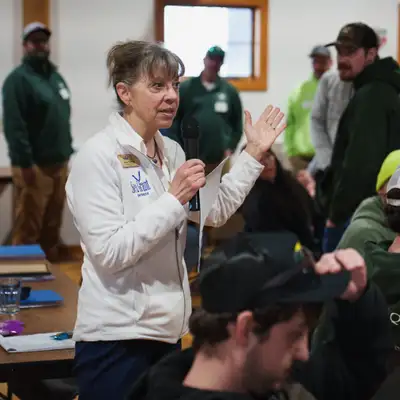
Brian Yurasits: I sat in on this workshop, it was really interesting being a fly on the wall. 'cause first off, it was a packed house and everyone was very engaged, from my perspective. I'm curious if you could talk a little bit about like why landscapers are taking your course? What is driving them and motivating them to seek this information?
Julia Peterson: I would say the [00:32:00] responses kind of fall into a couple of categories. One is that personally, this is an interest of theirs. A clean environment is something that they value. Another thing is it provides their company or their work with a little bit of a niche, right? Because then they can say, oh, you know what, we have these skills, we have this capability. We can address these needs when clients bring them up. Another driver, I think they are hearing that from clients, right? So there's some demand in the market for these kinds of skills and practices.
Brian Yurasits: When we think of projects that Sea Grant is working on, it tends to be coastal.
So I'm curious if you could talk about how this kind of workshop impacts the state more broadly as a whole.
Julia Peterson: We live in towns, neighborhoods, but we also live within watersheds, right? So a watershed represents all of the land where a raindrop falls and that raindrop ends up in a particular water body. And each watershed is named for the water body where that raindrop lands.
And the Great Bay Watershed [00:33:00] includes 42 towns within just the state of New Hampshire. That's a pretty big area. So, all of that water that falls in any of those 42 towns ends up in the Great Bay. Another aspect about the workshop is we tend to hold it about every two years in different parts of the state, in conjunction with a local host. Like Lake Sunapee, for example, the Lake Sunapee Protective Association hosted us and we've worked with Lake Winnipesaukee, brought this workshop to other places within the state to tap into the local landscaper market.
Brian Yurasits: What gives you hope about the future of clean water as it relates to how people landscape?
Julia Peterson: I think I'm certainly reassured by the fact that so many people are invested in the clean water goal. But the fact that that's what they're motivated by, I find very encouraging.
Brian Yurasits: Well, Julia, thank you so much for taking the time and sitting down and sharing your experience is working with Landscaping for Water Quality.
Julia Peterson: Thanks, Brian.
Brian Yurasits: Finally, we bring the hot mic around to landscapers who [00:34:00] participated in this year's Landscaping for Water Quality workshop, hosted at the Great Bay National Estuarine Research Reserve.
Hear what the landscaping professionals have to say about why they personally want to protect clean water through their work and what they hear from their clients. Stay with us.
Timothy Sicard: Okay, so my name is Timothy Sicard. I'm here with the town of Hampton Falls. I'm the brush dump attendant, but I do a lot with the coastal programs, coastal conservation in our town. And just generally trying to help our town be better with sustainable practices, knowing what to do with the landscaping in our town too.
Brian Yurasits: Was that kind of your biggest driver to learn some of these practices?
Timothy Sicard: I think it's important to know, more for the town, about the plants, about soil quality for our municipal activities and how we're gonna change over the years. We have a lot of [00:35:00] knotweed at our brush pile that I'm basically doing all the attending of.
So it's really interesting and good to know, like how I'm gonna have to change everything.
Brian Yurasits: What was the most useful session so far?
Timothy Sicard: I think the most useful session to me was the plants and going over knowing what might be the best to plant and what's the best for the bees and the pollinators and everything like that. It's, it's very good.
Daisy Chinburg: Daisy Chinburg, with Site Structures Landscape out of Eliot, Maine. The people that we work with that are really busy right now are the wetland scientists, land surveyors and environmental engineers. They're all super busy. It's hard to get a hold of 'em right now. So I think there's opportunity to like grow somewhere in that industry.
Another thing that I'm seeing is the municipalities are getting more and more strict on the Seacoast, especially. That's where I work. I don't know much about the Lakes Region, but I think they are doing the same thing up there.
Brian Yurasits: And so you're kind of servicing that new [00:36:00] need by the municipalities.
Daisy Chinburg: Yeah, so the wetland scientists are a link for contractors like us in the landscaping to review all the laws, see what is on the properties, and then connect with the municipalities and help you stay within the regulations and stay up to date with them too. 'cause they're changing like quarterly it seems like.
Patrick Shannon: So, my name's Patrick Shannon. I do design work for Miracle Farms Landscape Contractors in Moultonborough.
I just think if people were take a walk around the woods, they would see that, you know, their house could look like that and still be beautiful, you know?
Brian Yurasits: Yeah.
Patrick Shannon: We have projects that we've done that you could tell that we've incorporated into the natural landscape really well. Those are some of my favorite projects.
Brian Yurasits: Yeah.
Patrick Shannon: From the beginning, this site work to the finishing landscape, you know, the decisions that you make, that's gonna affect that site forever, you know. So, I feel like that's, that's something we want to dial in on is, what are we designing and how is it actually gonna benefit the ecosystem in that area. 'cause I feel like [00:37:00] if you're getting away from that, then you know, you're contributing to a larger problem. If you go into it with a mindset of, oh, I'm gonna, I'm gonna fill this up with ferns and natural low ground covers, and I'm gonna put blueberries by the shore. It may not be the perfect garden that you think you're gonna have, but what you actually are gonna end up with is like a beautiful, maintained landscape, you know?
Brian Yurasits: Yeah.
Patrick Shannon: That's really like the whole thing. I grew up here and I moved away and I saw a lot of different parts of the country that, they don't have the same natural beauty that New Hampshire has. And it's like everyone has that opinion who lives here. Everyone has a biased opinion about it, but it's like.
Brian Yurasits: That's fair.
Patrick Shannon: If this is a bastion that we're trying to keep, then I feel like it's a shift in the culture needs to happen in order for people to get behind that, you know? I feel like everyone probably walked away today going, how can I incorporate this in my next design, you know?
Everyone wants to see the lake survive and the water, to think what could the lakes look [00:38:00] like 25 years from now? Are my kids' kids gonna be able to swim in it? How do we still construct beautiful landscapes, but also make the client happy, but also put an effort towards preservation?
Brian Yurasits: Thanks for tuning in as you prepare for spring landscaping season.
Those 70 degree days filled with sunshine will be here before you know it. For the do-it-yourself landscapers listening, check out our Green Grass and Clear Water outreach materials in the show notes. And for those looking to connect with a Landscaping for Water Quality trained professional, check out the directory that Amy mentioned in our show notes as well.
This Landscaping for Water Quality workshop was hosted by the University of New Hampshire's Cooperative Extension, New Hampshire Department of Environmental Services, New Hampshire Sea Grant and New Hampshire Lakes. In partnership with the Great Bay National Estuarine Research Reserve, the Great Bay Stewards and Soak Up the Rain New Hampshire, with support from local municipalities, private industry, and [00:39:00] universities within the region.
Time and Tide is produced by New Hampshire Sea Grant. Explore more episodes featuring the latest coastal science happening here in the granite state wherever you get your podcasts.
And if you like what you've heard, please consider leaving us a review.
See you next time on Time and Tide.