Subscribe
Share
Share
Embed
The Autism and Theology Podcast is a space where we engage with the latest conversations in the field of autism and theology, share relevant resources, and promote ways in which both faith and non-faith communities can enable autistic people to flourish.
Our episodes are released on the first Wednesday of every month. We have a variety of guests who are related in some way to the field of autism and theology. Some are academics, others are people with life stories to share, and some are both!
We also release CATChat every third Wednesday of the month. These are shorter and more informal episodes where your hosts will share news and give you as listeners an opportunity to ask questions and share your stories.
Mati x Ian Podcast - CAT
Tue, Apr 14, 2026 4:14PM � 43:41
SUMMARY KEYWORDS
Autism researcher, rabbinical student, peer support coach, sacred texts, neurodivergent reading, Torah, Jewish tradition, text study, sensory experience, cognitive difference, religious communities, interpretive tradition, marginalization, neurodivergent Torah, faith inclusion.
SPEAKERS
Ian, Mati
Ian
Hello and welcome to this episode of the autism and theology Podcast. I'm Ian, and I'm so glad that you've joined us this week. This podcast is a space where we engage with the latest conversations in the field of autism and theology, sharing relevant resources and promoting ways that help faith and non faith communities enable autistic people to flourish. This podcast is run from the University of Aberdeen's Center for Autism and theology, which we've shortened to cat. If you would like to access the transcript for this episode, it can be found in the link on the show notes.
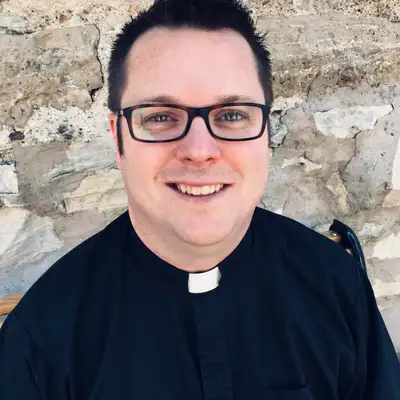
Today we have with us Mati Boulakia-Bortnick, a rabbinical student at Ecole rabbinic de Paris, or the Paris Rabbinical College. He is also an autistic researcher and autistic peer support coach. Mati, thank you so much for joining us today. Really excited to talk with you about an autistic reading of sacred texts.
Mati
Thanks for having me, Ian.
Ian
So on that note, you are obviously coming from Jewish perspective, and a large part of your tradition and your role in that tradition involves engaging with a fairly wide variety of sacred texts. Do you think, in your experience, at least, that there is an autistic-specific, or broadly neurodivergent way of engaging with these sacred texts? And if so, what would you say about such a way of reading and engaging with them?
Mati
Yeah, thanks. Judaism is all about texts, which I know sounds a bit folksy, but and while text study plays a major part in just about every religious community that I know of, it's heavily emphasized in Judaism, and it's often considered the spiritual practice of Judaism. For some, it might argue even more than prayer, though, I should say in Judaism, we have a thing that you have two people, three opinions. So certainly some might take umbrage with that.
I'm gonna start by maybe I don't want to say pushing back, but a little bit of gently pushing back on the question itself, right? But it's specifically because of my own view. So I don't think there's one autistic or even more broadly, neurodivergent way of engaging with sacred texts, but I do very, very much believe that neurodivergent readers make something visible which is already in the text. And part of that starts with how we understand Judaism, Torah itself, right?
So very often people think of Torah as this scroll at the synagogue, when nobody's been to a synagogue service before, a scroll sitting in an ark which we take out. But it's not just a scroll. It's not just a written text. There is, I mean, that is a Torah, but Torah is actually when we say Torah in Judaism, we mean an entire process, an ongoing conversation across generations, which includes the Torah, which many people know as the Pentateuch, the first five books of the Hebrew Bible, or the Old Testament in the Christian tradition, which, in Hebrew, is called the Tanakh, right? So there's the Tanakh, right? The Torah, the prophets and the writings. We also have rabbinic literature, which includes things like the Mishna, the two Talmuds, the Jerusalem Talmud and the Babylonian Talmud, various Midrashim, which are another type of rabbinic commentary, rabbinic literature, lots of commentary, codes.
All of this is an ongoing conversation, interacting with one another, which we call all of this is collectively Torah, even what we're doing right now, I would say, is Torah. Torah is disagreement. It's reinterpretation, it's constant renewal. So when we ask if there's a neurodivergent way of engaging with Torah, we're not just asking how somebody who might be neurodivergent reads a text. We're also asking how somebody participates in a living conversation, right? This is why I say that text study is very often considered the spiritual practice in Judaism, and I think that autistic people often engage that conversation in ways that highlight its core nature, the core nature of Torah and Jewish texts.
So for example, a lot of us read for pattern and consistency, right? Something that comes up very often for autistic folks, we notice contradictions, and instead of smoothing them over, we stay with them. And that's actually the entire point of what we call rabbinic literature. So the literature, like the Mishna, midrashim, the Talmudim that we just discussed, which is roughly from between the second century to the seventh or eighth century, lots of debate there too. So with the period we call, the rabbinic literature period. That's what the Talmud does. It preserves disagreements. The Talmud, very often is thought of as like a Jewish Book of law, right? And it's a common misconception. The Talmud is not a book of law. It's not even really a book. It's a recording of discussions over generations between scholars talking about things. It doesn't actually ever give, I shouldn't say ever, but it rarely actually delivers a ruling or a law or like in a codified form. It's the disagreements and agreements over them, and it preserves disagreements.
You might have three people who say one thing, five people who say one thing, sometimes they'll go with the three, sometimes they'll go with the five, and it preserves all of it. It doesn't resolve everything, very often lets multiple truths sit next to each other. So in that sense, a neurodivergent Reading isn't outside of the tradition. It is the tradition. It's deeply aligned with the tradition.
\There's also this other idea that a lot of us autistic people, that we're quote, unquote, too literal, right? You've heard this before, but when I see that, I see something totally different. It's a refusal to accept vague or socially convenient readings of text, which I think anybody listening to this sometimes can hear that very socially convenient or kind of wishy washy, very accepted reading of a certain text. And we go, Yeah, I've heard that one before. Come on, do something more challenging. Give me something else, right?
I also find that we also often have, again, this stereotypical autistic thing, which, again, not all autistic people feel this way, I'm just giving a few different archetypes, but a refusal to gloss over harm. A refusal to say, �that's just how it is.� And I found that that kind of reading is equally as autistic as it is rabbinic, right? And Judaism is all about the rabbis. It's what happens when you take the text seriously enough to question it, right? People often ask me, �What does Judaism say about this or that?� And I have to go, �I can't really answer that question,� right? It says, I mean, which kind of, which Judaism, which people, which? There's a million different things, right? And we take, I take text so seriously, and so many of us take them so seriously that we can question them. They don't always, necessarily not to say that we don't we. You struggle with text, that's that's the idea, that's the entire spiritual practice.
So another big piece of neurodivergent readings, I think, is that they're often very embodied, right? So those of you listening, you can't see me, I'm very actively moving my body around right now, right? We don't just read text intellectually. We're actually reading them through our bodies and our minds, or some might prefer to say, body-minds right through the sensory experience of studying right sitting here with a book, I'm holding a book that was published here in 1956 in my hands, and going through it and putting my hands on it and seeing, you know, the page, the pages of many Jewish books often have lots of things In the margins of commentators, right? And there's a big sensory experience to it, right?
We read through the discomfort of maybe sitting in that kind of space, or, depending I've been in, I've been in study halls that are super comfortable, ones that aren't and like that affects my learning. Right? We read through the we resonate with stuff. Or do we, can we read ourselves into the text? Or do we encounter the text in a way that's more, maybe authentic to the original sense, but still, can we respect the text in its own way, plus in our own in our own way? Right? Both right.
Our emotions: so like for me Torah, it either lands in my body or it doesn't. And I'm happy to say that not everything is always going to resonate with me, just like no text of any faith tradition is going to resonate going to resonate with everybody right, and that shapes my interpretation of how I read right. And Judaism is all about interpreting and reinterpreting right, and always constantly evolving. It means that I'm constantly asking, �Is this a safe text for me, for my community, for other communities, is there a potential safety here? Is there harm here?� Right? �Who's being misunderstood in this text, whose voice is missing in this text?�
And I think all of this leads to something super important that I think most autistic and more broadly speaking, neurodivergent readings of Torah, and I think this is probably true in any faith tradition of any autistic person reading any kind of religious text, our readings are coming from the margins, not marginal as in unimportant, but from the edges of community. So many of us are on the edges of community, right? And this is what your own work is dealing with, right? And from the edges, we can see things that the center can't. They're not able to see it. You notice the figures in the text, the characters, or the rabbis or the debaters, the people involved in it. You notice the ones who aren't fitting in. You understand the ones who are misunderstood, excluded, framed as problems, right?
So why I'm so drawn in the Bible and the Hebrew Bible? I love Joseph. I'm always brought to Joseph. He's so different. And he's, I think he's super misunderstood in the Jewish tradition and the Christian tradition and the Islamic tradition in the in rabbinic literature. I love two guys going Rabbi Eliezer and Rabbi Meir, super misunderstood, right? And this is not to diagnose Joseph or Eliezer or Meir, or Moses, or any of these kind of different weird figures in any way. And I know some of you might think Moses is not that weird. If you really get into text, Moses is, he's an outsider. He's the ultimate outsider, right? Imagine he's, he's the only one from his entire generation who lives. All the other boys of his generation were drowned. There's nobody else's age, right, right? Like, think about that. Like, Never mind. Forget about, like, growing up in Pharaoh's palace. Forget about having, getting, like, going into exile, like, all of that too. Forget about them going back into it and like, he's kind of a foreigner, right? Like he's the only one of his own generation, super outsider, right?
But you can only see them as an outsider if you're if you are an outsider, if you're reading him as, like, the leader of the children of Israel, then, like, no, of course not. You're gonna see them, right? So it's not to diagnose them as autistic, though sometimes it can be fun to think, �if I read this person, this figure, as autistic, what might we learn new out of it?� But it's about asking what happens when someone doesn't fit into a system, and how the system responds, right? And I think that's the really key. That's what's really central to me, and for a lot of us, I think also Torah is about reclaiming, right?
We've been told explicitly and implicitly that tradition isn't for us, for a lot of us in the margins, that it belongs to a certain kind of person, a certain type of lay person, a certain type of clergy person. So reading it as neurodivergent people is also a radical act of saying, �No, this is my tradition too. This is my text too, not despite how my mind works, but because of it.� So no, I wouldn't say there's one neurodivergent way of reading Torah. I'd say something else, but that Torah actually only works because there are multiple ways of reading that is the entire premise of everything, and neurodivergent readers often push the tradition to actually live up to that truth, to stay messy, to stay layered, to stay contradictory, to stay alive. So it's not about making Torah more inclusive. It's about revealing that it was never meant to be a singular point of view in the first place
Ian
In the Christian tradition, one of the things that I often say in Bible studies and things like that is that we're not dealing with a book, we're dealing with a library, right? And because of that, we have a variety of different voices in conversation with each other. And so it's it becomes really difficult to harmonize thoroughly, or to make to make it univocal, and too often, that's what we're looking for, or that's what I find a lot of neurotypical people are looking for, is what's the one thing that scripture says? And the truth is, there isn't one thing right? You're hearing a lot of different messages. And I think, I think you're right. I think that one of the things that I have noticed in leading those sort of, sort of scriptural studies, text studies, of holy text, is that I am not I am much more aware of the places where there are those inconsistencies, or those differences of opinion, or those, those sort of cross talk conversations. Anyway, you have you have written and spoken elsewhere about neurodivergent Torah, is that, are those ways of reading that you alluded to, or those, those ways of engaging that you have talked about, is that what you mean by that, or do you mean something else by neurodivergent Torah?
Mati
I mean a lot of different things. So that the term neurodivergent Torah was coined by my friend and colleague, Rabbanit Liz Shayne, who's my co-editor of a volume that we're going to it'll be coming out next year called Neurodivergent Torah, which is an essay anthology from neurodivergent Jews from all over the world and how they understand this term. But when I, when I talk about it, which is a little bit different than how, how Liz defined it in in her kind of her paper, which introduced the term into the discourse, I'm not talking about a different Torah, and I'm not talking about adding something external onto the tradition, neither, though neither is she right. I'm talking about a way of engaging Torah that centers neurodivergent experience as a legitimate, authoritative and a generative practice. Because for a very long time, including most places even today, Torah has been read through a very narrow lens. A lens that assumes that a certain kind of mind, a certain kind of body, a certain kind of behavior, is the right way to learn Torah. It's usually neurotypical, but not always. It's usually able-bodied, but not always. It's usually fitting into a very rigid set of norms around how we communicate, how we pay attention, how we express emotion, how we interact socially, and what happens that anything outside of that gets pathologized, ignored and erased, and so for me and those of us who are working on neurodivergent Torah, neurodivergent Torah is the response to that.
It's saying this is what happens when we take neurodivergent experiences seriously as a starting point for understanding Torah. So in like that way, like we're kind of inspired by Dr. Nick Walker, who works on this idea of neuro queering, that like anybody can really do neurodivergent Torah, not even only neurodivergent people. It's about just like how anybody can do a feminist reading of Torah. You don't need to be a woman to understand feminist theology, and use feminist theology to inform your life, right? And like you can, right, read the Bible in a feminist way without being a woman, right? So it's the same idea, right? It's something that we include after the fact, right? It's not like a it's not a gimmick, right? It's something that actually shapes how we understand the text itself and brings out a new interpretation, which is again rooted in that broader idea of Torah as an interpretive tradition, of that or not being one voice, not having one meaning, there's not a right or a wrong, which I think is very difficult, maybe for a lot of readers to understand right? I think it's, I think it's often difficult for a lot of Jewish readers and studyers to understand, because we all, we grow up within a larger Christian context, right? In the Anglophone world. And so even Jewish readings are obviously influenced by that, right? Just like, you know, very often Christian readings are influenced by Jews.
Jewish readings are run by Christians, like, we're all together, and that's the beautiful thing, right? But very often it means there's this idea like, oh, what does it say, but what does it mean, right? When I'm teaching Talmud, people go, so what does it mean? I go, you tell me what it means. And they go, What do you mean? I tell you what it means. I don't it means. I don't know. And I go, that's the point, right? There isn't one meaning. There's always disagreement, there's always tension. Right? In Hebrew, we have a word mechadesh, which means to to renew, to constantly reinterpret, right? So neurodivergent Torah is just one layer of that more general kind of idea, right? Though, the problem is, is that it's a layer that isn't actually given a lot of legitimacy. When we speak about this, people, they look at it kind of funny, right?
I teach a class called neurodivergent Torah at the rabbinical school that I study at. I was asked by the Dean of the rabbinical school who thought what the Torah that I was teaching was so important that we would like you to teach a class to your fellow students about neurodivergent Torah. So I'm doing that class now. I taught it earlier today. So in that class, some questions, things I ask people to do who, again, who are not neurodivergent, but how they can do the act of neurodivergent Torah. What's happening in this text? What's the sensory experience of the text, of those in in the text, but also you, as you're going through it? What's your sensory experience while you're learning this text? Is there anything that's connecting? What's happening with communication differences in a text between the various players in a text, right? Most of Jewish texts are having to do with people debating. So there's always going to be communication differences, right? Where are people being misunderstood? Where are systems reacting to difference rather than responding to needs? Right?
So, constant, you know, constant, like a really good example to go back to Joseph and Moses, right? To keep it something that everybody can relate to, Joseph is punished for his difference, right by his brothers. Right? Moses, when he has a need, he has a speech impediment, needs help, doesn't know how to speak, and so God says I'm going to provide accommodation for you, and that, that accommodation I'm going to provide to you is what? I'm gonna bring you your brother, right? He heard the need, responded to it, right? So that's an example of you know, when Joseph is saying what his needs are, he's thrown into a pit and sold into slavery, right?
So it often means rereading familiar stories and again, not to diagnose them, but to notice patterns, right? Classic example that I love talking about when it comes to Talmud. For those of you who study a little bit of Talmud, is the oven of Achnai story found in the Babylonian Talmud, in the tractate of Bava Metzi of Rabbi Eliezer right, being excommunicated, being isolated from his community, from everything, being overruled, being thrown out of the community, even though, over a debate over Jewish law, even though a voice comes down from heaven saying, �Eliezer is right.� And getting thrown, and even though he shows every proof in the world, this is a story that's often seen as the rabbinic supremacy, and that how this line, �lo bashamayim hi�, that the Torah is not in heaven, it's here on earth with us, right?
And it's read as this, and Eliezer is always seen as this bad guy. I look at it something different, right? Eliezer is a person who's an autistic person, who is arguing every proof to this thing, even God says that I'm on your side. And everybody says, I don't care. How many autistic people can really people can relate to that, how many non-autistic people can relate to that? And again, it's not about saying that Eliezer is autistic. It's about, if I read him that way, what? How can we read that story in a different way? Right? These stories begin to look very different when you read them through the lens of marginalization, cognitive difference, right?
Another big piece of neurodiverse Torah is that we're challenging the idea that there's a normal way to be human, right? We push back on neuronormativity inside the tradition. We ask, �what are these categories?� And maybe they're the problem. What if we call disruption and rigidity and inappropriateness? I put these in finger quotes. What if all of these are actually responses to environments that were never built for these people?
I guess bottom line neurodivergent Torah is about reclaiming the relationship to the Divine and to the tradition by using the tradition and by centering our forms of cognition. It's about saying that our way of thinking, our way of processing, our sensory world, our emotional world, all of us, individually, this isn't outside of Torah. It is Torah. We have to dismantle these normative assumptions, whether it's about neurology, gender, social, all this kind of stuff, and recognize that Torah is something that we actively shape through our lived experience, which, like on the surface, makes sense, but, so why did we not extend that to neurodivergent people?
Ian
No, I think, I think that's spot on. Where we well, yeah, I had something to say, but it's gone. One of the other things that you have written and talked about is the difficulties that neurodivergent individuals face in faith communities. And that could be, I mean, we could talk for days about that, but because the focus of this is engagement with sacred texts. Do you think that different ways of reading, different ways of interpreting, different ways of engaging with sacred texts might also play a role in the difficulty that neurodivergent folks face in incorporating into faith communities?
Mati
For sure. I think it's important, of course, to underline that, like all neurodivergent people, are going to experience the world differently, right? In case, we didn't make that, that disclaimer, and even though those are the same and people of the same neurotype, right, two autistic people are going to experience the world differently as well. Right? Not all autistic people will read text in the same way, and some of the biggest debates I've ever seen around a text have been by two autistic people talking about the same thing, right?
I think that piece is actually often overlooked, right? Because when people are talking about neurodivergent people struggling in faith communities, they're usually focusing on the more I say obvious. They're obvious to us, but they're not obvious to the general public, but like the sensory overwhelm, social expectations, eye contact, sitting, still, long services, standing, sitting, standing, sitting, interrupting, right? All those things are real, right? Those are all absolutely real things, and they're not obvious to most people in our communities, sadly, and disability inclusion is something that we are fighting for always.
But I think there's a deeper layer, which is that going back to interpretation again, right? Because faith communities don't just have norms about behavior, right? We have norms about how we're supposed to read texts, right? How you're supposed to understand a text, what counts as a quote, unquote, good interpretation, what's a bad interpretation, what counts as a respectful or acceptable or legitimate interpretation.
I cannot begin to tell you, Ian, how many times I've been told in the last two weeks that the way I speak about a text or a figure in a text is disrespectable or disrespectful, unacceptable, illegitimate, heresy, nonsense, garbage, fairy tales, right? It's because a lot of our interpretations are going to be extremely neuronormative, because neuronormative people are the ones that run it. So, like I say, neuronormative, not neurotypical, because plenty of autistic people can be neuronormative, right?
It privileges a certain, a certain type of thinking, right? That you're supposed to read text to get the quote, unquote main message quickly, right? Like, what is the message? What's the bottom line here, right? Right in Hebrew, we say, what's the peshat? What's the simple idea of the text.
It's about getting rid of contradictions. Most people don't like sitting with contradictions. Even in Rabbinic Judaism, where, like, it's all about contradictions, people still want to get what's the law say? What's the bottom line? That's the tachlis.
It's about accepting inherited interpretations, about pushing too hard. It's like, yes, push hard. Ask questions. I remember, like, when you're when you're studying, when you're studying Jewish texts and things, right? You're encouraged to debate. Debate is good. You always study in a pair, right? And you're meant to take different ideas and like, you debate over the text. It's fun. It's called chavruta, which comes from the same root in Hebrew as friend or connection, right? It's fun, but if you don't get to the inherited interpretation the way you're supposed to, that's bad news.
It's all about prioritizing the legal harmony, or even the social harmony, because in Judaism, right? Legal harmony leads to social harmony over intellectual honesty very often. And a lot of us neurodivergent folks aren't going to read things like that, right? We, we linger on one point and go, �Why is this?� We get fixated on it, right? We notice those details that aren't lining up, and we're going to ask questions that are going to disrupt the flow. And we take things seriously that others are just happy to kind of gloss over because some commentator in the ninth century said, �Oh, Shabbat didn't mean Shabbat there. It meant Passover. Get over it.� Right?
You have a whole construct in the Talmud, which says you would have thought that they meant x, but because they said X, but actually X means Y. Don't ask why, it just is right. And so when we bring that up, that difference can be misread, not because we're being disrespectful, because we want to get into it right, which is exactly what those rabbis who came up with those texts, that's what they were doing, right? I've been told I'm difficult, that I'm missing the point that I'm overly rigid, disrespectful, all of it, right?
What's actually happening? I'm not doing any of those things. I love these things. I dedicate my life to these things, to these texts. It's just a different mode of engagement, which, you know, I said, like, ironically, like, I think that is the point of rabbinic tradition itself. Like, I think that's what they were doing, right? The entire rabbinic enterprise is built on questioning disagreement and refusing to have easy answers, about not prioritizing, prioritizing harmony. It's all about keeping the tension. That's why they kept all the stuff.
So it's, so for me, like I'm sitting here like this. It's like autistic brain like this is a very strange dynamic. Like, I'm engaging in a text in a way that is faithful to the text and to the tradition, but my community has developed a norm that makes this kind of engagement feel out of place, right? And that creates a real barrier to belonging.
Ian
Yeah. Yeah, because, you know, like you said earlier, there's an expectation that the text says blank. It has, it has one meaning or one sort of univocality, and so often there is, there is implicit social expectation that you will go along with that interpretation and minimize any cognitive dissonance and just sort of smooth it over, if you if you're getting something different than that. And I think that, I, yeah, I find myself at least gravitating towards those places where that isn't the case, where there are differences of opinion, where there is tension in the text itself, and wanting to say. What does this mean? How can we be faithful to it? How can we, how can we relate to this without just minimizing it, without just moving it over, without just ignoring it? Yeah,
Mati
Yeah, yeah. Want the tradition to become more honest about what it's always been, right? That's, that's, I think, real access.
Ian
Yeah. So we have touched on this a few different ways, probably already. But do you have, you know, thinking about takeaways, you know, one of the things that we always are trying to do is, as I said in the introduction, enabling autistic people to flourish and faith communities to flourish, right? What do you think that these different neurodivergent ways of reading or engaging with sacred texts, or autistic ways of engaging with sacred texts might have to offer to religious communities? What's the, what's the benefit to communities, to faith communities in, in engaging in those, those ways.
Mati
Love the question, and I'm going to give a kind of boilerplate answer that I give very often, because people often ask me when I go right? So another big part of my job is that I go to communities and I train them in this kind of, I even do consulting. How do you make your community more engaged with disabled people and neurodivergent people more specifically? And I don't want this to be something that communities do, to be out of kindness, right?
I think they're� our readings are something that communities are missing. And I don't mean missing that they don't have them because they're already there. They're ignored, right? Because I think what we have to offer is that our way of reading texts and engaging community often does, I think things that are actually healthy for the tradition to go on, right in Judaism, right? Think of Fiddler on the Roof, tradition song, right? Like the tradition is really important, right? That's how Jewish people have managed to survive and thrive, is that we're essential for the health of tradition, and we were so often featured in the tradition, and these ways of thinking were featured in the tradition.
And it's only in the last, since emancipation of Jewry in the mid-19th century that a lot of this is getting pushed out with the rise of the modern age. And one of those first thing, I think, is that it brings a kind of honesty. I don't want to, like overly go on the like the autistic honesty thing, because there's plenty of autistic people who are not honest. Let's not get into much of that. But this type of learning brings a kind of honesty, right?
Because a lot of us think we don't let things slide right. It's not about, I don't mean honesty and truth, but like, being honest, like, being honest to the text, to engage in the text on its own terms. We don't let things slide. If something doesn't make sense, we stay with it, right? I mentioned that earlier, like, if something feels ethically off, we're gonna name it. If there's harm in a text or an interpretation, let's not rush to justify it. Let's be uncomfortable and say, like, yeah, my tradition says this. Like, well, let's, let's talk about it, right? Which is what they did, right? Like, this kind of reading prevents tradition from becoming complacent, and therefore making communities from being complacent, right? Because, like, this kind of learning, if this learning is just reduced to the library or to the study hall, it's useless. Like, our learning needs to be able to transform us in the world, right? That our learning can make an impact on the world is something I learned from my teacher, Rabbi Benay Lappe. That's the point of text study. That's the point of all of this.
Our type of learning preserves complexity. There's often this big pressure in Jewish religious communities, and I think in all religious communities, very often, to simplify things. Let's make it, let's, let's appeal to the lowest common denominator, or greatest common denominator, right? We need to make it things coherent and easy to transmit. We can't have crunchy theology. We have to have that smooth theology.
I have a teacher, Rabbi Michael Marmur, who always said that I like to have crunchy theology, like the crunchy peanut butter. Not that smooth peanut butter nonsense. But most of us, most people, don't want crunchy they want smooth. Thing is that our texts in any tradition, I have never seen a religious text in any sacred tradition that was simple. Doesn't exist. They're layered, they're contradictory, they're unresolved, all of them. It's not just Judaism. Everybody can benefit from that.
Neurodivergent readings resist that flattening. We keep the tension alive. And I think that's what allows us, for again, you don't have to be Jewish, in any spiritual faith, in any spiritual practice, to be living in a real conversation right now and make it relevant for our lives, rather than in a closed, dusty system. And the last thing I think that we really have to do is that it shifts us back towards this process rather than performance, right? I come from the Reconstructionist Jewish movement, right, which is all about process and doing things that make sense and are real to our lives and not performing. You're going to pray? Great, pray. What are you praying for? What are you praying about? Who are you praying to? Because if that's not authentic, no way, that's not going to work.
A lot of religious engagement is performative, right, in our prayer, in a way we study, in the way that we're expected to say hi to people on Saturday mornings or on Sunday mornings, right? Fitting into a rhythm of the group. Everything is very, very performative, and a lot of neurodivergent people, we can't do that or won't do it.
So that focus shifts back to what is actually happening in the encounter between me and this text. What am I noticing? What is this bringing up? And that leads me to being honest, which then I can maybe be more honest in my other pieces, right? Like, text study has like somebody might be listening to what is being honest with the text have to do with talking to people in the, in the social hall of my synagogue or my church? Everything. Texts are our laboratories for doing that.
I think the biggest thing I want people to take away that are listening is that those of us on the margins, and again, that's not only neurodivergent people or disabled people, but anyone on the margins, right? I think this is what we're offering with our reading. But this is applicable to everybody. But those of us on the margins have what to give to the tradition, the textual tradition, and the margins are a site of insight, and I don't think that�s niche. I think that is the entire point. I look at, I look at the Islamic tradition, the Jewish tradition, the Christian, the Buddhist tradition, who are the main who are the main people? Who are the right? They're the people on the margins. Right?
Okay, you're, you're a priest. Jesus is on the margins. John the Baptist is on the margins. St, Augustine is on the margins. Bede, St. Bede on the margins. The biggest, the biggest, the biggest thinkers. St, Francis, these are not people coming from the center, right? I would even argue perhaps that they're quite critical of what's going on at the center, and it's no different in the Jewish tradition. And I think we, that brings us back to that.
Ian
Yeah. I think that you're, I think that you're right about the benefits of neurodivergent engagement with sacred texts. I think, you know, one of the way, one of the things that I always say in engaging with the Bible and engaging with Scripture is that I often view my role in leading Bible study as a muddier of waters, right? Because we tend to gravitate towards that simplified reading. We tend to want to find, what's the one takeaway that sort of smooths over all the difference. And I just don't think that's doable with the, as you say, the vast majority of texts, if it has anything worth saying, it's not going to be simple. Because simple texts that say very simple things are not, in my experience, worth a lot, right? The reason that the that the that Scripture, that the Bible has, has endured and has lasted as long as it has, is because it's adaptable, because it has multiple things to say, and we, in engaging with it, we really ought to honor that and do our best to engage with that honestly. So yeah, I that's just to say, I endorse that answer
Mati
Awesome. I'm glad
Ian
This has been a really great conversation, but that is about us for time. Yep, Mati, do you have anything else that you would like to add, any parting wisdom, any thoughts that we haven't gotten to that you want to make sure you have a chance to say.
Mati
Just that never let anybody tell you what a correct reading is, right? Yes, we look at our tradition to help inform us. Right? You know Rabbi Mordechai Kaplan, who is the founder of the Reconstructionist movement, of which I'm a part, said that the past has a vote, not a veto. And I like to take that out of context and apply it to this and that, like our tradition has a lot to give, but so do we, even if it's not necessarily going to be consistent with the past. Though, I think very often our method is what's going on in the past, but a lot of times what's going to come out of it is not going to be what was in the past. And that's okay, because I have seen a lot of people who say, okay, you know what I'm with you, what you're doing, that method, that is the traditional method. That is awesome. Let's do it. But you better still get to the traditional answer, and I say no, maybe I'm not going to get to the traditional answer. Because maybe, maybe the tradition and for its time and place that meant and was very healing and helpful for people at a certain time, and it's not today. And you can check out my work at theautisticrabbi.com and see what I'm up to. I write on sub stack as well. Can find me there. And let's keep talking.
Ian
Awesome, Mati, thank you so much for being with us today. I think this has been a really great, really enriching conversation, and it's been a joy. For our listeners. If you have any questions about this podcast, or any questions in general, you can message us on Bluesky, @autism theology.bsky.social, or @autismtheology on Instagram, or you can send us an email at cat@abdn.ac.uk. Even if it's just to say hi, we'd love to hear from you, and thanks so much for listening.
- 1 -
00