Subscribe
Share
Share
Embed
Brought to you by Verissimo Ventures, The Very True Podcast features candid startup insights and conversations with early-stage founders, operators, and investors shaping the future of tech. From behind-the-scenes startup stories to hard-earned lessons on fundraising, scaling, and staying resilient, each episode offers a window into what it really takes to build something bold.
Alex (00:00)
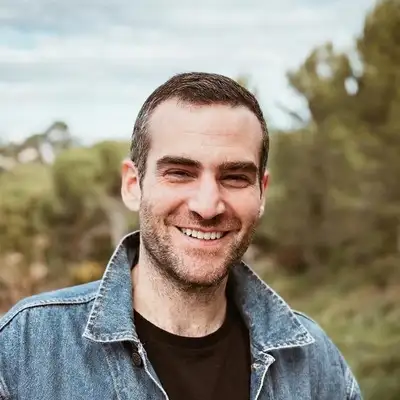
We are back with another episode of Very True by Verismo and I'm super excited to have Neri Bluman on today. I had the pleasure of investing in his last company called XFunnel, which recently was acquired by HubSpot. It was a short but very fruitful journey for us together and he's had an amazing career.
trajectory which I think a lot of budding entrepreneurs can learn a lot from and so I'm excited to have him on today to learn more about that trajectory his thoughts conclusions along the way We're definitely not done yet I know there's a lot of more good things to come in his entrepreneurial career in tech And so I will hand it over to him to start with a little bit of background
Neri Bluman (00:38)
Yeah, hi Alex, thank you for this pleasure to be here.
I'm Neri, I was born and raised in Israel.
went to college, law school, and MBA, I was thinking.
what I want to do. And I knew I'm not really good in one thing, which I always thought would be like a disadvantage in like life I was like really mediocre in a lot of things, like really good operator, like just going between things and picking them up, but not really going deep in anything. But I knew I have a lot.
to do and I have a lot in me.
just show myself and I kinda like, accidentally went into this startup world I think after 15 years, I'm still not very deep in anything, still doing a lot of things, really, really enjoying it. I think now I believe that there is a room and actually like a really good space.
in the world for people who are not professional in anything specific but can go really wide and do a lot of things. So this is one of my disciplines and I'm really good saying it out loud. Like I'm not really good at anything specific. I'm okay in a lot of other things.
Alex (01:49)
I'm a big fan of that as well. think that the generalist is super underrated and in a world right now where AI engineering talent is getting NFL style contracts. It seems like maybe that specific skill set is on its own, incredibly valuable and kind of exponentially different, but for almost everyone else, it feels like adaptability.
Is the skill set that is going to set most young professionals apart So you kind of did that I guess before it was cool in a lot of ways, ⁓ you know on another podcast I Mentioned that if you're really good in two areas and then those areas overlap You often end up being like the top point one percent in that overlap but I think what we're talking about here is even broader than that and the ability to just tackle problems and handle whatever comes your way, which
Again, you could say I'm not specifically good at anything, but I think there's an argument that that by itself should be considered its own superpower and skill set.
Neri Bluman (02:50)
Yeah, I will tell you that now it seems like I'm really owning it, but for a long time, I think I was driven by the fact that this is like a disadvantage and let me prove that I'm worthy of, being there and being and doing startups and doing everything. I was really eager to prove that I can do stuff. And I think more than anything, it's,
curiosity. That's one of the things that I'm really passionate about. It's being able to say, have no clue what you're talking about, but let me dive into it. You know, just recent example, it's like coding. I always wanted to code and I was never good enough. I couldn't sit.
couldn't really understand how it works and I tried and that was like a fail. like 18 months ago, it was really apparent to me that all of a sudden coding belong now to my people, which are the generalists, because this is, I know how to speak my mind and I didn't really know how to speak to a machine, which was really easy for me to start picking it up. know, X Funnel the last one, my co-founder and I,
we were roughly in the same place and, we're in between startups and consulting a few, ⁓ different companies. And we, set to really try to think about our next thing and not in a way of like, let's raise a lot of money and let's start a new company. just in curious what's happening in the world right now and what will be an interesting problem to work on.
And I think for the first time in a long time, immediately when we thought about the idea, we immediately can go ahead and develop this idea and like go to market with a product that only the both of us developed. It was obviously not scalable in any way. And we had to bring someone in. But that really was.
one of the times that I felt, my God, as a generalist, have a huge advantage right now. The machines are not speaking my language. They're no longer belong only for those experts in developing anything. So yeah, that was one of those times that I was really thankful for being a generalist because I could develop and I also could say, and I also could.
Alex (04:50)
Mm-hmm.
Neri Bluman (05:09)
launch company and I knew all of those. And all of a sudden it's a huge advantage. We were in a market with a product after a couple of weeks and we were with a customer after three weeks. That would never be an option. Five, six, seven years ago, I would have to find someone and made them go and write a code. And I was like, oh my God, you don't know what you're writing. I need to, I need to do this because I'm speaking to the customer and I need, I need something else. So anyway, those are.
Alex (05:30)
Yeah.
Neri Bluman (05:35)
Very exciting time for generalists.
Alex (05:36)
It actually came up just the other day. I was talking to some people about, you I was in investment banking at the beginning of my career and we used to work 16, 18, 20 hour days regularly. And the question is always, why don't you just hire two people to work 10 hour days instead of one person working a 20 hour day? And the answer is that the loss of productivity due to communication and collaboration is like insane.
You know, we did an exercise at the end of my investment banking training where like four of us had to work together to do what normally one analyst would do. And it actually took longer for each of us than it would have any of us had just done it individually. And so it seems like with AI now that communication and iteration process is just so much faster. I I experienced this myself, not in an AI sense, but when I was at NEA, I was
basically serving as the investment banker for one of our portfolio companies that was being acquired. And it was just me and the founder of the company instead of like managing director, know, VP, associate, analyst, stack. And by the way, those people are all functionally kind of the same. And so the communication there you could argue is actually more efficient than when you have designer, product manager, engineer, salesperson, all trying to communicate when they fundamentally speak different languages.
Neri Bluman (06:45)
Mm-hmm.
Alex (06:56)
And again, the efficiency just shoots through the roof. And so those iterations, instead of happening via email or physical or meetings they just happen instantly. And that's a beautiful thing about the world we live in now and the ability to say, I understand how the customer thinks and I understand how the machine thinks and I can just go. But let's take a step back. You you started a career as a lawyer.
I have another, I don't want to go down too far down the tangent, but I think that like the junior law associate job has basically disintegrated in the last six months because that job is effectively being an email jockey and a Microsoft Word document jockey. And frankly, a lot of them are not even that good at it. ⁓ and now AI has come in and crushed them, but you went from that sort of role into this company, AVO, which
Neri Bluman (07:36)
Yeah.
Alex (07:44)
had nothing to do with law, had nothing to do with like document stuff. Could you tell us a little bit about that transition and the thesis there and how and why you started that company?
Neri Bluman (07:55)
Yeah, absolutely. I was an intern in a law firm. So I finished my law degree. I became an intern. I finished my internship. went to through the bar exams. I never became a lawyer because one thing that I realized is I'm going to be a really, really bad lawyer because again, this is one of those things that I'm now I am allowing myself to say.
Alex (08:08)
Mazel Tov.
Neri Bluman (08:18)
Out loud, but I don't really have a really good attention to detail. I think there's a lot of people that don't have good attention to detail. It's not, it's not such a bad thing to have as a quality. think everybody are like, my God, I don't have attention to detail or every job description or every job interview is like, have a perfect attention to I don't have a really good attention to detail. I know how to work with people that has really good attention to detail. But anyway, I realized very fast, I'm not going to be a good lawyer.
And I had this friend that I had like my first window into entrepreneurship was a company really when we were students, really interesting take on a sunscreen vending machines. Really interesting initiative was that dummy machine that you 10 shekel in, you spin it around and you get like a small tube of sunscreen.
this is an entrepreneur, going with a flip flops to, kiosk at the beach and install machines. is my entry level entrepreneurship, So I met this guy, which I owe a lot to, um, and he pulled me in and he said, I'm starting a new thing. It's an e-commerce startup. It was, I didn't even know.
what e-commerce was, but I said, I like working with you. I think this is like a really common thread. I continue working with people I like. This is the only thing I know for a fact that works for me. So, and I said immediately like, okay, let's do it. Like, why do I care? Let's meet in your apartment with a, we have two other partners and let's start this thing, which I think really, really, really fast developed into
something I could never imagine. So the idea was pretty simple. E-commerce has two issues in the business model. The first one is logistic costs. So you pay a lot of money to deliver a product. This is why you have the minimum orders. This is why you have bulk orders. It was, again, 10 years ago.
It developed a lot in the past 10 years. And the second thing is a customer acquisition cost. So supermarket, you have it on the street. So people know that there is a supermarket there. So they go in, e-commerce, you have a customer acquisition cost. So those two make e-commerce a really tough unit economics business. So what we thought is we're going to centralize demand into one location. So basically work with
building, office buildings and residential high rise buildings. And we will communicate and collaborate with the building management and deliver into that spot in one time a day. And with that, we will lower the logistic costs, we will lower the customer acquisition costs into actually like almost nothing. That was the idea. It actually was a development of a different idea of like daycare.
a diapers and wipes delivery service. This is how we got to it. was like we were just shipping diapers and wipes to day cares And then we said, wait, why not office buildings and why not all the groceries in the world? And this is, know how startups are just like, what is this corner? Let's go there. Let's turn right. Let's turn left and let's get to a different completely different idea. So we started with that. We half ass applied to Y combinator and got in.
And I think that was really turning point. Obviously didn't know what Y Combinator is. Obviously didn't know what they even offer and what they are pushing companies to do. But I think before that it was four people delivering a couple of groceries for some office buildings. And all of a sudden, a couple of months after, we are 100 people.
with a warehouse and developing e-commerce system and online shops and really, really intense. I remember one of those long days in the warehouse that I was really, that was seven months in, something like that. I stopped and I looked around and I was like, okay, what's happening here? I never experienced this type of inertia and growth. And that was everything for me.
the inner generalists like hyper, I cannot rest. That was amazing. Like, was the first time I knew I love this world. I love being in a hyper speed environment. And I love the people that it attracted because those people were not coming for the money. They were not coming for the immediate money, at least, you know, there is like aspirational exit.
But nobody really think about it when you're that young as a startup. I think it's one of those things that people always assume that they wake up in the day and they think about the millions that I'm going to make. That doesn't exist. You wake up in the morning to work because you love that speed and you love that power that pushes startups. You never think about, my God, I'm going to be a millionaire. It just doesn't hold water.
And, and yeah, I love the people that work with, with me there. And when we were a hundred people, we decided that it's going to be something bigger. we very fast raised an A immediately after it was a B. Really top investors in Israel was a couple of really strong angels and F2 and then Kleiner Perkins and Insight Partners. And I moved with the company to the U S launch.
of markets there. That all happened and then COVID hit and I found myself in New York launching our second warehouse and all of a sudden I was like, my God, we are not going to have a business. That was one day. And literally three days after it was like, actually, no, we're not just going to have a business. We're going to have probably four or five times the amount of business that we had before. And that was one of those like startup moments. It was like, wait,
Are we going to die? No, actually you're going to explode. And that was another pivotal moment in the life of the company that in a year we grew from a hundred people to I think 400. And then the year after we were already a thousand people, somewhere around 2020. So.
Alex (14:19)
Wow.
Neri Bluman (14:24)
Back in the day, was again, the generalist that I am. The immediate room for a generalist is the chief operating officer. I'm a very good number two. I'm a very good behind the scene. And I think my role was, as I defined it back in the day, is at every given moment in the company that develop very fast, find this area that doesn't have someone
that owns it and take it, do it and get it right. And if needed, hire someone to do it and move on to the next thing. So when we were 80 people, all of a sudden it's a big organization and you need HR functions, but you don't have an HR and you don't even know what HR is. So the chief operating officer together with being in charge of logistics.
and the legal and finance of the company and helping raising money, you all of a sudden become an HR. And that was a world that didn't know anything about, and you need hiring and you need HR policies and you need to really learn about the HR world together with the company and then hire for this role and move to something else. So I think that was...
My role for the lifetime of the company, I think it taught me so much because in every junction of the company, when we were 80 people, it was HR. When we were 500 hundred people, it was IT and expansion and go to market. When we were a thousand people, it was PR. was a lot of those things that you really need to learn how to do and do it almost like because you have to, and then find someone to do it for you , hire
and place someone there. So I think that was Avo. That was a very short version of a very long story and we can discuss what happened after, but that was Avo in a nutshell.
Alex (16:11)
Nice. I don't think a lot of companies understand how important the role of that, utility player is. One of my best friends was that utility player actually at Lyft many years ago. And I meet a lot of companies now where they're so focused on, all these functional hires, but you really need the glue.
And having that person who's really part of the leadership team to be that glue, I think is one of the defining defining characteristics of a lot of successful companies. Now your company was in logistics, had a lot of employees, you know, very different from what XFunnel is and the efficiency that that operates in. But I'd be interested in your take on how that generalist utility player
Jack of all trades, or really becoming expert of all trades, operates in a highly hands-on scaling logistics, human heavy business, down to an AI driven software and services tools world that we live in now that a lot of companies are starting in, and how that adapts over to a, you could argue, world.
Neri Bluman (17:13)
Yeah, that's a very good question.
So I think that first of all, just for my personal story, what it gave me is a lot of confidence that I can do anything, at least a little bit. It sounds very obvious. know it will sound like weird for a lot of people, but I'm like...
I'm an introvert. I don't have a lot of self-confidence, but I know now after, you know, it was two years ago. So for 10 years or for my entire life, I know that I can pick something up and do it. Okay. That's idea that this is something I can really do well, gave you a lot of confidence that
think a lot of people are lacking when they start a company. have this imposter syndrome. They have this something that blocks them from what am I, what do I have to do with a startup? What do I have to do with technology or with marketing? You know, I've touched marketing before. I know marketing organization. I know go to market. I'm not a marketing expert. I built a very interesting marketing company and I became the expert in this field in a year. And I can tell you I'm
like Beeri and I and X Funnel, we're the experts in AI or whatever the name for it. It's answer engine optimization. It's the best option for now. We are the experts in this field after a year. And I think just knowing that you can pick something up and become very good at it very fast and build something in it. It's a very important skill, especially now with AI and building stuff.
speak to a lot of founders that have this block that they cannot approach anything because they haven't been in this world, haven't done anything like that. I think the second thing that I would say is that the noise in a startup. There's a lot of noise. If you want to...
You want to build a startup in marketing. So you think that 80, 90 % of your world will be, let's learn about this new world of answer engine optimization and let's develop something and sell it. But actually there's a lot of noise. There is a lot of bureaucracy. There's a lot of, if you want hiring, there is a lot of noise that comes with a development of a startup.
starting with how to set the legal entity and, taxes and stuff that nobody want to think about it. Nobody want to do. I can do it. I can do them very well. And I also have the people that can do them very well. And I remember like when I felt like the differences between when launching a company in 2017 and Avro to now the path that we're now taking is like, wait, how can we start?
I know a person, they can do that. I know this and I know this process and they can do that. And clearing that noise was very important for me. And I think that I did very well. And also as a really good number two, it was a very good obstacle removal. Beeri my co-founder, I knew that he is like a brilliant go-to-market, a brilliant strategist. I need to clear the way for him to do his thing. Like go bring customers, go think about how to...
you know, launch this company, how to be a thought leader and how to sell the product. So let me do any, everything else and you do yours, you do you. And that worked amazingly, like that collaboration. And I knew I can take anything that he doesn't want to do, I don't want him to do and do it. So that was an important.
Alex (20:29)
This is like the ultimate
unsung hero founder story that, you you understand that each person has their strengths. And most of the time it's just like, ⁓ one person's really good at sales or product. And the other person is like really technical and they can build anything. And I wonder if this maps to a broader idea of like a new paradigm of startups. You know, you're not the first to do this. there's been many others, but I think that this
this humility and this self-awareness, guess it seems like you had this early, but a lot of what I'm hearing from you is very like second time founder stuff, right? We learned the hard way, we got bogged down in this, we got lifted up in that. We launched a program at Verissimo called, It's All About Everything, which is really echoes exactly what you're saying.
which is that there's one side of the world that is just going to bog you down. As you said, it's the noise. It's how do we get the right accountants in place and how do we set up our taxes properly and how do we set our IT infrastructure so that we can get the right level of compliance and all of these like nitty gritty questions. And then on the other side, you've got what my friend David Rust calls the zone of genius, which is how do you unlock the superpowers? And what I'm hearing from you is that your superpower is the
everything stuff and you were able to recognize also that Beeri's superpower is the strategy and the sales and To draw that division and be able to focus on what makes you great. I think is why companies are successful. I've always said that Successful companies are just like snowflakes and they're like super unique and I also say that there's like five different reasons that companies fail
And if you could avoid those five, like one or two of those five reasons, it's almost like a video game, like Frogger. Like if you can dodge the tackles and like stay out of the way, then you can score a touchdown, right? And it feels like that's what you guys were able to do. And it's really a combination of those things where it's like, well, actually the way that you are successful and you don't have to be this unique snowflake is by avoiding those issues and understanding
everyone's strengths and weaknesses and making sure that you have all your bases covered.
Neri Bluman (22:33)
Yeah. And I will say something else about it and it will sound obvious, but let's say you are purely representing the VC world. know you have your own opinions and I know you are good friends of me and Beeri but let's say you're presenting the VC world. You want a successful company. I want to remind entrepreneurs you want to have fun. If those things don't work well together, if you all, if you found
Alex (22:53)
You
Neri Bluman (22:58)
your co-founder and yourself colliding on what you want to do and like, wait, but I also want to think about strategy. ⁓ I also want to sell. And you have those frictions. You're not going to have fun. And I think this is like something, sometimes it's like, I want to be successful. No, first of all, you're going to work on something for a long time. I know that sometimes it's 11 months, but sometimes it's seven years. takes.
Alex (23:21)
It's always the culmination
of things, right?
Neri Bluman (23:23)
Yes,
you need, you need to remember that you want to wake up in the morning and have fun with the person that you went on this mission with. And I think if you find a way to talk about it before, or at least know the person, and we can talk a lot about this because I feel like, you know, finding a partner in business is, I always say my wife doesn't like it, but it's almost harder to find.
than a partner in real life. There is so much that needs to click from what's your aspirations in life and what you want to achieve and what do you even want from this line of work because it's tough, it's hard work, it's not something, sane people would just choose to do in the day to day. So there is so much that goes into it and I really, I remember like I had...
many initiatives that I started. Those who failed were, I know this is one of your reasons, but those who failed for me was just a poor choice of a co-founder.
Alex (24:26)
So
before we get into a ⁓ mutual love fest for Beeri know, you have, I want to talk about really your LinkedIn post recently and the fact that you have proudly displayed there on your LinkedIn, career break, health and wellbeing. And I'm a big fan of Cal Newport and his concepts of slow productivity amongst other things. And that really good, important work takes time. takes space.
pseudo productivity or busyness is not our goal and I'm interested in hearing about how you were able to use that time productively and Like however comfortable you feel talking about why you feel like you needed it how you used it productively Now that you're two years past that How you think about it in retrospect? So, you know, I'll hand it over to you to discuss it.
Neri Bluman (25:13)
So wrapping up the Avo story, as happens a lot of the time, there was no magical exit. was no successful IPO. In 2022, was the financial... There was a period of time that the market started to react.
to what happened during COVID. We weren't able to raise our next round. And we were a company that needed a lot of money and needed money to run their operations and it's operational. It's a logistics business and it's a low margin business, heavy on personnel. So we had a realization that we knew that in order to pay every vendor
and every employee, which was one of the things that we always says, we are not going to go.
Oh, money, we're never going to declare bankruptcy. It's not going to happen to us. and we're going to pay every dime to anyone we owe. So we had this decision to really, um, lay off a lot of people. And I remember those days where, you know, one of the toughest days really in my life. but
I remember those days, it was really something I've never experienced because I was, as I mentioned, I was a really important figure in the HR. Obviously we had a huge HR department, but I was really connected to the employees. This is where I think my, a little bit my disadvantage of being an entrepreneur quote unquote is that I'm really connected.
I get really connected to the people and we get really connected to the story and I get really connected to the narrative of a startup. it was a really tough experience for me. And it involved a lot of logistics of laying off a lot of people in multiple continents and a lot of warehouses and different figures and a lot of different...
aspects of the business were on me. So the logistics aspect of laying off a lot of people were a big part of my operation. So that was one of those moments that I said to myself like years after I'm not going to repeat like a heavy, you know, big organization with a lot of people that needs a lot of funding to survive.
And that really left a big mark until today. Like it's it's a big, thing that I carry with me. And I remember, you know, winding down the business. Uh, I was with my partner at the time and, we really thought about what's going to happen. we were in New York. Obviously I, um, you know,
There is no more funding, so I cannot take any salary. I don't have money from home. I'm literally, this is what I do. do startups and I cannot stay in New York because it costs a lot of money to stay in New York. So I had a little bit of money saved up and I told my wife, let's pack up a couple of suitcases and go to a place where...
The little money that we saved can carry us and we can live off. And we took a flight to Lisbon, to Portugal. And I didn't know I'm going to take a year off. I didn't know I'm allowed to take a year off. This is something that it's as important as taking a year off is to tell yourself that you are allowed to take a year off. It's something that people don't understand that about themselves. I think a lot of it is because our parents' generation.
You know, they had probably two jobs their entire life. And whenever my mom called me when I was in this time off and she was like, so what do you do? And it's like, I don't do much. Like, and that was like something that I had to I had to look myself in the mirror. It's like you don't do anything now. Do you understand that? Is that OK with you? And it wasn't OK for a long time. So I think the first thing that you need to remember.
is that you have to be okay with taking time off. And that's something that it takes time to acknowledge that. And I know that it's not a possibility for a lot of people for many reasons. I'm considering myself to be privileged. I didn't come from money, but you know, in that time in my life, I didn't have a big family and I could fly to a very cheap place and live off of
almost nothing. now I can tell you that first of all, you need to take a long time, not a month, not a few weeks. If you can, and you need to work on it, it's important to take as much as you can, will say a year, because it doesn't start as like, my God, I'm, this is a vacation. ⁓
for myself like day one you're suffering day two you're suffering day three you're suffering like you're gonna suffer for a while until you allow yourself to be in this okay now enough time passed i can be in this mindset of i'm not doing anything and now let's start working on things that i want to do and i think before we're getting to what i actually did
It's important to get to the point that you actually can do things because if, if day three of your vacation, quote unquote, if day three of your time off, you would say, okay, I have a month. Let's start working on my mental health. It's not going to work. You need to almost detach yourself from your day to day. You to almost have this detox. And it took a couple of months to get through this detox and get to the point that I'm, I have this rhythm.
And I have my day for myself and I look in the mirror and I say today, I also, I don't have a job. I don't do anything. Allow yourself to not do anything. And that took a couple of months. And then I got to the point that I was in a really bad shape health wise, because startups are bad for your health if you don't take them in the right way. I think.
I met a lot of entrepreneurs and I think maybe you agree with me. All first timers are in bad shape. This is something that I've noticed. it's really hard to stop in, you know, in the beginning of your entrepreneurial career and tell yourself, okay, now I'm getting into shape. I'm going to eat well. I'm going to sleep well. It's in the first one. I'm allowing yourself, take it, take a moment. If you're in the first startup, allow yourself to treat yourself a little bit poorly.
Alex (31:30)
you
Neri Bluman (31:34)
But that was after seven years of doing that in New York, Israel time zones, I was on three hours of sleep, four hours of sleep for seven years. Eating not so well, having a really bad mental health practice. Actually, I didn't have a mental health practice at all. So I was always wanting to...
start with that and, and I didn't know where to start. So obviously what I do when I don't know what to do, I read all the amount of information that you have everywhere and listen to every podcast. I can do a different podcast about self-help books and podcasts that I found many of them not very helpful. Many of them got me feeling that, wait, I really cannot do half of the things that you offer. feel even worse than what I started with, but
I started to pick up things, talk to entrepreneurs, talk to people that I appreciate their opinion and really pick up some things. So the first thing that I had to do is get my sleep right. And that took long months to get my sleep right. And I'm a bad sleeper and I also can survive on three hours of sleep. So I was Superman.
And for me, it was like one of my biggest advantages is like, I can function on three hours of sleep every night. You know what it is for an entrepreneur. You're literally 60, 70%. You have 60, 70 % more capacity than anyone else. But apparently it's really bad for you. Like you go through the research. really not something you should. Yeah. It's really not something you should adopt and adopt. And so I had to get my sleep right. And that took a few months of.
Alex (32:57)
It catches up to you.
Neri Bluman (33:06)
really not doing a lot during the day. I think this is one of the things that, you know, when you do a lot, you're wired and you on a computer until 10, 11 PM. It takes you a long time to undo this and you usually cannot. So the fun thing about not taking a year off is you don't do much. You don't have a lot to think of that you did during the day. What did I do today?
I went on a walk with my wife, I made dinner. I started weird projects like sourdough projects, like weird things like that. And then you lay in bed, listen to a book about, you know, 7 PM, 8 PM, and your mind is just starting to unwind. And it's really beautiful. having the first night of good sleep was better than any drug.
I think anyone can take. Like waking up in the morning of after a good eight hours, if you're an entrepreneur, will probably resonate with this. It's amazing. It really feels great. So that was one of the first things I did. And I think after that, once you get a little bit the rhythm of time off and you're in it.
Because again, I didn't set myself at like a random date. You now take a year off. just, I knew I need to take time off. I knew I cannot think about anything, you know, career oriented. I couldn't think about anything tech oriented. didn't want to hear the word startups. I didn't want to hear about funding. I didn't want to hear about hiring. This was like all words that I didn't want to hear. so I went, I think pretty deep into.
the realm of mental health. And again, not sure how much we want to get into here because there is a lot in that year that I've done that I think was one of the best years of my life of expansion and learning a lot about myself. And I went through from really a lot of good therapy sessions with many people.
and sticking to a really strict, but fun mental health that included cold lunches and saunas and meditations and everything that you've you've listened to in books, but I went into it and I got it and I really stuck to it and all the way up to the other end of the spectrum to plant medicine. ⁓ Not sure that's the podcast for it, but got into this.
as well and it was such a, you know, I was I think six months or seven months in and me and my wife, we an Airbnb on this weird mountain in Spain for a couple of months. It was just us and this British lady that took care of this like compound and I think it was Chanukah
and we didn't even have anywhere to buy like candles or anything. So my wife made this like projects with something that we found and we went and we pick up some, some fruits and vegetables. Like I found myself in a very surreal, peaceful place that I could tell myself, okay, you needed that. You didn't know how to get here. There is no playbook, but I...
realized how much I needed to dissolve a little bit of the experience that I got and make a pact with myself that what I did so far, that wonderful seven years of my beginning of my career as an entrepreneur that belong to the past and from now on you're going to do things differently.
And that agreement with myself was really one of those pivotal moments of...
You don't have to hate everything in the past because I got there. got there after, what happened with Avo I got to hate that, like that world, that word of like hate. was really there. was like, I hate startups. I don't want employees. I don't want hyper growth. I hate VC money. You know, all of this. I got to the point that I really didn't want to do it.
And I spoke to people and I said, this is awful. know, I got, I had this enlightenment of like, you people, you're doing all of those things. You don't understand. This is really bad for you. And I agreed with myself that this is not going to be my next adventure. I'm not going to do it that way. And in many different subsections of what I'm not going to do exactly next time, but mainly it was know that you can do it differently.
And you will do it differently because you have this in your past. And that happened after seven or eight months of me really dedicating my life into doing nothing and to learn about myself and to expand my mental health capacity.
Alex (37:49)
Amazing. And once you got to that settled point, from there, how did you decide to start something new? I mean, I already know that the way you went into it was with much more intention and clarity. But at what point did you feel like, okay, like, let's get back in the saddle? Maybe it's a different saddle, but back in a saddle nonetheless.
Neri Bluman (38:09)
Yeah.
I actually didn't decide that I want to get back in the saddle. And I think that's the nice story about it.
I think it was November last year, October last year, I started to get an itch of something. wanted to do something. But again, I was still in that. Don't talk to me about startups. I don't want to hear about this. I don't want to, I don't want to do it. what I've been doing in the, like in the past.
five or six years is talking to entrepreneurs, friends. I had really good relationship with VCs that introduced me to people and I just sit with them and advise, call it the way you want it. I don't know what you think about consultancy and for startups, but I have my opinion, but I just sit with entrepreneurs and talk.
Alex (38:49)
I'm a huge fan. I'm a huge fan.
Neri Bluman (38:50)
And what?
Yeah. All right. So, so yeah, I'm a big fan. It depends on what, you know, if it's a, if I think what, what I like to do is hearing their story and resonate with like, everything is going to be okay. Let me tell you what happened to me. And this is type of like almost, I want to say like coach kind of like, uh, again, no money involved, like, uh, exactly.
Alex (38:57)
Yes.
Yeah. And it's also just benefiting from your experience on, what
I call is like avoiding the blind spots, whether it's mental health, whether it's the wrong tax structure, whether it's the wrong hiring plan. I think again, this is the power of the repeat entrepreneur. And we'll call it the conscious repeat entrepreneur. And what they can share with first time entrepreneurs is super, super valuable. I would say that there's a big difference between someone who is doing consulting
and someone who is a consultant, I'll draw that distinction. And I think that the utility that you find is often with people who, and again, I'm biased here because I also like did consulting, did advising. I don't know which one it is, but I pretty quickly realized that that's not a career path that I was interested in going down long-term because frankly, for one simple reason,
Neri Bluman (39:42)
Alex (40:04)
It's that it's not scalable and it can actually drive you into the ground as well. And when you're doing it very much on your own terms and you're doing it in a very bespoke natural way, I think that's fantastic. But as a person who is aspirational, it starts to not add up and you start to want to do more and more. And then the whole business model falls apart. And so that's why there's a distinction between someone who is doing consulting and someone who is a consultant.
Neri Bluman (40:06)
Mm-hmm.
Alex (40:31)
who's decided to plant their flag there. And I think that as kind of brutal as that sounds in a lot of ways, it is probably the right distinction. And when a founder meets someone who advertises themselves as a consultant versus them getting naturally or organically introduced to someone as, hey, I think that this person's experience can help you. It's a very different, the whole essence of the thing is different.
Neri Bluman (40:55)
Totally agree. I couldn't, I couldn't phrase it better. I experienced them both on both sides of the spectrum. I had many consultants and consultants throughout the lifetime of Avo and before. Um, and it's funny that you mentioned why, like, because it wasn't scalable and you didn't want to continue with this. The reason I couldn't do it and it was really frustrating for me.
is because they don't listen to you.
Alex (41:22)
Hahaha
Neri Bluman (41:23)
And I think being a consultant, really, really need to not be a good operator because the one thing that you want as an operator is that for the things that you believe that you will push for them to be executed. Not, I don't care about people listening to me, but as an operator, as an entrepreneur, I wanted the things that I believe that they're right, that they will be executed in the end.
And as a consultant, you just need to speak your mind and you log off and you don't care if they did it or didn't do it, but that wasn't for me. was like, okay, I cannot.
Alex (41:55)
I very much relate to that. mean,
I basically got in like a yelling match with Roy Mann, you know, because I felt very strongly that something should be measured or calculated a certain way. And he felt strongly that it should be a different way. And it was actually a very productive argument because we were trying to, it wasn't, I'm right, you're right.
type of argument, it wasn't actually an ego thing at all. It was very much like, what's the right way to do this? And what's the best way to do this? But that's very uncommon. And we were ultimately able to come to a mutual understanding and a clear way of presenting the data that was we were discussing at hand. yeah, that's the, it can be very nice to kind of not care.
Neri Bluman (42:24)
Yeah.
Yeah.
Alex (42:39)
I've been guilty of this in previous jobs. I know my dad has been guilty of this in previous jobs. It sounds like you have as well of just caring too much and learning how to be the consultant that just signs off and says my hours are up, like good luck and actually not caring can be very refreshing. But again, it gets old because either that's your nature or it's not your nature.
Neri Bluman (43:00)
Yeah. Yeah. You really have to. And it happened to me because throughout this year of break, I also thought that I'm going to try my luck in the VC world. And then I also realized that even if you're getting to the operational figure in the VC, nothing is going to be as being an entrepreneur.
as an operator in a startup, like you need to make this decision in your life when you go there that even if you think something needs to go that way, you can push for it to a certain extent, but someone else will take this decision and you need to be okay with that. And at this point in my life, cannot be okay with this.
Alex (43:37)
you
I very much relate to that and you know, I have strongly strong opinions on certain, you know, really economic arrangements inside companies and you know, best practices and prioritization. But before I jumped into being an investor, you know, I'm not a control investor. And I think that the VCs that get a bad rap
Neri Bluman (43:47)
you
Alex (44:06)
behave like control investors. And look, if you're a private equity fund and you own a company, fine, like do what you please. The economics of venture capital don't support that, first of all, in terms of what you own and what skin you have in the game and everything. And then ultimately, every venture backed startup story is a founder story.
Neri Bluman (44:20)
Yeah.
Alex (44:27)
And so this is something I go through myself with the decision process. I'm investing is if I don't feel like I can throw something over the fence and maybe it'll get caught. Maybe it won't get caught, but it'll be okay either way. Then it's not, it's not the right team, right? Like I don't expect founders to listen to everything I say. In fact, I actually view it as a somewhere between a red and a yellow flag. Like if they're doing everything I'm saying, I'm like, no, no, no, no, no. Like
Neri Bluman (44:49)
Alex (44:51)
You need to have strong opinions. I have strong opinions loosely held you need as a founder to have strong opinions strongly held and if I can you know change things like one degree left or right Great, like I'm I'm I feel like I'm a top 1 % VC then but anything beyond that is just outside the purview of You know what your what your job actually is and I think there's a lot of misunderstanding around that You know, I'm in this weird place
Neri Bluman (44:53)
See you guys.
See ya.
Alex (45:18)
where I started my own VC fund. And I always say there's some key differences between starting a startup and starting a VC fund. One is that you're committed for a lot longer, right? Like if you start a startup and you raise 5 million bucks and you burn a million of it and you just realize that like it's not working, you could just be like, hey, VCs, here's $4 million back. It just didn't work.
And everyone's like, okay, know, thanks for not wasting another $4 million proving that it doesn't work and just owning it and understanding that. And obviously that's not what the core outcome is, but it's better to get $4 million back than $0 million back. And someone might push back on say, well, no, you should keep trying and then you can get it. No, if anyone's even thinking that after burning $1 million, like that story is probably over.
Neri Bluman (45:54)
Yeah.
Alex (46:04)
And that's a great optionality. that's distinction number one is that, you know, when you raise a VC fund, you're locked in for 10 years. I had an LP of mine explained that the fees that I'm earning in years eight, nine, and 10 of the, of the, of the fund life, which are much lower than you earn in years, like one through five. He's like, that's our insurance because that's your salary to continue to manage these investments in this fund. So that's, that's one distinction. But the second distinction, which I would say balances that out.
is that it's not grow or die and startups are grow or die. And that is a really intense reality. it speaks to what we've been discussing up to now is that you don't get the space to take time off as a founder. And it's really hard to know what we, I mean, we wrote a blog post about this, what we call the founder expiration point where
the economic reality and the physical, emotional, mental reality just come to an impasse and like, it's just not gonna work. And that's a tough position that really a lot of companies get to. And I'm talking about ones that see a level of success, not the ones that just like, just don't work and never get off the ground. It's the ones that see some level of success and then they think they can force that and manifest that. And it's just really hard for a founder to step away.
take a month off, like it's just not an option. And finding that sustainability along the way either requires someone who's completely nuts, someone who's superhuman or someone who's just such an expert at maintaining balance and scaling and bringing the right people around them to foster that sustainable success. And as a VC, which I've been doing now for the last six years running my own fund, like,
this past summer, I had to take a month off. Like I was in this room, right? I'm in right now, which is our Mammad. It's our, you know, our bomb room with my wife and three kids with mattresses all over the floor. And, you know, doing that every night for two weeks, takes its toll and makes you wonder why any of this stuff that we're doing and talking about even matters. And frankly, after that, like I just needed a month off and
I tried to explain this to a friend of mine and he was like, no, I just have to work. And he also runs a fund and I was like, yeah, but you don't have to. Like you might feel like you have to, but it actually is probably better for your business if you just take a month off, like, you know, every once a, once a year. Um, and, that is like a huge benefit that I enjoy. And yeah, there's other challenges and stuff along the way, but you know, my, old boss at NEA, Harry Weller, who unfortunately passed away.
about nine years ago, he used to take six weeks every summer and go to Telluride with his wife and kids, and he would have an away message on his email for six weeks. And that might seem like a, you know, arrogant, lazy, VC thing to do, but let me tell you, if you go study that guy's investments and his returns and the creativity that he brought to his job and the
intensity that he brought to his job outside that six weeks, you see that like he really needed that and the ultimate productivity was much higher. But again, that's not a luxury that founders get is to take that, take that month, take that month and a half away and use that as a recharging point. Because even a two week vacation like also doesn't really count. You know, when I was at Morgan Stanley, I was the only analyst ever basically to take a two week vacation.
Neri Bluman (49:11)
you
Alex (49:28)
⁓ And it was only because I had just done the Facebook IPO that they let me take two consecutive weeks off Because when you take one week off, it's five days Right. It's only five days off when you take two weeks off you get at least the two days in the middle as well So you really get 12 days off. It's not 14 days or 16 days. Like it might be in a normal people job and You that definitely helps but it's still it's nothing. So ⁓ Anyway, let's
Neri Bluman (49:43)
Yeah.
you
Alex (49:56)
Let's fast forward to, you know, and Beeri reconnecting and deciding to do this a different way.
Neri Bluman (50:02)
Yeah. so I think, so yeah, going back to, to, so consultancy, and then I realized, I need to find something, that I am really passionate and I can also do, but I have this set of like principles that I, I want to carry with me to the next thing, to the next thing. Simultaneously, the AI coding stuff started. So I started to do a lot of projects and I mentioned it, was like such a
wonderful time for me. came up with like a billion apps and I started to code a lot of them and that was really fun time. So I spoke, I started to just chat with a lot of people from my past and Beeri was leading our growth at Avo back in the day. And here's first principle that I told myself is I want to find not just someone I like as a person,
which was definitely something I am definitely going to do. I want to find someone that is in a very similar point in their life like me. This is number one. Number two, I'm going to have a very intense conversation with them before we start anything about what kind of a founder you are and what kind of company you want to build.
And I think since that moment, I've been talking to so many entrepreneurs that don't have this conversation that it's, I cannot stress enough how important it is. I actually have a startup that I helped, unfortunately make them understand that they are not good together because they have different aspirations and they're in different type, they're in different place in their life because one of them has already made like exited their company and they have
eight figures in the bank account. The other one is the living month to month. That is a very tough point for two founders to start working together. those are two principles of like, want to find someone that I'm enjoying, but also let's have a conversation about what type of founder you are and what type of company you want to build. That was like something that started our conversations. I think what I realized is that there are like a couple of type of founders in the world. And one of them is
the Elon Musk's of the world is I'm gonna do something, nobody will stop me and I'm gonna change the course of the universe. I have met them, I actually work with one of them. This type is so unique that you need to be really brave to attach yourself to someone like this as their mission. Because they will do things that you will not gonna be okay with it.
This is one type of like an entrepreneur that you really need to be okay with this journey. The other type of an entrepreneur that will be the type of person that just love high speed and complex problems. And I almost want to say they live off of like challenges and that's what drives them in the morning, which is an amazing person to work
But sometimes it will get to the point that you will build something that you no longer understand why you built it that way or no longer be okay with the mission, but it still gives you this rush. So this is also not the type of founder I am. I used to be close to this because I found it intriguing, but I'm in a different place in my life right now and I wanted to something else. And there was a different type of founder that I just love technology. I love working on interesting problems.
Alex (53:04)
Mm-hmm.
Neri Bluman (53:20)
and I want to have comfortable life with eight or nine figures. I think nine figures is insane, but eight figures in my bank.
And it's, you know, I've made a lot of calculations about it and we can go on this topic of like how much money you need in your life. Cause it's very interesting topic and it's such a taboo, saying a number and talking about numbers in this world of entrepreneurs. It's like, how much money do you think you need? I have this question to every entrepreneur I talk to. It's like, how much money you need? Do you know? Have you run this calculation? Like, do you know how much money you need? And all of them was like, yeah, it's like, maybe this, maybe that. It's like, I promise you, you don't.
I promise you, don't need a hundred, nobody needs a hundred million dollars in their bank account. It's insane. Like that's something I like to really say it out loud. I believe it's actually true. So when I got to the call with Beeri I was like, okay, what, where are you in your life? He was in between startups, just finished his last startup. It was consulting. If you, if your company's great, you don't do anything for a year. Awesome.
Do you have financial security? Didn't have. But do you need money at the moment, in this moment right now in life? No, great. Another check because yes, I do need money. I didn't come from money, but I still have some savings, so I don't need salary now. Why does it matter? Because if I need salary now and I've been there, first month with an idea to go raise money from VCs, I don't want to be there. I don't want to do that. This is not something I want to do.
Alex (54:45)
Yeah.
Neri Bluman (54:47)
Pete founder, I want to think about what I, what I even want before I'm going to raise money if I will raise money at all. So that was the second thing. And the third was, let's talk about what, what do you want to achieve? And for both of us, it was very clear that it was like, I don't want to build a billion dollar company. Sorry. It's not gonna, not gonna happen. Maybe if we'll get like to a really good groove and it was an amazing problem that we both love.
I will build a billion dollar company, but I'm not going to hire 500 people. I don't want to do that. I don't want to manage. don't want to be, I don't want to be a manager. I can manage a few people. I don't want my title to be a manager. That's something I want. I want to be, to avoid if I can. And this, this, and the money aspect. And we both said like, how much money do you actually want? If you want to exit, if you want to talk about exit strategy, what do you want to do? And we spoke about this like.
around eight figures number, like high seven, low, eight. And again, I know I'm talking about it like it's nothing, but I think in my world, I know, and I spoke to a lot of founders that this was never a conversation. It was always, go big, let's go home, let's go broke, or let's take like this billion dollar exit. And, and for us, it was great. Maybe we don't even need to build a startup.
Maybe we can build a lifestyle business that can really scale, really great. And that's how we started, by the way. Didn't want to go raise money. I wanted to build a good business. We're both really good with people, really good with enterprise sales, really good with services. I know you love the services and software, services and software. Like this is what we do. We love this idea. And we started that way. Started developing. I had the best time of my life. I slept well. I exercised.
did my mental health, I worked with an amazing person and then we hired some really good people. We were profitable or on a, you know, and, or like at least a little bit close to profitability with getting a little bit of salary for the first couple of months. So going between what I've known to this was such a conscious decision and such a really good, like we built it very well and we can go and
really make the point of when we spoke about this exit strategy of like how much money you need, it really set us up to understand what type of company we want to build, what type of customers we're to have, who is circle, what from those customers who can invest, who can become a strategic partner and who we can exit to. That happened very early on and
Alex (57:18)
I think this
is the biggest mistake that a lot of founders don't, they just don't do that exercise. There's so many things you can do in an hour that completely change the clarity with which you run. And you mentioned earlier, the founder that just wants to run fast and solve hard problems. And I think that that's a lot of founders and frankly, a lot of what VCs and incubators look for as a characteristic, this term spiking has become very big. And it's like,
Neri Bluman (57:22)
Yes.
Alex (57:46)
just sit down and have the conversation of like, what do we really want to get out of this? And let's start from there and then work into, what might it become? How do we want to sell it? But start with that basic truth that everyone can get aligned around. And then again, how you sell it, what you talk about, all that stuff. Okay, fine. Like that's a different, that can be a whole different world if you want, but it just makes things a lot easier. mean, in my, in my world, it's like,
have the unit economics conversation early on. Like, what do we need to believe from a financial perspective for this thing to ever actually make a lot of money? And, you know, if you take on one end of the spectrum, like an Uber, it's like, yeah, we need to raise around $6 billion of equity capital to achieve global dominance. So then we can double our prices once we have global brand recognition. And then, and then we'll be profitable. I'm like, if that's your plan,
I'm probably not the investor for you. You you guys came in with such clarity and healthy, like healthy rooted confidence in how to do this. That like, we didn't even have to have that conversation because also you guys were already making money. But yeah, it's, ⁓ it's wild that people don't like if there's one thing that people take away from this conversation, I hope it's this is just like, you know, obviously
what you mentioned earlier about sitting with your co-founders, making sure you're on the same page. But I think this is a critical part of that conversation of, what do we want this to look like? What kind of company do we want to build? Like what kind of customers do we want to deal with? Which part of the economy do we want to sit in? All of these things are, again, they're not always the easiest conversations or the simplest, but they're also not massively time consuming.
Neri Bluman (59:25)
I will just tie it back to the point that I really want that to be something that we'll say out loud is that in the end of the day, you wake up every morning, you're like seven, eight months in, you're not going to wake up in the morning with the idea of I'm at a startup because I'm going to become a millionaire
You're going to wake up in the morning thinking about, I'm going to have fun today because I'm working with the people I chose to work with and I'm having fun working with them and I'm going to work on problems I decided I want to work on and it's fun working on them. And I was very fortunate that in my two biggest startups, that was the case, but I met so many people that they are like a year, two, three years in this game and
They're talking about their co-founder that they already checked out or they're talking about the problem that they don't really want to solve and don't know how they get here. And this is something that I really urge people to speak about it in the first conversation. I know that first timers, it's not an easy conversation because you're just going to run and you're just going to do it because it's something that you thought about and it sounds sexy.
⁓ but if you can sit and have this conversation, it's so.
Alex (1:00:37)
Yeah. Yeah. So it sounds like you ran a playbook here and really executed it to perfection. I, you know, I, I just to be clear, like I feel lucky to have been along for the ride. Correct me if I'm wrong, but I think I'm the only kind of traditional closed end VC fund on the cap table and
You know, I, a little bit of additional background. had met Beeri through my friend, Evan. they went to college together. Evan and I were friends when we were both living in DC at the same time. And we met and I actually introduced Beeri to a bunch of my companies as someone who was doing consulting and advising. Cause I immediately saw what his strengths were and that he could help those companies. And when you guys started this, I was very, very intrigued. And I,
I had more confidence in your guy's ability to execute than I normally do. And so it seems like you played this out extremely well. So I'll let you share kind of, I guess the rest of the story of how this played out. know, how you, you know, we talked earlier a little bit about what you have to look forward to, what you're nervous about. So I'll let you, I'll let you take it from there.
Neri Bluman (1:01:45)
Yeah, I would start by saying this is definitely not the... It's easy to connect the dots, you know, looking back, like it was always...
Alex (1:01:53)
haha haha
Neri Bluman (1:01:54)
Definitely a lot of luck and I don't know what your opinion about luck, but being in right place, right time, looking for the one above and asking for things. But I think that there is no playbook, let's say, like there is no playbooks out there, I think in general and following playbooks is really hard. think taking...
what you've learned and really apply it. It's the only thing that works. And being honest with your surroundings.
low amount of ego in this process really got us to really play the cards right. This specific situation happened. We were in this process building the new way of thinking about marketing in 2025, 2026. think AI brought a lot of new capabilities in our life.
But also AI is now the new way of people looking into the internet. So I think this is what our first realization is that the internet is going to change. We used to to Google. We used to look at blue links. And now the reality is that we are looking for answers. And there is like a chat that we ask things and we get answers. And that was our first aha moment about.
Internet is changing, marketing is going to change. Let's do some.
Our strength, me and Beeri, immediately go and get those big companies and big organizations to talk to us. I think this is one of our biggest strengths. If you're an entrepreneur that have this in their pocket, this is one of the best things you can do.
Alex (1:03:25)
was the
other core part of my thesis in investing and you guys, like getting big customers. If you can get big customers, then the rest is just details.
Neri Bluman (1:03:28)
Yeah, if you can get the teams.
Yeah. And I said for two main reasons. One of them is like, definitely because you can get customers. So it's nice. But the other thing is, especially like marketing, really saw it. The most talented people work in those big companies in marketing. They are almost the futuristic people in the, like they see what comes because they have so much traffic, know, Wix and Monday.com and HubSpot and those huge.
like incumbents, they see first what's the next chapter of the technology, the next chapter of the internet. And we can experience it with them. So that was our main go-to-market strategy is let's go and let's develop tools for them specifically. We obviously had something when we go to them because we pitched the idea of
We have the software, we have this tool that can help you analyze your performances, your brand visibility in AI. But then we just had conversations with them and they helped us build the tool. And that was such in going back to our conversations about how the gap, the distance between the business person to the code becomes shorter. That conversation with this marketing expert going through me.
And then I can go and develop the product with such a close circle that I can iterate very fast and go back with a really good polished product literally the next day. So we started to roll this idea, get more clients, get more customers, really high caliber customers, and develop that product with them. I think we looked at the market and we really saw that if
marketing is going to be a huge deal in the next couple of years. There are a few major players that are going to be interested in this revolution, evolution, call it the way you want. And that was Wix and HubSpot were two names that were thrown. we got a connection to Wix through you. And we were like really working on
Getting a few more strategic collaborations with those players definitely didn't think about acquisition. It's not something you think about. company are bought, not You don't think about acquisition after five months of the lifetime of a company. It's not something you're there. Nobody should and nobody can, but it's like.
Alex (1:05:49)
companies are bought
Neri Bluman (1:05:59)
We thought about strategic partnerships. So we went and we spoke to Weeks, we spoke to HubSpot. That was like two of our biggest successes. I think the teams there are amazing. So we started to work with them, with the marketing teams of both of those companies. And I think that was our first glimpse into the world of big tech, how they think about marketing, how they think about the future. And that was apparently one of the best.
the diligence that a company can do on you is to let their internal team work with the tool. So when things progressed with HubSpot, there was almost no need for us to, let's look at the demo. No, you have 40, 50 people on your very good marketing team working on our product for a couple of months now. So we started to work with them on discussing strategic partnerships and how for their customers it's going to look like.
both Wix and HubSpot. And we had them joined as our investors in the safe that we opened. I think we almost, know, raising money was never like ⁓ a goal for us. I think it was something that we knew that if it doesn't take too much attention from us, we can do and have people like you sitting and strategic partners that we
we love to work with and are not going to interfere with our business because that's something we really appreciate and they can help us build a lot of those relationships. we took a little bit of money and we expanded the team on the technical side and on the go-to-market side. And we continue working with the best teams in the world and developed really, I think, one of the best products.
in the market and what's fun about, answer engine optimization is that you're a disruptor. you are a pioneer. It's a new product. You're an educator. So you go into each sale conversation, sales conversation, you educate the people. And then you see how they started to speak the language and then they give you their input. And then you take the input to the team and start developing your product around it. And I think that's.
one of the best things that we did with such short iteration and that we really with for the majority of the time, we were five or six people on the team and we got to, think, one point five million dollars in ARR. That was a dream for, you know, for VCs for sure. But for me to cross a million dollar, not really needing the money, right? Not really using the money I took from investors, but really be able to have
this type of attraction with so little amount of people was for me, one of the best successes of the story because I knew I want to build a really good company that operates really well. Not a lot of people really have fun doing what I do, not do a lot of managerial and noise work. And we had a really good groove and flow for six, seven months of waking up in the morning, you know.
have a smile on my face and go to work with the best people that, you know, I love working with every conversation. Every sales conversation is a, is a yes. This type of like an event. I knew it was temporary. I know it happened. It happened now and then in startups, but it was like the best time of our life. It was really fun. And yeah, then we started a conversation with HubSpot about acquisition and long story short.
I think that we met the team, they met us. It was a really interesting click moment of they really appreciate what we build. They are really the pioneer in the marketing world. They actually created inbound marketing. is literally, if there is one company, I would say...
let's be a part of in this new world of the internet, let's be a part of HubSpot. So it was almost like from the first moment was something that both Beeri and I said, of course, let's go for it. Because if this is, if that, if this is it, we want to work in the company that has the chance of disrupting the new world of marketing. And for them, I think it was a really important.
feature that they want to develop for their customers. So it was really a match made in heaven and yeah, here we are.
Alex (1:10:08)
Amazing.
Well, Mazel Tov again. So now you're a month and a half after announcing the acquisition by HubSpot. how do you think about working for a company with almost 9000 employees? You know, that's been publicly traded for over 10 years. You know, with multiple global offices, where, you know, yeah, it's just a whole different can of worms than what you're used to. So how do you how do you think about that side of things?
Neri Bluman (1:10:30)
Yeah. So first of all, it's a very short amount of time. But, so let's meet again in three months and, and I'll share more immediate impressions. you know, it sounds obvious, but I think really, really, really strong teams. They have a thing for talent and for preserving talent that I've never seen anywhere else. so really, really strong.
teams that we're working with, they understand that they have this feeling of an incumbent, but they also really feels like they know where they are in the lifetime of their company. There is a pinnacle moment of marketing is changing. They invented inbound marketing back in the day, they might need to do it again. So there is like this notion of
We are now the pioneer again and we need to do something for our customers. yeah, it's my first time working in a company in this size. I'm having a lot of fun. They're really organized. They are really professional. And I think there is like a lot of wish to learn on their side on what we have done in the past year.
So for now in the past, you know, a couple of weeks being on boarded into working with the teams, I'm feeling great. I think it's gonna work and I think it's gonna be amazing.
Alex (1:11:52)
Awesome. I've very much enjoyed hearing the whole story, which I hadn't heard most of before. So I'm very grateful for that.
Neri Bluman (1:11:55)
Same.
it's been really fun. think, you you are, we know each other for a very short amount of time and I've been listening to your podcast. We're having conversation. I think you have a really interesting perspective of this world and I wish more had your observations of VC, but also I think entrepreneurship. I think you work with founders in a way that I really appreciate.
Thank you for the support, by the way.
Alex (1:12:22)
Well, thank you very much. And again, Mazel Tov and very excited for you guys. And I think we can say for sure that ⁓ you have stayed true as we always sign off on the podcast. So thanks so much. Really appreciate it. All right, we'll stop.
Neri Bluman (1:12:37)
Thank you, Alex.