Subscribe
Share
Share
Embed
“Women are each other’s human wonder bras — uplifting, supportive, and making each other look bigger and better.”“I always write the book I wish I had when I was going through it.”“Humour is my weapon. If you can make someone laugh, you can slip the medicine down more easily.”“There’s ordinary and there’s extraordinary — and people on the spectrum are extraordinary.”“Optimism isn’t an eye disease. Be positive. Never turn down an adventure.”
“There’s no owner’s manual for an autistic child. That was when I had to dig deepest for bravery.”
“If not now, when? You’ve earned it. Go out there and be fabulous.”

They’ve swum oceans, scaled mountains, launched empires, and shattered expectations. But before they did any of it, someone, maybe even themselves, thought: “You can’t do that.”
Hosted by Sam Penny, Why’d You Think You Could Do That? dives into the minds of people who said “screw it” and went for it anyway. From adventurers and elite athletes to wildcard entrepreneurs and creative renegades, each episode unpacks the one question they all have in common:
“Why'd you think you could do that?”
If you’re wired for more, haunted by big ideas, or just sick of playing it safe, this is your show.
Sam Penny (00:00)
17 years old, most of us are worrying about pimples, parents and getting through high school. This teenager, she wrote a brutally honest, hilariously raw story about sex and surf culture that shocked the nation, scandalized parents and even had strangers ringing phone to tell her she'd raised a slut. Schools banned it, parents forbade their kids from reading it, which of course,
only made teenagers desperate to smuggle it under the desks. That book, Puberty Blues, didn't just cause outrage. It became a cult classic, was turned into a hit film, and decades a TV miniseries. Most people would have apologized, hidden the book under the bed, tried to forget it ever happened. But she leaned in, whether it's Puberty, motherhood, or menopause. She later said,
I always write the book I wish I had when I was going through it. That line has been her battle cry ever since, from Fetal Attraction to Mad Cows to How to Kill Your Husband, she's made a career out of breaking taboos with punchlines. Today, her novels are international bestsellers, translated into 17 languages, adapted into film, TV, opera, and even a cocktail at the Savoy Hotel.
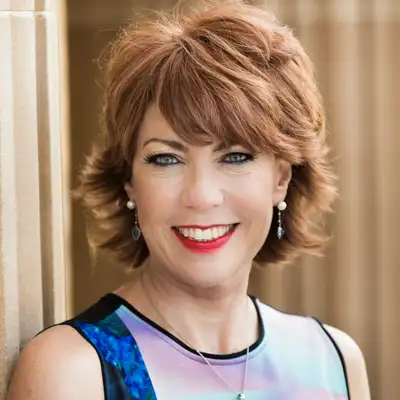
She calls herself a mischievous feminist hornbag. We call her the woman who proved humor can be sharper than any sword. This is Why Do Think You Could Do That? I'm Sam Penny and this is Kathy Lette. Kathy, welcome to the show.
Kathy Lette (01:29)
I'm so honored to be called a Hornbag. Thank you. That's the ultimate accolade for me.
Sam Penny (01:36)
That's absolutely fantastic and quite all right. And I'll call you a horn bag as much as you like. Now, Kathy, I'm really looking forward to this, this episode because you've had such an amazing career to date. But obviously everybody starts off as an ordinary person. I want to go right back to the start. Every good book obviously starts at the beginning. So where did your story start? What were you like as a kid growing up in Sydney?
Kathy Lette (02:02)
Gosh, well it couldn't have been a more ordinary upbringing. My mum was a teacher, my dad worked in, he was an engineer, worked in optic fibre. His name was Merv and we used to call him Optic Merv, obviously. I've got three sensational sisters and what a great way to grow up with three incredibly funny, fabulous, feisty, inbuilt friends. And I suppose if you, it was interesting when you started asking me about
Sam Penny (02:15)
Ha
Kathy Lette (02:31)
about where your courage comes from and everything. I think if you've got that sisterhood around you the whole time and a ⁓ very loving but also very clever and professional working mum, that's a pretty good role model and a pretty good support system. I always say that women are each other's human wonder bras, uplifting, supportive, making each other look bigger and better and having three sisters, I mean, my God.
Sam Penny (02:55)
Ha ha ha.
Kathy Lette (03:00)
You know when they say, whenever there's trouble, the wagons circle. They're not wagons. These are armored tanks I had around me at all times. And I guess that's what gave me the courage to stand on my own two stilettos and not wait to be rescued by some knight in shining Armani. And my mother having a career was really unusual. How old are you, Sam?
Sam Penny (03:22)
I'm 51. So I was born 73.
Kathy Lette (03:23)
If you want, well was
pretty different for your generation, but in my generation my mother was the only, out of all my school friends, I had the only mother who worked, not just worked, but a vocation, a passionate teacher. She went on to be a principal, she was a principal about eight different schools, everybody loved her. She was an infants and primary school headmistress, so you know that's a pretty good role model to have.
So I guess that's where the carry. Yeah. And you know, when I met, this is how ordering my upbringing was. When I met Barry Humphreys, when I was probably about 19 or something. Cause don't forget I was a bit, I got kind of famous at that age, which is pretty unusual. So I was at a Melbourne comedy festival or something and I met Barry Humphreys there.
Sam Penny (03:53)
That's absolutely fantastic.
Kathy Lette (04:17)
I remember saying to Barry, I think you invented me. Because you know how Dame Edna has a daughter called Valmay who's married to Mervyn, live in a blonde brick veneer in suburbia. My mother's name is Valmay, married to Mervyn, they live in a blonde brick veneer in suburbia. I said, am I a figment of your imagination? And of course we became great friends at that moment. We stayed friends until the day he died. just lived behind me in London. Every time we got home from overseas, he'd ring me up and say,
Sam Penny (04:23)
Yeah.
Kathy Lette (04:46)
because our houses backed onto each other. He'd say, Kathy dear, I'm poised at your rear entrance, something like that. So it was really magnificently, gloriously normal upbringing, except that my parents were very adventurous. When I was 12, they decided to take their long service leave. Isn't long service leave a brilliant thing? Where when you've worked for, I don't think it's only Australia that has it, as far as I know. ⁓
Sam Penny (05:09)
love it. I wish.
I have no idea.
Kathy Lette (05:16)
If you work for the government, you get paid half your salary for a year to take a year off and refresh. After you've worked for 20 years or something. It's genius. So they decided...
Sam Penny (05:30)
So you're
12, where did your parents take you?
Kathy Lette (05:32)
took us out of school. came to London, the four girls, my oldest sister was 13, I was 12, then we had one who was maybe eight and one who was four. And we came and lived in London, Mum taught here, Dad, you know, flew off to Scandinavia to learn how to get his explosives license. I sometimes think maybe he was a spy actually. And we went to school here and then we got in a camper van and went all around Europe.
And then we went to America and flew across and drove across zigzag across America in a caravan and then came home. We were away for a year. And I look back now, they were insane. Have six of us in a tiny little camper van. we did correspondence. took our, remember the School of the Air. Remember if you live in the outback, you get something that was called Correspondence School where they sent you your coursework.
Sam Penny (06:11)
Well...
Kathy Lette (06:32)
So we took all our work with us and we were learning about the Leaning Tower of Pisa while looking at it. So it was kind of brilliant, but also insane. My mother looks back now and says, what drugs was she on to even attempt this? That was pretty special. So I haven't thought about it till you've just asked me that question, but clearly they both have a big adventurous spirit, which obviously I've inherited.
Sam Penny (06:58)
So you were only 12 when you went on this adventure and then only about, what, four years later you started writing Puberty Blues with one of your friends. But during this period, were you a rebellious kid? You've just had this amazing adventure across Europe and the US. Were you rebellious?
Kathy Lette (07:08)
Yeah.
Yes.
Oh, God, yeah, because I was like a straight A student. was school captain at primary school. was sports captain. Like, was just, my mother and father were so proud of me. They thought that's kind of golden girl. And then I got taken hostage by my hormones at 13. Just started boys and then that was it. I went totally off the rails, know, sneaking out at night, meeting the boys in the panel van, going down to Kernell, we used to go and pull bongs.
in the, you know, you know what bongs are, they still use bongs? Yeah, okay. I don't know. All I know is that all the suburban fathers couldn't work out why their garden hoses were getting shorter. They thought they were shrinking. And I wrote an article about that for the Sun Herald once about explaining why to suburban dads why their garden hoses were getting shorter. And it was raised in parliament by Senator Bowen we used to call him, bong on Bowen.
Sam Penny (07:50)
Yeah, yeah. I don't know if they use that word. ⁓
You
Kathy Lette (08:16)
And he got us, because we had a little column with my girlfriend. We wrote a column by the Salami sisters in the Sun Herald once a week, which was a kind of funny, subversive, irreverent look at teenage life. Because we were only 19 or 19 and 20, I guess, when we writing it. And he had this raised in Parliament saying that the Sun Herald was employing girls who were teaching the
the youth of Australia how to do drugs and we actually got the sack but we had a fantastic editor called Max Suich and he ⁓ sneaked us back into the Sun Herald but without our byline but all our little cult following knew where we were. yeah I guess I've always been pushing out the envelope but not for any sort of, not in a calculated way, it just comes naturally. I guess it's the Irish Celtic.
Rebellious streak. Are you Celtic, Sam? What's Penny is an English surname, isn't it?
Sam Penny (09:17)
Yes, English, I think there's English, Scottish, Irish, I don't know. There's, you know, everything that's white Anglo is in there, pretty much.
Kathy Lette (09:21)
Yeah.
Well, I just
did that show, Who Do Think You Are? and worked out that I'm 50 % Irish from Tipperary and the rest of it is Scottish and Norwegian. from the Norwegian side, I got the feisty feminists, know, Scandinavian women are so strong and I could see feminists right back through my story. But from the Irish, you the mystery of yeah.
Sam Penny (09:49)
So talking about Feisty Kathy,
you're 16, your mom's a principal at a school, your dad's an engineer, you proclaim to them that you're gonna drop out of school and become a writer. This sounds like it's definitely something in your genes.
Kathy Lette (10:08)
It was traumatic though. mean my mother particularly is passionate about education and for me to and I'm still a straight A student or except for math. I always say Australian women are bad at math because we're always told that six inches is ten inches by the men. But anyway yeah it was very traumatic and my mother was heartbroken when I left school and I told her
I was already busking on the streets for a living, can you imagine? I came home from school one day when I was 15 and my dad goes, how was school today? And I go, it was great. I just lied my head off. And he said, that's interesting because I was in Martin Place where the GPO used to be there. And I looked out the window at lunchtime and I saw you busking in Martin Place. And hidden in my school uniform behind a rock.
got into town. But I think I was still being entrepreneurial. I was earning money. So I mean I was a horrible, horrible, horrible teenager in every single way. But when I told my mother and father I was writing this novel, and I said, look it's good, it's pretty graphic about sex in the back of panel vans and whatever. I said to my mum, do you want me to write under a pseudonym? I had a fantastic pseudonym, Sam. I was going to call myself Sue-denim.
Come on, that's good. Very good. But she was like, I remember she said, she was.
Sam Penny (11:31)
Oh, that's brilliant. Yeah, for a
16 year old, you just go, oh yeah, how genius am I?
Kathy Lette (11:38)
No, no, no, no. When I told her I was going to use a pseudonym, I remember she just said, Oh, don't worry, darling, I don't think that book's ever going to get published. Of course she would say that. I'm 16. And then when it went on to be this overnight sensation, and it was, I mean, it was a bit of a roller coaster ride to go from nonentity to overnight notoriety. And as you mentioned in your intro, my mum was getting not,
Sam Penny (11:51)
You
Kathy Lette (12:06)
not death threats but you the trolling of its day was anonymous phone calls so she anonymous phone calls from people saying call yourself an educator and teacher when you've raised a slut like that as you said blah blah blah and and they my mum is Protestant she's still alive she's beautiful she's 94 my dad sadly died 10 years ago but they went to different churches dad's Catholic mum's Protestant they'd go to their churches each week and you know the congregation would be horrified that
Sam Penny (12:12)
Mmm.
Kathy Lette (12:35)
they'd raised this rebel girl. I think it's, she, Mum didn't tell me that at the time. She only told me that, you know, not that long ago. So I think it was really hard for them. But I'd left home by, I mean, I left home at 16. So I wasn't, I wasn't dealing with it day in, day out. But, and my dad, didn't, actually my dad didn't speak to me for about a year. He was so upset. But of course it's, we have a very loving family. So in the end, you know how my father started to, you relate to this as an Aussie bloke,
when my dad was upset about Puberty Blues and he was really scandalized and he told my sisters, she's out of the will, not that there much money, but she's out of the will and my sisters, even my little sisters got together with me and said, don't worry, Kath, we'll share everything with you, which is so adorable. But anyway, after my dad hadn't spoken to me for a while, quite a while, I then got a...
he rang me just, he knew I'd a second hand car and he rang me to say, so yeah, well better bring the car down so I can check the tire pressure and the carburettor. And I was like, okay. I took the car down and he fixed a few things on it. You the next week he said, you better come down so I can check the fan belt. down, checked the fan belt. You know, and every time I went, he did more and more things on my car. know, Australian men show their emotions through.
Sam Penny (13:58)
Hahaha.
Kathy Lette (14:01)
through the car, right? And I remember we had a really bad fight one day about, I don't know what it was, women's rights or immigration or something. And I thought, oh no, we've lost all this ground we've made up. Because what if dad fixes your car? That's like writing a Shakespearean love poem. And then we'd lost all this ground. And then he just turned to me and said, so how many miles are you getting to the gallon? And I was like, oh, phew, we're back on track.
So dads relating to their daughters through their cars is a very Aussie thing. If your partner was here right now, she'd absolutely get what I was saying.
Sam Penny (14:41)
Yeah,
most likely. So what was it really that pushed you to become a writer to start off with?
Kathy Lette (14:50)
always loved writing. used to win all the competitions at school. I can remember winning my first literary competition, only a little school thing, when I was eight. And I loved writing. I loved creative writing and I loved English and all that sort of stuff. But what motivated me to write Puberty Blues with my girlfriend was the sexism. Because when you're 13, I mean you have no objectivity about what's happening to you.
You think it's normal. We thought it was normal for girls to be treated like a life support thing to a pair of breasts. mean, the terms for women were so brutal. were bush pigs or maggots, or if you're good looking, you're a glamour maggot, for God's sake. The terms for sex were rooting, tooling, plugging, stabbing, poking, or meat injecting.
Sam Penny (15:47)
Meat
injecting.
Kathy Lette (15:48)
Yeah, it was very brutal. But by the time I was 15, was getting a little bit more objective about what was happening. I just thought, this is wrong that the women are treated like this. So I stopped being a surfer girl at 16 and started writing about the experiences with a fresh, with a kind of objective eye.
And was really, Gabs and I wrote Puberty Blues really for our other surfy girlfriends to say to them, this is not right, that you're treated like this. It was like a manual to say to them, you're not just a piece of meat. And we weren't allowed to surf. The end of Puberty Blues where the girls go get a surfboard and go surfing, we really did that. We bought a surfboard, we went down to the beach, the guys, our boyfriends were horrified that we dared
to get a surfboard and the girls were scandalized too because they always take, in the patriarchal world, they always take the man side. And we got dropped that day. We had so much fun. So that gave us the good idea for the end of the book as well. But yeah.
Sam Penny (17:01)
Did you think it would become
such a huge scandal, this book?
Kathy Lette (17:06)
No, no, mean really we just wrote it for our girlfriends, just to send it out to our surfy girlfriends to give them a laugh and also make them look at how they were being treated and realize that it was deeply unfair and misogynistic and horrific. then we started sending it out, I read something in the, there was a Nation Review, is that what it was called? There was a kind of left wing
Fairfax magazine and Anne Summers was writing in it. Do you know who Anne Summers is Sam? know Anne? Oh she's a leading feminist, Australian feminist and she wrote a piece about gang rape in Queensland and I thought oh she'll understand what I'm writing about so we sent her some of these chapters and then we had we did decide to send this little book out to we sent it to about 10 publishers who all rejected it and then we sent it to Anne.
Sam Penny (17:40)
No.
Kathy Lette (18:04)
got it straight away and she sent it to a small feminist publishing house in Melbourne called McPhee Gribble and they immediately got it as well and then they just did a tiny print run and then it went VOOM! So it was quite a wild ride there but it definitely was a
Sam Penny (18:23)
How many
copies did you end up selling?
Kathy Lette (18:27)
I don't even know. It's still in print. It was on the school curriculum for a while. It's it's a cult book. I mean, I'm very, really proud of it. I mean, if I walk, when I'm walking around, I live in London, nine months of the year in Sydney, three months of the year, or about, about six and four now. But when I'm walking around London, I'll be walking around Piccadilly Circus and some Aussie kids will see me and they'll call out across the road, go get me a Chico roll and don't take a bite out of it or you're dropped. Or they'll say, hey.
rack off you fish face mole. I'm like so proud. So proud of my contribution to the vernacular. So yeah, it's a bit like, I don't know when you last read it, but it's a bit like straight Vegemite, no bread and butter. It's very astringent. It's very spare. And when I was writing that book, I know I was reading Ernest Hemingway at the time, because I'm an autodidact. It means self-taught. Obviously, it's a word I taught myself, But I was reading Hemingway at the time.
Sam Penny (19:24)
Yes.
Kathy Lette (19:26)
And as you know, Hemingway writes in no adjectives, no adverbs, incredibly spare prose. And that was the influence on me. And just as well, I did write it that way because it's so easy to read. It's so accessible. We know boys don't read fiction much. But that wasn't too demanding on them. So yeah, I'm really, really proud of
Sam Penny (19:54)
So there must have been a huge amount of backlash against you personally. And you were so young. I think you were 19 when the book was published. How do you handle, you know, going from nothing to notoriety, having so much backlash thrown at you? How do you cope with that when people just don't like what you're doing?
Kathy Lette (20:02)
Mm. Yeah.
⁓ I think it was a bit scary and I did run away from it for a little while and I didn't write another book. And also that book was so successful and so seismic that ⁓ I decided to, I couldn't follow it up with anything. So I wrote plays, I did two plays after that. And then I finally got the courage at about age 24 to do another book. And I wrote a book called Girls Night Out, which was about
being a single girl around Sydney, know, trying to find a man who wasn't married or gay, or married and gay, being Sydney, or just a guy who didn't think monogamy was something you make dining room tables out of. So that was a, and that's, it was a discontinuous narrative. So the same characters turn up in different stories. It's like a kaleidoscope, but by the end they're all together on a big girl's night out. And it was a, it was a very honest look at life for ⁓ women in,
at that time, this is in the early 80s, because it seemed to me the double standards when it came to sexuality hadn't changed from the surfy days. know, like a guy, when I was growing up, a guy who was sexually active was a love god, know, a stud muffin, a Romeo, Lothario, a spunk rat, as we used to say in Cronulla, and a girl with the same sexual appetites, a slut, a tart, a tramp, a mole.
And I still don't think that's changed today. I still think many men expect women to be so virginal. He's like, darling, darling, am I the first man to make love to you? To which the woman replies, of course, I don't know why you mean that. Same silly question. But anyway, so I was so appalled at that double standard that I wrote Girls Night Out as an honest account of what it was like to be a single girl in Sydney and the hypocrisy.
Sam Penny (21:55)
Of course.
Kathy Lette (22:12)
and also the way women were still being exploited by men. Like this is an example, Sam. My first, it's hard to imagine what it was like for women then when there was no HR, there were no sexual harassment suits, there was no one you could complain to about the way you were being treated. And my first job interview, I already had a book out, I already had a column in the newspaper, like I wasn't green. So was about 22, I guess, maybe.
And I went for job interview to start appearing on television. I won't name names or talk about which channel it was. But I go for my job interview. There's five men in suits, some of them quite well known, sitting in a semicircle like that. I sit opposite them. And one of them whacks $10 on the table and says, oh, I bet I can make your tits move without touching them. And I go, oh, yeah, OK, whatever. He leans over.
mauls my breasts and said ha ha ha you won there's the ten dollars so I said I bet you 20 bucks I can make your balls move without touching them I kicked him between the legs okay he's rolling around in agony the other guy hysterical with laughter they think this is the funniest thing they've ever seen got the job hello but I thought today you'd have a you would have a sexual harassment suit but then
Sam Penny (23:23)
Ha ha ha ha!
Kathy Lette (23:39)
There was no redress. All you could do, every day I went to work, when I worked at this TV station, I'd strap on a bulletproof bra before I walked in the door to deal with the double entendres, to deal with the comments about my looks, my breast size, my desirability. Was I rootable? That was the guys that go, how rootable is she? You know, they'd rate you. And there was nothing you could do except fire back. So I learned quite young.
to give back as good as I got. So I call it the black belt in tongue foo. So, and actually Sam, I don't know who your partner is, but I'm sure she's strong and funny and feisty, because you are.
Sam Penny (24:23)
She's Italian and feisty, Kathy.
Kathy Lette (24:25)
⁓
Well the thing about women is that we aren't as physically strong as men, but we are more verbally dexterous. We use on average about 400 more words in our daily vocabulary. and I always, when I go to schools and give talks to girls, I always say to them, if you go out at night and you're all dolled up, you're underdressed unless you've got a couple of one-liners tucked up your trouser leg. Because if you do meet a misogynist and a bully and he's trying, and he's...
saying sexist things to you, if you can take him down with a brilliant one-liner and make other people laugh at him, you completely take away his power. So it's a skill women should, you know, cultivate and it's part of our armoury. So and I did learn that. ⁓
Sam Penny (25:11)
But Kathy,
you're clearly a very articulate, smart woman. And for you, this wit comes so naturally. But for a lot of women and guys as well, when they're under the pressure, when they're being faced by derogatory comments, those kinds of things, trying to find the courage to say something as opposed to just shrinking and running away.
You clearly can, you know, take the bull by its horns, whereas others might find it very difficult. So how do people overcome their fear of what you've been going through throughout this period?
Kathy Lette (25:56)
⁓ Well, for women, our problem is we're brought up to be decorative and demure. Whenever a man and woman start talking at the same time or the research shows the woman always pulls back, we're far too polite. And the wonderful thing that happens to you post-menopause is you no longer care what people think about you. And women find this so liberating that they can actually say what they think for once.
Sam Penny (26:18)
you
Kathy Lette (26:26)
And the other thing that happens is that your estrogen goes down a bit. That's your kind of caring sharing hormone and your testosterone comes up a little bit. So you get a little bit more feisty, a little bit more like a little bit more selfish, a little bit more like a bloke actually. I mean, we all take HRT, me and a lot of my girlfriends and we take a little bit of testosterone. can, now I know why men, men are so lucky. You've got this rocket fuel all the time.
You know, and it's just so wonderful to feel empowered and really not to care. So I guess the reason men, you were saying, why don't men say more often say what they think and stand up for themselves. I think a lot of them do in my experience, but the ones who don't are probably the ones that I would like. They're probably the more empathetic, more beta male types. But humor, see, humor is the key. Humor is so disarming.
Sam Penny (27:12)
Ha
Kathy Lette (27:22)
If you can disarm with charm, you've got a much better chance of getting your message across. So that's why, you all my books, I think they're feminist, but I hope they're funny. Because if you can make someone laugh, you can slip the medicine down more easily. And in social scenarios too, you know, if someone is belittling you or making you feel bad, it's just humor is your your best defense mechanism, you know. ⁓
Sam Penny (27:33)
they certainly are.
So how does a woman then, you know, channel Kathy Lette in her workplace where she is, you know, coming up against the misogynist pigs? How do you have that bravery? How do you overcome that fear of standing up for yourself?
Kathy Lette (28:07)
Well, first of all, I always say to women when they read my books, take the lines in the books. I I love to write jokes and punch lines and one liners and stuff. It just comes naturally to me. Take those lines. Learn a few. Have a few ready so that you can, there's many, take as many as you want. They're there for you. They're like bullets, you know? So learn some. And also you've got to keep saying to yourself, if not now, when?
I mean, tempers is fugiting like there's no tomorrow. So, you know, be bold, be brave. You never know what's around the corner. I mean, I'm 66 now or Sexy Sex as I prefer to call it. But, but ⁓ I, and I often joke and say, ⁓ I'm having adventure before dementia. Not that I'm making light of dementia, it's a terrible disease, but you never know what's around the corner.
Sam Penny (28:50)
66. yes, glamorous.
Kathy Lette (29:07)
Why wait another nanosecond to have fun and be fabulous? And especially to women my age having their, know, once they've cut the psychological umbilical cord that kept them tethered to the kitchen by their heart and their apron strings for all that time, you know, women can post menopause, can put themselves for the first time in their lives. So, you know, I just want them to go forth and be fabulous and have a sensational second act because as I said to you, if not now, when?
you know, why wait another second? So the books I'm writing, the books I'm writing now like The Revenge Club and HRT, Husband Replacement Therapy and those kind of books. I wrote those, I'm writing these books to empower women because whenever I read books about women my age, they're always, you know, depressed and lonely and they're living in some drab little flat with a cat and they die of...
Sam Penny (29:37)
Exactly. Yeah, that's...
Kathy Lette (30:02)
misery and they finally get eaten by their cats, you know. And I don't know any women like that. All my women friends are probably like your partner, like they're swinging off a chandelier with a cocktail between their teeth. And, you know, it's the best time of your partner's obviously not, she's what, she's early, is she 50s? In her 50s?
Sam Penny (30:19)
No, she's quite a bit younger.
Kathy Lette (30:22)
quite a bit younger. Well, anyway, the women, you know, women, the women I know at this age are in the prime of their lives. And I said, that's what I'm trying to celebrate in my work now is just as I tried to liberate teenage surfer girls from the strictures, you know, that were holding them back. It's the same now with older women. I'm just trying to encourage them to be selfish for once.
And, you know.
Sam Penny (30:51)
Well, Kathy,
that's what exactly this podcast is about. It's called Why'd you think you could do that? Because it's all about making people recognise that this is the only life that they have. And you know, like the women you're talking about, if they've missed their first 60 years, they still have time to go out and have adventure, share, you know, live the dream. You have to be selfish because it's not someone else's life. It's your life, isn't it?
Kathy Lette (31:18)
Yeah, but also to women this age, would say don't let your guilt gland throb. Women have a guilt gland. Mothers feel guilty about everything. But just think of what you've sacrificed. Think of the acres of toast you've buttered. Think of the flocks of lamb you've roasted. Think of the schools of whatever, what do call, what's a collective noun for beef? Herd. Think of the herds of beef you've baked.
Sam Penny (31:45)
Yeah
Kathy Lette (31:47)
You know, women, mothers, we always put ourselves last. We always get the burnt bit of toast and we'd never think of having a window seat on a plane, like first world problems. But we're the lowest of the low in the family structure. So you don't need to feel guilty. You've earned it. You've earned it. So just go out there and do it. And that would be my main message. also, I think for women, life is in two acts.
The trick is surviving the interval, is the menopause, which is pretty ghastly. I'm warning you, Sam. When your partner gets to the menopause, the only word you want to say to her is yes, whatever she wants.
Sam Penny (32:28)
⁓ Kathy,
look, she's she's 40. She's already convinced she's going through menopause. And she uses it as every excuse for for being angry at me.
Kathy Lette (32:42)
well, listen, are you annoying? Do you do things? Do you help around the house? Are you actually a good partner?
Sam Penny (32:49)
Yes. Well, I
would, I would hope to think so, but sometimes you just feel that you're
Kathy Lette (32:55)
well, let me tell you, the
only thing women really want in bed is breakfast and a very good book. So if you bring her up breakfast occasionally and buy some good books to read, then I'd say you're ticking the right good partner boxes. But I was going to say about the second act is that, you know, once women get through the menopause, which I always say is, you know, it's awful. You you sweat more than Donald Trump doing a Sudoku.
Sam Penny (33:11)
Okay.
Kathy Lette (33:21)
Once you get through that, it is the best time of your life. No pregnancy scares, know, no period cramps, you've got all that tampon money to spend. It is, no one talks about the positive side that I'm telling you. It is liberating. So yeah, I think women come into their true selves at this time of your life.
Sam Penny (33:42)
So your career, Kathy, 20 books, I think it is at the last count, is very much a mirror of your life. It's almost reads as an autobiography. Why is it that you feel that you should write about your life, even though you changed the names here and there? Why do you feel that it's important to share each stage of your life in such an open way that you do?
Kathy Lette (33:47)
Yeah.
Yeah.
Sam Penny (34:12)
being a mother, ⁓ autism with Jules, ⁓ HRT, all these kinds of things. How to kill your husband, you've been married a couple of times. There's so much in there. Don't worry, I forgot to put that part in. They are both still alive to this day that we know about.
Kathy Lette (34:23)
It's still alive. It's still alive, I hasten to add.
friends with it as well.
Sam Penny (34:34)
⁓ Why is that? Why is it such a mirror of your life?
Kathy Lette (34:40)
Well, I always write the book that I have to wait till something's bubbling up in me that's making me crazy. And it's usually some part of a woman's life where she's being discriminated against and where life is not fair. And I always write the book I wish I'd had when I was going through something. It's like a manual for the next generation of women coming up behind me. And so I'm a passionate feminist. I champion women in all of my work because it's still a man's world, Sam.
You know, we don't have equal pay, we're getting concussion hitting our head on the glass ceiling and we're supposed to clean it while we're up there. You know, then at home we've got also the, not just the pay gap at work, we've got the domestic gap where we hit our head on the domestic glass ceiling, because I would say that even though we would make up 50 % of the workforce, we're probably doing about 99.9 % of all the housework and childcare. And then there's also an orgasm gap. There's a pleasure gap.
The research shows that for every five orgasms a heterosexual male has, heterosexual woman has one. So the only women who have pleasure parity with heterosexual men are lesbians, because you know, it's only a slip of the tongue, Sam. you know, so it's just such an unfair world for women. And just to be serious for a minute, more serious, you know, women's rights are slipping back all around the world.
Sam Penny (35:52)
Yep.
Kathy Lette (36:06)
I mean, in America, a woman born in America today has less rights than her grandmother did. know, look, yeah, the abortion bans in America, in Afghanistan, women being erased, in Iraq, never has a haircut been so political. You know, sexual attacks are sky high, convictions, rape convictions, limbo low. You've got upskirting and stealthing and grooming and revenge porn. I mean, it goes on and on and on.
Sam Penny (36:13)
Wow.
Kathy Lette (36:36)
So, you know, women have to be vigilant about our rights, especially for our daughters. We don't want them to inherit a worse world than we grew up through. The great success though, Sam, I would say, is the Me Too movement. Because the thing about women is the sisterhood is powerful. Once we get together and we stand together and we speak out together, we can change the world. And I think those top order prejudices are still there.
They've kind of maybe crawled under the rock a bit, but they're still around. But they're not as emboldened as they were when I was growing up. So I mean, that's one thing that has changed for the better for women. And that's because we acted as each other's human wonder bras, know, uplifting and supportive. And that's why...
Sam Penny (37:20)
So how do
you use your voice, Kathy? You have such a great voice ⁓ and such a great personality and someone who's so well known. How does Kathy Lette come out and try to change the world?
Kathy Lette (37:38)
with humor, with humor. as I was saying, you I wait, I wait till what's driving me mad, you know, what I've just been through, you know, the horrors of pregnancy and motherhood and, you know, trying to juggle kids and career without any domestic help from my partner, all that kind of thing. Whatever's driving me mad, I then turn it into a hopefully funny witty story that's also empowers women. And then I, and then I, then I,
I guess I always say if I have any gifts at all as a writer, it's putting into words what women might be thinking but not necessarily saying out loud because I've got a lot of chutzpah and I'm bold enough to do that. And I also just write down the way women talk when there's no men around because women are funny. I think our humor is quite different. mean, you're obviously a charming guy, Sam, and I'm sure your male friends are funny, aren't they? That lovely Aussie humor.
Sam Penny (38:29)
Thanks, Kathy.
Kathy Lette (38:34)
When you go to the pub, you have a great laugh. But you probably tell... Yeah, yeah. I think all my male friends are very funny and tell great jokes and stuff. At Women's Humor, we never tell jokes like that. Our humor's much more cathartic, confessional, self-deprecating, candid. I mean, we strip off to our emotional underwear in 3.6 seconds, and it's a psychological strip tease that reveals all. We tell each other everything.
Sam Penny (38:37)
Yeah, yeah.
Kathy Lette (39:03)
And it's hilarious when you go to girls like that you have to be hospitalized from hilarity. And a lot of, not a lot of men understand how funny women are because they talk over us. But if you could hear us when we're together it is brilliant. So I just try and capture that on the page. And I think also because my mother's a teacher and I was going to be a teacher like her, like her mother before her, before I, you know, my life took a different path.
I do have a strong urge to educate. So I think I don't have a blackboard, but I have a biro and I have book and have loose leaf foolscap paper. And I think I have a strong urge to sort of help women make sense of the world and help them find their way through it. Yeah. to me, it's better than winning the Booker Prize is when a woman comes up to me at a book.
launch and says whatever book it was, got me through a really bad time in my life, made me laugh, it cheered me up, it taught me a way to get through grief or heartbreak or rejection or whatever. I think, that's so great, my job is done. I just find that so rewarding and enriching. yeah, luckily enough I've been able to spin my obsession into a career. So that's good isn't it Sam?
Sam Penny (40:32)
That's amazing. Was there ever a moment where you felt like you had gone too far?
Kathy Lette (40:36)
No, I would say there's a moment where I wish I'd gone further. know, there's a, I wish, the one thing I never talked about was the fact that I have an autistic son because I didn't want to invade my son's privacy. So I waited until he was 21 when I wrote The Boy Who Fell to Earth and then the sequel, Best Laid Plans. But I wrote The Boy Who Fell to Earth and even then I felt really nervous about
⁓ you know, as I said, invading his privacy. But I showed him the book and he read it and he said, well mum, it's a celebration of idiosyncrasies, eccentricities and being different. And I was like, that's exactly what it is, Jules, thank you. And with his permission, I very tentatively started to talk about the fact that I'd raised an autistic son, which I hadn't talked about ever. And it was so cathartic for me. But I also learned it's always better to shine a light into a dark corner.
Only positive things came from doing that. And I wished I'd written it much, much earlier. Why did I wait so long? It was ridiculous when I've always talked so candidly about everything before. And once you talk about something, it allows other people then to talk about their similar experiences. So it's enabling in all sorts of ways. And of course, I'm so proud of Jules. whenever I write about autism, I try and put a
It is very challenging at times.
Sam Penny (42:07)
it's interesting, Kathy, because I think I read that when Jules was diagnosed, he was about three or four or so. ⁓ And how did you feel when he was first diagnosed? Was it a relief that it brought answers with it? Or was it something else?
Kathy Lette (42:16)
Yeah,
I
think this was a long time ago, he's 30, how old is he now? He's 33 I think, or 34 is what I So this is a long time ago when autism was the A word. that was a diagnosis that dragged you down into the dark. Nobody talked about it, no one understood it. So.
I think parents of special needs kids, go through various stages. The first stage you go through is denial, where you can't believe it. You bankrupt yourself seeing every medical expert in the country. I I hate to think how many doctors' children I've now put through university. And then you go through a stage of grief, where you blame yourself. You think, was it something I ate? Was it something I drank? Was it that one glass of wine in the final trimester?
if only I had Feng Shui'd my aura like Gwyneth Paltrow, know, it all would be well. And then you go through a stage of feeling a bit sorry for yourself where you probably drink a little bit too much Chardonnay. And then eventually you just come to the conclusion that, you know, this is the little person you've got and you've just got to do your best by them. And what Jules has taught me since then is there's no such thing as, well, there's no such thing really as...
as ordinary. I would say there's ordinary and well no, let me rephrase that. There's ordinary and then there's extraordinary and people on the autistic spectrum have a literal lateral tangential logic which is truly original and fascinating. I think we all have to just stop trying to make autistic people act normal. We have to think outside the neurotypical box and celebrate them for their differences.
Because you know, they have the garlic in life salad. I love garlic. And without autistic people, human beings would never have got out of the cave. I heard this great guy, this autistic scientist talking on the radio one day. And he said, well, you people think we're weird the way we don't make eye contact and the way we don't make small talk. He said, we think you're weird. The amount of time you spend being nice to people you don't even like. And I thought, that's so true.
Sam Penny (44:21)
Ha ha.
Kathy Lette (44:45)
If it wasn't for autistic people, wouldn't have, you know, space ships and, I don't know, submarines and, you know, all the people who kind of pushed out the envelope in some way, they're probably on the spectrum. you know, they think in years to come, they'll be able to rewire the brain and change the autistic neurological pathways to more kind of regular, normal pathways. But if so doing, you know, you'll lose...
Van Gogh, Einstein, Orwell, Steve Jobs, Bill Gates, all these amazing people who have made the world a better place. yeah, it's interesting. I just think we need to learn to celebrate people for all their differences and just be more embracing and tolerant and kind. And Jules has definitely taught me to be more compassionate and less judgmental. And that's a really good thing.
Sam Penny (45:31)
100.
Is there a chapter of your life that you haven't written about?
Kathy Lette (45:42)
yes, one or two. One or two.
Sam Penny (45:49)
Are you gonna share that or? ⁓
Kathy Lette (45:51)
Not right now. I'm thinking
about writing a memoir or I might have to call it a mumoir because there'll be a lot about autism. Although Barry Humphrey said I should call it let bygones, which I really like. But the one I want to call, I think I might call it while you're down there because that works on so many, know, downtrodden woman and every other level you can think of. So I might have to save a few little chapters.
Sam Penny (46:00)
mumoir
Kathy Lette (46:20)
for that Sam. I'm not going to do a psychological strip tease for you right now, maybe in that later.
Sam Penny (46:25)
⁓ well lighter then.
So what do you like to do in your spare time when you're not writing books? Is it spending time with Jules, your daughter Georgina, catching up with friends? What does Kathy Lette do?
Kathy Lette (46:39)
all of the above. I mean I have a lot of energy so I do go out. I never turn down an adventure. Yes is my favorite word. And I would also say that to people who feeling nervous about fulfilling their dreams or whatever or ticking off their bucket list. I mean just put a big word yes next to the on your wall and just try everything. You never know where it will lead. So I go out a lot. I meet people.
I'm like, I guess writers are like anthropologists on L plates in a way. So I've got a bit of a Margaret Mead, I go into Margaret Mead mode. So whenever I'm out, I'm always on the sniff for a character or a story or whatever. I find all that exciting. I do a lot of travel. I'm a travel writer. So I get to luckily go right around the world. I love going out dancing with my sisters and my girlfriends. I just think embrace the fun because
You know, Putin or Trump could blow us all up tomorrow. I mean, the world's so precarious right now. So, and whenever I want to, when I'm about to turn down a pleasure or adventure or whatever, I imagine those women on the Titanic who turned down the creme brulee. Imagine they're on the ice flow, freezing to death. They're thinking, I could have had pudding. And I didn't. my waist. So yeah, just always, just let that be your motto.
Sam Penny (48:00)
Yes, exactly.
Kathy Lette (48:07)
I could have had creme brulee on the Titanic.
Sam Penny (48:12)
And I also saw on your Instagram you're getting into ocean swimming. How do you like that? Have you? Of course. Getting out blowing bubbles.
Kathy Lette (48:16)
I've always loved I'm a surfing guru. Yeah, yeah, I've always loved swimming. Yeah, we weren't allowed to swim.
We weren't allowed to swim, although we had to wear crocheted bikinis. I crochet, do you know what crochet? Just absorbs the water. It goes straight to the bottom. No, I love swimming. That's right, exactly. I love swimming. So one of my sisters is a really good swimmer. So we swim together all time. Although,
Sam Penny (48:29)
Yeah.
hang down around your knees.
Kathy Lette (48:42)
I think the reason Australia swims so fast is because we're always looking for sharks. That's a great motivation to get your laps over quickly.
Sam Penny (48:50)
Well, next time you
come to Australia, you'll have to come out for Sam's swim of death. I don't know why my friends call it whenever they go swimming with me, ⁓ because we go out and swim under the shark nets and all those kinds of things. Heaps of fun, but it's heaps of adventure. So you'll have to come out next time, come to Noosa. And we're gonna do that.
Kathy Lette (48:56)
⁓ God.
I work in publishing. I have enough sharks in my life. Okay? I do not need to encounter them in the water as well. God, you are a brave and a bold one. No, that's not for me. In fact, I always make the man swim on the shark side. You they used to make men walk on the side of the pavement where they might get splashed. think the new etiquette, the Australian etiquette should be the man must swim on the shark side. Yeah.
Sam Penny (49:18)
Ha ha ha.
Where the car is, yes.
You know, interesting you say that because that is exactly how we swim when we go out in the ocean. So ⁓ yeah, some of my friends, female friends who are great swim. So I've like swum English channel and stuff like that. And my other friends, yeah, so yeah, the girls that I swim with, they've also swum the English channel. They're brave women, but they still put us on the ocean side where the sharks are.
Kathy Lette (50:08)
And it's ridiculous
because there's no logic to that. Sharks will attack anyone. But it just makes you feel a tiny bit better having a boy barrier.
Sam Penny (50:14)
Yeah.
Yeah,
exactly. Look, Kathy, you know, the show obviously is called Why Do Think You Could Do That? You've had such an amazing career to date and clearly a lot more to come. You have made so much ⁓ fun out of taboo subjects. And you've obviously been put up on a pedestal at times, but also shot down in flames or many have tried to shoot you down in flames.
So the question obviously, Kathy, is why did you think you could do that? Why do you think you could do all of this, make a career out of it, be such a high profile feminist and try to change people's lives? Why you?
Kathy Lette (51:04)
Well, first of all, I just felt such a great sense of injustice for women. And it infuriated me. And with three sisters, I wanted to make the world better for them as well. So it was that, wanting to actually make a noise about the way women were treated. And that's always been a burning ambition of mine. And I can't help it. I mean, it just comes as natural to me as breathing.
And I suppose because my mother is a feminist and had, as I told you, had a good career. So I had a fantastic role model in her and in her mother, who her teaching life was a vocation. So I guess it's just a sense of injustice. So I really just write for revenge. I mean, I like to impale enemies on the end of my pen. You know, they say poetic, I was married to a lawyer for 28 years, but I think poetic justice is the only true justice in the world that you can ⁓
Sam Penny (51:53)
Ha
Kathy Lette (52:02)
you can get your revenge by making people laugh at the foibles of your enemies. So I guess, yeah, a lot of writers say, I write you know, to me. My muse descends from the heavens and they're all this airy fairy thing about why they write Revenge, Sam, revenge. And when women get equal pay and when the world has parity,
Sam Penny (52:20)
You
Kathy Lette (52:29)
I would probably not feel the urge to write these novels. But until then, I mean, for God's sake, if only men would just take a year off, let women run the world just for a year. Go play golf, go and swim, do whatever you like. Just give us one year to make the world more equal and female friendly. I mean, I don't think that's asking for a lot. And sometimes men say to me, oh, you feminists want so much. And I go, do we? Equal pay, that'd be nice.
We'd like you to work out that Mutual Orgasm is not an insurance company. That'd be great. We'd like you to help more around the house, which is actually in your interest, as it's scientifically proven, no woman ever shot a husband while he's vacuuming. And we'd like you to do help more in the kitchen. You know, the way to a woman's heart is through her stomach sound. That's not aiming too high. Do you cook?
Sam Penny (53:04)
You
No.
I love cooking. It's one of my favorite pastimes. There is nothing better, Kathy, than spending a day cooking in the kitchen and serving that up to your family. It's a beautiful thing. There's a lot of, ⁓ so much joy in cooking when you recognize the purpose of it. And it's the same as your writing. You have this great purpose throughout all of your writing to
Kathy Lette (53:22)
Right. ⁓ well, a man in a cooking.
You see?
Sam Penny (53:50)
champion women and champion the women's spirit to get that equal pay to get ⁓ parity in just in what should be a normal thing.
Kathy Lette (54:03)
Can I say, Sam, I think nothing, as a feminist, I've been saying the same things my whole life and not enough has changed. And it's not gonna change until boys join us at the barricades. We need men to be on our marches, to be there at the front line with us saying, this is outrageous that women don't have equal pay. You we really need you. And of course, Andrew Tate, that toxic man is taking...
Sam Penny (54:27)
Mm.
Kathy Lette (54:29)
poisoning the minds of young men and taking them into his cult. But we have to not, we have to embrace them and somehow bring them into our world because of course feminism is better for men as well. I how great for a man to be liberated from the idea of having to be the breadwinner and having to be the sort of emotionally stunted, you know, strong, all the time strong, not be able to talk about his feelings. I mean
feminism is about choice and saying well maybe you should be the house husband and I'll be the alpha you know it just makes the world a more open place and more just a freer way of bringing up kids and all of that so we really need men to join us so you know Sam I want to see you at the next march at the front you know wearing
Sam Penny (55:22)
Okay, I'll
take a selfie and I'll send it to you. How's that?
Kathy Lette (55:25)
Yeah,
and handing out the cookies, the biscuits, the baked, nuts, yeah, for all the women.
Sam Penny (55:30)
that I baked. I'm not
a baker, I'm a roaster. So I'll have to cook pork sandwiches or something. So Kathy, along this journey, what lessons have really surprised you the most, especially about people's reactions to you and what you do.
Kathy Lette (55:38)
That's fine. ⁓
What was very tough when I moved to England because the English see Australians as a recessive gene. I came here for love. I didn't come here because I wanted to be here. And a lot of the English people have been at Oxford for so long, they've got ivy growing up the backs of their legs. they have a condescension chromosome. What they graduated in is advanced smugness, especially towards Aussies. And they were so unwelcoming. I came here in 1988, so a long time ago.
They were so rude to me in that very British way. They don't speak English here, they speak euphemisms. So when they'd say to me, oh, you're Australian, so refreshing. For a while, I thought that meant they liked me. And to me, while I work out, Sam, that meant, rack off, you loudmouth colonial nymphomaniac. And I'd be like, how technical. Please, I have my standards. But what I learned at that time, and that was really hard to leave my sisters and my friends and my home and my hemisphere.
to come to a very unwelcoming society. But what I learned, I read something that Eleanor Roosevelt wrote where she said that nobody can make you feel inferior unless you let them. And I just thought, well, I'm just not going to let them. So when they'd say something really nasty to me, I'd get out my notepad at a party and go, that's such a bitchy lie. I'm going to write that down and give it to a real villain in my next book. Thank you so much. Or if they criticized me about
Sam Penny (57:16)
Ha ha ha ha ha ha!
Kathy Lette (57:19)
they'd be very condescending about our penal past. And I'd say, what? I'd tell them, I'd say, must say what my grandma told me when I said I was moving to London. She's like, Kath, you can't possibly go and live in the England. That's where all those terrible convicts come from. And they had no respect. And then eventually, of course, because I didn't care what they thought about me, I learned not to care.
Sam Penny (57:39)
I love that.
Kathy Lette (57:46)
Eventually they sort of grudgingly came to accept me. So that taught me a good lesson. Just you have to not care what people think about you and practice that. You know, find your tribe.
Sam Penny (57:58)
then, Kathy, someone listening to this who ⁓ is inspired by what you do, what you say, what then is one small act of courage that they could take away and start putting into practice tomorrow?
Kathy Lette (58:12)
say what they're thinking. Just say it, don't think it. Say it and then do it. And remember that your female friends are your human wonder bras, uplifting, supportive and make each other look bigger and better. Get your human wonder bras around you and you will just see how uplifted you feel. Let your cups run us over with love. I'm wearing a wonder bra now Sam, it's so cool because when you take it off you wonder where the hell your tits went. So never wonder where your female bra is gone.
Sam Penny (58:39)
Ha ha ha!
Kathy Lette (58:41)
Keep each other close and draw strength from each other. So I guess my message is sisterhood, sisterhood. Find your female friends. Be loyal, be loving and lift each other up.
Sam Penny (58:56)
So then someone listening who thinks that they can't be brave like Kathy Lette what would you say to them?
Kathy Lette (59:02)
Well, as I said earlier, if not now when? What have you got to lose? You know, you've got to learn to, someone can always say no, but if you don't ask, you don't get. And it took me a long time to learn that too, because I was too polite being female, pulling back. But you men are much better at asking for what they want. They call it the, women have the princess syndrome where they'll work really hard and they'll sit working, they'll think someone must notice how hard I'm working and they're going to come out and give me a tiara.
Whereas men will kick down the door, go into the boss and say, I'm fabulous, where's my crown? We have to learn to lean in as Sheryl Sandberg said, lean in, ask for what we want and not be afraid of rejection. And if they say no, just go and ask somebody else.
Sam Penny (59:50)
So do you find it ⁓ easy to keep pushing forward each day to, know, some people might say making outrageous comments and, you know, talking about taboo subjects. Does it come naturally or do you have to keep pushing it? Sometimes you need to pick it up from inside.
Kathy Lette (1:00:09)
Gosh.
No, and also I don't go around thinking, what outrageous thing can I say today? I just try and speak.
Sam Penny (1:00:19)
Now
you may not think it, but I'm sure others might.
Kathy Lette (1:00:22)
I just try and speak truth to power and we live in a patriarchal world and if that means blowing raspberries at the patriarchy on a daily basis, that I will do. But of course I have many male friends who are fabulous. I'm not being sexist about this but I just think keep blowing raspberries and pointing out that certain emperors certainly have no clothes on.
Sam Penny (1:00:30)
Ha
Kathy Lette (1:00:51)
And that's my whole literary raison d'etre.
Sam Penny (1:00:54)
So now, Kathy, I always love to finish every interview with what I call the Brave Five. It's five questions. One doesn't lead on to the other. You ready?
Kathy Lette (1:01:05)
No, I don't know. Let's see. I've only had one coffee this morning. I might need two.
Sam Penny (1:01:10)
It's almost seven o'clock here, so it's almost champagne time.
Kathy Lette (1:01:14)
you're at wine o'clock, you lucky thing.
Sam Penny (1:01:17)
Yeah, exactly. what was or what is the most unexpected takeaway from your writing career so far?
Kathy Lette (1:01:24)
⁓ I was writer in residence at the Savoy Hotel, which was also better than winning the Booker Prize. I've got my own cocktail there called Kathy Cassis No, I've got my own dish on the menu called Kathy Omelette, obviously. And it's a lobster omelette because I do have quite good legs. It's the only thing I've got left. ⁓ Lobster omelette with the legs sticking out.
Sam Penny (1:01:34)
I know, that's fantastic.
you
Kathy Lette (1:01:52)
quite fabulous so I think that was a really good surprise and also I've got a lot of honoree doctrines now.
my mother was so upset when I left school so young, but I've now got three honorary doctorates. that was the one I really want, Sam. There's one called a companion of literature. And you know how they abbreviated? C.lit.
Sam Penny (1:02:04)
Well...
you need that. That is you. That has you written all over it, doesn't it?
Kathy Lette (1:02:14)
Hello.
That would rub me up the right way.
Sam Penny (1:02:20)
Alright, second question. What's the first emotion you felt when Puberty Blues exploded into controversy?
Kathy Lette (1:02:29)
Overawed, staggered, stunned, no idea. It was only written for girlfriends and suddenly it just erupted like Vesuvius. So yeah, overawed, ⁓ but also I suppose thrilled that the message was getting out there, that it resonated in such a big way.
Sam Penny (1:02:54)
Did you revel in it or did you want to shy away from the spotlight?
Kathy Lette (1:02:58)
shy away. was frightening. was very frightening. I was only a teenager. But luckily I wrote it with a girlfriend so we had each other. We had the human wonder bras. ⁓ We were very solid friends and that cushioned a lot of ⁓ the blows that came along with the accolades.
Sam Penny (1:03:08)
Ha
So what's one thing that you wish you knew before you published Puberty Blues?
Kathy Lette (1:03:25)
to ask for more money. ⁓ We sold the film rights. We knew we had to get an agent, because we weren't stupid, so we got an agent at Curtis Brown. But he read the book and just thought it was...
Sam Penny (1:03:28)
Ha ha.
Kathy Lette (1:03:43)
rubbish, you know. So, talk about the patriarchy, he didn't get it at all and he got, we sold the rights for $500 with no escalation clause. It went on to be the biggest box office grossing movie of the time, of its time. We made absolutely no money out of it. So even when we thought we were doing the right thing, we should have had a female agent who would have got it. So yeah, we were writing about the patriarchy and we were being diddled by the patriarchy at the same time.
Sam Penny (1:04:00)
Wow.
So fourth question in the rapid five five Kathy, what is a habit or a mindset that has really made the biggest difference to you?
Kathy Lette (1:04:22)
Always find the funny. Laughter is the best medicine. It will cure all. So no matter how grim, how grey, how gruesome, laugh your way out of it. And that's what your girlfriends are for.
Sam Penny (1:04:39)
Wonderful. And now the last question in the Rapid Fire 5. What is the best piece of advice you've ever received about writing or even just life?
Kathy Lette (1:04:48)
Well, it's not piece of advice I received. It's something that I believe is that, you know, optimism is not an eye disease. Be positive. Go out every day with a positive attitude and never turn down an adventure.
Sam Penny (1:05:07)
Yeah, wonderful. So this is something that I always like to ask only some of my guests, Kathy, and it's all to do with bravery because you've obviously shown bravery all the way through your career. When did you need bravery the most?
Kathy Lette (1:05:26)
I think when my son was diagnosed with autism, that was really, was very lonely and I felt I was just cast adrift. But I have three loving sisters and wonderful parents so I could lean into them. Unfortunately, they were on the other side of the world. I was in England and they were over there. But that's when I had to really dig deep and find my resilience.
Sam Penny (1:05:30)
Mm-hmm.
Kathy Lette (1:05:56)
Yeah, I think that was the toughest time of my life being far from home and terrified about this, this A word, this autism label. I mean, I now think a label is just something on the side of a jam jar and, you know, normal is just a setting on a washing machine. But at the time I didn't know that. And that was a very big battle for me to protect my son that you get this kind of lioness love comes out in you.
but I had no manual. There's no owner's manual for an autistic child and that was really hard and that's why I wrote The Boy Who Fell to Earth as a manual for other mothers and fathers so that they could find the funny, they could find the light in a very dark time.
Sam Penny (1:06:47)
So then what does bravery mean to you?
Kathy Lette (1:06:51)
Bravery means to me having a leg wax or a bikini wax. Like why? No, bravery means to me being true to yourself and having the courage of your convictions. Maybe I have the courage of my convictions because I'm convict stock. You know, my ancestors went out on the first and second fleet to Australia. I am, you know how we have inverted snobbery in Australia? You can trace yourself back to the convicts. That's like,
Sam Penny (1:07:10)
Yes, that's it.
Kathy Lette (1:07:21)
You had to put in royalty, so I am the creme de la crimsand.
Sam Penny (1:07:26)
Yeah, and now you're living where all the criminals came from.
Kathy Lette (1:07:29)
That's
right, exactly. ⁓ I know, ironic isn't it? But I do come, I come back to Australia three or four months a year and I'm trying to swap it around. I've got to be here for my autistic son a lot of the time, that's why I can't can't spend more time, but I'm trying to make it that we move to Australia and we just come back to England for three months for the summer, because it's so much fun. I've got so many great friends here now, but I'm an author through and through as you can see.
Sam Penny (1:07:31)
Ha ha!
Fantastic.
Kathy Lette didn't just write about surfing sex and teenage rebellion. She surfed the outrage turned taboo into comedy.
and showed us that the smartest rebellion can come wrapped in a joke. Her story reminds us that bravery doesn't always mean charging into battle or scaling Everest. Sometimes it means writing down the truth about your world at 17 and refusing to apologise when the world tells you to be quiet. It looks like standing up to critics with a laugh instead of an apology. It looks like proving that every story matters, especially the ones that society tries to hush up.
Maybe you'll never write a book called How to Kill Your Husband. But we all face our own taboos, our own moments when society tells us to stay silent. The question isn't whether you could do what Kathy did. The question is, will you tell the truth, even when it feels impossible? Now, Kathy, for those who want to keep laughing and learning with you, where's the best place for them to find your work?
Kathy Lette (1:09:01)
Well, they can follow me on Twitter at Kathy Lette or on Instagram, Kathy Lette, surprise, surprise. And they can just slip between my book covers, satisfaction guaranteed. Just find my books online or whatever. know, there's 20 novels out there. There's bound to be one that speaks to the stage you're going through right now. And to the men too, I would say, if you want to know how women talk when you're not around, this will be very educational for you. ⁓ But I would say, read it your own.
Sam Penny (1:09:28)
Fantastic.
Kathy Lette (1:09:30)
Read it your own risqué
Sam Penny (1:09:33)
⁓
geez. ⁓ Look, I'll make sure I put all of those ⁓ links into the show notes. And if this conversation has made you laugh, think or even squirm, share it with someone else bravery spreads and so does humour. I'm Sam Penny and this is do you think he could do that? Until next time, keep saying yes to the impossible.