Subscribe
Share
Share
Embed
Have you ever wondered what it takes to build computing systems that work at temperatures colder than outer space? David Reilly and Tom Ohki are tackling this exact challenge, leading a "special ops" team of engineers from their unique position at Emergence Quantum—the startup born from Microsoft's Station Q program. They're not just building quantum computers; they're creating the entire infrastructure ecosystem that will make scalable quantum computing possible.
qubitsok — Cut Noise. Work Quantum.
The quantum computing job board and arXiv research digest built for the community.
- Job seekers & researchers: Subscribe free at qubitsok.com — weekly job alerts + daily paper digest filtered by 400+ quantum tags.
- Hiring managers: Post your quantum role and reach 500+ targeted subscribers. Use code NEWQUANTUMERA-50 for 50% off your first listing at qubitsok.com/post-job.
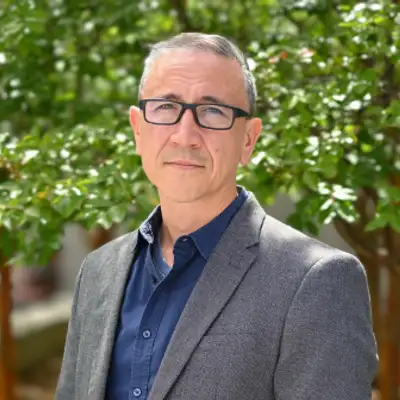
Your host, Sebastian Hassinger, interviews brilliant research scientists, software developers, engineers and others actively exploring the possibilities of our new quantum era. We will cover topics in quantum computing, networking and sensing, focusing on hardware, algorithms and general theory. The show aims for accessibility - Sebastian is not a physicist - and we'll try to provide context for the terminology and glimpses at the fascinating history of this new field as it evolves in real time.
Sebastian Hassinger (00:01.474)
David, Tom, thank you very much for joining me. I'm looking forward to this conversation because I think the stuff that Emergence is doing is really interesting. So David, why don't you start by giving a little bit of background about how you sort of got into the position to found Emergence in the first place.
David Reilly (00:19.637)
Thanks, Sebastian. Let me say also, big fan of the show. I think the service you're doing here for the community in general is really great. Amazing list of guests that you've had on and I think it's very much needed. So thanks for putting this together. We're excited to tell your listeners a little bit about this new company that we've started. Tom and I, co-founders of Emergence Quantum.
Sebastian Hassinger (00:23.97)
thank you.
David Reilly (00:46.785)
Fairly large team of people for such a young company that are already working together, 25 of us or more, and we're growing pretty quickly. And in a lot of ways, I think this company has been brewing probably for several decades. it's very interesting. Tom and I go back several decades that have been part of quantum computing and related fields now for quite a long time.
and have kind of almost grown up in this era since the late 90s. And I think, you know, over our kind of careers, we've both, I think, shared a passion for thinking about machines, quantum computers, from the point of view of a system, thinking about not just qubits and not just the kind of bottom layer of the hardware, but what will it take to pull together a total integrated system that really is going to be needed to go after the most, you know, exciting applications. And so
When you come at it from that point of view, it already kind of has many challenges. And I think, you know, we, probably have suffered over the years, both Tom and I and others that are part of our company, of the, of the critique of, of, of thinking too far ahead. Why are you guys thinking about a million qubits and how you're going to control them? And we don't have a million qubits. Let's focus on the now. But I think the world has changed. And so, you know, perhaps a emergence quantum may have been premature a decade ago.
I think now that where the field is at, we're kind of well positioned that a lot of the issues we've been discussing and modeling and planning and building prototypes are now really starting to become critically important. And so it's a great time to be starting a company.
Sebastian Hassinger (02:29.342)
You're certainly in very good company as well, because that's sort of John Martinez's framing as well as like thinking about it as a total system and with sort of that scale of a million qubits and then working backwards from, you know, what are the challenges that we have to get there? the roots though of the company, I the company itself is almost a year old, I think founded in May last year. But as you said, you go quite a bit further back because from
David Reilly (02:52.257)
Yeah, correct.
Sebastian Hassinger (02:58.674)
your position as a professor, were tapped by Microsoft to found the Station Q outpost as it were in Australia, isn't that right?
David Reilly (03:08.789)
Yes, so for me, I've been a professor at the University of Sydney and various places around the world over the years, but very much in that academic kind of career trajectory. I joined Microsoft nine, 10 years ago, and had an amazing experience, I think, there where we could build a team of people to really start to go after these questions of architecture, questions of control, and scalability.
Sebastian Hassinger (03:35.938)
Control, right.
David Reilly (03:38.497)
Yeah, that was a fun ride. I maintained an academic position and presence during that time as well, which was really interesting and allowed for both more fundamental research as well as that very focused activity within that Microsoft program. But yeah, mean, Tom, similar background as well. And we kind of came together for a kind of brief period of time at Microsoft before Emergence. But yeah, Tom has a...
a parallel path that he can tell you about as well.
Sebastian Hassinger (04:10.818)
Right, Tom, you do not have the same accent as David. So you clearly are more recent. No, dead giveaway. So yeah, tell us about your story.
David Reilly (04:16.799)
No, come on. Really? We sort of sound similar. Yeah, yeah, so yeah, I mean, as you've noted, it's I'm not, you know, I wasn't I think wasn't born in Australia, but moved here about five years ago. And David kind of picked up on where that story connected. we kind of decided to really connect and see what we could do together at Microsoft. But then, you know.
So this is where we are now with emergence quantum. But before that, I had a pretty long parallel kind of path that mimics a bunch or mirrors a bunch of what David had been working on as well. I was at Raytheon, BBN Technologies. BBN is actually this kind of old R &D company that really service a lot of the government and things like that. But we were working on some pretty special technology. So I cut my teeth and really grew up in an environment where
Sebastian Hassinger (05:05.336)
built the first internet router. Yeah.
David Reilly (05:13.929)
It was a place where incredible scientists were building things like the internet, the first parallel computers, the first quantum networks. Really a lot of the early AI work was done there as well. And it was an amazing culture to grow up in. I led a lot of their quantum computing and energy efficient compute division for a large part of 15 years there. And that really formed a bit of the basis of not only who I am, how I think about research, but how I...
would attack problems and try to solve them in terms of things like quantum computing. So the system-based approach, how to target what would be the ultimate goal and think about how to get there and do that in a way that's, I would say, less in the academic mode, but more of an engineering mode would be how I started things, or at least most of my career was formed. so it actually...
It's a nice match at this point because as we start the company, that is forming a bit of the basis of how we are really operating, right? We understand there is a grand challenge and oftentimes the bar is so high that you really need to figure out that path to get there. And it's not as simple as thinking about a product turnaround in a year or two. It's this extremely huge challenge. so...
Sebastian Hassinger (06:17.102)
Mm.
Sebastian Hassinger (06:33.773)
Right.
David Reilly (06:34.718)
That's what excites us. That's what the company is built on. And it's not just quantum computing. There's a lot of challenges like this that I was exposed to during my time at that company. And we're bringing some of those over to Emergence as well as themes of the company and objectives.
Sebastian Hassinger (06:51.992)
That's such a unique origin story because I mean, at this point you're a startup under a year old with an unusually large team, as you said, with a cohesion of working together over almost a decade, depending on which person you're talking about, as a team that stuck together through the transition from Station Q to starting up Emergence Quantum. It's really fascinating. And also the...
The systems view, the large scale engineering view, I think is also rare. Is, are those two aspects of why David, called the team a special ops kind of structure? Is that what you're thinking?
David Reilly (07:32.816)
Yeah, I think Tom coined that one. Some funny stories around that. It kind of took off as a terminology. But yeah, look, we enjoy working on, I think, challenging hard problems. So that very much is part of that culture of the team and that special ops kind of terminology kind of refers to that, that we want to work on the things that are difficult and try to be creative and find approaches that
Sebastian Hassinger (07:35.138)
Hmm.
David Reilly (07:59.925)
you know, maybe a little bit off the beaten track in some instances there. But you, yeah, you alluded to, I think, the team culture. And again, this was something that I think everybody in our team recognized as an enabler. You know, yes, it creates an environment where people want to work and enjoy themselves or are able to work at their best, all of those kinds of aspects. But there's also maybe a more, I don't know, a little bit more of a...
How do you go fast? How can you be agile? When I think you look at the engineering challenges and then try to figure out how to devise solutions very quickly or creatively, a lot of the time, in my experience, the barriers to doing that are human. so having a team that knows each other very well, knows how to argue, knows how to push back and find where something's not working.
Sebastian Hassinger (08:47.97)
Mm-hmm.
David Reilly (08:56.704)
a lot of the time that conversation can be very difficult. it kind of without the human kind of element there, marrying up in the right way, the technology sort of follows down often, you know, dead end path. So we thought that the culture that we had, the relationships that go back many, many years, wasn't an enabler and would allow us to work very quickly and in an agile way around, you know, really challenging problems. Uh, and that's proven, I think so far to be, to be true. So.
There's a bit of an origin story to that comment though, as far as special ops. That's the most recent coinage of that phrase. But it actually relates back to about 10 years or more when I had to form our colleague who ended up going to IBM Quantum. our group at Raytheon, the comment was as that person was leaving there, I really think about this group as like a special ops or green beret type team because it wasn't
It wasn't a go big or go home thing. And at that time, a lot of companies, was go big or go home. So they were hiring people off the streets, anybody who would even press a dilution refrigerator button to cool it down. But at the time, we were a very specialized team attacking specific problems. And every member had this deep expertise. And so that was something that actually I felt like we could recreate in a sense where we weren't growing at some ridiculous rate.
Sebastian Hassinger (09:58.392)
Right.
David Reilly (10:21.63)
member had a core function and we were able to do this and progress in a flexible agile way and that was exactly the secret at that point and so I think there's actually there's a bit of history behind that actually feeds into how we'd like to structure the group and how we'd like to be able to operate honestly so
Sebastian Hassinger (10:40.63)
And that, that special sauce of, of sort of team cohesion, communication and trust, frankly, as you said, David, knowing how to argue and push each other requires a high degree of interpersonal trust. I is, is that part of why you selected sort of a model where you're essentially R and D for hire rather than trying to be, you know, take a bunch of venture money and grow as fast as you can, because those conditions are particularly challenging.
for maintaining company culture and team cohesion.
David Reilly (11:12.18)
Yeah, the R &D aspect to our company is core and that'll be there, you know, for that we will be an R &D company, I think for the long, long haul. We recognize that although quantum is very much moving into two more kind of traditional engineering domains and thinking, there's still so much fundamental research and you kind of have to walk both, both paths. It will be both fundamental science, applied engineering, applied physics, all at the same time. And
I think it's important not just to have branches of a company or a group that are doing applied activity or engineering and those that are doing fundamental, but rather you even want people that can cross over between these domains and translate and bridge to be able to read a theoretical paper and turn that into an experiment and then go from an experiment into something that resembles more manufacturing or supply chain. And we're trying to build a team of people
that each individual to some extent can act as a bridge between these different worlds and domains. And we think that that's actually critically important. So the model at the moment of R &D is core to our activities. It does, I think, enable us to look now for many parallels and opportunities across different quantum systems. We like to say we're qubit agnostic.
Sebastian Hassinger (12:15.767)
Hmm.
David Reilly (12:39.223)
And that's perhaps a statement as much of our experiences as it is the future. I think there's still plenty of opportunity to improve on the existing qubit platforms of various kinds, as well as new types of qubits that may be hybrids of earlier types of arrangements or something totally new as well. And kind of regardless of that, the control systems, the scalable readout,
Sebastian Hassinger (13:03.874)
Mm-hmm.
David Reilly (13:04.851)
the thermal management, the interface to software, embedded systems, signal processing, all of these domains, irrespective of the underlying physical hardware platform, will be needed. And so, yeah, we're very much concentrating on developing a lot of those systems, building up the know-how, that's critical. The know-how that allows you to, as new systems appear on the horizon,
How do we quickly take what we know and start to build the rest of the system around those new types of approaches? But yeah, I mean, this R &D model is, it is but one kind of foundation to the company. I think on top of that R &D foundation, we are building product. We are building very custom subsystems that we think will be, not products in the sense, I think, of, you know, go to website, put it in your shopping cart.
Sebastian Hassinger (13:59.807)
Right. Supply chain.
David Reilly (14:01.012)
But supply chain, exactly. yeah, it's an interesting area now to think about how does that supply chain both adapt, how is it customized for enabling unique approaches. So it's not generic. It's not you can buy the same box that everybody's using. yeah, I think there is a world where you want some of those types of products, obviously.
But more and more we see opportunity to be part of the long-term supply chain and in step with that roadmap as it evolves, building out those subsystems.
Sebastian Hassinger (14:29.069)
Mm-hmm.
Sebastian Hassinger (14:41.39)
And in so many ways, it feels like the careful management of the classical control of the quantum system is the make or break, right? I mean, you can have great qubits that you can't read out or do error correction on or whatever. And, you know, terrific. That's an accomplishment, I suppose, but you can't really do a lot with it. So, you know, I want to zoom in on one aspect of the work that you've been doing, which is cryo CMOS. So this is more specific to
to the modalities that are down in a dilution refrigerator. But I find it really fascinating because there's so many challenges to building superconducting devices or other devices that are in these dilution refrigerators that are brought about by just the constraints of the physical environment. It's down to the bottom of this well that's colder than anywhere else in the universe. you know the...
connecting that environment or qubits in that environment with the room temperature electronics is an incredible feat in and of itself. But it seems like that's an area where you've done a lot of work. And it's an area where the potential for improvement and driving the limits seems like really, really extreme in that linkage.
David Reilly (16:01.588)
Yeah, I think you touch on something that Tom and I have long talked about. You could ask the question, what are the kind of attributes of scalable qubits, given the constraints of what you can build at the control layer? So if I start with some assumptions of what these higher layers could be and what's even possible, does that then project down to say something about the most scalable qubits?
I think that's an open question. It's very much about trying to tackle these things from both sides. Of course, you're trying to build the best qubits in isolation, couple them together, go from one to two to three to four, and bottom up build a machine. But you could do that and get to a certain point where you hit a brick wall. That may be very different for different systems. Is that at 100 qubits, 1,000, 10,000? It's not obvious where...
the line is where once you're able to build a system of a certain size, you can just tile it out like a cookie cutter and it keeps on going. originally, historically, our interest in Cryo-CMOS and control was thinking about, what if we start with the assumption that we need to control some large number of devices? And let's think about what becomes difficult from a control layer or from some of the other subsystems there. We're going to try to, you
tackle this problem top down and meet in the middle and understand better what an end-to-end system constraint looks like. yeah, we started again, probably in a lot of ways too early. And it was 10, 12, 13 years ago, we started to move into that territory. CMOS at cryogenic temperatures, it has a pretty extensive history.
over the years, you know, and it's really interesting, I think, to look back and see that the advantages of cooling semiconductors for classical compute, know, those have been known for a long time. You can go all the way back to the 50s and see that. And obviously there's a parallel story there with superconducting logic of various kinds as well. But I think the big challenge as you look back in history is that
Sebastian Hassinger (17:57.932)
Mm-hmm.
David Reilly (18:25.63)
You're trying to try to find some some advantage from cooling that outweighs the cost of the cooling and You're you're competing against you know, the the incumbent technology of the semiconductor industry that's moving at a fierce rate. So Yeah, it's interesting. There's there's a bipolar junction transistors. There's CMOS There's three five materials all of them had some story to tell around cryogenic operation and yeah, I think
Sebastian Hassinger (18:34.382)
Mm.
Sebastian Hassinger (18:38.499)
Right.
David Reilly (18:55.676)
We now talk about cryo CMOS, but that's in some ways a statement of that CMOS, know, complementary metal oxide semiconductor MOSFET devices are the type of transistor that we have now in the billions and in the trillions in our, know, GPUs and laptops and phones and so on. But I think our point of view would be not locked to cryo CMOS, but to think about cryogenic electronics.
Sebastian Hassinger (19:20.654)
Hmm.
David Reilly (19:23.664)
ranging from superconducting devices, even for tonic systems at cryogenic temperatures, three, five semiconductors, silicon, CMOS, and so on. And each of them, I think, brings some unique advantage, but also disadvantage. And I'm always wanting to make clear that cryo CMOS has a niche where we think it solves some critical problems. But one needs to ask, and ask daily.
Are you sure you want to stick that in the cryostat? Like, don't cool things for the sake of cool here, because it looked fun, right?
Sebastian Hassinger (19:56.792)
Hehehehehe
Yeah. And, and Tom at BBN that I think you, were coming in from a super conducting device perspective was, was cryo control, like control those devices in the cryo environment. that sort of part of your background before you? Yeah.
David Reilly (20:17.276)
Yeah, Yeah, I mean, either you could say fortunately or unfortunately. I've been in this space for 25 years. I mean, my thesis was about cryogenic control at millikelvin with digital logic of superconducting qubits. And that was a long time ago. And that was probably a little early. At that time, no. But I mean, many people do now. so the point is that we've had
Sebastian Hassinger (20:28.931)
Hmm.
There you go. Did anybody understand what you were talking about then?
David Reilly (20:43.782)
At BBN, yes, we explored a lot of different areas. What I will say is that there's many ways to solve potentially some of the challenges of scaling building systems. It's not just one. I think both of us have had the luxury of looking into a lot of those areas fairly deeply. And to the point where you understand that there's things that are out there in their current condition that operate at room temperature, but you do have to understand how you would modify and make things particularly applicable for
Sebastian Hassinger (21:08.558)
Mm-hmm.
David Reilly (21:13.286)
other environments, whether it's ultra-low temperatures down in millikelvin or a little bit higher in temperature, even that.
Sebastian Hassinger (21:18.478)
And just to make it a specific example, or make it concrete for, you know, the reasoning, the rationale for even the motivation for driving the CMOS down, the control system down into the fridges that you can do with, do control with far fewer leads, whereas you have to have one microwave lead per qubit in a standard transmon or whatever, you can actually multiplex on, in a digital control kind of way, right? To get...
David Reilly (21:46.763)
Well, so that's a good point because A, I was going to say, like David said, it's not just about putting things down there. You have to back up and say, and we've looked at a lot of different technology, what problem are you actually solving? Not just, can I put my favorite technology down there? And so if you back up and say, well, okay, certain systems,
you have really tight constraints on power budget and milli-calvin. You don't have much flexibility there. So you can't just willy-nilly throw whatever you want down at the coldest stages just because you think that will help multiplexing. You have to figure out a smart way of doing that across the stack. And yes, ultimately for systems like superconducting devices, some of the biggest challenges are just the ingress and egress, signal input and output for a large arrays of those systems and doing that with...
Sebastian Hassinger (22:21.646)
Hmm.
David Reilly (22:37.404)
very, very low noise. so anything that corrupts that is a negative. You can't just say, I can do more of it cold. If you do that and somehow corrupt the processor due to introduced noise, then you've sort of gone backwards. And so every single platform has a problem, and they're all different. Some operate at higher temperatures. Some have a lot more control requirements. Some need different things than RF. They need DC signals. Some have like many more lines than just one single RF line. have like 30 different
Sebastian Hassinger (22:55.15)
Mmm.
David Reilly (23:07.302)
like control lines that are baseband pulses. So that zoo in some sense is actually what we enjoy being in. the experience of having sort of, you know, the learned sort of application of these in cryo for whether it's CMOS, superconducting, optical, other types of material platforms, there's a place for probably almost everything if you think about it. So really the question is,
What specific problem are you solving for what specific architecture, goal, even application that you might be running? It's not the same for everybody. They might be targeting something that has a very different workload. So therefore you can't have a one size fit them all. So those are all things you have to consider. So I wish it was as easy as saying this is what problem it's solving. But for everybody, it's a bit different. You're getting to the right points, but I think that question's a pretty deep one.
Sebastian Hassinger (23:51.958)
Right. Right.
Sebastian Hassinger (23:56.335)
Yeah. Yeah.
Sebastian Hassinger (24:03.116)
Yeah. Well, and guess, mean, another example would be the Nature paper with Dirac, which showed control could coexist with the spin cubits without disrupting the coherence in a negative, or affecting the performance in a negative way. That's sort of another aspect of the same story, I guess.
David Reilly (24:10.758)
Right.
David Reilly (24:26.141)
Yeah, I think when you look at semiconductor qubits, various kinds, spin qubits being one example, they are controlled with voltages. And in some ways, they're a charge or a capacitive technology. So it sort of makes some sense to pair that with CMOS, because CMOS is also a voltage or a charge capacitive technology. And they speak the same language. But you want to be cautious, because if you said I needed to generate large changing magnetic fields or currents,
then that's not so efficient to do with CMOS. So, you know, there is a natural pairing there between the control parameters of the qubit system and those that are efficient and easy to generate with CMOS. A lot of the semiconductor approaches do have, you know, a lot of wires and that bottleneck of wires, yeah, there's an opportunity there to manage some of that ingress and egress with CMOS and integration.
for sure that ultimately leads to more compact systems, improvements in reliability. An open area, and an area I think that we're progressing on is to also leverage the fact that at cryogenic temperatures, of course, I can suppress thermal noise contribution. And if thermal noise shows up in various parts of the system, whether it's control readout, whether it's directly impacting qubit fidelity or something else, then I think to date,
On the control side, you know, there's very little activity to say, it's not just that I'm putting a CMOS circuit that's close, or it's not just that it's managing the IO bottleneck, but in fact, I've managed to improve my control fidelity by lowering the effective thermal noise relative to room temperature sources, which when you really look at it, and this is no exaggeration, have an effective, what you'd call noise temperature, that's not too far off the temperature of the sun.
Sebastian Hassinger (26:04.654)
Hmm.
Sebastian Hassinger (26:08.577)
Right.
David Reilly (26:18.353)
So there's an opportunity to suppress that by taking advantage of that low temperature environment. But it's not easy. You don't just stick it in the fridge and hope for the best. I would almost put it into there's like three plus a one sort of constraint or a thing that you really try to optimize. One is in the general term, are you able to sort of integrate? So that experiment that you just talked about says, OK, they can coexist. there's a possibility you can put it there where it's not
Sebastian Hassinger (26:29.4)
Right.
David Reilly (26:48.381)
completely destroying your quantum state. So there's this quantum classical interface, that's one. Second is like, can it scale? That's another aspect. it's first of all, can they coexist? Are you harming something? Can it be made such that it could be high density and have enough IO and live within power budgets? So that's two. And then really third is how well can you control it?
Like, yeah, you can make something super simple, low energy, but if you can't control it with this concept called fidelity or like really do operations or have high quality of gates and readout, then it's not going to be very useful at all. So those three are like the main basic criteria that you have to satisfy. And that involves a ton of co-design of the system. And so you need to know what you're controlling. And that really motivates us to work with.
Sebastian Hassinger (27:12.814)
Hmm.
Sebastian Hassinger (27:33.964)
Hmm.
David Reilly (27:39.101)
you know, this kind of qubit agnostic mindset that we need to understand the challenges of the physical systems and then engineer around it. And that's core. The fourth one, the plus one, would be eventually as things get bigger, like how efficient is your system at doing what it's doing? Because some of these systems are so large that it could take months to actually tune up and operate. And so if you build something that's perfect on those three things,
Sebastian Hassinger (27:41.206)
Right.
Sebastian Hassinger (27:55.032)
Hmm.
Sebastian Hassinger (27:58.978)
Right. Right.
David Reilly (28:05.448)
but it'll take you two years to actually get your system up to run on anything, then OK, good luck having anybody actually buy that as a product or use it. So anyway, those are the things.
Sebastian Hassinger (28:09.006)
To boot.
Sebastian Hassinger (28:16.354)
Well, can see how your framing makes sense from a qubit agnostic. But I wonder, does that also contribute to an even broader conception of the impact of the learnings from this operating at the quantum limits in quantum computing? Because more recent work that Emergence is doing
is looking at the potential of applying cryo cooling to classical data centers. tell me more about that, that sounds like, mean, why would you, as you said, why would you put the whole thing in a fridge? That sounds terrible.
David Reilly (28:57.329)
Yeah, this is a, I think, really interesting topic, again, to consider the historical context. But we've been discussing it from the point of view, I think, research. Quantum is in some ways, although we're passionate about quantum, the most challenging and perhaps the furthest out, even despite the progress over the recent years. You could ask the question, all of this technology that as a community we're building,
And does that have utility in perhaps some more nearer term applications or maybe even not near a term, but adjacent technologies that will be developed that have use cases in things broader than the quantum field. And so, when you kind of look at it from that point of view, obviously, the world's hunger for computing is not going away. That's growing. How are we going to continue to...
squeeze performance, not just energy, density and so on, but real performance. so there's some sort of limited number of parameters that you can imagine adjusting when it comes to computing technology. So already over the last decades, we've made transistors smaller. We've put more transistors on a die. That will continue, but it is getting harder. It's getting more expensive to do that. There's new architectures, devices, materials on the roadmap as well.
that will happen, but those are also very expensive and they're going to take some time. The third kind of parameter there, I think, is temperature. If you look at whether it's CMOS, whether it's enabling superconductivity, both for computing as well as for moving data around and so on, there is a story to tell, I think, where cryogenics really starts to have its moment in enabling a variety of different
Sebastian Hassinger (30:26.04)
Mm-hmm.
David Reilly (30:52.528)
compute platforms. Certainly quantum computing. a lot of people are talking about quantum computing in a data center. For us, that does not mean just installing some dilution fridges in the data hole and plugging them in, but rather thinking about, OK, so there's now a story where cryogenics becomes a central theme of a data center. And it's not just one dilution fridge or
it could be a very large number of quantum platforms. know, obviously when it comes to quantum algorithms, it's a requirement that to really kind of map out, let's say the energy landscape of a particular molecule, for instance, you're running that algorithm multiple times or you're having many kinds of quantum processor units that are running in parallel. And the time scale for that runtime is long. That could be weeks, can be months, it could be years.
Sebastian Hassinger (31:33.88)
Hmm.
Sebastian Hassinger (31:48.674)
Mm-hmm.
David Reilly (31:50.651)
And so I think the vision we see there is that quantum computing is going to be a farm of processing units. That starts to then, I think, resemble some pretty serious cryogenic infrastructure. And you could ask, well, if I'm building that, why don't I use that cryogenic infrastructure to also enable many other, I think, technologies that
Sebastian Hassinger (32:01.249)
Hmm.
Mm-hmm.
David Reilly (32:14.012)
that can be vastly improved with by cooling. The most obvious one being to go back to cryo CMOS, can you cool a processor? Can you cool a GPU? What would happen if you do that? there opportunity? And the answer is absolutely yes, particularly with the most aggressive technology nose, very small transistors, the leakage current is some.
is sizable, you could suppress that by lowering the temperature, you could improve the mobility, can improve the thermal properties and so on. yeah, think we see, kind of quantum is the destination in a lot of ways, but along that road, the technologies we're building out and the know-how, I think of the team that we're amassing here, starts to touch on a very large number of compute platforms that all aggregate together in a data center, heterogeneous computing, but a cryo.
Sebastian Hassinger (32:40.567)
Right.
Sebastian Hassinger (33:05.526)
Right. So I mean, it's almost, it sounds almost like if you assume that quantum computing is going to be deployed at scale and is most likely going to need cryo infrastructure, then there's a point in time where it starts to make sense to build and deploy the cryo infrastructure and leverage it with classical technologies in advance of the quantum deployment. That's really interesting.
David Reilly (33:29.414)
So that's actually, it's kind of, it's interesting because I haven't brought up this point for a number of years, but I remember I was talking at a government meeting once to a quantum computing crowd and they brought me in to talk about digital logic and superconductors and what its relevance was to the quantum community. And I put up one slide and most people just like they didn't understand at all. But my point was this, is that there was so many problems in scaling the classical digital logic for superconducting that the claims are all like,
The same is for data centers. We want to get energy down, performance per watt per dollar, all this stuff. And it was hitting brick walls because of fundamental things of scaling, like device variation, being able to build bigger systems out of it, the cryogenic support systems, everything system-wide to actually make that a viable computing platform. And I said, if you don't believe in that, but you're telling the government sponsors that you believe in quantum computing, there's some mismatch here, right? Because if you don't think that can happen,
which many people like, no, we're not that interested in superconducting digital logic potentially at that time, right? And if you don't believe in that, but then you believe in quantum computing things, there's a lot of fundamental aspects of it. They're completely identical as far as building up larger systems and the feasibility of that. And so, yeah, maybe that was a little naive of me. That was 20 some years ago. But at the same time, I think the same idea is there. It's like there's this idea of pushing in this direction, but it's technology that likely will be impactful.
Sebastian Hassinger (34:29.304)
Right.
David Reilly (34:55.868)
as it matures a bit later on in the roadmap. But there's so many things infrastructure-wise and capability-wise that are being built up, it really actually motivates us to push very hard in that direction to show that we can make those first steps into this area. And if we work on that technology, it's not just applicable to say, would say, computing. It could be in other domains, sensing that's at low temperature and other things, right? There is something
Sebastian Hassinger (35:02.05)
Mm-hmm.
Sebastian Hassinger (35:16.088)
Right.
Sebastian Hassinger (35:19.502)
Right, right. I mean that's... Go ahead.
David Reilly (35:24.212)
Just just to say you know i worry when you listen to this story that we're telling again is a story that has been told before and there have been various programs going all the way back through through the sixties the eighties even even in the last ten years that when you write down the equations you know you can can can convince yourself that.
moving to cryogenics has tremendous advantage. And you know, that's, that's including wall plug power, including, including cooling and so on. The big challenge of course, is that you have to be careful not to shoot behind the dock. That is the, you know, the incumbent conventional technology is, is moving at a fierce rate. And if you're competing, you've got to compete with where is the semiconductor industry going to be in five years or in 10 years, not where it is now.
Sebastian Hassinger (35:57.198)
Mm.
Sebastian Hassinger (36:10.53)
Right.
David Reilly (36:19.354)
And I think that challenge for us has motivated a strategy where we're very cautious about ever suggesting that, you know, the way in which we use computers today is going to hit some wall and you're going to have to bounce out of that and pivot to that. I don't think so. Rather, can we develop technologies that in fact parallel, you know, simultaneously
add value and improve, perhaps incrementally, but improve the performance of today and tomorrow's traditional, if I call that traditional computing, there is some win there. But along the way, those technologies that you're building will also lay the foundation for a world beyond that. So, you know, we're not trying to disrupt the incumbent technology. We're trying to improve it. But as we do that, we also start to build up the other side of the house that enables quantum.
Sebastian Hassinger (36:59.522)
Hmm.
David Reilly (37:12.056)
enable superconducting devices, enable sensing capabilities, and many other domains, I think, along the way. And so I think that's really important in the strategy that we have.
Sebastian Hassinger (37:21.742)
And your role, the role of emergence as sort of R &D in that kind of setting, do you imagine yourself, again, sort of looking at very specialized subsystems and sort of proving out the performance, the economics of the components that you would need to build up at a facility level or co-design at the facility level or some combination of both?
David Reilly (37:47.334)
think it's both. mean, ideally, it really depends on some of the client-customer relationships. Some will want to have maybe more transactional where we are literally part of a supply chain, but some will be a lot deeper into their development. And I think the co-design aspects will necessitate that. But we do have a philosophy that, like David said, we will always have an R &D core that will be
a big part of the business where we're developing and keeping on the bleeding edge of the areas that we're talking about. But at the same time, we will develop product roadmaps for things which we feel are ready and mature for that level of commercialization. again, it's not going to be things where, you know, I worked at Raytheon before, very few products you'd go to Raytheon's website, there's no click and collect, right?
Sebastian Hassinger (38:37.101)
Right.
David Reilly (38:37.411)
So in a similar way that there's customers that we have, those will be things that at the maturity level, which you would call a product level, will transition items as time goes on.
Sebastian Hassinger (38:49.794)
Well, what's fascinating to me is you also, mean, the, the model you're describing feels thoroughly modern and also feels connected to, mean, frankly, the roots of BBN, whereas sort of the, mid century, you know, the space race and the, sort of focused R and D efforts on bringing scientific advances to the very early stages of, of technologies that you sort of foster up the TRL.
ladder till it's actually something you can embed in a product.
David Reilly (39:19.963)
Exactly.
Yeah, I mean, I love hearing you say it that way because go back even 10 years and I think the kind of feeling was, yeah, starting a company, you could do that. You should probably do software. You should probably make an app, something that's not capital intensive and is, yeah. And now I think the world has changed. I feel that
Sebastian Hassinger (39:39.67)
Right.
Yeah.
David Reilly (39:51.431)
You know, we're not at the end here. We're actually at the beginning and you're, kind of like ending.
Sebastian Hassinger (39:56.994)
The beginning of what, David? Maybe a new quantum era, possibly?
David Reilly (40:00.668)
Exactly exactly but you know the the reference to the space race and and BBN and That's if you go back 10 20 years and think you know about those times from the point of view of saying you know the world we're living in it that felt to me at least a different era you know and I I sometimes felt gee I wish I was part of of hardware development in the 40s 50s 60s how exciting to be doing that
Now we're kind of living on this, you know, end point of it all. And we're living in, in, in, in software and applications and so on. But now over the last few years, I think it is a different world. And so it's going to be about hardware. It's going to be about new computing paradigms. It's going to be about new technologies that are coming, emerging from research and development and moving into product. So there is, I think a total renewed hunger for basic R and D that really does enable new types of hardware.
So yeah, we find ourselves at a critical point in time. I think you nailed it on the head too that there's a philosophy and a way you design and build a company which does what you're saying. We do feel that some of the existing models where you're really hyper accelerating on sometimes funding, whether it's VCs or not, that it tends to stray you from some of those objectives and there's different things that are motivating you, right?
Sebastian Hassinger (41:02.414)
Yeah.
David Reilly (41:27.503)
I do feel like that is kind of part of it and you need a bit of the long game, that vision, the consistency of where the goalpost is and that determination to get there. And that is exactly the type of company I think we would like to be and grow to be. there's an opportunity here in Australia actually to do that. It's one of the big reasons why we thought it would be an excellent thing to start up here. And I've seen some visions of this, or least lived through some versions in
the US and yeah, think there's opportunities to grow that in other places as well.
Sebastian Hassinger (42:02.604)
Yeah, yeah. And it's also, I think it's, it's given that model that it makes total sense. As you said, David, sort of like, it's not that Moore's law is ending. It's that we need to find ways to augment and continue and extend that curve. and they're, they're going to run the gamut from the, you know, the, the purely new paradigm of quantum computing to
quantum engineering approaches to squeezing more performance out of the classical technology. So it's a spectrum from like the entirely new to juicing the stuff we're already familiar with, which I think is really fascinating.
David Reilly (42:41.337)
Yeah, and doing both, I think, allows you some air cover in some ways, you know, that you can, yeah, you can improve perhaps incrementally existing technologies, but all of that technology accrues to the long term as well.
Sebastian Hassinger (42:49.261)
Right.
Sebastian Hassinger (43:00.396)
Right. Fantastic. Well, I mean, I could keep talking with you guys for another hour, but our time has come to a close. So thank you very much for joining me. This has been really interesting. So I appreciate your time very much. I appreciate what you guys are up to.
David Reilly (43:15.824)
Yeah, our pleasure. was great to meet you, Sebastian. Fantastic. Thank you.
Sebastian Hassinger (43:21.547)
Excellent.