Subscribe
Share
Share
Embed

The Failure Gap podcast is hosted by Julie Williamson, Ph.D., the CEO and a Managing Partner at Karrikins Group, a Denver-based, global-serving business consultancy. Julie delves into the critical space between agreement and alignment - where even the best ideas falter without decisive action. Through candid conversations with a diverse mix of leaders, this podcast explores both the successes and failures that shape the journey of leadership. Featuring visionary leaders from companies of all sizes, from billion-dollar giants to mid-market innovators, to scrappy start-ups, The Failure Gap uncovers the real-life challenges of transforming ideas into impactful outcomes. Tune in to learn how top leaders bridge the gap and drive meaningful progress in their organizations.
speaker-0 (00:00.576)
Welcome to the Failure Gap, the podcast where leaders get real about what it takes to move from agreement to alignment and turn strategy into action. I'm Julie Williamson, CEO of Karrikins Group and author of the best-selling book Make How Matter. I started this podcast because I've seen the same pattern in boardrooms, leadership teams, and organizations of every size. Smart people agree on the strategy, the priorities, and the goals, but progress still stalls.
The space between knowing what to do and aligning your team around how to do it together is what I call the failure gap. At Karrikins Group, our work is focused on helping leaders close the failure gap by making how matter. So alignment becomes more than agreement in the room. It becomes shared action across the organization. In each episode, I sit down with leaders from all sorts of organizations.
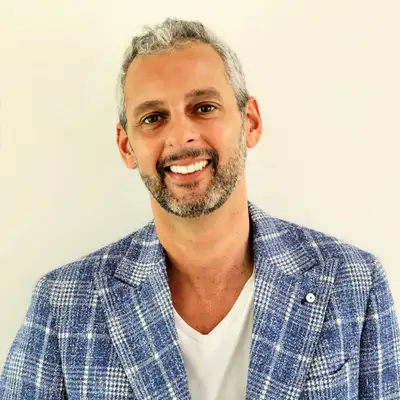
To talk about the real stories behind transformation, the tough lessons, the hard decisions, and the breakthroughs that helped them to move forward. Thank you for joining me today. Now let's close the failure gap. We love talking with interesting people, and today we're joined by Alex Pregnolato. He's the CFO of Liberty London and comes from a long career in high fashion, including Versace, Prada, and De Beers. Alex, welcome to the Failure Gap.
speaker-1 (01:27.312)
Thank you, Julie. Thank you for having me. I'm excited to be here.
speaker-0 (01:31.246)
Well, I'm looking forward to this conversation as well. And I can't wait to get into it with you as we think about in your career where you've seen organizations really close this space between agreeing that something sounds like a good idea and actually getting it done. But before we get there, I would love to give our listeners an opportunity to hear a little bit about your career journey and the different twists and turns that landed you as the CFO of Liberty London. Can you just give us a little bit about your background?
speaker-1 (02:00.302)
Sure, of course. well, let me start saying that, you know, born and raised in Italy, you know, blah, blah, blah, blah. After getting graduated at University of Economics in Torino, I had the opportunity to move to the States. So at the age of 26, I moved to New York for working as a financial analyst for Ferrero. Ferrero is like the a dessert company and a big, big, big corporate. after that experience,
I that at the time, and we're talking about 2001, long time ago, I was almost ready to go back to Italy when my boss at the time told me, no, you're not ready yet to stay in this country and learn more, do more, get exposed to different kinds of industry. And so that's what I did. So I moved to Prada for several years. then I moved to China. I moved to China for three years in 2013.
After that experience, I I moved back working with a with a company called MCM in the United States again as a VP of finance. after a few years with MCM, I had the opportunity to join Versace in a very at a very interesting time. And that was the year before Versace was acquired by Michael Korst and they became Capri.
So I was part of that transition from like a a company owned by private equity and the family to listed company in the United States. after several years, COVID hit. And there was a time in my life that I was in the in New York and I was not so sure if I wanted to be there or find my way back home or close to home. So
An opportunity with the beers came along here in London. And I was in 2021. I took that opportunity as a group CFO for the Beers retail division. And I stayed with the beers for over four years, and and now I'm here at Liberty as a group CFO for Liberty London, which is a company that is
speaker-1 (04:21.432)
Fundamentally built on two major pillars. One is our iconic store on nearby Regent Street. And the other one is a fabric business that is probably extremely famous around the world because it carries the Liberty style that was the main element that made us like so well known around the world. And I joined Liberty. Now it's almost nine months ago.
speaker-0 (04:49.398)
Yeah, it's been quite the career. And one of the things, Alex, that I really love about your background is that you said yes to a lot of things early in your career. You didn't just try to follow you know, a ladder step, step, step. It sounds like you were willing to shift and to try different things and move different places and get a variety of experiences as you went along your way, especially in that early career. And I think for our listeners,
That's an important takeaway to know that you don't have to have it all figured out when you're twenty six. You can still be exploring and learning and trying different things as you go.
speaker-1 (05:31.006)
yeah, you said you're absolutely right. And especially if we go back to the very beginning, first of all, I was extremely lucky to have my boss at the time was the one telling me, Alex, your your path here, your journey and for at Ferrero, it's it's over. You come back with me in Luxembourg, or you need to be ready to jump in the dark and try something new, something different. So I
As you know, it's now twenty-five years ago, I still remember clearly the words that this person gave to me. By the way, this person that was my boss is what more one of my best friends now. So we stayed in touch from time to time when I have doubts, questions, or I need like a different perspective. I I tend to get in touch with them, even after you know, after going from a financial analyst to group CFO. So
It's good to it was good to listen to him. And at the same time, I have to say that I always had this kind of approach where I was not scared to jump in the dark. Sometimes it's comfortable and convenient to work for the company you are with, you know, the people, you know, the processes, you know the dynamics, you know everything. But I always wanted to.
Do more, do different, learn more, learn faster. And and that was probably the best way for me to challenge myself, because it was not easy, to learn new things, learn new processes, learn about you know different industries, because that's also what happened. And overall, I'm glad that I did what I I did through through the past like 20 years.
speaker-0 (07:21.122)
You know, I really appreciate that you share that relationship that you forged early in your career and that this person took the time to have the conversation with you and encourage you to step out of your comfort zone because it is easy to just stay in the track that you're in. And jumping over to something else can feel a little hard or scary. And it couldn't have been easy to move to the States and then move to China and then try different things and be in different environments. and I think.
You know, for our listeners, especially those who are earlier in their careers, something to think about is if it's easy, you might not be doing it right. You know, there there might be an opportunity to challenge yourself in some different ways with your career rather than just staying where it feels comfortable and easy. Yeah, you know.
speaker-1 (08:11.416)
Well, it's it's part of also your you know your nature and your DNA. I'm a I'm a I'm a curious person. So curiosity is what drove me to place, place. And I have to say also ambition a little bit, because when you feel that you're you learn everything you need to learn in your role.
and you want to know more, you want to have a like a different perspective, you want to have a different understanding of a different industry and what's not, the best way it's just to you know just to just to do it, jump, jump and just try. I mean, at the end of the day, it probably the fact that I my career started in the United States where the the job market is extremely dynamic.
if probably if I would have started in Italy where there is no such a dynamic job market and people tend to retain their job to keep their job because you don't know what the future is gonna is gonna just give you. So probably I would have have a different approach. But United States is like such a fluid market dynamic. You you don't have to be scared to jump from one place to another. things can go well, things can go.
not so well. And happened to me that things didn't go well as well through the you know, through my career. But at the end of the day I was lucky to work in a country where there is this kind of flexibility that
speaker-0 (09:41.1)
Yeah. Yeah. And I think that you took advantage of that as well. Like you said, your curious nature and your ambitious nature led you to try some things that other people might might shy away from. So the encouragement that I'm hearing here is be willing to try, be willing to fail, be willing to keep moving, and look for opportunities to grow your experiences, which I think is is wonderful. And by the way, leads us very nicely into the conversation of the space between.
agreeing that something is a good idea and actually getting aligned and getting it done because often that requires a degree of curiosity and ambition and a willingness to try and willingness to take some risks to do to do things a little bit differently.
speaker-1 (10:27.52)
Indeed. You need you need that you need excitement. You need like passion for what for what you do. You need like to have like a deep desire to understand the business you're in it. So sometimes how many so many times I've heard in the especially in the past, but you're just you just work in finance or you're just a you're just a C or you what you do, you do numbers. You just need to understand the numbers. That is another important message I wanna give it. Like if you want to be good at your job.
Probably whatever kind of job you have, you need to understand the business in depth. Because I mean, numbers is just another language, but you need it's another way to convey a message. but you need to understand what kind of message you want to deliver. So numbers are a way to understand the business, explain the business. But a CFO or or FBA person or whoever works in finance or in operations, it's like it's a
It's a fundamental part of like the the the good results of the company. So it's important to, in my view, to understand the business, feel part of the business. Sometimes it's all but I do numbers, so I just like do my month and report. I do my budget, my forecast. It's like a lot more than that. Especially if you wanna if you wanna be in the in the room with the people and l literally be the famous business partner nowadays, there is no a single
CEO or organization, they are not looking for a CFO that is actually a business partner first.
speaker-0 (12:01.176)
Well, you know, I was just talking a few weeks ago with a CHRO human resources person, and she said the same thing, which is that in her career, getting to know the business is what has made the difference for her in her functional role. And I do think functional people sometimes make the mistake of thinking that being an expert in your functional discipline is enough. But you really need to know and understand and connect with the business in order to put things in context.
And it sounds like that's what you're doing with finance as well.
speaker-1 (12:34.164)
Absolutely. Absolutely. It's fundamental. And it's the same message that I try to convey to my team now or my team before the beers or the teams before before those. So it's it's very important. Absolutely, no doubt.
speaker-0 (12:48.12)
Well, you have been with some organizations that have gone through some significant transformations or growth, ownership types of transformations, strategic transformation, and also you know, looking at growth opportunities. I think about liberty even starting to get into supporting people doing crafting and things like that. That's a new part of the business. And I'm curious when you think about your experiences in working with executive teams who are trying to lead through transformation.
What stands out to you as you know things that work and things that don't work as they try to get aligned and to really take the business in a new direction? What are some of the key characteristics that you see at that leadership level that help people move from a green? It would be great if we did that, and to get aligned as a team to get it done.
speaker-1 (13:41.648)
this is like it's it's it's this is all it's complicated. It's a very there I could talk about like for hours about that. First of all, let me start saying one thing that especially it at least for me in the past ten years, I always work for companies that they want to go through a transformation. Transformation, transformation. This word transformation. I think
We all overuse the word transformation and we tend to put in transformation a lot of meanings that not necessarily are transformation. a turnaround is not a transformation. A turnaround is often lately, there is a sort of camouflage and we if we people use the word transformation just to do a turnaround. But the the the
the what needs to happen in order to go through a transformation is different than a than a turnaround, just to give an example. Or when we use like the words like a digital transformation when we actually people want simply to B2B2C business or an online business. That's not transformation. Digital transformation requires a completely different approach to just go and sell online. It requires like a complete, you know,
understanding and remapping of the of the all the back and front end of the company. It requires to bring people on work, it requires like change management, it requires require like a rewire operation that then they're gonna bring the business, for instance, in the business transformation. Just to give you an example. But this is one thing and I don't want to digress. But one thing that I I experienced quite often lately is
They need to go through strategic, a new strategic implementation, strategic review. Everybody goes, We are going through a strategic review now. I went through a strategic review when we were at the beers. So you know, Sun Tzu, that is like the writer of The Art of War, said strategy without planning is the slowest way to victory, and planning without strategy is just an oise before the defeat.
speaker-1 (16:05.462)
So this is something that it's I I could not agree more on that. I often spend an incredible amount of hours working on a strategic plan, but then we didn't spend enough time or we didn't bring the people on board in order to plan in the execution of such a strategy. So this is the major gap that I always experience. So come up having a goal and putting on a
PowerPoint or a gamma nowadays, whatever you want to put it. A strategy, it's it's not that complicated. What is complicated is to map and have the right people in the right place that are accountable and they they know their deliverables and they're gonna be on top of everything and they're gonna create a kind of traction, interest, and they're gonna be able to.
move the organization towards that goal. Right now, that in in planning a strategic change and innovation, three years plan, call it whatever you want, it takes the amount of the level of details that need to be on a on a on a board and and there to work on a on a on a single week and month and it's like incredible. And sometimes people forget about that. And as soon as you
start to diverge from like the strategic the plan versus the strategic planning, you lose momentum and you lose confidence and you lose in, you know, and you start second guessing yourself. Is this the right strategy? Is this right? Probably there is nothing wrong with the strategy. It's just the execution is the problem. So that's what I experienced in the past. That is what nowadays I try to
way more attention and have my team and the rest of the organization focus on delivering the strategy step by step. Sometimes when you look at a strategy, it's like it might be three years plan with so many different deliverables that it might be overwhelming. So you have to be able to break down the strategy in small actions, have like some outcomes, measure those.
speaker-1 (18:29.964)
and make sure that you support the team in that in that direction. So that's that's the way I see it.
speaker-0 (18:36.642)
You know, we always say at Carrigan's group that small things done consistently over time change the world. And I think what I'm hearing you say with, you know, because big strategies do require a lot of steps along the way. And you have to do those small things consistently in order to see if they work or not. I think people sometimes give up too soon. And they then they think, well, we need to redo the strategy. But what I'm hearing you say, and it maps with my experience, is sometimes you just have to
keep doing things long enough for it to take hold and to be able to start to see the change.
speaker-1 (19:13.708)
Yes, that's exactly the case. And the role of the CFO or the the the leadership team in this case, I think is just to keep the focus because at the end of the day, the leadership team it might come out with a strategy with a vision, but at the end of the day we need the the rest of the team to be hands on deck and make sure they're like in power and accountable.
And motivated. So we have to motivate. We, we leadership team, we need to support the rest of the organization in delivering the vision. And of course, being able to listen to the same very people that are working in in delivering the division, because sometimes they are, you know, close to the issues. They can see some opportunities, they can see some roadblocks. So it's a job that needs to be done all together. But at the end of the day, this is, in my view, is the perfect time.
to give the right amount of responsibilities for the to the people that reports me or reports, you know, to the leadership team that to see if they're gonna stand up and they're gonna be able to deliver what this the vision is is asking.
speaker-0 (20:31.138)
You know, you're a CFO, so you see all the numbers and you work with your business partners who are out there, you know, trying to make the sales and make the revenue and make the cost adjustments and so forth. One of the things that happens in a three year strategy is sometimes things go a little down before they go up. And that is often the moment when there's people revert back.
To how they used to do things instead of continuing forward towards the the strategic plan. And I'm curious, especially when you're working with a publicly held company or a PE held company where there are investors who have expectations, how do you work with the leadership team to help them to have the fortitude or the courage to continue forward through
those moments where it isn't so easy because things you know, when you're in a retooling and you s you talked about a turnaround or, you know, implementation of new technology, you know, sometimes things the numbers don't get hit because you're doing a lot of work to get to where you want to be in three years.
speaker-1 (21:50.476)
Yes, that's like it's always the conundrum of like when you are in the boardroom, you know, there are things where you know that certain board members, P or whatever, they they want to hear certain things that not necessarily is what the strategy is going to deliver. Let's face it, if as a strategy would be such a easy thing to deliver, you would probably don't need a strategy in the first place. You just need simply just to increase the
You know, media spending or just open more stores and magically top line and bottom line will be delivered like like that. 99% of the times it doesn't happen like that. You know, in a strategic review, in like approaching new opportunities, there are things they most of the time they they they're gonna be not I don't wanna say bad, but they're not gonna go up.
right away, first is gonna be always like a period where like an investment is needed and then the investment is gonna deliver something. I'm not a big fan of a kind of strategic planning on a hockey stick kind of approach, which I don't believe either. But at the same time, I I think it's our role, the CEOs, this the C levels of the company when we are in the boardroom, just to manage expectations and in a way also educate the board.
about what are we trying to do here, what we want to deliver and how long it's gonna take, how long it's gonna cost. If we're simply gonna try to please people in a room just for just for the the sake of like you know presenting a plan but then seeing right away that it's not gonna be the you know we it's gonna be a problem in delivering it. I don't think it's fair for the company, for us, for anyone. So
Every time I find myself in a boardroom and I have to present a plan, I honestly, you have to be honest and truthful to what you believe you can deliver. And I don't wanna f it it's also a matter of credibility. If I present something that I don't believe in, just for the sake not to feel the pressure of like a certain part of the organization, sooner or later I'm going to fail.
speaker-1 (24:15.924)
probably I'm going to fail from the very first minutes when like there's gonna be expectation and deliverables say gonna be immediately start to diverge. So it's I don't see the point. So I really spend a lot of time trying to explain in an extremely simple way because sometimes people, you know member of the boards or other or private equity, they are like focused on many other different businesses. So they I always start from the point that they don't necessarily know
everything in details about the business we're running. So simple, honest, truthful, and I had to believe in what I saw. I mean that's at the end of the day, I I would never approve the plan that I don't hundred percent support. That's my my approach.
speaker-0 (25:05.484)
I think a lot of what you're saying there rings true for moving from agreement to a good idea and into alignment in a lot of different cases, whether it's working with the board to have an ambitious strategy be realized, or even for an individual who's trying to do something different for themselves. You have to understand what the steps are along the way. You have to be clear with the people who are needing to be engaged and enthusiastic about it.
And you have to make sure that the people who are leading it are willing to do the hard work, but also to believe in the plan and that they continue to share that belief with their colleagues, but also upwards with the board or whoever else is involved. And I think those elements of breaking it down, having clarity, understanding what that long-term goal is are really helpful for keeping people aligned.
When you're asking them to do hard work, to do things that are hard.
speaker-1 (26:07.8)
Yeah. And you know, let's let's be also honest and clear here. Like most of the time, there is no such a strategy that will be delivered according to the original plan. So we need to be ready to to evolve, to change, to mitigate, to improve, to change if there is a mistake. And no no strategy can be perfect. Maybe there are mistakes in the strategy. So and sometimes you can only learn about those.
the moment you are really trying to implement some of this this changes. So there is nothing wrong in making mistakes in my opinion. That what it's wrong is just to be s get stuck in wanting to deliver an original plan and not be open and flexible eventually to up to apply some changes. So I this is another another important lesson that I'd learn and I try to pass on my on my team as well. I mean if we make a mistake, it's fine.
Let's try to go through the mistake as fast as we can and let's start all over again or just let's pivot or let's just like apply the necessary changes in order to succeed.
speaker-0 (27:17.302)
And sometimes not even a mistake, but the world changes fast. I mean, I think about the people who made three to five year strategy investments in 2023, 2024. And now they're dealing with the implications of AI and how that is changing their consumers, their suppliers, their distribution, everything about how they run their business. And so they have to adjust as they as they learn and as the world shifts.
speaker-1 (27:44.512)
Absolutely. Absolutely. It's very true. Think about just to give you to one example. When I was at Versace in twenty eighteen, we wanted to open like probably between twenty-five to thirty stores in United States only. COVID hit. So what? You had to change completely the plan. We had to go into the online business massively and we had to change our s our sales approach completely. And that's what we did. So the plan.
probably was like successful in the first place, but then external factors, as you said, might change the vision and the approach to the to the business. And that's what what what what we did.
speaker-0 (28:25.11)
And being adaptable, I think, is key for any leadership team that's trying to do big things with their organization is that it doesn't mean that you were necessarily wrong in twenty eighteen. It means that as a leadership team, you have to be able to come together and shift when conditions something that dramatic happens.
speaker-1 (28:42.09)
Absolutely. And in general, we need to be humble as as a as a human being and as a leader, because the fact that we l lead a team and organization doesn't mean that we're always right. I always, you know, question myself. I say if it's this is the right decision or if like that's the right time to to you know put in place some some some new strategy or what's not. So I tend to
Overscrutinize myself just to make sure that what I do is correct. And sometimes it is, sometimes it's it's not. It's it's human, it's absolutely human.
speaker-0 (29:21.25)
Yeah, let's not forget that we're all human, right? Yeah. I'm curious about AI in your world right now. Is there anything happening there? Like a lot of companies are saying, well, we need to do more with AI. Easy to agree and say, yep, we should. Tough to get aligned and do things in different ways. Anything that you can share about what's happening with your team right now in that space?
speaker-1 (29:24.311)
Absolutely.
speaker-1 (29:45.398)
Yeah, I think this is the real transformation because nowadays you i is in it it's there are so so many new technologies and AI support that we can add at at every single level from sales, marketing, content, supply chain, accounts payable, you name it, everything. Everything can support our business. And we are having
thoughtful approach in my opinion. We don't want to rush things. We we on on our roadmap for the next three years, there are like some AI developments and deployments within the company, especially on the top line. it's just that sometimes it's it's confusing in a way because if you would look at my inbox right now I probably receive 30 to 40
emails on a daily basis about somebody trying to sell me some sort of a AI tool like is the one that is going to solve all my problems. I have no doubt that out of those 30, 40 per day, like so Elo are talking about a lot, you know, to like almost 200 a a week, there is some they're good and some other script are not so good. So we we don't want to
rush things. We know what where we need AI the most and we are we're doing so especially to improve our content, some operations from A A P to to to AR. There are a few things. in the meantime, we're getting ready to to to to to to more things that are like more like you know strategic, I would say for especially on a top line level. But
nowadays it's it's unthinkable, in my view, to consider that we can compete with the rest of the world without having AI. Because I already see competitors, I see other companies, the way they leverage the technology. we we simply gonna go the same direction. It's just that we're taking our time, let's suppose we are.
speaker-1 (32:12.13)
means like probably twelve to eighteen months. It's not that it's not that not more than that.
speaker-0 (32:17.474)
Yeah, it does seem like the landscape is still settling, but you can't wait for it to settle to be learning. As as you pointed out earlier, right? Everything is about learning and staying curious and not being so committed to your original plan that you can't adapt as things emerge and as things go forward. And AI seems like that kind of space right now. There's a need to move thoughtfully and carefully, and also there.
is some subtling to do in the industry so that we see what the what the landscape will look like in a year or two.
speaker-1 (32:55.052)
Yeah. and again, we are we're using it. It's just that we don't wanna overuse it at the moment because we wanna make sure that whatever we are implementing now is gonna deliver what we are expecting. And then probably if we're gonna be on a curve that is gonna in the next twelve to eighteen months probably we're gonna see the the benefits and probably we're gonna add more.
more AI in certain areas of the of the business for sure.
speaker-0 (33:27.276)
Yeah, I mean, you know, Kerakin's group are just a a small consulting firm and we're doing a a similar approach of saying let's be using it and be fluent and be comfortable and confident with it, but let's not place any big bets until we see where we really want to go with it and how it is best in service to our clients. So we have a in a different scale, a similar approach.
speaker-1 (33:49.812)
Absolutely. Yeah. Wise approach, I would say.
speaker-0 (33:52.546)
Yeah, yeah, yeah. Well, Alex, when you think about this idea of moving from agreement to alignment, you've given us some great ways to think about working with our teams in providing clarity, in breaking things down into steps, and staying curious, in being willing to try things, not being afraid to fail, being willing to adjust as you go and as you learn, being open to conditions changing around you.
There's a lot in that space in the conversation that we've had that I think our listeners can take away and think about as a leader. Am I bringing that into creating alignment around a transformation or a turnaround or which is by the way another thing I appreciated, I'll go back to your earlier comments, which is be clear about what it is. Not everything is a transformation, right? Not everything deserves that label.
And you want to be because how you solve for a turnaround is different than how you solve for a transformation. And so I appreciate that push as well around clarity. So you've given us some great things to think about when we think about moving from agreement to alignment. I'm curious, just from a personal perspective, is there anything in your life where you've thought, I'd really like to do that? And you've gotten yourself aligned and and gotten it done. I know for me.
I always talk about the fact that I always say I I agree very much that I would love to learn another language and I find it really hard to get aligned and do the work, but I keep trying, I keep chipping away at it and you know, small things done consistently over time, right? So for me that's that's what I'm trying to do. Anything in your life where you're trying to learn something new or you've done that recently and that you could share with our listeners.
speaker-1 (35:35.712)
Yeah, I think that the list can be long, but let me give you an example. But and you know what, I'm gonna tell you why. definitely I think since few months I I'm trying to learn Chinese. So when I was in China, I was able to barely communicate with a broken Chinese. So I don't even want to, you know, people to consider me that I was speaking Chinese, not at all.
But at least I was able to order in a restaurant and tell the taxi diver where to go. Now it's it's difficult even that. So with me traveling to Japan and China quite often for work, I I really feel that that I would love to be able to communicate with with locals, even with some few broken words. So I I I'm trying.
the but the worst thing that I do is just sometimes I found excuses to myself not to do it. That's like the part that I had to overcome. That I'm too tired, I'm too busy, I'm to something. But the reality is that I spend like probably 45 minutes to one hour on Instagram every day. So I could simply just give up that time just to learn something about on Chinese and that so sometimes you literally we have excuses. So I have to be better than that.
And that's where I diverge from like from the the the the the plans to the the the alignment. But I I yes, that's definitely w one thing that comes to my mind.
speaker-0 (37:10.54)
Well that's a tough that's a tough one. And even though obviously you speak a couple of languages already, Chinese is so different from the languages that we're most familiar with. So I applaud you for taking that on. And also applaud your honesty, which is I'm in the same boat. I there are definitely moments of time every day that I could spend on that goal of learning another language that I don't for a hundred reasons. I'm tired, I'm you know, whatever, I'm distracted.
But if I redirected those minutes, I could get it done. And so I appreciate that push as well. So you and I can hold ourselves accountable. Yes. Yeah. In a year I'm gonna come back and see how your Chinese is.
speaker-1 (37:47.182)
Yeah.
speaker-1 (37:53.748)
Absolutely. Next time with pleasure.
speaker-0 (37:56.332)
Yeah. Great. Well, hey, we ask everybody two final questions as a wrap up for this. This has been a great conversation and I really appreciate you sharing your professional experiences and a little bit about something you're working on personally too. So thank you so much for that. I would love it if you would just give our listeners two or three things that you would suggest that they really focus on if they are trying to keep their team aligned to a big goal and more of a long term goal. How do you
see your s your yourself and your team through something ambitious that's going to take a while to get done. Any hot tips or things that that you want to make sure people focus on when they're in that situation. Well
speaker-1 (38:40.616)
well first I like to show my human side to people, to my team. I like to when we have touch bases when we talk, it's there's nothing wrong in just show that like a little bit of emotions, if you're happy, if you're sad, and ask about how they're doing work, how they're if they're everything they they c did create any concern, any problem. So it
Being at work like eight, ten hours every day with the same people and not and just focus on work and ask about numbers and statistics and number things like that is not gonna it's not gonna help to create the kind of relationship with your team that has to be done at human level. So you you you need to show your human side and you need to just to talk and make sure that they are well.
They are like in a good place, they don't feel they're overworking, they are like whatever. But if you didn't ask, they will never tell. If if they tell, it's going to be usually too late. So this is an important thing that I want to make sure about that. And and then another thing I that I like to do with my team, it's always to explain why I need something, why we need something.
Spend time like once a month, once every quarter, just to go through the the financial results of the entire company, what is going well, what is not going so well. Because you would be surprised sometimes, especially even in my team, besides my most most senior members, sometimes they don't have a clue of what where the company is going, what it's doing, or maybe just for a division, but not the other one. So
Make them feel part of this journey. Tell people. I like to tell people what are we doing? Why are we doing it? Why I'm asking certain things? Why would I see things in a certain way? So they make them feel that they have a purpose and not just like I'm the boss, he's the subordinate, and he has to provide, he or she should provide end of conversation. No, I think it has to be more than that.
speaker-0 (41:03.362)
I think those are two great suggestions for people who are trying to keep things moving and that is to connect as humans and also to make sure that people see the big picture and that they understand the context that they're working in. Yeah. Great, great tips for creating alignment across a team, especially towards a longer term goal. Alex, the last question we'd like to ask everybody is a dream along with me question. And it is if you could get any group of people
aligned to doing something together, whether it's someone in your community, a group in your community or your family or at work or the world in general or maybe a volunteer group that you're involved with or something like that. If you could get that group aligned to do something together, what would that thing be?
speaker-1 (41:51.362)
Well, I would love to see the streets and the walls of every city is around the world that are nice and clean. There is no more plastic, no more rubbish, no more like we we walk in a nice and clean environment because it means that everybody is respectful of the environment, and we're respectful of each other, and we like to live in a clean and and neat environment.
speaker-0 (42:15.426)
You know what? I love that so much because I totally agree with it. And also it's something listeners out there, every one of us can contribute to making sure that we're cleaning up after ourselves and picking up the trash and keeping things, you know, so that we can have pride in our environment, that we are in a space that we feel good about. So thank you for that push. I would love to see people get aligned to deliver on that together. Alex, thank you so much. This has been such a wonderful conversation, wonderful to hear about your
Career, how you've navigated different twists and turns along the way, some of the things that you do as a CFO to try and make sure that you and your team and your business partners can get aligned to complex and ambitious strategies that take time to deliver on. And the idea of creating things that can be managed in smaller pieces, that you can see progress along the way, that there's clarity around the goal and the plan, and that there is a sense of curiosity.
That allows for adaptability and adjustment as you go forward and as you learn new things or as the world changes, and that you build that adaptability into the team are all, I think, really wonderful indicators of a team that can get aligned to deliver together, rather than just agreeing that something's a good idea and hoping that somebody goes and does it. So thank you so much for this conversation. We really enjoyed it.
speaker-1 (43:38.778)
thank you, Julie. It was a real pleasure to be here and talk to you. I know it took us a while, but I'm we're truly happy that we made it. And I'm looking forward also to hear from your next podcast in your channel. Thank you very much.
speaker-0 (43:55.03)
Yeah, thank you. And to all of our listeners, please remember to like and share the episode. We always appreciate that. And we will see you next time on the failure gap.