Subscribe
Share
Share
Embed
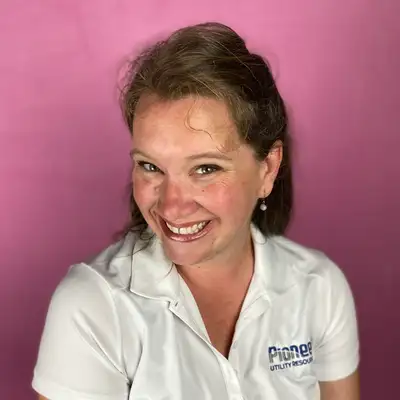
StoryConnect features interviews with marketers, communicators, CEOs and other leaders at cooperative and independent broadband companies, electric cooperatives and municipal power providers. The goal of the podcast is to help listeners discover ideas to shape their stories and connect with their customers. It is produced by Pioneer Utility Resources.
Intro:
A production of Pioneer Utility Resources.
StoryConnect, helping communicators discover ideas to shape their
stories and connect with their customers.
Megan McKoy-Noe:
Co-op influencers – how to find people to tell your story.
That's what we'll be talking about on this episode of The
StoryConnect Podcast.
Hi, I'm your host, Megan McKoy-Noe,
one of the storytellers here at Pioneer Utility Resources.
And I am joined by Anna Politano,
director of public relations and communications at the Oklahoma
Association of Electric Cooperatives.
Anna, thank you so much for joining us today.
Anna Politano:
I am so excited to be here, Megan.
Megan McKoy-Noe:
Well, I mean, we're talking about co-op influencers. You are a
huge co-op influencer in my world.
We've had you on the podcast before to talk about crisis
communications and social media expectations.
You are a friend of the pod, so it's always a treat to get to see
you.
But today we are diving into something new – the world of
influencers.
It's very exciting. I've seen t-shirts,
and people posing with "I'm a co-op influencer" signs across your
state. Tell us about your co-op influencers program.
Anna Politano:
Yes, I'm excited to share. So the co-op influencer program is a
refreshed focus
group approach. Focus groups are something that our Oklahoma
statewide has been doing for decades.
And as we thought about our new series of focus groups,
we wanted to create something that would
resonate with members that would be of value to the electric
cooperatives,
hosting the focus groups alongside our statewide staff.
And we really put a lot of thought into the name.
Of course, "influencer" is a buzzword nowadays,
but what we try to convey to the consumers who
participate is that their voice is important,
and their voice has influence.
And that's why we are taking the time to listen to them.
So we really try to hammer with them that they are in fact a
co-op influencer,
and we want them to wear that with pride and to know that their
electric cooperative cares,
and they do in fact have a lot of influence.
Megan McKoy-Noe:
Ah, I love this on so many levels.
And I mean you're right. Influencer,
it is a buzzword.
Everybody wants to be a social media influencer.
They, you know, it comes with all this,
the thought of, you know,
it makes you cool. It means somebody,
you know, folks listen to you.
And it seems like for years we have tried to find ways to talk to
co-op members and explain that
they are a member owner. They, you know,
have a voice, and it just hasn't rung true for them.
But calling them co-op influencers,
I mean, it's all the things.
It just hits home. So I'm so excited about the way that y'all
rebranded this.
I think you're right. It is very intentional,
and it really does work.
What kind of questions are you asking in these focus groups,
and how long are folks taking with your team?
Anna Politano:
That's a great question. So the way that we try to frame just the
whole experience,
we tell members that we want to have a conversation with them.
We just want to have a genuine conversation.
And we didn't really invite them just to sing our praises.
We want to hear the good, the bad and the ugly because there is
always room for improvement.
And that's kind of like how we frame it,
that it is a conversation.
We want them to feel safe, to share feedback.
Some that may be good, some that may not be so good.
W e do revolve the questions around the cooperative service just,
you know, just the different services the co-op may be offering.
Of course, starting with electricity and outages and things like
that.
S o service industry trends, such as residential solar or EV
or batteries, just like different trends in the energy landscape
and how they perceive
those changes, or how they may be curious about to learn more.
A nd also we frame some questions around engagement and
communication.
So it's service industry trends,
engagement and communication.
So all of the questions will focus on one of those areas.
Megan McKoy-Noe:
Wonderful, I love that you have those pillars around which
everything is kind of held up,
and it helps you keep everything,
as you said, focused, because you could go off on little bunny
trails with some of those questions.
How long does it take for folks that are participating?
Anna Politano:
The entire experience is about two hours.
We do invite them to have a meal that can either be lunch or can
be dinner.
We actually had a co-op that offered a brunch,
so we take about 30 minutes,
you know, make sure that everybody is well fed.
Everybody likes a good meal. And that kind of helps us to kind of
break the ice and start a conversation with them,
getting to know them a little bit better. A nd then we usually
allocate about an hour to an hour and a half for the questions.
T ry to keep a good pace. We don't want to overdo it because we
will lose their attention.
B ut if we set our expectations from the get go,
most of the members are understanding,
and they stay with us until the end without any issue.
So average time, two hours.
Megan McKoy-Noe:
Okay. And I know when I've talked to folks about holding focus
groups in the past,
there's two different schools of thought.
You could either have it in the community where it's completely
separate from the utility space,
or you can hold it or a lot of utilities have community spaces
built into their office,
and so some people choose to have them there.
What kind of locations do you use,
and does it seem to matter if it's at a utility location or at a
just community location?
Anna Politano:
Great question. The majority of the time we do it at the co-op.
The co-op may have a community center room,
community event room.
Most of the time, that's what happens.
At one point a few years ago, we had a co-op that decided to take
members to a local restaurant,
so there was a dedicated room, and we had lunch.
When that happened, but on this current series that we are now,
we're actually doing ten focus groups right now,
and all of the ten are being hosted at a community room at the
local electric cooperative.
Megan McKoy-Noe:
And we should say the co-op influencers program,
this is a statewide series of focus groups.
You hold them at different utilities,
but how do you look at the results?
Do you look statewide? Do you break it down by utilities?
How does that work?
Anna Politano:
Yes. So usually when a focus group is conducted,
we take very detailed notes.
We used to record them a few years ago,
but then we found that some members are not as outspoken
when we record.
Megan McKoy-Noe:
I can't imagine why. (laughs)
Anna Politano:
We just stayed with the, you know,
really comprehensive notes, as comprehensive as we can.
And so we provide those comprehensive notes to the electric
cooperative that is hosting the focus group with us.
Now, at the end of our ten focus groups,
we will evaluate all of those notes,
all of the feedback we have gathered,
and we are going to look for commonalities,
for trends that we are seeing, that we can report highlights to
our entire board of directors and
to all of our electric cooperatives in Oklahoma.
S o not until the end. We will do an overview,
an overview report,
and provide highlights that will show some statewide trends.
Megan McKoy-Noe:
I like that. So the utilities that are participating,
they get some inside knowledge of what's going on locally.
And then they all work together to get some nice statewide trends
reported.
You said that you're holding ten of these sessions this year in
2024.
When did they start, and when is your last one?
Anna Politano:
The first one started in July of 2024.
The last one should be April of 2025.
Megan McKoy-Noe:
Okay.
Anna Politano:
I do want to just mention that the ten focus groups I'm speaking
[of],
the participants are consumers. They are consumers of electric
cooperatives.
However, we kind of took this effort a step further.
Our statewide association, we hold a spring and a fall training
for new employees.
So we have new co-op employees ,
an orientation, a training, and we have conducted a focus group
with new employees as well. They got a co-op influencer t-shirt.
You know, their perspective is very fresh because they just
started working for the electric cooperative.
So we have hosted a focus group in the spring with new employees,
and we have hosted a focus group in the fall with new employees,
and those have been eye opening as well.
Megan McKoy-Noe:
Now, are those part of the ten focus groups that you have?
Anna Politano:
No.
Megan McKoy-Noe:
So those are extra. Those are bonus sessions,
I love it.
Do you know, I was talking to someone a couple weeks ago,
and she had been at her utility for two months,
and she said, "You know, I just I feel like I'm learning so many
things." She came from a healthcare background in communications
there, but she was just new to everything in the utility world.
And she told me she was feeling kind of out of place.
And I said, "No, are you kidding?
You are one of the most valuable voices here because you see
things that we don't see anymore.
You have this fresh perspective." So I love that you were adding
those in.
Have you done your first one of those two?
Anna Politano:
Yes, we did one in the spring, and we did one in the fall of
2024.
Megan McKoy-Noe:
Okay, so the fall of 2024 then is also done,
which is great because this is not going to go out for a few
weeks. What are the big things that you saw from the employee,
new employee focus groups?
Anna Politano:
It's been enlightening because they,
you know, I worked for electric cooperatives.
So for them, there were so many things about the electric
cooperatives business model that they didn't
know. But the vast majority, most of them will talk about how
they
are treated exceptionally well,
how they like the culture .
O ne of our questions, which we all have heard about is,
do you view yourself as a member or as a customer?
And those new employees, you know,
they not only provide the perspective for themselves,
if they see themselves as a member or a customer,
but they also provide the perspective of people in their
community. If they see themselves as a member or customers,
and,
you know, we've had both scenarios.
You know, some of them will say,
I understand the member concept.
Others will say, I don't understand the member concept.
And to me, I'm just a customer. So it gives us an opportunity to
have those conversations with them,
which in turn would nurture the conversations that they are going
to have with local members.
S o it's a win-win, but it's so,
I couldn't emphasize enough the benefit
of just taking the time to listen to how other people perceive
different concepts and what their perspective
is and how we can resonate with different generations and people
from different backgrounds.
S o having the new employee perspective has been extremely
helpful.
Megan McKoy-Noe:
That's huge. And you're right. We forget,
and I think it's easy to forget that everyone doesn't see the
world the way that you do. It's just the way,
you know, this is the way I see things.
That's great. You're just one person.
You have your own personal story that you're bringing to the way
you see the world, too.
And so many people don't think about that.
So focus groups are critical, and I love that you are then taking
new employees,
including them in the focus groups process,
but also turning them into true co-op influencers within the
co-ops too. S o that's really exciting.
Now with the podcast, we like to get into the nitty gritty of how
things work.
So let me just check. We've talked about where you hold the
meetings,
the kind of questions you ask, but how many folks RSVP,
and how do you get folks there?
You know, you mentioned making sure that,
you know, and you have people from different generations.
You have people from different backgrounds,
different communities. How do you find those future co-op
influencers and get them to show up at these focus group
meetings?
Anna Politano:
That's a great question. T he ideal size of a focus group,
in our experience,
is right at eight participants. R ecently,
we had a focus group
at a co-op. They invited eight,
but only six participants came.
It was still a very good, healthy size.
W e try to keep the group small because it allows – we feel that
the members feel more free
to share. When you have a larger group,
it's just harder to go around and really get feedback.
And the smaller the group, some of them,
some of the members feel,
they feel more open to share. S o really eight to six is the
sweet spot.
We've done bigger; we've done smaller.
So we've done a little bit of everything.
But we aim for eight. W e, at the statewide association,
we do not recruit
the the participants. We do rely on the local electric
cooperative hosting the focus group to recruit.
And they all have used many different methods to do it.
O ne that I'm kind of seeing a little bit more regularly now,
you know,
every electric cooperative will have their own board of trustees.
And those trustees, they come from different districts on the
service area for the electric cooperative.
So some co-ops are actually asking their trustees to look for
representatives from the various
districts so that they have different regions of their service
area represented.
Megan McKoy-Noe:
Oh that's nice.
Anna Politano:
We do encourage the electric cooperatives to make sure that that
group is as diverse as possible.
S o it could be, you know, an invitation from board members.
It could be , we've seen co-ops putting out on social media.
We've seen co-ops putting out on newsletter.
I t can just be word of mouth. B ut one thing that we are seeing
this year that we are very excited about
is the most recent co-ops, they have invited one of the Youth
Tour ambassadors that they
have sent on Youth Tour. So it's been really great too because we
have adults of all ages.
We try to have middle age and older.
But having that Youth Tour ambassador there,
and they are very connected to the electric cooperative,
but having their perspective for a young person and representing
a younger generation,
that has been great for us to watch,
and we are encouraging all of our co-ops that participate to
invite those young members as well.
Megan McKoy-Noe:
So I think that's a fantastic idea to include somebody in that
demographic that has some experience with you,
but then has their own point of view,
their own voice that they want to share ideas with.
When you are working with utilities in Oklahoma,
do you have a, kind of a guide,
what it takes to find co-op influencers with some of these tips
kind of outlined for them?
Anna Politano:
Yeah, I mean, we have an instructional email that we send to the
co-ops,
and we just also give them a call and kind of talk to them about
the process and brainstorm.
You know, if you are in the co-op industry,
you may have heard, "If you meet one co-op,
you meet one co-op" because they can be very diverse.
So we usually try to tailor the approach for each one of them and
what works best for them.
So we do like to visit with them and brainstorm what is the best
approach for them to invite members.
Megan McKoy-Noe:
Ah, I like it. So as you mentioned earlier on when we just got
started,
listening to members is not new in Oklahoma.
You and Sid Sperry, who is now retired,
but I adore the man.
He left a really solid legacy of the importance of focus groups
and surveys at the statewide.
So you all have been hosting focus groups for years.
This is the first year, I believe,
that you have rebranded it as the co-op influencer program.
What else is different besides the name?
Has anything else changed?
Anna Politano:
Yeah. So if you allow me, I'm just going to go back to the
history just a little bit .
Megan McKoy-Noe:
Please.
Anna Politano:
I visited with Sid Sperry, who is my dear friend and mentor,
and he really instilled in me the
importance of listening to consumers.
S o I owe all of this to Sid. B ut before Sid started the focus
groups.
We had a previous director of public relations at the Oklahoma
statewide,
Bill Roberts, who started the focus groups in 1988.
Megan McKoy-Noe:
Whoa.
Anna Politano:
And so that's when the Oklahoma statewide began getting involved
with focus groups.
So Bill Roberts started focus groups across the state to hear
feedback on the Good Neighbor
program, which was a statewide program at that time for different
services and programs.
That are electric cooperatives were offering. In 1992,
Sid was at that time working in the
statewide, and he held focus groups about customer choice and
potential legislation
that could impact electricity providers in Oklahoma at that time.
And after that, and closer to the time that I started,
we were holding focus groups solely focused on
our statewide publication, which for us is Oklahoma Living
magazine.
S o anytime that we would conduct a redesign of the publication,
or we needed to kind of get a post on the
editorial content, the advertising content,
we would sit down with readers,
electric cooperative members across the state and talk to them
about the magazine.
Those have been really crucial because they have truly guided
just really where our trade publication is today with the
current look and the different changes we have made through the
years.
Sid Sperry retired in 2021, but he left a tremendous legacy.
He left a tremendous legacy that it is extremely important to
take the time to listen to consumers.
So knowing that the industry is always evolving.
The industry is always changing,
and we are on the information overload age right now.
We really just try to think about how can we refresh,
how can we refresh this whole approach?
And that's how the co-op influencers began.
What is different about it? Of course,
the name, the rebranding.
You know, participants get a cool t-shirt.
They get a sticker, you know, the stickers are now everybody
wants stickers for their mugs or different things.
Megan McKoy-Noe:
I'm a sticker fanatic.
Anna Politano:
W e are also allowing, like in the past,
most of the questions would come from the statewide association,
but now we're trying to tailor the questions more to be more
applicable to the local electric cooperatives.
We also give them an opportunity if they want to add any custom
questions.
We do have a set of general questions that honestly,
if they want to change,
they can change. Most of them have stayed with the general
questions,
but they have the ability of telling us,
you know, we would like to add two or three other questions about
different programs we have, and we want to get their feedback on.
So one of the things that we were trying to do as a statewide
association was to add more value for our participating
co-ops, and I'm very hopeful that we are accomplishing that right
now.
Megan McKoy-Noe:
Oh, it sounds like it. It is such a fun idea,
and I love that you have made it
something that you can still use across the state,
but that it can be tailored in part for specific needs locally
too. Now, you mentioned that folks love getting the co-op
influencer shirts.
For folks that are watching this video on our YouTube channel,
you can see that Anna is wearing her co-op influencer shirt.
Very exciting, but I'm betting that's not the only reason that
you had folks show up for these focus groups.
What other incentives work?
Anna Politano:
It depends honestly. F rom the host co-op,
of course we do offer a meal.
And to some members, they enjoy the fact that they're going to
have a nice meal,
that they don't have to worry about dinner or lunch or whatever
the case might be.
S o it comes with a meal. We do offer a bag of co-op swag.
S o we give co-op swag, and the host co-op does the same.
Some co-ops do a bill credit. Not all of them.
Not all of them. F rom my experience,
we
really had great participation independent if we are offering a
credit or not.
S ome co-ops may have offered a gift card in the past as well,
but those are not really the majority of
the time from what I see. We do try to provide a template
invitation,
invitation graphic for our co-ops,
and we just say, you know, dinner,
co-op swag, a cool t-shirt. Now,
some co-ops have chosen to go a step further and do something
else for their members, but it's not required.
So it depends. But we have had great participation regardless of
what was being offered.
Megan McKoy-Noe:
Well, that is exciting. That's good to hear.
And again, it's nice that the program can be tailored to meet
whatever a local utility is able to do.
But you provide the guidelines,
the template, to kind of get them started.
I've got to ask, what's the best advice that a co-op influencer
has given you so far?
Anna Politano:
I have to tell you, Megan, one of the things that have really
resonated with us on this current
series. We have had some consumers who were served by other type
of utilities that were
not electric cooperatives. And one of the advice they have given
us is stay
true to yourself. Don't lose the personal touch that an electric
cooperative has.
Whatever it is that distinguishes you from other utilities,
and of course,
that's going into the human element and connecting with people.
B ut some of them have said, "Hey,
I've been served by other utilities,
and I can truly tell a difference with the service that I
currently have when I call,
when I come to meetings." S o they have really,
some of them have been intentional about telling us,
don't lose a good thing. Don't lose the personal touch that you
currently have.
Because, you know, we have a lot of corporations.
We have a lot of corporations. And,
it's easy for a consumer to feel that that consumer is just a
number, but really feeling that the electric cooperative cares or
whatever the local utility is,
that they truly care, and that is a valued,
a valued member.
That's something that our members have told us.
Don't lose that. So that has been,
I have to say that is the number one advice.
Megan McKoy-Noe:
I love that, especially in an age where influencers are so
important and their voices are coming
out, and we are getting so much information from so many
different people.
Staying true to yourself, staying who you are,
knowing who you are,
and being real and authentic in a digital age,
I think is very important and really good advice that you're
getting from your co-op influencers.
So thank you so much for sharing your story with utility
pioneers.
She is Anna Politano at the Oklahoma Association of Electric
Cooperatives.
And I'm your host Megan McKoy-Noe at Pioneer Utility Resources.
And until we talk again, keep telling your story.
Outro:
StoryConnect is produced by Pioneer Utility Resources,
a communications cooperative that is built to share your story.