Subscribe
Share
Share
Embed
Manufacturing Mavericks aren’t afraid to shake things up and stand out from the crowd. They are embracing the best tools and technology to showcase world-class American manufacturing and grow their business.
Join Greg McHale, founder of Datanomix, as he sits down with these exceptional people to hear their stories and explore the important lessons they learned along the way. Listeners can gain valuable insights they can use in their own facilities to improve their bottom line.
Greg: Welcome to Manufacturing Mavericks, a podcast where we showcase and celebrate exceptional people from across precision manufacturing who are boldly embracing new ways to improve their processes, grow their bottom lines, and ensure American manufacturing will thrive for generations to come.
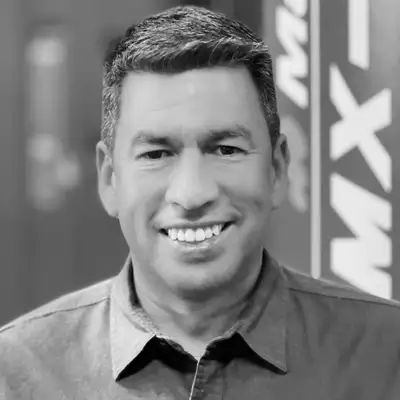
Greg: Welcome to this episode of Manufacturing Mavericks. I’m your host, Greg McHale. As the founder of Datanomix, I’ve had the privilege of visiting hundreds of shops all across the country, and in those visits, I have met some of the most incredible and innovative people in this industry. Our goal with the Manufacturing Mavericks podcast is to highlight those leaders, those Mavericks of manufacturing who are innovating not just with technology, but with culture, people, and process too, so we can all learn not just what they do, but why they do it. We’ll dig into what got them into manufacturing, what fires them up to go to work every single day, and pour their blood, sweat, and tears into keeping the manufacturing dream alive in our country. With that, I am honored to introduce today’s manufacturing maverick, Hernan Ricuarte. Welcome to the show, Hernan. How are you doing today?
Hernan: Good, good. Thanks. I appreciate you having me on, Greg.
Greg: I really, really appreciate having you, Hernan. We know that you’re a pretty impressive guy in the manufacturing space. Obviously, your company has an incredible presence on LinkedIn. Lots of followers, see lots of great activity from you, so really honored to be able to hear your story today, Hernan.
Hernan: Thanks, Greg.
Greg: So, to start it off, Hernan, what we’d like to open up with here on Manufacturing Mavericks is really getting some insight into your personal journey into manufacturing. So, you know, tell us a little bit about your background, you know, where did you grow up, and how did you ultimately get into manufacturing?
Hernan: Well, I grew up in—I was born on the East Coast, but I grew up in Southern California. Got an economics degree and went to Japan. Basically studied the Japanese language, got into the medical device and healthcare industry there between the US and Japan. I spent a total of ten years living in Japan. Really just honed in my focus and my career in Japan and the US.
And that continued on for 20-some-odd years. At one point, I moved the family back; my children were small. And I was traveling to Tokyo every two weeks, and here two weeks. Tokyo, two weeks; here, two weeks. During that period of time, my father, who had had a machine shop—started it when I was in high school—was thinking of selling it. And that’s where I, you know, gained an interest in looking into the business and decided to give it a shot. So, here we are seven years later with me fully dedicated and really excited about what we’re doing here at Ricuarte Precision
Greg: Wow. And so, when you say giving it a shot, had you done odd jobs inside of, you know, the business while your dad owned it when you were younger or was it not really an interest of yours?
Hernan: Genuinely not really an interest of mine.
Greg: Wow.
Hernan: So, when I was—I remember, geez, being maybe 14, 15 years old, and my dad, having me come into the shop and measure some things. And I got yelled at so much for every single thing [laugh] that I did that I decided this is not for me. To be honest, with the first 30 years of my father having the business, I stepped foot into the building—or the, you know, the buildings that he’s had—maybe two or three times, you know, to take him out to lunch, and that was about it.
Greg: So, Dad’s getting ready to sell and it piques your interest. What drew you to that?
Hernan: Initially, it really was the business side of things. You know, asked my sister and I to take a look at, you know, the financials, and you know, how the business looked and things like that because he wanted us involved in, you know, whatever transaction he was getting involved in. And that’s where my sister and I and my brother-in-law sort of took a look at things, you know, looked at what I was doing, and you know, how I was away from home so much, and how we did not want to just hand this over to anyone who had not put a concerted effort into building upon when my dad started. That’s where the interest led. And, you know, I jumped in headfirst. I’m very excited to make this a more growing and an established organization than it was back then.
Greg: So, really a lot of it out of family pride and honoring your dad.
Hernan: I wouldn’t be that dramatic about it, Greg [laugh]. It’s just—
Greg: [laugh].
Hernan: I don’t know about the honoring my dad part of it. Aga—you know, in part, I guess. You know, again, you’ve got a good, stable business with opportunities that, you know, that may be untapped. You know, some areas where I felt that, you know, we could make some investments and with some concerted effort and discipline we could put in processes, procedures, and grow. And so, that’s what we’ve been trying to do for the past six-and-a-half years.
Greg: So, when you came into the business, what did it look like? You know, numbers of machines, numbers of employees, you know, facility size?
Hernan: We’re in the same building. So, we’ve got just over 14,000 square feet here in the middle of Orange County in Southern California. This area is very much an aerospace, medical device, like a microeconomy. When I stepped in, we were in this same building. We had about 18, 19 machines and 20, 22, 23 employees. Today, we’ve got 26 machines, you know, some five-axis pallet systems, you know, twin-turret, a lot of live tooling lathes and wire EDMs. And we’ve got about 40 employees now.
Greg: So, machine count up, you know, 20%, but knowing, you know, what I’ve seen in your shop when I’ve been out there definitely some serious investments in technology that you’ve made. So, how did you end up doubling the employee count, you know, with the machines going up 20% like that?
Hernan: Again, we tried to be, you know, as careful as possible in our planning and prioritizing. You know, the first couple of years, to be honest, I felt—I think, looking back on it, I was probably spinning my wheels quite a bit. You know, these types of businesses, there’s never-ending opportunities for improvement, and so we’ve really made a concerted effort in implementing processes and procedures and planning out our investments. But you know, no matter how much planning and implementation you do, you always have to take some concerted risks, right? So, you know, that we’ve done, and then learn from, you know, some of our smaller mistakes. But things like some of the digital technologies that we’ve been investing in and some of the automation that we’ve been investing in have been really paying off for us.
Greg: So, processes and procedures, you mentioned that, you know, really, really thorough planning. How does that play into the culture of your shop?
Hernan: You bring up a good point because we’ve got some great, you know, automation, we’ve got some great digital technologies that help us, but without the team understanding why we’re doing this and how it benefits them, you know, we will be spinning our wheels, you know, we will have just a lot of nice, fancy machines and a lot of monitors out there that are not being used. We take our culture very, very seriously. And the things like, for example, we have this thing called the four Cs: Cynical, Complacent, Committed, and Compelled. You know, and so we always talk about, you know, where we fall into these categories. And, you know, what does committed mean? What does compelled mean?
Greg: You’re even putting revenue right out there on the shop floor as part of your regular updates with the team.
Hernan: Right, absolutely.
Greg: That’s interesting because there’s, you know, a lot of folks I’ve spoken with, some people like to do that, they think it creates alignment, some people think it creates conflict. How do you present that to the employees and what do you see is their reaction to it?
Hernan: Everyone wants to be with a winner, you know, and we want to be winners. You know, sharing our successes and our growth is super important because it provides our employees with motivation that, you know, they are part of something that is growing. With regard to revenue, revenue is not everything. We are pretty open with how much our investments costs us as well, you know? And again, you know, nothing’s ever perfect.
You can never make everyone fully understand what’s going on, but everyone is part of this growth and they see the change. And for us, you know, what we stress to everybody is, you know, as long as we are better than we were last week, we’re doing something right. So, let’s just keep on moving forward and keep on growing, you know? And again, you know, celebrating the wins and discussing some of the losses is also critical in this process.
Greg: That’s fantastic. And how do you guys end up celebrating the wins that you have?
Hernan: Probably don’t celebrate enough, but you know, things like, you know, the food coming in, you know, during the hands-on meetings, celebrating wins for individuals, doing, you know, small prizes, small competitions, whether it’s, you know, it’s something that we trained on or someone that brought in a very good idea that we’ve been able to effectively implement. You know, we try to recognize this. And sometimes, you know, it’s small, you know, financial, you know, gifts and bonuses and things like that. But, you know, it doesn’t have to be a huge amount, but just making sure you’re recognizing those individuals that are stepping up and making a difference is super important.
Greg: Absolutely, and that’s awesome that, you know, that you bring everybody together that you have those conversations. I think that you’re transparent about the losses, too, is pretty unique, right? One of the easiest things in a leadership position is to think that you want to, you know, maybe protect the team from things that didn’t go as well, but you know, isn’t that most often where some of the greatest inspiration on how to be better comes from?
Hernan: I agree, yeah. I mean, you just to put it all out there. I mean, it’s—you know, you have to be careful with some things, but I mean, we’re all human. You know, we have our good days, we have our bad days, and as long as we’re communicating, we’ll be making progress, I think.
Greg: Definitely. So, you mentioned investments a few times as well, digital technologies, some machining technologies. I know you’ve got those nice Matsuuras in the back, you know, palletized, lots of automation. How did you make some of the, you know, investment decisions that you did, and what are some of the biggest impact investments that you’ve seen in the last year or two?
Hernan: On the mill side, we went from, you know, three-axis machines—three plus two, so four-axis machines—all the way to the big jump forward in a 32 pallet in a 320 tool station big Matsuura automated system. And we did that, the machine came in, and we got it running one month before the Covid shutdown. So, our plan was that we had, you know, a handful of parts that we can run, but the plan really was to fill up that machine as best we could by pursuing opportunities that we’re trying to line up. But Covid came. We were able to offer very aggressive expedites because of that machine and ramping up of higher volume because of those machines. That, in a way, helped us significantly and helped us differentiate from everyone else we’re competing with here locally.
Greg: [laugh].
Hernan: [unintelligible 00:11:25] and that worked out so well that we bought another one. And [laugh] so, you know, wherever we can automate, we will automate. You know, and similar on the lathe side, as well. You know, some, you know, 12-foot bar feet, you know, twin-turret machines and things like that. On the other side, you know, with buying the big, pretty machines, and you know, it makes the shop look very sexy, but you need training, you need the discipline that goes along with it, you need process procedures.
And then how do you keep all of that information and scheduling and data tracking and everything organized? Well, that’s where the digital technologies and digital technology partners come into play. So, for us, you know, our digital ERP system, ProShop, has been, you know, a significant help to us, the backbone of what we do, keeping everything as digital as possible, you know, helping to drive efficiency and transparency in what we’re doing and who’s doing what, so we can hold people accountable. So, you know, with that, with Datanomix, which is fantastic for us because again, you can’t have eyes and ears everywhere, and if you’re able to educate and train your team to appreciate these technologies, they start finding ways of using the technologies, and also turning to you and saying, “Look. Look what I did. Look how successful we were this time as opposed to the last time we ran these parts.”
So, things like that is just, you gain a momentum, a positive momentum when you bring everyone together, and you try to get these guys involved and shift them from being, you know, complacent and committed to being compelled and being a part of the successes with all of these technologies.
Greg: That is, you know, fantastic. Like, I mean, how about—that’s another great way of celebrating the wins is, like, “Look at how we closed it out in ProShop? Look at what, you know, the Datanomix monitoring data says: we did 10%, 20% better this time.” And, you know, if you’re tying that revenue, and investments and things, the opportunity that creates inside the company for you to do more, right, to continue to invest in technology.
Hernan: Yeah. And what’s awesome is that you guys are talking to each other, you know? When the technology talks to each other, it is just so incredibly helpful and seamless. So, you know, we’ve got, when we do our programming, we make sure that we have a little bit of additional text in there to make sure that ProShop is recognizing the Datanomix data so that it is automated and seamless for us so that we have the data coming in from Datanomix into ProShop and everything is captured. We’re able to avoid unnecessary steps and allow our employees to focus on what they’re doing as opposed to, you know, taking extra steps and trying to make things work or make things link together.
Greg: Shout out to team ProShop on that great integration we did. Really appreciate that one, Hernan. In terms of, you know, you’re talking about all these digital technologies and you’re really using, I mean, you’ve got ProShop you’ve got Datanomix, you’ve got Paperless Parts, you’ve got High QA as well, right?
Hernan: Correct. Yep.
Greg: So, you’re really using the leading technologies that folks see for all these different workflows. You also talked about you’ve got the pallet machines, you’ve got, you know, the fancy shiny new machines. How does that you know influence how you onboard new employees bringing them into your shop where you have maybe digital technologies they haven’t experienced before, or maybe even machining technologies that are different from where they came from?
Hernan: Things are moving so fast in a way, Greg, that appropriate onboarding is something that we need to work on more. But it is a requirement for everyone to be intimately knowledgeable with ProShop and whatever machines we’re using monitoring on, they have to be intimately familiar with Datanomix. We use the Paperless Parts 3D viewer on all of our machines. So basically, what we stress to anyone on the floor or in the planning area or, you know, quality and another peripheral areas that helps support the machining, is that there is no excuse of not having everything at your fingertips. Because of all of these digital technologies, you know, anyone next to a machine cannot say, “I didn’t have an approved drawing with bubble prints. I don’t have the in-process inspection forms. I don’t have”—it’s all there.
And if it’s not there, during the [unintelligible 00:16:02] walks, you have to raise your hand and speak up. Because if not, it’s on your plate, you know? I’m maybe not answering the onboarding question appropriately, but you know, we do have—you know, there are great videos, even Matsuura has a little academy that they have. High QA does. Datanomix has great videos. ProShop has a forum in that.
So, we have our guys, we sit them down, and we have them review with others on a regular basis, especially when they’re onboarding. But really what it comes down to, it’s on-the-job training and, you know, in bits and pieces again because you can’t absorb everything in one day. But as long as everyone knows that the expectation is for one to be self-sufficient in their area, with you know—and being able to capture as much information as possible with the technologies that are in front of them, then it helps. Because everyone else is doing it and everyone else is here to help one another.
Greg: That’s fantastic. And I’m guessing, you know, from a recruiting standpoint, that’s got to be a competitive advantage for you that folks who come in are seeing that you’re trying to put everything at their fingertips and make it as easy as possible.
Hernan: And it also more quickly tells you and the potential employee if this is a fit or not because again, you know, accountability is extremely important. You know, people that are coming in here for interviews and what have you, immediately recognize that, you know, there’s no hiding, there’s no—you know, this is my information, or I know this, or I’m not going to share or, you know, I can get away with this, it just can’t happen here. Again, you can never say never, right, but it’s difficult to do. And here, it’s very much a team environment. And nothing’s perfect. You know, we’ve got, you know—there are bad days and that, but you know, everyone’s pretty much on the same page and responsible for being able to control and make use of the technologies that they’re working with.
Greg: Sure. I mean, so you’re putting it right out there. Like, “Hey, we have a culture of excellence, we measure things, we’re transparent about everything, and we want everyone best-equipped to hit those aggressive growth goals that we’re putting in front of you.”
Hernan: Correct?
Greg: That’s awesome. I know, Hernan, you’re also very active in NTMA and different events there. Maybe talk a little bit about how that has influenced, you know, you’re thinking about your shop and your culture, and you know, the last seven years of evolving the business.
Hernan: When I joined, again my father is quite old school. Extremely, extremely disciplined and hardworking, but he didn’t really interact too much with the manufacturing community. And me coming in with no, you know, machining or programming engineering knowledge, per se, I really felt that I needed to be exposed to what was going on. So, I went to an LA NTMA meeting where there was, like, an open forum at a machine shop, and I got an opportunity to meet different machine shop owners and leaders and see different technology and that was just huge for me. Since then, you know, I’ve been getting more involved and more involved and trying to give back whatever little I can, considering how much I’ve gained.
So yes, I’m a board member of the LA NTMA. You know, I see the LA NTMA as a fantastic platform to leverage, you know, all of the knowledge and experience we have together as a group to help one another succeed, you know? And there is, you know, some, I guess, small-minded way of thinking that, oh my gosh, you know, I can’t let this person in my shop, they might steal my ideas or, you know, or my people or whatever, but if you live in that, you know, narrow world, that’s where you’re going to be: you’re going to be in a narrow world. So, you know, we have a pretty open door policy here, you know of having, you know, another LA NTMA members and others from NTMA and even outside NTMA come and visit and talk and share, you know, successes, share, you know, some challenges that we’re facing. Because, you know, we are all working in a very challenging environment.
You know, I’ve spoken about this before, but, you know, just the term ‘shop,’ you know, job shop just really sort of rubs me the wrong way, Greg. You know, considering, you know, we’re making such sophisticated parts, you know, with incredible tolerances, going up in into satellites, you know, in the military, into medical devices, and things like that. And, you know, I mentioned this before, but, you know, I was at one of my son’s soccer games about a month ago and this other dad turned to me and said, “Oh, Hernan, that guy over there also has a shop. Yeah, I think he works on BMWs.” I was just thinking, “Man… what are we doing to ourselves?”
You know, here in Southern California you can’t take your car to get repaired and pay less than 180 bucks an hour, you know, but how difficult is it for us to justify a $180 an hour shop rate, you know, with all of our customers? So, we were just—and considering how capital intensive, you know, this business is, I mean, we need to help market ourselves a little bit better. You know, there’s all this talk of increasing the minimum wage. Well, my gosh, if someone working in a McDonald’s is getting close to 20 bucks an hour, how much should our setup machinist or programmers be making? You know, again, I think just as a community, we need to come together a little bit and help market ourselves a little bit better and to help us, you know, improve our image and protect ourselves a little bit because what we are doing is incredible work.
Greg: It truly is. I mean, and what a great way to encapsulate it, Hernan. You know, we’re going to [W 00:22:03] the head of the movement to rename ‘shop’ to a much sexier word [laugh] that describes how challenging, how difficult, and how amazing the products are that are produced in facilities like yours. A shop is, you know, a class you take in high school, right? It’s [laugh]—
Hernan: Exactly, yeah—
Greg: —a lot of other words.
Hernan: Woodshop or what have you, right.
Greg: [laugh]. Yeah.
Hernan: Yeah, there’s people out there leaps and bounds smarter than me. I mean, you know, ‘advanced manufacturing.’ There’s so many other terms that we could use that we should be using.
Greg: I mean, you know, your company has this word in it, right, the word ‘precision.’ Definitely have seen that as a major movement of the last several years to, you know, really separate the technology-oriented and advanced manufacturing companies, you know, to say what we are doing is hard and complex and requires that precision to be able to produce it.
Hernan: Right exactly.
Greg: You know, NTMA, obviously, a huge resource helping you learn, you know, really how to get into the industry, like you said, jump in headfirst. And it’s funny that you brought up ‘shop’ because the next place I wanted to go with you is what are some of the most challenging things you see in terms of running a job shop. But I guess we got to come up with a different term than job shop—
Hernan: [laugh].
Greg: —for me to ask you that question [laugh].
Hernan: Yeah, we don’t work on engines here, Greg.
Greg: So, what are some of the biggest challenges of running an advanced manufacturing facility that has such diverse requirements? How’s that, Hernan?
Hernan: That’s a great question, Greg.
Greg: [laugh].
Hernan: Well, there are many. Just going back to, like, the LA—you know, NTMA community and things like that, I mean first of all, I think we’re—this is maybe a little bit—you might disagree, but I think there are way too many machine shops. You know, in the city that we are in, in Orange County—we’re in sort of the middle of Orange County, a place called Santa Ana—there are well over 100 machine shops, you know? And, you know, everyone talks about, “Oh, gosh, it’s so hard to find people and hire people.” Well yeah, because there’s too many of us, you know?
And unfortunately, you know, a lot of shops are closing down. They were started by baby boomers who are very smart, incredible machinists, programmers, technicians, you know, have been so focused in the technical side at times that maybe they haven’t had the opportunity to invest the resources and time in maybe developing their businesses a little bit more where they have more processes and procedures in place and to scale through technology and things like that, but I think there’s going to be a lot of consolidation going forward, good or bad. But as far as challenges are concerned, yeah, I mean, running a small business, you know, we cannot benefit from economies of scale and that is a huge frustration for me. You know, walking in the shop every morning and thinking, “My gosh, we should be doing better here. If we could only get better pricing on certain things.”
Or you know—but how can you? You know, when I—I may have mentioned this earlier, but, you know, when I first came on board with my dad, six-and-a-half years ago, I remember him getting on the phone and talking to guys, asking for quotes on, you know, aluminum for, you know, like, I don’t know, like, a couple feet of aluminum. I’m thinking, “My God, spending that much time on the phone to buy 80 bucks of material?” I mean, like, how inefficient is that? You know, and it still exists, but it’s crazy how inefficient we are just because of our size.
So, I’m not saying the small is bad, but you know, I think there’s a lot of things that we could be doing, should be doing to be more efficient. And that’s why for us, the most valuable resource we have are people, you know? And the experience we have and how we share that experience and how we implement, you know, that experience. And just maximizing that and automating as much as possible is what we want to do, but it takes time because that takes money too. So—
Greg: [laugh].
Hernan: Egg-chicken, chicken-egg situation, sort of like us with the five-axis palette systems. I mean, you know, from some other business perspective, I had no right to be spending that much money on something at that time. But, you know, we’re fortunate to have done it. But you know, being small, you know, we have to take some big, big risks sometimes. I don’t know if I really answered your question, but it’s—there’s, again, so many areas to improve on, but so much we can do based on our limited resources.
Greg: I think you encapsulated it perfectly, Hernan. I mean, I totally agree with you on the consolidation, you know, front, by the way. I think, you know, that, let’s say there’s approximately 30,000 machine shops in the United States today. You know, I think we can easily see that number over the next several years, you know, get down to 15, 20,000 shops, but probably twice as many, you know, machines, as you have to consolidate the footprint into the companies that are making the investments to do the advanced methods that get the high-value work, you know, that kind of keep that cycle flowing. And obviously, you know, a lot of private equity dollars flowing into the space, too. They very clearly see it the same way. If you think about going back in time to when you first jumped into the shop, coming at it really without that manufacturing background, what do you know today that you wish you could tell that version of yourself?
Hernan: There’s different stages, I think, Greg, with regard to how I approach things. And it’s probably very different from, you know, other individuals with more technical experience than me, but I think initially, I probably would have invested in the digital technologies a little bit earlier in order to capture more data and organize data from the beginning, a little bit—earlier because that would have allowed us to get a better understanding of what our costs were, you know, are we making money in parts or not, you know, everything from material outside processing, things like that, you know, capturing that data. Because the data is all over the place, right? I mean, in all of our businesses, it’s just, there’s so much data, but how do you collect it efficiently and make good use of it? So, I think that’s definitely one area that I look back on and just think, man, you know, lost opportunities because we weren’t organizing the data well, so we weren’t able to plan as effectively as we should have.
Greg: What a great plug for all those investments that you’ve made that you’re clearly seeing, you know, pay-off at this point in the journey. And definitely, you know, approaching it as you did, maybe without having that, you know, innate, you know, shop floor feel that maybe comes from that old school methodology, that’s actually an advantage, right, because you have to bear it out and you have to prove it.
Hernan: That’s true. You know, the tribal knowledge stuff has always been super scary to me, you know? It is so dangerous, man, you know. And still, you know, y—guys here [laugh], we, again, it’s not—we call them, sort of, old man stories—
Greg: [laugh].
Hernan: Where you’ve got some guys that are very successful, extremely smart, but you know, they just talk about, “Oh, I can do this,” or, “I used to do this, and you know, this is how difficult this was,” well, you know, if you’re the only one that can do it, then of what benefit is it? Because you can’t scale with that, you know? And it’s not all about scaling, but for us, you know, scaling is super important because, again, we’re trying to grow and be more efficient and take advantage of some economies of scale, but without sharing the knowledge and making it repeatable and automating it, then you know, you’re not going to be going too much further down the road with regard to growth and improvement.
Greg: Love it, Hernan. Love the growth focus, love the growth-mindedness, and you know, that you do you know, put the money where the mouth is, make those investments, and that you’re very transparent with the team about what you’re spending, what it’s doing for you, and you know, how that aligns with your goals as an organization. That is exactly what we look for when we talk about Manufacturing Mavericks, that unique way of thinking that, you know, that special set of ingredients that gives us unique perspective on how to thrive in the, you know, the difficult and challenging and complex manufacturing environment that we have today. Hernan, you’ve been fantastic. Really, really appreciate having you on the show today and wish you continued success, continued growth. And I’ll make sure our team stays on top of that data for you and it continues to bear out the success that I know you guys are having with the efficiency gains that you’re getting from all those digital technologies. So, thanks again, Hernan. Been a real pleasure to have you on the show.
Hernan: Thank you, Greg. And you guys have been great. And yeah, I mean, the relationships that we have with Datanomix and the benefits we’re getting from that data and having it organized and automated is just incredible, and it just makes our team and our organization stronger, so I really appreciate what you guys are doing.
Greg: Appreciate hearing that, and always more than willing to help and support our customers in any way we can, so thanks very much, Hernan.
Hernan: All right. Thank you, Greg.
Greg: All right, you take care.
Hernan: All right, you too. Bye-bye.
Greg: Thank you for listening to Manufacturing Mavericks. If you’d like to learn more, listen to past episodes, or nominate a future Maverick to be on our show, visit mfgmavericks.com, and don’t forget to subscribe to and rate this podcast on iTunes, Spotify, Google Play, or your favorite podcast app.