Subscribe
Share
Share
Embed
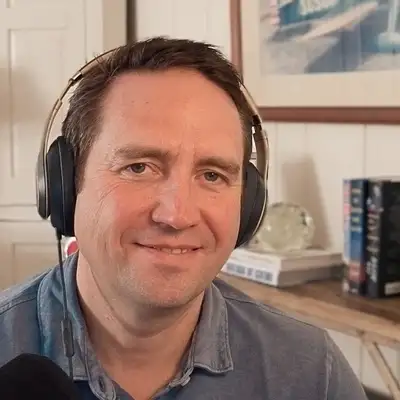
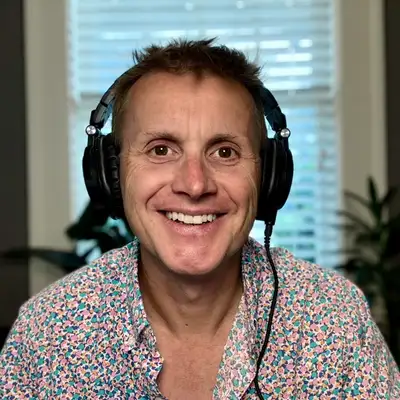
Space Insiders is your bi-weekly deep dive into the intersection of space, cloud technologies, and entrepreneurship. Hosted by Tony Sewell and Rob Ruyak, both seasoned space-tech executives, this podcast features candid conversations with founders, investors, and entrepreneurs shaping the future beyond Earth. Whether you're launching a startup, investing in innovation, or just space-curious, Space Insiders gives you the behind-the-scenes insights you won’t hear anywhere else.
New episodes drop every two weeks. Subscribe now and join the orbit!
Disclaimer: The views and opinions expressed in this podcast are those of the hosts and guests and do not necessarily reflect the official policy or position of any organization or employer.
Welcome to Space Insiders. My name is Tony Sewell, and as usual, here with Rob Reyak. How are going, Rob?
Rob Ruyak:Great, Tony. How's Down Under?
Tony Sewell:Good. Busy. We spent the week with the team in Sydney last week and this week my wife flew in and we're trying to find somewhere to live. So no pressure to get that done this week because we're moving down here in about five weeks' time, so it's really snuck up on us quickly.
Rob Ruyak:It's exciting, man. You guys should see the pictures that Tony sent to me. I mean, he's going to be having a beautiful view. It's going to be great. Really happy for you.
Tony Sewell:Yeah. Thanks, mate. So, really fun interview today and something a little bit different. We met with Patrick Johnson who is managing director at Silicon Valley Bank focused on their startup business. And I know he's a good mate of yours, Rob.
Tony Sewell:Would you like to tell us a little bit about it?
Rob Ruyak:Yeah. I met Patrick back in 2010 working at Booz Allen and was really impressed with him from the get go. Just super smart, really good with relationships, highly networked, quick on his feet. And It's been interesting to see his progression, his career move from a consulting role into having some global expertise and experience, but then working all the way into Silicon Valley Bank, which at the time, was really surprised that he did that. I wasn't really sure what he was doing, but it made all the sense to me once I reconnected with him and he told me more about what he did working in Silicon Valley and not just being a banker like one would think, but serving as, I would just say, he's like an Uber dot connector.
Rob Ruyak:That's really what it was or what it is. Being able to help companies in kind of all different facets of what they need, not just financing, but introduction to customers, to partners, to legal teams, anything that kind of fell within the web of a Silicon Valley bank network and that of a huge bank like them, that he could help other companies to be successful from day one the best that they could. And he's really good at it. And it led him to some new opportunities that we'll hear a little bit more about during the interview.
Tony Sewell:Yeah. I think that was the most interesting thing for me and sort of what Patrick was, I guess, emphasising that the relationship with the bank is not necessarily just about the money. It's certainly the way that SVB works and how they help sort of create the foundations and the connections that founders need and the advice. So I think there's a lot of really good practical nuggets that our listeners are going to enjoy in this. Before we get to the interview, there were a couple of pretty interesting stories in the news this week.
Tony Sewell:The first one I wanted to mention, which I think is kind of interesting because we've met with a few people in the space situational awareness and operations game, whereas the news of the Chinese team, the Shenzhou twenty return was delayed because of debris impacting their mission and their space station, which I think is I guess it highlights the risk that we see a lot of people in the industry talking about regarding, I guess, the level of control and regulation and understanding of what's going on in our near earth orbits and the real danger of debris and, I guess, uncontrolled behavior.
Rob Ruyak:Yeah. It's kinda scary. Right? I mean, it's one thing if it's other satellites that are in danger. It's another thing when you actually have humans in orbit.
Rob Ruyak:People. Yeah. And they're at risk. Mean, we saw that what was it a year ago? Maybe a little bit longer, you know, with the ISS and a similar thing where, know, the astronauts had to remain, you know, inside the ISS for a period of time because of the same risk.
Rob Ruyak:So it's a real thing. I mean, it definitely is. It's not theoretical.
Tony Sewell:Right. All these great things that we're gonna be able to do in orbit, but that's absolute title stakes. Yep. Yep. Other big news was I know you've got a lot of friends at Blue Origin, Rob, but this massive step they took with New Zealand last week, it never ceases to amaze me seeing seeing companies, like, land these these rockets on on these ships.
Tony Sewell:Like
Rob Ruyak:I mean, it is honestly, if if if you have not seen that video, you have to see it. I mean, it oddly is emotional, like when you watch it land because it is.
Tony Sewell:Yeah. You just feel the chills.
Rob Ruyak:You just think about all these people and there's so many smart people and like there's like thousands of people now. I think they have 10,000 employees at Blue Origin. They're not all working on New Glenn, but when you see these videos of the employees cheering and you think about how in the world can you actually organize, have an organization of people that all come together, do something like so marvel. I mean, it really is one of the most incredible things that a human has done is being able to do something like that. And the other thing too is, they're coming off They've learned a lot, obviously, from SpaceX, but these guys landed at the first time they tried.
Rob Ruyak:I mean, it's unbelievable, right? It's just unbelievable. And it's such a great thing for the market and for this industry because now there's competition. Now there's legitimate competition. I think we're going be able to see a lot more opportunity for companies to do big things because it's only going to drive the cost down more for launch.
Rob Ruyak:And I think just the ability to launch new and different spacecraft, I mean, it's got a huge fairing size. I mean, there's so much you're going to be able to do with that vehicle. It's so cool. And it really is. It was so great to watch that.
Rob Ruyak:And definitely go watch the video if you haven't seen it yet.
Tony Sewell:Yeah. A 100%. And fingers crossed, we might have an interview with someone from Blue Origin in the next few weeks as well. So stay tuned. All right.
Tony Sewell:Well, look, I think it's time to get to the interview with Patrick. Rob, what do you reckon?
Rob Ruyak:I can't wait. Let's do it.
Tony Sewell:Alright. See you in a minute. Alright. Welcome back. And today, we are joined by managing director from Silicon Valley Bank, Patrick Johnson.
Tony Sewell:Patrick, great to meet you. Thanks for joining the show.
PatrickJohnson:Thanks so much for having me here today.
Rob Ruyak:Good to see you, Patrick. Thanks for doing this with us again, man. This is this is just, exciting for me to have you, so thanks.
Tony Sewell:And, yeah, Rob's been telling us a lot about you. And I'd really just like to start just to hear a little bit about what you do. Tell me what a managing director responsible for startups at Silicon Valley Bank does.
PatrickJohnson:Yeah. For sure. You know, so I've been a part of SVB for a little over eight years. However, that tenure is now running to an end. And as Rob knows, I actually tendered my resignation, last week.
PatrickJohnson:And so I'll be departing, at the end of the month, to join, you know, an early stage venture backed startup. You know, I'll have more to share about that, but I'll still be, you know, very tightly, you know, involved with the broader innovation economy, the startup ecosystem. And yeah, you know, what I've what I've done, over the last couple of years, I've been responsible for, Silicon Valley Bank's early stage group, covering our East Coast markets. And so we tend to segment, the startup ecosystem both based on, sector stage and geography. And so my team has been spread out between Boston, New York, DC, Atlanta, Miami, Austin, and Chicago.
PatrickJohnson:Those are the principal markets that we're focused on, and predominantly supporting pre series a, founders. So we typically, you know, get involved with these companies really early on. You know, there's no such thing as too early. Sometimes it's just a couple people in a business plan sketched out on, you know, the proverbial napkin or whatever. And then we obviously bring them into the bank, give them, you know, the full suite of commercial banking solutions that you would expect.
PatrickJohnson:But where we've really differentiated is in delivering what, you know, I kind of frame as value beyond banking. You know, I think that that, you know, a lot of banking is pretty commoditized. And so to stand out in a crowded marketplace, you need to be doing more to help founders be successful. And so, we do a lot of, we kind of take a very broad definition of what it means to increase the probability of success for the companies we work with. So our team becomes an extension of their team.
PatrickJohnson:We help them with business development opportunities. You know, we do joint sales events to connect dots across, you know, the thousands of companies that that partner with us, to identify, you know, interesting channel partner opportunities, sales opportunities, things along those lines. You know, we help with recruiting, as well. I mean, we have a network of over 700 CFOs, and a, in a program called STD Advantage. And that was top of mind because just yesterday, one of the companies we work with said, hey, we're trying to hire a CFO.
PatrickJohnson:Can you help us, kind of attract some candidates for it? And so we're able to share the job rec. And I saw, just before we started reporting that, you know, three people have already applied, for that CFO role. But, you know, also if you're trying to hire a head of customer success, a VP of sales, people on engineering or product, you know, we tend to have pretty deep networks, in doing that. And yeah.
PatrickJohnson:So, you know, in a nutshell, that's what we do. A lot of our work is pretty event driven. We do a lot obviously also in helping companies raise capital, through our investor network. And so we're doing demo days, pitch sessions, investor readiness and fundraising workshops. I just hosted one of those, pretty recently with a partner over at Slow Ventures in New York.
PatrickJohnson:And, yeah, it's all in the service of founders.
Tony Sewell:This is awesome. This kind of area is pretty new to me. I'm more from the the the sort of the tech and product side. Yep. I am really interested though, before we kind of dive further into into that world, we talk a lot to the people we interview about their background and and such varied backgrounds Mhmm.
Tony Sewell:And sort of journeys for for the folks we've interviewed. And like and you've you've had a really interesting background. You worked for the OACD. You've worked in consulting and now banking. Just tell us how did your sort of career evolve?
Tony Sewell:And now you're about to go off into an exciting new, startup journey as well. Like, how how what's that that journey been
PatrickJohnson:you know, it it's one of these things where it's like, you know, the dots connect in hindsight. Yeah. And not obvious, when I was starting out that I would end up where I am now and and do what I'm doing, but feel very fortunate for kind of the way the journey's unfolded. So I initially met Rob when we were working at Booz Allen together back in the day. So I joined Booz Allen, you know, on the commercial strategy side back in 2008 and, really loved it.
PatrickJohnson:And I kind of stumbled into consulting. Growing up, I'd never heard about it, but then I was doing a summer program at Georgetown and, it seemed everybody there wanted to go into investment banking or consulting. And so I was doing my research and I'm like, okay, this seems this seems interesting. And so basically just tried to follow some of the advice of of, people that I considered really smart and connected. You know, got my foot in the door at booze.
PatrickJohnson:And, you know, in hindsight, that was an amazing place to start a career. Just because in consulting, you get exposed to so many different industries and projects and engagements you get to work on. You're able to build a really transferable skillset. And I loved them. I loved the firm culture.
PatrickJohnson:I was there during a pretty unique time where the Carlyle Group had purchased Booz Allen. They spun off the commercial side and then they were kind of really focused on building out the government and defense business. Learned a lot, worked with some incredible people. And then after about, you know, three or four years of doing that, I actually met my wife as well at Booz Allen. So thankful for that, you know, seventeen and a half years ago.
PatrickJohnson:And and yeah, after, you know, three and a half or four years, I was expecting that I was gonna do the traditional, you know, MBA route and then, you know, take a break, do my MBA and then come back, and rejoin the firm. But I had done some projects for a, for the OECD over in Paris, France. And one day the client that I supported over, at the OECD, gave me a ring and he asked if I was interested in coming over and kind of joining his team full time. And, it was pretty hard to say no to the opportunity to relocate to to Paris and, you know, to work with the OECD, which really interesting non governmental organization, you know, comprised of, you know, the time it was around like 30 member member countries, and putting together a lot of, you know, research on public policy, economics, you know, things that I was just kind of acutely interested in to try to increase, economic development and opportunities in those countries to share, you know, what was working on a policy side, among member countries to just ideally make things, work a little bit more smoothly.
PatrickJohnson:And, so went over to Paris, did that, loved it, really had no intention to leave, but then had the opportunity to rejoin Booz Allen and to help them launch a new business in Singapore. And, you know, at the time my wife and I still had a little bit of wanderlust and it seemed like a cool opportunity to then, spend time in Asia, which was obviously, you know, in the middle of a boom, still is in the middle of a boom in a lot of ways. And so we moved to Singapore. We're there for a couple years. You know, I was building out kind of the the Booz Allen office there.
PatrickJohnson:Also supported some projects down in Australia, which I know, is where you're based now, Tony. So I had some fond memories of that. And then ultimately was given the opportunity to reload with Booz to San Francisco. And I was working on a group called solution studio where, you know, the whole consulting business was really changing and, clients were less inclined to pay a bunch of money just for a PowerPoint deck outlining a strategy or what we thought they should do. They You wanted us to actually go in and build product, build solution, just get a lot more involved.
PatrickJohnson:And so, the initiative I was working on in San Francisco was around helping to productize a lot of IP that Booz Allen, was developing and to try to facilitate this, transition into becoming a little bit more of a product company. Now the issue is when you get to San Francisco, it's really, really hard not to get the startup itch. And while I loved what I was doing at Booz, you know, they're a big, you know, fortune 500 corporate. They operate on a very different time scale than startup world. And I just really felt compelled to, you know, to join an earlier stage startup.
PatrickJohnson:At that time, I never heard of Silicon Valley Bank. But what I quickly realized is that almost all, all roads in the startup ecosystem seem to flow through us, Phoebe. You know, they're working with the vast majority of venture capital funds, working with the general partners at those, funds and firms, banking all of the, you know, kind of really exciting high potential earlier stage startups. And I had a friend of mine from Paris who had moved over to join SVP and he kind of convinced me to, to join him. And I thought I'd be at SVD for a year.
PatrickJohnson:You know, I thought it was an opportunistic way for me to accelerate building out my network in the startup world. And, yeah. You know, I joined again thinking I'd be there for a year. And then pretty much from day one, I recognized it was a really special place. You know, one of the things I'd say is that it's it's obviously a bank for entrepreneurs, but in many ways, SVB was also a bank of entrepreneurs.
PatrickJohnson:And so felt that, you know, I was joining a place where we had the opportunity to kind of create the future of our industry and sector. And, initially, was part of an enterprise software lending team in San Francisco, which when you look at the startup ecosystem, you know, roughly 60% of it, is in NorCal. And so it was a really good market to support because, just the velocity and the size of the deals, you know, that's where the best founders in the world are based, and had a great time doing that. And then ultimately had the opportunity to to then transition into a couple internal management roles where I was supporting the former president of SVB, first as his chief of staff, and then as the head of strategy for the bank. And then after the, you know, kind of the regional banking crisis in 2023, you know, worked on the rebuilding efforts and we can get into some of the stories around that if if you're interested.
PatrickJohnson:And yeah, basically then had the opportunity to move into my current role, running, you know, this early stage group on the East Coast. Also, you know, kind of coincided with, you know, my wife and I, started having kids through our families. We have three boys, five, three, and one. Her family's in the area. And so, you know, we wanted to move back to the East Coast just to have proximity to grandparents and all of that, which has been great.
Rob Ruyak:So I remember, and this was 2010 when I went from Booz and Company to Booz Allen, and I met Patrick for the first time. I remember Patrick talking to Michael Farber, who I talked about in one of our previous episodes, we were talking about leadership. He's such an amazing guy. I remember turning to him and being like, Who is this guy? Who is this guy, Patrick?
Rob Ruyak:He's so young, he's so mature, he's so smart. And the one thing that always stood out about you with me, Patrick, is just how good you are with relationships. So I remember when we were pulling together the Booz Allen Capital Group, Corporate Venture Capital Group, and we were thinking through Solution Studio, I was so excited that you came back to do that because that whole concept was exactly what you were then doing at Silicon Valley Bank, which I think is such a core asset that you have and skill that you have, which is to meet people. You're not afraid to meet people. You're really good at nurturing those relationships and then bring them to bear to help others.
Rob Ruyak:I think that's one thing I want to talk to you a lot about today is how do you do that now? Well, I know you're moving on, but at Silicon Valley Bank, you were doing it other way, what was core to that was bringing people together constantly and trying to educate them and not only how to raise money. Because I think in the startup world, if you're not that familiar with it, everyone talks about venture capital all the time. I think a lot of the time it's money to help you grow your business, start your business, whatever it is. But there's so many other core things that a company needs that you just listed, which I always thought was unique to Silicon Valley Bank.
Rob Ruyak:It's not just another bank. So what is it that you would recommend to startup companies raising money now or looking to start their own company? Are there other things that they need to ask for when they talk to a bank? Is it really just about getting funding? Or are there other things that you would recommend that they ask for as they get started?
Rob Ruyak:Because there's a lot of things. There's a lot of risk out there. There's things that not until you ask do you really know. What would you recommend?
PatrickJohnson:Well, I think you just nailed it right there. It starts by asking. There's no harm in in, you know, kind of asking for anything. Right? Some of the most interesting people I've met had just come from straight up cold outreach.
PatrickJohnson:You know, I hear somebody's working on a
Rob Ruyak:cool
PatrickJohnson:thing, find them on LinkedIn, reach out to them. You know, it's it's coming from an authentic place as well where I'm like, you know, genuinely curious about what they're building. And then, you know, founders tend to be a very passionate bunch. And so they love talking about their idea and why they're doing, you know, the company. And so I think when you start having a conversation with a founder, just naturally a lot of things will come up in the course of that, where, you know, then I'm able to then kind of tap back and connect the dots, and figure out, oh, who else would be helpful for this person to know, you know, as they're building their business.
PatrickJohnson:And, you know, I think one of the things is, yeah, there's a lot of, there's obviously a lot of attention and press that goes into the venture capital world. Everybody wants to talk about, you know, the fundraising environment and how much they've raised and at what valuation. And, you know, I think that's interesting and important, but in a way it's kind of the wrong metric, because there are lots of ways of building and scaling a company and, you know, raising VC dollars is only one of, you know, many different, kind of paths that a founder could take. It definitely comes with some advantages, you know, if you've, if you're bringing in the right VC partners, again, they're gonna be able to help you with their networks. You know, they can look around corners.
PatrickJohnson:They've kind of seen this movie play out before in a sense with other portfolio companies they've worked with. And so I think the right VC partner can add a ton of value, but at the same time, it comes at a cost. You know, obviously you're giving up dilution, and in some cases, you know, control of your company to do that. And so I always kind of advise founders that like raising VC is great. But again, it's not the only route ahead of you.
Rob Ruyak:And you gotta find the one that works for you. Totally. So for example, like with Silicon Valley Bank, there's different ways of funding your company through a bank like SVB and others. But some of the questions that every startup obviously should be asking is, Do you have customers that can be my customers? Yeah, probably.
Rob Ruyak:You have a significant network of your own customers that could be customers of this company that you're trying to raise money for and with and mentor. And sometimes I feel like, where Tony and I work, working for a huge company, nine times out of 10, we have customers where we work that could help that company that we also support. Right? And it's not usually, I feel like, the first thing that comes to mind for founders that are trying to get their company off the ground.
PatrickJohnson:Yeah. I mean, well, look, generally with founders, their number one concern always is like not running out of money and going out of business. And so they're obviously like very conscious to that. And then if you think about ways of funding a business, you know, ultimately it's pretty simple. Yeah.
PatrickJohnson:You can fund your business with customer revenue. You can fund your business with, external venture capital kind of equity dollars that come in, or you can fund your business with debt. You know, those are effectively the routes ahead of you. And then obviously you could look at various combinations of those three, you know, kind of those three funding buckets. There's definitely a lot more attention on the customer revenue side.
PatrickJohnson:And that's even a thing where, you know, it used to be you could raise, you know, a seed round or even a series a round pre revenue. Like that's no longer the case, you know, now venture investors are really demanding, you know, just different metrics in order to fundraise and for a company to be viewed to be viewed as investable. So even at the early stage, I'm hearing from founders that, you know, to raise a pre seed, you know, they're expected to have like a million or more in recurring revenue, like for software companies.
Rob Ruyak:Boy, times have changed, haven't they?
PatrickJohnson:Yeah. I mean, they've really changed. Right? Yeah. And then also, but like, you know, the other idea that you just peed there is that, know, one of the advantages that startups and founders always have is just speed.
PatrickJohnson:And so when I reflect back even on the work I was doing at Booz Allen, you know, from like the solution studio side and then, you know, ultimately that, kind of morphed and became Booz Allen Ventures. You know, it was like four or five years, to basically stand up what became Booz Allen Ventures. And I think that's a real bright spot on their business now. Four to five years doesn't work in startup land. Right?
PatrickJohnson:These companies are operating on like a day to day basis. And so, you know, I think if you look at the characteristics of, you know, what sets apart some of the most successful founders and companies, it's generally just like a ruthlessness when it comes to speed. Like, that is the advantage.
Tony Sewell:Yeah. So, Patrick
Rob Ruyak:Do you think there's anything unique to the space industry in this area?
PatrickJohnson:You know, when I think about the space industry, well, one, I think it's a really exciting kind of spot in the market. It's pretty small compared to just the overall venture ecosystem. You know, I think the the last data I saw was that, you know, somewhere between 3 and $4,000,000,000, will go into space tech companies this year out of, you know, probably around $80,000,000,000 is getting deployed into the venture ecosystem overall. You know, one of the things that's unique about that sector is, just the capital requirements. You know, it's very different from just building a software company.
PatrickJohnson:Like you actually need to have a lot of physical infrastructure, CapEx. And so it basically requires these companies to raise more. A lot of them also obviously have a defense or at least a dual use angle to their business models. And so, you know, I'd really encourage them to look into ways of getting, you know, non dilutive government funding, SBIRS grants, things like that. And, otherwise, you know, I know a lot of venture investors are really excited about the space just because, you know, we're clearly in a space race, you know, with China and with with other, with other, you know, countries out there, which again is, you know, fueling more innovation, more capital going into this into this sector.
Tony Sewell:We met with, the founder of a European, space software company a couple of weeks ago, Lean Space. And Alvaro, it was interesting. They'd just gone through, I think they'd been through a couple of funding rounds and he was sort of saying one of the biggest challenges he's got as a software company in space is just competing with other SaaS companies for funding. So are there any particularly, how do you how do you advise founders to, I guess, better communicate their story and stand out amongst amongst others? Because there are lot of choices for where where these companies can invest their money.
PatrickJohnson:Yeah. Well, a lot of it comes down to why is this the right company and the right team to to, you know, go and win a market opportunity out there? Like, what's your right to win? I think one of the things for startups that's just super important is being so narrow, almost maniacal with your focus. You know, one of the reasons why startups fail is just trying to do too many things too soon for too many people.
PatrickJohnson:And so I think even there having a very clear definition of like, who is your customer? Like, literally who is the per like, what is the organization? What is the role within that organization? What problem are you solving for them? And really proving that out to get, you know, some reference points to, you know, confirm that you actually have product market fit.
PatrickJohnson:And then that's what will bring a lot of investors in if they see that you've actually solved a problem, you know, for a company, and that, you know, it's a sufficiently large market opportunity as well, because that's the other thing to keep in mind. You know, venture, we often say, know, venture investors are looking for venture sized outcomes. It's a power law industry. And so if you have a fund that's making, you know, call it 20 investments, they're looking for like one or two of those investments to return the fund. I mean, they're they're ready and willing to write off, you know, half of the deals that they do.
PatrickJohnson:And so in a lot of ways, it becomes a winner take all dynamic. And they're looking for companies that have the opportunity to, you know, create or to serve a really, really big market. And so I think it's also that's that's one of the questions that founders need to just keep in mind. Like, what is the market opportunity I'm going after? What is my right to web?
PatrickJohnson:What's my unique insight or the experience that I have that will position me to basically, you know, fulfill that need? And then from there, you know, there's, I've written a a a article just on Medium years ago, around like how to evaluate startups, you know, the three metrics that matter. And again, it's pretty pretty straightforward. You know, number one is a growth, right? Basically any venture investors gonna wanna understand like how is the company growing?
PatrickJohnson:Because that also proves out like, are you addressing a real pain point in the market? You know, the second metric they're looking at then would be around churn, that could be measured by net revenue retention or whatever. And if you have basically a low churn rate, high net revenue retention, then that indicates that like, okay, you're addressing a real need in the market indicated by the growth. And you're effectively solving that need because your clients aren't, you know, churning out. You know, if you had high churn that would indicate, okay, you've you've identified the right problem, but your solution's just not there to solve it.
PatrickJohnson:Not the right solution. And then the third one, which has become a lot more, you know, a lot more in focus over the last couple of years is around profitability. And so again, you know, it's it's easier said than done, but if you have a company that, is demonstrating pretty high growth rates, pretty low churn rates, and they have a business model where the kind of the unit economics makes sense and they can do this profitably, then sort of the world is their oyster. And, you know, venture investors are generally fighting over themselves to get into those deals.
Rob Ruyak:So do you think it's a good climate to raise money in right now for a start up?
PatrickJohnson:It depends on the type of startup. Yeah. I'd say it's it's always challenging. Right? I mean, even during the boom years, you know, with Zerp and what we saw with the venture world going crazy in 2021 and '22.
PatrickJohnson:Know, venture funding more than doubled over that period. In a way, it was easier for a lot of companies to raise money then. But at the same time, we're still now, you know, we're we're now dealing with sort of the hangover effects. Because a lot of companies that had raised during that era, raised it, you know, evaluation that was too high. You know, they're not able to grow into it.
PatrickJohnson:That creates some really challenging dynamics where these companies need to do a recap. You know, there's less interest again from the venture eco, you know, from a lot of the the venture investors, to support them because in a way it's almost easier to write off some of those companies and focus on the next new big thing. Obviously, one of the things that's different in the in the market right now is just all of the focus around AI. And I saw that something like 60% of all venture dollars, is going into AI. And if you cut into the data a little bit further, you see that and the vast majority of that is going into like five companies.
PatrickJohnson:And so we're seeing concentration of the likes that we've never seen before. And that's also, I think mirrored in just the venture world generally, where if you look at like the top five or six largest, venture funds, they're accounting for like over a third of all deal activity. You know, that used to be maybe 8% or 10%. So just in the last year or two, I mean, it's more than triple. And so you really have, I I guess I could summarize it as like a tale of two cities.
PatrickJohnson:Like, it's an amazing market for some people out there. It's incredibly challenging for others, and it's hard to know, you know, which one of those camps you're gonna be in.
Rob Ruyak:Yeah. I feel like there's a lot of conversation now about, you know, is this another .com boom? Do you think it is? I mean, there is a concern I think it's dot it's definitely
PatrickJohnson:com boom. The question is, will there be a crash after that? Yeah.
Rob Ruyak:Yeah. And that's what I meant. I mean, it's like, you know, you have a company like woosh.com that's raising, you know, $50,000,000 for a bunch of servers, which when I worked at Sun Microsystems at the time, that was a really good place to be when you're shipping these things out to a lot of random companies that weren't making money. But you think we're revisiting a kind of a cycle like that? No?
PatrickJohnson:Well, it's hard to say, right? Because there are kind of two theories behind that. You know, one one kind of thesis is that AI is truly different this time and that the productivity unlock and what it means just for growth is, you know, is more than enough to justify, you know, the insane investments that we're seeing going in this space. I mean, just on the AI build out, you know, this is the largest kind of investment program in history. Right?
Rob Ruyak:Yeah.
PatrickJohnson:It dwarfs, you know, the run up to World War one or World War two or the build out of the highway interstate system or the railroads or, like, you name it.
Rob Ruyak:Mass production. Yeah.
PatrickJohnson:Now Yeah. There's obviously things that people are are rightly pointing out as like, you know, cause for concern. And one of them is just the recycling of dollars within the ecosystem. And so, you know, you can pull up these charts showing like, oh, you know, Microsoft invests, you know, this many billion dollars into OpenAI, which then uses that money to go buy these GPUs from NVIDIA, which then is using that to, you know, partner with Oracle, which is then reinvesting back into OpenAI and you kind of have like this recycling of dollars playing out. That definitely makes me a little bit nervous.
PatrickJohnson:But I think it's a little bit too soon to to know what the ending is gonna be yet. I mean, obviously, there's gonna be market corrections, and that's just a part of, like, a healthy functioning, you know Yeah. Economy. But hopefully, it's more of like a glide path down and not kind of a an explosion, but something that I'm watching closely.
Tony Sewell:Patrick, just given where, at least in in your your your current role where you sit in the in the ecosystem and thinking about the space market, what what are the particular space and aerospace areas that that you see, like, real interest and and potential? Wait. You sort of see the biggest potential for in the future and and interest from investors.
PatrickJohnson:Yeah. Well, I'd say a lot of the biggest interest from investors is coming more on like the later stage firms. You know, it was like trying to get an allocation into SpaceX, you know, private markets. Everybody wants that for instance.
Tony Sewell:Everyone wants that.
PatrickJohnson:My world my my world is typically a lot earlier stage. And so there it's more around like, how can we use, you know, this confluence of new technologies coming to market between, you know, AI between autonomous systems between computer vision and machine learning. How can you create kind of new business models that bring all of those things together? You know, there's obviously still the ongoing war in Ukraine. And so a lot of what I'm seeing is more coming from like the battlefield in Ukraine as, you know, Ukraine and and kind of their allies are developing technology really fast to help, you know, the war fighters out there.
PatrickJohnson:So there's a lot on the drone side, you know, I think the whole future of warfare is changing, really dramatically. We're seeing it play out in real time. And I think that's also something that is driving a lot of investment into the space because, again, you know, just the dynamics of war changing. If you can use a cheap drone to go, you know, blow up a very expensive, you know, legacy military infrastructure or equipment, it changes the dynamics and kind of the the power, you know, posture, that you have on the battlefield. And so I'm saying a lot in terms of, like, you know, new applications of drones, but also drone defenses, directed energy lasers.
PatrickJohnson:I mean, you name it.
Rob Ruyak:Yeah. I mean, it's that kinda leads to our kinda these questions we wanted to have around building and nurturing, I guess, lack of a better term, ecosystems. So, we talk about defense tech. There's different parts of the country, I think, that are ripe for providing We were talking about where you were at Silicon Valley Bank, providing a whole bunch of different areas of value. It could be legal support contracts, could be different unique funding mechanisms like in the government, and maybe just local expert capital out there, specifically around defense tech in the DCs of the world and other What parts of the is it that you see in terms of ecosystem building that makes certain parts of the, let's just say The US as an example, but globally too, that make an ecosystem really unique, like a DC for defense tech, for example.
Rob Ruyak:I mean, Tony and I interviewed We had an interview a couple of weeks ago around how Atlanta has become an ecosystem for space investment, and a lot of it's from the work that Georgia Tech does. And there's a young lot people coming out with engineering degrees at one of the top schools in the country, in the world, actually. And that's kind of just one of many reasons why the ecosystem is actually unique for aerospace. What do you think it takes to build a unique ecosystem that supports startups and that has a high correlation of success from your view?
PatrickJohnson:Yeah. I mean, look, I think ultimately it comes down to just like the depth of, you know, talent pools that you have in particular areas. You know, there are very real network effects that play as well. And then also having, you know, one of the requirements for any robust ecosystem is, you know, basically having, big outcomes, right? In the sense that like you need a place that, has seen enough early stage companies that have graduated up to become later stage companies that have been acquired or gone public or whatever.
PatrickJohnson:In the process of doing that, they create a lot of wealth, that gets recycled back into, you know, the ecosystem. It also creates a, kind of a very deep talent pool of people who have been there and are able to take a startup from zero to one, or in some cases from, you know, 10 people to 10,000 people or whatever that might be. And that's also why you see so much concentration in the venture ecosystem in The US. Like, I'm really kind of optimistic and encouraged by the build out of all of these kind of new innovation hubs in the country. But at the same time, you know, New York and NorCal, you know, principally San Francisco, San Jose, those two markets account for 80% of the overall venture ecosystem in the country.
PatrickJohnson:You know, every other market is basically a rounding here. Right? And so it's like, yeah, Atlanta is exciting, but you know, it's like one or 2%. You know, Miami had been exciting, in some certain sectors, one or 2%. Yeah.
PatrickJohnson:Now that said, there are nuances. So like when you talk about defense tech, advanced manufacturing, things like that. You know, the whole area around Newport Beach, I think is really interesting. And again, it's it's kind of clustered though. Like, where's Anderle?
PatrickJohnson:Where's Palantir? Right? You see like a build out, you know, even in like Austin, Texas, obviously in DC. And so there are certain, you know, markets there that are deeper and kind of punch above their weight when it comes to defense tech or dual use or what have you. You know, that said, I, know, I'm I'm a believer that you have opportunity anywhere, But the reality is that like, you know, we saw for a couple years during, you know, call it 2021, 2022, you know, it seemed that Miami was like the hottest startup ecosystem.
PatrickJohnson:And I think there are so many things to like with what was playing out down there. But I think what a lot of founders realize is, yeah, that was an easy place to start a company. Maybe not the best place to scale a company. Scale. Just because, you know, if you need to hire 500 engineers or particular roles in product or whatever, there's just not the depth of the talent pool yet and that takes time.
PatrickJohnson:Now your example of Georgia Tech, like I think that's smart because again, there's an anchoring around these top research universities that are churning out talent. And so I think that's an advantage to places like Austin, to Atlanta to Boston, etcetera.
Tony Sewell:Yeah. Patrick, as we, sort of round this out, and thinking about what what what these different sort of local communities can offer, I really liked how you sort of started the discussion talking about how, I guess, founders not just thinking necessarily about banking just from the finance you get. Like, it's it's about all of the tools that that build the foundation of a good business. Are there particular things that founders underuse or underappreciate that that that you think really that that founders should be thinking about, that maybe it's just not obvious to them?
PatrickJohnson:You know, I I don't know because it's it's a little hard for me to have a counterfactual of this because, you know, when I'm looking at, like, what sets apart the best founders, it just tends to be this relentlessness. Right? And they are asking for help and they should do that. I mean, worst thing that happens is they get a no or they don't get a response. But I think good founders should be, asking a lot of every partner they work with.
PatrickJohnson:Know, ask your bank for things. Ask your law firm for things. You know, ask for customer intros. Again, like it doesn't hurt anything. Right?
PatrickJohnson:The worst case is they just they just kinda get a no. You know, you have one customer. Great. Ask them if they'll intro you to additional customers. Right?
PatrickJohnson:But I I really think it just comes out there with this, again, maniacal focus around, you know, just trying to get in the right rooms to grow the business.
Rob Ruyak:I take one thing that started outside of you. Sorry. Go ahead, Tony.
Tony Sewell:No. I I was just gonna I was gonna say, sort of coming from discussions that we we've had with with our friend, Kristen Sargent, Rob, like, when she went out on on her own, she said she was she was, like, pleasantly surprised and and really kind of buoyed by the fact that if you ask for help and you're out there trying to start a business, like, she was amazed how many people said yes.
PatrickJohnson:People wanna help.
Tony Sewell:People wanna help. Wanted to help, which which is which is great to great to hear that. Yeah. Sorry, Rob.
PatrickJohnson:Yeah. I mean, look. It's one of these things where I think look. I think it's really cool if you're lucky enough to be able to, you know, let's just say connect friends of yours who end up getting married. Right?
PatrickJohnson:Like, that's kinda awesome, that you get to play a role in that. Pretty similar. If you can bring people together and they end up founding a company or investing in each other's company or whatever. I mean, it's just a fun thing to be able to do. Right?
PatrickJohnson:I think people ultimately like helping people.
Rob Ruyak:Yeah. I would I agree with that. And the one thing I was gonna say is in my experience, especially when I was focused more on startups a little bit more in my past, I think startups typically underappreciate the power of partnerships as it relates to distribution, as it relates to just sales, because this is just my experience and maybe it's just kind of who I've met in companies I've worked with. But a lot of times I feel kind of the strength is also the weakness. There's this fire burning in their belly where it's, I have the product that's going to solve all these needs.
Rob Ruyak:But most of the time, the customer, especially if it's an enterprise type business owner, like someone who runs a business unit is making decisions or someone in government who's making a decision on down selecting a particular proposal, they're typically not just looking at the data integration platform or just viewing a geospatial map, right? There's a lot more there. There's an Uber solution. And sometimes I think startups sometimes tend to underappreciate the fact that the buyer is actually not really looking for the coolest technology, but they're looking for something that is what that startup provides plus others to solve their problem, and that's what they want to buy. Sometimes I feel, actually, a lot of times I feel that startups are really kind of under appreciating the fact that having strong partnerships with other companies is important.
Rob Ruyak:And I get it. I mean, when we worked at Booz Allen or any company I've worked for that's large, it can be scary, right? Because the company is concerned, to they're take my IP, they'll take my idea, they'll recreate it, whatever it But at the end of the day, I think the customers that companies are typically targeting are looking for something more than just what they offer. And there's something bigger around them that they need to be a part of that really completes the sale. So, that's just something that I thought I would add because I definitely
PatrickJohnson:think I totally agree with that. I think one of the things that a lot of founders struggle with is that they're used to operating at a certain speed and cadence and they expect everybody else to operate at that speed as well. But then they're trying to land some bigger enterprise deals and those people work on a different, you know, time horizon. You know, think one of the things that, you know, maybe it's a little bit of a growth hack, but and it also just kinda ties into psychology and human nature. But there's a big opportunity to bring some of these partners in to even help inform product development.
PatrickJohnson:Right? So if you go out and you're working with a company and you're like, hey, not only are you my customer, but can I also make you a design partner? And can you help, you know, can you help me figure out what should be on the product roadmap as I continue iterating the solution over the next couple quarters or years or whatever. And then you make them feel bought into the journey you're on and feel a little bit more ownership and that you'll invest it in your success. And it obviously also increases the odds that, you know, again, you're gonna be solving actual problems.
PatrickJohnson:You know, I think one of the going back to one of your questions, like one of the mistakes I've seen, you know, kind of founders make is just being too wet into their initial idea. Mhmm. And, you know, I see this every day because again, when you look at the the stage of companies that I spend a lot of time with, you know, the early stage to your pre series a. I would say probably around 90%, if not higher, of companies when they go from, you know, the early ideation phase to getting up to that series a kind of graduation milestone, like over 90% of them have materially pivoted what they're doing. You know, they've changed what they're building, they've changed their business model, they've changed the market they're serving, whatever.
PatrickJohnson:And so I think again, like one of the advantages of startups is just speed and also iteration. And so you don't necessarily know, like you have an idea about a problem you're gonna solve. The odds that you're gonna get it right on the first time are really low. And so it's more around like identifying the right problem and then getting in there. And again, like working through this iterative process, you know, and bringing, you know, some of those customers and design partners along for the ride with you.
Tony Sewell:Awesome. So just to kind of wrap it up before we get to Rob's fun question at the end, Patrick. We've talked a lot about with other people we've interviewed about mentorship and the importance of mentors for all of us. Is there a particular, mentor for you, that sticks out or a piece of advice you've you've got through your career that that you'd like to share?
PatrickJohnson:Man, I mean, I have so many. I like, seriously, I I have so many, you know, I feel incredibly fortunate with the, you know, kind of the stable of people who are by my side. Right? Yeah. And I was even just going through this, you know, the decision to leave SVB was not an easy one.
PatrickJohnson:Even though I'm extremely excited about this new opportunity I'm gonna be embarking towards. I probably had 30 conversations with people to just help me think through
Rob Ruyak:Right.
PatrickJohnson:And that was so beneficial. So, you know, early on, one of my mentors at Booz Allen had shared like, hey, there are, you know, there there are two ways that you could definitely fail here. One of them is by not asking for help when you need it. And then the second is by not giving help when somebody asks for it. Because in either one of those scenarios, you're you're wasting somebody's time.
PatrickJohnson:It's you know, it's just not the way that you wanna operate. And so I think being really generous with time is is great. And it's one of these things where it's like the more you give, the more you get. And so I try to be as helpful as I can, with my network, and that really gets reciprocated. And so it becomes like this positive flywheel that just keeps building on on itself.
Tony Sewell:I love it. That's great.
Rob Ruyak:Awesome. Okay. So we always finish these with a hopefully a fun question, so people could get to know you a little bit better, Patrick.
Tony Sewell:Okay.
Rob Ruyak:So since you're a banking nerd, I thought I'd ask you the question, what would be your what is your favorite all time moving that that revolves around banking or finance?
PatrickJohnson:Oh, man. I mean, there's so many.
Rob Ruyak:You know? Are there really?
PatrickJohnson:Like, you know, some margin call I would've liked that. It's like margin call's a classic. Right? I feel like that's at least on the top five.
Rob Ruyak:I have not seen that. Who who is in that? I haven't seen that.
PatrickJohnson:It basically follows an investment bank, you know, during the the February. Kinda gives you an inside look. It's it's a it's a good movie. Sounds like a comedy. I thought the big short was entertaining and obviously Michael Burry is, like, back in the news now.
Rob Ruyak:With That's good.
PatrickJohnson:You know, now he's back in the news, with these, shorts of Palantir and and kind of all the rest and looking at the AI side. Kind of a fun one was the GameStop movie that came out a couple years ago. Think that was called Oh,
Tony Sewell:that was a good one. Yeah. I yeah. That that was What about you?
Rob Ruyak:I did not see that either. Oh, mine? Okay. My answer is gonna be a little bit timely. I like It's a Wonderful Life.
Rob Ruyak:It's about banking. It's about right? It's a savings and a loan business with George Bailey. Wait. What'd you say, Tony?
Tony Sewell:I've never seen it.
Rob Ruyak:You've never seen it? It's all last time. My god. He breaks his All right. It is so good.
Rob Ruyak:Tony, you have to watch it. It's a Christmas movie. I'm not gonna tell you
PatrickJohnson:anything else.
Rob Ruyak:But it's an incredible story. So I don't know. I mean, of course, I like I thought Wall Street was phenomenal. Wall Street.
Tony Sewell:That was that's my that's my number one.
Rob Ruyak:So good. Yeah. I mean Yeah. That was so good. Wolf of Wall Street's pretty
Tony Sewell:good too. And I Wall Street's And just kept, like, the Oh. And I it just captures the a the spirit of the eighties, which I love as an eighties. It sounds really good.
PatrickJohnson:Ken, look. I gotta tell you. I mean, I know you asked about movies, but I have to say, the TV the TV series Silicon Valley kinda nailed.
Tony Sewell:That's that's Yeah. Yeah.
PatrickJohnson:Ken. The number the number of people I've met, meetings I've been to, events I've been at where I'm like, oh my god. I feel like this could be a parody in a sense.
Rob Ruyak:You Well, know what's funny, Patrick? I was thinking in real time as we were doing this interview, was gonna ask you. Is Russ Henneman's advice the best advice? You just wanna say you're pre revenue forever as long as you can?
PatrickJohnson:Well, I don't I don't think that's gonna work anymore
Rob Ruyak:in this market. Exactly.
PatrickJohnson:Mean, again, with that tire, I mean, they they really they really nailed it.
Rob Ruyak:Oh, yeah. Tony, what's your favorite?
Tony Sewell:Wall Street. Yeah. That was what I was gonna nominate. Absolutely.
Rob Ruyak:The Wall Street?
Tony Sewell:Yeah. Yeah. Yeah. Yep. Totally.
Tony Sewell:Awesome. Awesome. Well, Patrick
Rob Ruyak:Well, Patrick, thank you, man. This was so much conversation.
Tony Sewell:Really appreciate it. I learned a lot, actually, and I think I our listeners are gonna really enjoy this. And, Patrick, I can't wait to hear where you pop up. So I guess we'll stay tuned on LinkedIn in over the next couple of weeks. But if people wanna learn more about you or SVB, where where can they find you?
PatrickJohnson:Yeah. LinkedIn's great. So, you know, hopefully we can share a link to my LinkedIn profile. Feel free to send me a connection request. I'm obviously always happy to hop on a call, to to just be helpful for anybody out there building.
PatrickJohnson:You know, I feel like I've I've really been in one of the best jobs in the world to be able to, you know, I think materially, in a lot of ways impact the growth trajectory for a lot of these companies, which, you know, it's the future of our different industries. It increases competitiveness. You know, anything I can do to help reduce the barriers to entrepreneurship and to make the lives of founders better is, you know, is what I what I wanna continue doing.
Rob Ruyak:Awesome. Well, of luck, Patrick. Good job, Patrick.
Tony Sewell:Yeah. All all the best. Can't wait to hear. Alright. And and thanks everyone for listening.
Tony Sewell:If you like what we're doing, make sure you leave a review or or write, and we'll look forward to seeing you next time. Cheers.