Subscribe
Share
Share
Embed
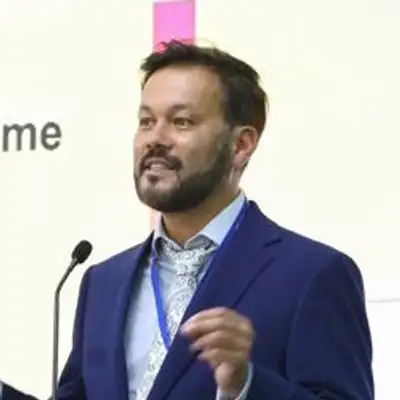
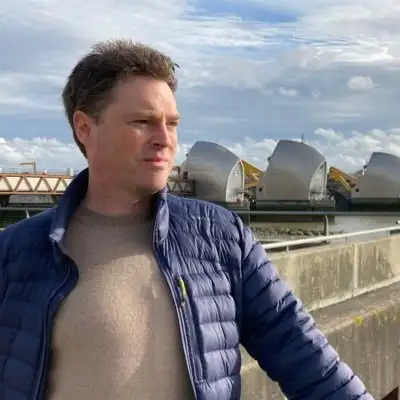
Generation One is the flagship climate podcast from University College London. Join our collective of passionate individuals dedicated to climate action and a fairer, more positive future – for us, and for the generations to come.
Our hosts Professor Mark Maslin and Dr. Simon Chin-Yee dive into the biggest challenges and solutions shaping the fight against climate change.
Joined by expert guests, they’ll be bringing you cutting-edge initiatives and inspiring climate action stories – from reimagining global energy systems to protecting our oceans, from using AI to decolonising climate solutions.
Tune in monthly to discover how we can turn climate science and ideas into real-world action.
Learn more about UCL’s Generation One climate campaign and access episode transcripts at ucl.ac.uk/climate-change.
We’d love to hear your thoughts and feedback. To get involved, email us at podcasts@ucl.ac.uk or find us on X using #UCLGenerationOne.
Language: English
Presenters: Professor Mark Maslin, Dr. Simon Chin-Yee
Producers: Adam Batstone, Caitlin Mullin, Jane Yelloly
UCL Minds 00:03
We are the first generation to feel the impact of climate change and the last generation that can do something about it.
Dan 00:10
So long as sporting organisations aren't perceived to be walking the walk on climate change, they're going to be called out by climate protesters.
Russ 00:24
Sustainability is secondary to the business, generally speaking, if we're talking in professional sport.
Sofie 00:35
We are kind of activists just as women's football players, so I think it's in our DNA to speak up about stuff like this.
Mark Maslin 00:45
This is Generation One from University College London, turning climate science and ideas into action.
Welcome back to UCL's Generation One podcast and season 5. I'm your host, Mark Maslin, and I'm a professor of Earth Systems Science here at UCL, which means I study climate change in the past, the present and the future.
Simon 01:17
And I'm Simon Chin-Yee from UCL’s School of Public Policy and my work focuses on clean energy sources for transport, shipping, aviation, you name it.
Mark Maslin 01:20
Today we're on to one of my favourite topics. We're moving from the sidelines to solutions. We are diving into the intersection of sport and sustainability. We'll be exploring how the world of sport contributes to climate change and how the climate crisis is already affecting how and where we play.
We'll be hearing from leading voices in sports sustainability, from grassroot campaigns to global initiatives, and discussing what clubs, venues and fans can do to build a more sustainable future for the beautiful game and of course other sports.
Simon, last episode was a topic particularly close to your heart. Does this one resonate the same way? Are you a sports fan?
Simon 02:25
Well, something you may not know about me, Mark, is that right out of my masters, I worked at UNESCO.
What a lot of people don't know is UNESCO is the UN agency mandated for sport. So that was quite a few moons ago. And at the time, I wasn't necessarily making the link between climate change and sport.
What we did do was make the link between education, sustainability, and the movement as part of a young person's curriculum. And in fact, Mark, until the Paris Agreement, the UN Convention on Anti-Doping was the fastest agreement to be ratified into the ecosphere, as it were.
I attended the 2007 Rugby World Cup as part of the United Nations. What was so interesting, and I got to see the final, and that was amazing. But one thing I thought was super interesting, very funny actually, is that I was asked by the team of Anti-Doping and Sport, which was my team, of course, to if I could follow the rugby players around into the changing room to test them, get urine samples from them, and not let them out of my sight until it happened. Now, I didn't do it because I couldn't commit to being at every match in the Stade de France, but it's something that I think about regularly, not because I didn't want to do it, but just because I missed an opportunity there.
Mark 03:37
So your great claim to fame is you turned down the opportunity to follow big, scary rugby players into the change room, say, Excuse me, sir, could I have a UN sample?
Simon 03:53
Can you just imagine we all move from the UN following these rugby players around? Is there a sport or a team that you are particularly obsessed by?
Mark 03:54
So I love all sports, whether it happens to be cricket, rugby, but my heart and my passion is probably football. Now, what you may not know is at COP26 in Glasgow, I helped organise a charity football match. We had the leader of the Labour Party, Anna Sawar, was on my team, and the leader of the Conservative Party was our referee. And I thought I'd be playing for 10 or 15 minutes because I'm slightly older and I'm not a professional footballer.
Yeah, they kept me on for the whole 90 minutes. You'll be pleased to know that my team did win, but as an Englishman in Scotland, I of course missed a penalty.
Simon 04:47
That was in the middle of a COP where you had 30,000, 40,000 of people attending and were criticized for this all the time. But if you think of these huge sporting events, World Cups, Olympics, they have an enormous carbon footprint. Is there an event that you participated in or as a spectator at one of these huge events?
Mark 05:02
So I was so proud to be able to attend the London Olympic Games, which still is the most sustainable Games that have ever, ever been held. And again, what was brilliant is they thought through everything, from the building construction to how the fans would get there, how everybody was going to live in that area, and then how they were going to use the site in Stratford after that. And of course, UCL has been part of that legacy because, of course, we've built our East Campus on the Olympic side to make use of all of that fantastic infrastructure.
Brilliant. Shall we go on with the show then, Simon?
Simon 05:48
Let's do it.
Mark 05:50
Joining us today, we have our very own Dan Hall, Sustainability Engagement Officer at UCL. He's also the Comms Manager for Football for Future, a non-profit empowering the football industry to embrace environmentally conscious practices.
Simon 06:11
And we also welcome Sofie Junger-Pedersen, a professional footballer who plays for Inter-Milan and the Denmark national team. And if that weren't impressive enough, in 2023, Sofie led the largest ever player-led climate advocacy campaign, inspiring 44 players participating in the Women's World Cup to take responsibility for their flights, raising over 25,000 euros for nature restoration projects around the world.
Mark 06:41
Later, we'll be hearing from Dr. Russell Seymour, founding director of the British Association for Sustainability in Sports and Senior Enterprise Fellow at the Institute for Sport Business from Loughborough University. So welcome, Sofie and Dan.
Dan 06:57
Hello, thanks for having me.
Sofie 06:57
Thank you very much.
Mark 06:58
Sofie, as a professional footballer, what inspired you to be a climate advocate, especially during the height of your career at the World Cup?
Sofie 07:13
Yeah, I think for many years I have been concerned about the climate crisis and from a very young age actually I have been interested in international politics and the global society and of course climate changes are a huge part of the global society and international politics. And in the last six years I would say I have tried to use my platform as a professional football player to put focus on the climate crisis and also push for the football industry to take part in the green transition.
And I feel very privileged to have the opportunity to use my platform and kind of use my career as a football player to put focus on climate crisis and recently also human rights. And yeah, I've always felt bad when I have been flying. I compensate all my flights, but I still feel bad. So when I found out that the World Cup was to be played in Australia and New Zealand, I knew I would feel bad about flying all the way from Denmark to Australia or New Zealand.
So around a year before the World Cup, I think I got the idea of trying to get players to compensate for their flights to and from the World Cup. And I did some PowerPoint presentations both in my club, Juventus, at that time, and for the national team, for the players and for the staff, where I presented this idea and I got very positive response from the players about participating in this.
Yeah, I think I just wanted that players could do something concrete by paying actually from their own pockets to climate-friendly projects and then also to use this platform to highlight that we are football players who also care about the planet and are concerned about climate changes. So yeah, this is, I think, how it started.
Simon 09:19
And how, Sofie, if I could just ask how you were inspired actually to do that. I mean, one thing is so important is that people around the world pay attention to sport. They're not necessarily paying attention to climate change. So having someone like yourself sticking their name on something like this can really reach many, many people.
Sofie: 09:50
Yeah, exactly. I think I have really understood during the years how powerful sport and football in particular is to drive change and to put focus on important things. And yeah, I think football, we also say that we stand for so many good values. We do a lot of campaigns, for example, against racism and homophobia and for equality and different things. And it's really good, it's really powerful when people, when kids and people in general, they see their idol from sport, they stand behind a message.
So even though I'm not the most followed football player at all, but I do play for a national team and for big clubs with big names. So it's always been like a privilege for me to be able to use my platform. And I see it also as some kind of a responsibility for me to do something.
Mark 10:42
Well, don't worry, you've got at least another four or five followers here already. So we'll be signing up. Don't worry.
Dan, tell us about Football for Future, how it began, its aims, and the gap in the football world it was trying to fill.
Dan 11:06
So Football for Future was founded in 2020. I joined in early 2021. Really, our mission is about creating an environmentally sustainable culture in football. So what we want to do is use football as a vehicle for social change.
We like to say that there's nothing more important than tackling climate change and there's no social phenomenon more powerful than sport. And so what we are all about is using that cultural power that football has to try and inspire people to take action on climate change, but also about embedding sustainability within the game itself.
So there's a few different ways we do this. We work with fantastic, inspirational, current top-level athletes like Sofie. We work with the next generation of footballers by conducting educational workshops with Premier League Academies.
We share stories from across the football and climate change sector to try and really create that community and share best practice. And we also deliver training to club staff to try and embed sustainability within football operations.
Simon 12:05
It's really, really interesting. I've noticed some of my students in the past years are really trying to use football specifically and linking it to climate action. But for yourself and for football for future, what are the challenges then that you come up against just in communicating that message across?
Dan 12:24
Yeah, it's interesting. I think there's still a sort of stereotype, you know, speaking here in the UK context, of the average football fan as someone who's not going to be the sort of average climate protester, as someone who is perhaps kind of wants to turn up to a football game, forget about football, and isn't particularly interested in engaging with any kind of climate politics.
But when you look at the kind of any kind of political survey that shows climate change is one of the most important issues for UK voters, and by any metric, football is one of the most sort of popular things in the country that people care about. There's going to be a lot of people in the middle of that Venn diagram, right? We like to use the language of football to explain climate terminology and even just thinking, you know, in terms of football metaphors and the values that being a football fan, you can kind of relate to.
You know, no hope is lost until the final whistle. The best team is greater than the sum of its parts. You know, it's not over till it's over. Just ask Sir Alex and Fergie time and all that. You know, it's kind of a little bit trite, but it's those values that we want people to have to take with them to tackle climate change.
Mark 13:28
So, Sofie, I don't think that many of us fans really have an understanding of how climate change can impact the game. Do you have any first-hand experiences of how climate change has actually impacted you or the clubs that you've played for?
Sofie 13:48
Yeah, I do have had some first-hand experiences with climate change maybe. I think my first summer where I played in Italy, I experienced playing in 36 degrees for a training session and that was not nice. I didn't feel good and I started to see black spots in front of me. Then also here in Italy I've tried to play in heavy rain at a game and the heavy rain just destroyed the pitch completely. We could not make a pass because the ball stopped in the puddles and it was not nice to play and I'm sure that it was not nice to look at.
Yeah, so that was another experience and I think in general when it's very warm and we play on turf, all the players we get blisters and it's really painful to play with. I'm sure that many others have experienced worse things and probably also a lot more times.
Simon 14:53
So Dan, yeah, back to you then. What are the biggest ways that football itself is actually impacting the environment? Flights, venue emissions, that sort of thing. What are the direct consequences of these events?
Dan 15:06
So when you think about attending a sporting event, every step of that journey has an environmental impact. So you attend the event, you travel there in some way, you maybe buy food or drink that has a carbon impact, that has potentially plastic packaging.
But the largest share of football's carbon emissions are through fan travel. So around 60 to 80%. This is even greater for mega events like the World Cup. So Sofie talked about her experience of going to the Women's World Cup in Australia. The next men's World Cup is over the entirety of North America, the largest geographical area the World Cup has ever been spread across. So clearly there are going to be huge transport associated emissions with that.
Mark 15:47
So Sofie, this is a question for you and I hope this doesn't get you into trouble. If you were in charge, and I'm sure you will be in a few years' time, what would you think that FIFA, UEFA or the national federations need to do to try and actually mitigate some of this impact?
Sofie 16:07
Yeah, I think they do have a responsibility to do something about this. One thing that I have asked UEFA to do is to make rules about how much teams are allowed to fly. For example, for Champions League games, there could be a rule that if you can do the same journey in five, six hours by train or by bus, then you're not allowed to fly.
I think also that will send a strong signal to fans that then could also choose to take not the fly. I think it's always important that even though it's fan travel that have the biggest impact on the climate, then it's still so important that we don't just point fingers at the fans, but that we also, as clubs and players, we actually do something to limit our own CO2 emissions.
Then another thing is also the choice of sponsors and I think UEFA and FIFA have a huge responsibility on this and also national federations. We already see that tobacco advertisement is not allowed in football, but it also have to be the case for fossil fuel companies and highly polluting companies like airline companies.
And we see a lot of those sponsorships in football and I really think that sends a very bad signal. And both FIFA and WEFA, they have policies that show their support to the Paris Agreement and to climate action in general. So we have to live up to those values. And that's something that I have also tried to call for with other players, 130 other female players, at the letter that we sent to FIFA in October, that we need to see more climate action from FIFA, and that we, the players, we support that and we think it's really important.
Simon 18:19
That's so impressive, Sofie. Do you see an uptake then from FIFA's side of things in order to actually address that and to not use those sponsorships that, for example, we associate with high polluters?
Sofie 18:36
Not yet. The questions that we asked in the letter to FIFA, we haven't got any response on that, or we did get some kind of response that was not a response on our questions. So we're still waiting to see if they will do something about it.
And we try to push even more to send a clear signal that we, the players, we cannot play with fossil fuel companies on our shirts and promote those companies because we actually also care about the planet.
Simon 19:15
Okay, and Dan, what about you?
Dan 19:15
Yeah, I absolutely agree with everything that Sofie said there. And I think it's a really important point that you make, Sofie, about not pointing the finger and it's particularly at fans. And when so much of the impact of football comes from fan travel, the kind of biggest impact that the authorities can make is actually making things easier for fans to travel in a more lower carbon way, right?
So whether that is hosting tournaments in a bit more of a sensible way geographically, improving transport links, all these kind of things make kind of more sustainable options more easy for fans. So at the men's Euros in Germany last year, UEFA and the host kind of organised for subsidised long-distance train travel for fans.
I think it was maybe free with a match ticket on public transport as well. So these sorts of initiatives make low-carbon travel more accessible for fans and definitely should be encouraged.
Mark 20:25
So Sofie, going back to your campaign, it's fantastic that you've been able to do this, but have you got supporters in the men's game? Is it replicated there? Are they picking up on this as well?
Sofie 20:28
Well, we do see male players who support climate actions and are vocal about it. Like a player like David Wheeler has been very loud on this issue, which is really great. Also, William Trost Ekong, I'm not sure how to pronounce it, but he's the captain of Nigeria. He's also very vocal when it comes to climate action and climate changes. So yeah, that's great. Of course, there haven't been 135 male players who have signed a letter to FIFA as we did, but I hope to see that in the future.
I think women's football is special because we have been fighting so many years for equality and inclusion in the game. So we are kind of activists just as women's football players. So I think it's in our DNA to speak up about stuff like this. That's not so natural, like in general, for the men's football, but I think we do also see more and more male players who are part of this, and that's great. The world is changing. The world is changing and fast.
Dan 21:54
So yeah, so taking that international, perhaps now if we can go more to the local level and back to you, Dan, understanding grassroots football and climate challenges, but also climate initiatives. They're often underfunded, overburdens. So how can such projects, such as the one you are spearheading there, be made accessible and realistic at the grassroots level?
Dan 22:10
Yeah, it's really tricky because, you know, overall, there was a study that showed by 2050, a quarter of UK football grounds will be flooded annually. There's research by BASIS, the British Association of Sustainability and Sport, that extreme weather has affected 40% of football players. And an analysis, I think it's maybe 10 years ago now, so it's probably out of date, that the FAA estimates that 120,000 games are lost per season across the football pyramid in England, and one-third of grassroots pitches are losing between six weeks and two months of the year from flooding.
So as climate change causes different climatic conditions for the UK, so thinking probably warmer, wetter summers and the increased likelihood and severity of extreme heat waves, that's going to impact the amount of days that are actually playable for football.
Sofie mentioned earlier about 36 degrees being really, really uncomfortable to even train in, let alone play matches in, and the impact of extreme rainfall on pitches. And that impact of rainfall on pitches is even more pronounced on a grassroots pitch that doesn't have the drainage of a top-level professional pitch.
Mark 23:32
So I'm going to ask both of you, Dan and Sofie, about protests. We see a lot of young people being incredibly anxious and they want direct action. So we've seen that sporting events like Formula One, even Snooker have been impacted by protesters standing up and saying, you should take this seriously.
Do you think, and I'm going to throw this to Sofie first, do you think this actually helps your cause or do you think that's going to cause a backlash with the fans?
Sofie 24:08
Yeah, I think actually it's a difficult question to answer. We experienced here in Denmark at a handball game. Handball is very popular in Denmark that a fan or a person interrupted the game and he wasn't popular. Like people got very angry, but it's difficult for me to say if somehow he did have an impact on people anyway. But it was not popular at the moment. And I think that those who are protesting like this, they are not bad people, of course. They are really worried about the climate changes and they do have an important point.
So I think our job is really to give them space to come forward with their messages. And yeah, I think it's a bit difficult to answer the questions, but some processes are not popular, but maybe they do have an impact.
Dan 25:04
Yeah, I think that so long as sporting organisations aren't perceived to be walking the walk on climate change, yeah, they're going to be targeted by protests, they're going to be called out by climate protesters. So I think regardless of your opinion on the protests, the best way to address the issue is by taking meaningful action on climate change. I think as kind of culturally significant moments where people come together, that naturally lends themselves to opportunities for people to make a point and to make a protest.
And, you know, protests has always been a part of major sporting events throughout history. And I think climate protests are the latest part of that. And if people don't actually believe that, remember that a woman died at a horse racing meeting over 100 years ago to protest about having the right to vote. Women's votes was a protest at a sporting event. So, history. So another thing I think we need to really take into account considering how fans, sports fans, can take meaningful action.
Simon 26:16
So I want to ask you both this, but I'll start with you again, Sofie, on understanding what an individual fan, a football fan, a sports fan, a tennis fan, can go out and do. What can they do to address climate change, either at a sporting event or even in their own lives?
Sofie 26:33
One thing is to eat less meat, especially beef. That's a really important thing that you can do to lower your own carbon footprint. Then also buying less clothes, buying recycled clothes is another way. Then fly less, as we have already talked about. That's also really important. And then use your, if you are lucky to be able to vote, then vote for politicians that actually want to change the structures to make the society more sustainable.
Dan 27:14
Yeah, I think if you are a fan of a club, whatever sport that might be, then write to the club, ask them what they're doing on climate change, ask them if they have a sustainability plan or a net zero plan, ask them what they're planning to do on climate. Because I think clubs consistently underestimate how much their fans actually care about climate change. Surveys consistently show in the football context that fans care about climate and think their club should be doing more.
Sofie 27:45
In general, I don't think it's good that we see that every year all clubs, all big clubs, they change their shirts to a new one and even have three different shirts to play the games in. I don't think it's a good signal to send that after one year we just don't want to use our clothes anymore. So I would probably say look for an Indo shirt in a recycle store. That would be a good idea. And then one thing I wanted to add was that as a fan you can show support for our letter to FIFA telling FIFA that I stand by the female players who want to kick out Saudi Arabia as a sponsor of FIFA.
So that's another way that you can support climate action as a fan. And we'll put that into the links on the notes so listeners can actually click on that and see that letter and support it.
Simon 28:46
Thank you, Sofie. Thank you, Dan, for joining us on our pod here at UCL Generation One.
Mark 29:02
We're now joined by Dr. Russell Seymour, founding Director and now Chair of the British Association for Sustainable Sport. And he's also Senior Enterprise Fellow at the Institute for Sport Business from Loughborough University.
Russ has a wealth of experience working in the sports industry, focusing on improving sustainability performance for professional venues. So Russ, welcome to Generation One.
Russ 29:30
Mark, very happy to be here. Thanks for the invitation.
Mark 29:31
So Russ, we've heard a lot about the football sector from our previous guests. So we're keen to actually talk about other sports because there are other sports, I've been told. So can you tell us about your trajectory? Because you started off working for professional cricket club, Lords, of all places, and now you've become a leading figure in sports sustainability. What was the turning point? What got you going?
Russ 29:56
Well, my whole idea was I was going to be an academic. I was a biologist. I was a conservation biologist. My PhD was in giraffe conservation, believe it or not, so nothing to do with sport. And one fateful day, a student of mine asked me if I liked cricket. I said I did. And he told me they needed match day stewards at Lord's Cricket Ground. So I started as a match day steward. Research plans don't always go the direction that you want.
So kind of my academic career didn't pan out funding, etc. So I ended up in a full-time role at Lords doing something completely different. But because of my background and interest around the environment and conservation, I started to think, well, what kind of impact is putting on a test match at Lords? It's five days, consecutive days, two or three meals per person, 30,000 people coming in. What kind of impact does that have? So I was maybe slightly bold and I took a report to the chief executive and said, you know, what do you think?
And he said, this is important. Would you like this to be your full-time role? So that actually created, my understanding is I was the first full-time Sustainability Manager at any sports venue. I've always said in the UK, but I've been assured it's globally. So Lords was a pioneer from that perspective. And we're talking about probably 2007, 2008. So sport wasn't really looking at it. Certainly we had the Olympics, the Olympic Games. The London Olympics were billed as the most sustainable games. And I think they still are, frankly. So there was work going on, but it wasn't kind of centred in a venue or a particular club. I realized that there was everybody in sport would have the same issues.
So let's get together and have a conversation. So we started that up. Mark, you were actually involved in our very first meeting of what became BASIS. You delivered what I remember as kind of a fire and brimstone approach to climate change. And, you know, it was quite full on. And I thought, oh, is it really going to be that bad? Some of it is country. Some of it is ongoing. But yeah, that's kind of my journey into this. But then started working with other clubs, other venues, professional, recreational sport as well.
Mark 32:02
So I have to ask you this. Can you give us a range of sports that you work with? Because as I said, we've started off with football, but what other sports are being affected? So every sport is affected.
Russ 32:14
You know, the whole of society is affected by climate change. So every sport is affected in some way. Some more obvious than others. You know, obviously outdoor sports, already talked a lot about pitch sports, so the management of the pitch, but also in terms of delivering the event, if you've got severe weather going on, you know, it's not just players that would suffer from heat, as Sofie said earlier, but you've got a duty of care to spectators as well. Equally, you've then got sports that really are embedded in nature. So any of the paddle sports, so you're canoeing, your paddle boarding, those kind of things, you're actually in nature.
Triathlon with open water swimming, you're actually directly there and experiencing the weather at the time. We may not think that indoor sports have such an impact, but we've got membership from table tennis, badminton, squash are all involved in this because they know their venues could be impacted. Their athletes can be impacted. A lot of athletes will still train outdoors. There's impact on nutrition in terms of impact on food and agriculture. So sport brings all of these things together and all sports will be impacted in some way.
Mark 33:23
I assume the poster sport is probably going to be the winter sports. I assume that's going to be severely affected, is it not?
Russ 33:36
I mean, winter sports are already being impacted. You're seeing shorter seasons. And this is from both professional, so, you know, you're professional skiers on the world circuit. The quality of snow is different. Quite often, I'm not an expert on skiing, but I believe some of it there's kind of a random draw as to who skis when. If you get an early draw or a late draw, the quality of the snow has changed because of temperatures. Overnight, cold temperatures, icy, harder snow. Warmer days, it starts to thaw. You've got wetter, more slushy snow. So even those kind of things can impact on the way that a winter sport is played.
Mark 34:10
So that's how climate change is affecting sort of sport. But how does sport affect the environment? What are the key things that we're looking at?
Russ 34:21
Well, again, I would say that sport as a sector, unless we'll stick with professional sport for now, but this extends into recreational sport as well. It brings together almost every other element of society anyway. So we're talking about fans getting to the game, the athletes as well, but fans actually getting to the matches. So transport is involved. We're then feeding people, hospitality. So agriculture, food production is involved. Huge amount of energy use. But we're talking about food, agriculture, sourcing, consumption, merchandise, kit manufacture. It just keeps building and building. There's so much that goes into sport. Who do you think should be driving this agenda? Is it the fans? Is it the professional athletes? Is it the venues? Is it us from the outside? I mean, how does this work? How do we influence sport? I think an oversimplistic answer would be to say all of them, all of the above.
I know that the two guests earlier, Sophia and Dan, did talk about probably more individual actions that could be taken when they suggested some practical things, so either as an athlete or as a fan. I think there's a huge opportunity for somebody in sport to actually take a lead on this and be much, much stronger. But I think until there's probably legislation involved or some kind of requirement, it's unlikely that every venue will pick up on sustainability and want to move it forwards.
So in terms of leadership, ultimately, I don't want to bring politics in and government, but I think it would be government in terms of legislation and stronger requirements across the board. And then sport would actually feed into that and have to respond. Now, I always argue that if these environmental issues were any other kind of issues, it would sit squarely on the risk register of all of these clubs. And at the moment, it really doesn't for many. So actually understanding the issue is the first thing. But that's hard because it's the people at the top, the executive team that you've got to get engaged in that. That's quite difficult because there's a million and one things going on to put on a sports event, to manage that team, to manage that facility.
So sometimes it's difficult to break through those immediate issues. Second thing is then just to understand what you are doing in terms of impacts. What is your carbon footprint? How much waste are you generating? What efforts are you actually putting into this? And I guess the third thing is try and find those opportunities. So I think it is about reducing risk. And the language we should use should be around that. It's reducing risk. It's about building resilience in your organization because there will be impacts. We're going to have to adapt to these things. These impacts that are coming. So perhaps we need to change some of the language around how we actually talk about these issues as well.
Mark 37:11
So to try and give a bit more of a positive approach, are there any clubs or leagues or grassroots movements you know of who are leading the way? Are there people or organisations we should be aspiring to?
Russ 37:26
Yeah, like, I mean, you've heard from Football for Future already. So there are quite a few sort of grassroots organisations that are starting to agitate and starting to feed into sports. I think one that I would highlight, and I tried to remember the name as I was coming in, I think it's called the Clean Water Coalition.
And it's about nine or ten different governing bodies now, all involved in water sports in some way. So we're talking about British rowing. We're talking about Paddle UK, which is all of the any sport where you use a paddle, like canoeing, paddle boarding, whatever it might be.
Anybody who uses water is now trying to put pressure on government to change legislation to improve bathing water quality. We often think of bathing water as being the sea, but it also includes any kind of water body, whether it be river or lake. So I think that's a very effective group that's come together and it's a coalition of those other governing bodies.
Mark 38:16
I know this is terrible to come back to football. We haven't talked about Forest Green. What are your thoughts about Forest Green and is that a way forward?
Russ 38:39
So look, Forest Green Rovers have definitely pushed things. The United Nations have recognised them as the first carbon neutral club. Dale Vince is as chair since he came into that position. He's got a personal drive. He believes this stuff. So when he went into that club, he really wanted to make those changes. So they've responded by being carbon neutral.
Everything is organic. In terms of their pitch, everything is vegan from their food. They've put this message out to their fans. My understanding is even the opposition fans come to the ground and actually say, you know what, that vegan food's not too bad. Why can't we have that back at our place? So they are stirring things up. And Dale's an activist as well. He certainly speaks his mind on these issues. So as a leader in that position and with the opportunity to actually do something with that club, he's pushed them on far beyond what any other club is doing. So Forest Green are a good example.
Mark 39:28
So Russ, I'm going to put you on the spot here because what about the villains? I mean, if you think about Formula One, when you're flying not just the team, but the cars all over the world to basically go round and round in a circle.
And then you've got golf with, of course, now a president of the USA building golf courses around the world, which seem to be in the wrong places, use up huge amounts of water and destroy biodiversity. Am I being unfair? Are these the villains?
Russ 39:58
Yes and no. And I know I'm hedging my bets here. I think Formula One is an interesting one because it always comes up as motorsport in general, I guess. For me, the big thing that some motorsports are doing is they're continuing the use of the internal combustion engine, using fossil fuels, burning fossil fuels, and we're getting direct emissions.
My understanding is Formula One doesn't have an intention to come away from burning liquid fuels, but they're starting to look at other sources of fuels. Now, there's a whole conversation around biofuels, et cetera, that we won't necessarily get into. And the logistics around Formula One has always been difficult. Flying cars around, they then come back to their base, mostly in the south of England, before they then fly out to the next. Having said that, to balance it, Formula One are looking at these issues.
They've rejigged some of their schedules so that they're tending to group races in certain areas so the cars don't come back between every single event. Also, most of the manufacturers in Formula One that are involved in that also produce, let's say, streetcars, the cars that are driven on our roads all the time. Quite a lot of the technology that Formula One generates goes into those streetcars. Apparently, I've been told a Formula One car is the most efficient machine that has been produced. And we've now got things like Formula E, which is electric car racing.
Extreme E, which is now morphing into Extreme H, because they're starting to use hydrogen-powered vehicles. So there is innovation going on there, but there still needs to be some changes. I think in terms of golf, there's good and bad. There are a lot of golf courses now, many of the Lynx golf courses up in Scotland, for example, who are managing their courses in a much more sympathetic way. You know, if in the summer it's not been raining, then your fairways are going to be brown. And you can expect that because they're not going to waste water. Having said that, where you've got golf courses in the middle of a desert and they're pumping water in and, you know, that's inherently unsustainable.
I'll bring football in as a bit of a villain as well, Mark, maybe just to be a little bit controversial, but there's already been conversation around that. And I think Dan mentioned it earlier. You know, the next World Cup is going to be played in Canada, North America, and Mexico. The one after that is being played across six, excuse me, three continents and six countries, starting in South America, moving to Spain and Portugal. All of this movement, fan travel, et cetera, it's upsetting because it flies against what FIFA and UEFA have been saying around sustainability.
So we need consistent messaging. And there are villains all over the place, but there's also some good as well. You've run basis for over 15 years now. You must have seen a lot of companies and sports venues start to make pledges and things like that.
Mark 42:48
Have you been seeing a rise of greenwashing? Do we need the fans to keep an eye on this? Or are sports venues being really quite not particularly ambitious about their progress?
Russ 43:09
Look, I want to acknowledge where people are making positive changes. And there are a lot of venues that are doing that. I guess on a slightly negative side, and I don't want to emphasize this too much, I don't think there's much that is really, really groundbreaking going on. There's a lot of, there's ambition in terms of trying to reduce carbon emissions, but I think the business side takes over. Sustainability is secondary to the business, generally speaking, if we're talking in professional sport.
There's been mention of UEFA already. Great guidelines. Genuinely, they've done some really good research, really good background information, information going out to clubs. But then they've extended their competitions, more teams playing in more competitions across Europe. So the business model doesn't always sit squarely with the sustainability aspirations.
Mark 44:00
Russ, it's been about 15 years, maybe even a bit more, since you set up BASIS. What do you see as the major achievements and how have you actually made those come about?
Russ 44:12
Well, I think what we've done with BASIS is bring together a community. The whole point in the first place was to start a conversation, to see where people were, see what they wanted to do moving forward, and just bring those conversations together. So in some ways, it's fairly low-key. I can't actually point to that we've generated a piece of legislation or anything like that, I guess. But it's about bringing everybody together and having conversations and support and giving them confidence.
I mean, we're approaching half of the Premier League football teams, quite a lot of the first-class county cricket clubs. We've got a large number of the governing bodies. Apologies, I can't put a number onto it. But equally, with those big venues, global brands, globally recognized names, we've also got smaller clubs and organisations. So anybody can be a part of BASIS.
Mark 44:50
If we imagine a future where an incredible famous sports star comes up and says, Russ, I'm with you. What can I do? How do we sell sustainability? Do you think that would make a difference? Do you think that power of personality, or do you think it's much more systematic change that we need?
Russ 45:00
I think there could be a significant impact. If there is a big name, a Ronaldo, a Messi, whoever it might be, actually gets behind this, there is a potential. But I guess it's got to be genuine. So if it could be a genuine response, then I think there could be a significant impact. But I think it would have to be over time. You know, it's not just that one moment in time.
I mean, let's look at Lewis Hamilton. We just talked a bit about Formula One a bit earlier. Lewis Hamilton often talks about these things and he's criticized. You know, he talks about being vegan. He talks about carbon footprints. And people say, yeah, but you fly around the world and you have a massive personal footprint. Now, we've also got to be realistic about this. He does have a big carbon footprint because his job is to drive a car around a racetrack in different countries around the world. We do need to have elite sport. You know, one way of reducing the carbon footprint of sport is to say, let's not do it.
Now, nobody wants that, of course. So we do need elite sport because it provides an aspiration. I think what we need to do, though, is restructure lower levels of sport. So you don't have, what's it, it's going to be 92 countries playing in the World Cup in 2036 or whatever it's going to be. You know, half of the countries in the world are going to be playing a match over eight weeks or, you know, it's getting crazy. Let's reduce that down a bit.
Mark 46:53
So to finish off for us, because this has been a fascinating interview. What can we do? What can sports fans or participants in grassroots sport, what can we do? Is there a tick list of things that we can actually do to actually help in our little way?
Russ 47:00
Yes, look, I think everybody listening to this podcast are listening because they're interested and they're probably doing stuff anyway. We don't always translate what we do in our, let's just say, our day-to-day life into our sporting endeavours. Honestly, translate it across. Take the knowledge that you've got, the understanding that you've got, and see how you can translate that to how you play sport.
So if you're buying, I think Sofie said it earlier, buy fewer clothes, buy secondhand clothes. Do you need to keep buying that new shirt that comes out every year? How do you get to your venue? Can you actually car share with your friends? Just translate across what you're doing in your normal life into your sporting life. And it just becomes natural and easy.
Mark 47:40
Well, I have to say I had a lucky football shirt which I wore for every single game that I played and it lasted me 10 years before it was so threadbare that it had to go.
Russ 48:00
I thought you were going to say before your knees went or something
Mark 48:08
Oh no, they went years ago. Thanks, Russ. It's always great to see you. And thank you for having your arm twisted to be on the podcast.
Russ 48:20
Very happy to do so, Mark. Thank you.
Mark 48:21
So that's a huge thanks to Russ, Dan, and Sofie for giving us a deep insight to how sport becomes more sustainable and hopefully helping to lead the charge against the climate crisis.
That is it for the episode of Generation One from UCL, turning climate science and ideas into action. But stay tuned for the rest of the series or listen on catch up to all our episodes on your favourite platform.
If you'd like to ask a question or suggest a guest that you would like to hear on Generation One, you can email us at podcasts with an S at ucl.ac.uk Otherwise, for more information about UCL's work in the climate space and for what our staff and our brilliant students as well as our researchers are doing to make a more sustainable future, head to the UCL Generation One website or follow us on social media #UCL Generation One.