Subscribe
Share
Share
Embed
What’s Up, Wake covers the people, places, restaurants, and events of Wake County, North Carolina. Through conversations with local personalities from business owners to town staff and influencers to volunteers, we’ll take a closer look at what makes Wake County an outstanding place to live. Presented by Cherokee Media Group, the publishers of local lifestyle magazines Cary Magazine, Wake Living, and Main & Broad, What’s Up, Wake covers news and happenings in Raleigh, Cary, Morrisville, Apex, Holly Springs, Fuquay-Varina, and Wake Forest.
009 - Whats up wake - Big Weather
===
Big Weather: [00:00:00] you know, as a guy gets older, they lose control of a lot of things. They lose control of. Bodily functions, they lose control of their kids. As the kids go up and make their own decisions they lose control of their health. So they hold on to things they can control. Maybe it's their lawn.
They can control that. Maybe it's a young guy they work with, they can control him. Why don't you just learn from him and, and shut up and listen and see what he has to teach you. [00:01:00]
Melissa: I am really excited about today's episode because let's just say my guest is kind of a big deal in the triangle.
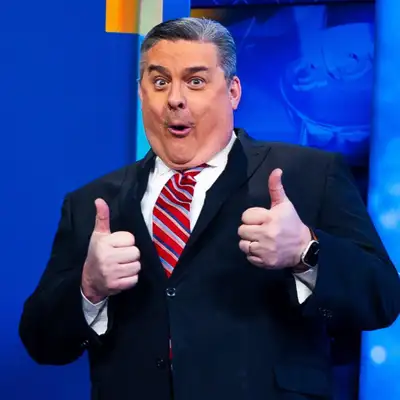
He's known as big weather, not just because of his towering presence, but because he shares big weather news. He's a pro at making complicated terms, understandable and scary scenarios, less frightening. He's got a sunny disposition, yet he knows that forecasting is snow Joke. Being that weather is the top reason why most people tune into local news.
Please welcome Chief Meteorologist for a BC 11 Eyewitness News, big weather. Don Whitaker. Hello. Thank you for being here. I'm so excited.
Big Weather: I am excited to be here. Thank you very much.
Melissa: Well, and I was telling you when you came in, I've watched a, b, C 11 my entire life. I'm a Raleigh native, so I've grown up.
There are many of those. So yeah, and you, you do kind of have to choose.
Big Weather: You do,
Melissa: which local news station you watch.
Big Weather: You do and, and in the olden days it was who you could get best on your tv. The [00:02:00] transmitters were in such different places that some people got one station, some people got the other, but now everybody has a choice.
And so yeah, I've definitely, and you stay
Melissa: loyal.
Big Weather: There are definitely loyalists you do with your, with your people. Absolutely. Yeah.
Melissa: Yep. So, yeah, so in other words, I'm very excited to, to meet you. You're the first one that I think I've met Barbara Gibbs Oh, yeah. Before, and she's lovely as well.
Big Weather: She is, she's a, she's a chameleon.
Like she will, she can be calm and sedated and very, mm-hmm. You know, when news is breaking, but she's one of the funniest people I know. She just doesn't let it out around everybody. Okay. So she's, she's one of my favorite people at the station.
Melissa: Yeah, yeah, yeah. She's really great. When she and John
Big Weather: Clark were there and doing mornings and I was with them, we, we had a very special team
Melissa: and I could tell that.
Too. Yeah. And I really like John, so I miss him.
Big Weather: I do too. Mm-hmm. But he is loving retirement. Okay. He went back to school for his master's at Liberty University. And he's working on becoming a podcaster. I think so.
Melissa: Oh, neat.
Big Weather: Yeah. So it'll be interesting to see what does, so can be a guest
Melissa: on his podcast one day.
I, God,
Big Weather: I hope so. That would be [00:03:00] great.
Melissa: I, you, you would be awesome at it. Okay. So. You and I were chatting a little bit before this and you mentioned that you grew up in Iowa. Yeah. So you're originally from there. Can you tell us how you got started in meteorology?
Big Weather: Sure. So, I grew up on the same street my grandmother grew up on.
Never thought I'd leave the state of Iowa. I was the first one in my family to leave the state. And for the first year or two it was. Very hard. I was very homesick. I went to college at Drake University in Des Moines about five miles from where I grew up. My mom worked at the university and I majored in television.
I really wanted to be a sportscaster, but one of my professors said, you know, you're too fat ever to be on tv, so you need to do something else. Wow. Yeah, it was, it was kind of cruel. So I learned to be a photographer and I actually started out as a sports photographer and I was offered a job my junior year in college.
I left Drake because one of my other professors who I really trusted said, look, you gotta. You gotta step up the, there's nobody hiring in TV right now. So I left the job to go be a sports photographer and I worked behind the scenes. And one day there was a person [00:04:00] who was auditioning for weather and wasn't very good.
And I'm like, even I could do better than that. And my boss said, well, if. If you think you could do better than him, get out there and give it a try. And I had done theater my whole life. I was, I was originally an athlete, broke my ankle, had to give up sports in ninth grade.
Melissa: I was gonna ask if you were an athlete because you are tall.
Big Weather: Yeah, I'm, I'm, I'm huge. Yeah. I'm six five in high school I was two 50. I'm a little more than that. And now, and I needed something else to do and, friend said You should think about auditioning for a play and, and plays. And also choir, they were like, sports you practice, practice, practice. And it was performance nights.
So that really talked to me. So when the boss said, you should get out there and, and give it a shot, I thought, well, I'll just do an ad lib of what I think a weather person would do. And I got done and he said, that's really good. You wanna work one day a week and we'll train you. And I was like, sure.
Paid better than behind the scenes. So you
Melissa: weren't even. Trained for meteorology or at that point? No. Wow.
Big Weather: I, but I loved it and it, it paid, I wanted to do it full-time as [00:05:00] soon as I did it. So I left and got my first weather job in Roswell, New Mexico. I was full-time weather and KBIM television down there.
Melissa: And a super big difference in weather. Oh
Big Weather: my goodness. Between Iowa and Mexico, you're on the edge of the, in our viewing area, we had 14,000 foot mountains. We had the desert and we had everything in between. And, you know, I was learning my way to live away from home and, I went back to school.
Mississippi State University at that time had just started a program for people like me who were on TV and needed to become a meteorologist. At that time they would mail you videotapes. You would take tests at your local national weather service office, and then you would fly down at the end of three years and take your boards and certify as a meteorologist.
And, and that's how I did it originally. Great experience. I left there, moved to Alabama. I worked in Pennsylvania, two different cities. I was working in Chicago. A buddy of mine called me and said, you should come down to Raleigh. I was like, why do I want to go to Raleigh? And I wasn't very happy in Chicago.
I loved Chicago and I loved being close to my family in the Midwest, but you know, I was commuting an hour seven each [00:06:00] way. And if there was traffic, your commute was two 15. And two hours and 15 minutes in the car, just that wasn't for me. And
Melissa: we complain about four 40, right? Exactly.
Big Weather: Four 40 is nothing.
When I first moved here, everybody's like, you're living in Holly Springs? That's so far away. I'm like, eh, you wouldn't know. Compared to my drive from Chicago, but a buddy of mine was working here and said, you gotta come to Raleigh. And this, as I flew in, it felt different and I loved it and we're so excited.
And we've been here now 14 years.
Melissa: So you really raised your children here? Yeah, for the most part. I guess they were little when, when you started out. They were,
Big Weather: we, they were born in Pennsylvania. One was born in Central Pennsylvania. The other two were born in Pittsburgh. We moved from there to Chicago.
We moved from Chicago. We were only gonna come here and do three years. They were used to moving. And my son said, dad, I really would like to finish high school here. And I said, okay. 'cause he, he'd made some close friends. And so I asked for a longer contract. I was lucky enough, ABC 11 gave it to me.
He got through high school. My two youngest said, well, we'd like to finish high school here too. And I was like, well, I guess we're here. But the truth was we loved it here. People who don't know [00:07:00] North Carolina, it's amazing. I can be at the beach in two and a half hours. Mm-hmm. I can ski in the winter in two hours.
Raleigh is so wonderfully located to do anything you want. You know, you wanna be in a big city, you can be in Atlanta or DC in just a few hours on the road. So, we loved it here. Luckily enough, I was really accepted here by a loving audience and, we're stuck now. I, I just, I love it.
Melissa: Well, and Raleigh also has four seasons.
It does. And you're naming some places that you've worked in the past that don't have all four seasons. No. So is that really the biggest difference in, in forecasting the weather compared to, say, Chicago or New Mexico or Alabama? Yeah.
Big Weather: Yeah, it really is. You know, for us I like the Four Seasons. I wish you know, being a big guy, I do better in cool weather.
So I wish Summer was a little shorter. But, the, what's amazing for North Carolina too is the mountains. I mean, they break up big systems. We, we will see a tornado every now and then, but we don't see those huge tornadoes they see in Alabama and Mississippi. Those F fours for that, absolutely [00:08:00] knock wood there.
And it's the mountains. And it was funny, my, when I lived in central Pennsylvania, we were in the shadow of the Allegheny Mountains. And so working on the eastern side of those mountains, I really learned to forecast. And Pittsburgh was the same way. Both of those cities really prepared me for working here.
And I think that's what added to my accuracy when I came here. That, and I had a great chief Chris Holman. When I moved here, chief Meteorologist Chris Holman told me all the tricks. There's a trick to living everywhere. Whenever you live somewhere looking for certain things in a forecast, so you're successful.
Mm-hmm. And he had been here long enough, 20 plus years and had, and was kind enough to take me under his wing and show me, here's what you gotta watch for and here's what we don't do. And so that, that I think, yes, I, I. I'm very liked on tv, but I, I hope it's because part of it is that I'm an accurate forecaster and I know I'm an accurate forecaster 'cause of Chris Hallman so
Melissa: nice.
He, he seemed like a great guy too. Sure. Wonderful.
Big Weather: Wonderful. Yeah. Absolutely loved him. Mm-hmm. Sweet as could be. Had a little bit of a dark side, [00:09:00] a dark humor side that he and I got along with really well. Okay. And he just, he was, he's, he is great. He's retired. He is still staying in, in Raleigh and we, we talk all the time.
Melissa: So to wrap up your, your past mm-hmm. You mentioned to me before we started this episode about how you have gone back to school.
Big Weather: I have. So tell
Melissa: us about that.
Big Weather: So, in the nineties when I started doing tv I got offered a job. One of my professors said, you need to take it. Nobody's hiring. So I left Drake University in my junior year, and I got into tv.
And then you have a. And then I have a wife and then I have kids. And going back to school is not a priority. Mm-hmm. You've got too many other things in your life. When I did meteorology at Mississippi State, earned my certification to get a degree in meteorology. At that time you needed at least four semesters of a foreign language because they were a liberal arts school and I could not, I just have never had that ability.
I can remember I'm 15 years old and German from high school, Al, and that's about it. And and
Melissa: to me it sounds like. You combine German and Spanish. German English. Yeah. And I, [00:10:00] right. I try Spanish too English,
Big Weather: and I can do, oh, I can do Don Ban. Where's the bathroom? So, very important words to know
Melissa: That'll get you by it, will it?
Big Weather: Absolutely. So it just wasn't a gift for me. My daughter was at the University of North Carolina at Pembroke. She said, dad, there's a program for people just like you who have college credits and may wanna pursue a degree. So I met with a counselor down there. She said, you know, you've got. Over a hundred college credits across the course of your life, you could get a degree from here.
And so I went back to school and I've been back as a full-time student at UNCP since last January. So you're over fulltime a year and a half full-time.
Melissa: Okay.
Big Weather: And I will graduate. And you're the
Melissa: chief meteorologist of a, a major news station.
Big Weather: It makes for busy days and weekends. Yeah. Mm-hmm. Luckily, I have a very understanding wife.
She, I'm the only one in the family who doesn't have a degree now. Almost, and I
Melissa: find that fascinating.
Big Weather: It is. It, it, it is like I, you know, I always thought my grandfather. Was amazingly smart. He knew how to do everything. And what I figured out as I'm getting into my [00:11:00] fifties is he was smart, but he'd experienced everything.
Mm-hmm. So it wasn't just that he knew everything, he'd lived it. And as I lived more and more, I think my life experience is this big. Mm-hmm. School experience was this big. So going back and learning to speak and. 2025 college speak has been a challenge. I'm the old guy in every class. A lot of my So do you
Melissa: go in per to in person classes?
It's all
Big Weather: online for me. Okay. Yeah. Okay. Yeah. I, but I will graduate in May with my son who is a senior at the University of North Carolina at Pembroke. And the two of us get to walk across the stage together, and I'm so excited for it. It's
Melissa: awesome.
Big Weather: I said to him, I'm like. Dude, I have waited 30 years to get my degree.
Mm-hmm. I will take another class and I'll graduate in December. And it can be your day.
Melissa: Oh yeah, yeah, yeah. Because I mean,
Big Weather: he's put in the hard work over the four years and, and he's like, dad, I think it would be really special. And so, you know, not
Melissa: many people can say that they graduated as same day dad as a dad.
Dad. Yeah. So, congratulations.
Big Weather: Thank you. It's, it's been the, I think that's
Melissa: very inspiring too.
Big Weather: And, and it's funny 'cause a lot [00:12:00] of the young people in the class, I'll say thi. Just life experience changes your perspective on things. And they'll, they'll ask, the teacher will ask a question and I'll say, well, this is what I do.
And the mm-hmm. The students are all like, why would you say that? And the teacher's like, 'cause he is lived. Yeah. That's what you should do. So, mm-hmm. It's been you know, it's kind of fun being the old guy, but it's also been a challenge. Luckily my daughter and my son, both UNCP students were able to kinda get me into the groove and teach me all the.
Stuff that needs to be done in, in today's learning. But it's been fun, it's been exciting.
Melissa: And all the slang, the, the current slang words.
Big Weather: Yeah. I've lost on half my teenagers could
Melissa: help you out with that. Oh, good. Yeah, please.
Big Weather: I don't want, once my kids moved out, I thought I'm really in trouble because they're the ones who kept me current on music and slang and everything else.
Mm-hmm. I don't wanna be the awkward old guy at the office who uses a word and everybody goes, you can't say that anymore. I, I didn't know. Yeah. So. Yeah. Yeah. Well,
Melissa: that's why they say kids keep you young. They
Big Weather: do.
Melissa: So congratulations on being the 2025 Maggie Award winner for Best Local TV [00:13:00] personality in Main and Broad Magazine.
And the reason I'm pointing this out is because our readers voted for you as best TV personality, not just best meteorologist. Oh, and I think there's something to be said about that, but I wanna get your take on. Why it's important to show your personality and not just, you know, read the weather updates.
Big Weather: Sure. Well, first of all, thank you to everybody who voted. Honestly, I, I can't say that enough. I mean, it's very humbling and if people weren't watching, I wouldn't have a job. And I love what I do and I love what I get to do. So, and I think that
Melissa: shows too. Mm-hmm. The biggest thank
Big Weather: you to everybody who take, took the time to vote because it's really because of them.
I get to do what I love. But, I don't know about the personality thing. I just, you know, for me, I never wanted weather to be boring. I've, I've always I believe. I'm, I'm a spiritual person and I believe God gives everybody gifts. And luckily I figured out early on that one of the gifts I had was to take a complicated subject and make it [00:14:00] simple.
And maybe that's math or maybe it's reading the instructions to my vacuum cleaner or whatever. I've always been able to take these. Thoughts and complicated ideas and, and simplify 'em. And so that's what I try and do when I go on tv. I want to, I want people to not only see that weather is going to affect their lives.
I wanna have a little fun or maybe learn something about it, or maybe make a joke. Once in a while, I get in trouble. Once in a while, I get too candid and my boss will go, Hey, we can't say that. I'm like, okay. Because that's just how I'm built. Um mm-hmm. I, there's not a filter. Well, there is a little one, but it, it takes a lot.
That's why
Melissa: I can't be on live TV or live radio. I just, I don't trust my, my personal filter.
Big Weather: I, every now and then I'll say something and my kids will be like, oh, dad, you can't eat. Then that's, no, no, don't, if you ever do that at work, you can't do that. I'm like, okay, thanks. So
Melissa: Uhhuh, thanks for the after warning.
Right.
Big Weather: So I give them, my wife has been a, a fantastic champion for me. She's really. [00:15:00] Over 30 years of watching television, she's gotten really good at TV and she knows what works for me. Mm-hmm. Mm-hmm. And so she'll say, Ooh, I really like this, or, have you ever thought about doing that? And it speaks to my abilities.
I don't think I'd be half as good if I didn't have her back in me. So, that makes it easier. And the fact that people like my personality I try to be the same person on TV as I am in real life, just because it would, I'm too stupid to try and maintain a second life. Mm-hmm. You know, a second personality.
What I, what I am is what you get. And hopefully it, it transfers and it sounds like it has. So thank you to everybody.
Melissa: Well, I think it's also important. To, to mention that trust is a big part of what you do because we tune into the weather in the morning. We, we wanna know, not just is it gonna be sunny and warm today, but are we going to be safe today?
Yeah. You know, I've got, I've got two drivers now, which scares the crap out me.
Big Weather: I know. How old are they, if you don't mind me asking?
Melissa: 17. My son is 17. My daughter just got her learner's [00:16:00] permit. She's 15. Oh. So it's, it just adds another element to why I would tune in to watch the weather and why I would need to trust you, because I want to see, you know.
How, what are, what's the risk to today? To have my kids on the road?
Big Weather: Absolutely. And it's something that I, I try not to take lightly. I mean, my very first job, I remember working, I was working at W-H-O-T-V in Des Moines, my hometown. I was working one day a week. And I, my forecast that day was sunshine all day, and one area of showers popped up.
It wasn't more than two miles wide, it lasted 15 minutes. Mm-hmm. And it died. And so 99.9% of my viewing area was like, you nailed the forecast. And a guy called me and he's like, you are so stupid. He said, I went out and I stained my deck and it, and it rained on it. But it was a wonderful life lesson.
Mm-hmm. I, I felt so bad. Like he wasn't mean, but you could just tell he was like, he
Melissa: was frustrated. Yeah. He was very frustrated
Big Weather: that that had happened. And I had told him it was gonna be a nice day. And I took it personally. Mm-hmm. I off, I said to [00:17:00] him finally, I was like, sir, can I just come out there?
I'll help you Restain it, it it, I missed it. Yeah. I'll help you restain it. And I think he, he knew that I was being genuine. Mm-hmm. And it was a wonderful lesson that weather affects everybody who watches you, not just. Raleigh in Durham. It affects in our area south of Virginia and Lumberton down into the south.
So, it's not a responsibility I take lightly. A lot of meteorologists will specialize in weather that they like to cover. Some are really good at forecasting winter storms. Some are really good with hurricanes. Chris Holman was almost an almanac of hurricane information. My specialty is radar. I feel I've taken classes every year.
I keep up on all the new radar technology because I want to be that. That voice of calm on somebody's worst day. I was a 9 1 1 telecommunicator for seven years as well, part-time while doing weather. And well there
Melissa: goes that, that explains your calm demeanor right there. Yeah. I can't think of a [00:18:00] more, a job that you have to be more calm for
Big Weather: you.
You were really taught and drilled to be the eye in the hurricane. It transfers into this job really well. Mm-hmm. Some meteorologists love working severe weather because they like the challenge of it. I hate it because I know somebody is having their worst day. Mm. Hopefully I can keep 'em safe or get 'em to a safe place.
But it's not something I take responsibility, light. It's not a responsibility I take lightly.
Melissa: You touched on radar and technology, so mm-hmm. How has [00:19:00] technology changed how you read the forecast in 2025 compared to when you got started in the business?
Big Weather: Sure. Radar. It gotta be night
Melissa: and day.
Big Weather: Oh, it absolutely is.
I worked on the very, it was funny. So the movie, Jurassic Park. Utilize the very first 3D fly through of clouds. It was a computer system and we were the first TV country TV station in the country in Des Moines. To use that same technology from Jurassic Park and to fly through the clouds would take eight hours for your computer to build that.
So the guy at night would start it, and I would use it in the morning. That's where we started. That's where I started today. You can build any kind of thing you want with any kinda weather. You want about 10 seconds. Radar has changed. We used to just have a radar. The beam would go out, it would hit a raindrop, it would come back, and that would tell you where the rain is.
Well, now we use what's called dual pole radar. So it not only sends out a beam horizontally, it sends one out vertically. And as those hit the raindrops, they can actually see which way those raindrops are moving and pointed in the olden days. 25 [00:20:00] years ago, not everybody had a cell phone. So if there was a tornado, we had to wait for someone like a cop or a police officer to call on the radio and say there's a tornado on Main Street, and it would work its way through.
Now we can actually, well utilizing Doppler radar, see those raindrops start to spin before a radar, before the tornado ever drops from the sky, sometimes up to 20 minutes in advance. So we have more tornado warnings issued today than we ever have. 'cause we'd rather warn people when that spin starts and get 'em in their safe spot than wait for the tornado to get to ground.
There's a lot of false warnings, but again, it's about getting people safe before that storm hits.
Melissa: How do you balance the use of all this technology with your own gut instinct?
Big Weather: Yeah, there's something to be said for experience. Yeah. When I worked in Pittsburgh, I worked under a chief meteorologist named Joe DiNardo.
He was one of the first meteorologists in the country on tv. He, he was, went to University of Chicago. He wouldn't, when I first got there, he would not let me use a computer to make a forecast. I had to use pencil and paper [00:21:00] and a slide rule. And I just hated, hated it. So
Melissa: he was super old school. He was?
Mm-hmm.
Big Weather: And he and I did not get along at all. And my, my grandfather came to visit us one time and I came home from work and I said, he goes, you don't look very happy. And I said, you know, grandpa said this, this old guy I we're, we're just not getting along. I, I don't know what to do. I need to use, and, and my grandfather said something very profound to me.
He said, you know, as a guy gets older, they lose control of a lot of things. They lose control of. Bodily functions, they lose control of their kids. As the kids go up and make their own decisions they lose control of their health. So they hold on to things they can control. Maybe it's their lawn.
They can control that. Maybe it's a young guy they work with, they can control him. Why don't you just learn from him and, and shut up and listen and see what he has to teach you. And it was, it was a defining moment in my career. I went back to Joe the next day. I said, Joe, I know we haven't gotten along.
It's my fault. Teach me what you know. [00:22:00] And he took me under his wing and he taught me how to forecast old school. I. Today I will show, if we get an intern from NC State, I'll show 'em how I forecast and they're like, what are you doing? But I really feel it adds to my accuracy. And though AI is coming along and can forecast incredibly well, I still am writing things on paper and using a pen and pencil.
Because I know if I dig deep enough into the data, my gut will tell me what the computer doesn't have.
Melissa: You mentioned meteorologist students mm-hmm. At NC State. Mm-hmm. There's one in particular that I follow and I'm, I'm sure you, and you know about him, but what would you, what kind of advice would you give to someone interested in a career in meteorology?
Big Weather: Yeah. I mean, it's, it's a, it's a wonderful field. You know, 90% of meteorologists you don't see, you see the guy or gal on tv, but, most meteorologists work behind the scenes, and it's an amazing field. One of my former interns is actually the lead forecaster for Delta Airlines. He, he got into the private sector.
Oh, that's neat.
Melissa: Yeah. You don't think, see, you don't think about [00:23:00] that, you know, meteorology and how you can have so many different path. Oh, it's, it's unbelievable avenues. Yeah. Mm-hmm. I
Big Weather: know I have former students I know of who work for electric companies. I have former students who work for shipping companies.
So it's an amazing field. As you move forward, if you ever want to do it, you should be really good with math and science. You're gonna need both computers. You're gonna need that no matter. That's why I'm out.
Melissa: What? Yeah. That's why I'm out. You're done. Yeah. Math, science and computers,
Big Weather: eh? Well, you know what?
It depends. You might find something you love about it. Mm-hmm. And I always tell everybody, every student, no matter what their career is, they should take a speech class. Oh, I
Melissa: agree with that for sure. Right? Yes. Public speaking, yes. Mm-hmm.
Big Weather: I go to. Continuing education every year. And I will meet these brilliant meteorologists men and women who put together these amazing papers and they can't communicate it.
And so I just wish they had that ability. So, even if you are in meteorology, you're a student and you don't want to go on tv, still take something to help [00:24:00] you express your ideas to other people. That's what I tell. That's great advice. Yeah. Yeah.
Melissa: . Let's pick up the pace with our, what's up Roundup, where I'll ask a few quick questions before we come to the end of our chat.
Okay. What is the craziest weather event you've covered as a meteorologist? Is there something singular that you can think of?
Big Weather: F five tornado hit oklahoma I was working in central Pennsylvania. We had three viewers who, one was killed, one was injured, and one rode it out. And I actually went down to Oklahoma and it turned out to be one of the biggest tornadoes, largest tornadoes in the past 125 years was 2.6 miles wide or something like that.
Nice. And so that was probably the craziest weather.
Melissa: You share recipes in your big recipe segment. So what is your favorite thing to cook for your family? Or what are they most. Request.
Big Weather: So once you get into your fifties as a guy, you, you choose a path. It may be learning more about World War ii or it may be smoking things.
[00:25:00] So I chosen the smoking path and I love doing ribs and they really like my brisket and ribs and, and when I do stuff like that. So that's probably their favorite thing that I make. My favorite thing to make is a recipe called scallop corn. My grandma taught me to make it. It's very big in the. In our life from the Midwest.
And I make it for all the holidays and that's when they request
Melissa: it. Scalloped
Big Weather: corn, you said scalloped corn. Its on the big recipes. Yeah. I mean,
Melissa: you can't get more Iowa than scallop corn. It is very
Big Weather: Iowa, but it's pretty good.
Melissa: It sounds delicious. Yeah. What is the most difficult type of weather to predict?
Big Weather: Here winter. Mm. Just because we are right on the rain, sleet, snow line. I mean, it is amazing to me how our roads, the ancient pioneers, a lot of the roads today came from ancient pioneers pathways. So like us 64 was probably wagon trail 200 years ago. On the north side of that, you get snow on the south side of it, you get rain.
And so trying to decide where that rain, snow, sleet line sets up in this area, that's the hardest thing for me.
Melissa: [00:26:00] What is the first thing you do in the morning as a meteorologist? I know you're, you're normally on TV in the evening hours. Yeah. But you're the chief meteorologist, so you have to look at it all day.
So what is the first thing you look at in the morning? I.
Big Weather: The coffee maker. And then after that I break out my computer and I will go through the morning models. I'll see kinda what's developed overnight. I'll look for certain things in the atmosphere that I know could trigger different things. So, I do look at that in the morning.
We are an email group chat with my other meteorologist, and I'll reach out if I see something or if they see something, they reach out to me. But yeah, being the chief, you're responsible. And so I start my day at nine when I roll out of bed and I ended it at. 1130 when I leave the station.
Melissa: And there's some schoolwork in between that too.
Yeah. Somewhere in there.
Big Weather: Absolutely.
Melissa: Well, I cannot thank you enough. Again, it has been such a pleasure meeting you. I've always heard great things about you, and thank you. You, you, you match your personality on tv, so thank you for not storming out of [00:27:00] this interview.
Big Weather: Well, if you'd asked me some, some questions that were a little more personal, I might have.
No, I'm just kidding. No. Thank you for allowing me to do this today. It's been a real pleasure and I hope we get to talk again soon.
Melissa: And tell everybody where we can find you on social media. You try to, you try to be pretty good on social. I
Big Weather: am, yeah. Facebook, Twitter. My kids have forced me into Instagram.
TikTok. Okay. Tiktoks. Too much work. I look at TikTok. I don't make it, but just look for big weather. A, b, C 11 On any social media, big weather. ABC 11. Nobody knows my real name, but they know big weather.
Melissa: Yes, they do. That is, that's what I called. I told my mom, I was interviewing you today, and she said, oh, big weather.
I love him.
Big Weather: So yeah.
Melissa: Hi from my mom.
Big Weather: Oh, well, hello and thank you.
Melissa: And for everybody else, read all about the winners of our 2025 Maggie Awards and the march April issue of Maine and Broad, which is on newsstands now or online at Main and broad mag.com.
Big Weather: Very cool.
[00:28:00]