Subscribe
Share
Share
Embed
Celebrate the joy of reading with the Book Love Foundation podcast. This is a show filled with information and inspiration from teachers and leaders across grade levels, states, and school systems. We interviewed authors and educators for the first five years and now turn our attention to leaders in public, private, and charter schools. Find out more at booklovefoundation.org or join our book-love-community.mn.co of 2500 educators from 28 countries. We sustain joy together, one kid and one book at a time.
Kevin Carlson 00:00
This podcast is produced for the Book Love Foundation, in partnership with the teacher learning sessions, connecting teachers with ideas, experts and each other.
Cornelius Minor 00:10
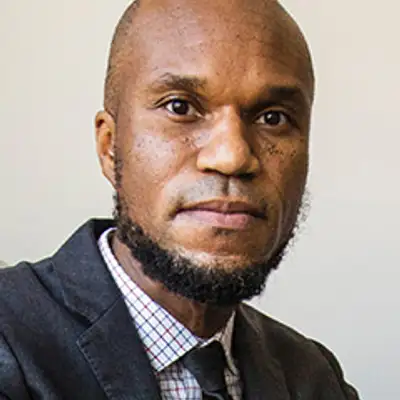
We in education are trapped by the things that have become habit, and I wanted to write a book that destroys habit, particularly the habits that marginalize kids.
Penny Kittle 00:21
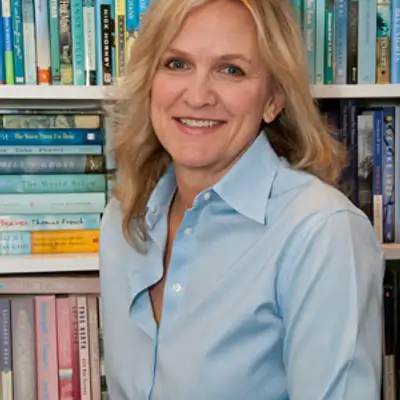
Welcome back to the Book Love Foundation podcast, I'm Penny Kittle and I'm your host. In our last episode, you heard the first part of my conversation with the incredible educator, Cornelius Minor. We talked about his personal and professional background, his passion for kids and teachers, his lifelong commitment to activism and his love for skateboarding. I just that connection between the two. The way he said, gravity comes for everyone, but I can fly, so I can do this. I was thinking about those moments of gravity and teaching when you fall hard, but you got to pick yourself back up. He says to kids, if I can teach you how to skate, to fly, you can read 40 books. You can do algebra. It's brilliant. So in this episode, we're sharing part two of our conversation with Cornelius, where he talks about his writing process, his inspirations for writing, and his brand new book. We Got This published by Heinemann.
Cornelius Minor 01:21
I was actually just talking to a friend who was asking me what it's like to kind of have this book in the world now. And for me, this book was like, a lot of like, this book was light for me, you know, I wrote the book almost like I was like, this is going to be a torch that people can hold, and it can dispel lots of darkness and and that was my great hope for the book. And now that it's in the world, and I'm walking with this book into classrooms, into districts, into towns, into schools, that thing that your teacher friend said that really bothered you, that there are towns that I have gone to this year since the book comes out, and I'm like, yep, this town is not built for people like me, like you know, there are. There already have been people who have uninvited me from schools and uninvited me from city councils, you know, because they're like, well, we like your message around happiness and love, but this whole dismantling oppressive systems, you can go back to New York with that. Or we like your message of reading and writing, but this whole being more inclusive, you can go back to New York with that. And so this is a real thing that, like, superintendents and principals talk about. And I'm just like, wow. So again, you've pledged your career to supporting kids, but you are not okay with supporting all of the kids.
Penny Kittle 02:34
I was gonna say it's only some of the kids. Yeah, you're willing.
Cornelius Minor 02:38
It's just like, interesting, you know? And so, and there's a certain kind of anger that, like you learn to live with and nurture that fuels you. And I think that's where I am right now. I told a friend of mine that, I don't know if you will, you you follow lots of music and but Daylight Soul was one of my favorite groups and, and I remember, you know, the buzz around their first album, Three Feet High and Rising. It was just like this meteor of just like good vibes and amazingness. And I remember listening to that album over and over and over and just all the love and light that that album brought. And their second album, though, was this really dark experience, like it was even called daylight soul is dead. And it was this really dark experience. And I remember thinking as a kid, how did they shift from this place of incredible light to this craze, this place of, like, deep, contemplative darkness? And I get it now, you know, I've been walking around with this like, you know, joyous, like illuminating book, but then it takes you into these really dark places. And so all of my writing since hitting the road has just been contemplatively dark. And I just think that that's where I am right now, and that's you know. And now that I am maturing to see more of the world, you know that I have the great fortune of being a New York City teacher, you know? And so now that I'm traveling and I'm in the world and I am seeing, you know, what families go through, and I'm, you know, seeing what kids go through, and I'm having conversations with those kids who who are seen but then not spoken to. And it's really, you know, I every time I go to I try to meet people and families before I start work in schools. So I typically fly in on a Sunday and I spend Sunday evening hanging out at the barbershop or at the basketball court or wherever the people gather. And I very intentionally like to hang out with families who have like gay children, or families who have like black children or families who have disabled kids, because, like, that's how you really get to know a school system. And so I usually will invite myself to a dinner with parents or caregivers, or I'll hang out in a foster home or somewhere, and just I listen stories that people tell and and there are these just incredible stories that people bring to you that you don't hear from. Superintendent, or you don't hear from the principal or the literacy coach, and kids talk about the feeling of being ignored, or the feeling of being invisible, or the feeling of just being, you know, completely disrespected by curriculum, by practice, you know, and so those things like, I know that's a lot, but when I think about what's inside of me right now and the spirit of the book. I mean, all that's a part of it.
Penny Kittle 05:23
Yeah, it's powerful. I think of how do you get your writing done? What's your routine? What's your process? As Graves would say.
Cornelius Minor 05:32
What's funny is, a lot of my writing, it's response. It happens in response to things. And I'm lucky enough to have a colorful enough life to where every day there's something to respond to. So, so, and I do a lot of writing, because I'm a parent of two littles. I do a lot of writing in transit. So when I'm like walking, I take my daughters to school in a Radio Flyer wagon. You know, I have a pretty that. So, I pile all the kids in the backpacks of the lunches in a red wagon, and I drag it around Brooklyn, and everybody goes to school. And so that time is writing time for me, where I can just be in my head, with the physicality of pulling two kids across avenues, like I can just like, get writing done in my head. So I'll usually write all day in my head, and then I commit to page after the kids go to bed. So usually when I sit at the computer, I've had stuff that's been warehoused all day, and it can just like, come out. And so there's a lot of that. A lot of it comes to music. I consume a lot of art. I spend a lot of time in galleries. I spend a lot of time with my headphones on, and so, so that. So for every word in that book, I can tell you the painting associated with it, you know, and so, or you know, or the song that, like was playing when it when it came out. And so I think that that's a big part of who I am. And I try to listen like that. I try to collect the stories of folks who it's not safe for them to tell them. I mean, I think one of the things that I have learned is that learned is that, yeah, if you're a gay kid, you know, in southern Missouri, it's not safe to tell your story and and so I have a pen and I can, like, I can amplify you without putting you in danger. And so a lot of it is me listening to kids and listening to families, and really thinking about, like, you know, like even the stories in the book, like, and what was beautiful is I got to go and sit at dinner tables with kids and being like, Yo, can I talk about that one time in the class when this thing happened? And how would that go if I were to talk about it? And so there were parts of the books that were co authored with kids and their parents, like sitting at their dinner table and really wanting to kind of hold on to their truths and really like careful ways.
Penny Kittle 07:48
That's powerful. I think. How long do you write at a time when you sit down at night?
Cornelius Minor 07:52
It depends, like there are some nights where there's just not much and or I'm tired or distracted, and I give myself permission to be those things. I think that that's important to forgive yourself. And then there are some nights where the fury of the day or the anger of the day or the love of the day kind of carry me to two in the morning. And then there are times where I just need to, like, put the pen down and go, like, play Fortnite, or go do something different. And so, so there's a lot of video gaming that happens in my house, and that's like all of that is really helpful. I think it's really important to have a balanced life, and so I try to spend as much time skateboarding and gaming and as I can.
Kevin Carlson 08:33
Hello. This is Kevin Carlson from the teacher learning sessions. This episode of the Book Love Foundation podcast is brought to you by Audible. Audible is offering our listeners a free audio book with a 30 day trial membership. Just go to audibletrial.com/booklovepodcast and browse for a title that interests you. Download it for free and start listening. It's that easy when you sign up for a 30 day trial, you can select any book of your choice for free, but you might want to consider Green a novel by Sam Graham Felsen, which explores an interracial friendship between two adolescent boys in 1992 Boston. Penny recently spoke with Sam about the book for an upcoming episode of this very podcast, and Green just won a 2019 Alex award from ALA for one of the best books written for adults that has special appeal to a teenage audience. To download your free audio book today, go to audibletrial.com/booklovepodcast now. Back to Penny's conversation with Cornelius Minor.
Penny Kittle 09:44
Okay, last question about the book, unless you have other things you want to say, this collaboration with your graphics person, yes, is the most beautiful book I've ever seen Heineman put out. I mean, I'm just in love with the design, with the color. I love the cover. How can you stand. It like you're a superhero.
Cornelius Minor 10:01
So there are two people that I need to shout out over this. Monica Kriegler is my designer. She is a goddess, and she's at Heinemann, and she got me like she took the time as a designer to understand me and figure out what my life was like, and and we spent a lot of time just on the phone. It was almost like, you know how when you meet a new friend for the first time, and that first few weeks of the friendship, you're just on the phone all the time. That's what it was like, Where, usually, you know, you have that relationship with your editor, but I got to have that relationship with my designer too. And so being on the phone, and she invested the time to learn who I was. And then Jamal Igle, who is the illustrator. Yeah, Jamal is known for his work on everything. I mean, he's drawn for Marvel Comics. He did Supergirl. So if you are a fan of the Supergirl show, a lot of that comes from the books that he wrote. I am, yeah. So a lot of that comes he has his own comic that he does, and Jamal is a Brooklyn illustrator, and he has a daughter who is in school in Brooklyn, and so he gets it from a parent perspective. And so it was really cool for him to he was just like, I want to bring to life the world that I want for my own daughter in my illustrations. And so that was really cool to just work with the two of them. And there were times where Monica and Jamal would run off without me and do their thing
Penny Kittle 11:31
And you just look at the proofs and go, Oh, yeah, exactly. I love the skyline that runs across some of them.
Cornelius Minor 11:38
Yeah, that's one of my favorite pages, like, you know. And I think just that that and Jamal and Monica both knew that if we wanted people to really hear these ideas, we would have to package it in a way that felt supremely attractive. And so both took that as a personal challenge, where they wanted to design something that somebody who is not at all interested in, including all kids, would be drawn to. And they designed a book around that, and, um, and Jamal did a really good job of communicating the imperfection of the work. You know, Jamal has known me, and I think that's the beautiful thing. Like I was working, I'm working with an artist who's known me for over 15 years. So, so, yeah, so Jamal has so Jamal's, and this is maybe too much personal information, but Jamal's roommate and I were in teacher graduate school together, wow. So Jamal was a young artist starting his career, and he lived with a young teacher starting his career, and then he so that's how we know each other, through like and so his roommate and I were in graduate school together, first year teachers together, and Jamal experienced all of that. So he experienced his roommate coming home, he experienced me coming in and being like, I'm over this. I can't do it like and so he has seen my evolution as an educator, and so he's been there for every minute of it. And so to have an artist who's seen you at your worst and who tries to represent all of that. And one of the things that he communicated early, he's like, I want to communicate through my illustrations your imperfection, that I don't want people to read this and defy you. I want people to know you as I know you, to like to understand that like you come home to your apartment and cry sometimes, or you come home and you're angry sometimes, or you come home and you defeated sometimes. And so he's like, I don't want these polished illustrations. I want these illustrations that feel really like rough and in process, because that's who you are.
Penny Kittle 13:26
Wow, what a gift. It's really it's really special. And kudos to Heinemann for putting the time in to creating such a package. Thanks again to Cornelius Minor for wisdom and insight, for the joy and laughter you bring to this relentlessly difficult work. It may be the dark days of winter, but don't forget, we got this. You've got this. Keep listening to your students, keep reading, keep finding joy in this work. I will see you soon.
Kevin Carlson 14:02
Thank you very much for listening to this episode of the Book Love Foundation podcast. Our next episode will come out in two weeks. In it Penny talks with Sam Graham Felsen, author of Green a novel.
Sam Graham Felsen 14:16
This is a coming of age novel, but I also think of it as a coming of awareness novel, it's kind of about his journey of understanding what it actually means to be white in America, what these terms that we hear floated around like white privilege, what that actually means in concrete terms.
Kevin Carlson 14:35
That's next time on the Book Love Foundation podcast, I'm Kevin Carlson, thanks for listening. The Book Love Foundation podcast is produced for the Book Love Foundation in partnership with the teacher learning sessions, connecting teachers with ideas, experts and each other.