Subscribe
Share
Share
Embed
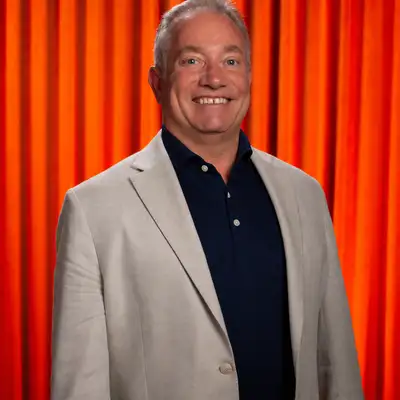
The Spark Podcast amplifies Nashville's creative voices, showcasing diverse talents and fostering growth through shared journeys. By exploring the unique experiences and stories of the city's agency owners, innovators, and creators, the podcast inspires connection and collaboration, reflecting Nashville's rich creative culture.
Listen to The Spark Podcast: Nashville on Spotify, Apple Podcasts and YouTube, or at creativeassembly.agency.
Every meaningful change begins the same way, with a spark.Sometimes it's choosing the slow way when the world has found a faster one.Most of us have never held something made by one pair of hands.A guitar built that way takes at least 200 hours.Nobody sees those hours.You hear them, though, the first time someone plays it.Today's guest lives inside those hours.He builds by hand the way his family has since 1928.He carries that craft from East Los Angeles to Gallatin Avenue.Nothing leaves that bench until it's perfect.On Creative Assemblies, the Spark Podcast, our mission is to amplify Nashville's diverse creative voices, foster growth through shared journeys, and inspire a city that thrives on collaboration.And now, here's the Spark.Welcome back to the Spark.I'm your host, Mark Scrivner, and today I'm joined by a great friend, Manuel Delgado.He's, uh, the owner and master luthier Delgado Guitars.And Manuel, I know you have a couple other brands under that we're gonna talk about.Mm-hmm.But, uh, man, you make some of the most extraordinary guitars in the city of Nashville.And- Thank you very much.I'm, I'm glad to call you a friend and glad to have you on the show.Yes, we've known each other for, poof, at least 15 years, I think.Yeah.Mm-hmm.Mm-hmm.Well, man, uh, take us back to, umYou know, I've heard some stories about, uh, you growing up on the East Side of, uh, LA and- That's rightyou know, just, uh, your past and what you were doing, and I know your dad and your grandfather were both, uhThey started Delgado Guitars.Yes.And so maybe take us back in your journey.Sure.Uh, so yeah, my grandfather and his brother, my great uncle, started the business in 1928 in Mexico, in, uh, Torreón, Coahuila.A lot of people have heard of Durango, Durango, Mexico.It's near there.And then they moved the shop to Juárez in the '30s, and then, like, you know, most immigrant stories, they came to the United States, uh, and opened up a business in East LA, Boyle Heights, 1948, later sending for their family.Um, I'm first generation born in the US.I was born, uh, in East Los Angeles.I tell everyone I went from East LA to East Nashville.Uh, but, uh, yeah, I, I grew up, uh, started playing guitar when I was five, and started repairing instruments when I was 7.My dad was baptized in the guitar shop in, uh, Juárez, and built his first guitar when he was 14.So he and, uh, uh, my grandfather, mainly him, um, helped me and pushed me the summer that I was 12, uh, to beat his record, and I built my first instrument, which is stillI still have at the shop.And, uh- At 12 years old.Yeah.Well, and as impressive as that sounds-my daughters got my record, and they tied stones around it and threw it in the lake, and they did it when they were 9.So they crushed my record, which, as a dad, you know, like, nothing makes you more proud than that.Oh, yeah.But both the girls, Ava was the first female and the youngest in our family to build an instrument.She's five and a half, oh, uh, years older than my youngest, Lila, and she built it at 9.And then Lila did it a few months earlier than Ni- than, uh, Ava did, at 9 also.So she technically is the youngest.So they each got to have their own little title, Ava being the first, Lila being the youngest.Yeah.Oh, man.Well, you've said that the East Side is where the artists gather.Yes.And, uh, you know, in Los Angeles and here, 20 years on, is it still true of, like, East Nashville?Well, you know, it's a city that's going through a lot of growth pains, as you know.Um, we're seeing, uh, gentrification gets sometimes a negative, it's, it's viewed as a negative term, but it- Mm-hmmit can, it can, basically just means the, uh, evolution of a, of a neighborhood.Um, but with that consequently comes the good and the bad.So we see where the very people that made this city a desirable place to come, which are the artists, um, are getting pushed out because of higher rents and different things like that, taxes.So we still have a large creative community in Nashville because it's just been established that way long before I ever came here, you know.Um, but, um, yeah, little by little, it's getting a little bit more challenging to not only find that community locally, but to be able to be part of that community.Meaning, like, we hope that we'll still be able to be here in 2 years, let alone 20.We might have to look at moving if things keep going the way they're going.But yeah.Wow.So it's more difficult.Well, taking us back, though, you, you built your first guitar at 12.Mm-hmm.Like, what did, uh, what part of, like, growing up in the shop do you typically leave out?Well, I don't really leave out much.You know me pretty well.I'm, I'm a pretty open book.Mm-hmm.And I'm not, uh, there's a lot about my past that, um, I, I've believeWell, I know it shaped me into the man that I am today.So, and I love toI think you and I have this in common.I've never said this to you, but I feel like when we meet younger people and we, we're curious to find out what their dreams are, what their pursuits are, and then we wanna kinda help them, whether it's just with a word of encouragement or connecting them with somebody.So I say that because I don't like to leave out any part of my story because I think that God put me through that journey so that I could share it.Um, and my, my journey, although I had a great childhood, my parents were amazing, but I grew up in the streets of LA and, you know, there was some things that I got into, and scuffles and different things like that.Uh, and, but that's, you know, it was just the way that I grew up.I didn't think any differently of it.So, um, I- I, I got to learn from my grandfather, I got to learn from my dad.My great-uncle had already moved back to Mexico, so I didn't get to work with him, although I got to go visit him when we would go see him.But I had so many amazing things, um, and such a great childhood.My parents, you know, my father's been gone for 30 years this year.Uh, my mom is still with us, thank God.But I just had, like, really awesome parents.And, uh, it wasn't until about maybe 7 years ago that I went through this, uh, experience where they, theyI think they call it a, um, umI forget what they call it, but they kind of, like, talk you through, like, if, if you grew up and your parents owned your house, step forward.If you went to college, step forward.If you ever got pulled over because the color of your skin, step backwards.And you kinda start to see things that you have no control over.And my, my parents raised me playing classical guitar.We went to museums.I got to see, uh, concert classical music at a young age.I grew up boxing.I grew up, you know, uh, we had all this different stuff.Even though we still had that LA experience- Mm-hmmin the streets, we got a lot of things that we were fortunate to be a part of.So yeah, I'd love to share my story in its entirety.Yeah.Well, I appreciate you saying that about me, but I see that in you for sure.Mm-hmm.Like, you are one of the most giving people I've met in Nashville, so.And that's created the great reputation you have for not just building great products, but, you know, building a city that you wanna be a part of.I mean, you've done a lot for the city, so just something I'm super proud of.Thank you, brother.You know, as we were doing, asI feel like I know a lot about you.Mm-hmm.But did a little research- Uh-oh.before the show, too, just to make sure that, uh, I could ask some other questions.Dun-dun-dun.But you know, one thing, your grandfather said, "Take your time, um, because we're in a hurry."Mm-hmm.That's- And I know you've said that before.WhatTell me the meaning around that.Yeah.Despacito porque llevamos prisa.That's what he would say.Take your time, because we're in a hurry.So, and I always say that my grandfather and my dad, at the time, I thought they were teaching me how to build instruments, but they were giving me life lessons.So take your time, because we're in a hurry.We're gonna take our time with, um, instructing our daughters, because we wanna make sure that they learn the lesson correctly, so that they don't make a mistake.We're gonna take our time in how we're constructing the instrument, because, you know, kinda measure twice, cut once attitude.Um, we don't have the time to go back and rush through it, so let's take our time and get it done right the first time, because we're in a hurry.Mm-hmm.And it sounds like an oxymoron, but you know, when you understand the, the lesson, it makes sense.And I apply that to a lot of different things.Um, but that's true of most of the things that my folks taught me.My dad would always tell me, you know, um, "Start with the end in mind."So, and I've done that in everything in my life.When I found out I was gonna be a father, what kind of a dad do I wanna be?When I found out I was gonna be a dad to a daughter, what kind of a, of a girl dad do I wanna be?Mm-hmm.Um, when I found out, um, you know, uh, our business is gonna grow, we're gonna bring in more employees, what kind of an employer do I wanna be, you know?So when you have that end goal, it makes itIt's still a challenge when obstacles come in, but you've already walked through it.So when I build an instrument, I build it entirely in my head long before I start to draw sketches and assemble wood.And once I'm doing that, I, I'll see obstacles, and I'll stop, and I'll back up, and I'll correct them.And I'm literally going through this whole thing, and then when it's all done, building it's like, "Oh, I've already built it.Now I just gotta go put the parts together."And I apply that in the same way.I try to be a friend, try to be a neighbor, a community member, a son.You know, you can apply it to literally everything.Yeah.Man, that's a good lesson.Mm-hmm.You, um, you know, you said you grew up on the streets of- Mm-hmmuh, LA.You're, um, you boxed- Mm-hmmyou know, growing up.But, um, your father won a championship, um, with boxing, with, with his boxing team a month before he passed away.Yes.So- What did, what did, what did that teach you?Yeah, my dadSo if you know anything about the Delgado family, we don't do anything halfway.And right?Apparently.I remember the girls got asked once, they were interviewed by a, a local, uh, national public radio, and I was in the other room tryingThis is when they were building their instrument, and they wanted to talk to them about it.And they said, uh, to Ava, he says, uh, "Tell us, what's it like being a Delgado?"And she goes, "Exhausting."Really?Because we're go, go, go, go, go.How old was she?Oh, this was probably- Maybe she was 9?She was 14.Okay15, yeah, 'cause Lila would had gone through it.But, um, w- w- the reason I say that is because when my dad wanted to start losing weight, he started training and boxing, and then the next thing you know, he's, uh, training the LAPD boxing team.We were right there near the Hollenbeck Youth Center and the Hollenbeck Police Department.Um, and then he actually even trained fighters that fought in the Olympics.Um, and I was in 5th grade at the time when he was doing that.So I, uh, would get up in the morning with him, we'd drive to the shop, we'd go to work out, and then I'd take a shower, go to school, and then I'd get out of school, walk back to the shop, do my homework, and then when I was done, work on instruments, and then we'd drive home together, and that was Monday through Saturday.On Saturdays, we'd work out in the morning.We'd all have breakfast at the shop with every, the people who worked there, everybody.Um, and then that was kind of our shorter day.Um, but getting a chance to grow up alongside, uh, these different folks that were coming through there, uh, police officers, became friends with them, and, you know, sparring with them.You're doing all these different things, and, uh, the life of law enforcement, uh, seemed like something that I wanted to pursue.Mm-hmm.So yeah, it's just, you know, all these really great, like I said, opportunities that have just crossed my path.Yeah.You mentioned something to me the other day about, uh, about just how life takes a turn and how you could've gotten into the, uhAnd you wanted to be a police officer- Yesa sheriff- Mm-hmmin Los Angeles.And luckily, Julie, your wife, um, you followed her here to Nashville- Yeahthank God- Mm-hmmfor her music career.Yeah.Uh, but had you not, or had you gotten that job, things might have been different.Maybe talk a little bit about that.Yeah.I'm pretty convinced that, um, I'd be a very different person.I, I think, you know, I have so much respect for the women and men who serve in our military, and first responders, um, and I, I believe that there's a part of you that you alm- you have to shut off to be able to cope with all the darkness and the tragedy that you see.And I remember my grandfather even told my dad that he was worried that I was gonna lose my sense of humor if I got into the police department.But, you know, going, seeing what friends of mineI always say my, growing up, my friends were either cops or criminals, you know, they were either gang bangers or they were in the LAPD.Um, seeing what, where some of their lives took them, I think if I had become a police officer, I would've had to have shut off a part to be able to, like, to be numb to all the, um, darkness and, and I don't know how I would've handledI'm a really, I'm a really, how do I say?I'm, I'm really big on justice.And I don't believe in, like, horoscope stuff, but I'm a Libra, so there's that balance, you know?And I'm, and I say I'm a fool who still thinks that life should be fair.So when I see somebody of power overpowering or taking advantage of somebody who is not able to defend themselves, that's my trigger.Mm.And I could imagine, like, if I had pulled up to a house and a, a woman or a child had been hurt, I don't know if that person would've made it back to the jails.Mm.Let me put it that way.So, um, God saved me from that, and, um, I was able to come here and, you know, like you said, we came here for Julie to pursue her songwriting, but she said, "Well, why don't you start building instruments again?"And, and yeah.And it's just, you know, again, uh, I'm a strong person of faith.I can't describe it any other way than His hand has been upon me- Yeahin our journey.Support for The Spark comes from our sponsor, Snapshot.Building something that matters takes more than a good idea.It takes a brand people trust and a system that reaches the right people.Snapshot is a performance-driven marketing agency that helps businesses grow with strategy, creativity, and measurable results.To learn how to build scalable systems for sustainable growth, visit the link in our show notes.What did that first year in Nashville look like for you as you were supporting Julie, but hey, I'm starting- To maybe build some instruments here and there Yeah.Well, it was very difficult.I sold my house in California, so we had the, the funding to be able to come here.We leased a house for a year 'cause we wanted to make sure we were gonna stay.Um, you know, myI left my mom behind, which I was taking care of her.I mean, she was, you know, healthy.Mm-hmm.But my dad was gone now, and she was, you know, had, uhMy dad took careA very traditional marriage where my dad took care of a lot of things.Um, and then we found out shortly after moving here that my niece, who was onlyActually, it was right before we moved here, had been diagnosed with juvenile diabetes.Um, and we were one of the people that, uh, they could look to to help with that.So I think within that same year, Julie's, uh, sister was diagnosed with breast cancer.I mean, just a lot of things pulling us back.And I remember telling Julie, I said, "You know, e- every moment that we spend missing someone is a time that we're dishonoring them.Because if we came here and we're not willing to give it 100%, then why the hell did we come here?"Mm-hmm."So let's either try it, or if you wanna pack it up and head back, let's pack it up and head back."But like I said, you know, we're all or nothing.Um, and so it, it was not without its challenges, but we pretty quickly on, uh, had, um, a lot of really cool things happen.Um, I wasAgain, we were renting a home, and I was just building out of the garage.And, uh, Bose found us, and they wanted to use us for an infomercial, like, talking about quality of sound.And, and then within the year and we moved into our house in East Nashville where we've been now for 21 years.Um, uh, Tennessee Crossroads and, you know, all these really cool little shows and, and, uh, it just started to kinda take off from there.And I didn't wanna have a shop, 'cause I just wanted to build, but people started finding out about me, and the door, they'd show up at my door.And went from the shop to putting an office in the house, and then the basement full of repairs, and then a storage unit-and then a second storage unit, and then a third storage unit.And, uh, it was after Ava was born and someone came knocking on a Saturday when I just wanted to hang out with her, and a musician, and I, of course, I was, I let them in, but I remember they just reeked of cigarette smoke, you know?And I was like, "Man, I gotta have some kinda separation from my family and this."And then that's when we decided to open the shop where we're at now.Yeah.Man, well, when you got here- Mm-hmmthe city was completely full of guitar makers, right?Yeah.How did youI'm interested to hear, like, how did you decide who you were gonna build for?Well, you know, one of the things I've always said that I appreciated about Nashville is it didn't really care about my past.It did in the sense of, like, oh, you know, your family, and this is, like, your lineage, and, and your parents, your dad built for this artist, and your grandfather, and da, da, da, da.That's great.What can you do?So I didn't feel like, not that I ever did, but I didn't feel like I was in my dad's shadow or my grandfather's shadow.Um, it was like, that's great that you have this history, but we wanna see what you're all about.And for me, it was never, I never doubted what I was gonna do, because I wasn't coming here to compete with Gibson or, you know what I mean?It's like, that's not who we are.We build handmade instruments.Uh, we do it in the old world technique.Um, we can, uh, you know, repair and restore anything with strings that you can carry in, which rules out pianos.So I didn't have to kinda figure out where I was.I just had to start.And, uh, the hardest part for me, I think, was I was not somebody that felt the need to promote myself.I was always c- more comfortable promoting others.So it was harder to then have to realize, like, I gotta let people know what I can do and what we're about if I want them to, like, you know, expect them to bring me their business orAnd that was the hard part, because it felt a little bit braggadocios.and, and we were brought up to be very humble, and so that, that was probably the more challenging part, to try to find that balance where you're sharing your accomplishments, but you're not trying to do it in a boastful way.Mm-hmm.Mm-hmm.You know, you, um, make some of the coolest guitars in town.I know we're gonna see 1and we're gonna talk about some others, but, uh, you know, as, as I was looking at, at just some of your, the stuff you've done, I also saw that you restored an 1817 guitar that now lives at The Hermitage.So that guitar belonged to Sarah Yorke Jackson, which was Andrew Jackson's daughter-in-law, and she actually served as the first Lady for a short while also.Wow.Yeah, a really great history.Um, they found us because they were trying to figure out who could restore this instrument, and it was through, uh, I believe the Country Music Hall of Fame, uh, Jack Clutter, who is their musical instrument curator, and he's like my adopted son.He was my apprentice when he was a young, young man.Um, he told them about me, and I got to go, uh, look at the instrument at The Hermitage, evaluate it.Um, it needed a lot of work, I mean a lot of work.I remember when we got it back to the shop, 'cause they make you put on gloves and everything, and you're, you know, kinda testing everything, and I, uh, got the strings off, and I was looking at the fingerboard, which is this part right here.And I'm wiggling it, and it just came off.They had only put it on with, like, Scotch tape.Oh, man.I was like, "Oh, my gosh."Um, so to be able to do something like that, um, and be a part of, uh, American history in that way, even though it's a small way, but, you know, to be a part of that and to be able to contribute, restore that instrument, uh, it's now back at The Hermitage.We were able to, umI say we a lot.My, my dad and grandfather are gone, but it's always we.Uh, uh, we were able to, uh, correct some of the history of the instrument, uh, who potentially built it, where it came from, and all that, so now they have a little bit more accurate history on it.But that's very important, especially coming from a family of immigrants, you know.Uh, my, my great-uncle built the original Mickey Mouse guitar for Walt Disney.Really?So we're also a partYeah, the guitar that you saw on The Mickey Mouse Club that Jimmy played, my great uncle built that.And then, as Oprah would say, a full circle moment, I worked on the movie Coco with Pixar.So it's like, you know, there's all these really cool things that have happened, and here we are.If you didn't know where we're at, we don't advertise, so if you didn't know where the shop was, you'd drive by it.Mm-hmm.And we're this little, uh, piece of history here in East Nashville.Mm-hmm.How about build- I mean, I can't even imagine the emotions that went into building that guitar, rebuilding that guitar from such a historical value.Yeah.I'm v- I'm a very, you know me well, I'm a very emotional person, and, um, I always try to make sure that I'm looking at, uh, the purpose behind things.And, you know, Andrew Jackson had a, a, a colorful history, and, and I imagine, like, what was this guitar witness to?You know, what kind of things happened around it?Um, and just trying to make sure that, um, like, the, the energy that I put back into it was all just, you know, uh, positive, for lack of a better term.And when I completed it, I remember I asked a, uh, a young, uh, African American, uh, concert classical guitarist to come and play it.And it seems silly, and I have video of it, and I ended up never posting it because it just didn't, something about it didn't seem right.But it was like, you know what?It was almost like, in a small way, maybe we can unwrite some of the wrongs- Oh, manthat were.Rigid.Yeah.So, you know, like, yeah.Oh.It was just kind of like give, let's give it some power.Yeah.God, you've done so much, too, for the, just the music scene here in Nashville.Mm-hmm.And, uh, you know, you helped bring mariachi to the Schermerhorn in, uh, 2018 as well.Yeah, yeah.That was, I got a phone call from a couple of ladies who said, "Listen, we, there's this, uh, opportunity, but we don't think we can make it happen."I think it was June, early June, and it was gonna happen, like, August 17th or something."Do you think we can do it?"And I was like, "Absolutely."You know?Like a true entrepreneur.Yeah.Right?Yeah.Yep.I always say with me, with, with God, it's not a question of if, it's a question of when.And so they hadn't had any experience in doing anything like this, so, and, uh, we had a teacher here at the time that, again, I'd asked her, "What were some of the things that you would wanna do?"And, um, she wanted to be involved in, like, promotions and different things like that.And so I asked her to be a part of the team.Um, again, it's like, "Oh, well, this will be an opportunity for you to learn and see how it goes, and, and be able to put your name behind the event."And we did it.Uh, we raised enough money to make the event free.Uh, we covered their travel, hotels, meals, all of that.Wow.Uh, f- and you know, when you put an event on like that, to be able to, we broke even the first year.Um, so it was amazing.Yeah, it was really amazing.And through that, you mentioned the different brands.I s- I created a brand called Music City Mariachi, and the dream is we'll eventually bring a mariachi conference here, where we'll be able to bring, uh, students from around the country to come here and partake in, uh, classes and then do performances as well.Mm-hmm.So yeah.And you, you, um, make a lot and restore a lot of those instruments as well- Yesbeyond, under a different brand.Right.Um, maybe talk a little bit about that and the others that you're involved with.So the first year I was here, I was approached by a company that had a deal with Guitar Center, and they were looking at, um, developing mariachi instruments.And I remember they showed me their lineup, and a lot of the instruments that were in there are not mariachi instruments.You know, it'd be like, uh, having an accordion and a banjo and going like, "Yeah, we're gonna pitch these to symphony players."And it's like, uh, the symphony doesn'tYou know, they might have performances with that, but that's not part of a symphony, a traditional symphony.So I remember I went to LA and I met with the head buyer of Guitar Center and everything, and, um, quickly saw that what they were doing was not good, and I ended up not attaching myself to it.Um, but then they started to try to steal some of my ideas.And I always say the way I get things accomplished is when I wake up mad-and they piss me off.So I woke up mad and I saidAnd they said, "Well, without us, you won't be able to do it."And I said, "Oh, really?"So I started another line.At the time, I called it Serenata, which means serenade, and they stole the name, too.And I remember I wrote them a cease and desist letter.I had to read all the history of the Ernest & Gallo Wine, the brothers, and all this, and I learned all the legal history.Hm.And I wrote them a letter and got them to stop.Um, so then I changed the name to La Tradicion, the tradition, and that's the brand today, La Tradicion Music.And we work with school programs around the United States.We provide them, uh, with instruments that are high quality, that are accurate, um, that are culturally correct.Um, and then through that, I just found, like, let'sSometimes I say, like, when people say, "What do you do for a living?"I say, "I solve problems."I would talk to directors and say, "Well, what are some of the issues you're having?""Well, we're, the kids, they only make a medium and a large, uh, finger pick for this instrument."So I would go to the companies that make them and say, "Hey, you need to make a smaller pick for the kids."And they'd say, "Oh, there's no money in it."Okay.So then I'd pay for the mold, design it myself, and now we're the only company that offers those smaller picks.Um, I'd go to them and I'd say, "Hey, you need to make strings for these instruments."Big companies.I won't say their name.And they'd say, "Oh, there's no money in that."So, okay.So then I started developing my own line of strings.We have our own, uh, line of, uh, educational posters, straps, tuners, you know, all these different, uh, accessories that go with the instruments.And then through that, the teachers were telling us that they couldn't get the suits that they wear, the traje de charro.And I was like, "I don't wanna get into the tailor business."But I quickly realized, okay, there's a easier way to do this, and we basically found out a way to get high-quality tailors, cut out all the, "Oh, if you want an extra button, it's gonna be 10."No, we'll just make it 3 price points, whatever design, custom.And we make them now for T- uh, Texas Christian University, Texas A&M, Northwestern, high schools around the United States.I mean, I could go on and on.We've done them- Holy cowfor so many different people.Yeah.Hm.So we're, we'reAnd I'm very proud that what I really try to do is, again, I always say I'm a fan of the underdog, so I work with, uh, female-owned businesses in Mexico to do these suits, because it's still a little bit of that machismo attitude in Mexico.So I wanna build up those female-owned businesses.Entrepreneurs.Yeah.Wow.Mm-hmm.Well, you've got a super cool shop on Gallatin Road- Yesover in East Nashville.Mm-hmm.That is kinda, it's discreet.I mean, you have to know it's there.But you also have the, uh, Music Maker Stage, which holds about 50 people.Mm-hmm.And I guess what, um, what have you seen that happens there that's in that more intimate style that maybe some of these bigger event venues lose?Well, what birthed the Music Maker Stage was, um, a friend of mine was losing her radio show, and she didn't have any place to have it.I was at the Station Inn, where, uh, Peter Cooper was having a album release.He, he, he passed away, uh, some years ago.Um, and I remember I was talking to my friend Gina, and I remember, this is like October, I said, "Well, maybe God'll bless me one day and we'll have a bigger space, and you can do your show there."Fast-forward, it's January, I'm in Mexico City.I find out my next-door neighbor's gonna be moving out.I call the landlord and tell him I want the space, and he says, "It's yours."Um, we got it mid-March, and between, uh, 9:00 to 5:00, uh, Bill, who used to work with me, would help me, and on the other hours I did it myself.It was just an empty room.Hmm.1,000 square feet.No second floor, just a bathroom.I built a second floor, 2 rooms in the back, a staircase, lined it with wood.You've seen the space.Mm-hmm.Uh, guitar-shaped lights, and we had our grand opening on May 4th.So from the middle of March to May 4th, we built it out, and she would have her, uh, radio shows in there.And from that, we had a local venue here called the Family Wash that was right down the street, and they were gonna be closing down, and that was like our neighborhood pub where families could go.So we started doing community movies in our space, a space where artists could come.And, uh, I always jokingly say, like, you know, we opened up a music venue in 2019, which is a great, perfect timing 'cause COVID- Yeahhit the next year.Mm-hmm.Um, but Julie and both the girls were helping me, and we started doing livestreams when the world shut down so the artists could come in without an audience, and they could get virtual tips.Um, we got Visa and UPS and, uh, different companies to sponsor us so we could get money to the artists.And then, uh, it was always Julie's, that's what she does, her singing, songwriting, and at some point it just became too much for me, and I said, "I can't keep doing this anymore, so, you know, it's yours, but, uh, you know, like basically are you okay to do it without me?"And which she has been, 'cause she's taken off with it.Mm-hmm.And I think she's in her third or 4th year of running it solo, and she's doing a great job, yeah.Wow, yeah.Mm-hmm.I've, I've loved every concert I've been over there- Yeahtoo, so.Well, it's like you said, the, what makes it different, I didn't really answer your question, is that you're gonna get an intimate, uh, opportunity to be with the artist.There's not this large separation.It's not this, you know, you can, the artist isn't h- often hiding off in some green room.They've gotta walk through there to get to, to the stage.And Julie does it where she'll introduce the artist, they'll do a short set, and then she comes up in the middle and does an interview where you get to really know about them, and then they close it out with a short set.So it's really tight the way that she does it, and we livestream it nationwide, uh, so through Volume.com.So yeah, it's like a really great opportunity for a young artist that's up and coming, yeah.Gosh, it's, uh, um, very similar to the Bluebird Cafe, just even a little more, like, intimate feel.Mm-hmm.Yeah.So you guys have done it very well.Yeah.Julie's done a great job with that.She has, yeah.Well, you sit at a lot of art tables in Nashville.Mm-hmm, yes.What do you think that a luthier brings to that table that maybe nobody else does?Well, I remember years ago, uh, uh, when an article was written about the shop, and somebody said, like, "Community activist Manuel Delgado," and I was like, "What the, what?"Who's that?You know, I'm like, I never thought of myself as being that.But again, because I always say, like, I'm a f- I'm a fan of the underdog, I've always been trying to give a voice to those who don't have a voice.So I'll get asked to be on a lot of boards, and I've been a commissioner for the arts for Metro Nashville.I've served on the symphony board of, you know, uh, I mean, oh gosh, a lot, you know.Uh, music, uh, Music Makes Us, and now I'm on Leadership Music board.Um, and I always make sure, like, 1, it's gotta be something I'm passionate about or something I feel I can make a difference if I'm gonna be a part of it.A lot of times, especially when DEI was very big after George Floyd and everything, people wanted to make sure their board looked diverse.Mm-hmm.Um, I would get asked, you know, because of, because I'm Mexicano/Latino, um, and I would always challenge them and say, "Come on, I can't be the only Mexican you know.You gotta know some other people."Mm-hmm."And if not, then we, that, maybe that's where the problem is."But as I'm on the board, um, that's what I try to make sure, that are we looking at our community?Are we representing our community?Mm-hmm.Um, because, you know, people don't know still that Nashville has the largest Kurdish population in the United States, you know?You don't think that there's people of Kurdish background that are interested in classical music or theater or whatever it might be.Of course there are, you know?But if we're not going out to meet those people where they're at, we're wanting them to come to us, well, then yeah, that's not gonna happen.The event at the symphony with the mariachi, I worked with them to make sure that we translated pages in Spanish, navigated maps, people would know where to park, how to get to the symphony.You're talking about people who a, a broken turn signal can change their life forever.Hmm.You know?They get deported, and that's it.So when you're not considering those thingsI was on the, uh, Adventure Science Center board.And I would say, you know, well, how- they're like, "What can we do to improve our attendance?"And, "Are you working with schools?""Yes.""Do you ever give them printed materials?Great.""Yes.""What language is it in?""Uh, English."Well, is- you know, how many different- Yeahcountries do we have here?So little things like that.You get it, 'cause you're, you're into- Mm-hmmmarketing and stuff.It's like- Yeahthe simplest things that someone can do.So that's, that's what I try to bring when I'm in these boards.Yeah.You know, your, um, grandfather- Mm-hmmand uncle, your dad- Yeahnow you.But you've also said that it matters less that your daughters take over- Mm-hmmfrom where you, you leave off.Right.You know, what, what do you hope they carry forward?The work ethic is theI always say that, you know, they got Julie's brains and my work ethic.Um, uh, I want, I always, I try to teach them, try to leave a place better than how you found it.If somebody lets me borrow something, I wanna return it in better condition.If somebody lets me borrow their car, I'm gonna bring it back with a full tank.I say even if you're just in a room and you put a smile on somebody's face, you've left it- Mmbetter than how you found it.So it's really about realizing that, um, it's not just about you.You know, if you're a person of faith like me, I'm representing my faith, uh, but I'm also representing, my last name means something because I'm representing my mom and dad, I'm representing my grandfather, uh, I'm representing all these different folks who had, had it not been for them, I would not be where I'm at today.Um, last year we got to be a part of the Smithsonian and I, I received a fellowship, and I remember I called my mom from Washington, DC.It was raining at night.I was walking from the Jefferson Memorial to the Washington Memorial, and I thanked her because had she and my dad not made the sacrifices that they did, I would not have been brought up here and had the opportunities that I had.So the girls know those stories because you can't go through life, or you shouldn't go through life and not respect the story that came before you, that gave you what you have now, good or bad.Mm-hmm.Um, because it shapes you.So, and as you know, you spend more time at work than you do anywhere else.I would never want them to do something that they're not passionate about.Mm-hmm.So, you know, for me, I genuinely am okay if the business ends with me.Um, but if they wanna continue it, it'll be there for them, but I want them to do whatever they're passionate about.Wow.Man.That's sad, uh, um, just thinking of your daughters potentially- Yeahtaking over the business is, um, but you know, I'd do the same.Mm-hmm.And you know, or working with them.Yeah.You know, it is just gotta be super, like, motivating.Um- It is.It is because, but you know, you're, you're great at what you do because you love what you do, and the same in return.Yeah.Um, you know, I see Ava's, uh, shown, um, ab- abilities to do so many different things in the store.Um, right now she's studying something different in college.Leila seems to have a lot of interest in the business right now, but I don't get like, ooh, you know, like oh great.It's like, I mean, I'm excited- Mm-hmmif they're a- in the moment, and I never f- got disappointed if they weren't, you know?It's, uh, but if they choose to, for me, it's been a great life.You know, I get to make dust for a living.Not too many people get to say that, you know?Man.And that's when I'm happiest, when I'm behind the bench and I'm creating something or restoring something.Yeah, think of all the stories that were told on that instrument prior, or what will be told after.Our tagline is, "Does your guitar have a story?"And we always say that for most, the story starts when you walk into Guitars R Us and you pick it up off the wall, and maybe it was a gift from somebody or whatever, but with a Delgado instrument, there's a whole story that we wanna know about you before we create the instrument.So it's an extension of the person.Yeah.Mm.Talk about that, like when you, when somebody, an artist or an individual comes to you and they, um, say, "Manuel, I'm ready for a new guitar."Mm-hmm.What does that process typically look like, being that everything is so custom?Right.It, it can be for a couple of different reasons.Sometimes somebody is, has a certain look that they're wanting, a body style.Um, sometimes they're looking for a certain sound.So what we try to do is first determine what it is that they're needing, and then if it's a custom instrument, um, I always likePeople say, like, I should get a couch where they could lay down because they feel like they're in therapy with me when I talk to them, 'cause I wanna know about the people that are important to them in their lives, if they have family, if they have children.I wanna know their names, and I'll find out, like, what the translation of their name is.So, you know, I had a gentleman that IHe was from Ireland, and I designed a 138-piece mother of pearl rosette that I inlaid, uh, around the sound hole.And in the center it had a, a dagger with abalone shell, and the, the father's, uh, name translated into dagger of God or something.I think the dad's name was Gilbert or Gabriel or something.And the mother, uh, the translation was dove, so I inlaid mother of pearl doves in the bridge.And the mother of pearl Celtic design was because if you think of Ireland and you think of the fog rolling in, and bright green, uh, curphe- I'm s- uh, purfling inlay around the top, 'cause the lush landscape of Ireland.So there's all these little things that- Mmhe knew the story behind.Somebody else would look at it and go, "Oh, wow, that's really cool.That's beautiful design."But he knew the meaning of it.So, you know, think of, uh, if you have a watch that belonged to your father or your grandfather, it's not just a watch.To anybody else, oh, wow, it's a pretty watch or it tells time.Mm-hmm.But to you, every time you look at it, it has significance.It has a, a story.So, and if you're a creative person and you're having an instrument and you wanna be able to create on it, if you have all that inspiration in that instrument, then that helps that much more.And then, of course, the sound is the most important thing, so we try to determine what it is.If it's a, a female artist, they're usually gonna have a higher registered voice, so we wanna build them something that's gonna have more mid-range or low-end, 'cause you don't want 2 singers singing in the exact same note.You want them to have compliment one another, so we wanna make sure that they have an instrument that complements them.Um, the size, the shape, the, the feel, everything.Yeah, there's a lot that goes into it.And the other thing I love about it is I've always loved math, is it's all math and it's physics and angles, and, you know, in math there's only one right answer.So the intonation, the distance of the frets, the, the distance that the string has to travel before the fret, will it be sharp or flat, you have to know all those things to make sure everything is correct.God, that's unbelievable, the thought process- Yeahthat you put in.The creative that you put in to just making a guitar.Mm-hmm.It's unbelievable.Yeah.You know, in 2 years, Delgado Guitars turns 100.Yeah.What do you think, like, let's say another 20 years from now, what is the person running Delgado Guitars need to hear from you?Well, I would hope that it would still beYou know, if people looked at our business model, they would think that we are crazy.Because the way most businesses operate is they get out there, they try to, you know, come up with a product or a service that is, uh, gonna have a return, uh, to where they can make money, and then they try to build that business to the size or level that they want to.And then when they feel they've reached a successful, uh, section or portion in their business, then they start to look at how they can give back, and they might even, if it's a big corporation, create a charitable wing, and they're doing all these different things.We do it backwards.We've always served first.So in times where we didn't have, when, in COVID, when we got shut down, um, we continued, Julie and I pulled money out of savings to make sure that our people were taken care of instead of laying them off.You know, when the tornadoes hit, we help- we opened up a bank account and we'd go to people, "What do you need?"Write a check and hand it to them.Right.No Red Cross, you know, any of that.Not that those organizations are bad, but I mean, not having to go and fill out- Yeahyou know."What do you need?Boom, here you go."And again, like, if somebody looked at that, it'd be like, what are you doing, you idiot?You're gonna put yourselfIt's like, nope, we're gonna do what's right first.We'll worry about the other stuff later.And so I would hope that whoever is still at the helm, that they're remembering that, that it's always about the people first.And I've always said I'd, I'd never wanna sacrifice a relationship over a business transaction.Mm-hmm.It's not that important.So- You know, make sure the relationship is strong first and worry about the other things after.You know, a lot of people are gonna listen to this on audio, but, uh- Mm-hmmyou know, there's gonna be quite a few that'll, um, tune in to our YouTube channel, and I hope they do- Yeahbecause I wanna talk a little bit about some of the guitars that you've made.Mm-hmm.And then you're gonna show one off, uh, here that's just super cool.Mm-hmm.Um, but I mean, the intention that you put in everything, so Major League Soccer, when they moved to Nashville- Yeahyou know, the Nashville SC, they ask you to build a guitar for them that you did- Mm-hmmbased on wood that you found around the construction site.Yes.And, uh, it's probably one of the coolest guitars.You presented it to the team on the first game, the inaugural game- Mm-hmmof the, uh, first season.Yeah.Is that right?Yeah.It was, um- It was, again, instead of, uh, like, just painting it or putting a logo on it or stickers or anything like that, we're very intentional in everything that we do.So we wanna do something that's very special.And we've become, you know, season ticket holders of the team since they opened up the new stadium, and we love the games.And as you know, with our girls growing up with the sport, we've, I've become a big fan of the sport.Um, so it, it had to be more than just, you know, slapping some pieces of wood together and, "Here you go."Um, I wanted it to be unique, so the design mimics that of a soccer ball.You're right, the pieces, I got to tour the stadium when it was being constructed.A mutual friend of ours, Caitlin, was working- Mm-hmmthere at the time.She's responsible for me having that opportunity.She reached out to me.Um, it has the colors of the, the proprietary colors of the team.We actually reached out to them and found out what the SKUs and the codes were for the colors, and we used those.Um, it's got the MLS logo.Uh, we, uh, and I named it, uh, Victoria, which is victory, because I want the team to be victorious.Mm-hmm.And this year we're having a heck of a year.We're in first place, and God willing, it'll keep going.We're already in the playoffs.Um, so yeah, just a lot of little things that, um, added up to, you know, uh, showing that we were intentional and, and cared about what we were wanting to present to them.So it was a great opportunity.We were grate- I'm always grateful that these things, uhPeople think, like, I have an agent, 'cause sometimes we have these really cool things that come to us, and it's just, like, I don't know how people find out about us, but, you know, we've been in the Super Bowl commercial.We got to be on a Monday Night F- uh, Football commercial.And, you know, I mean, I mean, there's just no- You're, uh, you got a movie series coming out, right?Well, there was a movie that, I can't say too much about it because I signed an NDA, but we're, that's, I think coming out next year, and I'll have a small scene in it.And there's a little bit more that our business has a tie to in it.That's, I guess, what I'll say- Okayas a teaser.So yeah.Yeah, so we'll s- I wish, I should've asked them if I could say more about it.This would be good promo for them, but yeah.We'll tune it in- Yeaha year from now.Yeah.But you also, uh, I saw a super cool video that, uh, was done on a guitar that you made for McLaren with, uh, really, like, a wrecked, a wrecked car, right?Yeah.So when, uh, um, Music City, uh, Indy race came here for the first year, uh, Arrow McLaren came out, reached out to me in partnership with, uh, Vu, I think it's a vape company or something.Mm-hmm.And they wanted to do something, and they were like, "Yeah, make us a guitar."And I said, "Well, what if we did something, like, with one of the cars?"And they're like, "Well, what do you mean?"Again, like, let's do something greater than just a guitar.So they ended up sending me different parts.They sent me the steering wheel, and they sent me the rake and parts of the frame.And again, learned about their papaya orange proprietary colors.And if you look at the shape of that ins- instrument on the top, it's shaped like the IndyCar.I actually traced a, I, uh, downsized a photo of the IndyCar, and I traced it, and that's the shape on the front.The paint, rather.And the top is carbon fiber.So the pickup rings are all made of, uh, the rake from the system.The, on the back, I used some of the windshield and put parts of the steering wheel in there, so the, the shift, gear shifters and the little dials are in there.And then I contacted, uh, Don Lace, uh, who owns Lace Pickups out in California, and he made me these really cool custom pickups that would look good on it.So yeah, all kinds of really cool stuff.And then I got to go to the race, but they had the car in downtown on Broadway, and they did an event at Ole Red, and the instruments all, our instruments were hung up there, and we had pictures with the guitar with the race car.It was really cool.Yeah.There is, uh, no accident that all this blessing comes to you.Just for being such a good man that you are.Oh, I appreciate it, brother.Um, you know, and it's, uh, it's just fun to watch all these great things and hear the stories that, hey, I'm in a Super Bowl commercial.Yeah.You know, tune in.Or Hey, Jim Beam asked me to build a guitar- Yeahout of their barrel staves so that they could use it for, you know, one of their charity giveaway campaigns."And it's just unbelievable the stuff that you get to do, and it's no doubt where it's all coming from.Let me, one last question for you.Is, like, looking back- Mm-hmmyour, your, uh, dad, your uncle, your grandfather, they're all looking down on you.They're with you.Mm-hmm.And you say, "We," all the time.Yeah.What do you think, if they were all sitting here today, what would they say about you?You know, I was very fortunate that I didn't lose my dad or my grandfather wondering if they cared about me, 'cause I know not everybody has that.Sometimes there's turmoil or anything like that.Um, my dad, like, just, oh my God, you would've loved him.He was big, too.He was 6'4.You know, they didn't make Mexicans that big back then.He was a big dude.Had hands like hammers.Uh, my grandfather was very loving towards me.Um, again, my great uncle, I didn't know him a lot, but I got toBut I really do believe that they would be proud of what I've done, um, because I've done it in a way without, I didn't harm anybody in the process.I didn't, uh, take anybody down to achieve.Um, all I've tried to do is bring honor to the name, and I never pretend that I've done it on my own, 'cause there's no way I'd be where I'm at without the talents that they taught me and the gifts that God has given me.So, um, yeah, I, I really think that they're smiling, and, um, probably, like, nudging God to help me out along the way.Uh, I, I jokingly say that sometimes I'll say, "All right, I'm gonna do this.God, if you don't want me to do it, you gotta create obstacles and show me."And I think God will create the obstacle, and but me, dummy down here, I'm going, "All right, He just wants me to show Him that I really want this, so I'm gonna, all right, I'm gonna keep going."Then He'll create another obstacle."All right, He really wants me"And then I think He's up there going like, "Oh my God, this guy's not getting it.""Fine, just let him have it."So- Ohyeah, it's just that tenacity that you have to have as a entrepreneur to be able to achieve those things.Yeah.Manuel Delgado, Delgado Guitars.Thank you so much for taking time out to be on the show, and, and share your story with our audience.It's, uh, very inspiring.Thank you, brother.Love you very much- Yeahand I appreciate you having me.You too.You are a brother from another mother.Amen.Yeah.So thank you.Thank you for joining us today.God, what a great story that Manuel shared with us today, and all the great lessons.Um, thank you for being a part of the show.Without you tuning in week in and week out, we're not able to do this, and I love meeting the people that we get to meet on this show.If you would, please subscribe, rate, and review, just so we can get this message out to more people.And if you have any questions for Manuel, we'll drop all of his, uh, information into the show notes, and, uh, you can reach out to him.Or please be sure to check out the Maker's Stage over, uh, on Gallatin Road.They do some amazing concerts.And, uh, until next week, we'll see you on The Spark.And that's a wrap on this episode of The Spark from Creative Assembly.Thanks for spending time with us and exploring the mind shaping Nashville's creative future.If you're walking away more inspired, connected, and energized, that's exactly the point.A big thank you to our sponsor, Snapshot, and the incredible team behind the scenes who make this show possible.Your support fuels every conversation and keeps collaboration alive.So if you haven't already, subscribe wherever you get your podcasts and leave us a review.Thanks again for tuning in.Until next time, stay creative, stay curious, and keep that spark.