Subscribe
Share
Share
Embed
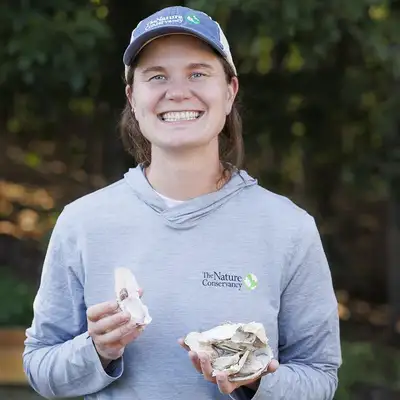
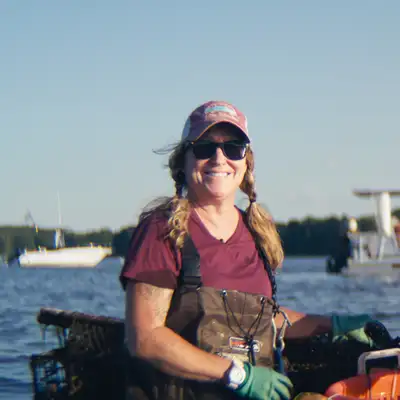
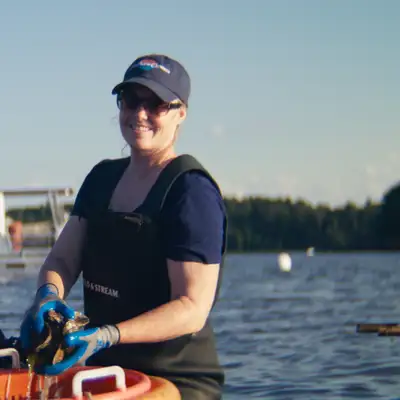
Time and Tide is a New Hampshire Sea Grant podcast for anyone who is connected to the Granite State’s waterways and wants to learn more about the latest science impacting both yourself, and the animals that live here. Hosts Erik Chapman and Brian Yurasits break down complex topics from seafood to coastal resilience by bringing on guests from both the research world, and local industries to share their expertise and perspectives.
Oyster Restoration Time and Tide_MASTER
===
Brian Yurasits: [00:00:00] How would you go about like with an elevator pitch to convince someone why they should also eat oysters?
Brianna Group: So first I have to say taste. I'm a little biased, but I think oysters are absolutely delicious and it's a great way to actually taste the water body that they're grown in, which is really cool. So it's like this burst of flavor that just reminds you of the ocean or wherever they're grown.
And another thing is they're super healthy for you. So, great source of protein, different minerals, and the great thing about, you know, eating oysters around here is you're actually supporting restoration efforts. A lot of those shells are going back in the bay.
David Beattie: Easy. Poor boys, people that eat clams up here, if they'll eat a fried clam, they'll eat a fried oyster.
When you get a good fried oyster sandwich, it's pretty amazing. That would be the gateway into the oyster world.
Laura Brown: I try to compare it to something that they enjoy, like yogurt or ice cream, where when you chew it, it's not completely breaking down either, but you're still kind of chewing it, moving it around, getting that flavor.
'cause it's good. So I'm like, oh, there's a sweetness in oysters too, so just go ahead and try it.[00:01:00]
Brian Yurasits: Oyster reefs are like coral reefs of the north. A century ago, vast reefs of eastern oysters Crassostrea virginica, stretched across Great Bay, cleaning the water and forming one of New Hampshire's most important coastal habitats. Today, only a small remnant of those wild oyster beds remains. But across the bay, a quiet movement is underway to bring them back, one shell and a few baby oysters at a time.
I'm your host Brian Yurasits, and welcome to Time and Tide, the podcast from New Hampshire Sea Grant where we explore the science stories and people behind our changing coastlines. On today's episode, I'll be joined by my co-host, Erik Chapman. In this episode of Time and Tide, we're focusing on a small animal with an [00:02:00] outsized impact, the eastern oyster. We'll start with the basics, what oysters are and why they matter so much to estuaries like Great Bay. From there, we'll look back in time at the long relationship between New Hampshire and its oysters from thriving natural reefs covering 1000 acres of Great Bay, to a 90% decline.
But this isn't just a story about loss. It's also a story about restoration. We'll head out with Brianna Group and Kelsey Meyer-Rust from the Nature Conservancy to learn how scientists and volunteers are rebuilding oyster habitat in Great Bay, placing shell on the bottom, raising young oysters, and tracking how new reefs come back to life.
We'll also speak with Dave Beattie and Dale Pike from the Coastal Conservation Association of New Hampshire about their oyster shell recycling program, a community powered effort that turns leftovers from local restaurants into the foundation for tomorrow's reefs. And to round out the conversation, we'll hear from two industry partners and sisters, Laura Brown and Krystin Ward, who are part of this [00:03:00] restoration network, showing how conservation, community and working waterfronts can all come together around a shared goal.
Because restoring oysters isn't something any one group can do alone. It takes scientists and nonprofits, fishermen and farmers, restaurants, and volunteers. In short, it takes a village.
So join us as we explore how a tiny bivalve is bringing big change to Great Bay.
Stick with us.
When we talk about wild oysters in the granite state, we want to share some numbers for context. In 1993, there were over 25 million adult oysters on the wild reefs in New Hampshire. That number dropped to 1.25 million by the year 2000. Today we've seen that number grow back to around 7 million [00:04:00] on wild reefs for a number of reasons like restoration and management.
Brianna and Kelsey from the Nature Conservancy in New Hampshire are here to help us break this down.
Brianna Group: Yeah, so my name is Brianna Group and I'm the Great Bay Program Manager for the Nature Conservancy in New Hampshire.
Kelsey Meyer-Rust: I'm Kelsey Meyer-Rust, i'm the Coastal Conservation Coordinator.
Brian Yurasits: For any listeners out there who are unfamiliar with oysters as a species, could you maybe tell the story of the life cycle of an oyster?
Starting at its larval stage, its tiniest stage floating around In New Hampshire waters.
Kelsey Meyer-Rust: Oysters, when they are ready to spawn, they do broadcast spawning. A male oyster will kind of shoot sperm into the water column, and a female oyster will shoot eggs into the water column and they'll mix and then create an oyster larvae.
And then that oyster larvae is kind of a free floating larvae in the water column. Eventually, when it's ready, it will attach itself to a substrate. It could be an oyster shell, clam shell. When they get to that form, it then is called a [00:05:00] spat or a baby oyster. It will stay there for life. Spat will just get larger and larger and eventually become an adult oyster.
And then when it's ready, it will start to spawn and kind of just starts all over again.
Brian Yurasits: So how large is a spat? What are like the sizes of these different stages in their lifecycle?
Kelsey Meyer-Rust: An oyster larvae is like teeny tiny. Unless you get a bunch together to the naked eye, you wouldn't really be able to see it.
Oyster spat, when it finally attaches itself, it could be five millimeters or less, so it's really tiny. It almost looks like quinoa on an oyster shell. That's probably the best way to describe it. They grow pretty fast, pretty quickly, and market size oysters is about three inches and that can take about a year.
Erik Chapman: Can you tell us what species we have here and then also how many species are there in North America and in the world
Kelsey Meyer-Rust: Here we have the eastern oyster. It's range is from about the Gulf of St. Lawrence all the way down to the Gulf of Mexico. It gets its name eastern oyster 'cause it's only an East Coast species, so you won't find it on like the West Coast, they have the Pacific oyster instead. [00:06:00] The eastern oyster, they tend to be a little bit larger and maybe thicker shell compared to the west coast oysters.
The eastern oyster is the only native oyster here on the East Coast. We have some other oysters here by accident like the European oyster. I would say globally, I don't think it's a hundred percent known how many oyster species we have.
Brian Yurasits: I wanna get back to the lifecycle for a second. They switch sexes throughout their life.
Could you describe when that happens and why that happens?
Kelsey Meyer-Rust: When they're younger and smaller, they're almost always male. And then when they get older, they tend to switch to females. So females tend to be larger and older than male oysters. A big reason why they do this is for the best reproductive success.
Sperm tends to take less energy to produce and spawn than say eggs do. So a larger oyster can handle energetic cost, it would take to produce eggs compared to a smaller oyster. So that's actually usually why that happens.
Brian Yurasits: What does it mean to be a bivalve?
Kelsey Meyer-Rust: Oysters fall under the [00:07:00] category of mollusks.
That would also include clams, scallops, and muscles. And a bivalve, it's kind of in its name bi, so two, so it has two halves to it or two shells. The top shell tends to be more flat, and the bottom shell tends to be more cupped, and that's where the meat is held on the abductor muscle. They usually have bilateral symmetry, so they're usually pretty even in length.
Brian Yurasits: Where do oysters sit in our local ecosystem? What eats oysters? What do oysters consume themselves?
Kelsey Meyer-Rust: They're filter feeders, so they take in water and keep in food they want to keep. So, that would include things like phytoplankton. Species that eat oysters would be crustaceans, so like crabs and lobsters will eat oysters as well as marine mammals, and some bird species will eat oysters as well.
Brian Yurasits: Are they more vulnerable as larvae or as spat to certain predators, compared to at their later life stages when they're stuck on their substrate?
Kelsey Meyer-Rust: I would say they're most vulnerable when they're like one inch or less, so that spat to one inch size, they're [00:08:00] super vulnerable, especially to things like green crabs that can break into it. Once it gets to three inches, the shell is pretty thick and tough, it's a lot harder for something to break into it.
Brian Yurasits: What are the ideal conditions for oysters to thrive? Is there particular temperature, conditions, salinity, pH?
Kelsey Meyer-Rust: Temperature and salinity play a huge role in oyster survival and the range of where they live. So, oysters definitely prefer brackish water, so that mix of both fresh and salt water. And then same with temperature. I think they prefer more temperate, I would say like 50 to 70 degrees in terms of water temperature. Oysters are also pretty resilient. If there is a big exposure to like salinity or really cold or a really hot wave as well, they can survive those for short periods of time.
Brian Yurasits: I'm curious if you could talk about the role that oysters play being like an ecosystem engineer In some ways?
Kelsey Meyer-Rust: I always say oysters are like little architects. An adult oyster can filter [00:09:00] about 50 gallons of water a day. It's a whole lot of water. And when you have millions of oysters out there, that's a lot of water they can take in and filter and help clean. Oysters, they can do this thing where they can create like a pseudo feces and that pseudo feces is chock full of like different nutrients that goes into the bottom, and then that can help with nutrient cycling, like the nitrogen cycle, the carbon cycle, and things like that.
Brian Yurasits: You painted this picture of what it's like for a larval oyster transitioning to an adult oyster.
Now, I'm wondering if you could tell the story of wild oysters in New Hampshire waters. How far back would you say this story starts?
Kelsey Meyer-Rust: Indigenous tribal communities in New Hampshire have been eating oysters for 2,500 years. I also know in colonial times oysters became a really popular source of protein. It was a trade commodity too.
Today a lot of folks get them, usually from restaurants that oyster farmers have harvested. Oysters have been around for a long time and people have been enjoying them for a long time too.
Erik Chapman: Can you describe sort of the extent that oyster reefs had historically in [00:10:00] New Hampshire?
Kelsey Meyer-Rust: And just to set the scene, so I would say Great Bay Estuary kind of has three parts to it. Piscataqua the mouth of the estuary, the upper part of the bay or Little Bay, and then the lower part of the bay or Great Bay in the lower part of the bay, Great Bay, we used to have oyster reefs pretty much everywhere. In Little Bay we had some pretty healthy reefs, and the Piscataqua River at the mouth, we had a lot of oyster reefs there too.
And we still have some, but not nearly to the degree it used to be. And a lot of things over the past few decades have been causing that. Historical over harvesting, disease, MSX and Dermo, those are oyster specific diseases, and that really hit hard for oysters, especially in the nineties. MSX was a big problem, and now dermo is a big issue, especially because it's a warm water disease.
And then also things like pollution and invasive species, all those things can affect oyster reefs.
Brianna Group: So, it's interesting because we don't really have historical mapping that goes all the way back to pre-colonial or colonial times. It's all anecdotes, stories about there being so many oysters that people were actually feeding them to [00:11:00] pigs.
The 1970s, I would say is probably some of the more historical mapping that we have. There were about a thousand acres of oyster reef in Great Bay, and so through some calculations we were able to figure out that like, wow, they were filtering the bay in just four days, which is amazing. And now you fast forward to today, and we've got maybe a little over a hundred acres of oyster reef.
Brian Yurasits: If you could break down those two diseases that you mentioned a little bit. It sounds like disease was really this catalyst to the decline of wild oysters.
Kelsey Meyer-Rust: MSX was the one that hit really hard in the nineties, and MSX has kind of gone away over the past few years. Dermo is the one that's really prevalent now and it tends to kill oysters at the adult stage.
I do want to mention too, these are oyster-specific diseases, so they only affect oysters. They're actually completely safe to eat. There's been a lot of research done on this looking at oyster disease, MSX and Dermo, and how we can get disease-tolerant strains of oysters.
Erik Chapman: What [00:12:00] created the vulnerability of the population to disease? 'Cause I would imagine the declines in populations have to do with other environmental challenges that weaken the resilience of the individuals in terms of health that makes them vulnerable disease. Is that true, or?
Kelsey Meyer-Rust: Warmer water is a big factor in terms of this because of how more prevalent the diseases will be in the water. 'Cause they really thrive in that warmer water. Salinity and temperature can play a big factor in terms of disease and how prevalent it is.
Brian Yurasits: How do you go about choosing the best sites for oyster restoration?
Brianna Group: We try to avoid anywhere with eelgrass, avoiding navigational channels as well. Logistically, where is it possible to work within?
A big part of constructing a reef is building that foundation and that requires bringing out a barge with a crane and hundreds of yards of shell. So, if you think like one yard of shell is maybe the size of like a washing machine, we're putting out 300 to 500 yards of shell.
Where can we have the greatest [00:13:00] chance for success of recruitment? And so what recruitment means, just to define that as well, is when that larvae goes through the process of setting onto something hard and turning into a spat. We have pretty sporadic recruitment here in the estuary. As Kelsey mentioned, we've had these diseases that have entered our system, they're shortening the lifespan of our oysters.
With less adult breeding biomass, we're seeing less oysters entering into the population, and so we want to give ourselves the greatest chance of success when we're building a restoration site.
How close do we need to be to a reef to get the greatest chance of success? That really needs to be within a kilometer of a wild reef.
And so that's how we've chosen to identify a site, is looking for that recruitment success. Also trying to stay within the environmental and also the permitting constraints. And maybe this is getting more to construction design is looking at the actual bottom of a site and looking at how sedimentation is moving throughout the site, and that really [00:14:00] determines how we put out the shell, how much shell.
Brian Yurasits: Could you describe what a restoration site looks like? If you were to dive down to one of these restoration sites, is it just a bunch of shells? How do you get them to stay in one place and not just drift off with the current?
Brianna Group: To answer that question, maybe I'll compare two different sites that we're currently working in. So, we have a restoration site over by Woodman Point. It's a two and a half acre site, and for that site it's got more of a really mucky bottom. If you jumped off the boat at low tide, you'd probably sink in pretty deep. We don't want the shell that we put out to just get buried by the sediment.
We actually put out these huge piles of shell. It's about 35 cubic yards of shell. So, think 35 washing machines in a big pile. And it is actually really cool, kelsey and I went out at a very low tide, you can see the piles at low tide. But, you go instead to a site that we're working at over by the mouth of the Squamscott, it's more of a sandy bottom, there's really strong flow there. The [00:15:00] shell isn't going to sink as deep. We've actually been able to do a thin layer of shell at that site, and it will persist and stay put. And that's great because shell is a limited resource, there's only so much.
Erik Chapman: It's just so great to see the Nature Conservancy and how they've approached this and really kind of embraced this as a priority.
You're all in now. How did that set into place?
Brianna Group: You know, we kind of have to go all the way back to the early two thousands. We are so lucky in this region to have such incredible expertise and knowledge through the University of New Hampshire. Dr. Ray Grizzle and Krystin Ward, they're really the ones who started oyster restoration in Great Bay, and I think that's because in the nineties we saw that huge drop off in our oyster populations, like how Kelsey was mentioning because of disease. And it was very pilot, very small scale, like trying to figure out what is the best substrate to use, learning how to set larvae onto shells, too. That's a whole process and technique that has been refined over the years. A lot of that work was really funded through [00:16:00] NOAA, through the EPA and PREP as well.
Brian Yurasits: NOAA stands for the National Oceanic and Atmospheric Administration. PREP stands for Piscataqua Region Estuaries Partnership. EPA stands for Environmental Protection Agency.
Brianna Group: The Nature of Conservancy, we actually got involved in 2009. That was to help to fill a funding gap for a lot of this restoration work.
There's another party that plays into this, and that's NRCS is a really huge funder of oyster restoration in this region.
Brian Yurasits: NRCS stands for the US Department of Agriculture's, Natural Resources Conservation Service.
Brianna Group: A lot of those early years were refining techniques and how do we design a reef for the greatest success, and how do we keep adapting that as conditions are changing and we're learning more about our system.
Erik Chapman: What I really love about that story is that you talked about all these partnerships that you built around, and I feel like that's a New Hampshire approach to these things. I'm curious if you could talk also about your relationship with the oyster growers. How has that evolved over time?
Brianna Group: Partnering with the oyster [00:17:00] farmers on restoration has been a game changer for how we do restoration projects. Here in New Hampshire, it came out of this whole process called Restoration by Design. We really needed to take a step back and sort of reflect on what have we learned and how can we build a roadmap for how we want to continue restoring oysters in Great Bay. And so we took into account ecological factors, social factors, to create a blueprint, this is how we want to restore oysters in the Great Bay. And one of those really important partners were the farmers that were at the table. We purchased, I want to say it was like 19,000 of these huge oysters. They were probably like, some of them 4, 5, 6 inches in size, those can't go to market, they've outgrown the half shell market. And we placed those on a restoration site and we saw really great survival, we saw growth and recruitment, and that really became the backbone for a program called SOAR, which is called Supporting Oyster Aquaculture and Restoration. I feel like that has just taken off. A big part of the farms [00:18:00] partnering with us is it takes so much energy and time to grow an oyster to three inches.
And so, if we're trying to put out these large adult oysters, I'm not a farmer, I don't know how to do that. The farms, they have the experience, the expertise to have the greatest success at growing a large amount of oysters to an adult size to put on a reef. Partnering with them, it's given us ecological benefit, but at the same time creating a restoration market has allowed them to diversify their businesses.
Let's say there may not be a good year. They can sell oysters to restoration instead. The oyster farmers, they're stewards of the bay. Their businesses depend on a healthy, great bay to grow their product. They're maybe sometimes the first ones to see if things aren't doing so great.
Brian Yurasits: I will mention that we at New Hampshire Sea Grant have dipped our toes into this collaboration as well, especially during the COVID-19 pandemic.
When aquaculture businesses were struggling nationwide, Sea Grant programs received support through National Oceanic and Atmospheric Administration aquaculture [00:19:00] funding to help stabilize the industry. Sea Grant purchased about 10,000 oysters from eight local farms and placed them on licensed farm plots as experimental oyster reefs.
Researchers, growers, and Sea Grant staff then monitored these reefs for a year. Those early experiments helped demonstrate how farm-grown oysters could support restoration.
Does it matter where oyster farmers are getting these oysters from, that you're using in restoration?
Brianna Group: The great thing about using these farmed oysters is they're from lines that have MSX tolerance, that might be helping with not being impacted by disease as much.
And I've heard rumors that there might be a strain coming out, with Dermo resistance as well. I would say, you know, genetics are definitely something to keep an eye on.
Brian Yurasits: How are residents or visitors to New Hampshire's coast connected to this process?
Kelsey Meyer-Rust: One is through spat counting. So, like we mentioned spat are baby oysters that are attached to shell. I'll host these [00:20:00] spat counting events, anyone can sign up and come. We host a bunch throughout the season from June all the way to almost October. They'll go through these shells and they'll actually count all the spat that are on the shells just to get some baseline data, how the spat survived from the setting tanks, and get an idea of like where we're starting from. The other way we get involved with the community is through our Oyster Conservationist Volunteer Program. This program has been happening since 2006, so we're about to enter our 20th year.
These volunteers will get one of those cages that have the spat on shell that we just got the data from at the spat counting event. And they'll hold onto these cages for about 10 weeks. They have some sort of access to the Great Bay watershed, and twice throughout the season, they'll measure the spat on the shell.
They'll look to see if there's any predators in the cages, like green crabs. And then we also have these little fish bait bags filled with, I call them like blank shells, so there's nothing on them, to see if maybe we get wild recruitment as well.
Brian Yurasits: Is there a through line between everyone who's involved with [00:21:00] this? What is that motivating factor that brings folks into the fold of oyster restoration?
Brianna Group: We all want to see a healthy and resilient Great Bay. This is such a beautiful, magical place. Ocean and freshwater meet, and it just creates this incredibly productive, beautiful ecosystem that is so rare. But also it's really threatened, especially since we're seeing so many changes here on the Seacoast.
And so that's the common thread, is we want to protect and conserve and improve the Great Bay for the benefit of wildlife, but also for the people who live here and enjoy it and recreate in it.
Brian Yurasits: This single little mollusk can connect so many people for this common goal. What defines success for this work?
Brianna Group: It's a great question and I will say. Success is a hard thing to define. Even thinking about what is the baseline, we're missing a lot of that historical data. I will say there are a couple universal metrics that have been developed. Some of those include reef height, reef coverage, [00:22:00] density of oysters on a reef, having multiple age classes.
So, are we getting a reef that is reproducing, is it self-sustaining, is it existing above the sediment? It's not getting buried. Those are all metrics that we're measuring ourselves against. We're lucky that we have a couple reefs in Great Bay that are really healthy. There's one in the Squamscott and in the Piscataqua River.
That's something that we can measure ourselves against, but then even looking beyond, making sure that we're measuring those ecosystem services too, because there's this great ecological value our reefs are providing. They're improving our water quality. They're providing this incredible habitat for other animals that live in the Great Bay.
Brian Yurasits: What does the future look like for this restoration work?
Brianna Group: We are in the process of permitting two additional sites. It's really important, I'll say as well, to have long-term monitoring too. So, looking at even like 10 years out from after you've constructed a site to see what is the shell base looking like?
What is the density [00:23:00] of those oysters looking like? At our current sites, we've seen really great persistence of shell. It's not getting buried, it's still very present on the sites. I think probably one of the biggest nuggets of success that we've seen was at the Nannie Island wild reef. In that restoration site, that reef was very heavily degraded. Fish and Game, during their dive surveys they weren't finding any live oysters, no recruitment for a number of years. And then after we deployed over 600,000 farmed oysters onto shell, we actually saw a huge spike in recruitment on the wild reef and on the restoration site, and we've seen that each year since then.
Erik Chapman: Are there any other impacts of this work that our listeners might feel in their lives outside of just the delicious oysters that they can eat?
Kelsey Meyer-Rust: If you're using the Great Bay watershed, you feel it every single time you're out there. Folks use Great Bay for a multitude of reasons. You know, maybe they like to go kayaking, maybe they like to go bird watching or do some fishing, or just use their boat.
And [00:24:00] oysters are a big reason why we're able to do all these great things in Great Bay, 'cause oysters are like these ecological powerhouses and because of all the great services they provide, we're able to enjoy our watershed.
Brianna Group: Oysters, whether they're wild or farmed, are helping the bay. I remember seeing this number that we have just about as many acres of aquaculture farms in Little Bay as we do acres of wild reef.
And you think about the benefit that those farms are providing alongside our restoration sites and wild reefs.
Brian Yurasits: I do want to say Kelsey and Brianna, thank you for taking the time and sharing your deep knowledge.
Kelsey Meyer-Rust: Thank you for having us.
Brianna Group: Thank you. It was great.
Brian Yurasits: Up next, you'll hear from two recreational fishers and conservationists who saw an opportunity to engage restaurants and consumers with oyster restoration.
Dave Beattie and Dale Pike both work with the Coastal Conservation Association of New Hampshire on their Oyster Recycling Program, providing the shells for baby oysters to grow on.
Stick with us.[00:25:00]
David Beattie: I am Dave Beattie and I've been involved in CCA New Hampshire since its start. At that time, I was a saltwater fly fishing guide. Originally it was primarily geared around striped bass conservation, and over the years we've evolved and gotten just as much into the marine environment as game fish. And as the organization morphed into this wider range of environmental concerns, so did I. 18 miles of coastline, it'd be pretty sad not to take care of it.
Brian Yurasits: And how about yourself, Dale?
Dale Pike: Yeah, I moved to Newmarket in 1999 and at some point I signed up to be a Oyster Conservationist through TNC and had connections there and invited to the board with CCA. Our environmental activity as a board, I would say has gone up a great deal in the last decade.
The biggest threats to the fish we love to catch like striped bass are environmental.
Erik Chapman: So, how many [00:26:00] shells do we need each year to support the restoration in Great Bay?
David Beattie: That I think largely depends on their deployment objectives, whether it be TNC or UNH. They tend to be in hundreds of yards these deployments, the major ones. We can only provide, depending on the year, anywhere from 10 to, I think the highest we ever provided was maybe 50 yards because of storage and aging issues. So, we hope to provide as many as we can.
Brian Yurasits: That's half of a football field.
David Beattie: It's amazing when you see how many oysters are actually consumed in this greater Seacoast area. It's mind boggling and it's becoming more so.
Brian Yurasits: What is your role in this oyster restoration process?
David Beattie: Kind of started somewhere around 2010, 2011, we're always looking for things to do, whether it be through funding or volunteer efforts or some combination thereof. They approached the Orvis company and got a $12,000 grant, and with that started the program.
Another board member bought a trailer and [00:27:00] donated that, and then they started reaching out to restaurants and the university, and from there it just, I don't wanna say exploded, but grew. It's a controlled growth. We want to do it right.
Erik Chapman: And how many restaurants are you working with today?
David Beattie: We have four right now, we're gonna bring on a couple more come spring. We've had as many as 10 or 11 pre-Covid.
Brian Yurasits: This oyster comes to you on a plate at a restaurant. You slurp it up. Can you talk about the journey of that shell from the consumer at a restaurant to Great Bay where it is then used for restoration purposes and has oyster spat sticking to it?
David Beattie: Once they're obviously consumed on site at the restaurant, collected by the staff, we pick up once a week, so they sit at the waste storage area at the restaurant. Then we pick them up, uh, we're pretty quick about it. We don't linger at these spots. We've gotten pretty good at it, it's not quite a formula on pit stop, we're outta there in minutes. Put 'em on our trailer, and then go to the next restaurant, and then we return to the Port Authority, where we're currently [00:28:00] operating out of, and that's where our roll off containers are. And then the volunteers dump them from the 20 gallon barrels, Rubbermaid barrels that we use that are collected and which we provide to the restaurants. Dump 'em into the containers where they age, has to be for six months as per Fish and Game.
Brian Yurasits: Why six months?
David Beattie: Microbes that would lead to issues with existing shellfish populations in the bay.
Dale Pike: It requires cooperation along the way. Restaurants are under pressure economically, they have staff that change over a lot, and they've got to separate out all the plastic, and sometimes they're in a hurry and they just treat it like everything on that plate with oyster shell on it can go in the barrel. That makes 'em very heavy, the ice melts. Sometimes we see towels, we see latex gloves, we see all kinds of things that may make it there. Most of the time they do a good job of separating out just shell, but that's a key part from what we see if plastic makes it through.
I've helped before with UNH when the shell is being dumped and you're there looking for things that made it through our process. So it requires a lot of [00:29:00] cooperation from the restaurants' staff at a time when they're really busy. And then take it out to wherever they let stuff to collect and get it into the barrels. It's so much easier if you have a place where they've got plenty of room. But a lot of our restaurants are in the middle of downtown Portsmouth and it's tight in there.
Erik Chapman: The restaurant owners, it seems like they're putting a lot of sweat equity into this project. I'm curious how you get them on board and sort of what's in it for them.
David Beattie: Clearly in this area, a lot of the restaurants are making an credible effort to be more environmentally aware and they realize this is a good way for a restaurant to do it. I'm sure a lot of them have other things they would like to do, but when it comes down to the bottom line, they just can't do it.
Whereas this offers them a chance to do something. It's doable, we can do this.
Erik Chapman: It puts the consumer in the restaurant in this sort of lifecycle of shell. They are contributing to the restoration. The restoration then creates more oysters, which cleans the bay, they eat the oyster.
David Beattie: It's this clear, understandable story that everyone can [00:30:00] grasp.
You're not talking about things in parts per thousands or parts per million, and people's eyes just glaze over. Whereas this, it's like the bay benefits from oysters, you like to eat oysters. Here's some rubbish, we're taking the rubbish and doing good with it. And that's the thing with oyster farming is it actually benefits the environment.
Brian Yurasits: If these shells weren't going to restoration purposes, where would they end up in the waste stream?
David Beattie: That's an excellent question. I was told either composting for the more conscientious operations or just plain going to the landfill, which is a shame because even if they weren't being used for good restoration purposes, they go for over $200 a yard for driveways.
Dale Pike: Some restaurants don't generate that much. It tends to be the restaurants where it works well are people that really are making it a big part of their whole strategy to attract people. They use a, say buck-a-shuck type of arrangement that will drive a lot of oyster consumption.
Brian Yurasits: But I was wondering if you could talk about how oyster restoration has this ability to reach anyone in New Hampshire. It doesn't [00:31:00] matter what your politics are, where you live. This story of oyster restoration is kind of a low hanging fruit to get people engaged in the health of our coastal ecosystems.
David Beattie: You're not asking someone not to do something. It's, oh, you're gonna take that garbage and do good with it. We've never come across the person that says, that's inconveniencing me.
Here's a great thing that everyone can understand and everyone can get behind. The only science you have to get into with people a little bit is explaining how oysters do benefit. And that, fortunately, is a fairly easy story. Kind of like right now in the bay the shades are closed, and the oysters help us open the shades, and then the light comes in and everything happens.
Brian Yurasits: Maybe what are some other activities that folks enjoy in and around Great Bay that are made better by the presence of a healthy oyster reef?
Dale Pike: Bird watching is a major one. People love seeing eagles, they love seeing ospreys when they're out feeding on the herring run. All of that is so dependent on the [00:32:00] water quality.
David Beattie: The sport fishing, you know, recreational angling benefits from a clean system. Paddleboarding, which has become very big.
They don't necessarily have to be a stakeholder in terms of, I only care about the bay because I fish, I only care about the bay because I birdwatch, I paddleboard. You want people to just care.
Dale Pike: At its heart, all of these activities rely on a healthy ecosystem.
Erik Chapman: What gives you hope about the future of oysters in Great Bay?
David Beattie: We seem to have a large number of very active nonprofits, which are very willing to collaborate, and that's nice to have.
Brian Yurasits: I kind of want to throw David's response back to you, Erik. What do you think is that special sauce?
Erik Chapman: In some ways it's as simple as our geography is quite small. We're all coexisting and neighbors in a part of the same community to begin with.
And so I think in New Hampshire, we're offered that opportunity and we are very fortunate to take advantage of that opportunity. And then it becomes quite easy to focus on the problem and less on getting the credit. You know, Sea Grant is an organization that comes with that [00:33:00] sort of mission.
David Beattie: Anytime, whether it's two or 15 groups get together, it just gives more credibility. This must be for real because all these groups seem to agree on this.
Brian Yurasits: What are your short term goals for this season?
Dale Pike: You've kind of constantly gotta refresh the restaurants. If there's anything we can provide them, they have it to provide good clean shell.
David Beattie: We're always looking to pick up a handful of restaurants that work within our limitations and structure, and we're always trying to strive to keep things safe and appealing for the volunteers. And everyone kind of jokes that you couldn't pay me to do this, but I'll do it for nothing, once or twice a month for a couple hours. I'm right there myself.
Erik Chapman: You know, what is it about sport fishing, what's the hook for you?
Dale Pike: And I can still remember, I was probably four or five years old getting a little teeny brook trout out of a brook, and it was just like, electric.
David Beattie: The evolution of an angler, particularly in their later stages of angling, they have a more in depth appreciation of the environment, whether it's freshwater or marine, and that becomes just as important to them as the [00:34:00] physical act of catching fish. And it's often described as that line doesn't just connect you to that fish, it connects you to that environment.
Brian Yurasits: And you have to deeply understand the ecological role of that fish to catch it.
Dale Pike: When you are out there in the morning on the Piscataqua or some of these places, and there are herring upon the surface and the stripers are chasing 'em, and the birds are feeding off the same herring as the striper, it's just this melee going on. And yes, you're catching some fish, but it's fun to just see it.
David Beattie: Within the hunting and angling community you're gonna get a wide range of people. If done right and you focus on the issues at hand, it's nice to get all these people of these varied backgrounds and philosophies and opinions to work together.
Brian Yurasits: Dale and Dave, thank you so much for taking the time.
David Beattie: Thank you. It's a pleasure being here.
Brian Yurasits: As you've heard throughout the episode, oyster farmers are at the center of oyster restoration work in New Hampshire. Laura Brown owns and operates Fox Point Oysters, and Krystin Ward is a marine [00:35:00] biologist at University of New Hampshire, an owner and operator of Choice Oysters.
These two are sisters working together to grow delicious oysters in Great Bay while supporting science and restoration.
Stay with us to hear their story.
Krystin Ward: My name's Krystin Ward, I live in Dover and I have two farms, a four and a half acre farm in Newington and an acre farm in Durham.
Laura Brown: I'm Laura Brown. I own Fox Point Oysters, which is a very small two acre farm, right off Cedar Point over in Durham.
Brian Yurasits: Is there a difference between the oysters that you're farming versus wild oyster populations? Where do you get the oysters that you're using to grow on your farms?
Krystin Ward: Most of the farmers in New Hampshire get a lot of their seed from Muscongus Bay up in Maine. We get like nine to 13, 14 millimeter seed from that hatchery. There are some people with upwellers in Great Bay, some of the farmers where they get seed much [00:36:00] smaller, usually from Muscongus Bay, and then they raise 'em in the upweller.
Brian Yurasits: And what is an upweller?
Laura Brown: An upweller is like a nursery for the smaller ones, they need a little bit more attention. If you were to just toss 'em in the bags and cages we use on the farm, they're not quite big enough to survive.
There's sort of a pump in this upweller nursery that helps get food to them faster and quicker so that they grow and become a little bit more hardy before they go out onto the farms. So, I would say like three-eighths to a quarter inch, somewhere around there an oyster is safe to take from one of these hatcheries and put straight into our waters. But if one of our other farmers has a nursery nearby, it's a great place to buy 'em from, 'cause they're already acclimated to our water.
Brian Yurasits: Just to confirm, they're the same species of oyster and they're coming from somewhere nearby.
Krystin Ward: Yeah. In the wild, naturally spawning oysters usually need like a hard substrate to settle on. in a hatchery, the larvae are always under movement to try to keep them single and not setting.
When we buy oyster seed, they're all single oysters not attached to anything.
Brian Yurasits: If you don't mind like taking us on a little journey through like where it is, what it's like working on your farm and who [00:37:00] works with you out there?
Laura Brown: My farm, I probably have a really unique situation, I'm the only one that doesn't need a boat to get to my farm, so I actually just kayak out.
I only work at low tide. So I get between two and four hours a day usually to work, and I kayak out, or I walk out to my site. It's far enough, it's a hike through the mud. Fairly muddy site I have what's called oyster condos. They look almost like a lobster trap, but a lot larger space between the metal pieces.
And they hold bags and the oysters are inside the bags. The oysters are growing the same way they would on a reef. They're eating the same food, they're doing the same thing. But the goal of the farmed oysters is to keep them looking pretty. Restaurants and people wanna see pretty oysters that are all the same size.
So the bags and cages really just help us keep them organized by size, and it allows us to kind of shake 'em around, clean 'em off, make sure everybody's getting the same amount of food that's passing by in the water. Since we don't feed them, we really need them to all have equal access to that food in the water.
So a lot of the farming is just cleaning off those cages.
Krystin Ward: I have similar process to Laura. One of my sites is a little deeper. It allows for bottom seeding. So I do a lot of bottom [00:38:00] seeding in addition to the condos and the trays. Once they're probably around one and a half years to two years to avoid predators, you can just seed 'em on the ground and then it's less gear intensive. Give 'em about another year, year and a half to grow. Go out and rake 'em up, clean 'em up from the algae and stuff that's settled on it and I collect 'em that way.
Erik Chapman: So you each have spent an incredible amount of time in Great Bay. What are some things that you can tell us about the uniqueness of the spots that you are farming?
Krystin Ward: One of mine is at the mouth of the Oyster River. In between tides it is just hauling past. So, you're constantly kind of readjusting, making sure they're going with the flow so that they're not getting knocked over. My other site is very quiet, it's on Fox Point. Very much more peaceful.
Laura Brown: When I started farming, I started on her site, the Fox Point site.
Krystin's my sister in case people didn't notice. We usually forget to tell people that. I was very, very fortunate to start my farm on her site. And now I'm over by Cedar Point. I have a bridge near me and it's kind of loud every now and then, but I actually feel a little bit safer there sometimes 'cause I could hear activity. And I was out there once struggling in the mud and it was just, it [00:39:00] was a riot, it must have looked so ridiculous from the shore. And people do not know what I'm doing out there. But I think mine has the prettiest sunrise ever of anywhere I've ever been in my whole life. It is just so beautiful.
I just feel really, really lucky. A lot of weird species floating by too, I've seen some good stuff.
Erik Chapman: You're not gonna ask about the weird species.
Brian Yurasits: Oh, no, no, no. That's where I was going next. Yeah, what is the most interesting species encounter, whether it's a majestic bald eagle flying by or something that's underneath the surface that you kind of can't see that brushed against your,
Laura Brown: Oh God,
Brian Yurasits: your leg, or something like that.
Laura Brown: Way too many of those.
Krystin Ward: For me, definitely the squid eggs were kind of neat to see and then sometimes, you know, the little bait fish come in and then you'll just see stripers zooming in and outta your cages.
Laura Brown: If this is the one where I saw it first and like requested help 'cause I am not a scientist and I was like, what is that thing?
I thought it was alien brains and I was like, Krystin, you need to come out here. She came out with her boat, and she's like, it squid eggs. Like it was no big deal. I was freaking out.
I did have a giant eel slide through my hand once as I reached down for something and I just saw it slide past the cage and I was like, [00:40:00] oh my God, I got back on the boat. At the time it was at Krystin's farm again, and that was it for me, I went home for the day. But this year, I'm much braver now, this year I saw a lion's mane jellyfish, and I took about 75 selfies with it. It was the most beautiful thing I think I've ever seen.
Krystin Ward: And as you can see, the cages are acting as habitat.
We have to be on a mudflat, no eelgrass present, no natural reefs present, we're taking over this mudflat and species just are coming in. They're using it just like they would a regular reef.
Laura Brown: The bald eagles are pretty cool when they float over. It's kind of, it's ridiculous. The seals come around every now and then, only if I'm playing music really loud on the kayak. I think they like the thumping sound.
Brian Yurasits: What are the most top of mind threats to farmed oysters in New Hampshire waters today?
Laura Brown: Green crabs.
Krystin Ward: Yeah, the predation, obviously. We have the diseases. MSX and Dermo, which could wipe out a farm just like it could wipe out a natural reef.
Laura Brown: We work really closely with the Department of Environmental Services, so they're constantly checking our water quality. We're only allowed to farm in Little Bay. We're not in Great Bay. It's all part of the Great Bay Estuary, but we're in a very small piece of it, which is [00:41:00] very highly monitored for the water quality purposes.
Krystin Ward: As far as the oysters are concerned, water quality really isn't an issue at all.
Laura Brown: I mean, temperature can affect them too. I think there was a huge storm a year ago in February and I lost over 50% of a certain size class. I lost like 80% of 'em.
Krystin Ward: If they're exposed to ice, yeah.
Brian Yurasits: Do you share your insights while you're spending time out on the water with these other organizations doing restoration work in Great Bay, and could you talk a little bit about that?
Krystin Ward: You know, we do our annual reports and relicensing with Fish and Game, that's a good opportunity for us to let them know at the end of the year what changes we've seen. Obviously if there's a disaster or something happening, we call Fish and Game.
Laura Brown: I mean, we're out there every single day, so we're kind of the perfect stewards of the bay.
So if we see some weird algae on there, like what is this thing? We have so many partner organizations we can go to, and it's like, can you tell me what this thing is? Or like, has anyone else seen this?
Krystin Ward: My other job is at UNH, University of New Hampshire. I work with Dr. Ray Grizzle partnering, especially with the SOAR projects.
We also have funding to go out and monitor the restoration sites. Once the shell is put down as a base, these farmed oysters go [00:42:00] out, we go out and do video transects.
Laura Brown: The other scientists at UNH, we have a space in the base, so sometimes they'll come out and run small experminets using our oysters at least, or they come out and people have dropped things in off my dock.
Erik Chapman: I'm wonder if you could also talk about other ways that the oyster farming that you're doing contributes to restoration of the ecosystem.
Laura Brown: Just oysters, they're pretty great little creatures. They're pulling out nitrogen when we harvest 'em. As farmers, we're not feeding them anyway. The more the merrier as far as I'm concerned.
Brian Yurasits: The New Hampshire oyster industry is fairly new and grew really quickly, right?
Laura Brown: It's pretty baby. It's a young industry.
Krystin Ward: Compared to other states, yeah.
Brian Yurasits: That's interesting to set the context of how quickly the industry has grown. From the ground up, it sounds like you were engaging with the rest of this community.
Laura Brown: I would say Krystin did that way more than I did, but I was just trying to keep oysters alive on the farm and learn the process of farming and then how the heck I was gonna sell 'em. Then that got more involved for sure.
Krystin Ward: We're really lucky to have The Nature Conservancy and NRCS. They've played a huge role with the restoration in [00:43:00] using farmed oysters and rewriting the book here, looking at us like farmers on land.
Brian Yurasits: How does that work into your business model? Like what oysters are you contributing to that work? I've heard the term uglies thrown around. Uh, it would be great if you could dive into what that means. The forgotten oysters, I guess.
Krystin Ward: The forgotten oysters, yes.
Brian Yurasits: Have a greater purpose in life.
Krystin Ward: You know, you can't get to everything.
Time constraints and just getting it weather wise, tide wise. Especially with the bottom seeding, we start getting these oysters that are four inches, five inches, and they're bent, they're crooked, they're weird looking, but we were like, what can we do with these? Because of oyster biology, we know that we need the young oyster along with the older oysters to spawn, male and female, so.
Laura Brown: I kind of lucked out because I have so many events that I do that I can bring the big and ugly ones and no one really cares 'cause I'm shucking them for them. Once people have to do it themselves, they want the pretty, perfect, easy ones to open. But if I'm doing it for 'em, they'll take a great big giant one, they don't care. So I ended up not having any bigger ones to sell to any of the [00:44:00] restoration sites. And I started buying them in for restoration only. So I have a whole section of the farm that just goes to restoration only. It's nice 'cause I don't have to take care of it like I take care of the other ones.
I don't have to shake 'em as much. I don't have to move 'em around as much. I can toss 'em in the ground and kind of ignore 'em for a while. 'cause it doesn't matter what they look like, but they're still healthy and they're growing beautifully.
Brian Yurasits: Do you have any advice for an oyster grower who is maybe entering the space, about how to engage with research and this restoration work that you're involved with?
Laura Brown: The Sea Grant interns are the best, and so many of the students in a lot of the labs at UNH are always like, well, how can we work with the farmers? Like, we wanna get out there more. We wanna learn what they're doing. I always say just find a farm and ask to work, but be useful. You've gotta be out there and you've gotta be useful and you've gotta be available and you will learn almost everything.
I think the farmers are very willing to share their information, but not if you're coming out twice a summer. Time, get out there and just work and we'll pay you.
Brian Yurasits: What makes you lose sleep at night being an oyster farmer in New Hampshire?
Laura Brown: The list is long. I'd say to start out with is [00:45:00] infrastructure. For our industry there is zero.
We really need a space where we can operate from. We need better ways to access our farms. There's only one marina and it's a private marina right now, so it's really tricky. And if they're full, no one else can go in there. So that's a really hard one. People that maybe don't want commercial aquaculture out in the bay, there's a lot of people that are fearful of what we're doing and I think once we talk to them, a lot of people change that immediately.
Brian Yurasits: What would you say if you had someone's ear who was skeptical about having an oyster farm?
Laura Brown: People would come over and, oh, I just signed a petition for someone not to have a farm out there. I said, oh, could you tell me why? And I said, I don't know this person, maybe I don't want them out there either. I don't know.
I said, but what you know, what were your reasons? And they didn't have any. And they said, well, we don't want these giant barges coming out. It would be loud. And I said, okay, well, you know, and I'd point to a little pontoon boat. I'm like, well, that's the barge you're thinking of. We usually turn off the engines and people work very quietly in the water.
After 20 minutes of explaining, they were like, this sounds amazing. Oysters are cool. I want a farm out there, I wanna see this. So, once they understood it, they were fine with it. I'd like to see more oyster [00:46:00] farms, if they're well maintained and well kept. I think it's a really great thing for the water quality as long as we're allowing people to use the bay in their recreational ways and we're not hindering their ability to do so, also.
Erik Chapman: What are some other things that give you hope?
Krystin Ward: Recreational oystermen and women, we talk to a lot of them in these meetings. They'll wanna know about the restoration projects. These projects are happening near the areas that are recreationally harvested for years and generations. So having good feedback from these restoration projects, and they're like all for it.
Laura Brown: Yeah. We have so many awesome chefs that are completely in tune with what we do. They know that the bay to the table, I mean farm to table, is huge for oysters. I mean, there's no processing done, it's right there.
Krystin Ward: Have the chefs come out with you to your farm and it's amazing. All of a sudden, they are pushing your oyster. They want a local oyster name on their menu.
Erik Chapman: I mean, the partnership and the community has grown in ways that has supported a really good thing happening in our backyard, and that's powerful stuff. If you were to sort of envision a future of where it could go, you [00:47:00] know, what would that look like?
Krystin Ward: I would love to see the restoration keep going. Eelgrass beds, oysters, how everything's related. By keeping these restoration projects going, and by keeping the monitoring going, we could really kind of be a model state.
Laura Brown: I want to see it running smoothly where we're supported by our state, we're marketed by our state as a local seafood.
It's kind of a big deal, like it's a good, healthy, sustainable protein source.
Erik Chapman: How would you characterize New Hampshire's oyster industry? What's kind of unique or what's characteristic about it?
Laura Brown: It's tidal. It's got a really good tidal blast in there. It's like eight to 10 feet and we have like seven nice freshwater rivers that feed it.
So, it does make pretty unique growing conditions for these oysters. And because there are only 12 of us harvesting, you can't get 'em anywhere else. If you wanna try a New Hampshire oyster, we're it. I mean, every morning when I go out at low tide, there's four other pickup trucks right next to mine and we're all, hey, hey, what's going on?
Hey, you doing all right? Oh, I forgot my lock. Oh, here's one and, oh, do you have extra ice? Yeah, sure. I have it. So it's such a tight community and I feel really fortunate for that.
Brian Yurasits: Do New Hampshire oysters taste [00:48:00] different than other oysters? And how would you describe the flavor?
Krystin Ward: I think definitely. The salt factor, the texture factor. They just seem more firm.
Laura Brown: That cold, cold winter makes 'em just like super meaty and compact and so flavorful. So they have that super briny kick, but they also have this hint of sweetness in the background.
Brian Yurasits: Well, you've made me, and I'm sure Erik, too, a bit hungry. Thank you both Laura and Krystin for taking the time and sharing your knowledge of what it's like to work out there.
Laura Brown: Thank you both for having us. Thanks for asking.
Brian Yurasits: We've learned how crucial oysters are for the health of New Hampshire's estuaries and what uphill battles wild oysters face to recover back to their historical abundance. But we've also heard so many examples of why nonprofits, oyster farmers, consumers, recreational fishers, restaurants, government agencies and researchers are all working together to bring wild oysters back.
So, the next time you decide to slurp up or fry a local New Hampshire oyster, think about how you're [00:49:00] actually helping to clean our waters, build habitat and support baby oysters with your recycled shells.
Click the link in our show notes to learn how you can get involved with The Nature Conservancy's restoration efforts or Coastal Conservation Association's Shell Recycling Program, and learn more about the research happening around oyster aquaculture and restoration at the University of New Hampshire.
Time and Tide is produced by New Hampshire Sea Grant. Explore more episodes featuring the latest coastal science happening here in the granite state wherever you get your podcasts. And if you like what you've heard, please consider leaving us a review.
See you next time on time and [00:50:00] tide.