Subscribe
Share
Share
Embed
This is Impactful Breakthroughs, the podcast where we highlight top leaders driving breakthroughs in clinical research and life sciences.
Each episode features candid and inspiring conversations with the people who have dedicated their lives to shaping the future of healthcare. You'll hear stories from the physicians who've run hundreds of clinical trials, biotech founders chasing the next cure, surgeons pioneering new techniques, and patient advocates who turned their own diagnoses into a mission to help others.
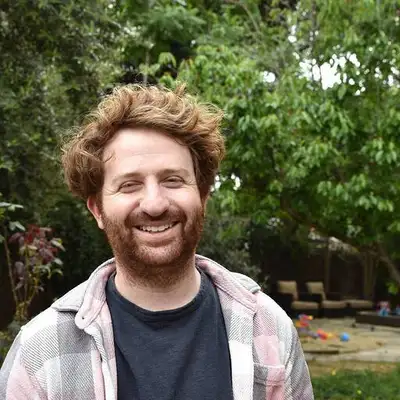
Hosted by Zach Gobst, who has spent his career working alongside clinical trial teams and patient communities, be sure to subscribe on Apple Podcasts, Spotify, or wherever else you listen.
I want to make moving this technology as fast as possible my goal in life because the faster you move, of course, there need to be guardrails, but the faster you move, the more people it affects, and the more women can be saved and spend time with their families, which is the key to why I wake up in the morning. Doctor Manisha Ball out of MGB, she did a study to look at interval cancers, and she took around two, three hundred studies of interval cancers, confirmed interval cancers that she had, and ran them through our algorithm, and then the AI would have reduced those interval cancers by a third. It's all coming together. Right? Like, research trials are flowing into products that then flows into diagnosis.
Becky Weber:Where are the bounds?
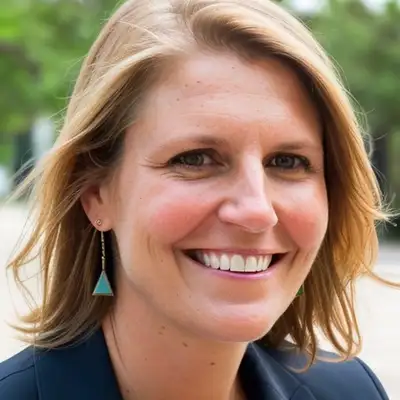
Voiceover:Welcome to Impactful Breakthroughs, the podcast dedicated to the incredible individuals who are shaping the future of medicine. You just heard a snippet from today's guest, Becky Weber, the EVP of Sales at Lunit Cancer Screening. Lunit, formerly Volpara Health has 330 screening sites across The Americas, all dedicated to helping radiologists detect cancer earlier through their platform based approach. Becky brings a unique perspective to the show today. Having spent her entire career blending health and technology, you'll hear the personal story connecting her to the mission at Lunit and how she thinks about AI's role in the health care evolution.
Voiceover:And now, your host, Zach Gobst, founder and CEO of Leapcure.
Zach Gobst:Becky, happy to have you on.
Becky Weber:Thank you.
Zach Gobst:Wanted to start the conversation learning a little bit more both about your experience working in health tech over, was it, twenty years now? What's been the journey, and what have been the key inflection points so far?
Becky Weber:Yeah. Well, thanks for having me on, Zach. I started my career after IU, which we both went to IU. That's how we know each other. And so I started my career in Madison, Wisconsin at a company called Epic that does EMR software.
Becky Weber:Most people use it. If you go to MyChart to find your lab results or schedule appointments, that's Epic. It was there that I was first introduced to health tech, health software, and I fell in love. You know, I thought, wow. What an opportunity to work in an area that affects people's lives directly.
Becky Weber:And I had considered going into the medical field. Wasn't for me, turns out, but this kinda got me there. So Epic took me to Europe where I worked on research academic hospitals in The Netherlands. And then after working there for a while, so much fun to work in The Netherlands and so incredible to work with those organizations, I went to Apple, which was a big change, and it was sort of a fluke getting a job there. You know, I met somebody as I was hiking a trail, and he happened to work in Apple and knew that they needed somebody in the medical space.
Becky Weber:They couldn't tell me why or the health space. And when I went, they said, yeah. We need someone that understands health technology. So I said, oh, totally. I would love to do that.
Becky Weber:I'd love to work for a company like Apple. And once I was brought in and hired, they told me, well, we're developing a watch, and we're developing this thing called Health Kit. And so that was really cool. And I think that's what really forged my love of software development generally and and going from concept to product. And I worked there as a technical project manager and ran a team that worked on the phone and the watch for health and fitness.
Becky Weber:So learned so, so much and learned about how do you keep your quality high when it comes to software, which was which was great. At the time, was living in San Francisco. My husband got pulled into, you know, starting a startup. I was a little jealous about his startup because it looks like fun and energizing. So I went to a startup, small startup called Able Health.
Becky Weber:And after two years, we were acquired by a bigger company called Health Catalyst. And it was so fun to, you know, ride that success, the highs and lows, you know, you know, at a at a startup. And then finally, I went to a company called Volpara Now the reason I went to Volpara is interesting, and it's now known as Lunit. But while I was at Health Catalyst, the company that acquired the startup, I was diagnosed with breast cancer.
Becky Weber:And that, I think, was such a pivotal moment for me. Experiencing it, I was diagnosed on my son's first birthday. For anyone that's ever had that sort of diagnosis, it's very jarring. I thought immediately, oh, I'm going to die. This is it.
Becky Weber:And so at that point, you know, work kind of goes to the wayside. I stayed at Health Catalyst. They were very kind and helped me through the process. But I went through chemo. I went through surgeries, all of this, and you really shift your priorities.
Becky Weber:And I had two young boys at the time. So after that, after I had come out of the other end, I'll say, I had been confronted, I guess, with the reality of life, which is, you know, you've only got a few years to live. And and I know I like to work, and I wanna work. So how can I use those years the most effectively and and enact the most change possible? And so I was looking for some way to use my skill set in the breast cancer cancer space.
Becky Weber:And, you know, one of those universal things happened, which is a mentor of mine from the epic days, became CEO at a company called Velpara that specializes in breast cancer screening. And so she found a way to bring me on, and it was just incredible. Everyone there is so mission driven. We've recently merged with a company called Lunit, and so now we're known as Lunit. But the mission continues, focused on personalized cancer screening and personalized cancer treatment.
Becky Weber:And it's just, you know, every day, the stories that you hear about, oh, they implemented our software, and, you know, the next day they found a cancer they wouldn't have found is just incredible. You know, it really validates that move. So I think that's the biggest inflection point.
Zach Gobst:Yeah. Thanks for sharing. It's interesting because, yeah, we met in college before our career started. So
Becky Weber:Yeah.
Zach Gobst:You kind of see how things evolve for our careers and for us to, you know, stay friends. It's been, what, years.
Becky Weber:Yeah.
Zach Gobst:I've also got a credit you with my biggest media placement I ever had was because of you. Do you do you know what I'm talking about? Do you remember?
Becky Weber:Is it a pamphlet of no. I don't what is it? I was
Zach Gobst:in color on the front page of the Herald Times for being in the cardboard boat regatta. You had done a masterful job of creating this elephant shaped boat that stole the headlines. It's all been downhill from there. But but yeah. No.
Zach Gobst:Right. I I think it's Paywald, the Bloomington, Indiana based Herald Times newspaper.
Becky Weber:Well, Zach, I I wanna say I credit you for the lowest grade I ever got in a class, and that was sailing. Oh, you're yeah. Was yeah. Zach and I took a sailing class, and at the time, I thought it was as easy as driving a boat. And I think maybe we we didn't quite do the studying we needed to do, and then quickly capsized a boat.
Zach Gobst:Yeah. The uncapsizable boat, I think.
Becky Weber:The uncap yeah. Yeah. That's the one. We were like, oh, let's choose that one. You can't capsize it, and then capsized it.
Zach Gobst:Going back to kind of what's been an awesome career, you know, I've been excited to have you on and excited to kind of follow where you've gone to always kind of have this purpose in your work. And you mentioned, I think, at the beginning, were interested in perhaps, you know, a medical career prior. Where where do you think that started for you?
Becky Weber:I don't know. I had this really great high school sort of advanced class where the science teacher, biology teacher, had a agreement with the local hospital to bring kids interested in the medical field into surgery and into different you know, you shadow basically at 17 years old, which, by the way, no way it would happen today, just like PHI, HIPAA. Like, there's just no way. But I think that was you know, it was an interesting class. I got to get out of school and go do these cool things, sit through surgeries, which were awesome.
Becky Weber:And then there was one time we went to the morgue or actually a whole session that we would you know, we'd spend, like, three weeks. And I I would go to the morgue, and I witnessed a few I witnessed autopsies. And I think that's when I was confronted with, you know, this is big, and I saw a baby with SIDS get off. It's just incredibly sad and awful. And I I thought, I I don't know that this is for me.
Becky Weber:It was really just I do better with technology, I realized. And so that's when I shifted and went more into, like, okay. I think I wanna do, you know, business marketing. We'll see where that takes me. I'm good at math.
Becky Weber:I can do that. But always had that interest in the back of my mind.
Zach Gobst:Yeah. Which, you know, drove you to kind of some incredible experiences, you know, working at Epic, working at Apple Yeah.
Becky Weber:Working at
Zach Gobst:Able that was acquired by Health Catalyst. So how did your appreciation for kind of this purpose driven work evolve after working in it directly?
Becky Weber:Well, I'll tell you this. I mean, you know the story, and it's kind of crazy. I won't go into it in too much detail. But when I was working let's see. What was that?
Becky Weber:Able or Health Catalyst, one of them. I did a 23andMe test, which at the time, 23andMe was you know, everyone was doing it, and you're getting your information. And I found out that I was from this part of Europe mostly, and, you know, I was gonna have macular degeneration because that you know, there was, like, a health
Zach Gobst:Yeah.
Becky Weber:Part of it. And I didn't think much of it and found out a few years later that I had some siblings on there I didn't realize. Half siblings. And so that became this, you know, what a what an awakening and kind of a blow because I've never been told about them. Turns out it was a sperm donor situation, so my parents weren't cheating on each other or had these second families.
Becky Weber:That was my fear. It's been worse. But, I think that was an inflection point for me because I was working in health tech, but what power there was in genetics. You can use genetics to find these things and these huge revelations about me personally, but also what about the medical field? What is genetics going to do to the medical field if we can take when I was conceived in the eighties, they had no idea that I would ever be able to find out.
Becky Weber:And my parents had no idea I'd be able find out. It supposed be a secret. And now that's completely known. It's very easy. You sign up for $30.
Becky Weber:You know? So I think at that point, I was like, oh my god. There's gonna be such a shift in the way we do things in this world, in the medical space. And so I think I was and was before I was diagnosed with cancer. So I think that, like, led me to, oh, this is really exciting, and what a cool area to be in.
Becky Weber:And then when I got diagnosed with cancer, it was like, okay. Doubling down, you know, I want to make moving this technology as fast as possible my goal in life. Because the faster you move, you know, of course, there need to be guardrails, but the faster you move, the more people it affects, and the more women can be saved and spend time with their families, which is the key to why I wake up in the morning.
Zach Gobst:Yeah. That's great. And kind of interesting because I think, like, finding those pockets of where you can move health care quickly to impact people is kind of where I found myself as well too. Like, this is never a topic that we'd talk about even kind of relatively early in our careers, definitely not in college. To me, what's really cool is, like, you'd been doing impactful work, but then you had kind of, like, got this glimpse in your own life of, like, oh, this is this is how it can impact my immediate family.
Becky Weber:Yeah.
Zach Gobst:And so being able to kind of, like, shift to, like, after what you discover on 23 and me after you just discovered with your breast cancer diagnosis and and treatment path, you spoke a little bit about kinda how you appreciate time, and you kind of have more of an understanding of how it, you know, has a human impact. I'm curious if there's any other, like, decisions that you've made or adjustments that you've made in the way that you think about your career, maybe projects that are more interesting. Maybe it's, like, you know, certain things that you're just more clear on prioritizing.
Becky Weber:Yeah. I think one way of working, and I think this might be just natural to a lot of people as they go through their career. You know, I take a lot more pride in growing other people and giving them a sense of accomplishment than I do trying to find the accomplishment myself. And in turn, of course, it kind of, you know, you you accomplish what they accomplish. But I think trying to inspire this next generation is really interesting to me and something that I think I can sort of leave given, you know, I have this now in the back of my mind, thought, okay.
Becky Weber:We have a very limited time, a finite time. I think the other thing is I'm less concerned about sort of empire building and politics at work. I just want to get the best outcome. You know? I just want to make an impact.
Becky Weber:And, honestly, it's very freeing. I think often people get caught up in that, and it's just not helpful in any way. And it's it's definitely not beneficial to a company. So, anyway, I've found that very freeing too of, look. I'm here to identify cancers earlier and personalize cancer detection and treatment, and I'm not here to build my resume.
Becky Weber:I I just care about the end game. So maybe that's one example.
Zach Gobst:Were there things that, like, from your experience at Apple or Epic that you've had to, like, unwind working in startups in that regard? Because I imagine a lot of, like, how you Yeah. Build authority in a really large company. And I guess Health Catalyst was, oh, you know, sizable, not at the same scale as Apple.
Becky Weber:Yeah. Well, the reason I'm I left Apple, and honestly, sort of epic too, is because I think when a company gets super large, your role is very, very defined. You can feel yourself executing the thing that you're supposed to do over and over, and I felt that, and I just didn't feel challenged by it. And when I saw Steve, my husband, with his startup, he was challenged every day. And that's what's really interesting to me is solving these puzzles.
Becky Weber:You know? And so I that's why I decided to make a leap and go to the startup, and I loved it. Because even though I was the head of operations, you know, I would jump into sales. I would jump into product. I was running product meetings for a while, and I I just thought it was fascinating.
Becky Weber:So I really value that jump. And I think there's a place and a time for both of those, and I think some people enjoy being in a large company. But for me, I I prefer the sort of small to medium size.
Zach Gobst:Yeah. Wanted to transition a little bit to what you're doing now at Lunit.
Becky Weber:Yeah.
Zach Gobst:Share more on Lunit and, like, where they are in their journey of post merger.
Becky Weber:Yeah. So Lunit has two sides to it. One is cancer screening. So it's identifying cancers earlier, personalizing cancer risk assessment, specifically breast cancer. We also do lung, but in The US, it's breast cancer.
Becky Weber:The other side is actual oncology. So it's working with biopharma to support biomarker driven development and, you know, basically helping more targeted clinical trials. So probably somewhere somewhere this fits in your realm, Zach. I don't really understand how, but somehow I'm sure they overlap. But my side of the house is really, let's do more personalized breast cancer screening.
Becky Weber:So how do we get the right detection earlier for a patient? And so what we have is a full suite of products to basically do a risk assessment early, but also we have AI. And so this is sort of what Lunit brought in. Lunit is a South Korean company, but they came with AI detection software. And so we merged in this AI detection software with with a screening software that does breast density and does your, you know, genetic risk assessment.
Becky Weber:And so now we have this full suite, and it's very, very powerful. And we're seeing a lot of interest in The US market, Canada, Latin America. And so it's been fascinating because it used to be there was this concept when when imaging happened, there was this concept called CAD, you know, ten years ago, and that was computer automated detection. But what that was was it was just humans had annotated those images. And then based on those annotations, it would show, okay, here's where the cancer is.
Becky Weber:And there were 10 marks because it overmarked. Now it's really the AI that is identifying the cancer based on so many such an incredible volume that one radiologist could never see in their lifetime. And so it's just extremely better. And the one example I like to give is doctor Manisha Ball out of MGB. She did a study to look at interval cancers.
Becky Weber:And so so you go in to get screened, and then if between your screening they find a cancer, that's called an interval cancer. And it could be that, number one, it was missed because the quality of the image wasn't good or the radiologist didn't see it, or number two, it's just a very, very, very aggressive cancer. And so what she did was she took around 200 to 300 studies of interval cancers, confirmed interval cancers that she had and ran them through our algorithm. And then the algorithm, the AI, would have reduced those interval cancers by a third. Had they used this algorithm, a third fewer women would have had this later stage breast cancer.
Becky Weber:And so it was fascinating, and that was just, like, one of those moments where I was like, oh, this is exactly what I should be doing. This feels so good.
Zach Gobst:Yeah. Those, like, compounding impact discoveries that you can kind of take Yeah. It's awesome. And you've been there how long now? And
Becky Weber:So I joined in 2024, and so I've been here almost two years.
Zach Gobst:Getting to see, like, the product. That's that's a pretty fascinating thing where, like, there's an existing product that's doing well in the market, and then you're kind of merging with an AI capability to and you're you're kind of making one plus one equal more than two patterned product. What's that been like? Merging organizations, emerging products to deliver more value because that's super interesting.
Becky Weber:You know, it's been oddly successful, and I say that because I've been through some of these acquisition games before. And I think often, acquisitions happen for the wrong reason. For example, maybe they want to just get the revenue bump for the quarter. You know? And so there isn't a bigger vision, but I think when Lunit and Volpara got together, there was this vision that was spot on.
Becky Weber:And it's been really motivating because I think the one big similarity you know, that's a South Korean company. Actually, we're a Kiwi company. We're out of New Zealand, but we have a lot of most of our customers are The US, so we're sort of spanned across the globe. But when you look at the cultural differences, they're quite big. The Asian culture is very different.
Becky Weber:Working culture is very different than, you know, New Zealand and even The US, they're different. So you could see it being a disaster, but everyone is driven by this ultimate goal of saving women and saving lives. And I think that's just made it so great to work at. And it's made it honestly successful. So I've never heard of a more successful integration, honestly.
Becky Weber:We've integrated our products, our teams. You know, it's been two years, but it feels like it's gone very fast.
Zach Gobst:I think it speaks to I mean, there's a reason why you're there, and it's coming across in your answer. Like, the focus on impact above all else and the focus on the specific impact to women's health and improving the product, it seems like that's what really is driving that alignment and that they're putting people like you that have that drive in leadership roles too, I I think reinforces the two. So it's not just, you know, one acquisition that has that vision alignment. I it seems like it's in the DNA of all parties.
Becky Weber:Exactly. And, you know, when I hire too, I ask people about, you know, what's drawing you to this role, and do you have any connection with breast cancer? And the people who have this personal connection work so much better in our company than those that don't. And and everyone, honestly, everyone has some connection, some cancer connection. But those that are specifically seeking out a company like ours, the rate of success is just extremely high.
Becky Weber:So it's it's something I ask in every interview.
Zach Gobst:In terms of, like, where health technology is going, I know no one has a crystal ball. Yeah. You know, what's exciting to you? You you mentioned in your personal story about how people, like, in the eighties didn't know 23andMe would exist. What are the things that are exciting to you about kind of health technology today and where it's going?
Zach Gobst:Yeah.
Becky Weber:Oh, yeah. I'm interested to see how everything plays out with the the huge monsters of sort of SaaS software and what happens to them now that people can develop their own. I think there is this moat around, you know, FDA medical device. So in some ways, people aren't gonna stay entrenched because that's not gonna get easier. But I just am fascinated to see what's gonna happen, especially in The US.
Becky Weber:And then I think in our space, when you would get a mammogram, our AI can say, is the likelihood that this is cancer or not? There is now functionality that we're working on and we're going to have out soon and FDA approved soon, which is look at a mammogram and say, in five years, what's the chance you have breast cancer? And I think that's where we're going, which is like, Okay, instead of you know, tools to diagnose, what are the tools to evaluate the risk of something happening? And then the other big thing is these foundation models. So looking across different, you know, multimodal data sources and pulling them together on an organization's own dataset to say, you know, what is the chance this person develops some sort of cancer?
Becky Weber:Look at these you know, look at everything about this patient's record. What can you tell me about this patient? And I think that's just exponential power that we're gonna have.
Zach Gobst:Super cool. Yeah.
Becky Weber:Yeah. It is cool.
Zach Gobst:Also wanted to give you a chance to kind of shout out or spotlight some of the mentors you've had along the way.
Becky Weber:Yeah. I mean, I have I have so many that have just you know, I think sometimes people are like, oh, I'm gonna be your mentor. And sometimes people just say things that resonate with you so much, it really affects the way you change. Terry Thomas is obviously huge. So Terry worked with me when I was in The Netherlands for Epic, and she was the one that brought me into Volpara, now Lunit.
Becky Weber:And I think she's just born with this incredible gut instinct about things. And she pulled me in to do a role, lead a team that I've never done before, and I was very apprehensive about. And she said, nope. You're going to do it. I will help you, and you will be successful.
Becky Weber:And she really did just that. She helped me every step of the way. She's very inspiring. Just incredible.
Zach Gobst:Yeah. Thanks for sharing. We've attacked health technology from different angles. You know, I'd be curious about someone who's kind of getting more and more exposure to clinical research, what your initial impressions are, and if you have any thoughts or questions.
Becky Weber:Yeah. What I think is interesting about the space is it's all coming together. Right? Like, these research trials are flowing into product that then flows into diagnosis. And I think that's going to be a really interesting space to watch.
Becky Weber:Because if you you know, right now, every day, you hear about, okay. Well, we figured out a way to identify this protein that then this drug can whatever. You know? Where are the bounds?
Zach Gobst:There is something with AI in general and and the convergence of everything. I think I've heard something like the founder CEO of GitLab's, the people buying GitHub, didn't just, like, find his own journey to, like, curing his cancer, but have has, like, kinda open sourced and and, like, showed other people how, you he's gone about it. And
Becky Weber:Yeah. That's awesome.
Zach Gobst:I think the way that we can, like, work with other data points is just unprecedented. And so I think it is driving a conversion. So it's not its own kind of lane in the same way to develop a drug. There are product concepts. There are things that go on in in the clinic that can be integrated, and we can measure things at home in a different way.
Zach Gobst:Yeah. The other point on AI is, and this is what I've been thinking about more, is there's kind of a lot of established workflows in health care and clinical trials. And AI kind of shifts the rigidity around the need for that. The FDA is changing too where, like, right now that you only need kind of one pivotal study to take a drug to market. Now I hope they expect, like, more quality data if they're just doing one pivotal study, but some of these kind of constraints are kind of shifting because Yeah.
Zach Gobst:We have more data to say, hey. That that constraint that protected this thing for good reason, we we have more data now.
Becky Weber:So Right. Well, that and that's what I was gonna say is, you know, along with this, what are regulations gonna look like? Because when you think about some of the requirements on quality management systems and so you know, even incorporating AI inside your organization, you have to define for the tool. What's the use case that you're using the tool for? And I'm like, I don't know.
Becky Weber:Yeah. You know? And I feel like the guidelines were a railroad track for a train to run on, but now we've got a rocket ship, and it doesn't work that way. And so it's gonna be fascinating to see how they handle it. I feel like every headline is just, like, hand wringing and Armageddon about AI, and I'm just like, you know what?
Becky Weber:We could do this, or we could just face it. You know? We could just face it and figure it out because Yeah. It's happening. We can't stop it.
Becky Weber:And if we don't do it well and we don't think about it in a safe way, that's when it goes off the tracks. Right? Somebody else is gonna try to do it. So, yeah, it's what a world. What a world.
Zach Gobst:Well, yeah, Becky, was a pleasure having you on.
Becky Weber:Yeah. Thank you. This is fun.
Zach Gobst:Love your story. Glad we get to spotlight it. Thanks, Becky.
Voiceover:That's a wrap on this episode of Impactful Breakthroughs. A heartfelt thank you to Becky Weber for reminding us that when personal experience and professional purpose collide, something truly powerful happens. As technology continues to reshape what's possible in medicine, Becky's journey leaves us with simple advice. Drop the politics, focus on the mission, and stay ready for what's coming because the pace of change isn't slowing down for anyone. If today's conversation sparked something in you, be sure to subscribe, share, and connect with us for future episodes.
Voiceover:Until next time, stay informed, stay engaged, and keep pushing for better health outcomes for all.