Subscribe
Share
Share
Embed
One of the most essential ingredients to success in business and life is effective communication.
Join Matt Abrahams, best-selling author and Strategic Communication lecturer at Stanford Graduate School of Business, as he interviews experts to provide actionable insights that help you communicate with clarity, confidence, and impact. From handling impromptu questions to crafting compelling messages, Matt explores practical strategies for real-world communication challenges.
Whether you’re navigating a high-stakes presentation, perfecting your email tone, or speaking off the cuff, Think Fast, Talk Smart equips you with the tools, techniques, and best practices to express yourself effectively in any situation. Enhance your communication skills to elevate your career and build stronger professional relationships.
Tune in every Tuesday for new episodes. Subscribe now to unlock your potential as a thoughtful, impactful communicator. Learn more and sign up for our eNewsletter at fastersmarter.io.
Matt Abrahams: Have you ever felt
that fortune has benefited you?
Well, today you're in luck because we're
going to spend some time discussing luck.
My name is Matt Abrahams and I
teach Strategic Communication at
Stanford Graduate School of Business.
Welcome to Think Fast
Talk Smart, the podcast.
Today, I am super excited to
be joined by my friend, and now
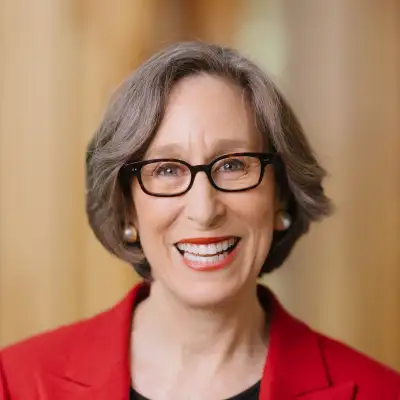
three time guest, Tina Seelig.
Tina is the executive director of the
Knight-Hennessy Scholars Program at
Stanford and Director Emeritus of the
Stanford Technology Ventures program.
Tina also teaches courses on creativity,
innovation, and entrepreneurship.
She's the author of many books,
including Creativity Rules: Get Ideas
Out of Your Head and Into the World.
Her latest book is what I Wish I
Knew about Luck: A Crash Course on
Turning Aspirations Into Achievements.
Tina, welcome back.
It's great to be back in studio with
you to continue the conversations
you and I have in lots of different
areas, in lots of different ways.
Thanks for being here.
Tina Seelig: It is my pleasure.
Matt Abrahams: Excellent.
Shall we get started?
Tina Seelig: You bet.
Matt Abrahams: I don't know if you
remembered it or not, but when we
first met, it was after I gave you
a cold call because I had seen your
TED Talk called The Little Risks
You Can Take to Increase Your Luck.
Lucky me, that email initiated a
friendship and collaborations that
have gone on for a number of years.
But before I ask you why luck
is an important topic and one we
should look into, I'd like to know,
was I lucky that you answered my
email or was it just good fortune?
Tina Seelig: I think you were lucky.
Millions of people have watched that
TED Talk, but you took the time to
actually reach out and you sent me
a nice note and it certainly was
interesting enough that I responded.
And the rest is history.
So you were definitely lucky
because there's a very big
difference between fortune and luck.
So fortune is the things
that happened to you.
So you happened upon that video.
Maybe it ended up in your feed, but then
you were lucky because you reached out.
So there's a difference between the things
that happened to you and how you respond.
We are in a constant dance between what
the world gives us and how we respond
to it, and that's where luck comes in.
Matt Abrahams: I wanna
hear all about luck.
Tell me what got you interested
in luck in the first place.
Tina Seelig: Great.
So when I was growing up my father,
who just recently passed away, he and
I have debated about luck for decades.
He always said, the harder
I work, the luckier I get.
And I really internalized that.
And I would say it too, like, yeah,
the harder I work, the luckier I get
until I realized that was a shortcut.
You know, what is that hard
work and what can you unpack to
actually make yourself luckier?
And he and I continued to debate
because he still felt that good
things just happened to him.
And I would say, no, no, no.
Look at all the things you did
to make those good things happen.
Matt Abrahams: I see.
So there's a big sense
of agency in all of this.
You use the term making luck.
Can you unpack that for us?
Because I don't think of luck that way.
Help me more understand that.
Tina Seelig: So I deeply believe that
opportunities for lucky things to
happen are ubiquitous, but they're
invisible and most people don't see them.
And therefore you need to
figure out how to catch them.
And so what you do is if luck is like
the wind invisible but powerful, you
need to build a sail to catch it.
There are three ways that
you build a sail to catch it.
First you have to start with your ship
and you start with the internal work.
You need to know your values.
You need to know your risk profile.
You need to know the story
you tell about yourself.
You need to know where you're going.
You also then need to recruit your crew.
That is, get other people engaged
who wanna help you because most luck
comes through other people, right?
There are other people who are
gonna help you reach your goals, and
there are lots of ways to do that.
And then finally, you need to
hoist the sail, and those are the
things you do every single day to
put energy into catching the wind
that is ubiquitous around you.
Matt Abrahams: I really like the
analogy of the wind because it helps
us understand that there's something
very powerful that we can't see,
yet there are things we can do.
I wanna dive deep into
each of those three areas.
But before we do that, I
really enjoyed your new book.
You argue something that I found really
interesting that I never thought of.
You argue that deep, authentic listening
is one of the most underrepresented or
underused ways to get luck or find luck.
What is curious listening and
how does it help us with luck?
Tina Seelig: People know if
you're paying attention, if
you're present, if you are there.
I mean, this is something
you are masterful at, Matt.
I mean, really and truly.
And I know it's one of the reasons
I love spending time with you
and that other people do as well,
because you are really listening.
You're listening not just to wait for
your turn to say something in response,
but you're listening and actually really
responding to what you heard, often taking
time to review what the person says.
So let me do some reflective listening.
This is what you said.
Did I get it right?
It builds trust in other people,
and when people trust you, they're
much more likely to wanna help you.
Matt Abrahams: I see.
So it's the being present, being curious,
and then signaling that you heard, that
leads to the trust in collaboration,
which opens up the opportunity for luck.
I like that.
What are some of the things that we
can do to help prepare us to be lucky?
To be open to luck?
Tina Seelig: A lot of it has to do with
not making things about you, but really
making things about the other person.
I was thinking about this this morning
as I was anticipating spending time
with you, and I was reflecting on
emails I get from former students,
for example, where they need something
from me or want something from me.
I look at how they communicate
it in a way that makes some
of them luckier than others.
There's a story that I actually have in
my book about one of our former students
at Knight-Hennessy Scholars, who ended
up becoming the videographer for Kamala
Harris at the White House, and this was
a dream job for a young videographer.
And you wonder how did she get that job?
How many people would want that job?
And her story is so compelling.
Her name is Azza.
She had taken a course in
videography when she was in college.
It was the only course on videography
that they offered, but she was
so taken with it that she stayed
in touch with her professor.
She built a real relationship over
the years and kept the professor
up to date on what she was doing.
When things were going well,
they celebrated together.
When she was struggling and looking
for a job, her professor was
the first person she contacted.
She ended up going to graduate school at
Stanford and again, couldn't find a job.
After she graduated, she wrote to hundreds
of different media outlets and newspapers.
No one even responded.
So she sent a note to this
professor who she had been in
touch with for 10 years, right?
And had built that relationship and
said, gee, I'm really struggling.
Do you have any ideas?
And the professor said, you know, I just
got a call from someone who's looking
for the videographer at the White House.
Few weeks later, she had interviews
and she ultimately was offered the job.
It's in contrast to sometimes I get
an email out of the blue from someone,
someone who I haven't talking to in years.
Who then has a long list of things that
they want, and I think, wow, that was so
interesting that the difference between
when you have a relationship and it's
built on trust and mutual understanding
as opposed to someone who wants
something in a very transactional way.
Here's a laundry list
of things that I need.
Matt Abrahams: Building that
relationship is so important.
I want to make sure that
we're being very clear.
We're not being manipulative,
we're building a really honest,
true, connected relationship, and
from that, possibility comes up.
Tina Seelig: Absolutely.
It's about being authentic and you
never know where those opportunities
are gonna take you, but you can
be sure that luck is a long game
and if you build these authentic
relationships, good things will result.
Matt Abrahams: Absolutely, and I
can reflect on many points of my
life where it is through connections
and relationships that have led to
opportunity, and it's because of the
time I've spent nurturing those from
a really honest, authentic place.
Many people find it uncomfortable
and awkward to do that kind of
tending to those relationships.
Do you have thoughts and
advice on how to do that?
Tina Seelig: I love that question
because it shouldn't be so hard.
One trick I have something that I have
cultivated over the last few years is
that when I spend time with someone,
at the end of the time that we spend
together, we always make another date.
And you figure out what
the cadence is gonna be.
Is it gonna be a week?
Is it gonna be a month?
Is it gonna be a year, same
time next year, whatever it is.
It could be a phone call, it could be
getting together for coffee, but that
you've actually put a stake in the
ground and say, this is an important
enough relationship that I'm going to
commit to keeping that volley going.
And it's been really transformative.
Because otherwise what happens is
months go by and you go, oh gosh,
I haven't seen Matt in a while.
Maybe you reach out, but now it's gonna
take months to get something on the
calendar 'cause everybody's so busy.
But if you've already made
a commitment, it's there and
something to look forward to.
Matt Abrahams: A technique I use is
after I meet with somebody, I have
a good experience, I'll often send
some kind of message acknowledging
it, and sometimes sharing what the
value was as a way to really connect.
I love that idea, and it really
is that interpersonal connection,
communication that matters.
Tina Seelig: Well, you bring up something
very, very important, is acknowledging
when people do something for you.
I am the queen of thank you notes.
I have a habit that every single
night before I go to bed, I look at
my calendar and I see who I engaged
with that day and what was meaningful
and send off thank you notes.
And not only do I end the day feeling
really grateful, and I think there's
a big difference between being
grateful and being appreciative.
I feel grateful for all the good
things that have happened, but I
also show that appreciation and
that is another way to be lucky.
In fact, one of the most powerful ways
is demonstrating your appreciation.
Because if someone has done something
for you and they've taken that
time away from something else,
and you need to acknowledge that
investment they've made in you.
Matt Abrahams: I really like
that distinction between
gratitude and appreciation and
taking the time to do that.
And we know there's a tremendous
amount of evidence that says well
being and happiness can be enhanced
when you take the time to think
about gratitude and appreciation.
So I really like that.
You have a great chapter in
your book on Unshackling Luck
Through Conflict Resolution.
And when I saw that, I was like, what?
Wait a minute.
That doesn't make any sense to me.
How does conflict dampen
the likelihood of luck?
Tina Seelig: If you wake up and
the first thing you think about is
some conflict that you're dealing
with, it is a huge distraction.
Think about the mental energy we spend
thinking about you're being angry at
someone or disappointed or frustrated.
If you can release that, not only
do you feel better, but you've now
untangled these knots that have
gotten in the way of the relationship.
It's really powerful.
I think about it all the time.
I'll get up and I'll go like, do I have
any unfinished business with someone?
Do I have anything I need to apologize
for or to acknowledge, and it's fun.
It's like tending a garden.
If you pull the weeds up when
they're little, it's easy.
It doesn't take much time.
But if you let them grow into big,
huge trees with big, deep roots, then
resolving those conflicts is gonna take
a tremendous amount of time and energy,
and you might just avoid it altogether.
So keeping your garden clean, or
you could say keeping your house
clean, could be your closet clean,
keeping things clean frees your
mind to be focused on other things.
Matt Abrahams: You just triggered
something, I never thought of
this, but an apology as a way of
opening up opportunity to luck.
Usually I feel an apology is
rectifying a something negative.
And it does that for sure, but it also
opens up potential and opportunity.
I think a lot of us feel overwhelmed
and maybe embarrassed when we have
to make apologies or remedy conflict.
But if we see it as an opportunity to
create something positive, that really
does open us to lots of good things.
Tina Seelig: You know, I'm one of these
people who can easily perseverate on
thinking that everybody hates me, right?
I can easily go to a place
where it's like I did something
wrong and I've learned to ask.
You know, it's like, hey Matt, we saw
each other the day is everything okay?
Usually it has nothing to do with me.
You know, there's something going
on, but because I am so sensitive,
I might interpret the fact that
you were distracted thinking that
somehow I had done something wrong.
So just checking it out.
Hey Matt, is everything okay with us?
Matt Abrahams: It is in fact, and
in several of the points you've
made, it boils down to not being
assertive, but being present and
asking and taking initiative.
And that's where luck and deeper
relationships can come from.
I wanna come back to conflict
because you do something in your
book that I found really interesting.
You use a matrix to categorize
conflict based on whether they
stem from personal or professional
behaviors versus the values we have.
When we find ourselves in conflict,
how should we adapt our communication
style depending on whether we're
dealing with a behavioral annoyance
or some fundamental values clash.
Tina Seelig: One thing you should know
about me is I love two by two matrices.
I turn everything into
a two by two matrix.
It's really a fun way to organize ideas.
So this two by two matrix is
personal, professional, and
the behaviors and values.
So you can put different conflicts
into these different boxes.
Like is this a professional conflict about
a behavior, like you're interrupting me in
meetings, or is this a personal conflict
about a behavior like you're leaving
your socks on the floor, or is this a
values-based conflict in our relationship
where we really just feel very
fundamentally differently about something?
Or is it a behavior?
So it's very important to realize
where you are and then what type
of conversation you're having.
So I know that at the business
school, they do a lot of work on
nonviolent communication and not
crossing the net and saying, when you
do this, it makes me feel this way.
Where you basically take responsibility
for how you feel, but not try to
attribute anything to the other person.
I think that's really good for behavior.
But for values differences, the
question should be about, tell me more.
Help me understand.
Now, sometimes you have to go back
and forth because a behavior conflict
might be rooted in a values conflict,
but you're not gonna know that until
you start asking some questions.
Matt Abrahams: I wanna get
meta with you for a little bit.
I have always admired not only your
passion and your creativity, but
when you write and when you lecture,
you are really engaging and you
hook us in lots of different ways.
In your new book, you use
this metaphor of the wind.
What advice would you give to people who
want to make their communication more
engaging and connecting to their audience?
'Cause you do it so well.
Tina Seelig: I think it's about
constantly putting yourself
in the shoes of your audience.
It's not about me, it's about you and how
can I explain something in a way that's
gonna really land, and so constantly
readjusting your sale to make sure that
it's landing well with your audience.
In fact, I have a funny little
secret, or maybe it's a secret.
You know, I give a lot of talks and I
always like to be a little bit unprepared.
Now you wonder what does that mean?
It doesn't mean I'm not prepared.
I'm certainly prepared, but I like to
be a little bit unprepared because it
makes me much more improvisational.
It allows me to be responsive,
reactive to see what I'm getting,
and then tune my presentation to
the folks that are in the room.
It gives me a lot more energy because A,
I have to be on my toes, but I think the
people in the room feel the energy that
I'm not doing something that's scripted.
I'm doing something that is
for them and uniquely for them.
In fact, it's one of the reasons
I'm not a huge fan of being
recorded when I give talks.
I'm like, you know what?
You had to be in the room.
The experience is for those people
who are there, because if I'm
playing to the camera, it's a very
different experience than if I'm
just having a relationship with the
people who are there in real time.
Matt Abrahams: By thinking about
the audience and what they need
really helps you craft the different
ways in which you can communicate.
You are also a master of
appreciating the context.
I have seen you teach similar material
differently based on is it in the
morning, is it in the afternoon, big
room, small room, all of that I've
seen you use, and that's important.
You know, I've spent a lot of my last
several years focusing on spontaneity.
Getting yourself to a point where
you have it understood and mapped
out, but not memorized or scripted
gives you that freedom to play.
And it gives you that
confidence from which to play.
And to me, that's energizing.
Tina Seelig: Well, so you know,
there's an interesting other
piece of the puzzle, right?
So you write books.
I write books.
One of the things about writing a book
is it actually gives you all the stories.
It gives you a ton of material, lots
of Legos, lots of building blocks.
So whenever you get a question,
you have a lot to work with.
And a book is just part of the process
of preparing and doing the research so
that when you're having a conversation
with someone or you're giving a talk,
there are many different things.
And so that makes it really fresh.
It's like, oh, the next time we give
the talk I'll give a different example.
I'll tell a different story.
Matt Abrahams: Yeah.
And you don't have to be an author
to, to take advantage of that.
You can stockpile anecdotes and
conversations to pull them in.
And in fact, when I teach people
how to do job interviews, et cetera,
I say, you should stockpile some
examples so that you can pull them in.
A good chef prepares the different
ingredients in advance so they can
assemble 'em as they're needed, and
that's exactly what we're talking about.
Tina Seelig: Well, I love this idea that
when people are gonna be interviewing
to think in advance of all the different
examples, think of what would be
those building blocks that are gonna
tell the story and see which ones
fit the types of questions you get.
Matt Abrahams: You've been here before,
so you know that we end with three
questions and one I create just for
you, and the other two are familiar,
and you can keep the answers you
gave last time, you can change them.
I'm curious, you've spent a lot
of time thinking about luck.
What's the thing that surprised you
the most about, what do you feel
lucky to have learned about luck?
Tina Seelig: The most important
thing is the incredible amount of
agency we have every single day.
And so whenever I walk into a new room,
having the mindset that there is a prize
in every room, it's up to me to find it.
So I'll give you just little examples.
I was just in New York for a
couple of weeks because our son and
daughter-in-law just had a baby.
So I was staying at this hotel and I
would go downstairs and interact with
the people at the restaurant, interact
with the people at the bar, interact with
the people who were at the front desk.
I made a point of getting
to know every single one.
Find out their name, chat
with them, and you know what?
Magically all sorts of nice
things happened, right?
Magically they would offer me
opportunities like, oh, we happen to have
this today, or, can I help you with this?
Magically, because I just said hello.
One of the last days I was there, I
was standing in line to get a cup of
coffee in the morning at the cafe and
this young woman, maybe in her late
twenties, was there, and I know don't
miss an opportunity to say hello.
So I turned to her and I said,
oh, you have such a pretty
dress on, which she did.
I wasn't lying.
I said, you have such a pretty dress.
And she said, oh, it's
from Rent the Runway.
And I said, oh, that's so interesting.
I've heard a lot about this from many
of my former students who use it.
We had a conversation.
She said, former students,
where do you teach?
I said, I teach at Stanford.
She said, oh, I went to the GSB,
and by the end of the conversation
we were connected on LinkedIn and
she works at LinkedIn, in fact.
And it's so funny because who
knows what will happen as a
result of that connection.
Maybe nothing, maybe something,
but it never would've happened
if I hadn't said hello.
Matt Abrahams: I think there's something
to people who've been three time guests
on the show, and there are very few, you
and Alison Wood Brooks is the other one.
You both say the same thing.
You say, look for a
treasure in every room.
She studies conversation and says,
look for gold in every conversation.
It's that notion of going in with
the approach that there's something
here and the curiosity, the listening
that I do, might activate it, and
that's very different than many
of us enter in our conversations.
And that sense of agency
that you highlighted.
I think we make our own luck
and we need to make sure we do.
Tina Seelig: And to know that you do and
to know that every single day, the choices
you make, this is a very important thing.
The choices you make today will
determine the choices that you
have in the future, and therefore
you're constantly setting the stage.
But it is a long game.
Luck is a long game and you can't
say, oh, I didn't have a quick
win, therefore it's not working.
You have to know that you're investing
and that it compounds over time.
Matt Abrahams: Question number two, who's
a communicator that you admire and why?
Tina Seelig: This is an easy softball
question because it's you, Matt.
I know.
I know, I know.
No, but I really and truly aspire
to be as articulate and thoughtful
and prepared and flexible.
And here you've basically made this
your life's mission to help people
be better communicators and you're
just an incredible model yourself.
Matt Abrahams: Well, thank you.
I appreciate that.
We'll see if it makes it
into the show, but okay.
Question number three and final
question for this conversation, and I
hope there are many more on the air.
What are three ingredients that go
into a successful communication recipe?
And I'm wondering if that's changed
since you've looked at luck.
The prior time we talked about this,
we hadn't talked about luck, so.
Tina Seelig: It's all about the other
person, and you asked me for three,
but I'm just gonna triple down on it.
It's all about the other person.
It's all about the other person.
Communication and luck comes from really
understanding your audience and tuning
your messages to them, really listening
to them and being fully present with them.
Matt Abrahams: It is
all about the audience.
It's understanding their needs and
the opportunities that unfold with
you two together, and I appreciate
that and I knew it was gonna be
great having a conversation with you.
I am very fortunate and
lucky to have you in my life.
Thank you for bringing the notion
of agency and what we can do to make
luck a reality in our own lives.
I appreciate it.
Tina Seelig: Thank you so much.
This was an incredible opportunity.
I feel so lucky.
Matt Abrahams: Thank you for
joining us for another episode of
Think Fast Talk Smart, the podcast.
To learn more from Tina,
listen to episodes 111 and 159.
This episode was produced by Katherine
Reed, Ryan Campos, and me, Matt Abrahams.
Our music is from Floyd Wonder.
With special thanks to the
Podium Podcast Company.
Please find us on YouTube and
wherever you get your podcasts.
Be sure to subscribe and rate us.
Also follow us on LinkedIn,
TikTok, and Instagram.
And check out fastersmarter.io for
deep dive videos, English language
learning content, and our newsletter.
Please consider joining our Think
Fast Talk Smart Learning Community
at fastersmarter.io/learning.
You'll find video lessons, learning
quests, discussion boards, an AI
coach, and book club opportunities.
Again, that's fastersmarter.io/learning
to become part of our Think Fast
Talk Smart Learning Community.