Subscribe
Share
Share
Embed
Ducks Unlimited Podcast is a constant discussion of all things waterfowl; from in-depth hunting tips and tactics, to waterfowl biology, research, science, and habitat updates. The DU Podcast is the go-to resource for waterfowl hunters and conservationists. Ducks Unlimited is the world's leader in wetlands conservation.
I had always heard Carl's name. Right? Talking to Jim and Jeremy all the time, it was we'll we'll check with Carl and and and so for a while, I thought it was just a fictitious character. Right? Carl was like a thing at Purina until I got to meet you and hang out with you last year.
David Schuessler:Can we do a mic check, please? Everybody, welcome back
Karl Gunzer:to the Ducks Unlimited Podcast. I'm your host, doctor Mike Brasher.
Jimbo Robinson:I'm your host, Katie Burke.
Karl Gunzer:I'm your host, doctor Jerad Henson. And I'm your host, Matt Harrison.
VO:Welcome to the Ducks Unlimited Podcast, the only podcast about all things waterfowl. From hunting insights to science based discussions about ducks, geese, and issues affecting waterfowl and wetlands conservation in North America. The DU Podcast, sponsored by Purina Pro Plan, the official performance dog food of Ducks Unlimited. Purina Pro Plan, always advancing. Also proudly sponsored by Bird Dog Whiskey and Cocktails. Whether you're winding down with your best friend or celebrating with your favorite crew, Bird Dog brings award winning flavor to every moment. Enjoy responsibly.
Jimbo Robinson:Welcome back to another installment of the DUX series here on the Ducks Unlimited Podcast. I'm your host, Jimbo Robinson, alongside the series cohost, mister David Schuessler. This series highlights companies, individuals, and organizations that are highly involved in the success of our DUX waterfowl show. And today, we may have the company that has had the biggest influence on the show from day one. And DUX presented by Purina Pro Plan is July 31 through August 2 at the Renaissance Convention Center.
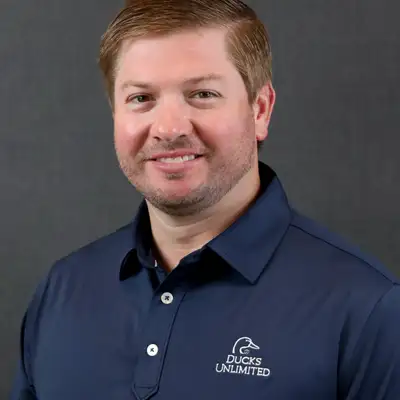
Jimbo Robinson:And speaking of Purina Pro Plan, today, we have a special guest on the podcast, mister Carl Gunzer, director of professional engagement partnerships with Nestle Purina Pet Care and the presenting sponsor of DUX again this year and the OG from day one of DUX beginning in Texas. Karl, how are you doing?
Karl Gunzer:I'm good, Jimbo. How are you and David today?
David Schuessler:We're doing well. Jimbo, there is no DUX without Carl and Purina Pro Plan.
Jimbo Robinson:The o g from day one. No doubt.
David Schuessler:It wouldn't it would we would not have it today if not for them.
Jimbo Robinson:Oh, that's absolutely a fact. From the days the hot days in Texas.
David Schuessler:And cold days in Texas.
Jimbo Robinson:Cold days Texas. Really cold down there.
Karl Gunzer:Windy, rainy. That's right. Yeah.
Jimbo Robinson:And the one year that we needed rain when y'all decided to partner with the Incredible Dog, I guess, the incredible dog challenge. Right? Challenge. That's right. Ever seen, I don't know, 50, maybe 500, I don't know, pallets of sod put on asphalt and watered around the clock?
David Schuessler:Needed rain. Pretty crazy. We needed a little bit of that year.
Jimbo Robinson:That was amazing. Amazing. Well, Carl, before we dive off into this, we have a fun game we call the flock shot, and we are going to spray you with questions, and you have to give us quick answers. So Landon's gonna cue the button.
Karl Gunzer:The flock shot.
Jimbo Robinson:Coffee drinker or not?
Karl Gunzer:Coffee. Yes. Heavily.
David Schuessler:How do you take it?
Karl Gunzer:Wimpy cream and sugar. Maybe maybe French Vanilla Creamer by Nestle. No.
Jimbo Robinson:No. Hey. If you at least you owned it because I Yeah. If I when I drink coffee during the season, I'm the same way. Yeah.
Jimbo Robinson:Favorite color of Gatorade?
Karl Gunzer:Oh, I think orange.
Jimbo Robinson:Easy. Flavor's orange. Yeah. Not as fun. Over, under, semi auto?
Karl Gunzer:Over. Over. Yeah. I it depends what I'm hunting. Duck hunting, I'm is usually a semi, but if I had one gun, it would be an over under.
David Schuessler:He's a he's a Carl's an upland guy.
Karl Gunzer:And I do like my upland hunting.
Jimbo Robinson:Yeah. Yeah. I'm glad I took that question now. Upland or waterfowl. What was your first gun, Carl?
Karl Gunzer:Very first gun was an Ithaca. I think it's model 37 or 87 pump 20 gauge deer slayer. Got it for Christmas, and I remember I duck hunted with it, and I was all confused because it had, like, rear sights and a front sight. And I was like, dad, nobody else duck hunting has sights on their shotgun. Well, evidently, that was all that, you know, the local hardware store had.
Karl Gunzer:So so that's what I duck hunted with. And then one year, I got a barrel for it and then had a little Ithaca model thirty seven twenty gauge. Yep. The Deerslayer. The Deerslayer.
Karl Gunzer:That's what it was.
David Schuessler:It's it's so cool as we do these interviews how many people their first gun was a pump gun. Yep. I mean, mine was.
Jimbo Robinson:Mine was. My kids weren't. My kids was. Oh, Tripp's was. Tripp's was.
Jimbo Robinson:Leila's was. Okay. Good for you. For a four ten pump. Right?
Jimbo Robinson:I mean, I think that that's but not it would probably have not have been I mean, I I mean, you and I are probably in different shoes than most, but, I mean, my kids got into it at four and five years old. I mean, you know, you know, we carried a gun. I I I don't know if I approached it the the right way or the wrong way. I would say I definitely did with my son, but, you know, I let him carry a gun from day one whether he loaded it or not. It was all about teaching him the safety of that gun where it goes.
Jimbo Robinson:You know, we still remind him things today, but, yeah, they were they were pumps, but they carried it. And Mossberg, an advancement of technology, you know, they make smaller compact four tens and 20 gauges. And, you know, the the deal with both of my kids been you shoot your first duck out of the air, we'll move to a semi auto. Because I feel like at that point, you can move a gun correctly, and it
David Schuessler:worked for them. The great thing about people that start on pumps, you can take you can take that Ithaca, I guarantee you, put it back in Carl's hand. You'd pull the trigger and you would you'd ratchet a shell. Absolutely. It's there.
David Schuessler:It burned somewhere in the back of our brains.
Karl Gunzer:That's right. Yeah. That's right. Yeah. Well, I'm I'm amazed that I remember that.
Karl Gunzer:So specifically, actually, I I was not expecting the question. But Jimbo, like you, for years, I would get to carry a BB gun until I could hunt. And and that's sort of like my dad would get up to shoot the ducks and I would get up with my BB gun, you know, and that was sort of my gun safety, was a BB gun in the blind, and then of course, when they got bored, we'd shoot decoys and whatever else.
Jimbo Robinson:But Oh, well, that that's definitely happened. You know? Yeah. Yeah.
David Schuessler:That was my experience, Carl, was a BB gun for, like, three or four years on duff hunts, and you've got it in the wrong direction. Your barrel's in the dirt. Oh, yeah. Mhmm. Mhmm.
David Schuessler:Until you can do it with that BB gun, son,
Jimbo Robinson:you're you're not going to have
David Schuessler:a shotgun in your hand.
Jimbo Robinson:And you are never too old for a BB gun in a blind. Because when it gets slow, and you've said, you've talked a while, and my kids, your kids, anybody's kids, when they get up and they plink a decoy, you're like, I wonder if I can still do it. And so everybody starts passing it down. That that that'll that's that's just don't that never gets
David Schuessler:We need to we need to get the the club BB gun for this year.
Jimbo Robinson:Oh, absolutely. And see which one you can hit the farthest out there.
David Schuessler:That's right. That's great.
Jimbo Robinson:Well, one item for your dog that you never leave home without.
Karl Gunzer:The dog. A crate. Never always have a crate in the truck.
Jimbo Robinson:Interesting. Okay. Okay. Yeah. Yeah.
Karl Gunzer:Pretty to the
Jimbo Robinson:dump. Gotta have it.
Karl Gunzer:A leash. A leash. You know? I guess a leash would be the the obvious answer, but yeah. But I'm sure there's a crate.
David Schuessler:Alright. You have you have to pick one of these for the rest of your life. Only one of these. Is it TV, music, or books?
Karl Gunzer:Oh. Well, I'd like to be like the Renaissance guy and say I read all kinds of books, and I'd love to and I do like music, but I think if it was one yeah, I'm gonna get old. You're not gonna be able to run around. I'm gonna say the TV.
David Schuessler:I like it. Our first one, Carl, you're the first one to choose TV. I appreciate your honesty because
Karl Gunzer:Honesty?
Jimbo Robinson:Yeah. Yeah.
David Schuessler:Yeah. I appreciate it.
Jimbo Robinson:Well, somebody the other day said, well, I mean, I guess you could read a book on TV, listen to music through the TV, and I mean, so, yes. That's there you go. Because that's
David Schuessler:kinda like three more wishes. Right? Yeah. Yeah. Yeah.
David Schuessler:That's not a
Karl Gunzer:It's hard to watch it's hard to watch sports on a book, and, you know, you can listen to sports. That's good. But I'm I I like I like my sports.
Jimbo Robinson:That's exactly so I said TV. This question came actually from our Marcoms department. They do these funny things on a white wall whiteboard they have in the in their area. And it said, if you if two of these went away forever and you could keep one, what would it be? And most people put music, and I put TV.
Jimbo Robinson:And Mhmm. They all looked at me like, why TV? And I said, man, I love sports. Yeah. I love live sports, but I've got to watch something, whether baseball, football, or basketball, something.
Jimbo Robinson:So well, that's good. What's your favorite movie of all time?
Karl Gunzer:It's gotta be Jeremiah Johnson.
David Schuessler:Oh, good answer. Great answer.
Jimbo Robinson:Has to be the to be the best answer ever.
David Schuessler:Has to be. Great answer.
Karl Gunzer:Yeah. In fact, I've been trying I watch it, you know, I don't know, every year or two, and lately, it's not on anything. You know what I mean? Like, you can't find it on Prime or Netflix or anything like that. Some it's like, I should have bought it years ago.
Karl Gunzer:Of course, when back then, it would have been a VHS tape or something.
Jimbo Robinson:Minus Top Gun.
Karl Gunzer:It's a great one.
Jimbo Robinson:Minus Top Gun. And I don't parental influence, maybe. My dad loved that movie, and I remember when I was I don't remember the exact age, but our alarm system went off one time, and I answered the phone. And it was like, what's the password, sir? And I was like, password.
Jimbo Robinson:I mean, I was six, seven years old. I had no idea. And I said, I don't know. Let me go ask my dad, and I found him in the backyard with, you know, headphones on and a Walkman. Dad, what's the what's password for the the the alarm's going off?
Jimbo Robinson:He's like, TopGun. I was like, oh, well, I should've known that. But that is my favorite movie of all time.
Karl Gunzer:Alright.
Jimbo Robinson:Not as cool as Jeremiah Johnson, but
Karl Gunzer:David, you you didn't chime in here. Do you have a good
David Schuessler:favorite movie? Blues Brothers.
Karl Gunzer:Okay. Okay.
Jimbo Robinson:Fits so well.
David Schuessler:Alright, Carl. Favorite place to hunt waterfowl. What state and and or specifically, what region of what state?
Karl Gunzer:Wherever they're flying. I, you know, I grew up kind of hunting the Eastern Shore Of Maryland, and I have not waterfowl hunted there since over the seventies. I would love to go back there one day and and have a good hunt. And so that's like my favorite memory. Like I did not grow up, you know, I'd love to say, oh, green timber and yet I get to hunt it every once in while and that that is incredibly fun.
Karl Gunzer:I get to hunt some field hunts, but I don't know. It's all good. I don't know how you pick that.
David Schuessler:No. But I think Pick
Karl Gunzer:a good group, I guess.
David Schuessler:Yeah. I think where you grow up, there is something about it. I you you grew up in one of those iconic areas, The Bay. Right?
Karl Gunzer:And Yep.
David Schuessler:Jimbo was fortunate to grow up. Part of his childhood in this part of the world where we are in Memphis with the green timber and the rice fields, I grew up on the Gulf Of Mexico, not necessarily what people think about as an iconic duck location. But if I had one place, one hunt left, that's where I would go. Redheads? Hunt redheads on the Gulf Of Mexico because that's what I that's what I chased in high school and college and not every day, but that was the, you know, that was the get cold, get wet.
David Schuessler:Well, it scratched your
Jimbo Robinson:it initiated your itch for what you do today.
David Schuessler:That's exactly right.
Jimbo Robinson:And so that's the legacy and tradition Yeah. For sure. Alright. Well, you remembered your first gun. Yep.
Jimbo Robinson:I mean, down to what the sights looked like. That's right. Deerslayer. What was your first car?
Karl Gunzer:It was a Ford f one fifty, so not a car, but it was I I can't tell you what year. It was like this two tone. They don't make two tone these days like they used to. It was like two tone gray, you know, big wide deal. And as every high school kid should do, you know, I got big tires on it and got it stuck and, you know, everything else.
David Schuessler:I think Carl represents, Jimbo, our membership. Yeah. Jeremiah Johnson, Ithaca pump, f one fifty with big tires. Like, that that was a great flock shot.
Jimbo Robinson:Do you want it back?
Karl Gunzer:Oh, I would love to have it back. That would that would be awesome.
Jimbo Robinson:I asked that question.
Karl Gunzer:A couple trucks like that, an old diesel Ford f two fifty. We sold that, and I would love to have that one back too.
Jimbo Robinson:Most apparently, I asked this question on one of them, and the response back to me from a guest was, you know, 77% of most men want their first car back. And I was like, what? No way. And we've asked this question, and, yes, most people have said they want their first car back.
Karl Gunzer:Well, I guarantee it would be worth a lot more today than when I sold it.
David Schuessler:Yes. Yes. It would.
Karl Gunzer:If it was still running. Yeah.
Jimbo Robinson:Well
David Schuessler:I didn't
Karl Gunzer:I did not know this this podcast was gonna be so difficult. I didn't know. I should have prepared. I should have listened to one of these before I came on.
David Schuessler:Gets it gets a lot easier from here.
Jimbo Robinson:Hey. That's why it's the flock shot, though. You know? People are gonna
David Schuessler:Spray and pray.
Jimbo Robinson:Spray and pray. It's that's why it is. Well, you know, let's jump into Purina, and and and you've been on the podcast before, haven't you? I know you have.
Karl Gunzer:Yes. Yeah. A few.
Jimbo Robinson:A few times.
Karl Gunzer:Hell, maybe yeah. Yeah.
Jimbo Robinson:For all of our listeners as part of this DUX series, take us back to how did the partnership between Purina and Ducks Unlimited first come together, and and why was it a natural fit for Purina to to, you know, get on board with DU?
Karl Gunzer:Sure. Well, before I do that, I'm gonna be a politician for a second and and answer a different question that you didn't ask yet. You know, when you started this podcast, you said it wouldn't DUX wouldn't be possible without Purina, And and I always like to say that it's a lot easier to write the checks than to do the work, and we're super proud to partner with you guys and sponsor the sponsor the expo, but it's people like, you know, Dana Barton, Logan, and all you guys that you know, David, that that's who it couldn't happen without. It could happen without me. It wouldn't be as much fun probably, but it could happen without Purina, I think.
Karl Gunzer:It can't happen without you guys. So thanks to y'all for putting it together, all the work that you do to make it happen. I know it's a huge effort. So it's been fun to be a part of it. So that's my answer to the question you didn't ask.
Karl Gunzer:Now would you repeat your question?
Jimbo Robinson:Well, well, we'll just go we'll skip to number two, Carl, which was last year at DUX, y'all made a big splash in Impact, probably one of the most talked about parts. Why DUX in that event, and why does Purina see it as such a good fit?
Karl Gunzer:It well, as you guys know, it's all about the dog. And I think everybody that's listening that's a waterfowler or a hunter, period, you know, over 80% of your members own dogs or 75, something like that. It's part of what makes the the hunting experience so great and and for as a conservation tool. So really it's about the dog, and I think it's something that all your members get interested in. It's fun to they're they're just a great part of the whole hunting experience.
Jimbo Robinson:And y'all did some amazing interactives last year.
Karl Gunzer:Yeah. It is pretty funny. We for the people that haven't been there, we have a huge booth. It feels like it's its own expo by itself sometimes. You know, it's got a a seminar area.
Karl Gunzer:It's got a interaction area. We give away samples. We do stuff. We have a bunch of different presenters that come and from, you know, Tom Smith at Wild Rose, and we'll have Jim Ronquist on stage this year. So we get a bunch of different people there, but we just try to make it something that people will remember.
Karl Gunzer:So this last year, we had this deal called the cold hold. People stuck their hand in the water and feel what it's like for a dog to be working in, you know, 32 degree water and this little scent line deal where people would try and smell the difference between a duck and a pheasant and a deer and a quail. So just kind of things that are fun and memorable. This year, we're giving away dog tags. So everybody come and bring your think about what you want on your free dog tag.
Karl Gunzer:You can we'll engrave them on-site. Pro Plan branded, will have a little dog bone, and so you put your name and your phone number on there so your dogs have a tag come hunting season. So we just try to do different things to make it interactive and fun for people. And then, of course, we have all of our experts there from veterinarians to people that work in our plants and factories. So just try to engage with people and have something interesting for them to do.
David Schuessler:It is without a doubt one of the most popular areas. I don't wanna say booth because, like you say, Carl, it's it's like an ex it's an expo inside the expo. Right? But it is it is the most popular. And, you know, when Jimbo and Logan and I were talking about the layout of the show this year, we said, we need to get the DUX DUX den.
David Schuessler:We need to get it closer to Purina. Like like like, we we we need to we need to feed off of some of this synergy they have going. So we're neighbors this year, which is which is gonna be and we weren't that far apart last year, but it's gonna be cool to to share crowds this year Absolutely. Going back and forth between a podcast and a seminar and a a meet and greet and
Karl Gunzer:We'll try and keep it down. No.
Jimbo Robinson:Well, what's
Karl Gunzer:Keep it to a
David Schuessler:general law. You to do we don't want you to do that.
Jimbo Robinson:What's fun is is from that from I met Adam Campbell last year, and Adam and I have become really good friends, and and I had him on a podcast three or four months ago, and a lot of what he talked about was DUX and the people that he met there and what it's done for him. And it's just a small world. Right? And the outdoor industry is a small world, but the connections you make make it even smaller. And so it was a great introduction to him, and I met him only because he was there with y'all.
Karl Gunzer:Yeah. Yeah. And he's coming back this year again, and he's a great guy. He's got a great podcast too, a great trainer does a really good seminars, brings dogs. And that's something we're trying to do more of this year is trying to have more dogs at our seminars.
Karl Gunzer:Last year, we had a lot of seminars and they were a half an hour long and they kind of were back to back. And this year, a little different, we're going to make it an hour long, we're going to have more dogs there, and it's sort of gonna be like thirty minutes of seminar and then fifteen minutes of interaction, you know, questions and answers, maybe play with the dogs a little bit more, and then give us a few minutes in between reset. You know, doing half hour presentations, it felt like the guys were a little bit handcuffed sometimes, and people would have questions and they'd have to move along. So a little different format, but a lot of the same people that we had last year.
Jimbo Robinson:We all learned. We took that same approach in the DUX Den and others.
David Schuessler:That's right. You learn learn a little bit every year.
Jimbo Robinson:That's Well, Purina Pro Plan, you know, they've been the official performance dog fit of ducks since '15. Has that role evolved over the years?
Karl Gunzer:Well, it's fun in that we kind of hit every touch point at DU as much as we can. So, you know, we were in your advertising, in the magazine, we're on digital stuff. We do, you know, partner on your e newsletter, of the week, experiential things like the DUXpo, we attend your national convention. And so we have a relationship that is kind of across all of your departments, which is fun because I've got to meet everyone from, you know, all your magazine people to, you know, people that do social media, like, you know, Matt and Mallory to, you know, you name it, we work with them and engage. So it's kind of a fun deal.
Karl Gunzer:It feels like this partnership has just grown and grown over the last eleven years. You know, we attended national convention last year, our CEO spoke, Neenalie Ferger spoke at your national convention talking about the ten year partnership. And it's not just an advertising and marketing partnership, you know, we've also donated, you know, a million dollars to the Rice Stewardship Initiative, you know, different truly on the ground conservation work, we've also been a part of that as opposed to just kind of the media stuff.
Jimbo Robinson:And yeah, and I remember even on the event side, right, as a regional director, one of the highlight items of our state convention every year was the year's worth of dog food. Right. As a dog owner, I was all in on that one until I got outbid every year.
David Schuessler:I won it in Montana. Alright. I went to Montana as a not not as staff. I went up there just to go to the convention and then went fishing afterwards, so I got to play the raffle. This is years ago.
David Schuessler:And I won the ultimate prize.
Jimbo Robinson:The ultimate dog package.
David Schuessler:A year's worth of dog food, and it was glorious.
Karl Gunzer:Yeah. And we've partnered it's been fun. We've partnered with Gunnar one year, Yedi one year, like, different partners. So it's it's like not just a year supply of of Pro Plan, but the kind of a prize package that, you know, besides the the coupon for the free dog food, get, you know, a crate or a YETI bed or something.
Jimbo Robinson:It's always yeah.
Karl Gunzer:Gunner crate. Yeah. It's been fun.
Jimbo Robinson:The Gunner crate was cool, and, you know, the dog food carrier, I mean, like, you couldn't match those two any better. That's right. Right.
David Schuessler:That's right. Carl, I I I think that dogs because of the partnership with Ducks Unlimited, I believe that there are healthier dogs because of the affinity that our members have to to purchase products through people who partner with the organization. And I don't think most people understand what a difference it is in a high performance dog food versus, I'm just gonna say, in every day. Right? Just, you know, something that you go into even a convenience store and you can buy.
David Schuessler:And it and it really wasn't for me until recently, not only working with Pro Plan, but talking to trainers that the the general public doesn't understand that much like our food, you know, there's a difference in a a greasy hamburger and a and and and a baked chicken breast. There's difference in dog foods as well. And just if you would, take just a quick moment to share with those listening how important it is, for high performance animals, which hunting dogs are, that they have the proper nutrition and that it makes a difference feeding your dog pro plan than it does something that your grandfather, you know, fed the dogs back in the nineteen seventies.
Karl Gunzer:Yeah. Something that prevents death was the old, you know, theory of dog food. Right? Table scraps or whatever, you know, when I grew up in the same deal, and I think some of it has come over from, you know, the competitive industry, which was my background as a trainer, as, you know, dog trainers and competitors recognize an advantage in feeding a good food, increased stamina, endurance, better coat, better stool, just all of those things, healthier dogs, pure injuries, all that is seen in the competitors. Guys like Adam Campbell or others that are competing, they know that feeding a good food is competitive advantage.
Karl Gunzer:And I think that is sort of that message is now resonating in the hunting industry. And I think that's part of just what you said, David, is in general, people are starting to realize that food is more than just fuel, you know, it's almost medicine, right? You're eating things, you're taking things in your food that actually help you stay healthier, live a better life. And that's the approach to ProPlan, right? It's kind of our flagship premium food.
Karl Gunzer:It's going to have higher levels of omega-three fatty acids and, you know, glucosamine and chondroitin and omega-3s, all of those things that help dogs, you know, have better coats, more stamina, live longer lives better, prevent injuries by having a higher protein. So I think people are realizing all those advantages, and you actually, it's better to feed a higher quality food. And if you look in general, not just as hunters, but the population in general, we're feeding better and better dog foods as a community or a country than we did ten, twenty years ago, right? Like, it's obviously more expensive, but sometimes it saves you money at the vet too. So having cleaner teeth, you know, all those things add up.
David Schuessler:Well, you and I have a we have a mutual friend in Mark Medford Mhmm. Who runs a lot of dogs. And he told me a story a year or two ago as as I had a dog who was aging. He said, get him on BrightMind. He and he said, I you know, we put some of our retired dogs on BrightMind, and all of a sudden, we're putting them back in trials, and they're winning.
David Schuessler:You know, they literally literally the dog the dog food brought the dog out of retirement and allowed them to compete, which, of course, those dogs, that's all they live for is to compete. I mean, that's that's, you know and I thought that was a heck of an endorsement to have to have somebody like Mark say, you know, we we brought we brought dogs out of the kennel just based on the dog food that that they were eating.
Karl Gunzer:Yeah. You you know, that's truly probably in my mind our most amazing product that that people at first will be very skeptical about. It's like, wait a minute. You know, your your dog is mental acuity is gonna improve and and mobility and all those things, and not just Mark's stories, but there's lots of other stories about dogs. A dog named Baby, who was Purina's High Point Retriever about, oh, five years ago, she literally was retired, started her on Bright Minds.
Karl Gunzer:It brought her back as an 11 year old, and she was the high point dog in the country after being retired. You know, just really amazing stuff. And and we're continuing those types of research in trying to help dogs live better, longer life.
VO:Stay tuned to the Ducks Unlimited Podcast sponsored by Purina Pro Plan and Bird Dog Whiskey after these messages.
Jimbo Robinson:Subscription. Mhmm. Shows up it used to show up every two weeks, and now it's, I think, once a month now that I'm down to one. But I mean, people have asked me, and and David's been around, but mine's four 15. 14.
Jimbo Robinson:Just turned, yeah, just turned 14 and or 14 now. But he hunted with us hard this year. Very hard. Very hard. Yeah.
Jimbo Robinson:And I people ask me all the time, well, what are you feeding? I'm like, dog Purina, Pro Plan. Now he's always on the weight management. He is now because when I went to the thirty twenty, he gained a lot of weight quick, and I think it's just his age and his metabolism. I I is what I associated it with.
Jimbo Robinson:So we basically stay on thirty twenty all the I mean, on the weight management one all the time. But, I mean, it's he's been taking it for twelve I mean, since he was born, eleven, twelve years. And and it's and I mean, he he my dad says there's no other way that Slate is who he is besides good, healthy dog food. And I know
Karl Gunzer:You should take a look at that at that Bright Minds. That's it's and that's one of the reasons for the senior formulas is lower fat, and that's the biggest thing that you said, Jimbo, is you don't want those old dogs gaining weight as harder on their hips and joints, and you know, if they start developing a little arthritis and the senior formulas are really designed with higher protein that the dog still need to develop muscle and that cognitive health that's in Bright Minds, but then lower fat just to try and keep them from getting too heavy.
Jimbo Robinson:I wrote it down and I looked it up, and I'm I may be switching. Not that I need him to have any more energy even at his age, but but that's that's that's cool. I'm glad you said that.
David Schuessler:Carl, so much of what Purina has done, I mean and and I think it it really places the partnership at a different level, is not only just the the the brand recognition, the the shared brand through the food, but but Purina has funded so many conservation projects and conservation initiatives across this country, I don't think the average waterfowl hunter would would know just off the rip how much Purina has done for the breeding grounds as well as those critical areas. You mentioned earlier some of the rice programs as we continue to try to sustain that type of agriculture in in the parts of the country it's grown because it creates such a great wintering food source. Not the rice itself, but those flooded rice fields as they degrade and everything else. The rice gets eaten up by by the ducks pretty quick. But how important are waterfowl hunters to Purina or maybe specifically Pro Plan as it comes as a as a customer base?
David Schuessler:I I would think that there's a pretty good correlation between duck hunters, and we could throw pheasant hunters and Mhmm. You know, and and snipe and woodcock and all those things. Shed hunters? Yeah. Yeah.
David Schuessler:Shed hunters. Exactly. I I think it I'm assuming there is a there's an understanding at Purina that we, being hunters, are an important part of the consumer world as it pertains to dog food.
Karl Gunzer:You're you're a 100% right. I think it is an important consumer to the brand. We know from our partnerships with with you all and Pheasants Forever and Rough Crouse Society and all the different nonprofit conservation organizations that we partner with that, you know, your members choose Pro Plan more than any other dog food, and it's a, you know, just hunters in general. Right? But that's not why we do the conservation work.
Karl Gunzer:I think it's important to know that conservation work is part of Purina's mission of clean air, clean water, healthy soils, all those things, and all of that funding comes from a sustainability effort to try and reduce Purina's footprint on the environment. And obviously in manufacturing, use a lot of raw materials, we use energy, we use water, all those things, and as a company, there's an obligation to offset that, to practice sustainability efforts, to try and use renewable resources and all those things. And so to me, I feel like it is sort of hand in glove, right? We're talking about the people that enjoy the outdoors and the duck hunters, but part of that mission for the company is also a sustainability mission that just happens to fit perfectly with Ducks Unlimited and and other conservation organizations.
Jimbo Robinson:You know, you you mentioned earlier about speaking at our national convention, and Purina has been recognized with, you know, DU's highest corporate conservation award. To me, the the cream of of the of the recognition we give out. What does that mean? What does that recognition mean internally for Purina?
Karl Gunzer:I a lot is sort of the the simple obvious answer, but I I think we don't do as good a job telling that story, in my opinion, sometimes. We don't talk about all of the efforts that we do in sustainability. We love to tell, you know, our research and the quality of our food and some of the things we were just talking about, Bright Vines and those things, but I don't know that we always tell as good a story about how the company supports conservation initiatives, and like I said, clean water, healthy soils, regenerative agriculture. I know that's a huge deal internally, and part of that is why we received the Corporate Conservation Award, and that is set pedestal in a very visible place out at our Purina Farms where people can see it along with a few other awards we've we've received. So it's it's a great recognition, and and we appreciate it internally.
Jimbo Robinson:With any company like Purina that is science based, right, which you've said a few times here today, do you walk does does sometimes do you have to do you walk around and just hang out with some of those people to learn from them? Is it because I I do we do that to you. I do that to you. If I I'll go and and sit with with somebody that, you know
David Schuessler:As long as our scientists will tolerate us.
Jimbo Robinson:Right. Yeah. Because most of the time, I'm asking the questions. I really want I know that I I want the I know I want the answer. I want I want the answer to be a certain thing.
Jimbo Robinson:Right? So are we gonna have a good duck season? And then I get the whole spill, and I'm like, you didn't answer my question. But do you does that happen at Purina? Like, I I could see that being fun.
Karl Gunzer:A 100%. And and it's sort of like you probably asked, you know, Mike Brasher those questions. Oh, yeah. You're trying you're trying to put words in his mouth, he's not biting. And it's probably the same way for us a little bit.
Karl Gunzer:You know, Purina has, I think, around 500 researchers, scientists, and veterinarians on staff who are doing research on, you know, different things microbiome research to just cognition, mental health, heart health, just it's mind boggling. And by the fact that we're owned by Nestle, we actually have access to a lot of research that's done on the human level. And so those departments talk to each other and sometimes there's some pretty cool collaborations. I think the most recent one that we have released is actually a cat food, but it's called Live Clear, it helps reduce allergens for people that are allergic to cats. So basically, you put your cat on this cat food and it reduces the allergens so that people with cat allergies can actually live with their cat.
Karl Gunzer:That's the kind of stuff that I like, I can't talk to the guy that figured that out. Like he's talking about, you know, this FLD1 saliva protein that people react to, you know, I'm just, I'm trying to count how many calories is in a bowl. Anyway, that's kind of the fun part is some of that research and how long it actually takes. Like you said, the science based part, there's a lot of great marketing stuff out there and people can make a lot of claims, but I know from our end, how long it takes to come out with a new product that actually has a real claim that is substantiated by the FDA and and all that, and it's it's kinda mind boggling.
Jimbo Robinson:Kinda like what you just said.
David Schuessler:Jimbo, do not do not tell my wife that there is a cat food that will handle my allergies.
Karl Gunzer:Dude, you can cut this podcast, Garrett. Can you take that out? We're gonna
David Schuessler:cut that out. Yeah.
Jimbo Robinson:Will his son Will's still working here. I'm gonna, when I walk by, I'm gonna make sure I mention that to him and make sure Yeah. Make sure Meredith listens to this one. Yeah. That but that is amazing, though.
Jimbo Robinson:Like, I I was I I was don't get I'm not a loss for words, but to consider that what a cat eats could help a human's allergies and how that that that it goes to show you what you feed an animal is a lot of what they are. I mean, that that Yep. And so that's that's amazing, and, you know, it's interesting to me how I've believed that Purina stayed so authentic to the science base and to what they do and what they do best, and and in today's world, everybody wants organic this and organic that and all of this stuff, and I know that that's part of it, but at the end of the day, the science of what goes into that food, whether it's organic or not, still speaks for itself, and I know that y'all
Karl Gunzer:fight That's that all the right. Probably the best example of that was, oh, you know, five to ten years ago, the big thing was grain free. Everybody, you know, grain free this, grain free that, sort of following on some of the human theory of gluten allergies and all that, and everybody was going grain free. Well, you know, there's no science that says grain free foods are better than foods with grain. You know, dogs and cats need nutrients, not ingredients, and those nutrients come from different ingredients, but they come from all kinds of different ingredients.
Karl Gunzer:Not just, you know, there's protein in corn. Corn gluten meal is really high in protein. Now it's not an animal protein, but there's still good things in that. So, you know, rice, it's a great carbohydrate form. Do we do we need you know, rice is a grain, but it's a great carbohydrate.
Karl Gunzer:Do dogs need carbohydrates? Well, I'm not gonna say need. Do they utilize carbohydrates? Absolutely. So it's a good part of the food.
Karl Gunzer:So I think sometimes getting rid of the marketing chatter and looking at the science, you kind of see what dogs actually need and how they perform. And then lo and behold, five years ago, they started finding out that, you know, some of these grain free formulas actually did have issues, or there were concerns about some of these grain free formulas that were not being formulated just based on necessary nutrients. People were just looking at ingredients and trying to formulate a diet without grain. It's pretty hard to formulate a good dog food without any grain. You gotta know what you're doing.
Karl Gunzer:So
David Schuessler:Well, it's Jimbo, to your point, true to the true to the science, no apologies. Right? And and what I appreciate, not only is a Ducks Unlimited employee, a dog owner, a hunter, but somebody who appreciates not running Purina Pro Plan, not running from many of its customers being hunters.
Jimbo Robinson:Right.
David Schuessler:And and and not not shying not hiding that fact. Right. Right? You buy there are certain bags you buy, and I think the one I've got my dog on right now is, you know, that beautiful pointer. That's a hunting dog on that bag.
Jimbo Robinson:Yeah. Right? Yeah. It's got
Karl Gunzer:some of them got a DU logo on them.
Jimbo Robinson:That's right. No. Exactly. Yeah. Exactly.
David Schuessler:So Yep. The the purple.
Jimbo Robinson:Or not shying away from science based and not falling into the marketing chatter
David Schuessler:That's right.
Jimbo Robinson:Which I believe is runs parallel with what DU does. Yep. You know? And and as much as I which my original question about asking the questions led to my second one, which led me which is, you know, what I do to Brasher, which, you know, is, hey. This I'm hearing this, this, and this.
Jimbo Robinson:What do you the science tells us. You know, that's one of his go to famed quotes is the science tells us this, this, and this, and he doesn't shy away from from the science tells us this. And and and as much as the marketing and the and the chatter, I'll just say that the social chatter can can steer you away from that, It it's facts. But I have a question. You're not a vet.
Jimbo Robinson:I get that. But you hang out with with those dog vet people. I'm not a biologist, but I hang out with them. Well, apparently, he hangs
David Schuessler:out with 500 of them. That was shocking
Jimbo Robinson:to me. That that's another one. It's the best part about doing these because you learn such cool facts about places. Are are do do dogs do they really have a a I don't even know what it's called. They have a a enzyme, whatever, in their stomachs to where it can it filters bad water.
Jimbo Robinson:Is that true? I've always been told that's why, like, when your dog drinks the water in a rice field, they don't get sick. It's because their stomachs can tolerate bad water.
Karl Gunzer:I'm I'm glad that was not included in the flock shot because probably only about six people have made it this far in the podcast, and but I do not know the real answer to that. That's a great question. There's no there's no question dogs can tolerate, you know, water that we probably are gonna get sick on. Right? But dogs do get Jardia and other things.
Karl Gunzer:So that's a good question.
Jimbo Robinson:I've heard that one, Tom.
Karl Gunzer:You stumped the band. I don't know why. I mean, and I know sometimes they drink rice field water and get sick of the dog. Pardon the pun. So yeah.
Jimbo Robinson:I don't know.
David Schuessler:I well, it's like chlorine
Jimbo Robinson:no idea.
David Schuessler:Well,
Jimbo Robinson:I hope you don't bust that for me because my dog was drinking chlorine water yesterday with the kids, and I was thinking, oh, it's alright. He's got something in his stomach that makes it okay.
David Schuessler:We're gonna find this answer out at DUX, Jimbo. I know.
Karl Gunzer:We'll know by then. Yeah. I might find out. That's right.
Jimbo Robinson:But when when when when breakthroughs are made in dog food, are they made are they made on a large scale? Are they a lot of times small tweaks?
Karl Gunzer:So there's lots of small tweaks in different products to try and I'm going to say appeal to people or, you know, some people are going to have preferences. They like for their dog to have lamb because they think lamb is better or they like their dog to have, you know, salmon. The dog probably cares less where that protein came from other than the fact that it's a good usable protein, you know, and dogs tend not to be very picky or Labradors anyway, but but then, you know, so you're making dog foods that appeal to people and then you have some picky dogs, so you have to make a dog food that appeals to the dog. And we do a lot of research on, it's called palatability and making sure the dog eats it because no matter how nutritious it is, if the dog doesn't eat it, you know, it doesn't do them any good. So I'd say there's different reasons for different formulas of food and they vary, but sometimes it's creating, you know, higher protein or fat foods or lower protein and fat foods.
Karl Gunzer:So I think, you know, there's a reason there's, I don't know, a 100 different formulas out there.
David Schuessler:Interesting. Jimbo, do you know one of the greatest tweaks in all of animal medicine? No. When they made the heartworm pills and everything else you give taste good. Yeah.
David Schuessler:Because now they're treats. Right? Now they're treats and not medicine. Scramming it down there
Jimbo Robinson:as throat.
David Schuessler:That you have to coat in peanut butter or wrap in bologna.
Karl Gunzer:Thick in piece of cheese or something. Yeah.
Jimbo Robinson:Yeah. Why is all dog food brown? So what made me just think of that?
David Schuessler:I don't know why.
Karl Gunzer:Well, it's not all brown. Some some has coloring in it, but Pro Plan doesn't.
Jimbo Robinson:They're all earthy tones. How about that? Yes. Yeah. Yeah.
Jimbo Robinson:Interesting. I don't
David Schuessler:know because it doesn't have color in it.
Jimbo Robinson:I know. That's a Right. I just see when he said when you said that, and I was thinking,
David Schuessler:I don't know why it's
Jimbo Robinson:all anyways, this is what Well This is why this is fun. Yeah. Yeah. I wanted I want that I want that answered too. And you asked
Karl Gunzer:me Okay. Okay. I'll put it down. Doctor Ruth Ann. So doctor Ruth Ann will be at DUX.
Jimbo Robinson:She's one of our favorites. Have it.
Karl Gunzer:Okay. If we don't have it before then, we'll ask doctor.
Jimbo Robinson:That's one of those questions. That was a joke.
Karl Gunzer:Maybe you should get her on this and then do the little stump the band flock shot with her and and fire a couple of these questions at her.
Jimbo Robinson:That would be good for the for the Average listener.
David Schuessler:In the regular DU podcast.
Karl Gunzer:Yeah. Yep.
David Schuessler:Stump the doc. Stump the doc.
Jimbo Robinson:Yeah. You know what? I've talked to our our producer because I bet that would be fun. You know, dogs are the most popular thing we do. I mean, like, one of the best I don't know how they did it if they created a bot, but the the dog March madness that happened this year
David Schuessler:Oh, yeah.
Jimbo Robinson:The lab losing and and, like To, like, what?
David Schuessler:A draw car or something like that?
Jimbo Robinson:That was a German Shorthair.
Karl Gunzer:German Shorthair. Because it's on the it's on the it's on our bag. It's That's the purple. Marketing is.
David Schuessler:That's the that's the purple dog. That is the
Jimbo Robinson:purple dog suit. That's what's on the front of my bag too. But it is the power, but but that's interesting because people are paying attention to you know, they they they love dogs around here, and so we could maybe get people to submit random questions. Why is dog food brown? And do they have it?
Jimbo Robinson:Because there's a lot of I asked Adam on there, like, what's some of the most interesting questions you get when you're at a show or when you get this? And and it wasn't about training, which I thought was surprising to me.
David Schuessler:It was just about dogs and dogs.
Jimbo Robinson:In general. And he was at you know, what kind of kennels do you travel in? What what kind of material do you use on your dog leash or your dog collars? Like, it was a lot of things like that that he was asking. He's like,
David Schuessler:why does my dog sleep on its back?
Jimbo Robinson:I don't he's like, how it was it was crazy because that's not the questions that you expect to peep. You know, my dog gets stuck in this situation hunting. Right. How can you help me? That's what he thought would be more of of related to it, and and I think peep it's just a natural tendency to to ask those, which was one of the things you were saying earlier about all this science based stuff and how you have 500 vets and all these people are are working on it.
Jimbo Robinson:It has to be difficult because you can't ask a dog theoretically or Right. Well, at all. You can't ask him, hey. How do you feel after eating this morning? Yeah.
Jimbo Robinson:Right? Like, so it's gotta be difficult to test. There's gotta be a million different pointers that that these scientists and vets are looking at when they're testing dog food on dogs.
Karl Gunzer:It it's it's amazing. And some of the palatability stuff I can talk about is pretty fun. Like, you know, they'll it's sort of like blind taste tests as they'll put two things in like the door for, you know, a cat and which one does the cat go to, which do they eat the most of, which they eat first, and then they switch it around. You know what I mean? And they put diff you know, it's just it's pretty incredible the way they track that and and feed just to test.
Karl Gunzer:And that's just one thing, is palatability. There's lots of other pieces. They do test they test hydration. They you know, there's so much they can do.
David Schuessler:I don't know how we would test Jimbo's dog Slate, because he would he would eat the second he would eat the first bowl so quick and be on the second, you couldn't switch him.
Jimbo Robinson:Yeah. They they he would be if they could study dogs' brains, I'd love to know what what made that dog what he is. My kids laugh because we all love Slate. He is not the best pet that we've ever owned, but he is the best, hands down, the best duck dog I've ever I've ever owned. His instincts, his nose, all of that, amazing.
Jimbo Robinson:But he still chew he still gets in the trash cans. He still, you know, chews up anything that smells like food. He eats all the it's it's amazing. 14 year old puppy. Yeah.
Jimbo Robinson:He's a 14 year old puppy. He eats rib eyes. He ate 14 rib eyes one time off no. Eight rib eyes one time off the counter. It's just it's crazy though, but maybe I need to send him up there and y'all test him for a little while and just see what Oh,
Karl Gunzer:you need here here's one more for your list to add to Ruth Ann. They have discovered some gene, I think, in Labradors that makes them hungry all the time or they eat all there there's some research that found, like, a hunger gene in Labradors. There it is. I think Slade, yeah, has it.
David Schuessler:There's no doubt.
Jimbo Robinson:There is no doubt that he has it because Mary Morgan feeds him two cups a day. I feed him one cup, so I try to feed him most often. But he will eat like, if I if I was like my old dog where you just had the big bowl out there and you filled it up with food and it just stayed there and they ate when they want Yeah. That's that would never happen. No matter how much you give him, he eats every bit of it and then is sniffing for more.
David Schuessler:That's right.
Jimbo Robinson:Yeah. I mean, I I yeah. Gene, hunger.
David Schuessler:I I guarantee you he has it.
Jimbo Robinson:There's no doubt. Yep. Which probably drives him to get in the trash cans, to eat the pizza cardboard boxes. Know?
David Schuessler:Half the ducks we chew. Yes.
Jimbo Robinson:He chews ducks up, licks their breasts till there's nothing left. I mean, but we love him. We love him. Yep. Well, you know, that got me thinking about, hey.
Jimbo Robinson:Maybe we ought to get a couple pet ducks and start testing them. Do they really like corn? Do they eat rice?
David Schuessler:I can let me tell you what. I think we're on to something. Can I can assure you that ducks like rice and ducks like corn? Ducks like millet too. Oh, that'd be fun.
David Schuessler:This has been great.
Jimbo Robinson:This has been great. Well, as we begin to wrap up, Carl, looking ahead, where do you see the Purina Ducks Unlimited partnership growing?
Karl Gunzer:I would love to do like, if I just could pick an area that I think is an opportunity, I'd love to do more with your chapters. The good thing and the bad thing is you have so many them, but I love, you know, there's nothing better in my mind, and I think you guys know this, but I used to be like a RD for the Elk Foundation. Right? Like, worked the banquet system at the Elk Foundation, and I know there's nothing better than your local volunteers and the people that attend your banquets. And I would love to reach them with product or different things.
Karl Gunzer:You know, like you talked about the year supply of dog food we do for the state conventions. We can't possibly afford to do that at chapter level, but I would love to do something at chapter level. We do a great job engaging with, you know, all of your marketing and advertising groups, but I think with the banquet fundraising, it'd be fun to figure out a way to do something there.
Jimbo Robinson:Well, heck yeah. I know.
Karl Gunzer:I think I'm talking to the right guy for that there too, sitting there.
David Schuessler:Probably, yeah.
Jimbo Robinson:Yeah. Yeah. Well, my mind
Karl Gunzer:is not place to grow.
Jimbo Robinson:Absolutely. One of the one of the things that, you know, I think so back to the years worth of dog food, I know some the guy that won it the year I did not get it, and he gave me one of the coupons. So I used it. And it's why I switched to Purina and Pro Plan. Right?
Jimbo Robinson:Which made me think when you just said that, what if we did a collab with somebody and did a three month. Right? Three months free of dog food. It would just take one person switching for those three months or even a one month free dog food Mhmm. In today's world.
Jimbo Robinson:And so there's opportunities like that that we could venture off into and and let an RD pick that. And and Yep. Even the small bags, though. You know? Like, I mean, I got a couple.
Jimbo Robinson:Some people may have left some thirty twenty bags around last year at DUX, and I picked them up. You know?
Karl Gunzer:So so to your point, we are giving away so this year at the expo, there's two things. One is we're giving away samples again, like smaller sample bags. We've also partnered with Tractor Supply, and we've got a coupon code for $15 off a bag of Pro Plan from Tractor Supply, so we'll be giving those away. So yeah, lots of we agree, sampling, there's no better testimonial than actually trying it yourself, and I know that's how we've gotten how Pro Plan has gotten a lot of professional kennels and stuff to switches. I've given guys half a dozen bags, say, okay, put, you know, two dogs on Pro Plan and, you know, the difference in two months or in a month.
Karl Gunzer:And next thing you know, switch their whole kennel to Pro Plan because, you know, the you see the you see the results.
Jimbo Robinson:The science spoke for itself.
Karl Gunzer:That's right. There you go.
David Schuessler:Well, Jimbo, see, I didn't know about Carl being an RD for the elves. Nope. No wonder we get along so he's our people.
Jimbo Robinson:He is.
David Schuessler:He is. He's event fundraising people.
Karl Gunzer:That's right.
David Schuessler:Fantastic. I didn't know that.
Jimbo Robinson:Well, you learn something new. It's funny it's funny when I came when I was a regional director for thirteen years, then when I switched into the office, I had always heard Carl's name. Right? Talking to Jim and Jeremy all the time, it was we'll we'll check with Carl, and and and so for a while, I thought it was just a fictitious character. Right?
Jimbo Robinson:Carl was like a thing at Purina until I got to meet you and hang out with you last year, but it's amazing, you know, how much you mean to everybody in this building. And I know you represent a massive brand and a massive conservation group in in Nestle Nestle Purina. But, man, it was, like, so cool to meet you and doctor Ruth Ann last year and and for y'all to draw our grand prize, and it was just fun to kinda connect all of the dots that that make up the world that we all live in, and so that was really fun. And then to have you on on the show was was just awesome today, and and it's just you think you know a lot until you do one of these, and you find out how many people are behind it, and and it's just it makes this so much fun. And and I know the listeners out here are gonna they'll be just as blown away as as we are with some of the the the stats and the stuff that you gave us, and and we won't talk about the cat allergies ever again.
Jimbo Robinson:We're gonna leave that alone. Well, you've told us all the big things for DUX, and and we're super excited to have y'all back again this year. I can't wait to see the setup. Can't wait to see you and hang out that week and and just have a lot of fun. So anything, any closing?
Jimbo Robinson:Anything else, David, you have? Did you tell him about your new he didn't even mention that you have this awesome new dog.
David Schuessler:Well, it's awesome so far. Right? So Muddy Muddy passed on December 5 and actually got a puppy in, I guess, was late January, early early Feb. Yeah. Early early February, born on December 5.
David Schuessler:And Wow. So so so far so good. It's passing passing all of the water dog tests to just check them off. I'd I'll I'll text Jimbo one morning and and, you know, gun shyness, check. Feather test, check.
Jimbo Robinson:So Alright.
Karl Gunzer:Yes. I need a I need a name and a color and all that. What what
David Schuessler:So Jet Black Bandit. I'm it's kinda weird. Jet black bandit. Jimbo and I like to name our dogs around colors or descriptors.
Karl Gunzer:Yep.
David Schuessler:And I wanted to call him Jet. The kids wanted to call him bandit. So we're calling him Bandit, but my release is Jet. So it won't be back. It won't be his name.
David Schuessler:I guess, technically, it will be his name. It'll just be Yeah. His so Jet, and and he is Jet Black.
Jimbo Robinson:Nice. Yeah. Bandit kinda. Bandits.
David Schuessler:Yeah. Bandits okay.
Karl Gunzer:Bandits a great name.
Jimbo Robinson:Yeah. Yeah. It's awesome. It's been it's been a ton of fun, and to to to live to to just to back up and live, you know, through through David and the puppy has been a lot of fun because mine is just old. Adam's trying to talk me into a new one, though.
Jimbo Robinson:So and it's gotta come at some point. Mhmm. Because after a dog was full for fourteen years and and the kids getting used to it, I to have to get out and go chase them again. I don't know how that'll be.
David Schuessler:It took me one season. Yeah. Yeah.
Jimbo Robinson:Well, Carl, I know y'all value what your time is, and and we can't thank you enough again for for not only being on with us today, your partnership with DUX, but everything you truly do, at DU, and and my wheels are spinning about a couple different things. But how to help you tell that story about conservation and all is one thing that's going through my mind because it's an amazing story, to tell what y'all do for the conservation world, but especially with what y'all do with Ducks Unlimited and and all of our initiatives in Livin' Lakes and Rice Stewardship and DUX Park, I mean, the list goes on and on. Y'all are y'all are a complete partner and one of the most valuable ones we have, and and we thank you for that. And to all of our listeners out there, if we didn't convince you today to switch your dog to Purina Pro Plan, come and see their amazing city. I'm gonna call it a city inside of DUX.
Jimbo Robinson:Talk to Carl, talk to the doctors, the vets, the trainers, everybody that lives in it every day, and come do the fun interactives because my son and I stuck our hand in that water, and and he may have beaten me last year. But it's it's amazing to do. And to all of our listeners, thank you for listening to another episode of the DUX series on the Ducks Unlimited Podcast, and we will catch you on the other side.
David Schuessler:Watch for alligators.
VO:Thank you for listening to the DU Podcast sponsored by Purina Pro Plan, the official performance dog food of Ducks Unlimited. Purina Pro Plan, always advancing. Also proudly sponsored by Bird Dog Whiskey and Cocktails. Whether you're winding down with your best friend or celebrating with your favorite crew, Bird Dog brings award winning flavor to every moment. Enjoy responsibly.
VO:Be sure to rate, review, and subscribe to the show and visit ducks.org/dupodcast. Opinions expressed by guests do not necessarily reflect those of Ducks Unlimited. Until next time, stay tuned to the Ducks.